

P0022 on 2015-2020 Lincoln MKZ: Camshaft Timing Over-Retarded (Bank 2) Causes and Fixes
On a 2015-2020 Lincoln MKZ with a V6 engine, code P0022 is most often caused by low or dirty engine oil, or a faulty Variable Camshaft Timing (VCT) solenoid on Bank 2. An oil change and/or replacing the VCT solenoid (around $30-$90 for the part) is the most likely fix. Bank 2 is the cylinder bank closer to the radiator.
- P0022 on a V6 Lincoln MKZ means the Bank 2 intake camshaft timing is too retarded.
- The first and most important diagnostic step is to check the engine oil. Low or dirty oil is the leading cause.
- The most common part to fail is the Bank 2 intake VCT solenoid, often due to sticking from oil debris, as noted in Ford TSBs.
- Replacing the VCT solenoid is a manageable DIY task for many, but if the issue is a stretched timing chain, it becomes a much larger and more expensive repair.
- Do not immediately assume the worst; follow the diagnostic path from cheapest/easiest (oil) to most complex (timing chain).
What's Unique About the 2015-2020 Lincoln MKZ
The V6 engines in the Lincoln MKZ use a Twin Independent Variable Camshaft Timing (Ti-VCT) system that is highly dependent on oil pressure and cleanliness to function correctly. Ford and Lincoln have issued multiple Technical Service Bulletins (TSBs) for this platform, explicitly stating that codes like P0022 can be triggered by small debris causing the VCT solenoid to stick. TSB SSM 47170 even recommends a specific diagnostic procedure (pinpoint test HK11) to cycle the solenoid 10 times with a scan tool to attempt to clear debris before replacing it, highlighting the system's known sensitivity.
Diagnostic Flowchart
Tap your situation to follow the diagnostic path that matches what you're seeing on this vehicle.
Generation note: The 2015-2020 year range covers the second generation of the Lincoln MKZ. A significant facelift occurred in 2017, which replaced the 3.7L V6 with a new 3.0L twin-turbo V6. While the engines differ, both use a hydraulic Ti-VCT system, and the causes for code P0022 are fundamentally the same across both V6 powerplants.
Symptoms You May Notice
- Check Engine Light is on
- Rough engine idle
- Poor acceleration and loss of power
- Stalling at low speeds or when stopping
- Decreased fuel economy
- Rattling or knocking noise from the engine, especially on startup
- Replacing the camshaft position sensor when the actual fault is with the VCT solenoid or oil quality.
- Replacing the camshaft phaser before confirming the VCT solenoid is functioning correctly and that oil pressure is adequate.
Most Likely Causes
- Low or Dirty Engine Oil 🔴 High Probability The VCT system is hydraulic and requires specific oil pressure and cleanliness to operate. Sludge or varnish from old oil can clog the small passages and filter screens in the VCT solenoids, causing them to stick and not respond to the PCM's commands.
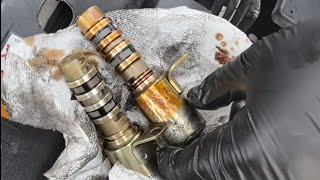
How to confirm: Check the engine oil level on the dipstick and examine its color and consistency. If the level is low or the oil is dark, thick, or past the recommended change interval, it is the most likely culprit. 🎬 See: 5 common causes and fixes for the P0022 code
Typical fix: Perform a complete engine oil and filter change using the manufacturer-specified oil type and viscosity (typically SAE 5W-30 full synthetic for the 3.0L/2.7L and 5W-20 for the 3.7L).
Est. part cost: $40-$80 - Faulty Variable Camshaft Timing (VCT) Solenoid 🔴 High Probability → Shop Engine Camshaft Manufacturer TSBs (SSM 47170, SSM 50067) directly cite that debris can cause the VCT solenoid to stick, leading to this code. The solenoid can also fail electrically. A user on the Ford Edge Forum with a 3.7L engine experiencing P0022 and other codes found his VVT solenoids were covered in varnish with partially clogged screens; replacing them resolved the rough idle.
How to confirm: After checking the oil, this is the next step. A mechanic can use a scan tool to command the solenoid on and off to check for a response (per TSB SSM 47170). It can also be removed and visually inspected for clogged screens or tested for electrical resistance (typically 7-14 ohms).
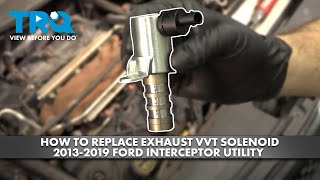
Typical fix: Replace the Bank 2 intake VCT solenoid. On V6 models, the Bank 2 (front) solenoids are located under the valve cover but are more accessible than the rear bank. 🎬 Watch: Step-by-step guide to replacing VVT solenoids on the MKZ
Est. part cost: $30-$90 - Worn Timing Components (Chain, Phaser, Guides) 🟡 Medium Probability Over time, especially if oil changes are neglected, the timing chain can stretch or the camshaft phaser can fail. A stretched chain allows for excessive slack, which the PCM detects as a timing error. A failing phaser may produce a distinct rattling or knocking sound on startup as it struggles to lock into its base position before oil pressure builds.
How to confirm: This is a more advanced diagnosis. It often involves listening for a characteristic chain rattle on startup or removing the valve cover to inspect the chain for slack. Confirming a bad phaser often requires significant engine disassembly.
Typical fix: Replace the timing chain, guides, tensioners, and potentially the camshaft phasers. This is a labor-intensive and expensive job.
Est. part cost: $400-$1200
Rare But Worth Checking
- Clogged Oil Passages: Severe engine sludge can block the oil passages leading to the VCT system, starving it of pressure. This usually indicates a history of severe maintenance neglect and may require extensive engine cleaning or replacement.
- Faulty Camshaft Position Sensor: → Shop Engine Camshaft Position Sensor While possible, a bad sensor would typically throw its own specific trouble code (e.g., P0345). It's less common for it to fail in a way that only produces a P0022 timing code.
- Damaged VCT Solenoid Wiring/Connector: → Shop Engine Variable Valve Timing (VVT) Solenoid A damaged wire or corroded connector for the VCT solenoid can prevent it from receiving the correct signal from the PCM. A user on a Lincoln forum with P0022 and P0021 codes found a split wire casing on the solenoid connector.
Diagnosis Steps
- Verify the engine oil level and condition. If low, top it off. If dirty or past its service interval, perform an oil and filter change with the correct viscosity oil. Clear the code and see if it returns.
- Use a professional scan tool to monitor the desired vs. actual camshaft position for the Bank 2 intake cam.
- Use the scan tool's bidirectional controls to perform pinpoint test HK11, as suggested by TSB SSM 47170. Command the Bank 2 intake VCT solenoid on and off 10 times. Listen for an audible click from the solenoid and watch for a change in engine idle. This may clear minor debris.
- If the solenoid does not click, inspect its wiring connector for damage or corrosion. Test for power and ground at the connector.
- If wiring is good, remove the VCT solenoid. Inspect its screens for metal shavings or sludge. You can test it on the bench using a 12V power source to see if the internal plunger moves.
- If the solenoid is stuck, clogged, or fails the electrical test, replace it.
- If the solenoid and oil are good, the problem is likely mechanical. Listen for startup rattle which points to a faulty camshaft phaser. Further diagnosis will require inspecting the timing chain for stretch and guides for wear, which is more intensive engine work.
Parts You'll Likely Need
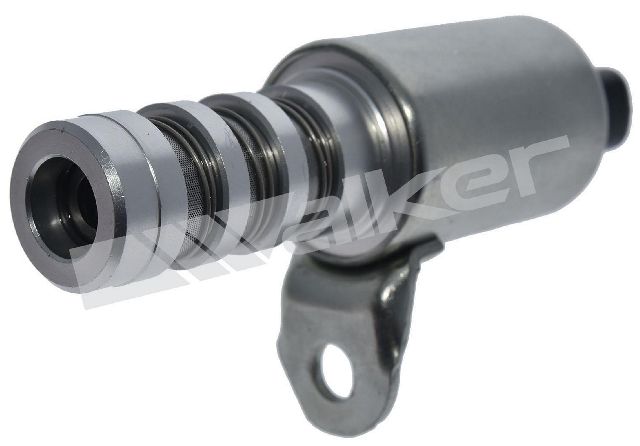
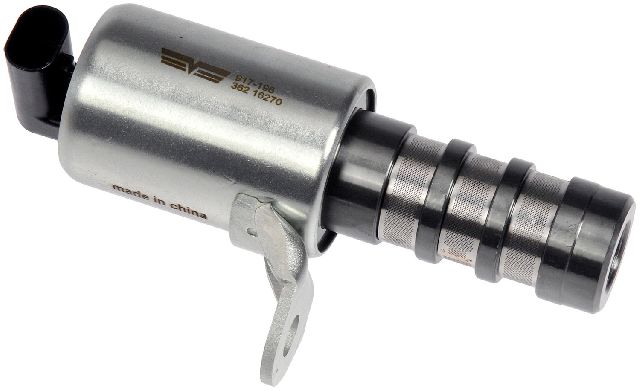
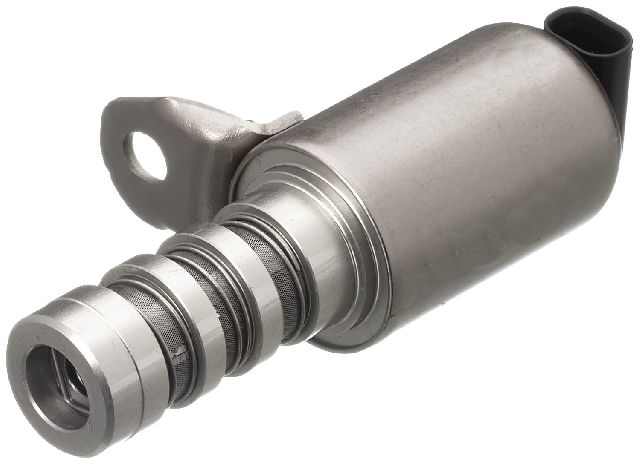
- Engine Variable Valve Timing (VVT) Solenoid
(OEM #FT4Z-6M280-B (For 3.0L V6 and related 2.7L V6))— This is the most common point of failure according to TSBs and owner forums. It gets stuck from oil debris or fails electrically. Note: This part number supersedes FT4Z-6M280-A.
Trusted brands: Motorcraft, Dorman, Standard Motor Products (SMP)
OEM price range: $60-$90
Aftermarket price range: $30-$60 - Engine Oil and Filter — Clean oil of the correct viscosity is critical for the VCT system to work. Old, dirty, or incorrect oil is a primary cause of P0022.
Trusted brands: Motorcraft, Mobil 1, Valvoline
OEM price range: $50-$90
Aftermarket price range: $40-$70
Related Codes That Often Appear With This One
- P0012 — This is the same 'over-retarded' condition but for Bank 1. Seeing both codes together strongly points to a systemic issue like low/dirty oil, low oil pressure, or a stretched timing chain affecting the whole engine.
- P0021 — This is for an 'over-advanced' condition on the same bank (Bank 2). Seeing opposite codes can indicate an erratic VCT solenoid that is sticking intermittently or an electrical issue causing unpredictable behavior.
- P0300, P0302, P0304, P0306 — These are misfire codes for Bank 2 cylinders. Incorrect camshaft timing can lead to poor combustion, causing misfires on the affected bank.
Technical Service Bulletins (TSBs) & Recalls
- SSM 47170: Notes that various VCT codes, including P0022, may be due to small debris causing the VCT solenoid to stick. Recommends cycling the solenoid with a scan tool (Pinpoint Test HK11) before replacement.
- SSM 50067: Repeats the information from SSM 47170, indicating this is a persistent issue recognized by the manufacturer.
- SSM 54366: Refers technicians to a specific pinpoint test (HK) in the service manual for diagnosing VCT codes like P0022.
Platform-Specific Known Issues
- TSB SSM 47170 and SSM 50067 note that on some Ford and Lincoln vehicles, P0022 can be caused by 'small debris causing the VCT solenoid to stick.' It advises against immediate component replacement, instead suggesting technicians first use a scan tool to cycle the solenoid 10 times to attempt to clear it.
- On the 3.7L and 3.0L V6 engines, the VVT solenoids are located underneath the valve covers. While replacing the Bank 2 (front) solenoids is feasible for a DIYer, replacing the Bank 1 (rear) solenoids is significantly more labor-intensive as it requires removing the upper intake manifold.
Mechanic-Grade Diagnostic Values
- VCT Solenoid Internal Resistance — expected: 7 to 14 Ohms. Failure: A reading of infinite resistance (OL) indicates an open circuit in the coil. A reading significantly outside the expected range suggests a failing coil.
- VCT Solenoid Connector Voltage (KOEO) — expected: Approximately 12 Volts (Battery Voltage). Failure: No voltage indicates an open in the power supply (VPWR) circuit, potentially a blown fuse or wiring issue.
- VCT Advanced Error PID (Scan Tool) — expected: Should hover around 0° (± 5° is acceptable for short periods). Failure: A consistent, large value on the Bank 2 error PID indicates the PCM is detecting a deviation between the commanded and actual cam position, even if the solenoid is being commanded correctly.
Scan Tool Commands That Help
- Ford IDS (or equivalent professional scanner): VCT Solenoid Duty Cycle Command / Output State Control — This bidirectional control allows a technician to manually command the VCT solenoid on and off or to a specific duty cycle. It's used to verify if the solenoid clicks audibly and if manually activating it causes a change in engine idle, confirming the solenoid's mechanical function and its effect on the engine. This is the underlying function used in TSB-recommended pinpoint tests.
- Ford IDS (or equivalent professional scanner): VCT_ADV_ERR (Parameter ID - PID) — Monitoring the VCT Advance Error PID for Bank 2 shows how many degrees the camshaft timing is off from the PCM's commanded position in real-time. A large, persistent retarded value confirms the P0022 condition while driving or at idle.
Wiring & Ground Locations
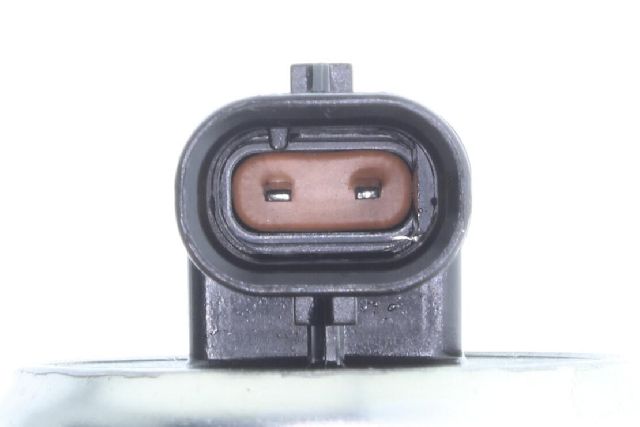
- VCT Solenoid Connector — On the top of the VCT solenoid, which is located under the valve cover for Bank 2 (the bank closer to the radiator).. This connector provides power and the control signal from the PCM. A damaged connector, corroded pins, or split wire casing can cause an open or short in the circuit, leading to codes P0010/P0020 (circuit codes) and the resulting P0022 timing fault.
- PCM Connector — The Powertrain Control Module (PCM) is typically located in the engine bay. Its specific location can vary slightly by year and engine.. To definitively test for a wiring short or open between the PCM and the VCT solenoid, a technician would need to check for continuity from the pin at the VCT solenoid connector to the corresponding pin at the PCM connector.
Real Owner Repair Stories
- Ford F150 Forum (2017 Ford F-150 3.5L EcoBoost (engine family shares VCT technology)) — Long-term cam phaser rattle, then a P0022 code appeared with the rattle now occurring during driving.
❌ Tried (didn't work) Replacing the VVT solenoids, Replacing the cam position sensor
✅ What actually fixed it A full timing job, which included replacing the cam phasers and other timing components, ultimately resolved the code and symptoms. - Lincoln vs Cadillac Forums (2004 Lincoln LS V8 (older model but demonstrates wiring failure mode)) — P0022 code, then P0021 after taping up a wire. Car ran fine initially, then developed a very rough run.
❌ Tried (didn't work) Initially taping the damaged wire, which led to a different code (P0021).
✅ What actually fixed it The root cause was identified as a split wire casing on the VCT solenoid connector, causing a short. The suggested fix was to repair or replace the connector pigtail before suspecting mechanical parts like the phaser. - Cartalk Community Forum (Lincoln LS V6) — P0022 code, inability to accelerate past 2200 RPM in top gear.
❌ Tried (didn't work) Replacing the VVT solenoid, Replacing the camshaft position sensor, Changing the oil, Changing spark plugs
✅ What actually fixed it The user had tried all common fixes without success. Forum experts advised the next step was to have the engine's mechanical oil pressure tested, as low oil pressure would prevent the VCT system from functioning correctly regardless of new electronic parts.
When the Usual Fixes Don't Work
- In one documented case on an F-150 with a related engine, a user experienced a P0022 code and had a noticeable cam phaser rattle. Replacing the VCT solenoid and the camshaft position sensor did not resolve the issue. The final, successful repair was a complete timing job, including the replacement of the cam phasers themselves. This highlights that while the solenoid is a common and less expensive starting point, a persistent P0022, especially when accompanied by engine noise, can point directly to the more serious mechanical failure of the phaser or timing chain.
OEM Part Supersession History
FT4Z-6M280-A→FT4Z-6M280-B— Part revisions are common to improve reliability, change materials, or address known failure modes like sticking or screen issues. While the exact reason isn't publicly documented by Ford, superseded parts often indicate an improvement over the original design.
Model Year Variations Within This Range
- 2015-2016 vs 2017-2020: The primary difference is the V6 engine. 2015-2016 models used the 3.7L Cyclone V6, while 2017-2020 models introduced the 3.0L twin-turbo EcoBoost V6. While both utilize the Ti-VCT system, part numbers for VCT solenoids, phasers, and timing components are different between these two engines. The diagnostic principles remain the same, but the physical parts are not interchangeable.
Helpful Videos
We Have This Part in Stock


The information in this article is provided for general reference and educational purposes only. Vehicle specifications, procedures, and part compatibility can vary by production date, trim level, and region. Always consult your vehicle's factory service manual and verify part numbers before purchasing or performing repairs. Safety-critical components such as airbags, seat belts, and braking systems should be installed by a qualified professional.
- Lincoln MKZ:
- 🧭 Diagnostic Flowchart
- 🎬 Helpful Videos
- 🛍️ Shop This Part
- What's Unique About the 2015-2020 Lincoln MKZ
- Symptoms You May Notice
- Most Likely Causes
- Rare But Worth Checking
- Diagnosis Steps
- Parts You'll Likely Need
- Related Codes That Often Appear With This One
- Technical Service Bulletins (TSBs) & Recalls
- Platform-Specific Known Issues
- Mechanic-Grade Diagnostic Values
- Scan Tool Commands That Help
- Wiring & Ground Locations
- Real Owner Repair Stories
- When the Usual Fixes Don't Work
- OEM Part Supersession History
- Model Year Variations Within This Range
- 🎟️ Get 5% Off