

P0022 on 2014-2021 Mazda 6 2.5L: Why This Code is Invalid and How to Fix the Real Issue (P0012)
The code P0022 ('Bank 2') is not valid for the inline-4 Skyactiv-G 2.5L engine. The actual code is almost certainly P0012 ('Bank 1'). This is typically caused by a failing electric intake VVT actuator (phaser), not low oil. For 2018 models, a PCM software update may be the only fix needed. Expect a repair cost of $400-$700 for a new actuator.
- The code P0022 is invalid for your car. The real code is P0012, which refers to the intake camshaft on Bank 1.
- Do not waste money on a new Oil Control Valve (OCV); the intake side of this engine uses an electric actuator, which is the most likely part to have failed.
- Before replacing parts, check with a dealer to see if your car's VIN falls under a TSB for a free PCM software update (especially 2018 models) or a known faulty actuator (especially 2015 models).
What's Unique About the 2014-2021 Mazda 6
The key difference in the Mazda Skyactiv-G engine is its unique variable valve timing (VVT) system. Unlike most engines that use oil pressure-driven solenoids (OCVs) for both camshafts, the Skyactiv-G uses an electric motor to control the intake camshaft timing. This means the common causes for this type of code on other vehicles, like a dirty OCV or low oil pressure, are not the primary culprits for a P0012 on your Mazda 6. The problem is almost always electrical or mechanical, pointing directly to the electric VVT actuator, its separate drive motor, or the PCM software.
Symptoms You May Notice
- Check Engine Light is on
- Reduced engine power and poor acceleration, sometimes described as 'limp mode'
- Vehicle may enter 'limp mode'
- Rough or unstable engine idle
- Engine may be difficult to start
- Decreased fuel economy
- Rattling noise from the engine on cold starts (less common, may indicate timing chain)
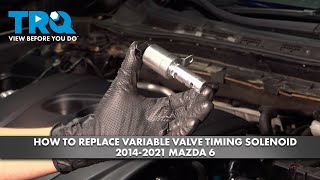
- Replacing the Oil Control Valve (OCV). 🎬 Watch: How to replace the exhaust VVT solenoid The intake side is electric, so replacing the hydraulic OCV (which controls the exhaust cam) will not fix an intake-side P0012 code.
Most Likely Causes
- Failing Electric VVT Actuator (Phaser) 🔴 High Probability The intake cam is controlled by an electric motor driving a mechanical phaser, which is a known failure point. Mazda issued TSB 01-007/15 for this part on 2015 Mazda 6 models (VINs JM1GJ**170533 to 177277) due to spring shaft fatigue. The phaser can get mechanically stuck in the retarded position.
How to confirm: A diagnostic scan tool can command the actuator (PID: VT IN_DES) and monitor its response (PID: VT IN_ACT). A failure for the actual angle to follow the desired angle confirms a fault. Physically, a technician can remove the VVT motor and attempt to turn the phaser's internal shaft by hand; it should rotate smoothly.
Typical fix: Replace the electric VVT actuator (phaser) and the single-use valve cover gasket. In some cases, only the VVT motor needs replacement.
Est. part cost: $350-$500 - Outdated Powertrain Control Module (PCM) Software 🟡 Medium Probability Mazda has released software updates to correct logic errors that could falsely trigger timing codes. TSB 01-014/19 was issued for 2018 Mazda 6 models with VINs lower than JM1GL**336737 (produced before Dec. 21, 2018) for this reason. This only applies to vehicles with a Mitsubishi-made PCM.
How to confirm: A Mazda dealership can check your vehicle's VIN against TSB 01-014/19 to see if the software update is applicable.
Typical fix: Reprogram the PCM with the updated software. This is a dealer-level repair and may be covered under the Federal Emission Warranty.
Est. part cost: $0 (if covered) - $150 - Low or Dirty Engine Oil ⚪ Low Probability While the intake cam actuation is electric, the entire engine and the exhaust cam VVT rely on clean oil. Extremely low levels or sludge can still cause issues with the phaser's internal mechanics or the timing chain tensioner, though it's less likely to be the root cause for P0012 specifically.
How to confirm: Check the oil level on the dipstick and inspect its color and consistency. Ensure the correct viscosity (0W-20) is being used.
Typical fix: Perform an oil and filter change using a high-quality full synthetic 0W-20 oil.
Est. part cost: $50-$90
Rare But Worth Checking
- Failing Electric VVT Adjust Motor: The electric motor (Part No. PE01-12-4Z0C) that drives the phaser can fail independently. A scan tool may not show a circuit code, but the motor will fail to adjust the phaser.
- Stretched Timing Chain: → Shop Engine Timing Chain This is more likely on higher-mileage vehicles (over 100,000 miles). A brief rattle on a cold start is a key symptom. This is a significant mechanical repair.
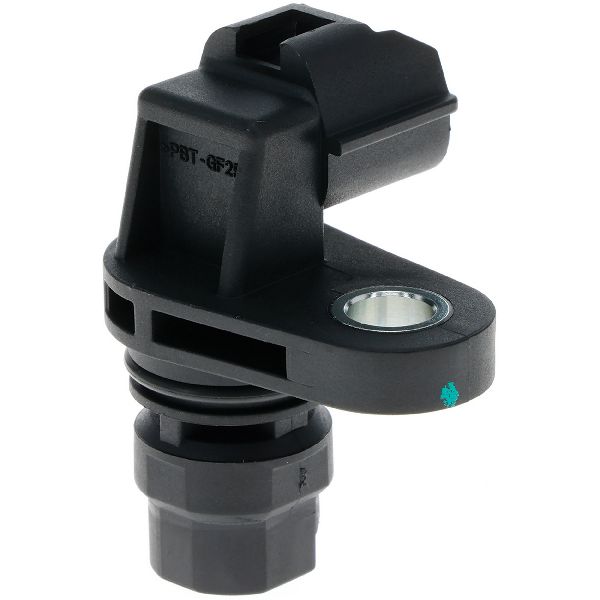
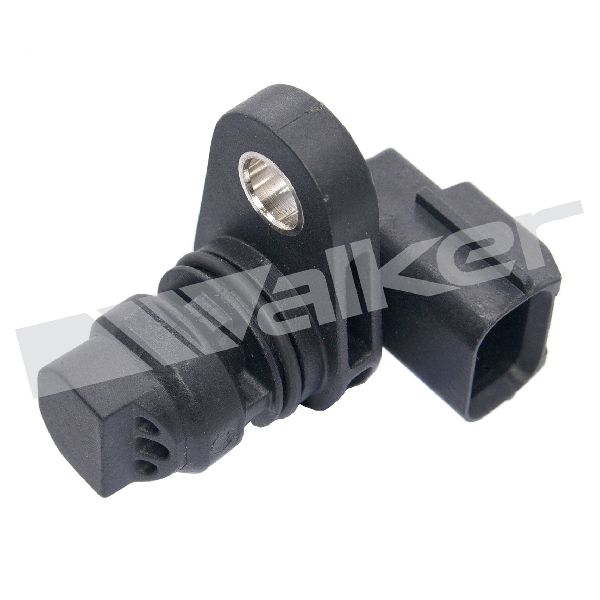
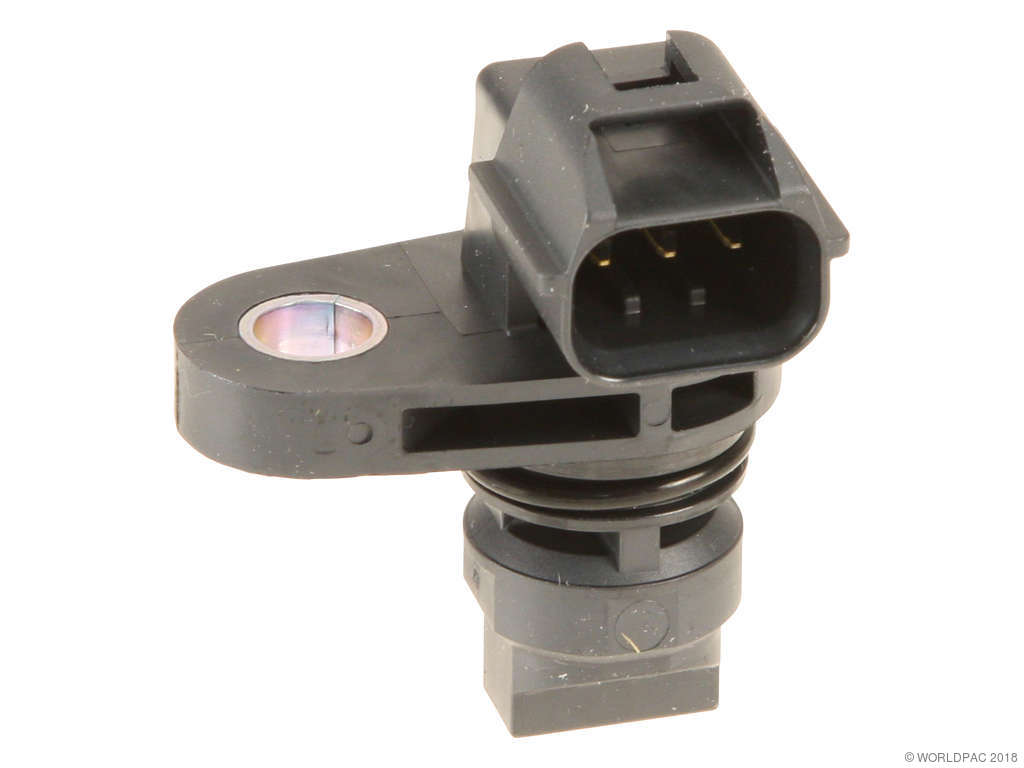
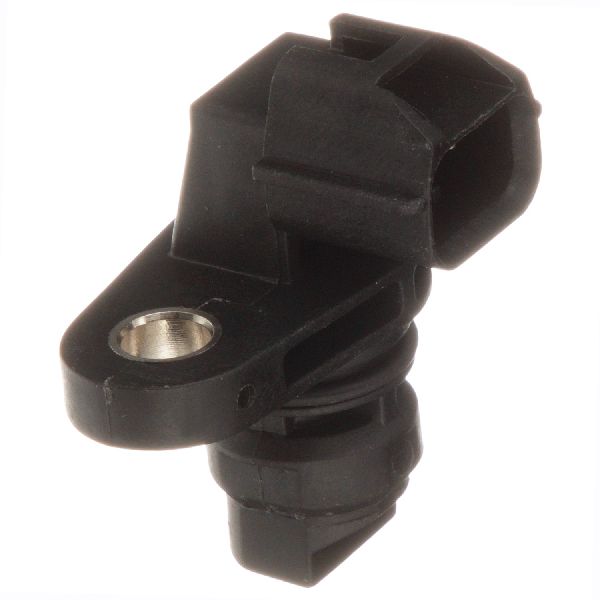
- Failing Camshaft Position Sensor: → Shop Engine Camshaft Position Sensor The sensor that reads the camshaft's position can fail, sending incorrect data to the PCM. However, this would typically set a different code (like P0340) but can sometimes be a contributing factor.
Diagnosis Steps
- Confirm the code is P0012, not P0022. If the tool shows P0022, re-scan with another device to verify.
- Check for any Technical Service Bulletins (TSBs). For a 2018 model, check if the VIN is lower than JM1GL336737 (TSB 01-014/19). For a 2015 model, check if the VIN is between JM1GJ170533 and 177277 (TSB 01-007/15).
- Check the engine oil level and condition. Ensure it is full, clean, and the correct 0W-20 viscosity. If low or dirty, perform an oil change, clear the code, and see if it returns.
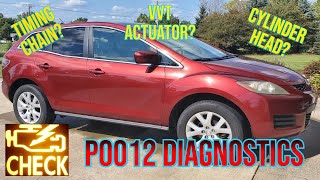
- Using an advanced scan tool, monitor the desired (VT IN_DES) vs. actual (VT IN_ACT) intake camshaft position angles while the engine is running. If the actual angle lags significantly or is stuck at zero, the VVT system is at fault. 🎬 See this step-by-step P0012 diagnostic and repair guide
- If a TSB for a PCM update applies, perform this step before replacing any parts.
- If the actuator appears to be the issue, remove the VVT motor and manually check if the phaser mechanism can be rotated. If it is stuck or has tight spots, it needs replacement.
- If the phaser moves freely, the VVT motor itself may be faulty. Electrical tests can be performed per the factory service manual.
- If the actuator is replaced and the code returns, or if you hear a rattling noise on startup, the next step is to inspect the timing chain and tensioners for wear or stretch.
Parts You'll Likely Need
- Electric VVT Actuator (Intake Camshaft Phaser)
(OEM #PE01-12-4X0C (current), PE01-12-4X0B (superseded))— This is the most common failure point for code P0012 on the Skyactiv-G 2.5L engine, as identified in Mazda TSB 01-007/15.
Trusted brands: Mazda (OEM)
OEM price range: $400-$520
Aftermarket price range: $250-$400 - Valve Cover Gasket
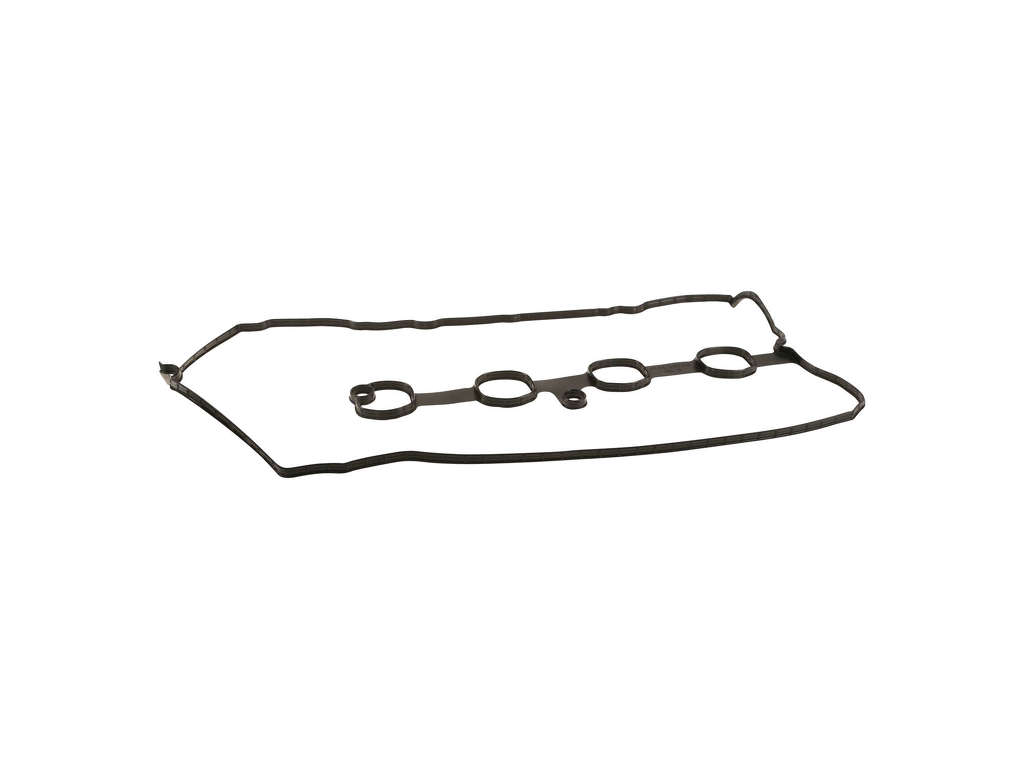
(OEM #PY01-10-235)— This is a single-use gasket that must be replaced any time the valve cover is removed to access the VVT actuator.
Trusted brands: Mazda (OEM), Fel-Pro, Mahle
OEM price range: $30-$50
Aftermarket price range: $20-$40 - Electric VVT Adjust Motor
(OEM #PE01-12-4Z0C)— This motor drives the phaser and can fail electrically, preventing timing adjustments even if the phaser itself is okay.
Trusted brands: Mazda (OEM)
OEM price range: $650-$800
Related Codes That Often Appear With This One
- P0011 — This is the 'over-advanced' equivalent of P0012. Mazda TSB 01-007/15 groups them together as both can be caused by the same failing VVT actuator.
- P0016 — Indicates a correlation issue between the crankshaft and camshaft. It often appears with P0012 if the root cause is a stretched timing chain.
Technical Service Bulletins (TSBs) & Recalls
- TSB 01-007/15: Addresses P0011/P0012 caused by VVT actuator spring shaft fatigue on specific 2015 Mazda 6 and 2014 Mazda 3 models.
- TSB 01-014/19: Calls for a PCM software update to correct false P0012 codes on certain 2018 Mazda 6 and CX-5 models with Mitsubishi-made PCMs.
Platform-Specific Known Issues
- TSB 01-007/15 identified a batch of faulty VVT actuators due to spring shaft fatigue, affecting 2015 Mazda 6 models with VINs from JM1GJ**170533 to 177277.
- TSB 01-014/19 notes that some 2018 models with VINs lower than JM1GL**336737 may only require a PCM software update to fix the logic that triggers the P0012 code.
Mechanic-Grade Diagnostic Values
- Intake Cam Timing Deviation Threshold — expected: Actual timing (PID: VT IN_ACT) should be within 5 degrees of desired timing (PID: VT IN_DES).. Failure: The P0012 code can be set when the actual timing is over-retarded by more than 5 degrees for a specified period.
- Exhaust VVT Oil Control Valve (OCV) Resistance — expected: 6.9 - 7.9 ohms. Failure: A reading outside this range indicates a faulty exhaust OCV. This is a common misdiagnosis, as the intake side is electric and does not use an OCV.
Scan Tool Commands That Help
- Mazda M-MDS / Advanced OBD-II Scanner: VVT Motor Circuit Integrity Check (Manual Test) — To quickly test the wiring and the PCM's ability to monitor the VVT motor circuit. Unplug the VVT motor's electrical connector with the key on. The PCM should immediately set a P0010 (Intake 'A' Camshaft Position Actuator Circuit) code. If it does, the wiring from the PCM is likely intact.
- Mazda M-MDS / Advanced OBD-II Scanner: VVT Adaptive Values Reset/Relearn — After replacing the VVT actuator or motor, a relearn procedure is necessary for the PCM to adapt to the new component's operational characteristics. While some relearning occurs during normal driving, a forced reset via a scan tool is the proper method.
Wiring & Ground Locations
- Intake Camshaft Position Sensor Connector — On the side of the cylinder head, near the top edge of the valve cover, on the right side (passenger side) of the engine.. This connector and its wiring are critical for the PCM to receive an accurate signal of the camshaft's actual position. Damage or corrosion here can lead to incorrect timing readings, potentially mimicking a mechanical VVT fault.
- Electric VVT Adjust Motor Connector — On the front of the engine, mounted to the VVT actuator assembly.. This is the main power and control connector for the motor that drives the intake phaser. A poor connection here will prevent the actuator from making any adjustments, causing it to be stuck and triggering a P0012.
Real Owner Repair Stories
- mazdas247.com forum user (2016 Mazda 6 2.5L, 52,000 km) — Check Engine Light with P0012, strong loss of power, difficulty driving uphill.
❌ Tried (didn't work) Initial diagnosis at the dealer included checking wiring, sensors, and oil pressure, none of which resolved the issue.
✅ What actually fixed it The official service center replaced 'all parts of the fuel distribution system,' which the owner understood to be the entire VVT actuator assembly. The suspected root cause was the 'electromagnetic asterisk' (VVT phaser). - Mazdaspeeds.org forum user (Mazdaspeed (Note: MZR engine, but diagnostic path is relevant)) — Persistent P0012 code after multiple part replacements.
❌ Tried (didn't work) Replaced Oil Control Valve (OCV), Replaced cam cap and camshaft, Replaced VVT actuator, Re-timed the engine, Verified oil pressure was good
✅ What actually fixed it The issue remained unresolved after replacing all common mechanical components. The next diagnostic steps were identified as testing the wiring harness for faults or replacing the cylinder head due to a suspected score mark in the cam journal, indicating a deeper electrical or mechanical issue beyond the bolt-on parts.
OEM Part Supersession History
PE01-12-4X0B→PE01-12-4X0C— The original part was identified in TSB 01-007/15 as being prone to internal spring shaft fatigue. The superseding part is an updated design to correct this weakness.
Model Year Variations Within This Range
- 2018-2021: Models from 2018 onward introduced a cylinder deactivation system to the 2.5L Skyactiv-G engine. A failure in this system, particularly with the rocker arms, can cause symptoms like sudden power loss and limp mode, which may be confused with a VVT issue. Mazda issued service alerts (e.g., SA-041/18) for rocker arm issues on these models.
Diagnostic Flowchart
Other Known Issues on This Vehicle
Issues unrelated to this code that are worth knowing about as an owner of this generation:
- Infotainment Screen Delamination ('Ghost Touch') 🟠 Medium — Very common, especially on 2016-2018 models. Often worsens in heat. (Ref: Mazda issued warranty extensions for this issue on some models, but software updates often fail to fix the hardware problem.)
- Premature Wheel Bearing Failure 🟡 Low — Commonly reported issue where wheel bearings become noisy at relatively low mileage (under 100,000 miles).
- Leaking Belt Tensioner 🟡 Low — The hydraulic belt tensioner is known to leak oil, requiring replacement.
- Rattling Door Speakers (Bose System) 🟡 Low — The speaker cone in the front door Bose speakers can separate from its frame due to corrosion, causing a rattling or distorted sound.
- Transmission Shifter Switch Failure 🟠 Medium — In earlier models (approx. 2014-2016), a switch in the shifter assembly can fail, preventing the car from fully shutting off and draining the battery.
Used vs. New Parts: Buying Guide for This Vehicle
When a used part is the smart pick: For this specific repair, using a used part is generally not recommended for the core components. The VVT actuator is a known failure point with a revised part number, so a used one from a junkyard likely has the original faulty design or significant wear. A used part only makes sense for external components like the engine cover or connectors if they are damaged during repair.
Donor-vehicle mileage cap: roughly under 50000 miles for the part to have meaningful remaining life.
What to inspect on the donor part:
- Verify the donor vehicle was not in a severe front-end collision.
- If possible, check the VIN of the donor vehicle to see if it falls outside the TSB ranges for known faulty parts.
- Inspect electrical connectors for any signs of corrosion, brittleness, or cut wires.
OEM-only on this vehicle (don't cheap out):
- Electric VVT Actuator (Phaser): Due to the high failure rate of the original design and the critical nature of the part, only the latest OEM revision (PE01-12-4X0C) should be used to ensure a lasting repair.
- Electric VVT Adjust Motor: This is a complex and expensive electrical component. Aftermarket quality is unproven, and a used part carries high risk. Stick with OEM.
Aftermarket brands forum-validated for this vehicle:
- Fel-Pro (Valve Cover Gasket)
- Mahle (Valve Cover Gasket)
- Victor Reinz (Valve Cover Gasket)
Brands owners have reported issues with on this vehicle:
- No-name, unbranded VVT actuators or motors from online marketplaces. The precision required for this part makes low-quality alternatives a significant gamble that could lead to repeat failures.
Real Owner Stories
Aggregated from forums and TSBs cited above. Mileages and costs reflect what owners reported in those sources.
2016 Mazda 6 2.5L Skyactiv-G — 32311 miles
Symptoms: Severe power loss and a P0012 error code.
What fixed it: Replacement of the VVT actuator assembly (described as all parts of the fuel distribution system in the report).
Source hint: mazdas247.com: A 2016 Mazda 6 owner with 52,000 km reported P0012 with severe power loss.
2016 Mazda CX-5 2.5L Skyactiv-G
Symptoms: The intake cam was found to be stuck at 0 degrees during a diagnostic scan.
What fixed it: The technician removed the VVT motor and manually freed the stuck phaser mechanism as a temporary fix, confirming the phaser was the mechanical point of failure.
Source hint: YouTube (Pine Hollow Auto Diagnostics): A detailed diagnostic video on a 2016 Mazda CX-5 with P0012
2015 Mazda 6 2.5L Skyactiv-G
Symptoms: Timing codes P0011 or P0012 caused by mechanical failure of the VVT component.
What fixed it: Replacement of the electric VVT actuator due to spring shaft fatigue.
Source hint: TSB 01-007/15
Related OBD-II Codes
Frequently Asked Questions
Does TSB 01-014/19 apply to my 2018 Mazda 6 with the 2.5L Turbo engine?
My 2015 Mazda 6 has a P0012/P0022 code; is there a known manufacturing defect for this year?
Can a software update fix the P0012/P0022 code on my 2018 Mazda 6?
Is the PCM software update covered under warranty for my Mazda 6?
What specific oil should I use in my Skyactiv-G 2.5L to prevent VVT issues?
How can a technician confirm if my VVT actuator has failed without just guessing?
Helpful Videos
We Have This Part in Stock


The information in this article is provided for general reference and educational purposes only. Vehicle specifications, procedures, and part compatibility can vary by production date, trim level, and region. Always consult your vehicle's factory service manual and verify part numbers before purchasing or performing repairs. Safety-critical components such as airbags, seat belts, and braking systems should be installed by a qualified professional.
- Mazda 6:
- 🧭 Diagnostic Flowchart
- 🎬 Helpful Videos
- 🛍️ Shop This Part
- What's Unique About the 2014-2021 Mazda 6
- Symptoms You May Notice
- Most Likely Causes
- Rare But Worth Checking
- Diagnosis Steps
- Parts You'll Likely Need
- Related Codes That Often Appear With This One
- Technical Service Bulletins (TSBs) & Recalls
- Platform-Specific Known Issues
- Mechanic-Grade Diagnostic Values
- Scan Tool Commands That Help
- Wiring & Ground Locations
- Real Owner Repair Stories
- OEM Part Supersession History
- Model Year Variations Within This Range
- Other Known Issues on This Vehicle
- Used vs. New Parts: Buying Guide for This Vehicle
- Real Owner Stories
- 2016 Mazda 6 2.5L Skyactiv-G — 32311 miles
- 2016 Mazda CX-5 2.5L Skyactiv-G
- 2015 Mazda 6 2.5L Skyactiv-G
- Related OBD-II Codes
- Frequently Asked Questions
- 🎟️ Get 5% Off