

P0022 on 2011-2018 Subaru Forester 2.5L: Causes and Fixes for Over-Retarded Cam Timing
On a 2011-2018 Forester, P0022 is almost always caused by low/dirty engine oil or a failing driver's side Oil Control Valve (OCV). Start by checking your oil. If the oil is clean and full, the OCV is the next likely culprit, costing around $90-$120 for an OEM part.
- First, check your oil. Low or dirty 0W-20 synthetic oil is the #1 cause of P0022 on this Forester.
- If the oil is good, the driver's side Oil Control Valve (OCV) is the next most likely culprit. You can confirm this by swapping it with the passenger's side OCV to see if the code moves to P0011.
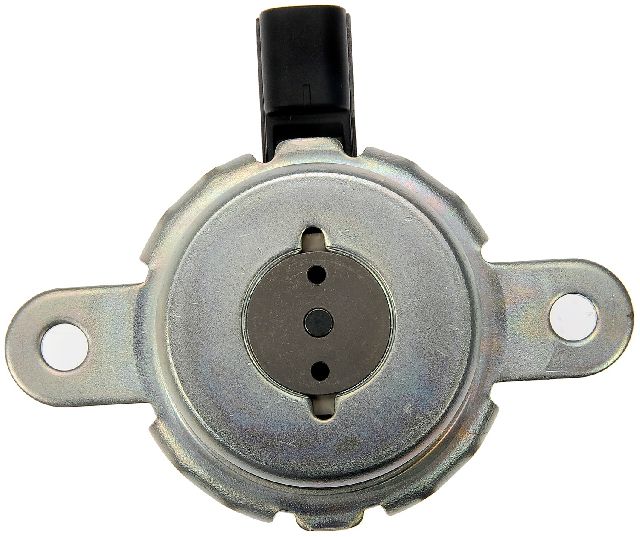
- The correct OEM part number for the OCV is 10921AA231, which replaces 10921AA230 and 10921AA220. The left and right side solenoids are the same part.
- Do not immediately suspect a major timing chain failure. This code is almost always resolved with much simpler and cheaper oil or OCV-related fixes.
What's Unique About the 2011-2018 Subaru Forester
The FB25 engine in this generation Forester (SH and SJ) is highly dependent on clean, correct-viscosity engine oil (0W-20) for the AVCS to function properly. The system's small oil passages are easily obstructed by sludge or debris from delayed oil changes. Furthermore, this engine platform is known for potential oil consumption issues, which can lead to low oil levels that starve the AVCS system, directly causing this code. Unlike the older turbo EJ engines famous for banjo bolt filter issues, the FB25's issues with this code are more directly tied to basic oil maintenance and the reliability of the Oil Control Valves (OCVs). The diagnostic process is straightforward, often involving swapping the identical driver and passenger side OCVs to see if the fault follows.
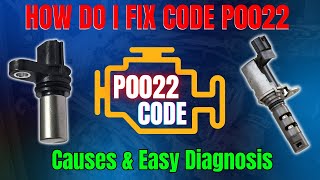
Generation note: This guide covers the 2011-2013 (SH) and 2014-2018 (SJ) generations of the Subaru Forester. Both use the FB25 2.5L engine with a timing chain, and the causes and repair procedures for code P0022 are consistent across this year range 🎬 Watch: A quick breakdown of P0022 causes and fixes. for the non-turbo model.
Symptoms You May Notice
- Check Engine Light is on
- Rough or unstable idle, sometimes causing shaking
- Reduced engine power and sluggish acceleration
- Poor fuel economy
- Engine stalling, especially when coming to a stop or at low RPMs.
- Hard starting
- Replacing the camshaft position sensor. This sensor is what detects the problem and reports it; it is rarely the cause of the problem itself.
- Assuming it's a major timing chain issue before checking the oil and OCV. The vast majority of P0022 codes on this engine are solved with the two most common, simpler fixes.
Most Likely Causes
- Low, Dirty, or Incorrect Engine Oil 🔴 High Probability The AVCS system is hydraulic and extremely sensitive to oil level, condition, and viscosity. The FB25 engine is known for some oil consumption, making low oil levels a common issue if not checked regularly. Sludge from infrequent oil changes can clog the small passages required for the system to operate.
How to confirm: Check the oil dipstick for level and the oil itself for color and consistency. If it's low, black, or sludgy, this is your starting point. The low oil light on pre-2014 models may not illuminate until the level is critically low.
Typical fix: Top off the oil or perform a complete oil and filter change using the correct 0W-20 synthetic oil.
Est. part cost: $30-$70 - Faulty Oil Control Valve (OCV) / VVT Solenoid (Bank 2) 🔴 High Probability → Shop Engine Variable Valve Timing (VVT) Solenoid These solenoids can get clogged with sludge from infrequent oil changes or can fail electrically over time, preventing them from directing oil flow to the cam phaser. It is a very common point of failure on the FB engine.
How to confirm: After verifying oil is good, the easiest test is to swap the Bank 2 (driver's side) OCV with the Bank 1 (passenger's side) OCV. They are identical parts. Clear the codes and drive. If the code changes to P0011 (Bank 1), you have confirmed the OCV is faulty.
Typical fix: Replace the faulty Oil Control Valve. It is highly recommended to use an OEM part to avoid compatibility issues.
Est. part cost: $90-$140
Rare But Worth Checking
- Clogged Oil Passages: If oil changes have been neglected, sludge can build up in the small oil passages within the cam carrier or the cam phaser itself, starving the system of oil even if the OCV is working. This is mentioned in Subaru TSB 02-163-16R as an advanced diagnostic step after checking the OCV.
- Worn Timing Chain or Components: → Shop Engine Timing Chain While the FB25 uses a timing chain designed to last the engine's life, a stretched chain or failing tensioner can cause timing to be off, potentially triggering this code. This is usually a last resort after all oil-related issues are ruled out and is often accompanied by rattling noises.
- Failed Camshaft Phaser (AVCS Sprocket): → Shop Engine Camshaft The actuator sprocket on the end of the camshaft can fail internally or become clogged with debris. This is an expensive and labor-intensive repair that should only be considered after all other possibilities are exhausted.
Diagnosis Steps
- Check Engine Oil: Verify the oil level is full and the oil is clean. If low, dirty, or the wrong type, perform an oil and filter change with full synthetic 0W-20 oil. Clear the code and see if it returns. This is the most critical first step.
- Inspect OCV Connector: Check the wiring and connector for the Bank 2 (driver's side) OCV for any damage, corrosion, or loose connections.
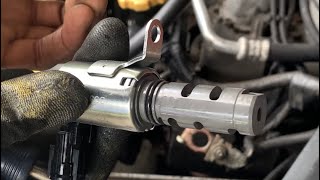
- Swap OCVs: The Bank 1 and Bank 2 OCVs are the same part. Swap the driver's side solenoid with the passenger's side solenoid. Clear the codes, drive the vehicle, and rescan. If you now have a P0011 code, the solenoid is faulty and needs to be replaced. This is the most definitive DIY test. 🎬 See this walkthrough on diagnosing and replacing the valve.
- Test OCV: Alternatively, you can test the solenoid's resistance with a multimeter. It should be between 6.9 and 7.9 ohms at 68°F (20°C). You can also apply 12V to see if the internal piston actuates, though this is less reliable than the swap test.
- Advanced Diagnostics: If the OCV is good and the code persists, the issue is likely more complex. Per TSB 02-163-16R, this involves checking engine oil pressure and inspecting for clogged oil passages in the cam carrier and cylinder head, or checking for a faulty AVCS cam sprocket. This level of diagnosis is best left to a professional.
Parts You'll Likely Need
- Engine Oil Control Valve (OCV) / VVT Solenoid
(OEM #10921AA231)— This is the most common part to fail after ruling out oil issues. It controls the oil flow that adjusts the cam timing. It is the same part for left and right banks.
Trusted brands: Subaru (OEM), Denso
OEM price range: $90-$120
Aftermarket price range: $40-$80 - Engine Oil and Filter — The most common cause of the code is low or dirty oil. Always use the specified 0W-20 full synthetic oil.
Trusted brands: Idemitsu (OEM supplier), Mobil 1, Pennzoil Platinum
Aftermarket price range: $30-$70
Related Codes That Often Appear With This One
- P0011 — This is the equivalent code for Bank 1 (passenger side). You might see this if you swap a faulty OCV from Bank 2 to Bank 1 during diagnosis, confirming the OCV is the problem.
- P0302, P0304 — These are misfire codes for cylinders 2 and 4 (the cylinders on Bank 2). Incorrect cam timing can disrupt the combustion process, leading to misfires on the affected bank.
- P000C — This is the 'Slow Response' code for the same camshaft and bank. It often points to the same root causes, namely oil flow issues or a failing OCV, and is covered under the same diagnostic TSB.
Technical Service Bulletins (TSBs) & Recalls
- 02-163-16R: Provides updated inspection and repair procedures for AVCS-related DTCs on FA and FB engines, including P0022. It outlines a diagnostic flow starting with oil checks, OCV tests, oil pressure tests, and finally inspection of internal passages, confirming that oil-related issues are the primary focus.
Platform-Specific Known Issues
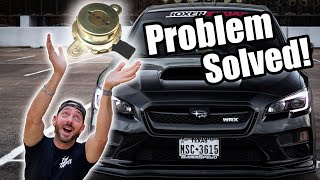
- Owner Experience: OCV Replacement Fix: A user on Reddit with a 2011 Forester experiencing P0022 and related codes was advised by others that the Oil Control Valve was the likely culprit. The user confirmed that replacing the OCV is a relatively easy job, held in by two 10mm bolts, and shared a video guide for the repair. 🎬 Watch: How to replace or upgrade your oil control valve.
Mechanic-Grade Diagnostic Values
- Oil Control Valve (OCV) Resistance — expected: 6.9 - 7.9 Ohms at 68°F (20°C). Failure: A reading outside this range, or an open/infinite reading, indicates a failed solenoid coil.
- Live Data: AVCS Intake Cam Angle (Bank 2) — expected: Should read near 0° at idle. The angle should increase off-idle as commanded by the ECM.. Failure: The actual angle does not change or lags significantly behind the 'Commanded Cam Angle' PID, confirming the camshaft is not moving as requested.
- Live Data: Mechanical Timing Check — expected: With the Bank 2 OCV unplugged, the 'AVCS Intake Cam Angle (Bank 2)' should read a steady value close to 0° while the engine is running.. Failure: If the reading is a steady +10° or -10°, it indicates the timing chain has likely skipped one tooth on the 36-tooth cam sprocket.
- Engine Oil Pressure — expected: Refer to the vehicle-specific service manual or TSB 02-187-21 for the exact pressure chart.. Failure: Pressure below the specified range at idle or a higher RPM (e.g., 3,000 RPM) indicates an oil supply problem that will starve the AVCS system.
Scan Tool Commands That Help
- Subaru Select Monitor (SSM) or equivalent professional scan tool: Current Data Display - AVCS Intake Cam Angle (Bank 2) & Commanded Angle — Used to monitor the real-time performance of the AVCS system. Comparing the actual cam angle to the ECM's commanded angle is the primary way to confirm the fault is occurring.
- Subaru Select Monitor (SSM) or equivalent professional scan tool: Active Test - AVCS Solenoid Duty Cycle — Some advanced scan tools may allow the technician to manually command the OCV duty cycle to test the solenoid's and phaser's range of motion while monitoring the cam angle sensor, confirming mechanical response.
Wiring & Ground Locations
- OCV Connector & Harness — The electrical connector on the front of the Oil Control Valve, located on the front of the timing cover on the driver's side (Bank 2).. Per Subaru TSB 02-170-17R, the OCV can develop an internal leak, causing engine oil to 'wick' past the connector pins and into the engine wiring harness. This oil contamination can travel down the harness, causing shorts, poor connections, and erratic behavior that mimics a failed OCV, even after the OCV is replaced. The harness must be inspected for oil and cleaned or replaced if contaminated.
OEM Part Supersession History
10921AA220, 10921AA230→10921AA231— Part was updated to improve reliability and address internal oil leakage.
Heads up: According to TSB 02-170-17R, OCVs with a production date code of '17159' (159th day of 2017) or higher are the improved design less prone to oil wicking into the harness. When replacing, ensure the part is the latest revision.
Model Year Variations Within This Range
- 2011-2013 (SH Forester): This is the first iteration of the FB25 engine. It is known for potential oil consumption issues related to the piston rings, which can lead to low oil levels that trigger P0022. The intake manifold and wiring harness are specific to this generation.
- 2014-2018 (SJ Forester): The FB25 engine was updated in 2014 with a higher compression ratio (10.3:1), redesigned pistons, reshaped intake ports, and larger intake valves. While the causes for P0022 are the same, swapping an engine between an SH and SJ requires adapter plates for the different intake ports and swapping over sensors, wiring, and cam reluctor wheels.
Diagnostic Flowchart
Other Known Issues on This Vehicle
Issues unrelated to this code that are worth knowing about as an owner of this generation:
- Excessive Oil Consumption 🔴 High — Widespread in 2011-2014 models, less so in 2015+. Can start early in the vehicle's life, often burning over 1 quart per 1,200 miles. (Ref: TSB 02-157-14R acknowledged the issue, leading to a class-action lawsuit and an extended warranty (now expired) for short block replacement in severe cases.)
- CVT Transmission Shudder/Failure 🟠 Medium — Common across the generation, particularly in 2014-2017 models. Symptoms like shuddering, hesitation, or stalling can appear. (Ref: Subaru extended the CVT warranty to 10 years/100,000 miles for many affected vehicles due to reliability concerns.)
- Rear Suspension Sag ('Saggy Butt') 🟡 Low — Commonly reported as the vehicle ages or when carrying weight. The rear springs weaken, causing the rear to sit lower than the front. (Ref: A recall was issued for some 2014-2018 models for faulty rear suspension springs that could break.)
- Premature Wheel Bearing Failure 🟠 Medium — Often reported between 60,000 and 100,000 miles. Presents as a humming or droning noise that increases with speed.
Used vs. New Parts: Buying Guide for This Vehicle
When a used part is the smart pick: For this specific repair, using a used Oil Control Valve (OCV) from a junkyard is generally not recommended. It is an electro-hydraulic part prone to failure from both sludge/debris and electrical issues. The cost of a new OEM or quality aftermarket part is low enough that the risk of a used part failing quickly outweighs the potential savings.
Donor-vehicle mileage cap: roughly under 60000 miles for the part to have meaningful remaining life.
What to inspect on the donor part:
- If considering a used OCV, pull it from a documented low-mileage vehicle.
- Inspect the screen on the solenoid; it must be perfectly clean and free of any metallic debris.
- Test the resistance with a multimeter before purchase; it should be within the 6.9-7.9 ohm range.
OEM-only on this vehicle (don't cheap out):
- Oil Control Valve (OCV) / VVT Solenoid
Aftermarket brands forum-validated for this vehicle:
- Denso (often the OEM supplier)
- Hitachi
Brands owners have reported issues with on this vehicle:
- Dorman: While widely available, forum and mechanic experiences are highly mixed for electronic components like solenoids. Many report premature failure within a year, making the OEM part a safer investment to avoid repeat labor.
Real Owner Stories
Aggregated from forums and TSBs cited above. Mileages and costs reflect what owners reported in those sources.
2011 Subaru Forester FB25
Symptoms: Experiencing P0022 and related codes; engine performance issues.
What fixed it: Replacing the Oil Control Valve (OCV), which is held in by two 10mm bolts.
Source hint: r/SubaruForester - Reddit: A thread titled '(Advice) Easy to replace the oil control valve?' from January 2024
Related OBD-II Codes
Frequently Asked Questions
Does TSB 02-163-16R apply to my 2011-2018 Subaru Forester with the FB25 engine?
Why is my 2011-2014 Forester more prone to P0022 than later models?
Can I use a Dorman brand Oil Control Valve to fix this code?
Is there a simple way to test if the Bank 2 OCV is actually the problem?
What type of oil should I use to prevent AVCS issues in my FB25 engine?
Will the low oil light on my 2013 Forester warn me before P0022 occurs?
Helpful Videos
We Have This Part in Stock


The information in this article is provided for general reference and educational purposes only. Vehicle specifications, procedures, and part compatibility can vary by production date, trim level, and region. Always consult your vehicle's factory service manual and verify part numbers before purchasing or performing repairs. Safety-critical components such as airbags, seat belts, and braking systems should be installed by a qualified professional.
- Subaru Forester:
- 🧭 Diagnostic Flowchart
- 🎬 Helpful Videos
- 🛍️ Shop This Part
- What's Unique About the 2011-2018 Subaru Forester
- Symptoms You May Notice
- Most Likely Causes
- Rare But Worth Checking
- Diagnosis Steps
- Parts You'll Likely Need
- Related Codes That Often Appear With This One
- Technical Service Bulletins (TSBs) & Recalls
- Platform-Specific Known Issues
- Mechanic-Grade Diagnostic Values
- Scan Tool Commands That Help
- Wiring & Ground Locations
- OEM Part Supersession History
- Model Year Variations Within This Range
- Other Known Issues on This Vehicle
- Used vs. New Parts: Buying Guide for This Vehicle
- Real Owner Stories
- 2011 Subaru Forester FB25
- Related OBD-II Codes
- Frequently Asked Questions
- 🎟️ Get 5% Off