

P0022 on 2003-2009 Toyota 4Runner 4.0L V6: Causes and Fixes for Over-Retarded Cam Timing
On a 2003-2009 4Runner, P0022 almost always points to a problem with the driver's side (Bank 2) Variable Valve Timing (VVT) system. The most likely fix is replacing the Oil Control Valve (OCV), which costs about $70-$150 for the part and is a straightforward DIY job. Before buying parts, always check the engine oil level and condition first, as low or dirty oil is a primary cause.
- Before buying any parts, check your engine oil. Low or dirty oil is a very common cause for P0022.
- The most likely failed part is the driver's side (Bank 2) Oil Control Valve (OCV).
- A simple diagnostic test is to swap the driver's side and passenger's side OCVs. If the code follows the part (changing to P0012), you've found the problem.
- Also check the small OCV filter screen located near the OCV; it can get clogged with sludge and is an inexpensive part to clean or replace.
- This code is usually DIY-friendly and does not require immediate, expensive repairs.
What's Unique About the 2003-2009 Toyota 4Runner
The 1GR-FE engine, used in the 4th generation 4Runner, Tacoma, and FJ Cruiser, has a generally reliable VVT-i system that adjusts the intake camshafts. However, it is very sensitive to engine oil level, viscosity, and cleanliness. Code P0022 on this platform frequently points directly to a failing Oil Control Valve (OCV) on the driver's side (Bank 2). While more serious issues like a stretched timing chain can happen at very high mileage (250k+ miles), the diagnostic path for this code almost always begins with checking the oil and the OCV.
Symptoms You May Notice
- Check Engine Light is on
- TRAC OFF light may also illuminate
- Rough or unstable idle
- Hesitation or stumbling on acceleration
- Reduced fuel economy
- Engine may be hard to start
- Engine vibration that may feel like a transmission shudder
- Replacing the Camshaft Position Sensor. While a sensor can fail, it is much more likely to produce a sensor-specific circuit code (like P0345-P0349) rather than a timing performance code like P0022.
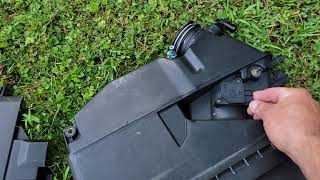
- Assuming a transmission problem. The rough running, hesitation, and engine vibrations caused by this code can sometimes feel like a transmission shudder or torque converter issue. 🎬 Watch: How this code can mimic a transmission shudder
Most Likely Causes
- Low or Dirty Engine Oil 🔴 High Probability The VVT-i system is hydraulic and relies on clean oil at the correct pressure to function. Sludge, low levels, or incorrect viscosity can prevent the VVT actuator from moving as commanded. This is the most common cause of VVT-related codes.
How to confirm: Check the engine oil dipstick. The oil should be at the full mark, have the correct viscosity (typically 5W-30), and look clean (not black and sludgy).
Typical fix: Perform an oil and filter change using a quality filter and the correct viscosity oil (5W-30).
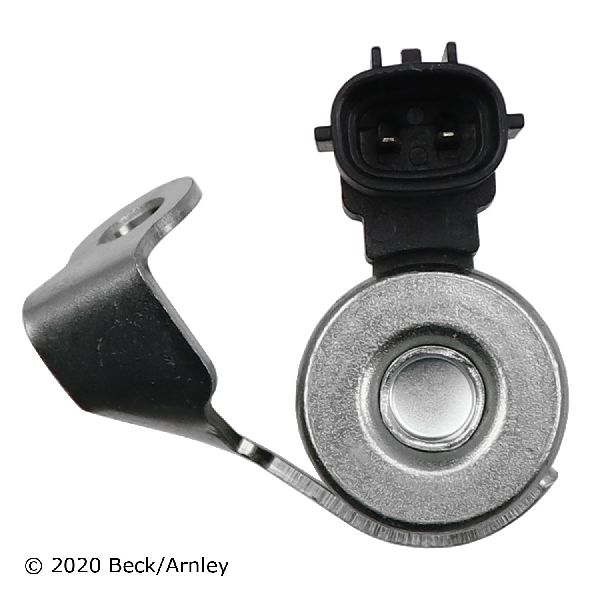
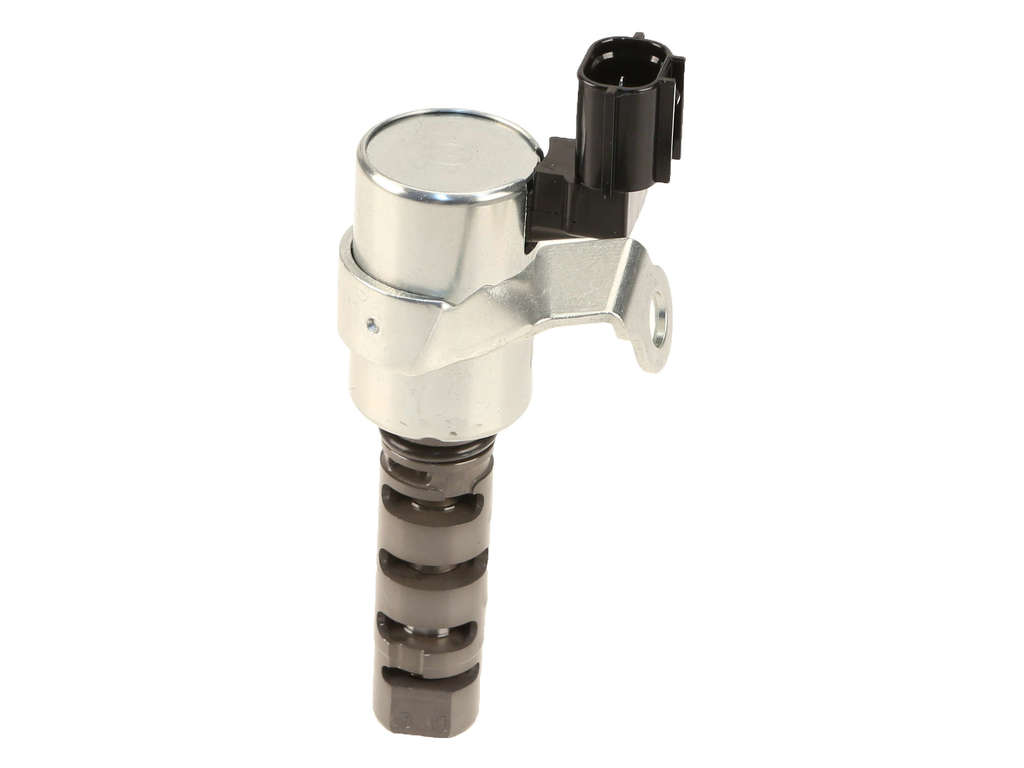
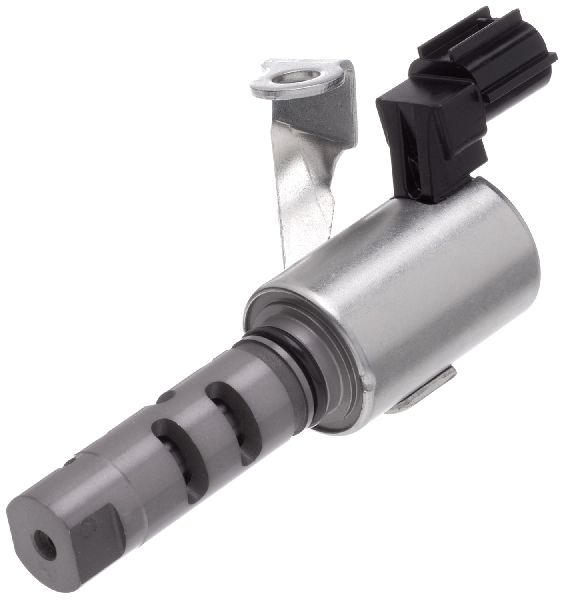
Est. part cost: $40-$80 - Faulty Bank 2 Oil Control Valve (OCV) / VVT Solenoid 🔴 High Probability → Shop Engine Variable Valve Timing (VVT) Solenoid This solenoid is the most common failure point for VVT-related codes on the 1GR-FE engine. It can become clogged with debris or fail electrically over time, causing it to stick.
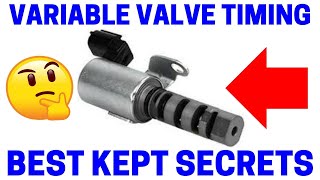
How to confirm: Swap the Bank 1 (passenger side) and Bank 2 (driver side) OCVs. They are identical parts. Clear the codes and drive. If the code changes to P0012 (Bank 1 Over-Retarded), the OCV is confirmed bad. You can also test the solenoid's resistance with a multimeter (should be 6.9-7.9 ohms at 68°F/20°C) or by applying 12V to see if the internal plunger moves. 🎬 See this tech tip for testing and cleaning the OCV
Typical fix: Replace the Bank 2 Oil Control Valve. It is recommended to use an OEM or Denso part.
Est. part cost: $70-$150 - Clogged OCV Filter Screen 🟡 Medium Probability A small, thimble-shaped mesh filter protects the OCV from debris in the oil. If oil changes are neglected, this screen can become clogged, starving the OCV of oil pressure.
How to confirm: Remove the Bank 2 OCV filter (a small bolt on the cylinder head near the OCV) and inspect it. It should be clean and free of sludge or debris. This is often done at the same time as OCV inspection.
Typical fix: Clean the filter with brake cleaner or replace it if damaged. It is a very inexpensive part (OEM P/N 15678-31010).
Est. part cost: $5-$15
Rare But Worth Checking
- Stretched Timing Chain: → Shop Engine Timing Chain At very high mileage (250k+ miles), the timing chain can stretch beyond the tensioner's ability to compensate, causing timing codes. This is less common but possible, and usually presents with rattling noises.
- Failed VVT-i Camshaft Actuator (Phaser): → Shop Engine Camshaft The gear assembly on the end of the camshaft can fail mechanically, getting stuck in one position. This is much less common than an OCV failure and a more expensive repair.
- Collapsed or Incorrectly Installed Oil Filter: → Shop Engine Oil Filter Adapter On these engines, a cartridge-style oil filter is used. If a low-quality or incorrect filter is used, or if the center support tube in the housing is missing, the filter can collapse, restricting oil flow and causing VVT codes.
- Clogged Oil Passage: In rare cases, especially in engines with a history of poor maintenance and sludge, an oil passage leading to the VVT actuator or camshaft can become blocked. This requires significant engine disassembly to diagnose and clear.
Diagnosis Steps
- Check the engine oil level and condition. If low, dirty, or overdue for a change, perform an oil and filter change with the correct 5W-30 oil. Clear the code and drive to see if it returns.
- Scan for any other DTCs to see if other issues are present.
- Locate the Bank 2 (driver's side) and Bank 1 (passenger's side) Oil Control Valves (OCVs). They are located on the front of each cylinder head and held in by a single 10mm bolt.
- Swap the two OCVs. They are identical parts and connectors. Clear the codes and drive the vehicle.
- If the code returns as P0012 (Bank 1), the OCV you moved is faulty and needs to be replaced. This is the most common outcome.
- If the code P0022 returns, the OCV is likely not the issue. The next step is to inspect the small OCV filter screen for Bank 2. It's located under a cap bolt near the OCV. Remove it, clean it thoroughly with brake cleaner, and reinstall or replace it. 🎬 Watch: Step-by-step guide to replacing the OCV filter screens
- If the filter is clean and the code persists, inspect the wiring and connector for the Bank 2 OCV for any damage, corrosion, or loose pins.
- If all of the above steps fail to resolve the issue, the problem may be more serious, such as a faulty VVT camshaft actuator (phaser) or a stretched timing chain, which requires more advanced mechanical diagnosis and likely professional help.
Parts You'll Likely Need
- Engine Variable Valve Timing (VVT) Solenoid / Oil Control Valve
(OEM #15340-0P010 (Supersedes 15340-31010))— This is the most common part to fail and cause code P0022 on the 1GR-FE engine.
Trusted brands: Denso (OEM supplier), Aisin, Toyota (Genuine)
OEM price range: $120-$180
Aftermarket price range: $50-$100 - VVT Solenoid Filter / Oil Control Valve Filter
(OEM #15678-31010)— This small screen can get clogged with sludge, especially if oil changes have been neglected, restricting oil flow to the VVT solenoid.
Trusted brands: Toyota (OEM)
OEM price range: $5-$15
Aftermarket price range: $3-$10
Related Codes That Often Appear With This One
- P0012 — If you swap the OCVs for diagnosis and the original P0022 moves to the other bank, you will see P0012 ('A' Camshaft Position - Timing Over-Retarded Bank 1).
Technical Service Bulletins (TSBs) & Recalls
- EG011-07: Addresses an intermittent no-start condition on some 2005-2007 Tacomas with the 1GR-FE by providing an ECM calibration update, showing a history of ECM logic refinement for this engine.
- T-SB-0044-14: While for 2012-2014 Tacomas, this TSB addresses spark knock by modifying ECM logic, indicating Toyota's adjustments to engine control parameters over time.
Platform-Specific Known Issues
- Access to Bank 2 OCV: Accessing the Bank 2 (driver's side) OCV can be slightly tight due to surrounding components like the air intake assembly. Removing the engine cover and air intake tube provides much better access.
Mechanic-Grade Diagnostic Values
- Oil Control Valve (OCV) Resistance — expected: 6.9 to 7.9 Ω at 20°C (68°F). Failure: A reading outside this range, or an open/short circuit, indicates a faulty solenoid coil.
- OCV Operation Check — expected: When 12V is applied to the terminals, the internal spool valve should move. You should hear a click.. Failure: No movement or a sluggish valve indicates it is stuck, likely due to internal debris or mechanical failure.
- Techstream Live Data: VVT Bank 2 Target vs. Actual Angle — expected: The 'VVT Angle (B2)' should closely follow the 'VVT Target Angle (B2)' during engine operation, especially when RPM changes.. Failure: A large, persistent lag between the target and actual angle confirms the over-retarded condition.
Scan Tool Commands That Help
- Toyota Techstream: Active Test: Control the VVT System (Bank 2) — This function allows a technician to command the Bank 2 OCV to operate while the engine is running. By observing live data for 'VVT Angle (B2)', you can confirm if the OCV and VVT phaser are mechanically capable of advancing the cam timing. If the angle changes on command, the OCV and phaser are likely working, and the issue may be related to oil pressure, filters, or wiring.
Wiring & Ground Locations
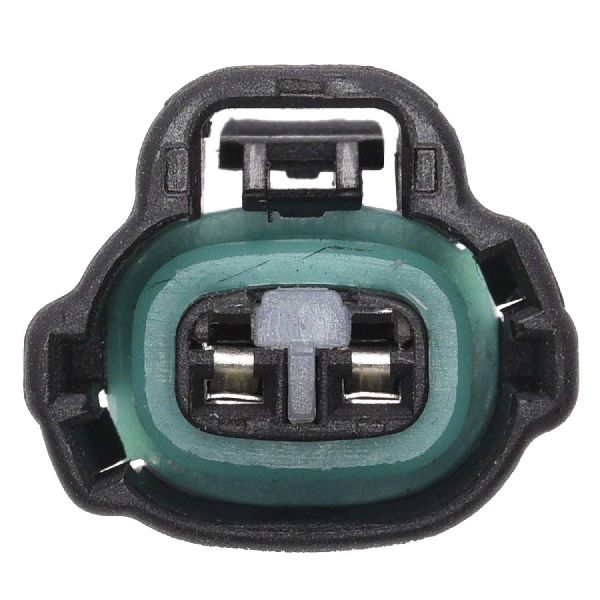
- Bank 2 OCV Connector (O8) — On the front of the driver's side cylinder head, connecting to the Oil Control Valve.. This is the direct electrical connection for the component that controls cam timing on Bank 2. Pin 1 receives a duty-cycled control signal from the ECM, and Pin 2 receives power. Checking for voltage, ground, and signal at this connector is a key diagnostic step.
- ECM Connector E6, Pin 24 (OC2+) — At the Engine Control Module (ECM), which is typically located in the passenger compartment.. This is the specific pin on the ECM that sends the control signal to the Bank 2 OCV. A continuity test between this pin and Pin 1 of the OCV connector can identify a break in the control wire.
- ECM Connector E6, Pin 12 (OC2-) — At the Engine Control Module (ECM).. This is the specific pin on the ECM that provides the ground path for the Bank 2 OCV. A continuity test between this pin and Pin 2 of the OCV connector can identify a break in the ground wire.
Real Owner Repair Stories
- TacomaWorld Forum Thread (Toyota Tacoma w/ 1GR-FE, 253,000 miles) — P0022 code would appear intermittently, about every 500-1000 miles after being reset. No noticeable driving symptoms other than the Check Engine Light.
❌ Tried (didn't work) An oil change with high-quality oil initially made the codes disappear for a while, but they eventually returned.
✅ What actually fixed it The user planned to replace the Bank 2 OCV as the next step, which is the standard, high-probability fix. The story highlights how even with good oil, a high-mileage OCV can begin to fail intermittently. - NHTSA ODI #10579431 (Toyota Tundra) — An owner reported that the check engine light came on with codes P0012 and P0022. A technician checked the operation of both VVT systems and found them working fine at that specific time, illustrating the intermittent nature of these timing performance issues.
OEM Part Supersession History
15340-31010→15340-0P010— Standard part revision and consolidation by Toyota.
Heads up: None. The new part number is a direct replacement for the old one.
Model Year Variations Within This Range
- 2003-2009: The 1GR-FE engine in this generation of 4Runner uses single VVT-i on the intake cams only. Later versions of the 1GR-FE (around 2010 and newer in other models) were updated to Dual VVT-i, which also controls the exhaust cams and uses different components. It's critical to ensure parts are for the single VVT-i engine.
Diagnostic Flowchart
Other Known Issues on This Vehicle
Issues unrelated to this code that are worth knowing about as an owner of this generation:
- Head Gasket Failure 🔴 High — Most prevalent on 2003-early 2006 models, often appearing between 120k-180k miles. Symptoms include unexplained coolant loss and gurgling sounds from the dash on startup.
- Frame Rust 🔴 High — Widespread issue, especially in salt-belt states. Can lead to structural failure of the frame, control arm mounts, and other components. A class-action lawsuit was filed, but unlike Tacoma/Tundra, 4Runners were not included in the major frame replacement programs. (Ref: Limited Service Campaign (LSC) was offered in some regions but has largely expired.)
- Seized Brake Calipers 🟠 Medium — Very common problem, particularly for the front calipers. Pistons inside the caliper corrode and stick, causing brake drag, pulling, a burning smell, and uneven pad wear.
- Cracked Exhaust Manifolds 🟠 Medium — Common on both V6 and V8 models. Develops cracks that cause an exhaust ticking noise, especially when the engine is cold. The noise may lessen as the metal heats up and expands.
- Cracked Dashboard 🟡 Low — Extremely common cosmetic issue where the dashboard material becomes brittle and develops large cracks, especially when exposed to sun/heat. A Warranty Enhancement Program (ZE6) was issued but has since expired. (Ref: Warranty Enhancement Program ZE6 (Expired))
Used vs. New Parts: Buying Guide for This Vehicle
When a used part is the smart pick: For the Oil Control Valve (OCV), a used part is generally not recommended. It is an electromechanical part prone to clogging and wear from oil contaminants. A used part may have the same issue or fail shortly after installation. Given the relatively low cost of a new, quality aftermarket or OEM part, buying new is the smarter choice.
Donor-vehicle mileage cap: roughly under 75000 miles for the part to have meaningful remaining life.
What to inspect on the donor part:
- If buying used is unavoidable, source from a vehicle with documented low mileage.
- Inspect the mesh screens on the valve; they should be perfectly clean and free of any sludge or debris.
- Ensure the electrical connector is not cracked or damaged.
- If possible, perform a resistance test (6.9-7.9 ohms) and a 12V activation test before purchase.
OEM-only on this vehicle (don't cheap out):
- VVT Solenoid Filter (P/N 15678-31010) - This part is extremely inexpensive from the dealer, and there is no reason to use an aftermarket or used version.
Aftermarket brands forum-validated for this vehicle:
- Denso (The original equipment manufacturer for Toyota)
- Aisin
Brands owners have reported issues with on this vehicle:
- Unbranded, no-name parts from online marketplaces are frequently reported by mechanics to have high failure rates or incorrect specifications.
- Dorman is often cited in forums as having inconsistent quality for electronic parts and solenoids compared to OEM/Denso.
Real Owner Stories
Aggregated from forums and TSBs cited above. Mileages and costs reflect what owners reported in those sources.
2005-2015 Toyota Tacoma 4.0L V6 (1GR-FE) — 253000 miles
Symptoms: Recurring P0022 code. The code disappeared temporarily after an oil change but eventually returned, leading to concerns about a stretched timing chain at high mileage.
What fixed it: Initial temporary resolution through an oil change, reinforcing the importance of oil condition for the VVT-i system.
Source hint: TacomaWorld: 'P0022, Risk of Timing Issues on 1GR-FE'
2005-2015 Toyota Tacoma 4.0L V6 (1GR-FE)
Symptoms: Engine vibration that felt exactly like a torque converter shudder.
What fixed it: Replacing the Oil Control Valve (OCV).
Source hint: YouTube: 'Tacoma P0022 Cam Code Fix and Torque Convertor Shudder Fix'
2005-2015 Toyota Tacoma 4.0L V6 (1GR-FE)
Symptoms: Persistent P0022 despite performing OCV swaps, installing a new VVT gear, checking timing, and performing oil pressure tests.
What fixed it: Deep diagnostic investigation into VVT activation with an external power source and checking for potential oil passage blockages.
Source hint: TacomaWorld: 'P0022 help! At a loss'
Related OBD-II Codes
Frequently Asked Questions
I'm feeling a vibration in my 2003-2009 4Runner that feels like a transmission shudder; could this be related to P0022?
Is there a simple way to test if my Bank 2 Oil Control Valve is actually bad before buying a new one?
What specific oil should I be using in my 4.0L V6 to prevent VVT-i codes like P0022?
I heard there is a small filter that gets clogged; where is it located on the 1GR-FE?
Does TSB EG011-07 apply to my 4Runner's P0022 code?
What is the part number for the OCV filter screen if I need to replace it?
Helpful Videos
We Have This Part in Stock


The information in this article is provided for general reference and educational purposes only. Vehicle specifications, procedures, and part compatibility can vary by production date, trim level, and region. Always consult your vehicle's factory service manual and verify part numbers before purchasing or performing repairs. Safety-critical components such as airbags, seat belts, and braking systems should be installed by a qualified professional.
- Toyota 4Runner:
- 🧭 Diagnostic Flowchart
- 🎬 Helpful Videos
- 🛍️ Shop This Part
- What's Unique About the 2003-2009 Toyota 4Runner
- Symptoms You May Notice
- Most Likely Causes
- Rare But Worth Checking
- Diagnosis Steps
- Parts You'll Likely Need
- Related Codes That Often Appear With This One
- Technical Service Bulletins (TSBs) & Recalls
- Platform-Specific Known Issues
- Mechanic-Grade Diagnostic Values
- Scan Tool Commands That Help
- Wiring & Ground Locations
- Real Owner Repair Stories
- OEM Part Supersession History
- Model Year Variations Within This Range
- Other Known Issues on This Vehicle
- Used vs. New Parts: Buying Guide for This Vehicle
- Real Owner Stories
- 2005-2015 Toyota Tacoma 4.0L V6 (1GR-FE) — 253000 miles
- 2005-2015 Toyota Tacoma 4.0L V6 (1GR-FE)
- 2005-2015 Toyota Tacoma 4.0L V6 (1GR-FE)
- Related OBD-II Codes
- Frequently Asked Questions
- 🎟️ Get 5% Off