

OBD-II Code P0023: Exhaust Camshaft Position Actuator Circuit Malfunction (Bank 2)
The Ultimate Expert Guide to Diagnosing and Fixing P0023
- P0023 flags a strict electrical failure in the Bank 2 exhaust VVT solenoid circuit, not a mechanical timing jump.
- Check your dipstick first; low or sludgy engine oil causes hydraulic VVT failures that trigger this code.
- Test the solenoid's resistance with a multimeter; a healthy VVT solenoid reads between 5 and 15 Ohms.
- Do not replace the 3-wire camshaft position sensor; P0023 specifically requires diagnosing the 2-wire oil control valve actuator.
What Does P0023 Mean?

P0023 is a generic OBD-II code signifying the Powertrain Control Module (PCM) detects an open or short circuit in the exhaust camshaft's oil control valve (OCV) on Bank 2. This OCV, or VVT solenoid, dynamically adjusts camshaft timing to optimize engine power and fuel efficiency. 'Bank 2' is the engine side without cylinder #1, and the 'B' camshaft universally designates the exhaust camshaft.
Technical definition: The SAE/OBD-II definition is "Exhaust 'B' Camshaft Position Actuator Circuit (Bank 2)". The PCM triggers this code when it commands a timing change but detects the actuator's control circuit voltage or resistance falls outside the specified range. This indicates a broken wire, a short to ground, or a short to power. For example, Ford sets the code if the commanded and actual electrical states mismatch for 5 seconds, while Toyota flags it for excessively high or low duty cycles.
Can I Drive With P0023?

Yes, But With Caution. You can physically drive the vehicle, but it is strongly discouraged. Continuing to drive with an active P0023 code causes poor engine performance, rough idling, stalling, and a sharp decrease in fuel economy. More critically, a shorted circuit causes irreversible damage to the Powertrain Control Module (PCM). Prolonged operation with incorrect timing leads to incomplete combustion, overheating and damaging the catalytic converter—a repair costing between $800 and $2500.
Common Causes

- Faulty Camshaft Oil Control Valve (VVT Solenoid) (Very Common) — The solenoid is an electromagnet that fails internally. The coil winding develops an open circuit (a break) or a short circuit, preventing operation. This is the most frequent culprit for a P0023 code.
- Low, Dirty, or Incorrect Viscosity Engine Oil (Very Common) — The hydraulic VVT system requires precise oil pressure. Low oil levels, degraded oil, or incorrect viscosity impedes the solenoid's mechanical movement, causing the PCM to flag a circuit fault as it struggles to control the valve.
- Wiring Harness or Connector Damage (Common) — Electrical wiring leading to the solenoid degrades from heat and vibration. Wires fray, short to ground, or corrode. The connector itself suffers from bent pins, loose connections, or oil contamination, disrupting the electrical signal.
- Engine Sludge and Clogged VVT Filter Screens (Common) — Extended oil change intervals cause oil to break down into thick sludge. This sludge blocks narrow oil passages and clogs the small mesh filters protecting the solenoids (often located in banjo bolts or at the solenoid base), restricting oil flow and triggering VVT codes.
- Failed Camshaft Phaser (Less Common) — While P0023 is an electrical code, a mechanically stuck camshaft phaser causes erratic behavior. The PCM interprets the inability to control the stuck phaser as a circuit fault, though this usually triggers performance codes like P0024 simultaneously.
- Worn Timing Components (Chain, Guides, Tensioners) (Less Common) — A stretched timing chain or failing hydraulic tensioner alters the camshaft's base timing. The VVT system operates so far out of its expected range that the PCM flags a related circuit fault.
- Faulty Powertrain Control Module (PCM) (Rare) — The internal driver circuit within the PCM that controls the solenoid fails in rare instances. Consider this only after definitively ruling out the solenoid, wiring, and oil issues through testing.
Symptoms
- Check Engine Light (MIL) is On — The PCM illuminates the Malfunction Indicator Lamp (MIL) as soon as the electrical fault is detected and verified, often in a single drive cycle.
- Rough Idle and Stalling — With the exhaust camshaft in an incorrect or fixed position, combustion is inefficient at low speeds, causing a rough, unstable idle or stalling when stopping.
- Reduced Engine Power and Hesitation — The engine feels sluggish during acceleration. The VVT system fails to provide optimized power, resulting in a noticeable lack of responsiveness.
- Decreased Fuel Economy — An inefficiently operating engine burns more fuel. A malfunctioning VVT system causes a 10-20% drop in gas mileage because valve timing is not optimized for cruising.
- Hard Starting — A failed solenoid leaving the camshaft in an advanced or retarded position disrupts the normal compression and ignition sequence, making the engine difficult to start.
- Rattling or Ticking Engine Noise — Low oil pressure or a failing phaser produces a metallic rattling or ticking sound from the top of the engine.
- Failed Emissions Test (also visible on scanner) — Incorrect exhaust valve timing directly increases emissions of NOx and other pollutants, guaranteeing an emissions inspection failure.
Diagnostic Flowchart
Tap your situation to follow the diagnostic path that matches what you're seeing on this code.
Common Fixes & Costs
- Engine Oil and Filter Change — Parts: $40-$100, Labor: $50-$125, ~0.5 hr book time (DIY)
- Replace Camshaft Oil Control Valve (VVT Solenoid)
— Parts: $50-$250, Labor: $100-$250, ~1.2 hr book time
(DIY)
: OEM
: OEM
: OEM - Clean or Replace VVT Filter Screens — Parts: $5-$30, Labor: $75-$200, ~0.8 hr book time (DIY)
- Repair or Replace Wiring/Connector — Parts: $15-$60, Labor: $150-$400, ~2.5 hr book time (Intermediate)
- Replace Powertrain Control Module (PCM) — Parts: $600-$2000, Labor: $150-$300, ~1.5 hr book time (Professional)
Used vs. New Parts: Buying Guide
When a used part is worth it: Buying a used VVT solenoid is not recommended due to the low cost of new aftermarket parts and the high cost of repeat labor. Consider it only in an emergency for a very old, low-value vehicle.
Donor-vehicle mileage cap: roughly under 50000 miles for the part to have meaningful remaining life.
Donor quality checklist:
- Verify the donor vehicle did not have engine sludge.
- Ensure the part number is an exact match.
- Check the electrical connector for corrosion.
Decision logic:
- If The cost of a new OEM or reputable aftermarket solenoid is less than $150. → Always buy new. Savings from a used part are not worth the risk of premature failure.
- If The vehicle is over 15 years old or has more than 150,000 miles and you are doing the repair yourself. → A warrantied used part from a reputable salvage yard is an acceptable budget choice.
- If You are paying a shop for the repair. → Buy a new part with the longest possible warranty to protect your investment in labor costs.
Warranty tradeoff: Used parts offer a 30-90 day warranty. New aftermarket parts come with a 1-year to limited lifetime warranty. New OEM parts carry a 1-year/12,000-mile warranty.
Worst-case if a used part fails: $250-$500 if a used solenoid fails after installation, requiring a second replacement part plus repeat labor charges.
What Happens If You Wait — Timeline
- 0-1 month: Check Engine Light is on. Driver notices a rough idle, slight hesitation on acceleration, and a drop in fuel economy. (MPG impact: 5-10%% · Added cost: $25-75 in wasted fuel)
- 1-3 months: Symptoms become pronounced. Stalling at stops is frequent. The engine runs rich with unburnt fuel entering the exhaust. (MPG impact: 10-20%% · Added cost: $75-200 in wasted fuel)
- 3-6 months: Unburnt fuel overheats and damages the catalytic converter's internal structure. Risk of damage to the PCM's internal driver circuit increases if the fault is a short. (MPG impact: 15-25%% · Added cost: $800-$2500 for catalytic converter replacement)
- 6+ months: Catastrophic failure is possible. The catalytic converter becomes completely clogged. On interference engines, prolonged incorrect timing leads to chain failure and severe engine damage. (MPG impact: >25%% · Added cost: $2000-$5000+ for combined catalytic converter, PCM, and major engine timing repairs)
Cost of Not Fixing It
- 0-1 Month: Noticeable drop in fuel economy (10-20%), rough idle, and engine hesitation. Failed emissions test is guaranteed. (Added cost: $50-$100 in wasted fuel.)
- 1-6 Months: Increased risk of overheating the catalytic converter due to unburnt fuel, leading to permanent damage. (Added cost: $1,200-$3,500 for catalytic converter replacement.)
- 6+ Months: A short circuit damages the PCM driver circuit. Prolonged incorrect timing contributes to increased wear on timing chains and guides. (Added cost: $1,000-$2,500 for a PCM replacement or several thousand for timing chain repairs.)
Diagnosis Steps

- Check Engine Oil Level and Condition
Pull the dipstick and check the oil. Low, black, sludgy, or incorrect viscosity oil causes the entire VVT system to fail. An oil change is often the fix itself.
Tools: Rag (Beginner) - Scan for Other Codes and Review Freeze Frame Data
Use an OBD-II scanner to check for codes like P0024, P0013, or P0365. Review freeze frame data to identify engine conditions (RPM, temperature, load) when P0023 triggered.
Tools: OBD-II Scanner (Beginner) - Visual Inspection of Wiring and Connector
Locate the Bank 2 exhaust VVT solenoid. Inspect the electrical connector for corrosion, pushed-out pins, or oil saturation. Trace the wiring harness for fraying, melting, or chafing.
Tools: Flashlight (Beginner) - Test the Solenoid's Resistance
Disconnect the solenoid. Set a multimeter to Ohms (Ω). Measure resistance between the two solenoid pins. Most VVT solenoids read between 5 and 15 ohms (e.g., Toyota specifies 6.9-7.9 Ω at 68°F). A reading of infinity (OL) means an open circuit; near zero means a short. Both require replacement.
Tools: Multimeter (Intermediate) - Check for Voltage and Ground at the Connector
Turn the ignition 'On' (engine off). On the harness connector, use a multimeter set to DC Volts. One pin must have battery voltage (approx. 12.6V). The other pin is the PCM ground control; check for less than 1.0V on this wire during active command to verify circuit integrity.
Tools: Multimeter (Intermediate) - Swap Solenoids (If Applicable)
If Bank 1 and Bank 2 solenoids are identical and accessible, swap them. Clear codes and run the engine. If a P0013 (Bank 1 equivalent) appears, the solenoid is definitively faulty.
Tools: Basic hand tools (socket set, wrenches) (Intermediate) - Check Minimum Oil Pressure
Connect a mechanical oil pressure gauge. Oil pressure must exceed 20-25 PSI at idle at operating temperature. Low pressure indicates a larger engine problem (e.g., worn oil pump) preventing VVT operation.
Tools: Mechanical Oil Pressure Gauge, Basic Hand Tools (Advanced) - [PRO TIP] Active Command with a Bidirectional Scanner
Graph the Bank 2 Camshaft Position Sensor data (PID: CAM_POS_B2) while commanding the VVT solenoid on and off (0% to 25% duty cycle). The camshaft angle must change. If the solenoid clicks but the angle doesn't change, the issue is mechanical. If it doesn't click and circuits test good, the solenoid is faulty.
Tools: Bidirectional OBD-II Scanner (Professional) - [PRO TIP] Oscilloscope Waveform Analysis
Connect an oscilloscope to the solenoid's control wire and ground. With the engine running, verify a square wave (duty cycle signal) from the PCM. A flat line indicates no signal or a short. A noisy waveform indicates a failing PCM driver or circuit interference.
Tools: Oscilloscope (Professional)
When This Code Triggers (Freeze-Frame Conditions)
- Engine Coolant Temp: 185-210°F (85-99°C) (Engine at full operating temperature.)
- Engine RPM: 1200-3000 RPM (During light acceleration or steady-state cruise when the VVT system actively adjusts timing.)
- Engine Load: 25-70% (The engine is under a moderate load, not at idle or full throttle.)
- Vehicle Speed: 30-60 mph (48-97 km/h) (Occurs during city or highway driving as the PCM commands timing changes for fuel efficiency.)
Related Codes
- P0024 — P0023 is an electrical circuit code, while P0024 is a mechanical performance code. The electrical fault (P0023) prevents PCM control, causing the camshaft phaser to stick and trigger the performance code (P0024). Always diagnose P0023 first.
- P0013 — This is the identical electrical fault for Bank 1. If both P0013 and P0023 are set, suspect systemic issues like extremely low/sludgy oil, a blown shared fuse, or widespread wiring damage.
- P0365 / P0369 — These refer to the Camshaft Position Sensor 'B' Circuit on Bank 2. P0023 points to the 2-wire actuator (solenoid) moving the cam, while P0365/P0369 point to the 3-wire sensor reading its position. Diagnose them separately.
- P0009 — Indicates a misalignment between the crankshaft and Bank 2 camshafts. On GM 3.6L V6 engines, P0009 strongly indicates a stretched timing chain. Severe timing deviation can trigger P0023 alongside it.
Climate & Environmental Factors
- Extreme Cold Weather: Cold temperatures increase oil viscosity. Incorrect or old oil becomes too thick on a cold start for the VVT system to operate, triggering a circuit or performance code as the PCM struggles to move the phaser.
- High Humidity / Salt Belt Regions: Moisture and road salt accelerate corrosion on exposed VVT solenoid connectors, creating high resistance or an open circuit that directly causes a P0023 code.
- High Altitude: Altitude does not directly cause a P0023 electrical fault, but it affects overall engine performance, unmasking pre-existing or borderline VVT system issues.
How to Talk to a Mechanic About This Code
Say this: "I have a P0023 code on my vehicle and I'd like to schedule a diagnostic appointment. Based on the symptoms, I suspect it's either the VVT solenoid, a wiring issue, or an oil pressure problem. Please start by checking the oil and testing the solenoid and its connector before recommending major parts."
This signals you've done your research and guides the technician toward the most likely, and often cheapest, fixes first. It discourages 'shotgunning' parts and prevents an immediate upsell.
Avoid saying:
- 'My check engine light is on, can you just fix it?'
- 'I think I need a new camshaft sensor.'
- 'Just do whatever you think is best.'
Questions to ask before authorizing the repair:
- Did you test the solenoid's resistance, and what was the Ohm reading?
- Did you confirm there is 12-volt power and a good ground signal at the solenoid connector?
- If you are recommending a solenoid replacement, what is the warranty on the part and your labor?
- Have you checked for any technical service bulletins (TSBs) related to this code for my specific vehicle?
Where to Take It: Dealer vs Independent vs Chain
- Dealer:
Best for: Vehicles still under a powertrain or emissions warranty., Complex, manufacturer-specific VVT systems (e.g., BMW VANOS, Audi Valvelift)., If a previous shop failed to diagnose the problem correctly.
Downsides: Highest labor rates, typically 1.5-2x more than independent shops., May recommend replacing more parts than necessary as a precaution. (Typical cost: +50% vs. baseline) - Independent Shop:
Best fit for most situations. P0023 is a common code that any competent independent mechanic diagnoses and repairs effectively.
Best for: Most out-of-warranty vehicles., Common domestic and Japanese makes where P0023 is a well-understood issue., Vehicle owners looking for the best balance of cost and quality.
Downsides: Diagnostic skill varies; choose a shop with good reviews and ASE-certified technicians., May lack immediate access to highly specialized tools for certain European brands. (Typical cost: +0% vs. baseline) - Chain Shop:
Use with caution. Acceptable for a basic oil change or if you are certain the solenoid is the issue and it's easily accessible. AVOID for complex electrical diagnosis.
Best for: An initial, often free, code scan., Performing a simple oil and filter change if you suspect that's the cause.
Downsides: Technicians often work on commission, leading to high pressure to upsell unnecessary services., Skill level for electrical diagnostics is inconsistent; they may replace parts without proper testing. (Typical cost: -10% vs. baseline)
When to Walk Away From the Repair
If the estimated repair cost for the P0023 fault and any related issues exceeds 40-50% of your car's private-party value, seriously consider selling or trading it in.
- Car worth $4000, fix is $2000: Walk away. A $2000 repair on a $4000 car is not a good investment, especially if it points to a larger issue like timing chains.
- Car worth $12000, fix is $600: Fix it. A $600 repair for a common VVT solenoid is well below the threshold and is a reasonable cost to keep a valuable car running well.
- Car worth $2500, fix is $1500: Walk away. The repair cost is 60% of the car's value. It's time to cut your losses.
What Scan Tool You Need for This Code
Minimum: A basic code reader that reads and clears engine fault codes and displays live data for engine RPM and temperature.
A $20 code reader only gives you the P0023 code. To properly diagnose the issue, you need live data to confirm engine operating temperature and freeze frame data to see conditions when the code set.
Budget: BlueDriver Pro (~$100) — Connects to your smartphone via Bluetooth. It reads and clears the P0023 code, views freeze frame data, and graphs live data streams to confirm if an oil change or part swap fixed the issue.
Mid-range: Foxwell NT510 Elite (~$180) — Offers bidirectional control. This allows you to directly command the VVT solenoid to turn on and off. If you hear the solenoid click but engine performance doesn't change, it points to a mechanical or oil pressure issue, saving significant diagnostic time.
Professional: Autel MaxiCOM MK808 / MK900 (~$500-700) — Offers full bidirectional control, extensive live data graphing, and access to manufacturer-specific codes. They perform advanced active tests invaluable for tracking down intermittent wiring faults or confirming a faulty PCM driver.
Rent vs buy: Auto parts stores scan codes for free. However, to properly diagnose P0023, you must clear the code and see if it returns after a repair. Buying a budget-friendly scanner like the BlueDriver is a worthwhile investment.
How to Clear the Code After You Fix It
- Use an OBD-II scan tool to clear the P0023 fault code.
- Start the engine and let it idle for 2-3 minutes to verify the immediate return of the code.
- Perform a complete drive cycle to allow the vehicle's readiness monitors to run.
Drive cycle (~20 minutes): Start the engine cold. Idle for 2-3 minutes. Drive in stop-and-go traffic for 5 minutes with smooth acceleration. Drive at a steady highway speed (55 mph) for 5-10 minutes. Coast down to 20 mph without braking before stopping.
Readiness monitors affected: Catalyst Monitor, Oxygen (O2) Sensor Monitor, Evaporative (EVAP) System Monitor
Before emissions retest: drive at least 50 miles to fully set monitors.
Watch out for:
- Disconnecting the battery clears the code but resets all readiness monitors, guaranteeing an emissions test failure until a full drive cycle is completed.
- The code returns immediately if the underlying electrical fault (bad solenoid, broken wire) was not properly fixed.
Will This Fail Emissions / State Inspection?
Yes — this code typically fails an OBD-II emissions inspection.
- California: An illuminated Check Engine Light is an automatic failure. After repair, the vehicle passes with at most one 'Not Ready' monitor (excluding the Catalyst monitor).
- New York: The NYS DMV inspection includes an OBD-II scan. An active P0023 code causes an automatic failure.
- Texas: In the 17 counties requiring emissions testing, an illuminated Check Engine Light results in an automatic failure. For vehicles 2001 and newer, one 'Not Ready' monitor is permitted.
Most Commonly Affected Vehicles
- General Motors (GM) Equinox, Traverse, Acadia, Camaro (with 3.6L V6) (2008-2017) — Highly susceptible to issues from extended oil change intervals. The 3.6L LFX engine is known for timing chain stretch. Special Coverage N182189940 extends warranty to 10 years/120,000 miles for related codes on some models.
- Hyundai / Kia Sonata, Santa Fe, Sorento, Optima (with 2.4L Theta II & 3.3L/3.8L Lambda engines) (2011-2019) — Solenoid failure is common. Some Theta II engines were subject to recalls for engine debris issues that clog oil passages and affect the VVT system.
- Nissan Altima, Murano, Pathfinder, Maxima (with VQ35DE & VQ37VHR V6 engines) (2007-2018) — Often caused by the oil control valve itself. Low oil levels exacerbate the problem. The OEM part number has several revisions (e.g., 23796-EA000).
- BMW 3 Series (E90), 5 Series (E60), X3 (E83), X5 (E70) (N52, N54, N55 engines) (2005-2015) — The fault is almost always a failed VANOS solenoid. They are often replaced in pairs. BMW issued a 10-year/unlimited mileage warranty extension (SI B01 10 14) for VANOS units on some models.
- Subaru Forester, Outback, Impreza (with EJ25 engine) (2006-2014) — A primary point of failure is the tiny filter screen inside the banjo bolts feeding oil to the AVCS system. These clog easily and must be removed or replaced.
- Toyota / Lexus Camry, RAV4, Highlander, ES350, RX350 (with 2GR-FE V6 engine) (2007-2017) — Failure is often due to a faulty solenoid or a clogged filter screen at the valve base. The specified resistance is very precise (e.g., 6.9-7.9 Ohms at 68°F).
- Ford F-150, Mustang, Explorer (with 5.0L 'Coyote' V8 & 3.5L EcoBoost V6) (2011-2018) — Ford's VCT system is sensitive to oil condition. The code sets after the PCM sees a command/actual state mismatch for 5 continuous seconds.
- Honda / Acura Accord, CR-V, Pilot, MDX (with J-series V6 & K-series I4 engines) (2008-2017) — The VVT solenoid is often part of the VTEC spool valve assembly. Oil leaks from the spool valve gasket lead to low oil pressure issues triggering VVT codes.
Manufacturer-Specific Notes
- General Motors (GM): Oil sludge from extended oil life monitor intervals is a primary cause of solenoid failure. GM issued Special Coverage N182189940 extending the solenoid warranty to 10 years/120,000 miles on specific engines.
- Subaru: The small filter screen inside the banjo bolts supplying oil to the AVCS system clogs easily. Mechanics routinely remove these filters during service to prevent future oil starvation.
- Ford: Ford sets this code if the PCM's commanded state for the VCT solenoid mismatches the actual electrical state for a continuous 5-second period, pointing directly to an electrical failure.
- BMW: BMW's VANOS system is prone to solenoid failure. The company addressed related issues with an extended warranty (SI B01 10 14) and a safety recall (23V-707) for bolts that loosen or break.
Real Owner Stories
Subaru WRX - Solenoid Swap Confirms Failure
A Check Engine Light appeared during normal driving, revealing code P0023.
What they tried:
- The owner swapped the exhaust solenoid with the intake solenoid on the same engine bank.
- After clearing codes and restarting, a new code appeared for the intake solenoid circuit.
Outcome: The fault code moved with the solenoid, confirming the part was bad. Replacing it with a $150 OEM solenoid resolved the issue.
Lesson: Swapping identical intake and exhaust solenoids is a definitive, zero-cost diagnostic test to confirm a bad solenoid before buying parts.
2006 Lexus IS350 - Misdiagnosis After DIY Repair
After a DIY spark plug change, the Check Engine Light illuminated with code P0023 and occasional hard starting.
What they tried:
- The owner incorrectly assumed the camshaft position sensor failed.
- Forum members pointed out P0023 is an actuator circuit code and suggested checking the wiring harness disturbed during the spark plug job.
Outcome: The root cause was an unplugged harness connector for the oil control valve. Re-seating the connector resolved the code.
Lesson: If a code appears immediately after a repair, re-trace your steps. A connector was likely left unplugged or a wire stressed.
2011 GMC Acadia 3.6L V6 - Ignored Symptoms Lead to Major Failure
The vehicle arrived at a shop in a no-start condition after displaying 'Engine Power Reduced' and codes P0021 and P0023 for weeks.
What they tried:
- The owner continued driving, ignoring warning lights and symptoms.
Outcome: Teardown revealed extreme timing chain slack. The camshaft moved by hand without the chain moving, indicating complete timing system failure caused by running on low/dirty oil. The repair required a full timing chain and phaser replacement.
Lesson: P0023 on a GM 3.6L engine, especially with rattling noises, is a serious warning. Ignoring it turns a simple oil or solenoid issue into a multi-thousand-dollar engine repair.
Subaru Forester - The Infamous Clogged Banjo Bolt Filter
A P0023 code indicated a fault with the exhaust AVCS (VVT) on Bank 2.
What they tried:
- After confirming the solenoid was electrically sound, the mechanic inspected the oil supply line.
- The mechanic removed the banjo bolt feeding the AVCS solenoid.
Outcome: The tiny mesh filter screen inside the banjo bolt was completely clogged with sludge, starving the solenoid. Removing the $9 filter and flushing the oil resolved the code.
Lesson: On Subaru EJ-series engines, always check the banjo bolt filters for AVCS codes. Proactively removing these filters during service prevents this failure.
How to Prevent This Code From Triggering
- Perform regular oil changes with high-quality synthetic oil (Every 5,000-7,500 miles) — Prevents engine sludge formation, the primary cause of clogged VVT filter screens and stuck solenoid valves.
- Use OEM or high-quality VVT solenoids for replacement (When replacement is needed) — Cheap aftermarket solenoids have high failure rates and fail to meet precise electrical resistance specifications, causing the code to return.
- Apply dielectric grease to VVT solenoid connectors (During any service where the connector is unplugged) — Seals the connector from moisture and road salt, preventing corrosion that causes high resistance or open circuits.
- Perform an engine flush before replacing VVT components (If sludge is suspected or found) — Dissolves sludge and clears oil passages, ensuring the new VVT solenoid is not immediately contaminated by pre-existing blockages.
Frequently Asked Questions
What is the most common misdiagnosis for a P0023 code?
The most common mistake is replacing the Camshaft Position Sensor instead of the Camshaft Position Actuator (Oil Control Valve/Solenoid). P0023 is strictly an actuator circuit code.
Can I just clean the VVT solenoid to fix P0023?
Sometimes, yes. If the solenoid is mechanically stuck due to sludge but is electrically intact, you can clean it with brake cleaner. However, if the solenoid fails the resistance test (typically outside 5-15 Ohms), it has failed internally and cleaning will not fix the electrical fault.
What is the difference between P0023 and P0024?
P0023 is an electrical circuit code indicating a problem with the solenoid or its wiring (e.g., open or short). P0024 is a mechanical performance code indicating the camshaft timing is stuck in an over-advanced position. The electrical fault in P0023 is usually the cause of the mechanical problem reported by P0024.
How much does it cost to fix code P0023?
An oil change costs $80-$200 and fixes many cases. The most common repair, replacing the VVT solenoid, costs between $150 and $500 for parts and labor. A diagnostic fee of $100-$150 is also standard to pinpoint the exact cause.
What is Bank 2 and the 'B' camshaft?
On a V-style engine, Bank 2 is the side of the engine that does not contain cylinder #1. The 'B' camshaft consistently refers to the exhaust camshaft.
Can using the wrong oil cause a P0023 code?
Absolutely. The VVT system relies on precise hydraulic pressure; oil that is too thick or too thin prevents the solenoid from reacting as the PCM expects, triggering a fault code.
Will a P0023 code cause a misfire?
Yes. Incorrect exhaust valve timing traps exhaust gases in the cylinder, disrupting the air/fuel mixture and causing incomplete combustion that triggers misfire codes like P0300.
Key Takeaways
- P0023 flags a strict electrical failure in the Bank 2 exhaust VVT solenoid circuit, not a mechanical timing jump.
- Check your dipstick first; low or sludgy engine oil causes hydraulic VVT failures that trigger this code.
- Test the solenoid's resistance with a multimeter; a healthy VVT solenoid reads between 5 and 15 Ohms.
- Do not replace the 3-wire camshaft position sensor; P0023 specifically requires diagnosing the 2-wire oil control valve actuator.
Shop the Parts Behind P0023
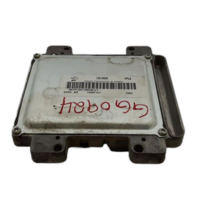
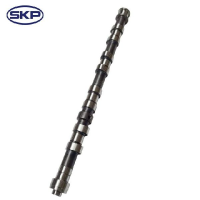
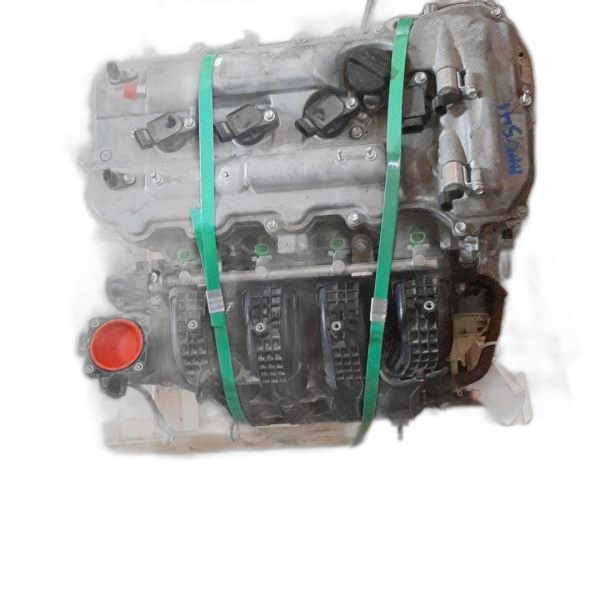
Below are the parts most often responsible for code P0023, ranked by how frequently each one is the actual culprit (per the diagnosis above). Tap any to see what we have for your vehicle.

The information in this article is provided for general reference and educational purposes only. Vehicle specifications, procedures, and part compatibility can vary by production date, trim level, and region. Always consult your vehicle's factory service manual and verify part numbers before purchasing or performing repairs. Safety-critical components such as airbags, seat belts, and braking systems should be installed by a qualified professional.
- 🧭 Diagnostic Flowchart
- 🛍️ Shop This Part
- What Does P0023 Mean?
- Can I Drive With P0023?
- Common Causes
- Symptoms
- Common Fixes & Costs
- Used vs. New Parts: Buying Guide
- What Happens If You Wait — Timeline
- Cost of Not Fixing It
- Diagnosis Steps
- When This Code Triggers (Freeze-Frame Conditions)
- Related Codes
- Climate & Environmental Factors
- How to Talk to a Mechanic About This Code
- Where to Take It: Dealer vs Independent vs Chain
- When to Walk Away From the Repair
- What Scan Tool You Need for This Code
- How to Clear the Code After You Fix It
- Will This Fail Emissions / State Inspection?
- Most Commonly Affected Vehicles
- Manufacturer-Specific Notes
- Real Owner Stories
- Subaru WRX - Solenoid Swap Confirms Failure
- 2006 Lexus IS350 - Misdiagnosis After DIY Repair
- 2011 GMC Acadia 3.6L V6 - Ignored Symptoms Lead to Major Failure
- Subaru Forester - The Infamous Clogged Banjo Bolt Filter
- How to Prevent This Code From Triggering
- Frequently Asked Questions
- What is the most common misdiagnosis for a P0023 code?
- Can I just clean the VVT solenoid to fix P0023?
- What is the difference between P0023 and P0024?
- How much does it cost to fix code P0023?
- What is Bank 2 and the 'B' camshaft?
- Can using the wrong oil cause a P0023 code?
- Will a P0023 code cause a misfire?
- Key Takeaways
- 🎟️ Get 5% Off