

P0023 on 2010-2016 Hyundai Genesis Coupe 3.8L: Exhaust Cam Actuator Circuit Fixes
This code is most often caused by a failed exhaust camshaft oil control valve (OCV) on Bank 2 (driver's side). Expect to pay $45-$125 for the part. It's a common DIY fix that involves swapping the accessible solenoid on the front of the engine. Ensure you are replacing the EXHAUST valve, not the intake valve.
- P0023 points to an electrical fault in the exhaust camshaft oil control valve (OCV) circuit on the driver's side (Bank 2).
- The most common fix is replacing the faulty OCV solenoid. A simple 'swap test' with the passenger side exhaust OCV can confirm the diagnosis.
- Ensure you are replacing the correct part; the EXHAUST OCV (e.g., 24360-3C811) is different from the INTAKE OCV (e.g., 24355-3C100).
- Always check your engine oil level and condition first. Low or dirty oil is a frequent cause of CVVT system problems.
- This is a DIY-friendly repair for most home mechanics, requiring basic hand tools.
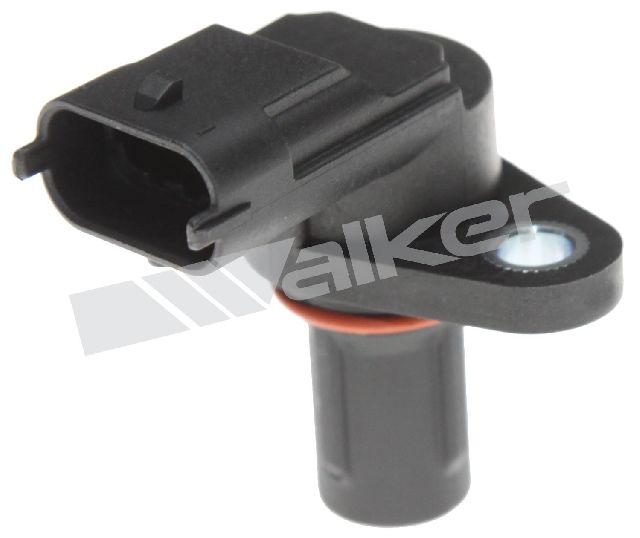
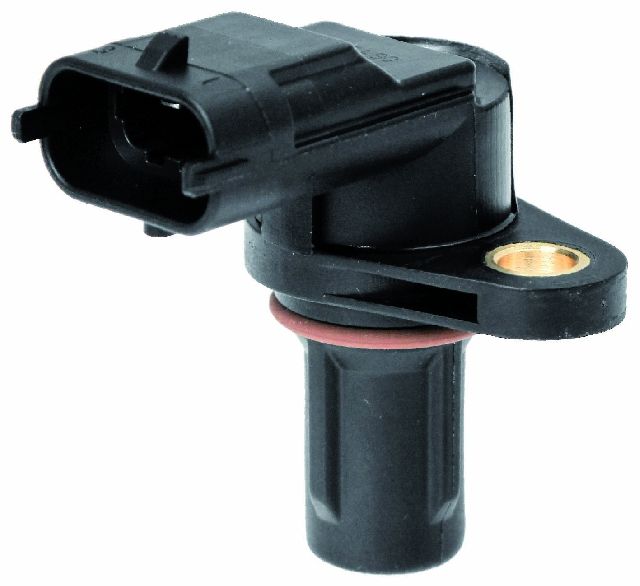
- Do not confuse the OCV (actuator) with the camshaft position sensor; they are different parts.
What's Unique About the 2010-2016 Hyundai Genesis Coupe
The Lambda II V6 engine relies heavily on its Dual-CVVT (Continuously Variable Valve Timing) system for performance and efficiency. This system uses four oil control valves (OCVs), one for each camshaft (Intake and Exhaust on both banks). Code P0023 isolates the issue to the exhaust OCV on the driver's side. These valves are a known failure point across many Hyundai/Kia models with this engine family. While the 2010-2012 (BK1) and 2013-2016 (BK2 with GDI) models have different engine specifics, the function, location, and failure mode of these OCVs are very similar.
Generation note: This guide covers both the BK1 (2010-2012) and BK2 (2013-2016) generations of the Genesis Coupe 3.8L. The fundamental cause and fix for P0023 are the same for both, as they use a similar CVVT system and oil control valve design. Part numbers may vary slightly, so always verify with your vehicle's VIN.
Symptoms You May Notice
- Check Engine Light is on
- Rough or unstable idle
- Hesitation or stumbling on acceleration
- Reduced engine power
- Worse fuel economy
- Engine may stall in some cases
- Replacing the camshaft position sensor. P0023 is a circuit code for the actuator (the OCV), not the sensor that reads the camshaft's position. While they work together, a circuit code points directly to the actuator or its wiring.
- Replacing the wrong OCV. The engine has four OCVs (Intake/Exhaust for each bank). P0023 specifically refers to the Bank 2 EXHAUST valve. Accidentally replacing the intake valve will not solve the problem.
Most Likely Causes
- Failed Exhaust Oil Control Valve (OCV) on Bank 2 🔴 High Probability The OCV is an electronic solenoid that lives in a high-heat environment and is sensitive to oil contamination. It's a common failure item on many modern engines, including the Hyundai Lambda series.
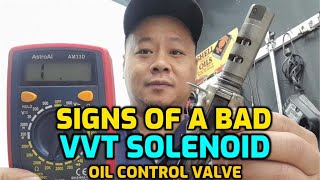
How to confirm: Swap the Bank 2 exhaust OCV (driver's side) with the Bank 1 exhaust OCV (passenger's side). Clear the codes and drive. If the code changes to P0013 ('B' Camshaft Position Actuator Circuit / Open Bank 1), the OCV is confirmed bad. You can also test the resistance of the solenoid with a multimeter; it should be between 6.9 and 7.9 ohms. 🎬 See how to test if your VVT solenoid is still working properly. An out-of-spec reading indicates a failed solenoid.
Typical fix: Replace the faulty Oil Control Valve. Be certain you are replacing the exhaust OCV, as the intake and exhaust OCVs are separate parts.
Est. part cost: $45-$125 - Low or Dirty Engine Oil 🟡 Medium Probability The CVVT system is entirely dependent on clean oil of the correct viscosity and pressure to function. Neglecting oil changes can cause sludge to build up and clog the small passages in the OCVs, triggering a fault.
How to confirm: Check the engine oil dipstick. Note the level and the condition of the oil. If it is low, black, or sludgy, this is likely a contributing factor.
Typical fix: Perform an oil and filter change using a high-quality synthetic oil that meets manufacturer specifications. Using an OEM Hyundai oil filter is often recommended by owners to prevent oil pressure issues that can cause other noises like startup rattle. Clear the code and see if it returns.
Est. part cost: $50-$100 - Wiring or Connector Issue ⚪ Low Probability Engine bay heat and vibration can cause wiring to become brittle or connectors to loosen over time. The connector to the OCV can also become contaminated with oil.
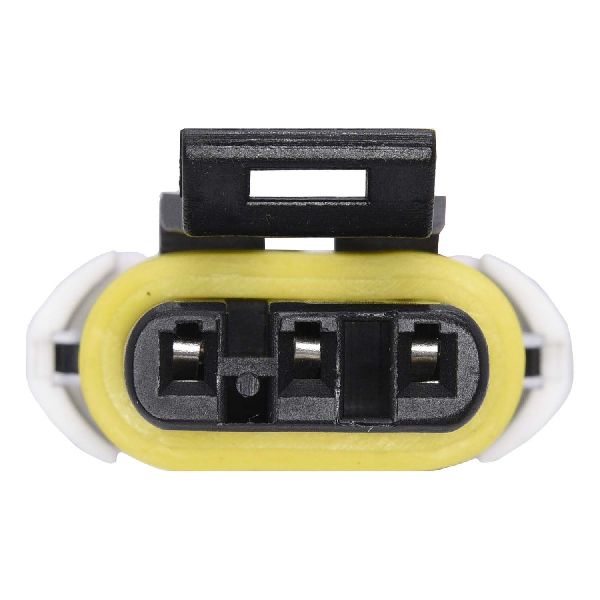
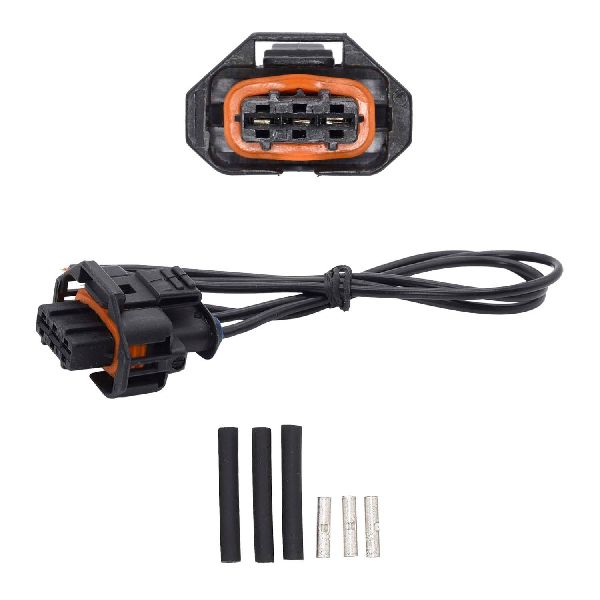
How to confirm: Visually inspect the wiring harness and electrical connector going to the Bank 2 exhaust OCV. Look for any signs of corrosion, damage, loose pins, or oil contamination. Check for continuity with a multimeter if visual inspection is inconclusive.
Typical fix: Repair the damaged wiring or clean/replace the connector.
Est. part cost: $5-$50
Rare But Worth Checking
- Faulty Engine Control Module (ECM): → Shop Engine Control Module (ECM) This is extremely rare. The ECM should only be considered after all other possibilities (OCV, oil, wiring) have been exhaustively ruled out. A failed driver circuit within the ECM can mimic the symptoms of a bad OCV.
Diagnosis Steps
- Verify the code with an OBD-II scanner.
- Check the engine oil level and condition. If low or dirty, perform an oil and filter change first, clear the code, and re-test. Many owners recommend using an OEM Hyundai oil filter.
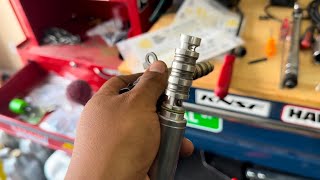
- Locate the Bank 2 (driver's side) exhaust Oil Control Valve (OCV). It is on the front of the engine, typically held in by a single 10mm bolt. 🎬 Watch this 4-minute DIY guide to fixing the P0023 engine code. The exhaust OCV is usually the lower of the two on the valve cover.
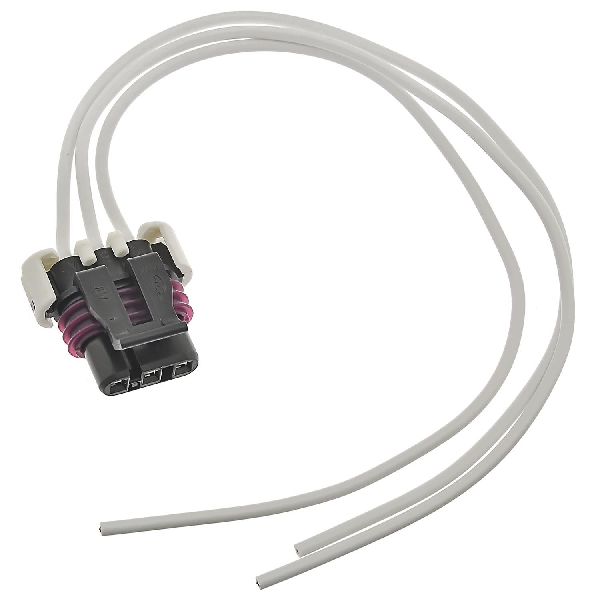
- Inspect the electrical connector and wiring for any visible damage, corrosion, or loose connections.
- If the wiring looks good, perform a 'swap test'. Swap the suspected bad exhaust OCV with the equivalent exhaust OCV from Bank 1 (passenger's side).
- Clear the codes with the scanner and start the engine. Drive the vehicle to see if a code returns.
- If the code returns as P0013 (the Bank 1 exhaust equivalent), the OCV you moved is faulty and needs to be replaced.
- If the P0023 code returns, the problem is in the wiring or the ECM, and further electrical testing with a multimeter is required to check for an open or short in the harness.
Parts You'll Likely Need
- Camshaft Oil Control Valve (Exhaust, Bank 2)
(OEM #24360-3C811 (Exhaust, LH))— This solenoid is the most common failure point for a P0023 code. It controls oil flow to the cam phaser and is prone to electrical failure or clogging. NOTE: Do not confuse this with the INTAKE OCV. P0023 is for the 'B' / Exhaust valve.
Trusted brands: Hyundai (OEM), Dorman, Standard Motor Products (SMP)
OEM price range: $90-$125
Aftermarket price range: $45-$80
Related Codes That Often Appear With This One
- P0024 — P0024 indicates 'Timing Over-Advanced' on the same camshaft. If the OCV is stuck or failing, it can cause both electrical circuit faults (P0023) and mechanical timing performance issues (P0024).
Technical Service Bulletins (TSBs) & Recalls
- TSB 21-AT-018H: Addresses a harsh 2-3, 3-4, or 4-5 upshift in 2013-2016 Genesis Coupes with the 8-speed automatic transmission by replacing specific solenoids within the transmission. While not directly related to an engine code, it is a relevant service bulletin for the platform.
Platform-Specific Known Issues
- A common related symptom on the 3.8L Lambda engine is a distinct rattle on cold startup that lasts for a few seconds. While this is often caused by worn timing chain tensioners, it can be exacerbated by oil pressure issues. Some owners report that using non-OEM oil filters can contribute to this noise, reinforcing the importance of proper oil and filter choice when dealing with any CVVT-related codes.
Mechanic-Grade Diagnostic Values
- Oil Control Valve (OCV) Solenoid Resistance — expected: 6.9 - 7.9 Ohms. Failure: A reading outside this range (e.g., infinite for an open circuit, or near zero for a short) indicates a failed solenoid.
- OCV Connector Voltage (Key On, Engine Off) — expected: One of the two pins should have battery voltage (approx. 12V).. Failure: No voltage suggests a problem in the power supply circuit leading to the solenoid.
Scan Tool Commands That Help
- Hyundai GDS (Global Diagnostic System): CVVT Actuator Test / Bidirectional Control — This test allows a technician to manually command the Bank 2 exhaust OCV to activate. If the engine stumbles or runs rough during activation, it confirms the solenoid is mechanically working and oil passages are likely clear. If there is no change in engine operation, it points directly to a failed OCV, a wiring fault, or a blockage.
Wiring & Ground Locations
- ECM Connector Pin — On the main connector to the Engine Control Module (ECM), located in the left rear of the engine compartment.. The ECM sends the control signal to the OCV. A wiring diagram shows Pin 93 controls the Bank 1 Exhaust OCV. The corresponding pin for the Bank 2 Exhaust OCV can be tested here for continuity back to the solenoid connector, helping to isolate a wiring harness fault from an ECM fault.
- Gf01 / Gm02 — Gf01 is located at the left kick panel. Gm02 is on the left side of the dash.. These are major chassis ground points. While not exclusive to the P0023 circuit, a corroded or loose ground at these locations can cause a variety of unpredictable electrical faults, including issues with sensor and actuator circuits controlled by the ECM.
OEM Part Supersession History
24360-3C811→24360-3CAA2— Part update for later model years, likely corresponding with the BK2 generation.
Heads up: Part 24360-3C811 is listed for 2009-2012 models, while 24360-3CAA2 is listed for 2012 and newer models. Always verify the correct part number with the vehicle's VIN, but be aware that the part was updated.
Model Year Variations Within This Range
- 2013-2016 (BK2): The BK2 generation features the GDI (Gasoline Direct Injection) version of the 3.8L Lambda II engine, which increased horsepower from 306 to 348. While the fundamental CVVT system is the same, the OCV part number was updated around this time (see part supersession history). The engine internals were also strengthened.
Diagnostic Flowchart
Other Known Issues on This Vehicle
Issues unrelated to this code that are worth knowing about as an owner of this generation:
- Timing Chain Tensioner Wear & Startup Rattle 🔴 High — Common issue, especially as the vehicle approaches 80,000-100,000 miles. Presents as a brief, loud rattle for 1-3 seconds on a cold start.
- Manual Transmission Grind / Poor Shift Feel 🟠 Medium — Extremely common complaint, particularly in the BK1 (2010-2012) models but also present in BK2. Owners report notchy shifting and grinding, especially into 3rd and 5th gears. Often mitigated with upgraded transmission fluid (e.g., Redline MT-85) and shifter bushings.
- Intake Valve Carbon Buildup (BK2 GDI Models) 🟠 Medium — An inherent issue for the 2013-2016 GDI engines, as fuel is injected directly into the cylinder and does not clean the back of the intake valves. Significant buildup can occur by 60,000-80,000 miles, causing rough idle and power loss. Requires periodic manual cleaning (e.g., walnut blasting).
Used vs. New Parts: Buying Guide for This Vehicle
When a used part is the smart pick: A used OEM Oil Control Valve (OCV) can be a cost-effective option if sourced from a reputable auto recycler, given the high cost of a new OEM part. Since it is an external bolt-on part, replacement is not labor-intensive if the used part fails prematurely.
Donor-vehicle mileage cap: roughly under 80000 miles for the part to have meaningful remaining life.
What to inspect on the donor part:
- Inspect the fine mesh screens on the valve for any tears, clogging from oil sludge, or metallic particles.
- Ensure the plastic electrical connector is not cracked, brittle, or filled with oil.
- Ask for the donor vehicle's mileage and, if possible, its VIN to check its history.
OEM-only on this vehicle (don't cheap out):
- While not strictly required, using an OEM (Hyundai/Kia) Oil Control Valve is highly recommended by mechanics for this repair. Aftermarket solenoids have a higher reported failure rate, potentially causing the code to return.
Aftermarket brands forum-validated for this vehicle:
- Standard Motor Products (SMP)
- Dorman
Real Owner Stories
Aggregated from forums and TSBs cited above. Mileages and costs reflect what owners reported in those sources.
2013-2016 Hyundai Genesis Coupe 3.8L GDI — 87000 miles
Symptoms: Owner documented noticeably uneven carbon buildup on the intake ports, which is known to cause rough idle and power loss on the GDI engines.
What fixed it: The known repair for this inherent issue is periodic manual cleaning of the intake valves, such as through walnut blasting.
Source hint: r/genesiscoupe - 'Noticeably uneven buildup in intake ports - 3.8 GDI'
2010 Hyundai Genesis Coupe 3.8L — ~85000 miles
Symptoms: A brief, loud rattle lasting for 1-3 seconds on a cold start, a common symptom on this platform.
What fixed it: Forum discussion centered on worn timing chain tensioners as the primary cause. Owners also noted that using an OEM oil filter and proper oil could help mitigate related oil pressure issues that exacerbate the noise.
Source hint: r/genesiscoupe - '2010 Bk1 3.8: How do I know if I'm having timing chain/tensioner problems?'
2011 Hyundai Genesis Coupe 3.8L
Symptoms: Experienced notoriously poor shift quality and grinding, particularly when shifting into 3rd and 5th gears.
What fixed it: The issue was mitigated by upgrading the transmission fluid to a product like Redline MT-85 and installing upgraded shifter bushings.
Source hint: r/genesiscoupe - 'Did Hyundai ever fix the manual transmission issues?'
Related OBD-II Codes
Frequently Asked Questions
I have a P0023 code on my 3.8L Genesis Coupe. What's the very first thing I should check?
How can I confirm the Bank 2 exhaust Oil Control Valve is the problem on my Genesis Coupe before buying a new one?
My 3.8L Genesis Coupe makes a rattling noise on cold starts. Is this related to the P0023 code?
Where can I find the Bank 2 exhaust Oil Control Valve on my 2014 Genesis Coupe 3.8L?
When changing the oil to address a P0023 code, does the brand of oil filter matter?
The article mentions TSB 21-AT-018H. Does this TSB address the P0023 engine code?
Helpful Videos

![How to Fix P0023 Engine Code in 4 Minutes [2 DIY Methods / Only $6.85]](https://img.youtube.com/vi/hOwkCRyWP8M/mqdefault.jpg)
We Have This Part in Stock


The information in this article is provided for general reference and educational purposes only. Vehicle specifications, procedures, and part compatibility can vary by production date, trim level, and region. Always consult your vehicle's factory service manual and verify part numbers before purchasing or performing repairs. Safety-critical components such as airbags, seat belts, and braking systems should be installed by a qualified professional.
- Hyundai Genesis Coupe:
- 🧭 Diagnostic Flowchart
- 🎬 Helpful Videos
- 🛍️ Shop This Part
- What's Unique About the 2010-2016 Hyundai Genesis Coupe
- Symptoms You May Notice
- Most Likely Causes
- Rare But Worth Checking
- Diagnosis Steps
- Parts You'll Likely Need
- Related Codes That Often Appear With This One
- Technical Service Bulletins (TSBs) & Recalls
- Platform-Specific Known Issues
- Mechanic-Grade Diagnostic Values
- Scan Tool Commands That Help
- Wiring & Ground Locations
- OEM Part Supersession History
- Model Year Variations Within This Range
- Other Known Issues on This Vehicle
- Used vs. New Parts: Buying Guide for This Vehicle
- Real Owner Stories
- 2013-2016 Hyundai Genesis Coupe 3.8L GDI — 87000 miles
- 2010 Hyundai Genesis Coupe 3.8L — ~85000 miles
- 2011 Hyundai Genesis Coupe 3.8L
- Related OBD-II Codes
- Frequently Asked Questions
- 🎟️ Get 5% Off