

P0024 on 2011-2015 Audi Q7 3.0L Supercharged: Causes and Fixes for Exhaust Cam Timing
On the 2011-2015 Audi Q7 3.0L, P0024 is most often caused by a faulty exhaust camshaft adjuster solenoid on the driver's side (Bank 2) or low/dirty engine oil. A new solenoid is about $50-$150, and it's a common DIY fix. The definitive diagnostic is to swap the Bank 2 and Bank 1 exhaust solenoids to see if the code follows.
- Always check your engine oil level and condition first. An oil change with the correct VW 502 00 spec oil can sometimes fix this code.
- The most likely failed part is the Bank 2 (driver's side) exhaust camshaft adjuster solenoid.
- A simple, no-cost diagnostic is to swap the driver's side and passenger's side exhaust solenoids to see if the code follows to the other bank (P0014).
- This code on the 3.0T V6 is not typically an indicator of imminent, catastrophic timing chain failure, unlike on some other engines.
What's Unique About the 2011-2015 Audi Q7
The 3.0L Supercharged V6 (3.0T) in this generation of Q7 uses a robust, chain-driven VVT system. Unlike some other VAG engines known for premature timing chain tensioner failures, this code on the 3.0T is less commonly a major mechanical issue. The problem more frequently originates from the hydraulic control side of the VVT system, making it highly sensitive to engine oil quality and the condition of the camshaft adjuster solenoids (also called adjuster magnets).
Symptoms You May Notice
- Check Engine Light is on
- Rough or unstable engine idle
- Reduced engine power and hesitation on acceleration
- Increased fuel consumption
- Rattling or knocking noises from the engine, especially on startup
- Difficulty starting the engine
- Stalling
- Replacing the camshaft position sensor without testing it first. The solenoid is a more common failure point.
- Assuming a major timing chain issue without first checking the oil and the adjuster solenoids. The 3.0T is considered reliable in this area.
Most Likely Causes
- Low, Dirty, or Incorrect Viscosity Engine Oil 🔴 High Probability The VVT system is hydraulic and extremely sensitive to oil pressure and cleanliness. Using oil that does not meet the VW 502 00 specification or extending oil change intervals can lead to sludge and blockages in the narrow passages of the VVT solenoids and phasers.
How to confirm: Check the oil level via the MMI system or dipstick and observe its color and consistency. If it is dark, thick, or below the minimum level, it needs to be addressed.
Typical fix: Perform an oil and filter change using a high-quality full synthetic oil that meets the Audi/VW 502 00 specification.
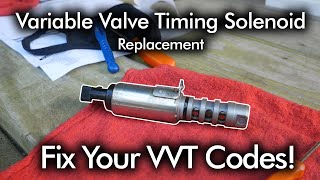
Est. part cost: $80-$150 - Faulty Camshaft Adjuster Magnet (Solenoid/OCV) 🔴 High Probability → Shop Engine Camshaft This solenoid, also called a camshaft adjuster magnet by Audi, controls oil flow to the camshaft phaser. It can become clogged with debris, its internal screen can break, or it can fail electrically, causing it to stick. This is the most common point of failure for this code on the 3.0T engine.
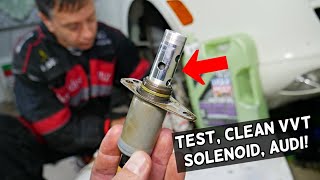
How to confirm: Swap the Bank 2 (driver's side) exhaust solenoid with the Bank 1 (passenger's side) exhaust solenoid. They are identical parts. Clear the codes and drive the vehicle. If the code changes to P0014 (Bank 1), the solenoid is confirmed to be faulty. You can also test the solenoid's resistance with a multimeter; it should be between 6.9 and 7.9 ohms.
Typical fix: Replace the Bank 2 exhaust camshaft adjuster solenoid. The part is located on the front of the upper timing cover and held by a single Torx screw. Some owners report temporarily fixing the issue by cleaning the solenoid and its screen, but replacement is the recommended permanent solution.
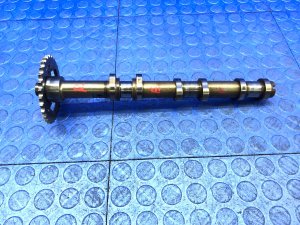
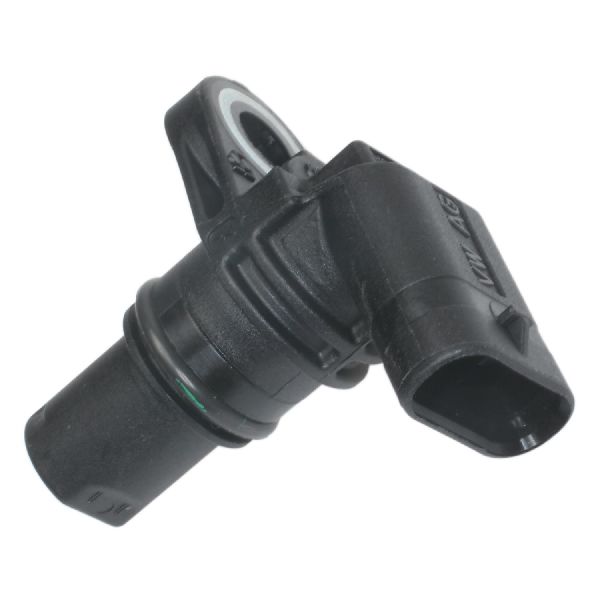
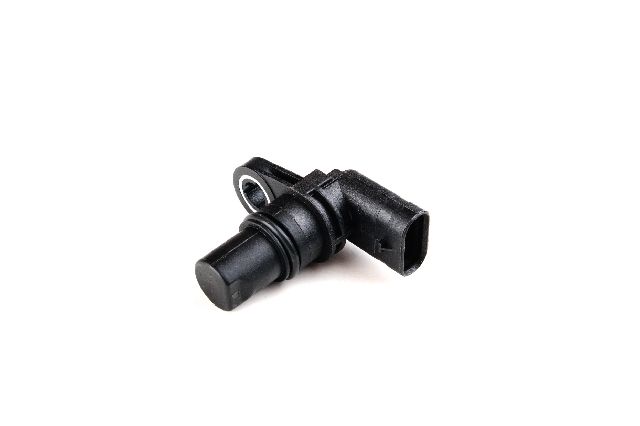
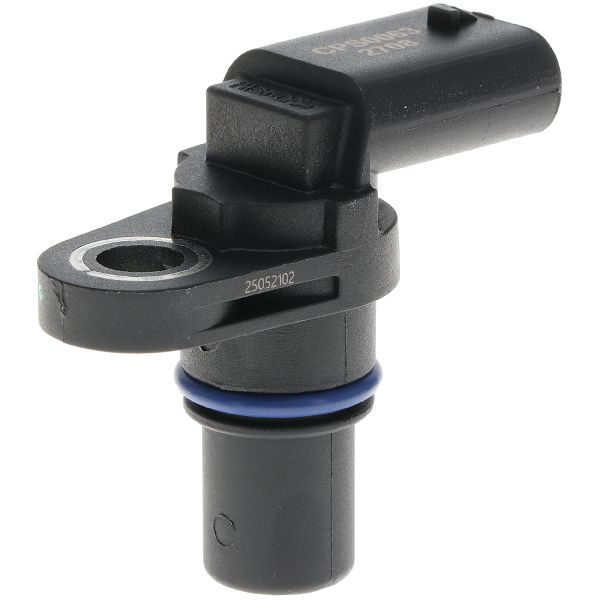
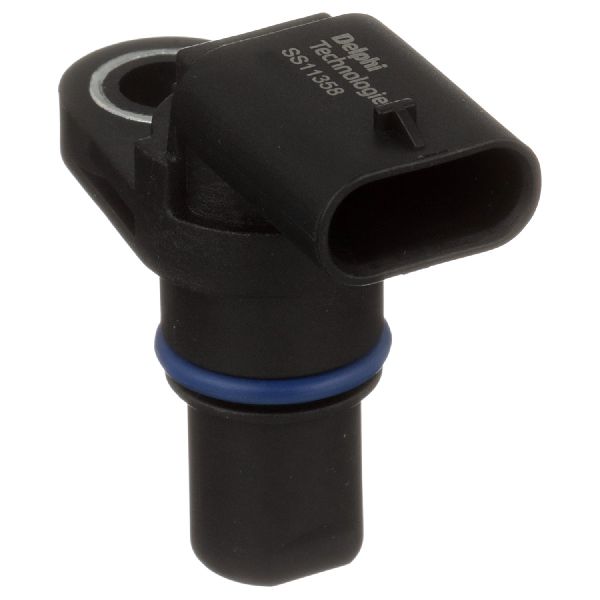
Est. part cost: $50-$150 - Faulty Camshaft Position Sensor ⚪ Low Probability → Shop Engine Camshaft Position Sensor The sensor provides the camshaft position data to the ECM. While durable, it can fail electrically or provide incorrect readings, tricking the ECM into setting a timing fault code.
How to confirm: Use a scan tool (like VCDS) to monitor live data from the sensor. An erratic or non-existent signal points to a bad sensor. You can also swap the Bank 2 sensor with the Bank 1 sensor to see if the fault follows.
Typical fix: Replace the Bank 2 camshaft position sensor.
Est. part cost: $40-$100
Rare But Worth Checking
- Stretched Timing Chain or Failed Tensioner: → Shop Engine Timing Chain While less common on the 3.0T engine compared to other Audi engines, significant mechanical wear can cause the base timing to be off, triggering this code. This is usually accompanied by rattling noises on startup, which may point to failing tensioner guide rails.
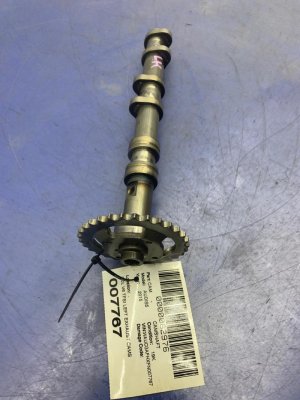
- Faulty Camshaft Phaser (Adjuster): → Shop Engine Camshaft The mechanical phaser itself, which is mounted on the end of the camshaft, can seize or fail internally. This is a more complex and expensive repair, as documented in a forum where a dealer replaced the adjuster as a final fix for a persistent timing code on an A6 3.0T.
Diagnosis Steps
- Check Engine Oil: Verify the oil level is full and the oil is clean. Ensure the correct oil that meets the VW 502 00 specification was used. If in doubt, perform an oil and filter change as the first step.
- Scan for Other Codes: Use an OBD-II scanner to see if any other codes are present, which could provide more diagnostic clues.
- Inspect Wiring: Visually inspect the wiring harness and connector for the Bank 2 (driver's side) exhaust camshaft adjuster solenoid for any damage, corrosion, or loose connections.
- Swap Camshaft Adjuster Solenoids: This is the most effective diagnostic step. Swap the Bank 2 (driver's side) exhaust solenoid with the Bank 1 (passenger's side) exhaust solenoid. They are identical parts held by a single Torx bolt. Clear the codes and drive the vehicle. If the code returns as P0014, the solenoid is faulty and needs replacement. If P0024 returns, the problem lies elsewhere.
- Test Solenoid Electrically: With a multimeter, check the resistance of the suspect solenoid. It should measure between 6.9 and 7.9 ohms. You can also apply 12V power to the solenoid (when removed from the engine) to see if the internal piston actuates.
- Test Camshaft Position Sensor: If the solenoid swap does not isolate the issue, test the camshaft position sensor on Bank 2 by monitoring its live data with a scan tool or swapping it with the sensor from Bank 1.
- Mechanical Inspection: If all electrical components and oil are good, a deeper mechanical inspection may be needed. This involves checking camshaft adaptation values with a tool like VCDS to look for signs of timing chain stretch or a faulty camshaft phaser. This is best left to a professional.
Parts You'll Likely Need
- Camshaft Adjuster Magnet (Solenoid)
(OEM #06E109257P (supersedes 06E109257J, 06E109257F))— This is the most common failure part for code P0024 on this engine, responsible for controlling oil flow to the cam phaser.
Trusted brands: Bosch, Pierburg, INA, Genuine VW/Audi
OEM price range: $90-$150
Aftermarket price range: $50-$90 - Engine Oil and Filter — Incorrect or dirty oil is a primary cause of VVT system faults. An oil change with the correct VW 502 00 spec oil is a critical first step and maintenance item.
Trusted brands: Liqui Moly, Motul, Castrol EDGE, Mann-Filter, Mahle
OEM price range: $100-$150
Aftermarket price range: $80-$120
Related Codes That Often Appear With This One
- P0014 — This is the equivalent code for Bank 1 ('B' Camshaft, Exhaust). If you swap solenoids for diagnosis, you would expect to see P0024 replaced by P0014 if the solenoid is bad.
- P0304, P0305, P0306 — These are cylinder misfire codes for Bank 2. Incorrect exhaust cam timing disrupts the engine's combustion process and can lead to misfires on the affected bank.
- P0023 — This code relates to the electrical circuit for the Bank 2 exhaust camshaft adjuster. Seeing it with P0024 strongly points to an electrical failure of the solenoid or a wiring/connector issue.
Technical Service Bulletins (TSBs) & Recalls
- While no specific TSB for P0024 on this exact model was found, TSBs for other Audi engines with similar VVT systems often point to checking oil pressure and the adjusters themselves as the primary diagnostic path for timing-related fault codes.
Platform-Specific Known Issues
- Solenoid Screen Debris: When removing the faulty solenoid, it's common to find the small screen at its tip is either clogged with sludge or has broken apart. Some owners have reported temporarily clearing the code by cleaning this screen, but replacement of the solenoid is the more reliable long-term fix.
Mechanic-Grade Diagnostic Values
- VCDS Camshaft Adaptation Phase Position (Bank 2 Exhaust) — expected: Between 0° and -5.0° at warm idle is considered healthy for the 3.0T engine.. Failure: Values consistently exceeding -5.0° suggest timing chain wear. Values approaching or exceeding -8.0° are a strong indicator of significant timing chain stretch requiring mechanical inspection and likely replacement.
- Camshaft Adjuster Solenoid (N320) Resistance — expected: 6.9 to 7.9 Ohms at 20°C (68°F).. Failure: A reading of 0 ohms (short circuit) or infinite ohms (open circuit) confirms electrical failure. Note that a solenoid can pass this resistance test but still be mechanically stuck.
- Camshaft Adjuster Solenoid (N320) Connector Voltage — expected: Battery voltage (approx. 12V) should be present at Pin 2 (typically brown/black wire) with the ignition on.. Failure: No voltage indicates a problem with the power supply, fuse, or wiring harness.
Scan Tool Commands That Help
- VCDS (VAG-COM) or ODIS: Output Test for 'Exhaust Camshaft Adjustment Valve Bank 2 (N320)' — This is a crucial bidirectional test to perform if a solenoid swap is inconclusive or to quickly test a new solenoid before installation. The command actively cycles the solenoid, and you should hear a distinct clicking from the engine bay. A lack of clicking confirms a faulty solenoid or wiring issue.
- VCDS (VAG-COM) or ODIS: Basic Settings - Camshaft Adjustment Adaptation — This procedure should be run after replacing major timing components like chains, tensioners, or phasers. It forces the ECM to relearn the physical adjustment range of the VVT system. Some technicians also report success running this after a solenoid replacement to clear stubborn codes, effectively resetting the learned control strategy.
Wiring & Ground Locations
- N320 Connector — On the front of the Bank 2 (driver's side) upper timing chain cover, connecting to the exhaust camshaft adjuster solenoid.. This is the direct electrical connection for the component most likely to cause P0024. Pin 1 is the Pulse Width Modulation (PWM) signal from the ECM, and Pin 2 is the 12V power supply. Checking for voltage at Pin 2 and signal at Pin 1 is a key electrical diagnostic step.
- Main Engine Ground Strap — Typically located on the passenger side of the vehicle, connecting the engine block to the chassis frame rail.. While a poor main ground usually causes multiple, erratic electrical issues, it can sometimes affect sensor and actuator performance. Ensuring this connection is clean and tight is a fundamental step in any electrical diagnosis.
- ECM Ground Point — Located in the engine compartment, often on the firewall or inner fender near the ECM housing.. The ECM relies on a clean ground reference to accurately control actuators like the VVT solenoid. A corroded or loose ECM ground can lead to incorrect solenoid operation and trigger timing codes.
Real Owner Repair Stories
- AudiWorld & Audizine Forum Threads (composite) (2013 Audi S4 3.0T (same engine and VVT system)) — Persistent P0024 code, rough idle, and reduced power.
❌ Tried (didn't work) Performed multiple oil changes with correct VW 502 00 oil., Replaced the Bank 2 exhaust camshaft adjuster solenoid (P0024 returned)., Swapped solenoids from Bank 1 to Bank 2 (P0024 returned, did not change to P0014)., Replaced the camshaft position sensor.
✅ What actually fixed it A piece of a plastic timing chain guide rail had broken off. The debris traveled through the oiling system and became lodged in a small oil passage leading to the camshaft phaser on Bank 2, starving it of the oil pressure needed to operate correctly. The fix required removing the timing cover to retrieve the debris and replace the failing timing chain guides.
OEM Part Supersession History
06E109257F→06E109257J, then 06E109257P— The design of the solenoid and its integrated screen was updated over several revisions. The latest 'P' version is considered the most robust, with an improved screen design less prone to tearing or clogging, which was a failure point on earlier versions.
Heads up: All versions (F, J, P) are physically and electrically compatible. However, it is strongly recommended to use the latest 'P' revision for any replacement to ensure longevity.
Model Year Variations Within This Range
- 2011-2015: The 3.0T engine in the Q7 came with several engine codes (e.g., CCNA, CCNB, CTWA, CTWB). However, the variable valve timing system, including the camshaft adjuster solenoids and sensors relevant to code P0024, are functionally identical across these versions. Diagnosis and repair procedures do not change based on these specific engine codes within the 2011-2015 model year range.
Diagnostic Flowchart
Other Known Issues on This Vehicle
Issues unrelated to this code that are worth knowing about as an owner of this generation:
- PCV Valve Failure 🔴 High — Common failure around 60,000-80,000 miles. The diaphragm tears, causing a large vacuum leak.
- Water Pump & Thermostat Failure 🔴 High — Very common, especially on pre-2013 models. The original plastic components are prone to cracking and leaking. (Ref: Subject of multiple class-action lawsuits.)
- Intake Valve Carbon Buildup 🟠 Medium — A known issue for all direct-injection (FSI) engines, typically needing service every 40,000-60,000 miles.
- Leaking Supercharger Intercoolers 🟠 Medium — A known failure point, though less common than PCV or water pump issues.
- Timing Chain Tensioner Wear 🟡 Low → Shop Engine Timing Chain — Not as prevalent as on other Audi engines, but can occur at higher mileage (100k+ miles).
Used vs. New Parts: Buying Guide for This Vehicle
When a used part is the smart pick: For this specific repair, buying used parts is generally not recommended. The primary failure items are electronic solenoids and sensors which have a finite lifespan and are sensitive to the oil quality and maintenance history of the donor car. The cost savings are minimal compared to the risk of receiving a part that is near the end of its life or already faulty.
Donor-vehicle mileage cap: roughly under 60000 miles for the part to have meaningful remaining life.
What to inspect on the donor part:
- If forced to buy a used solenoid, request one from a vehicle with documented low mileage and a clean service history.
- Visually inspect the solenoid's screen for any tears, debris, or heavy sludge, although a clean appearance is not a guarantee of function.
OEM-only on this vehicle (don't cheap out):
- Camshaft Adjuster Solenoid
- Camshaft Position Sensor
Aftermarket brands forum-validated for this vehicle:
- For the Camshaft Adjuster Solenoid, Pierburg and INA are often the Original Equipment Manufacturers (OEMs) for Audi. Buying from these brands provides a part of identical quality to Genuine Audi at a lower cost.
- For engine oil, brands like Liqui Moly, Motul, and Castrol that offer oils specifically meeting the VW 502 00 specification are highly trusted in the enthusiast community.
Brands owners have reported issues with on this vehicle:
- Avoid unbranded or generic 'white-box' camshaft solenoids and sensors from online marketplaces. Forum users frequently report these parts are dead-on-arrival or fail within a few months.
Real Owner Stories
Aggregated from forums and TSBs cited above. Mileages and costs reflect what owners reported in those sources.
2012 Audi A6 3.0T
Symptoms: Camshaft position code bank 2; owner attempted to swap solenoids but the issue persisted.
What fixed it: Replacement of the mechanical camshaft adjuster (phaser), which Audi covered under goodwill.
Source hint: AudiWorld.com: A thread titled 'p0021 camshaft position code bank 2 cam adjuster replacement'
2011-2015 Audi Q7 3.0L Supercharged V6
Symptoms: Check engine light with P0024; upon inspection, the small screen at the tip of the solenoid was either clogged with sludge or broken apart.
What fixed it: Replacement of the Bank 2 exhaust camshaft adjuster solenoid (camshaft adjuster magnet).
Source hint: vehicle_specific_issues: Solenoid Screen Debris
Related OBD-II Codes
Frequently Asked Questions
Is there a specific TSB for the P0024 code on my 2011-2015 Audi Q7 3.0T?
Can I use any synthetic oil in my Q7 to resolve this timing code?
How can I tell if the Bank 2 exhaust solenoid is actually the problem without buying a new part?
What should the electrical resistance be for the camshaft adjuster magnet on the 3.0L Supercharged engine?
I found debris on the solenoid screen; can I just clean it?
Could my rough idle and P0024 be related to the PCV valve?
Helpful Videos

![How to Fix P0024 Engine Code in 4 Minutes [2 DIY Methods / Only $6.74]](https://img.youtube.com/vi/0tbOM7HEJsQ/mqdefault.jpg)
Used OEM Parts in Stock
New Aftermarket Parts Available


The information in this article is provided for general reference and educational purposes only. Vehicle specifications, procedures, and part compatibility can vary by production date, trim level, and region. Always consult your vehicle's factory service manual and verify part numbers before purchasing or performing repairs. Safety-critical components such as airbags, seat belts, and braking systems should be installed by a qualified professional.
- Audi Q7:
- 🧭 Diagnostic Flowchart
- 🎬 Helpful Videos
- 🛍️ Shop This Part
- What's Unique About the 2011-2015 Audi Q7
- Symptoms You May Notice
- Most Likely Causes
- Rare But Worth Checking
- Diagnosis Steps
- Parts You'll Likely Need
- Related Codes That Often Appear With This One
- Technical Service Bulletins (TSBs) & Recalls
- Platform-Specific Known Issues
- Mechanic-Grade Diagnostic Values
- Scan Tool Commands That Help
- Wiring & Ground Locations
- Real Owner Repair Stories
- OEM Part Supersession History
- Model Year Variations Within This Range
- Other Known Issues on This Vehicle
- Used vs. New Parts: Buying Guide for This Vehicle
- Real Owner Stories
- 2012 Audi A6 3.0T
- 2011-2015 Audi Q7 3.0L Supercharged V6
- Related OBD-II Codes
- Frequently Asked Questions
- 🎟️ Get 5% Off