

P0024 on 2018-2019 Buick Regal GS: Exhaust Cam Timing Causes and Fixes
On a 2018-2019 Regal GS, P0024 is often caused by a known software glitch (TSB N192266190) requiring a dealer ECM update, especially if other cam codes are present. If not software, the next likely cause is a faulty Bank 2 exhaust camshaft actuator solenoid, a ~$40-$80 part. Always check engine oil level and condition first, as the VVT system is hydraulic and sensitive to oil quality.
- This code is specific to the 2018-2019 Buick Regal GS with the 3.6L V6 engine.
- Before replacing any parts, check if other cam codes are present. If so, the most likely cause is a software glitch that a GM dealer can fix with an ECM update (TSB N192266190).
- Always check your engine oil level and condition first. Low or dirty oil is a very common cause of VVT system faults.
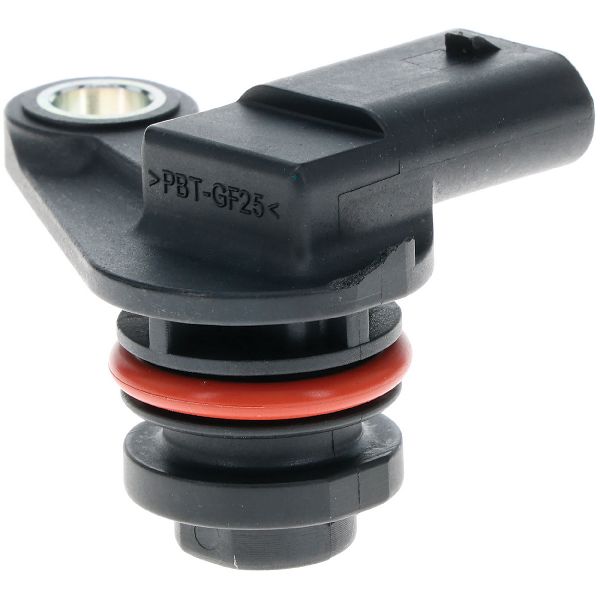
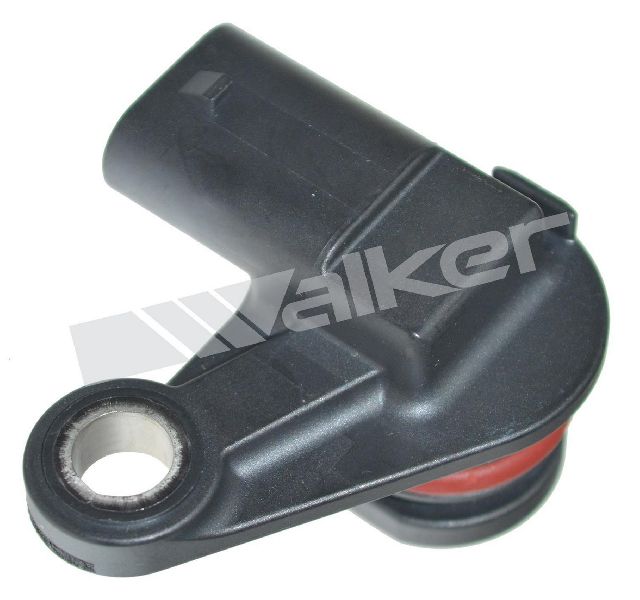
- If the issue is mechanical, the most probable failed part is the Bank 2 (front/radiator side) exhaust camshaft actuator solenoid, not the sensor.
What's Unique About the 2018-2019 Buick REGAL
The 2018-2019 Regal GS with the 3.6L LGX V6 is subject to a specific software anomaly. GM issued Technical Service Bulletin PIP5568E acknowledging an investigation into P0024 and other cam codes (P0011, P0014, P0021) setting together, often after an auto start/stop event. A subsequent service update, N192266190, provided an ECM reprogram as the official fix. This means the code is frequently not a mechanical failure but a software issue that needs to be addressed by a dealer, a known issue across many GM vehicles with the LGX engine.
Diagnostic Flowchart
Tap your situation to follow the diagnostic path that matches what you're seeing on this vehicle.
Symptoms You May Notice
- Check Engine Light illuminated
- Rough or unstable idle
- Engine stalling, especially when slowing down or at idle after an auto-start.
- Hesitation or stumbling during acceleration.
- Noticeable loss of engine power.
- Decreased fuel economy.
- Engine running rough immediately following an auto-start.
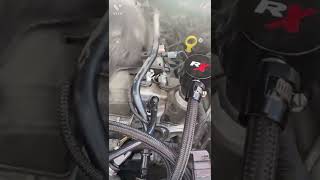
- Replacing the camshaft position *sensor* instead of the camshaft position actuator *solenoid*. The sensor reads the position, but the solenoid controls the oil flow that changes the position. The solenoid is the more likely failure point for this performance code. A Reddit user with a Camaro with the same engine and code made this mistake initially. 🎬 Watch: How to replace the VVT solenoid on an LGX engine
- Replacing any mechanical parts before checking if the vehicle requires the ECM software update described in TSB N192266190, especially when multiple camshaft codes (P0011, P0014, P0021) are present.
Most Likely Causes
- Engine Control Module (ECM) Software Anomaly 🔴 High Probability → Shop Engine Control Module (ECM) A documented issue addressed by GM TSBs PIP5568E and N192266190, often triggered by the auto start/stop system, causes false cam position readings. The ECM software had a glitch that could cause it to report incorrect cam positions after an engine restart.
How to confirm: Check if other camshaft codes (P0011, P0014, P0021) are present simultaneously. A GM dealer can verify if the N192266190 software update has been applied to the vehicle's VIN using the GM Global Warranty Management system.
Typical fix: Reprogramming the ECM with the latest software calibration. This must be done by a dealership or a qualified shop with GM-specific tools (SPS).
Est. part cost: $0 - Low, Dirty, or Incorrect Viscosity Engine Oil 🔴 High Probability The VVT system is hydraulic and extremely sensitive to oil pressure and cleanliness. Sludge or old, thick oil can clog the small passages and screens in the camshaft actuator solenoids, causing them to stick or respond slowly.
How to confirm: Check the engine oil dipstick. The oil level should be full, and the oil should be its proper amber color, not dark, thick, or gritty.
Typical fix: Perform an engine oil and filter change using a full synthetic oil that meets GM's dexos1 specification (SAE 5W-30 is specified for the LGX engine).
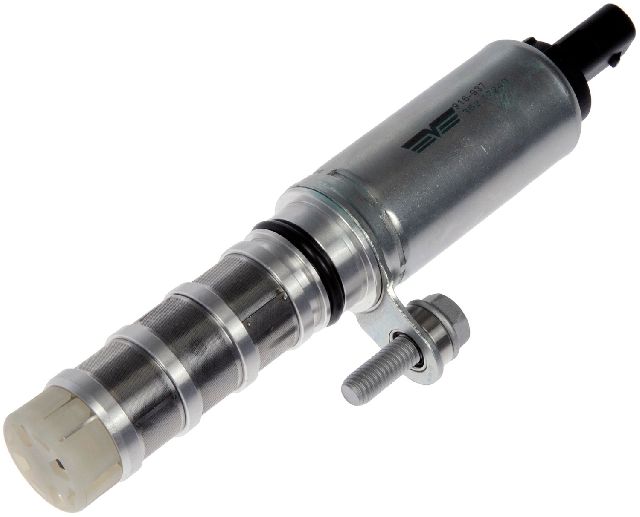
Est. part cost: $40-$70 - Faulty Camshaft Position Actuator Solenoid (VVT Solenoid) 🟡 Medium Probability → Shop Engine Camshaft These solenoids are a common failure point on GM 3.6L engines. They can become clogged with debris or fail electrically, preventing proper oil flow to the cam phaser. The four solenoids on the LGX engine are identical, making diagnosis by swapping easier.
How to confirm: A good diagnostic step is to swap the Bank 2 exhaust solenoid with the Bank 1 exhaust solenoid. Clear the codes and drive the vehicle. If the code changes to P0014 (Bank 1 Exhaust), the solenoid is confirmed bad. A scan tool can also be used to command the solenoid on and off; a lack of response or audible click indicates a likely failure.
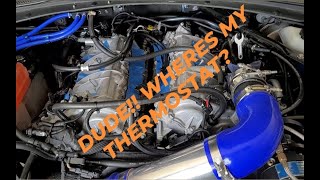
Typical fix: Replace the Bank 2 exhaust camshaft position actuator solenoid. On the 3.6L LGX, Bank 2 is at the front of the engine bay 🎬 See this video to locate the LGX cam sensors and solenoids (radiator side). The exhaust solenoid is typically the one closer to the firewall on that bank.
Est. part cost: $40-$80
Rare But Worth Checking
- Worn Timing Chain, Guides, or Tensioner: → Shop Engine Timing Chain While a known issue on older GM 3.6L engines (like the LLT), it is much less common on the newer LGX engine, which has a revised timing system. This should only be considered after all other causes are ruled out, as it's a complex and expensive repair.
- Faulty Camshaft Phaser: → Shop Engine Camshaft The mechanical actuator on the camshaft itself can seize in the advanced position due to internal failure or oil starvation. This is much less common than a solenoid failure and is a more involved repair.
- Corroded Battery Terminal / Low System Voltage: In one documented case on a similar GM 3.6L engine, a corroded battery terminal caused low system voltage, leading to erratic sensor readings and a P0024 code. Cleaning the terminal resolved the issue.
Diagnosis Steps
- Check for other DTCs. If P0011, P0014, or P0021 are also present, suspect the software glitch (TSB N192266190) as the primary cause.
- Inspect Engine Oil. Check the oil level and condition on the dipstick. If low, dirty, or overdue for a change, correct this first, clear the code, and see if it returns. This is the easiest and most common fix for VVT issues.
- Diagnose the Solenoid. If the oil is good, the easiest way to test the Bank 2 exhaust solenoid is to swap it with the Bank 1 exhaust solenoid. Clear codes and drive. If the fault moves to Bank 1 (P0014), the solenoid is bad. 🎬 Watch: A guide to diagnosing and replacing VVT solenoids
- Inspect Solenoid and Wiring. Remove the suspect solenoid. Inspect its mesh screens for sludge or debris. Check the electrical connector and wiring for any damage or corrosion. The plastic clips can become brittle.
- Consult a Dealer about TSBs. If the diagnosis is inconclusive, contact a GM dealer with your VIN to see if TSB N192266190 (ECM reprogram) is open or has been performed on your vehicle.
- Advanced Mechanical Diagnosis. If all else fails, a professional mechanic may need to perform deeper diagnostics to check for a faulty cam phaser or timing chain issues, though this is rare on the LGX engine.
Parts You'll Likely Need
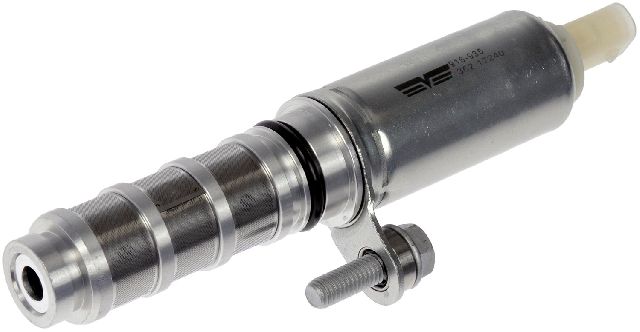
- Camshaft Position Actuator Solenoid (VVT Solenoid)
(OEM #12697129)— This solenoid controls oil flow to the cam phaser and is the most common mechanical part to fail, either by clogging or electrical fault, causing timing deviation codes. The LGX V6 uses four identical solenoids for intake/exhaust on both banks.
Trusted brands: ACDelco (OEM), Delphi
OEM price range: $50-$90
Aftermarket price range: $35-$65 - Engine Oil and Filter — The VVT system is dependent on clean oil at the correct pressure. An oil change is a critical first step and often resolves timing performance codes.
Trusted brands: ACDelco Oil Filter, Mobil 1 Full Synthetic (dexos1), Pennzoil Platinum Full Synthetic (dexos1)
OEM price range: $50-$80 (for oil and filter)
Aftermarket price range: $40-$70 (for oil and filter)
Related Codes That Often Appear With This One
- P0014 — Exhaust Camshaft Position Timing Over-Advanced (Bank 1). If both P0014 and P0024 are present, it strongly suggests a systemic issue like low/dirty oil or the software glitch affecting both exhaust cams.
- P0011 — Intake Camshaft Position Timing Over-Advanced (Bank 1). Its presence with P0024 is a key indicator of the software anomaly described in TSB PIP5568E and addressed by update N192266190.
- P0021 — Intake Camshaft Position Timing Over-Advanced (Bank 2). Seeing this with P0024 points to an issue on Bank 2 (oil passage blockage) or the system-wide software glitch.
Technical Service Bulletins (TSBs) & Recalls
- PIP5568E: Preliminary investigation into P0011, P0014, P0021, and P0024 setting together or in pairs, noting the cause was a software anomaly under investigation. The initial fix was to clear codes and release the vehicle.
- N192266190: A GM Service Update that provided an ECM reprogram to fix drivability concerns (rough run, stall, reduced power) and the setting of multiple camshaft codes (including P0024) related to the auto start/stop system.
Platform-Specific Known Issues
- A software anomaly can cause P0024 to set with P0011, P0014, and P0021, particularly after an auto start/stop event. This was investigated under TSB PIP5568E and addressed with a service update (N192266190) to reprogram the ECM.
- The 2018-2020 Buick Regal GS is an Opel Insignia assembled in Germany for the North American market, sharing its LGX engine with many other US-domestic GM products.
Mechanic-Grade Diagnostic Values
- Camshaft Position Actuator Solenoid Resistance — expected: 5 to 13 Ohms. Failure: A reading of OL (open circuit), 0 ohms (short circuit), or a value significantly outside the expected range.
- Camshaft Position Actuator Solenoid Resistance (Precision) — expected: 6.9 to 7.9 Ohms at 68°F (20°C). Failure: A reading outside this specific range indicates a faulty solenoid coil.
- Scan Tool Live Data: Desired vs. Actual Camshaft Position Angle — expected: Less than 5 degrees of variance. Failure: The ECM may set P0024 if the variance is greater than 5 degrees for more than 10 seconds.
Scan Tool Commands That Help
- GM GDS2 / High-End Aftermarket (e.g., G-scan, Autel): Camshaft Position Actuator Control / VVT Solenoid Test — This bidirectional command allows the technician to manually activate the solenoid to verify its mechanical function. A healthy solenoid should produce an audible click and a change in engine idle characteristics when commanded ON/OFF. This helps isolate a failed solenoid from a wiring or ECM driver issue.
Wiring & Ground Locations
- G102 / G104 (Example GM Designators) — On GM V6 engines, critical engine grounds are typically found bolted to the rear of the cylinder heads.. The ECM, camshaft position sensors, and actuator solenoids rely on clean, tight ground connections. A poor ground on a cylinder head can introduce electrical noise or voltage drops, leading to erratic sensor readings and false timing codes.
- Main Engine/Transmission Ground — A large ground strap typically connects the engine block or transmission case directly to the vehicle's chassis or battery negative terminal.. This is the primary ground path for the entire powertrain control system. Corrosion or looseness at this point can cause a wide range of difficult-to-diagnose electrical issues, including VVT system faults.
Real Owner Repair Stories
- 2CarPros Forum User 'Sisco' (Saturn Outlook (with GM 3.6L V6)) — Check Engine Light with codes P0011, P0014, P0021, and P0024, plus a StabiliTrak warning. Vehicle was running sluggish with engine noise.
❌ Tried (didn't work) Initial diagnosis pointed towards replacing all four cam sensors/solenoids.
✅ What actually fixed it The engine oil was found to be very low. Adding two quarts of oil and clearing the codes resolved all symptoms and fault codes permanently.
OEM Part Supersession History
12697129 (and others)→N/A (Multiple valid part numbers exist)— Part consolidation and minor revisions.
Heads up: On the 3.6L LGX engine, the four VVT solenoids (Intake/Exhaust for Bank 1/2) are often the same part and are interchangeable, even if they have different part numbers from different production runs (e.g., 12679099, 12687219). Always confirm fitment with the VIN, but swapping identical-looking solenoids for diagnosis is a valid strategy.
Model Year Variations Within This Range
- 2018-2019: No significant mechanical or electrical variations are documented between the 2018 and 2019 model year Regal GS with the LGX V6 that would alter the diagnosis or common causes for code P0024. The primary known issue is a software glitch applicable to this entire range.
Helpful Videos

We Have This Part in Stock


The information in this article is provided for general reference and educational purposes only. Vehicle specifications, procedures, and part compatibility can vary by production date, trim level, and region. Always consult your vehicle's factory service manual and verify part numbers before purchasing or performing repairs. Safety-critical components such as airbags, seat belts, and braking systems should be installed by a qualified professional.
- Buick REGAL:
- 🧭 Diagnostic Flowchart
- 🎬 Helpful Videos
- 🛍️ Shop This Part
- What's Unique About the 2018-2019 Buick REGAL
- Symptoms You May Notice
- Most Likely Causes
- Rare But Worth Checking
- Diagnosis Steps
- Parts You'll Likely Need
- Related Codes That Often Appear With This One
- Technical Service Bulletins (TSBs) & Recalls
- Platform-Specific Known Issues
- Mechanic-Grade Diagnostic Values
- Scan Tool Commands That Help
- Wiring & Ground Locations
- Real Owner Repair Stories
- OEM Part Supersession History
- Model Year Variations Within This Range
- 🎟️ Get 5% Off