

P0024 on 2016-2019 Cadillac CT6: Exhaust Camshaft Timing Over-Advanced (Bank 2) Causes and Fixes
On a 2016-2019 Cadillac CT6 with a V6 engine, code P0024 is most often caused by low or dirty engine oil, or a failed Bank 2 exhaust camshaft position actuator solenoid. Always check the oil first. A known software glitch, documented in a GM TSB, can also trigger this code, sometimes requiring only a code clear or a dealer reprogram. Replacing the solenoid is a common DIY fix, with the part costing between $40 and $100.
- P0024 on a V6 Cadillac CT6 means the driver's side exhaust camshaft timing is too far advanced.
- Before buying any parts, check your engine oil. Low, old, or incorrect oil is the leading cause of this code.
- The most likely failed part is the Bank 2 (driver's side) exhaust camshaft position actuator solenoid, which is a relatively inexpensive and accessible part to replace.
- If other camshaft codes like P0011, P0014, or P0021 are also present, refer to TSB #PIP5568E, as this indicates a known systemic issue that may not be solved by replacing one solenoid.
- Do not confuse the actuator solenoid with the camshaft position sensor; the solenoid is the more probable cause.
What's Unique About the 2016-2019 Cadillac CT6
The 2016-2019 Cadillac CT6 uses sophisticated V6 engines (3.0L Twin-Turbo LGW and 3.6L LGX) where oil pressure and quality are critical for the VVT system's operation. A key issue for this platform is documented in GM Technical Service Bulletin #PIP5568E, which investigates P0024 setting along with other cam timing codes (P0011, P0014, P0021). The TSB explains this may be caused by a software anomaly, sometimes after an auto stop/start event, where the ECM reports '0' for the actual cam position while still commanding movement, causing drivability issues and setting the codes. In some cases, the initial fix was simply to clear the codes and release the vehicle. It's also worth noting that on 2.0L 4-cylinder CT6 models, P0024 can appear as a 'ghost code' due to this software glitch, as those engines only have one bank and the code should not physically be possible.
Diagnostic Flowchart
Tap your situation to follow the diagnostic path that matches what you're seeing on this vehicle.
Symptoms You May Notice
- Check Engine Light is on
- Rough, unstable, or shaking idle
- Reduced engine power and poor acceleration
- Engine hesitation or stumbling, especially after an auto stop/restart event
- Decreased fuel economy
- Engine may stall
- Rattling or knocking noises from the engine
- Hard starting engine
- Replacing the camshaft position *sensor* when the camshaft position actuator *solenoid* is the faulty component.
- Immediately replacing hardware (solenoids, sensors) without first checking for applicable TSBs related to software updates, which is a known cause of this code on the LGX/LGW engine family.
Most Likely Causes
- Low, Dirty, or Incorrect Viscosity Engine Oil 🔴 High Probability The VVT system is hydraulic and extremely sensitive to oil pressure and cleanliness. The LGW twin-turbo engine, in particular, can degrade oil faster. Sludge can clog the fine mesh screens on the VVT solenoids, preventing them from operating correctly.
How to confirm: Check the engine oil level on the dipstick and inspect its color and consistency. Ensure the correct oil type (full synthetic dexos1 Gen 2 5W-30) is being used as specified by the manufacturer.
Typical fix: Perform an oil and filter change using the manufacturer-specified oil. This should always be the first step before replacing any parts.
Est. part cost: $50-$100 - Failed Camshaft Position Actuator Solenoid (VVT Solenoid) 🔴 High Probability → Shop Engine Camshaft These solenoids control the flow of oil to the cam phasers. They are a common failure point, often becoming clogged with debris from infrequent oil changes or simply failing electrically over time.
How to confirm: Swap the Bank 2 exhaust solenoid with the Bank 2 intake solenoid (the parts are identical on the LGX engine). Clear the codes. If the code changes to P0021 (Intake Camshaft Position Timing Over-Advanced Bank 2), the solenoid is confirmed bad. You can also test the solenoid's resistance with a multimeter, which should typically be between 6.9 and 7.9 ohms.
Typical fix: Replace the Bank 2 (driver's side) exhaust camshaft position actuator solenoid. Many owners choose to replace both solenoids on the bank at the same time for preventative maintenance.
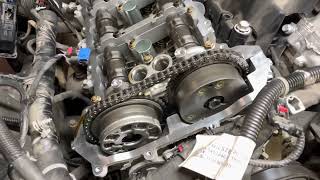
Est. part cost: $40-$100 - Worn Timing Chain or Failed Cam Phaser ⚪ Low Probability → Shop Engine Timing Chain While less common, high-mileage vehicles (typically over 100,000 miles) can suffer from stretched timing chains or failed cam phasers (the mechanical gears that adjust timing). A stretched chain or a stuck phaser can cause the physical timing to be off from what the sensors report.
How to confirm: This is a complex diagnosis. A mechanic may listen for rattling noises on startup or use a scan tool to monitor desired vs. actual cam/crank correlation data. Definitive confirmation requires removing the engine front cover to physically inspect for chain slack.
Typical fix: Replace the timing chains, tensioners, guides, and potentially the cam phasers. This is a labor-intensive and expensive job.
Est. part cost: $500-$1500
Rare But Worth Checking
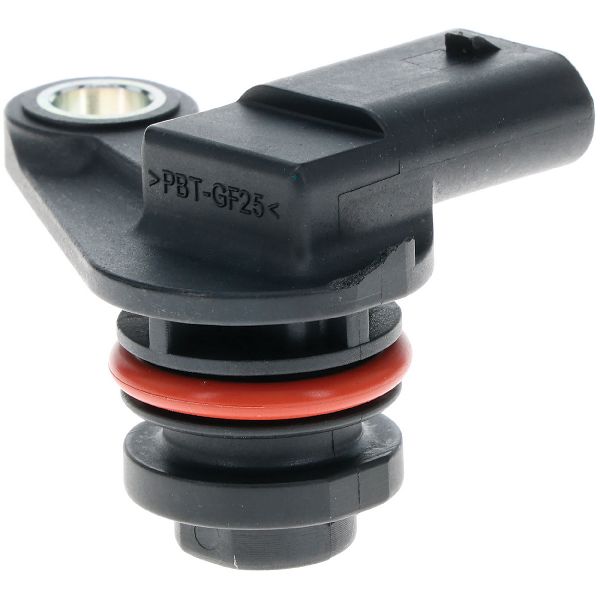
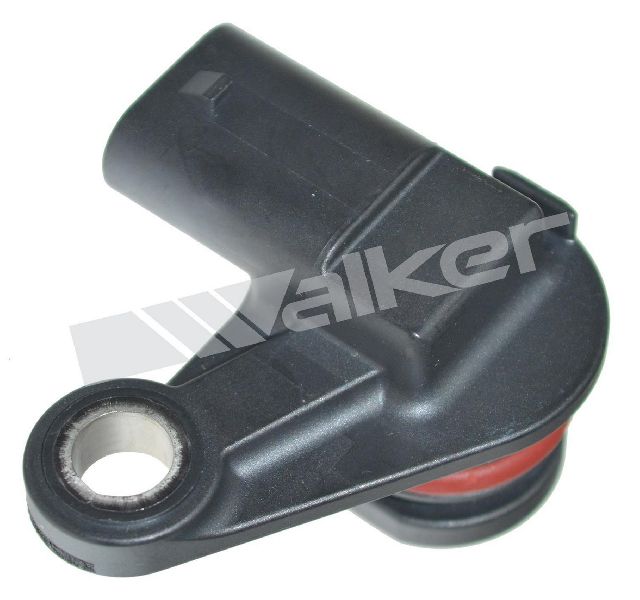
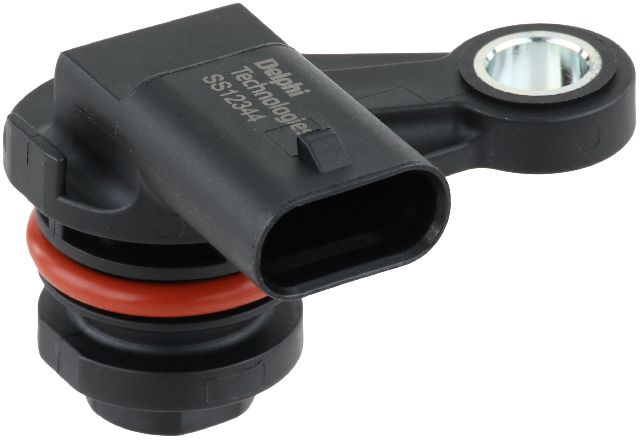
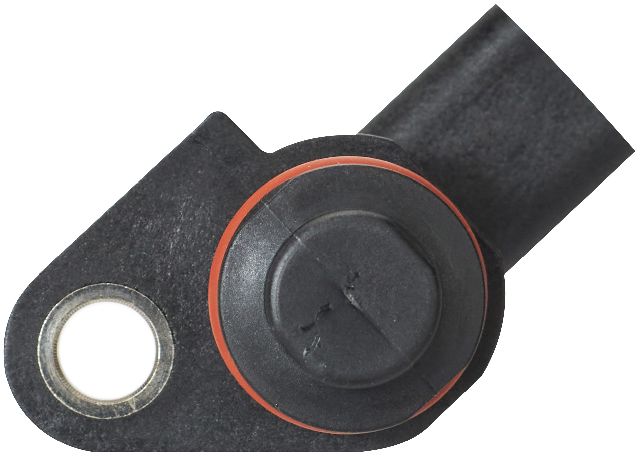
- Faulty Camshaft Position Sensor: → Shop Engine Camshaft Position Sensor While possible, the sensor that reads the camshaft's position is less likely to fail than the solenoid that controls it. It's often replaced by mistake. The code P0024 is most often a control or system performance issue, not a sensor reading fault.
- Damaged Wiring or Connectors: Frayed wires or corroded pins on the connector for the VVT solenoid can cause an intermittent signal, leading to the code.
- Poor Engine Ground Straps: On some GM 3.6L V6 engines, corroded or loose ground straps attached to the cylinder heads near the VVT solenoids can cause incorrect readings and faulty operation of the solenoids, which rely on a stable ground reference.
- Faulty Powertrain Control Module (PCM): → Shop Engine Control Module (ECM) This is extremely rare. The PCM should only be considered after all other possibilities, including software updates, have been exhaustively ruled out.
Diagnosis Steps
- Verify the engine oil level and condition. If low, dirty, or overdue for a change, correct this first with full synthetic 5W-30 dexos1 oil, clear the codes, and re-test.
- Use an OBD-II scanner to check for other related trouble codes. If P0011, P0014, or P0021 are present as history codes, it strongly points to the software anomaly described in TSB #PIP5568E.
- Contact a GM dealer with your VIN to check for open service campaigns, specifically referencing TSB #PIP5568E or #N192266190, which may recommend a software update.
- Inspect the wiring harness and connector for the Bank 2 (driver's side) exhaust VVT solenoid for any signs of damage, corrosion, or loose connections.
- Perform a 'swap test'. Since the intake and exhaust solenoids are often the same part on the LGX V6, exchange the Bank 2 exhaust solenoid with the Bank 2 intake solenoid. Clear codes and drive. If the code changes to P0021, the solenoid you moved is faulty.
- If the code does not change, test the solenoid's operation using a multimeter to check for proper resistance (typically 6.9-7.9 ohms).
- If the solenoid and wiring are good, the issue may be mechanical. Listen for any rattling from the engine front cover on startup, which could indicate a timing chain issue.
- For advanced diagnosis, a technician may use a scan tool to command the solenoid on and off while monitoring camshaft angle data to see if it responds correctly.
Parts You'll Likely Need
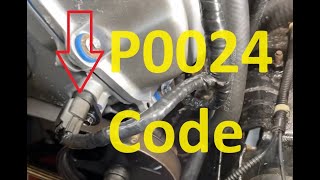
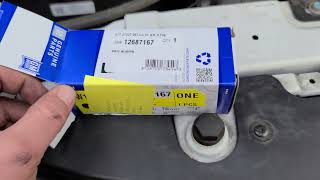
- Camshaft Position Actuator Solenoid (Exhaust, Bank 2)
(OEM #12687299)— This solenoid is the most common failure point for code P0024. It gets clogged with debris or fails electrically, preventing proper control of the camshaft timing. On the 3.6L LGX, this part number is often used for both intake and exhaust solenoids.
Trusted brands: ACDelco, Delphi
OEM price range: $60-$100
Aftermarket price range: $40-$70
Related Codes That Often Appear With This One
- P0014 — This is the same over-advanced timing issue but on Bank 1 (passenger side). TSB #PIP5568E specifically notes these codes can appear in pairs (P0014 and P0024), suggesting a systemic problem like oil pressure or a software anomaly.
- P0011 — Intake camshaft timing over-advanced on Bank 1. The TSB #PIP5568E groups this code with P0024 as part of a known issue that may occur after an auto stop/restart event.
- P0021 — Intake camshaft timing over-advanced on Bank 2. This code will appear if you swap a faulty exhaust solenoid with the intake solenoid during diagnosis, confirming the solenoid is the problem. It can also set along with P0011 as a pair, indicating a software issue per TSB PIP5568E.
Technical Service Bulletins (TSBs) & Recalls
- PIP5568E: Communicates an investigation into the cause and correction for DTCs P0011, P0014, P0021, and P0024 setting together, possibly in pairs, and causing some drivability concerns. Notes it may be a software anomaly.
- PIP5568B/C/A: Earlier versions of the bulletin also noting an investigation into the same group of DTCs setting together.
- N192266190: A TSB for platform-mate vehicles that calls for an ECM reprogram to fix this group of codes, especially when related to auto stop/start events.
Platform-Specific Known Issues
- A GM Technical Service Bulletin (TSB #PIP5568E) was issued regarding an investigation into codes P0011, P0014, P0021, and P0024 setting together or in pairs on 2016-2019 models. This is often due to a software anomaly after an auto stop/restart cycle. The initial dealer instruction was sometimes just to clear the codes and return the vehicle to the customer.
- On platform mates like the Cadillac XT5, a specific TSB (#N192266190) was issued for an ECM reprogram to correct this group of codes, indicating that a software update is a likely fix if available for the CT6.
Helpful Videos
![How to Fix P0024 Engine Code in 4 Minutes [2 DIY Methods / Only $6.74]](https://img.youtube.com/vi/0tbOM7HEJsQ/mqdefault.jpg)

We Have This Part in Stock


The information in this article is provided for general reference and educational purposes only. Vehicle specifications, procedures, and part compatibility can vary by production date, trim level, and region. Always consult your vehicle's factory service manual and verify part numbers before purchasing or performing repairs. Safety-critical components such as airbags, seat belts, and braking systems should be installed by a qualified professional.
- Cadillac CT6:
- 🧭 Diagnostic Flowchart
- 🎬 Helpful Videos
- 🛍️ Shop This Part
- What's Unique About the 2016-2019 Cadillac CT6
- Symptoms You May Notice
- Most Likely Causes
- Rare But Worth Checking
- Diagnosis Steps
- Parts You'll Likely Need
- Related Codes That Often Appear With This One
- Technical Service Bulletins (TSBs) & Recalls
- Platform-Specific Known Issues
- 🎟️ Get 5% Off