

P0024 on 2010-2015 Chevrolet Camaro 3.6L V6: Exhaust Cam Timing Causes and Fixes
On the 2010-2015 Camaro 3.6L V6, P0024 is most often caused by a faulty Bank 2 (driver's side) exhaust camshaft actuator solenoid or low/dirty engine oil. However, this code can be a critical early warning of a stretched timing chain, a very common and serious issue on these engines. Always check oil and the solenoid first before suspecting a major repair. The presence of codes like P0008 or P0017 alongside P0024 makes a timing chain issue extremely likely.
- Always check your engine oil level and condition first. A simple oil change is the cheapest and easiest potential fix.
- The Bank 2 (driver's side) exhaust VVT solenoid is the next most likely culprit and is a relatively easy DIY replacement.
- P0024 on a 3.6L Camaro should be taken seriously as it can be an early warning of a stretched timing chain, a common and expensive repair for this engine.
- If you also have codes P0008 or P0017, or hear a rattling from the front of the engine, a timing chain failure is almost certain and requires immediate professional attention.
What's Unique About the 2010-2015 Chevrolet Camaro
The 3.6L V6 engine family (LLT for 2010-2011 models, LFX for 2012-2015) is notorious for premature timing chain stretching. This was largely due to long oil change intervals recommended by the original Oil Life Monitor (OLM) and the original chain design. While P0024 can be a simple solenoid failure on many vehicles, on this specific Camaro, it must be treated as a potential symptom of a failing timing chain. Codes like P0008, P0017, or a rattling noise from the engine front significantly increase the likelihood of this serious mechanical issue. GM acknowledged the problem with updated parts and several Technical Service Bulletins (TSBs), such as #12-06-01-009F, which details the comprehensive timing chain replacement kits.
Generation note: The 2010-2015 model years cover the fifth-generation Camaro. However, it includes two different versions of the 3.6L V6 engine. The 2010-2011 models use the LLT engine, which is more prone to premature timing chain wear. The 2012-2015 models use the updated LFX engine, which features a more durable timing chain design and integrated exhaust manifolds, but failures can still occur, especially with poor maintenance.
Symptoms You May Notice
- Check Engine Light illuminated
- Rough or unstable idle
- Reduced engine power and poor acceleration
- Hesitation or stalling, especially when coming to a stop
- Decreased fuel economy
- Rattling or ticking noise from the front of the engine, especially on cold starts
- Hard starting condition
- Replacing the camshaft position sensor. The sensor is usually just doing its job by reporting the timing error. The problem is typically with the oil, the solenoid, or the timing chain itself.
- Replacing only one solenoid when others may be failing. If one solenoid is clogged or has failed, the others may be in similar condition due to the same oil quality issues.
Most Likely Causes
- Low or Dirty Engine Oil 🔴 High Probability The VVT system and timing chain tensioners are hydraulic and extremely sensitive to oil pressure, volume, and cleanliness. Extended oil change intervals, a known issue with the factory Oil Life Monitor (OLM) calibration on LLT engines, can cause oil to degrade and sludge to form, clogging the small passages in the solenoids.
How to confirm: Check the oil level on the dipstick and inspect the oil's condition. If it is low, black, or appears sludgy, this is the first step. Check when the last oil change was performed.
Typical fix: Perform an engine oil and filter change using a full synthetic oil that meets GM's Dexos1 specification (typically 5W-30). Clear the code and drive to see if it returns. This simple step can sometimes resolve the issue entirely.
Est. part cost: $50-$100 - Faulty Bank 2 Exhaust Camshaft Actuator Solenoid 🔴 High Probability → Shop Engine Camshaft These solenoids control oil flow to the cam phasers. They can become clogged with debris from dirty oil or fail electrically over time, causing them to stick. This is a very common failure point on the GM High Feature V6 engine family.
How to confirm: The most reliable DIY test is to swap the Bank 2 (driver's side) exhaust solenoid with the Bank 1 (passenger's side) exhaust solenoid. Clear the codes and drive. If the code changes from P0024 to P0014 ('B' Camshaft Position - Bank 1), the solenoid is confirmed faulty. You can also command the solenoid with a capable scan tool and listen for a click.
Typical fix: Replace the Bank 2 exhaust camshaft actuator solenoid. It is located on the front of the driver's side cylinder head, held by a single bolt. It is recommended to use an OEM ACDelco part as some aftermarket versions have high failure rates.
Est. part cost: $30-$70 - Stretched Timing Chains 🟡 Medium Probability → Shop Engine Timing Chain This is a well-documented weak point of the LLT and, to a lesser extent, the LFX engines. The original chains were prone to premature wear, causing them to stretch and throw off the mechanical timing between the crankshaft and camshafts. This is often accompanied by codes P0008, P0016, or P0017. GM released TSB #12-06-01-009F to address this with updated parts.
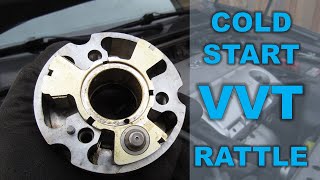
How to confirm: This requires a professional diagnosis. A technician will use a scan tool to monitor camshaft deviation angles at idle and higher RPMs. If the angles are out of specification (e.g., more than +/- 4-5 degrees), it confirms a mechanical timing issue. A rattling noise from the front of the engine on cold starts is also a strong indicator. 🎬 See how to diagnose and fix VVT clattering at startup.
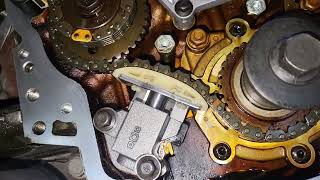
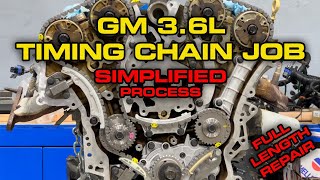
Typical fix: This is a major repair that involves replacing all three timing chains, the tensioners, and the guides. It is highly recommended to use the latest updated parts from GM (specified in TSB #12-06-01-009F). This job is labor-intensive (10+ hours) and requires specialized tools. 🎬 Watch this full-length timing chain removal and installation guide.
Est. part cost: $400-$700 for a full kit
Rare But Worth Checking
- Failed Camshaft Phaser: → Shop Engine Camshaft The phaser is the gear at the end of the camshaft that actually adjusts the timing. It can get stuck or fail internally, but this is less common than a solenoid or chain failure. TSB #12-06-01-009F specifically advises against replacing phasers unless they are found to be damaged, as they are not the typical cause of stretch-related codes.
- Slipped Crankshaft Reluctor Wheel: In very rare cases, the reluctor wheel on the crankshaft, which the crankshaft position sensor reads, can move. This will cause persistent timing codes even after a timing chain replacement. This is a severe issue requiring crankshaft replacement.
- Faulty Camshaft Position Sensor: → Shop Engine Camshaft Position Sensor It's possible for the sensor itself to fail, but it's uncommon. Usually, a bad sensor would trigger a different code related to the sensor circuit (e.g., P0365-P0369). P0024 is a correlation code, meaning the sensor is often correctly reporting a mechanical problem.
- Excessive Camshaft End Play: → Shop Engine Camshaft GM issued TSB #08-06-01-011K indicating that excessive camshaft end play (over 0.016 in / 0.40 mm) can cause various timing codes, including P0024. This would require mechanical inspection and potential cylinder head or camshaft replacement.
Diagnosis Steps
- Check Engine Oil: Immediately check the engine oil level and condition. If it's low or dirty, perform an oil and filter change with the correct Dexos-approved 5W-30 synthetic oil. Clear the code and see if it returns.
- Scan for Additional Codes: Use an OBD-II scanner to check for other codes. Codes like P0008, P0009, P0016, or P0017 are critical clues that point towards a timing chain issue.
- Inspect Solenoid Wiring: Check the wiring harness and connector for the Bank 2 (driver's side) exhaust camshaft actuator solenoid for any visible damage, corrosion, or loose connections.
- Test the Solenoid: The easiest test is the 'swap method'. Unplug and unbolt the Bank 2 exhaust solenoid and swap it with the Bank 1 exhaust solenoid. Clear the codes. If P0024 disappears and P0014 appears, you have a bad solenoid. Alternatively, remove the solenoid and inspect its screens for metallic debris, which indicates a larger mechanical failure.
- Professional Diagnosis: If the oil is good and the solenoid tests fine, the next step is to have a professional check the cam/crank correlation data with an advanced scan tool. A technician will monitor 'Camshaft Position Variance' PIDs. A consistent deviation of more than 4-5 degrees at idle strongly suggests a stretched timing chain.
- Mechanical Inspection: If a timing chain issue is confirmed, the engine's front cover must be removed to inspect the chains, guides, and tensioners. This is a labor-intensive job.
Parts You'll Likely Need
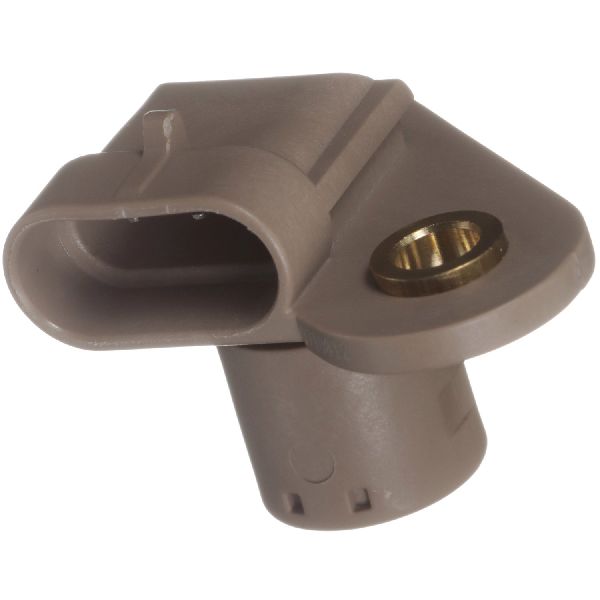
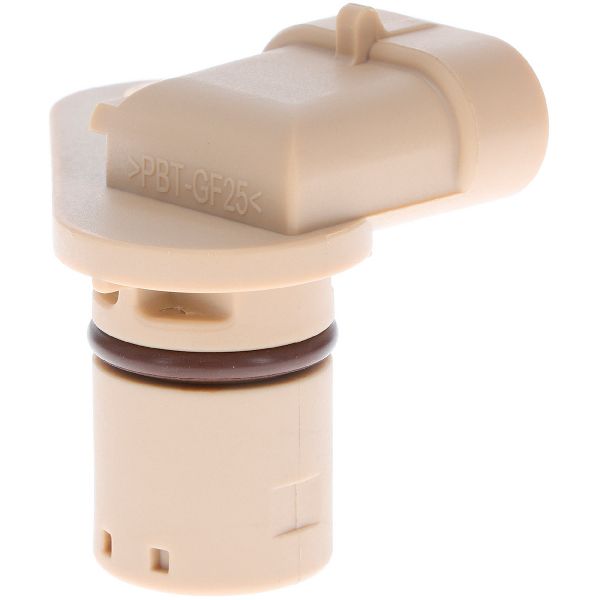
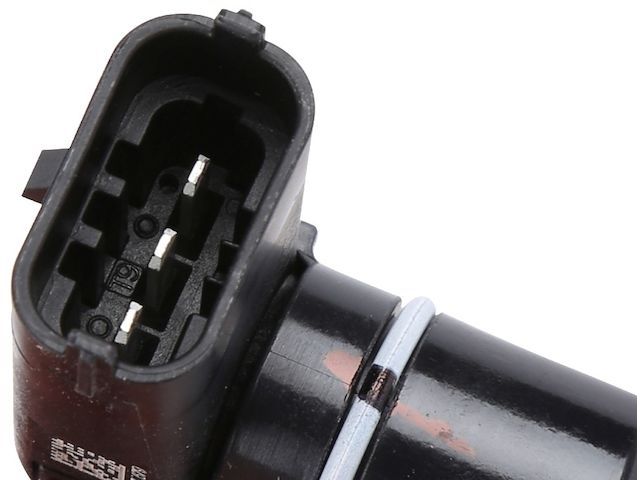
- Engine Camshaft Position Act
Related Codes That Often Appear With This One
- P0014 — This is the equivalent code for the exhaust camshaft on Bank 1 (passenger's side). Seeing both could indicate a widespread oiling issue affecting both banks. It will also appear if a faulty Bank 2 solenoid is swapped to Bank 1 for diagnosis.
- P0008 — This is a general engine timing correlation code for Bank 1. If you see P0024 along with P0008, a stretched timing chain is extremely likely as the misalignment is detected across the engine.
- P0017 — This code indicates a Crankshaft/Camshaft correlation error on Bank 1 Exhaust. Seeing this with P0024 strongly points towards a stretched timing chain affecting the entire engine.
- P0021 — This is the intake camshaft timing code for Bank 2 (driver's side). Seeing P0021 and P0024 together points to a problem affecting the entire Bank 2 cylinder head, such as an oil supply issue or a problem with the primary timing chain feeding that bank.
Technical Service Bulletins (TSBs) & Recalls
- 12-06-01-009F: Details updated timing chain kits for High Feature V6 engines to address stretch issues and related DTCs (P0008, P0017, etc.).
- 08-06-01-011K: Addresses camshaft timing DTCs (including P0024) that can be caused by excessive camshaft end play.
- PIP5096C: A preliminary bulletin for LFX engines that can set P0024 and other cam codes without drivability issues, suggesting inspection of the engine build sticker before replacing actuators.
- 15-06-01-002 (series): While not directly for the V6, this TSB addresses lifter issues on other GM engines (V8s) that can cause ticking noises, which can sometimes be confused with timing chain rattle.
Platform-Specific Known Issues
- Premature Timing Chain Stretch: The 3.6L V6 engines in this generation of Camaro are widely known for this issue, which can lead to catastrophic engine failure if ignored. GM issued TSB #12-06-01-009F which included updated timing chain kits to address the problem.
- Incorrect Oil Life Monitor (OLM) Calibration: Early calibrations of the OLM allowed for excessively long oil change intervals, which contributed to oil breakdown and accelerated timing chain wear. Owners are advised to change oil more frequently than the OLM might suggest.
Mechanic-Grade Diagnostic Values
- Camshaft Position Actuator Solenoid Resistance — expected: 8 - 12 Ohms at 68°F (20°C).. Failure: A reading outside of the 5-15 Ohm range, or an open/shorted circuit, indicates a failed solenoid coil.
- Scan Tool 'Camshaft Position Variance' PID (Bank 2) — expected: -2 to +2 degrees at a stable, warm idle.. Failure: A consistent reading greater than +/- 4 degrees at idle, or a value that steadily increases with RPM, strongly suggests a stretched timing chain or other mechanical timing issue.
- Voltage at VVT Solenoid Connector (Control Wire) — expected: Varies based on command. The ECM provides a Pulse Width Modulated (PWM) ground signal. A DVOM will show a fluctuating voltage; a lab scope is required for accurate diagnosis.. Failure: No voltage change when commanded by a scan tool, or a constant ground/open circuit.
Scan Tool Commands That Help
- GDS2 (GM Global Diagnostic System 2) / Tech2: Camshaft Position Actuator Control — This bidirectional command is used to manually override the ECM and command the Bank 2 exhaust solenoid to a specific duty cycle (e.g., 0%, 25%, 50%). While monitoring the 'Actual Camshaft Position' PID, a technician can verify if the solenoid is physically responding to commands and if the oil passages are clear, helping to distinguish between an electrical, hydraulic, or mechanical phaser problem.
Wiring & Ground Locations
- Bank 2 Exhaust Camshaft Position Actuator Solenoid Connector — On the front of the driver's side cylinder head, pointing forward. It is the lower of the two solenoids on that head.. This is the primary component controlled by the ECM to adjust timing for Bank 2 exhaust. The connector can become contaminated with oil, and the wiring can become brittle from heat cycles. Pin 1 (typically Pink/Black) is the 12V ignition supply, and Pin 2 (typically Dark Blue) is the PWM ground control from the ECM.
- G103 — Typically located on the engine block, near the starter motor on the driver's side.. This is a primary engine block to chassis ground, and it is a critical ground point for the Engine Control Module (ECM). A loose or corroded G103 can cause erratic behavior from various sensors and actuators, including the VVT solenoids, leading to false or intermittent timing codes.
Real Owner Repair Stories
- Camaro5 Forums, user '9ABiT' (2010 Chevrolet Camaro 3.6L LLT) — Check Engine Light with code P0024.
❌ Tried (didn't work) Initially, the owner suspected a major issue like a timing chain.
✅ What actually fixed it The owner swapped the Bank 2 exhaust solenoid with the Bank 1 exhaust solenoid. After clearing codes and driving, the code changed to P0014. This confirmed the original solenoid was faulty. Replacing the single bad solenoid (Bank 2 exhaust) with a new ACDelco part permanently resolved the P0024 code. - Camaro5 Forums, user 'jroc' (2011 Chevrolet Camaro 3.6L LLT with 60,000 miles) — Check Engine Light with codes P0008, P0017, and P0024.
❌ Tried (didn't work) Replacing the camshaft position sensors., Replacing the VVT solenoids.
✅ What actually fixed it After the initial parts-swapping did not work, the vehicle was taken for professional diagnosis. The confirmed cause was stretched timing chains. A full timing chain replacement service, including all three chains, tensioners, and guides, was performed. This resolved all timing-related codes.
OEM Part Supersession History
e.g., 12627116, 12646784→12655421, which was then superseded by 12679099 (for exhaust).— Revisions to improve reliability and resistance to oil contamination.
Heads up: While physically similar, using an intake solenoid in an exhaust position (or vice-versa) can cause issues. Always verify the correct part number for the specific position (Intake/Exhaust) and bank using the vehicle's VIN. The latest ACDelco or GM Genuine part is always recommended.Original LLT Timing Chain Kit→Various updated kits, referenced in TSB #12-06-01-009F.— The original chains were prone to premature stretching. The new chains have an improved design for longevity.
Heads up: When replacing chains on an LLT engine, it is critical to use the complete, updated kit specified by GM. Mixing old and new design components is not advised.
Model Year Variations Within This Range
- 2010-2011 (LLT Engine): These engines have the highest probability of the P0024 code being a symptom of a stretched timing chain due to the original chain design and oil life monitor calibration. Diagnosis should weigh more heavily towards a potential chain issue from the start.
- 2012-2015 (LFX Engine): These engines feature the updated timing chain design from the factory, making chain stretch less common but not impossible, especially with poor maintenance. For an LFX, a P0024 code has a higher probability of being just a faulty solenoid or oil issue compared to the LLT. The LFX also has integrated exhaust manifolds ('headifolds'), which does not affect this code but is a key engine differentiator.
Diagnostic Flowchart
Other Known Issues on This Vehicle
Issues unrelated to this code that are worth knowing about as an owner of this generation:
- Premature Timing Chain Wear (LLT Engine) 🔴 High → Shop Engine Timing Chain — Very common on 2010-2011 models, often appearing between 70,000 and 120,000 miles. Less common but still possible on LFX. (Ref: TSB #12-06-01-009F, Special Coverage #11340C (expired))
- Torque Converter Shudder 🟠 Medium — Common issue on automatic transmission models, typically felt as a vibration or shudder at low speeds (around 40-50 mph). (Ref: Multiple TSBs exist regarding fluid flush and replacement.)
- Key Stuck in Ignition 🟡 Low — A common annoyance where the key cannot be removed from the ignition due to a faulty shifter interlock or wiring issue. (Ref: Recall #14294 for some model years.)
- Carbon Buildup on Intake Valves 🟠 Medium — A consequence of the Direct Injection (DI) system on both LLT and LFX engines. Over time, it can cause rough idle and reduced performance. Typically requires walnut blasting to clean.
- Water Pump Failure 🟠 Medium — The water pump is a known failure point that can lead to coolant leaks and overheating. Often occurs after 60,000 miles.
- Trunk Lid Wiring Harness Failure 🟡 Low — The wiring that runs to the trunk lid can fray and break from repeated opening and closing, causing the trunk release and/or third brake light to fail.
Used vs. New Parts: Buying Guide for This Vehicle
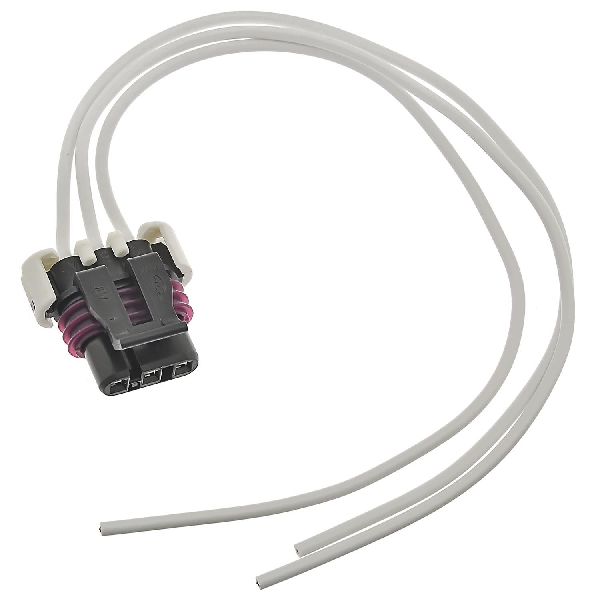
When a used part is the smart pick: For this specific repair, using used parts is highly discouraged. The only scenario where a used part might be considered is for a wiring harness pigtail if the original connector is broken during diagnosis.
What to inspect on the donor part:
- Not applicable as used mechanical parts are not recommended.
OEM-only on this vehicle (don't cheap out):
- Timing Chain Kit: This is a critical, high-labor job. Using anything other than the latest GM Genuine kit or a top-tier OEM-supplier equivalent (like Cloyes) is a significant risk.
- Camshaft Actuator Solenoids: Due to high failure rates of many aftermarket brands and the sensitivity of the VVT system, using OEM ACDelco solenoids is the most reliable path to a lasting repair.
Aftermarket brands forum-validated for this vehicle:
- Cloyes (for Timing Chain Kits): Widely regarded in the professional community as an OEM-quality supplier for timing components.
Brands owners have reported issues with on this vehicle:
- Dorman (for VVT Solenoids): Multiple forum and owner reports indicate a high rate of failure, either out-of-the-box or shortly after installation, for this specific application.
Real Owner Stories
Aggregated from forums and TSBs cited above. Mileages and costs reflect what owners reported in those sources.
2007 Cadillac CTS 3.6L
Symptoms: The owner reported P0011, P0021, and P0024 codes appearing even after replacing sensors.
What fixed it: The discussion concluded that despite the mileage, a stretched timing chain was the most likely cause requiring replacement.
Source hint: r/MechanicAdvice - 07 CTS 3.6L timing issue
Chevrolet Camaro 3.6L LLT
Symptoms: Owners on forums reported symptoms ranging from simple check engine lights to P0024 and related timing codes.
What fixed it: Outcomes varied from simple solenoid swaps to full timing chain replacements using updated parts from TSB 12-06-01-009F.
Source hint: Camaro5.com Forums
Chevrolet Camaro 3.6L LLT
Symptoms: Technicians discussed the complexity of the timing chain job, focusing on the failure of guides and tensioners.
What fixed it: Performing a full timing chain job using the updated parts specified in TSB 12-06-01-009F.
Source hint: BobIsTheOilGuy.com - LLT 3.6L Timing Chains
Related OBD-II Codes
Frequently Asked Questions
Does TSB #12-06-01-009F apply to my 3.6L Camaro if I have P0024?
Can I just swap parts to see if the Bank 2 exhaust solenoid is bad?
Why is the Oil Life Monitor (OLM) calibration a problem for my LLT engine?
I have P0024 but no drivability issues on my LFX engine; should I replace the actuators?
What kind of oil should I use to prevent P0024 and timing chain issues?
Is the rattling noise on cold starts related to the P0024 code?
Helpful Videos


We Have This Part in Stock


The information in this article is provided for general reference and educational purposes only. Vehicle specifications, procedures, and part compatibility can vary by production date, trim level, and region. Always consult your vehicle's factory service manual and verify part numbers before purchasing or performing repairs. Safety-critical components such as airbags, seat belts, and braking systems should be installed by a qualified professional.
- Chevrolet Camaro:
- 🧭 Diagnostic Flowchart
- 🎬 Helpful Videos
- 🛍️ Shop This Part
- What's Unique About the 2010-2015 Chevrolet Camaro
- Symptoms You May Notice
- Most Likely Causes
- Rare But Worth Checking
- Diagnosis Steps
- Parts You'll Likely Need
- Related Codes That Often Appear With This One
- Technical Service Bulletins (TSBs) & Recalls
- Platform-Specific Known Issues
- Mechanic-Grade Diagnostic Values
- Scan Tool Commands That Help
- Wiring & Ground Locations
- Real Owner Repair Stories
- OEM Part Supersession History
- Model Year Variations Within This Range
- Other Known Issues on This Vehicle
- Used vs. New Parts: Buying Guide for This Vehicle
- Real Owner Stories
- 2007 Cadillac CTS 3.6L
- Chevrolet Camaro 3.6L LLT
- Chevrolet Camaro 3.6L LLT
- Related OBD-II Codes
- Frequently Asked Questions
- 🎟️ Get 5% Off