

P0024 on 2009-2017 Chevrolet Traverse 3.6L: Exhaust Cam Timing Causes and Fixes
On a 2009-2017 Traverse, code P0024 is most often caused by a faulty Bank 2 exhaust camshaft actuator solenoid or low/dirty engine oil. These are simple, inexpensive fixes. However, this code can also be an early and critical warning sign of a stretched timing chain, a very common and serious issue on this engine. A professional diagnosis using a scan tool to check cam/crank deviation is crucial before replacing parts. The solenoid is an easy DIY fix, while a timing chain replacement is a major,
- Always check your engine oil level and condition first. A simple oil change can sometimes resolve this code.
- The most common part to fail is the Bank 2 (radiator side) exhaust camshaft actuator solenoid. It's affordable and relatively easy to replace.
- P0024 can be a symptom of a stretched timing chain, a very serious and expensive repair common to this engine. Do not ignore the code.
- If you also have codes like P0008 or P0017, a timing chain failure is extremely likely and requires immediate professional diagnosis.
What's Unique About the 2009-2017 Chevrolet Traverse
The 3.6L LLT V6 engine used in the first-generation Traverse is notorious for premature timing chain stretching. This is a widespread, documented issue acknowledged by GM through multiple Technical Service Bulletins (TSBs) and a special coverage program (#11340C). A primary contributing factor is believed to be an overly optimistic Oil Life Monitor (OLM) system that allowed for excessively long oil change intervals, leading to oil degradation. Degraded oil loses its ability to properly lubricate and operate the hydraulic chain tensioners, leading to chain slack, guide wear, and eventual stretching that can trigger timing codes like P0024. Later TSBs included an ECM reprogram to adjust the OLM calculation. The issue was common enough that it also affects the successor LFX engine (2013-2017), though timing chain components were updated for the LFX.
Symptoms You May Notice
- Check Engine Light is on
- Rough or unstable idle
- Engine hesitation or loss of power, especially on acceleration
- Rattling, scraping, or ticking noise from the engine, particularly on cold startup, that may last a few seconds
- Reduced fuel economy
- Engine may be hard to start or stall when coming to a stop
- Failing an emissions test
- Replacing only the camshaft position sensor. This rarely fixes a P0024 code, as the issue is usually with the oil-controlled mechanical system (solenoid, phaser, or chain), not the sensor reading the position.
- Replacing camshaft phasers when only the timing chains are stretched. TSB 12-06-01-009F explicitly advises against replacing phasers, idlers, or gears unless they are found to be worn, as they are not typically the cause of stretch-related codes.
Most Likely Causes
- Low or Dirty Engine Oil 🔴 High Probability The VVT system and timing chain tensioners are hydraulic and highly sensitive to oil level, pressure, and quality. The original Oil Life Monitor calibration often allowed for intervals that were too long (up to 10,000+ miles), leading to oil degradation and sludge.
How to confirm: Check the oil level on the dipstick and inspect its color and consistency. If it's low, dark, or sludgy, it needs to be changed. Many owners on forums report that simply performing an oil change resolves the code, at least temporarily.
Typical fix: Perform an oil and filter change using a full synthetic 5W-30 oil that meets the GM dexos1 specification. Some owners recommend using an engine flush product before the oil change to help clean out sludge.
Est. part cost: $40-$80 - Faulty Exhaust Camshaft Position Actuator Solenoid (Bank 2) 🔴 High Probability → Shop Engine Camshaft These solenoids control oil flow to the cam phasers. They can become clogged with sludge from dirty oil or fail electrically, causing them to stick in the advanced position. GM has updated the part number for these solenoids multiple times and issued TSBs (like PIP5096C for similar engines) due to batches of faulty solenoids.
How to confirm: Swap the Bank 2 exhaust solenoid with the Bank 2 intake solenoid. Clear the codes and drive the vehicle. If the code changes to P0021 (Intake Camshaft Position Timing - Over-Advanced, Bank 2), the solenoid is faulty. You can also test its resistance with a multimeter; it should be between 8-12 ohms. A technician can also command the solenoid on and off with a scan tool to check for an audible click and a change in engine performance.
Typical fix: Replace the faulty solenoid. Bank 2 is on the radiator side of the engine, making the solenoids relatively accessible without major disassembly.
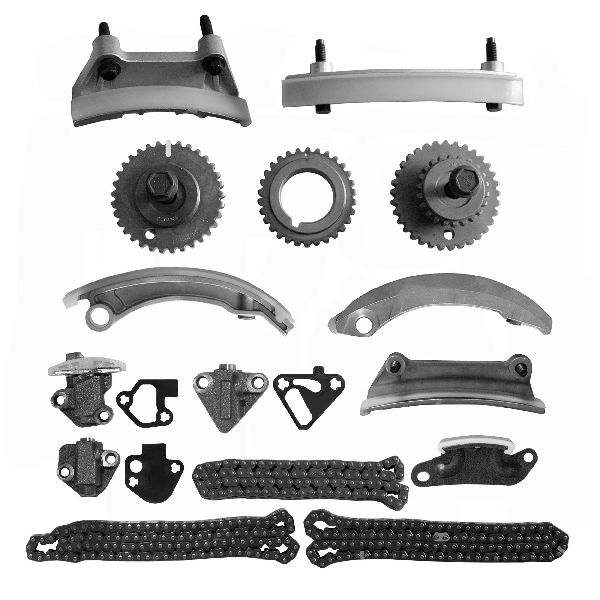
Est. part cost: $25-$60 - Stretched Timing Chains 🟡 Medium Probability → Shop Engine Timing Chain The original timing chains on the 3.6L LLT V6 are a well-documented weak point, prone to premature stretching. GM issued multiple TSBs and a special coverage program (#11340C) for this issue, extending the warranty to 10 years/120,000 miles. This was often caused by extended oil change intervals.
How to confirm: This is a complex diagnosis. A technician will use a scan tool to check cam/crank correlation data. If the deviation between desired and actual cam position is significant (more than 5-6 degrees), physical inspection is required. This involves removing the engine front cover to measure chain deflection. Finding metallic shavings on the magnetic drain plug or on the solenoid screens is also a strong indicator.
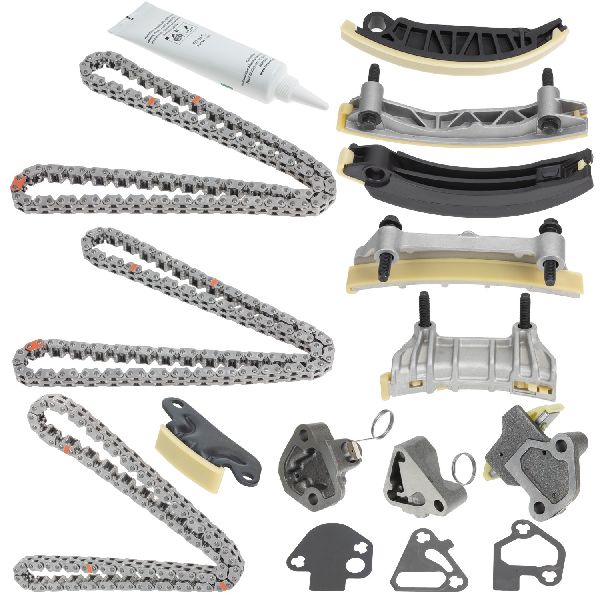
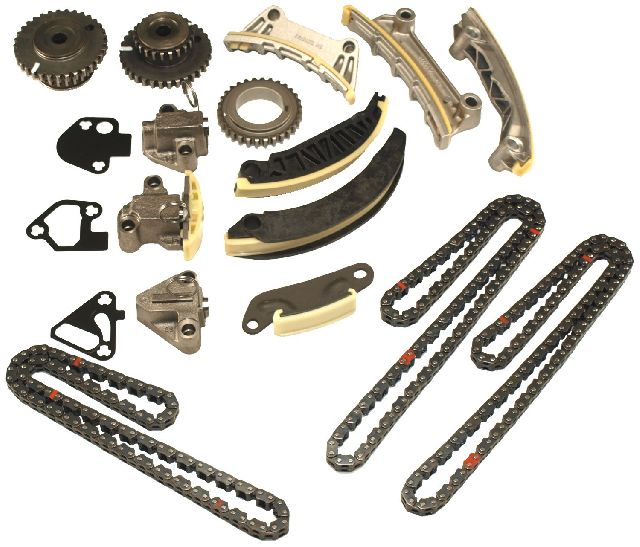
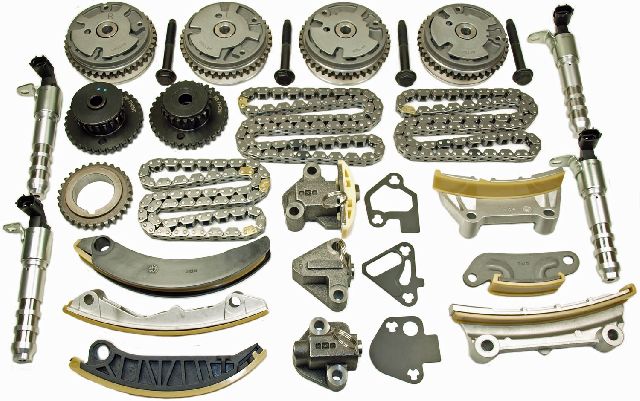
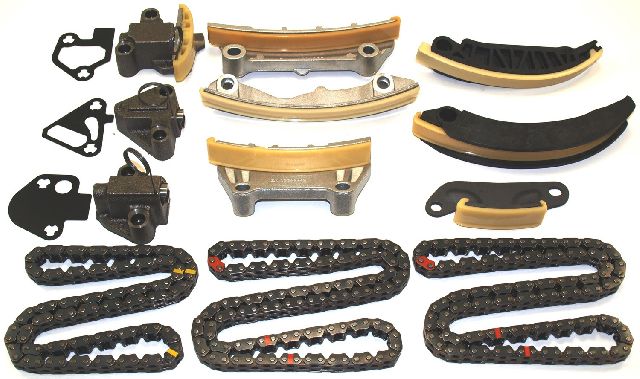
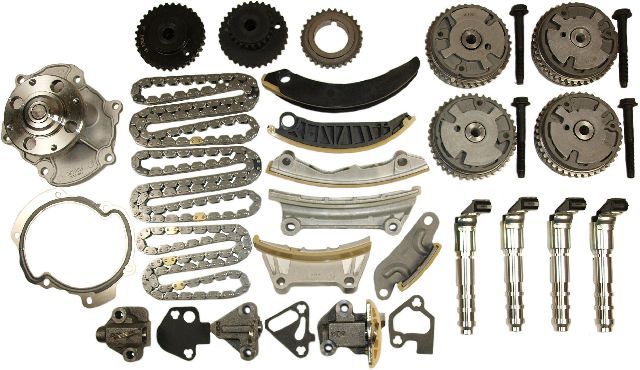
Typical fix: Replace all three timing chains, the tensioners, guides, and often the water pump and crankcase seals while the engine is opened up. This is a very labor-intensive job, often requiring 9-12 hours. 🎬 Watch: Part 1 of this step-by-step timing chain replacement guide.
Est. part cost: $400-$700 for a complete kit
Rare But Worth Checking
- Worn Camshaft Phaser (Actuator): → Shop Engine Camshaft The phaser is the gear on the end of the camshaft that actually adjusts the timing. It can get stuck in the advanced position due to internal wear, debris from dirty oil, or a failed internal locking pin. This is usually diagnosed after ruling out the solenoid and confirming the timing chain is okay. A startup rattle is a common symptom of a failing phaser.
- Faulty Camshaft Position Sensor: → Shop Engine Camshaft Position Sensor It's rare for the sensor itself to cause an over-advanced code without setting its own specific sensor circuit code (like P0366 or P0369), but it can happen. It's more likely to be a solenoid or mechanical issue. Many owners misdiagnose this, replacing the sensor when the problem is the actuator solenoid. 🎬 Watch: How to replace the camshaft position sensor yourself.
Diagnosis Steps
- Check Engine Oil: Verify the engine oil is full and clean. If it is low or dirty, perform an oil and filter change with 5W-30 full synthetic oil meeting dexos1 spec, clear the code, and see if it returns.
- Scan for Other Codes: Use an OBD-II scanner to check for any other stored codes. Codes like P0008, P0009, or P0017 strongly suggest a timing chain issue and should be considered a high priority.
- Test the Camshaft Actuator Solenoid: Locate the Bank 2 (radiator side) exhaust solenoid. Swap it with the adjacent intake solenoid. Clear the codes and run the engine. If the code changes to P0021, the solenoid you moved is bad and needs replacement. Alternatively, use a scan tool to command the solenoid on/off and listen for a click. Note: Some GM TSBs for similar engines discourage this swap and recommend immediate replacement with an updated part if a solenoid is suspected.
- Inspect Solenoid and Wiring: Remove the solenoid and inspect its screens for metallic debris, which indicates a larger mechanical problem (likely timing chain guides). Check the connector and wiring going to the solenoid for any signs of damage, corrosion, or loose connections.
- Advanced Mechanical Diagnosis: If the oil and solenoid are good, the next step is to suspect a mechanical timing problem. This requires a professional. A technician will use a scan tool to monitor desired vs. actual camshaft position angles. If a significant deviation is confirmed (e.g., >5-6 degrees at idle), they will need to remove the engine's front cover to inspect the timing chains, guides, and tensioners for wear and stretch.
Parts You'll Likely Need
- Exhaust Camshaft Position Actuator Solenoid (Bank 2)
(OEM #12655421 (superseded by 12679100))— This solenoid is a common failure point. It gets clogged with debris from engine oil or fails electrically, causing it to stick. GM has updated this part several times.
Trusted brands: ACDelco (OEM), Delphi, Dorman
OEM price range: $40-$60
Aftermarket price range: $25-$45 - Timing Chain Kit
(OEM #12650230 (for 2009 models, verify by VIN))— Required if the diagnosis confirms stretched timing chains, a known major issue on the 3.6L LLT engine. The kit should include all three chains, tensioners, and guides. TSB 12-06-01-009F specifies the correct kit.
Trusted brands: ACDelco (OEM), Cloyes, Melling
OEM price range: $400-$600
Aftermarket price range: $250-$450
Related Codes That Often Appear With This One
- P0008 — This code indicates an Engine Positions System Performance issue on Bank 1. When seen with P0024, it strongly points towards a systemic timing chain problem affecting the entire engine, as this is one of the primary codes listed in the timing chain TSBs.
- P0017 — Crankshaft Position - Camshaft Position Correlation (Bank 1 Exhaust). This code, along with P0024, indicates timing correlation faults on both banks, making a stretched timing chain the most likely culprit.
- P0014 — 'B' Camshaft Position - Timing Over-Advanced (Bank 1). Seeing both P0014 and P0024 together suggests a problem affecting both exhaust camshafts, such as dirty oil or a failing oil pump, rather than a single component failure.
Technical Service Bulletins (TSBs) & Recalls
- 11340C: Special Coverage Adjustment for Timing Chain Wear. This extended the warranty to 10 years/120,000 miles for affected vehicles. It also included an ECM reprogram to update the oil life monitor algorithm.
- 12-06-01-009F: Provides information on the updated timing chain service kits for the 3.6L V6 engine, confirming the widespread nature of the timing chain issue and listing the correct part numbers for service kits.
- 08-06-01-011K: Details diagnostic procedures for various camshaft-related DTCs and includes a procedure to check for and correct excessive camshaft end play using thrust washers.
- Bulletin #N192266190: Notes that when the vehicle is stopped, conditions associated with P0024 can cause the engine to run rough, run at reduced power, or, in rare cases, stall. Dealers are instructed to reprogram the engine control module (ECM).
- Bulletin #PIP5568E: Communicates an investigation into the cause and correction for a group of DTCs setting together, specifically P0011, P0014, P0021, and P0024, including the possibility of these codes setting in pairs.
- Bulletin #PIP5568B: Provides preliminary information regarding an investigation into the cause and correction for the group of codes P0011, P0014, P0021, and P0024 setting together.
- Bulletin #N192266190 02: States that potential reduced engine power or engine stall may occur when DTCs P0011, P0021, P0014, and P0024 are set, and dealers will reprogram the ECM.
Platform-Specific Known Issues
- Premature Timing Chain Stretch: The 3.6L LLT V6 is widely known for this issue. GM issued Special Coverage Adjustment #11340C which extended the warranty on this component to 10 years or 120,000 miles for some model years. This coverage is expired for most vehicles now, but its existence confirms the prevalence of the problem. The primary cause was linked to the original oil life monitor calibration allowing excessive time between oil changes.
- Camshaft End Play: TSB #08-06-01-011K addresses several cam timing codes, including P0024, and instructs technicians to check for excessive camshaft end play, which could require installing thrust washers to correct. This is a less common issue but should be investigated during a major timing job.
Mechanic-Grade Diagnostic Values
- Camshaft Position Actuator Solenoid Resistance — expected: 8 to 12 Ohms. Failure: A reading significantly outside this range, or an open/short circuit, indicates a failed solenoid coil.
- Scan Tool: Desired vs. Actual Camshaft Position Angle Variance — expected: Less than 5 degrees at idle.. Failure: A consistent variance greater than 5-6 degrees for more than a few seconds will trigger the P0024 fault code.
- VVT Solenoid Connector Voltage — expected: Battery Voltage (~12V) on the power supply pin with ignition on, engine off.. Failure: No voltage or low voltage points to a problem in the wiring harness or fuse, not the solenoid itself.
Scan Tool Commands That Help
- GDS2 (GM Global Diagnostic System 2): Camshaft Position Actuator Solenoid Control / Test — This is the primary bidirectional control for this issue. It allows a technician to command the Bank 2 exhaust solenoid ON and OFF while monitoring the 'Desired vs. Actual' camshaft position angles in live data. If the actual angle does not change when commanded, it confirms a stuck solenoid, a clogged oil passage, or a wiring/ECM driver issue, definitively testing the system's mechanical response.
Wiring & Ground Locations
- G110 — Right rear of the engine, mounted to the back of the cylinder head.. This is a primary engine ground. A loose or corroded connection at G110 can cause erratic voltage and incorrect readings for multiple engine sensors, including the camshaft and crankshaft position sensors, potentially leading to false timing codes.
- Q6C Camshaft Position Actuator Solenoid Connector — The 2-pin electrical connector on the Bank 2 (radiator side) exhaust VVT solenoid.. This is the direct connection point for testing voltage and resistance of the solenoid and its control circuit. It should be inspected for oil contamination, corrosion, or pushed-out pins, which can mimic a failed solenoid.
Real Owner Repair Stories
- 2CarPros Forum User 'Sisco' (Saturn Outlook with same GM 3.6L V6) (Saturn Outlook (shared platform/engine)) — Check Engine Light with codes P0011, P0014, P0021, and P0024, plus a StabiliTrak warning. Vehicle was running sluggish with engine noise.
❌ Tried (didn't work) Initial diagnosis suggested replacing all four cam sensors/solenoids.
✅ What actually fixed it The engine oil was found to be very low. Adding two quarts of oil and clearing the codes resolved all symptoms and fault codes, confirming the issue was solely due to low oil level. - NHTSA ODI #10714540 — An owner reported poor engine performance occurring occasionally. A diagnostic check noted codes P0011 and P0024, identifying the issue as camshaft position timing over-advanced.
OEM Part Supersession History
12655421→12679100— Part redesign to improve reliability and address internal clearance issues found in the original design.
Heads up: While physically interchangeable, using an old-stock original part is not recommended. TSBs for similar engines explicitly advise against swapping solenoids for diagnosis and instead recommend replacing the suspected faulty unit with the new service part, as a bad batch of original solenoids was a known issue.
Model Year Variations Within This Range
- 2009-2012: These model years use the 3.6L LLT V6. This engine is the original version most notorious for the timing chain stretching issue due to early chain designs and aggressive Oil Life Monitor (OLM) calculations. It uses a Bosch ECM.
- 2013-2017: These model years use the updated 3.6L LFX V6. The LFX features an integrated exhaust manifold, a different intake manifold, and a Delphi ECM. The timing chains were redesigned and are considered more durable than the early LLT chains, but they are still a potential failure point, often linked to oil consumption or poor maintenance.
Diagnostic Flowchart
Used vs. New Parts: Buying Guide for This Vehicle
When a used part is the smart pick: For this specific repair, using used parts is generally not recommended. The cost of a new VVT solenoid is low, and the failure rate is high, making a used part a significant gamble. All other major components are wear items that should not be sourced from a junkyard.
Donor-vehicle mileage cap: roughly under 60000 miles for the part to have meaningful remaining life.
What to inspect on the donor part:
- If forced to consider a used solenoid, look for one from a vehicle with documented low mileage and regular maintenance records.
- Avoid parts from engines that show signs of sludge or have failed due to timing chain issues.
OEM-only on this vehicle (don't cheap out):
- Timing Chain Kit: This is a critical, high-labor repair. Using non-OEM or unverified aftermarket kits is a major risk. Stick to ACDelco (OEM) or highly reputable aftermarket brands known for timing components.
Aftermarket brands forum-validated for this vehicle:
- Timing Chain Kits: Cloyes, Melling
- VVT Solenoids: Delphi, Dorman
Brands owners have reported issues with on this vehicle:
- Unbranded, 'white box' timing chain kits from online marketplaces. The quality of the chain material and guides is paramount, and failures are common with cheap kits.
Real Owner Stories
Aggregated from forums and TSBs cited above. Mileages and costs reflect what owners reported in those sources.
2011 Chevrolet Traverse 3.6L LLT V6 — ~135000 miles
Symptoms: Check Engine Light came on with a rattling noise from the engine on cold startups.
What fixed it: The owner first tried an oil change and then replaced the camshaft actuator solenoids, but the code returned. The ultimate fix was a complete replacement of all three timing chains, guides, and tensioners.
Cost: $2000-$4000
Source hint: traverseforum.com
2012 GMC Acadia 3.6L LLT V6 — ~110000 miles
Symptoms: Check Engine Light for P0024, engine hesitation on acceleration.
What fixed it: A mechanic advised checking the Bank 2 exhaust solenoid for metal shavings. Shavings were found, confirming the need for a timing chain job. The issue was resolved by replacing the timing chains, guides, and tensioners per TSB guidelines.
Source hint: reddit.com/r/MechanicAdvice
Related OBD-II Codes
Frequently Asked Questions
Is the timing chain problem on my 2011 Traverse still covered by a warranty?
My Traverse has code P0024. Where is the part I need to check first?
What is the correct engine oil to use to help prevent P0024 from returning?
I have P0024 and my mechanic also found code P0008. What does this mean?
My mechanic found metal shavings on the solenoid screen. Is that bad?
Can I just swap the solenoids on Bank 2 to see if the P0024 code moves?
Helpful Videos

We Have This Part in Stock

The information in this article is provided for general reference and educational purposes only. Vehicle specifications, procedures, and part compatibility can vary by production date, trim level, and region. Always consult your vehicle's factory service manual and verify part numbers before purchasing or performing repairs. Safety-critical components such as airbags, seat belts, and braking systems should be installed by a qualified professional.
- Chevrolet Traverse:
- 🧭 Diagnostic Flowchart
- 🎬 Helpful Videos
- 🛍️ Shop This Part
- What's Unique About the 2009-2017 Chevrolet Traverse
- Symptoms You May Notice
- Most Likely Causes
- Rare But Worth Checking
- Diagnosis Steps
- Parts You'll Likely Need
- Related Codes That Often Appear With This One
- Technical Service Bulletins (TSBs) & Recalls
- Platform-Specific Known Issues
- Mechanic-Grade Diagnostic Values
- Scan Tool Commands That Help
- Wiring & Ground Locations
- Real Owner Repair Stories
- OEM Part Supersession History
- Model Year Variations Within This Range
- Used vs. New Parts: Buying Guide for This Vehicle
- Real Owner Stories
- 2011 Chevrolet Traverse 3.6L LLT V6 — ~135000 miles
- 2012 GMC Acadia 3.6L LLT V6 — ~110000 miles
- Related OBD-II Codes
- Frequently Asked Questions
- 🎟️ Get 5% Off