

P0024 on 2011-2024 Dodge Durango 5.7L Hemi: Causes and Fixes for Over-Advanced Cam Timing
Code P0024 on a 5.7L Hemi Durango means the passenger side exhaust camshaft is too far advanced. The most common cause is a faulty VVT solenoid, which is located under the intake manifold. Before attempting this repair, always check your engine oil level and condition, as low or dirty oil is a frequent trigger. Using the correct 5W-20 oil and a quality filter is critical.
- P0024 on the 5.7L Hemi points to an over-advanced exhaust cam on the passenger side.
- Always check your oil level and condition first; use 5W-20 oil.
- The most likely failed part is the VVT solenoid, but it requires removing the intake manifold to replace.
- If the VVT solenoid has been replaced and the code returns, investigate for signs of a more serious issue like a failing cam phaser or the 'Hemi tick' (lifter failure).
- Due to the location of the solenoid, DIY difficulty is high. Expect 2.5+ hours of labor at a shop.
What's Unique About the 2011-2024 Dodge Durango
On the 5.7L Hemi engine, the VVT solenoid (also called an oil control valve) is a very common failure point for this code. Unlike many other engines where this part is easily accessible on the valve cover, the Hemi's VVT solenoid is located in the engine valley, underneath the entire intake manifold. This makes diagnosis and replacement a more involved job, often taking 3-5 hours. Additionally, the 5.7L Hemi can be prone to camshaft/lifter issues (the 'Hemi tick'), which can generate metallic debris that contaminates the oil and clogs the fine mesh screens on the VVT solenoid, leading to repeated failures if the root cause isn't addressed.
Symptoms You May Notice
- Check Engine Light is on
- Rough or unstable idle
- Engine hesitation or stumbling on acceleration
- Reduced engine power
- Decreased fuel economy
- Engine may be hard to start
- A ticking or rattling noise from the top of the engine
- Replacing the camshaft position sensor first without checking oil or the VVT solenoid. The sensor is reporting the problem, but is not usually the cause of it.
- Replacing the cam phaser when the actual problem was just a clogged VVT solenoid. Due to the labor involved, it's critical to diagnose the simpler components first.
Most Likely Causes
- Low, Dirty, or Incorrect Viscosity Engine Oil 🔴 High Probability The Hemi's VVT and MDS systems are entirely dependent on oil pressure and cleanliness. Sludge or the wrong oil type (e.g., not using the specified 5W-20) can clog the small passages in the VVT solenoid and cam phaser.
How to confirm: Check the oil level on the dipstick and examine the oil's condition. If it's low, black, or sludgy, or if it's been a long time since the last oil change, this is a likely contributor.
Typical fix: Perform a complete oil and filter change using the manufacturer-specified oil viscosity (typically 5W-20) and a high-quality filter. Using a Mopar OEM filter is often recommended as some aftermarket filters can cause pressure issues.
Est. part cost: $50-$100 - Faulty VVT Solenoid (Oil Control Valve) 🔴 High Probability This solenoid is a common failure item. It can become clogged with debris, its internal screens can break down, or the solenoid coil can fail electrically, causing it to stick.
How to confirm: Because it's under the intake manifold, physical inspection is difficult. A diagnostic scan tool can command the solenoid to activate, but failure is often intermittent. If the oil is clean and the problem persists, the solenoid is the next logical suspect. A recurring failure of this part may point to debris from a larger engine problem.
Typical fix: Replace the VVT solenoid. This requires removing the intake manifold. It is highly recommended to also replace the intake manifold gaskets at the same time. A relevant forum thread on RamForum.com discusses a successful solenoid replacement fixing similar codes.
Est. part cost: $50-$150 - Failing Camshaft Phaser 🟡 Medium Probability → Shop Engine Camshaft The phaser is a mechanical gear that can wear out over time, especially with poor oil maintenance. The internal locking pins can fail, or the unit can get stuck due to sludge or debris.
How to confirm: This is a difficult diagnosis without ruling out the VVT solenoid first. A persistent rattling noise on startup that goes away as oil pressure builds is a strong indicator. Confirmation requires a significant teardown of the engine's front timing cover.
Typical fix: Replacement of the cam phaser, timing chain, and tensioners. This is a complex and labor-intensive job.
Est. part cost: $200-$500 - Faulty Camshaft Position Sensor (Bank 2) ⚪ Low Probability → Shop Engine Camshaft Position Sensor While sensors can fail, they are less likely to be the cause of an 'over-advanced' code than the hydraulic and mechanical parts that actually control the timing. The sensor is usually just reporting the problem accurately. The 5.7L Hemi only has a single camshaft position sensor on the front timing cover, but the PCM can still set a bank-specific code if the fault timing correlates to Bank 2 events.
How to confirm: Inspect the sensor and its wiring for damage. A diagnostic test involves swapping the Bank 2 sensor with the Bank 1 sensor to see if the code changes to P0014 (the Bank 1 equivalent). If the code moves, the sensor is bad. Since the 5.7L only has one sensor, this test is not applicable; instead, the sensor's output would need to be checked with an oscilloscope.
Typical fix: Replace the camshaft position sensor.
Est. part cost: $25-$75
Rare But Worth Checking
- Stretched Timing Chain or Failed Tensioner: → Shop Engine Timing Chain On higher mileage engines (150k+ miles), the timing chain can stretch, or the hydraulic tensioner can weaken. This causes a constant timing offset that the VVT system cannot correct, leading to codes like P0024. This often presents with a rattling noise.
- Failing Camshaft Lifters / Lobes: → Shop Engine Camshaft The 5.7L Hemi is known for the 'Hemi tick,' which is often caused by failing roller lifters that damage the camshaft. This failure releases metallic debris into the oil, which can clog the VVT solenoid and cause P0024 as a secondary symptom. If you have a persistent ticking noise combined with this code, this is a serious possibility that requires investigation.
Diagnosis Steps
- Check Engine Oil: Verify the oil level is correct and the oil is clean. If low, top up. If old or dirty, perform an oil and filter change with the correct 5W-20 oil and a quality Mopar filter. Clear the code and see if it returns.
- Scan for Codes: Use an OBD-II scanner to confirm P0024 and check for any other related codes (e.g., misfires, other timing codes).
- Inspect Wiring: Visually inspect the wiring harness leading to the Bank 2 (passenger side) camshaft position sensor and VVT solenoid for any obvious damage, fraying, or loose connections.
- Diagnose VVT Solenoid: This is the most likely culprit. Since it's under the intake manifold, direct testing is difficult. If oil and wiring are good, it's reasonable to assume the solenoid is the issue. A professional would use a bi-directional scanner to command the solenoid and watch live data, but for a DIYer, replacement is often the next step.
- Replace VVT Solenoid: If you proceed with this, you must remove the intake manifold. Replace the solenoid and the intake manifold gaskets. Inspect the old solenoid's screens for debris. Fine, dark sludge points to an oil maintenance issue. Shiny metallic particles are a major red flag for internal engine damage, likely from the camshaft/lifters.
- Diagnose Camshaft Position Sensor: If a new solenoid doesn't fix the issue, test the sensor. Since there is only one on the 5.7L Hemi, it cannot be swapped. The sensor is located on the front timing cover. Check its wiring and connector. If the issue persists, advanced diagnostics with an oscilloscope may be needed.
- Advanced Mechanical Diagnosis: If all else fails, the issue is likely mechanical with the cam phaser or timing chain. This usually requires professional diagnosis and repair at a shop.
Parts You'll Likely Need
- Variable Valve Timing (VVT) Solenoid
(OEM #53022338AB)— This is the most common failure point for this code on the 5.7L Hemi. It gets clogged with debris or fails electrically.
Trusted brands: Mopar, Dorman, Standard Motor Products (SMP), TRQ
OEM price range: $80-$120
Aftermarket price range: $40-$80 - Intake Manifold Gasket Set
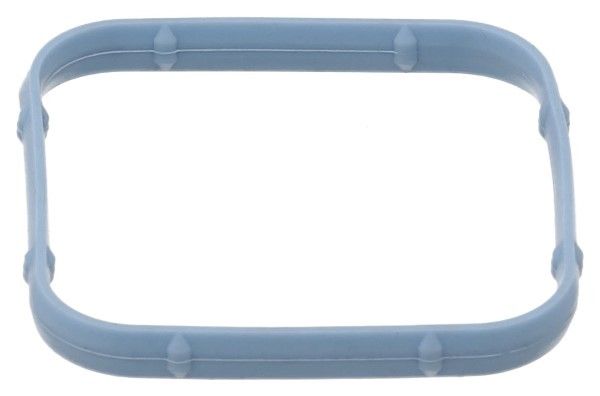
(OEM #53022162AD)— These must be replaced whenever the intake manifold is removed to access the VVT solenoid to prevent vacuum leaks.
Trusted brands: Mopar, Fel-Pro, Mahle
OEM price range: $30-$50
Aftermarket price range: $15-$30
Related Codes That Often Appear With This One
- P0014 — This is the equivalent code for Bank 1 (driver's side). Seeing both codes together could indicate a widespread oil pressure or sludge issue affecting the entire VVT system.
- P0300, P0302, P0304, P0306, P0308 — These are misfire codes. Bank 2 includes cylinders 2, 4, 6, and 8. Incorrect exhaust cam timing can disrupt the combustion process and cause misfires on that bank.
Technical Service Bulletins (TSBs) & Recalls
- TSB 17-007-14: While not directly for P0024, this TSB is relevant to Durango owners as it addresses clunking noises from failed rear self-leveling shock upper mounts, a common platform issue.
Platform-Specific Known Issues
- The VVT solenoid is located under the intake manifold, making a common repair much more labor-intensive than on other vehicles.
- This code can be an early symptom of the 'Hemi tick,' where failing lifters are contaminating the oil system with debris, which then clogs the VVT solenoid. If the solenoid fails repeatedly, a deeper engine inspection is warranted.
Mechanic-Grade Diagnostic Values
- VVT Solenoid (Oil Control Valve) Internal Resistance — expected: 6 to 12 Ohms. Failure: A reading outside of this range, or an open/short circuit, indicates a faulty solenoid coil.
- Camshaft Position Sensor Signal Voltage — expected: A fluctuating square or sine wave pattern between approximately 0.2V and 4.8V when viewed on an oscilloscope.. Failure: A flat line, erratic signal, or voltage that is consistently high or low suggests a sensor or wiring issue.
- Camshaft Position Sensor Connector Voltage (Key On, Engine Off) — expected: Typically a 5V reference, a ground, and a signal wire. You should find 5V on one pin and a good ground on another.. Failure: Missing the 5V reference or ground points to a wiring or PCM issue, not a faulty sensor.
Scan Tool Commands That Help
- wiTECH or advanced aftermarket scanner (e.g., Autel): VVT Solenoid Actuator Test / Bidirectional Control — This is a critical diagnostic step. While the engine is idling, a technician can command the Bank 2 exhaust VVT solenoid to activate. A healthy solenoid with clear oil passages will cause a noticeable change in engine idle (it may stumble or stall). If there is no change in engine operation, it confirms a problem with the solenoid itself (stuck/failed) or a blocked oil passage, helping to rule out a more complex phaser or timing issue.
Wiring & Ground Locations
- Bank 2 Camshaft Position Sensor Connector — The 5.7L Hemi has a single cam sensor located on the front timing cover, near the thermostat housing and below the alternator. Bank 2 codes are set by the PCM correlating this single sensor's signal with crankshaft position during Bank 2 cylinder events.. Damage to the harness or connector for this single sensor can cause bank-specific timing codes like P0024.
- VVT Solenoid Connector — Located in the engine valley, under the intake manifold. The harness routes from the main engine harness towards the center of the engine.. This connector is inaccessible without removing the intake manifold, making visual inspection difficult. A poor connection here is a possible but unlikely cause compared to solenoid failure.
- Engine Ground Straps / Points — Key grounds are located on the engine block and cylinder heads, often near the front of the engine or at the rear near the transmission bell housing. For example, G909A is often cited as being at the right rear of the engine compartment.. A poor engine ground can cause erratic behavior in various sensors, including the camshaft and crankshaft position sensors, leading to incorrect timing codes. A user on a diagnostic forum found that a dangling engine ground strap was related to a host of intermittent sensor codes.
Real Owner Repair Stories
- Reddit user on r/MechanicAdvice (Vehicle with 5.7L Hemi (details not specified)) — Initially had a cam/crank correlation code. After a dealer ECM update, new codes P0024, P0019, and P000D appeared.
❌ Tried (didn't work) Multiple oil changes, Dealer ECM update (which seemed to cause more codes)
✅ What actually fixed it The user's post was for diagnostic advice and did not have a final confirmed fix, but pointed towards a potential mechanical timing or phaser issue that software and oil changes could not resolve.
OEM Part Supersession History
53022298AD→53022298AF— Standard part revision and improvement by the manufacturer.
Heads up: The newer part number (53022298AF) is the correct service replacement for the VVT solenoid in this application.
Model Year Variations Within This Range
- 2011+ (vs. pre-2009): The 5.7L Hemi engine was updated for the 2009 model year to include Variable Valve Timing (VVT). All 2011-2024 Durango models with the 5.7L engine have this VVT system. Pre-2009 engines do not have VVT, use a different timing setup, and will not set this code.
Diagnostic Flowchart
Other Known Issues on This Vehicle
Issues unrelated to this code that are worth knowing about as an owner of this generation:
- Camshaft/Lifter Failure ('Hemi Tick') 🔴 High → Shop Engine Camshaft — Common, especially on engines with over 80,000 miles, or those with extended idle times or inconsistent oil changes. The issue stems from failing roller lifters, often on MDS cylinders, which then damages the camshaft.
- TIPM (Totally Integrated Power Module) Failure 🔴 High — Very common, especially on 2011-2013 models. Can cause a wide range of electrical issues, including no-start conditions, stalling, or the fuel pump failing to shut off. (Ref: NHTSA Recalls: 14V530000, 15V115000, 19V813000. These address fuel pump relay failure within the TIPM.)
- Broken Exhaust Manifold Bolts 🟠 Medium — Very common across all model years. The rear-most bolts are prone to breaking due to heat cycles, causing an exhaust leak that sounds like a ticking noise, especially when the engine is cold.
- Rear Load-Leveling (Nivomat) Shock Failure 🟠 Medium — Common on models equipped with the optional tow package. The self-contained shocks can leak or fail internally, causing a bouncy, unstable ride and clunking noises from the rear. (Ref: Chrysler TSB 17-007-14 addresses clunking from a failed upper shock mount.)
Used vs. New Parts: Buying Guide for This Vehicle
When a used part is the smart pick: For this specific repair, using used parts is generally not recommended. The primary failure components are wear-and-tear items that are sensitive to oil quality and have a finite lifespan.
Donor-vehicle mileage cap: roughly under 50000 miles for the part to have meaningful remaining life.
What to inspect on the donor part:
- If considering a used engine harness, inspect thoroughly for brittle plastic, corrosion on pins, or any signs of previous repair (tape, splices).
- Never buy a used VVT solenoid or cam phaser. The risk of receiving a part that is already clogged, worn, or near failure is extremely high.
OEM-only on this vehicle (don't cheap out):
- VVT Solenoid: While aftermarket options exist, the Mopar OEM solenoid is widely recommended for reliability and to avoid repeat repairs.
- Intake Manifold Gaskets: Always use new, high-quality gaskets (Mopar or Fel-Pro) to prevent vacuum leaks after the repair.
Aftermarket brands forum-validated for this vehicle:
- Fel-Pro (for gaskets)
- Mahle (for gaskets)
Brands owners have reported issues with on this vehicle:
- Unbranded, low-cost VVT solenoids from online marketplaces are a significant gamble and often fail quickly.
Real Owner Stories
Aggregated from forums and TSBs cited above. Mileages and costs reflect what owners reported in those sources.
2011-2024 Ram 1500 5.7L Hemi V8
Symptoms: VVT solenoid keeps going bad repeatedly; issues with oil cleanliness and debris affecting the solenoid screens.
What fixed it: Ensuring the use of clean oil and high-quality filters; the discussion highlights that recurring solenoid failure often points to deeper debris issues.
Source hint: https://www.ramforum.com/threads/vvt-solenoid-keeps-going-bad.172428/
2011-2024 Dodge Durango 5.7L Hemi V8 — ~85000 miles
Symptoms: Ticking noise from the engine, specifically differentiating between a cold start noise and a more serious mechanical sound.
What fixed it: Differentiating between normal operation and lifter failure; serious cases require addressing failing roller lifters and the camshaft.
Source hint: https://www.reddit.com/r/DodgeDurango/comments/1b790vj/hemi_tick_experiences/
Related OBD-II Codes
Frequently Asked Questions
Does TSB 17-007-14 address the P0024 code on my Dodge Durango?
Is there a recall for the electrical issues on my 2011-2013 Durango that might affect engine starting?
Why is the VVT solenoid repair so expensive on the 5.7L Hemi V8?
What oil should I use in my Durango to prevent P0024 and VVT issues?
Could the 'Hemi tick' be related to my P0024 code?
Can I swap the Bank 2 camshaft sensor with Bank 1 to troubleshoot P0024?
Helpful Videos
We Have This Part in Stock


The information in this article is provided for general reference and educational purposes only. Vehicle specifications, procedures, and part compatibility can vary by production date, trim level, and region. Always consult your vehicle's factory service manual and verify part numbers before purchasing or performing repairs. Safety-critical components such as airbags, seat belts, and braking systems should be installed by a qualified professional.
- Dodge Durango:
- 🧭 Diagnostic Flowchart
- 🎬 Helpful Videos
- 🛍️ Shop This Part
- What's Unique About the 2011-2024 Dodge Durango
- Symptoms You May Notice
- Most Likely Causes
- Rare But Worth Checking
- Diagnosis Steps
- Parts You'll Likely Need
- Related Codes That Often Appear With This One
- Technical Service Bulletins (TSBs) & Recalls
- Platform-Specific Known Issues
- Mechanic-Grade Diagnostic Values
- Scan Tool Commands That Help
- Wiring & Ground Locations
- Real Owner Repair Stories
- OEM Part Supersession History
- Model Year Variations Within This Range
- Other Known Issues on This Vehicle
- Used vs. New Parts: Buying Guide for This Vehicle
- Real Owner Stories
- 2011-2024 Ram 1500 5.7L Hemi V8
- 2011-2024 Dodge Durango 5.7L Hemi V8 — ~85000 miles
- Related OBD-II Codes
- Frequently Asked Questions
- 🎟️ Get 5% Off