

P0024 on 2015-2018 Ford C-MAX: Exhaust Cam Timing Causes and Fixes
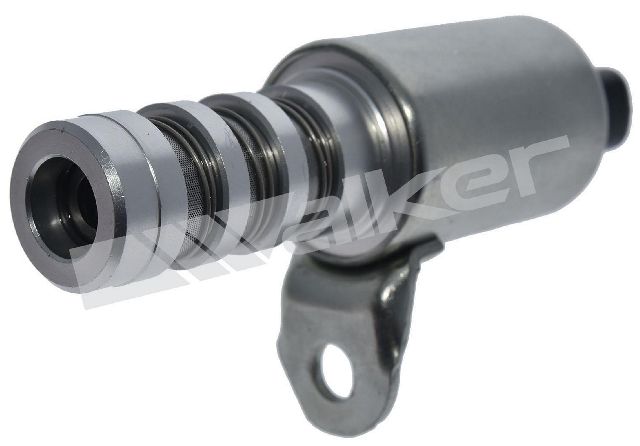
On a 2015-2018 Ford C-MAX, code P0024 is almost always caused by a sticking exhaust VCT (Variable Camshaft Timing) solenoid due to dirty or low engine oil. An oil change and replacing the VCT solenoid is the most common fix. However, on this 2.0L Hybrid engine, the valve cover must be removed to access the solenoid, making the repair more involved than on other vehicles. The required part is typically OEM #CM5Z-6M280-C.
- P0024 on a 2015-2018 C-MAX points to the exhaust camshaft timing being too advanced.
- Before buying any parts, check your engine oil. Low, old, or dirty oil is a primary cause of this code.
- The most likely failed part is the exhaust VCT solenoid, which gets stuck due to oil debris, an issue acknowledged by Ford in multiple TSBs.
- A simple diagnostic step is to swap the intake and exhaust VCT solenoids to see if the trouble code follows the part.
- Do not immediately assume a costly timing chain issue; the problem is usually a much cheaper solenoid or an oil quality problem.
What's Unique About the 2015-2018 Ford C-MAX
The Ford C-MAX, which shares a powertrain with the Fusion Hybrid and Lincoln MKZ Hybrid, has a known sensitivity in its Variable Camshaft Timing (VCT) system. Ford has issued multiple TSBs (SSM 47170, SSM 50067) specifically mentioning that P0024 can be caused by small debris in the engine oil, which causes the VCT solenoid to stick. A crucial difference on this platform is that the VCT solenoids are located underneath the valve cover, meaning the cover must be removed for inspection or replacement. This increases labor time and cost compared to engines where the solenoids are externally accessible.
Diagnostic Flowchart
Tap your situation to follow the diagnostic path that matches what you're seeing on this vehicle.
Symptoms You May Notice
- Check Engine Light is on
- Rough or unstable idle
- Engine hesitation or sluggish acceleration
- Decreased fuel economy
- Engine may be hard to start
- Engine stalling
- Rattling or knocking noises from the engine
- Replacing the camshaft position sensor when the root cause is a sticking VCT solenoid or dirty oil.
- Replacing the timing chain and phasers before properly diagnosing the much cheaper and more common VCT solenoid failure.
- Assuming the VCT solenoid can be replaced without removing the valve cover, as is common on many other engines.
Most Likely Causes
- Sticking or Failed VCT Solenoid 🔴 High Probability → Shop Engine Variable Valve Timing (VVT) Solenoid Ford TSBs #SSM 47170 and #SSM 50067 directly state that small debris in the oil can cause the VCT solenoid to stick, leading to this code. This is a well-documented issue on this powertrain.
How to confirm: A mechanic can command the solenoid with a scan tool (Pinpoint Test HK11) to cycle it and attempt to clear debris. Because the solenoid is under the valve cover, swapping it with the intake solenoid is not a simple diagnostic step. Testing resistance (typically 6-12 ohms) or applying 12V to the removed solenoid to check for a click are definitive tests.
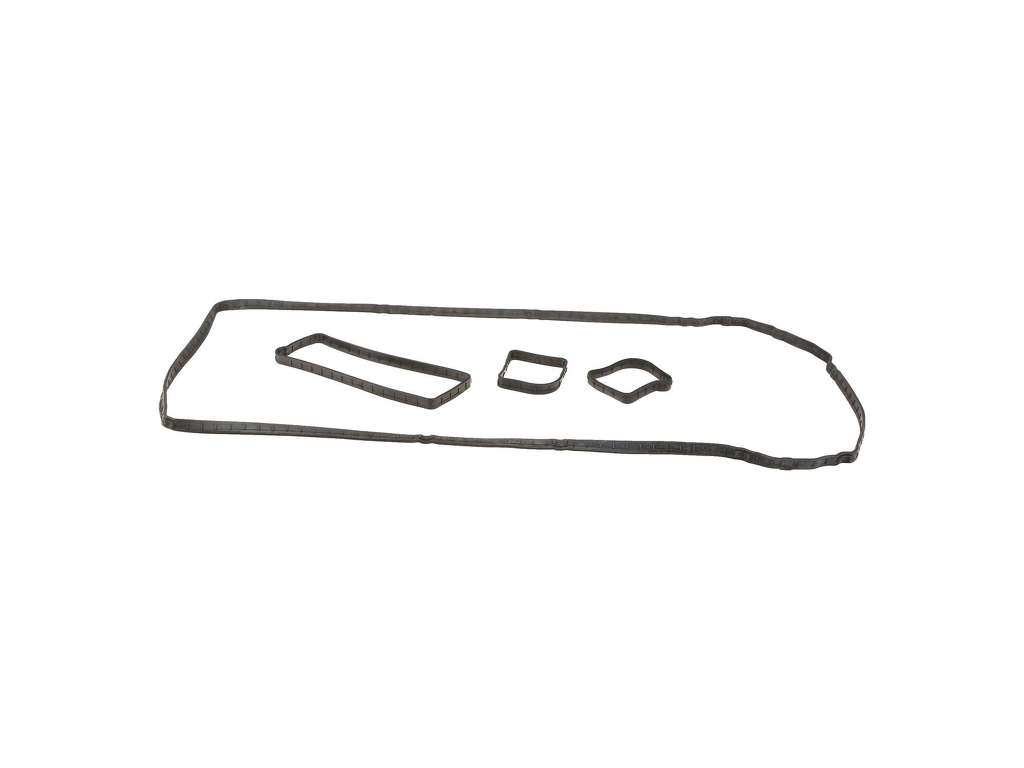
Typical fix: Replace the exhaust VCT solenoid, the valve cover gasket set, and change the engine oil and filter.
Est. part cost: $40-$60 for the solenoid, plus $30-$50 for the gasket set. 🎬 Watch: Step-by-step guide to removing the valve cover and gasket.
- Low, Dirty, or Incorrect Viscosity Engine Oil 🔴 High Probability The VCT system is entirely hydraulic and relies on clean oil at the correct pressure to function. Sludge or low oil levels will prevent the VCT phasers from adjusting timing correctly, and is the leading cause of solenoid failure.
How to confirm: Check the oil level on the dipstick and inspect its color and consistency. If the oil is dark, gritty, or below the 'add' line, it needs to be changed.
Typical fix: Perform an engine oil and filter change using the manufacturer-specified grade (e.g., SAE 5W-20 Synthetic Blend). Clear codes and test drive to see if the issue is resolved before replacing parts.
Est. part cost: $40-$70 - Faulty Camshaft Position Sensor ⚪ Low Probability → Shop Engine Camshaft Position Sensor
How to confirm: The sensor provides the timing data to the PCM. If the VCT system is confirmed to be working, the sensor's wiring and output signal should be tested. However, this is rarely the cause compared to the solenoid or oil issues.
Typical fix: Replace the 'B' (exhaust) camshaft position sensor.
Est. part cost: $46 - $103 according to RepairPal.
Rare But Worth Checking
- Worn Timing Chain or Tensioner: → Shop Engine Timing Chain If the engine has high mileage and has a rattling noise on startup, a stretched timing chain could be the cause, throwing off the base timing enough to trigger the code.
- Failed VCT Phaser (Camshaft Sprocket): The mechanical actuator on the camshaft itself can fail or become clogged with sludge, preventing it from changing timing correctly. This is a more involved and expensive repair.
- Wiring or Connector Damage: Check the wiring harness and connector going to the VCT solenoid and camshaft position sensor for any signs of corrosion, looseness, or damage, which could interrupt the signal from the PCM.
Diagnosis Steps
- Check Engine Oil: Verify the oil level is correct and the oil is clean. If it's low or dirty, perform an oil and filter change with the correct SAE 5W-20 oil. Clear the code and see if it returns. This simple step solves the problem in some cases.
- Scan for Other Codes: Check for any other related DTCs that could provide more clues about a systemic issue.
- Perform TSB Diagnostic Scan: Per TSB SSM 47170, use a capable scan tool to access the PCM and run the VCT solenoid diagnostic routine (Pinpoint Test HK11). This cycles the solenoid 10 times to attempt to dislodge any small debris. Clear codes and re-test.
- Inspect Wiring: Visually inspect the connectors and wiring going to the VCT solenoids and camshaft position sensors for any damage or corrosion. The connectors are on top of the valve cover.
- Test/Replace the VCT Solenoid: If the code persists, the solenoid is the next likely culprit. This requires removing the valve cover. Once removed, the solenoid can be cleaned and tested, but replacement is recommended. Always replace the valve cover gasket and solenoid seals at the same time.
- Mechanical Inspection: If all electronic components and solenoids check out, a deeper mechanical inspection of the VCT phaser and timing chain may be necessary, which is best left to a professional.
Parts You'll Likely Need
- Engine Variable Valve Timing (VVT) Solenoid
(OEM #CM5Z-6M280-C)— This is the most common failure point for code P0024 on this vehicle, as identified by Ford's own service bulletins. It supersedes part number CM5Z-6M280-A.
Trusted brands: Motorcraft, Dorman, Standard Motor Products (SMP)
OEM price range: $50-$70
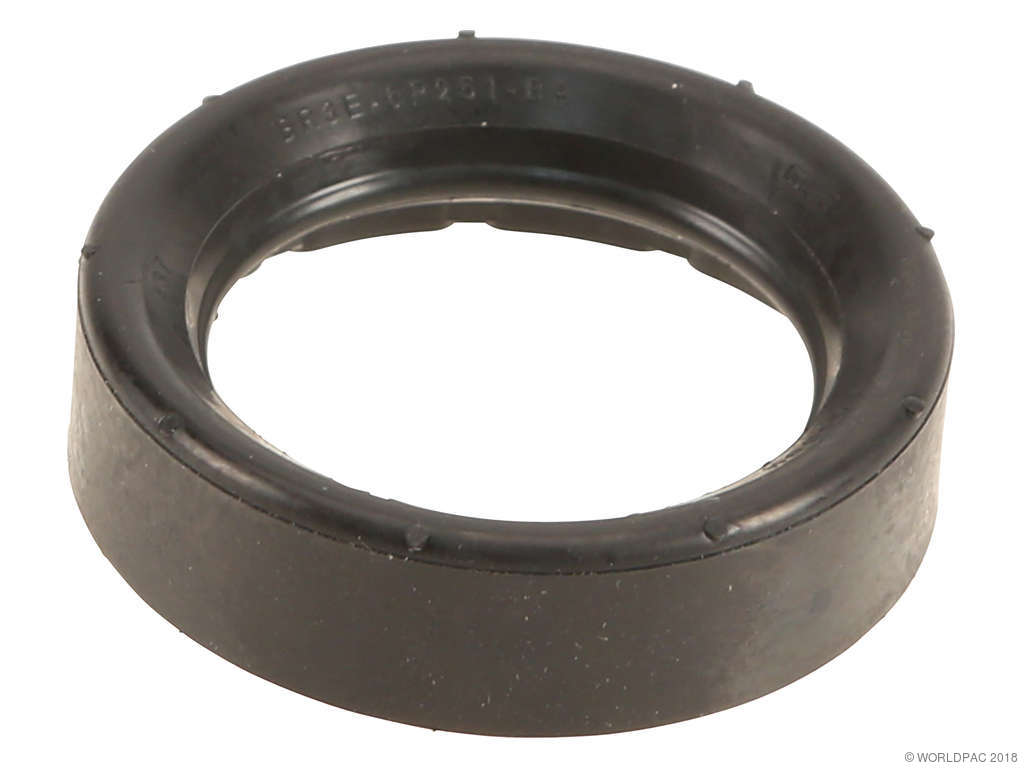
Aftermarket price range: $30-$50 - Valve Cover Gasket Set — Required for replacing the VCT solenoid, as the solenoid is located under the valve cover on this engine. The set should include the main gasket and spark plug tube seals.
Trusted brands: Fel-Pro, Motorcraft, Mahle
OEM price range: $40-$60
Aftermarket price range: $25-$40 - Engine Oil and Filter — Clean oil is critical for the VCT system's operation. An oil change is a required first step and should always be done when replacing VCT components.
Trusted brands: Motorcraft, Mobil 1, Castrol
OEM price range: $50-$80
Aftermarket price range: $40-$60
Related Codes That Often Appear With This One
- P0014 — This is the equivalent over-advanced code for the intake camshaft. Seeing both may indicate a severe oil pressure/quality issue affecting the entire VCT system.
- P0025 — This code is for an over-retarded condition on the same exhaust camshaft. Seeing P0024 and P0025 intermittently can point to an erratic VCT solenoid or a severe oil flow problem.
- P0011, P0012, P0015, P0016, P0017, P0021, P0022 — These are all VCT-related codes mentioned in Ford's TSBs. Seeing a group of them often points to a systemic problem like severe oil contamination, low oil pressure, or incorrect oil viscosity affecting the entire timing system.
Technical Service Bulletins (TSBs) & Recalls
- SSM 54366: Dated 2025-11-12, references diagnostic trouble codes including P0024 and points to specific pinpoint tests.
- SSM 47170: Dated 2018-03-21, notes that P0024 may be due to small debris causing the VCT solenoid to stick and advises using Pinpoint Test HK11 to cycle the solenoid before replacement.
- SSM 50067: Dated 2021-08-27, reiterates the issue of debris causing the VCT solenoid to stick for codes including P0024.
Platform-Specific Known Issues
- TSB SSM 47170 & SSM 50067: Ford issued these bulletins stating that vehicles may exhibit P0024 (and other VCT codes) due to 'small debris causing the VCT solenoid to stick.' It advises against immediate component replacement and suggests following specific diagnostic procedures first, such as cycling the solenoid with a scan tool (Pinpoint Test HK11).
- TSB SSM 54366: This later bulletin also lists P0024 and directs technicians to a specific pinpoint test (HK) in the workshop manual for diagnosis, reinforcing that this is a known issue with a defined diagnostic path.
- Valve Cover Removal Required: Unlike many engines where VCT solenoids are externally accessible, the 2.0L I4 Hybrid requires removing the entire valve cover to access and replace the solenoids, making the job more labor-intensive.
Mechanic-Grade Diagnostic Values
- VCT Solenoid Internal Resistance — expected: 6.9 to 7.9 Ohms at 68°F (20°C). A general acceptable range is 5.0 to 14.0 Ohms.. Failure: A reading of 0 Ohms (short circuit) or infinite Ohms (open circuit) indicates a failed solenoid coil.
- VCT Solenoid Connector Voltage — expected: Approximately 12V (battery voltage) on one pin with the key on, engine off.. Failure: No voltage suggests a wiring fault, a problem with the PCM power relay, or a blown fuse.
- Live Data: VCT Advanced Error PID — expected: The value should be close to 0° when the engine is at a steady RPM in closed-loop operation.. Failure: A large, persistent deviation from 0° indicates the camshaft timing is not matching the PCM's command, pointing to a stuck solenoid or phaser.
- VCT System Oil Pressure — expected: Should be above 20 PSI at idle to ensure proper function.. Failure: Pressure below this threshold can cause VCT system malfunctions even if all components are good, potentially indicating a worn oil pump or clogged pickup tube.
Scan Tool Commands That Help
- Ford IDS (Integrated Diagnostic System) or equivalent (e.g., FORScan): Pinpoint Test HK / VCT Solenoid Cycling — As recommended by TSB SSM 47170, this command cycles the VCT solenoid rapidly (e.g., 10 times) to attempt to dislodge small debris that may be causing it to stick, potentially resolving the fault without part replacement.
- Ford IDS (Integrated Diagnostic System) or equivalent: Monitor VCT Solenoid Duty Cycle PIDs — When diagnosing a drivability issue without a hard fault, monitoring the duty cycle commanded by the PCM can reveal if the computer is attempting to compensate for a slow-responding or stuck component.
Wiring & Ground Locations
- PCM (Powertrain Control Module) — Located at the front of the left front wheel well.. The PCM provides the ground signal that controls the VCT solenoid. A poor connection at the PCM could cause erratic solenoid operation.
- Primary Engine Bay Ground — Located to the right of the 12V battery, near the engine compartment fuse box.. A corroded or loose main ground can cause a variety of unpredictable electrical issues throughout the engine management system.
- G105 Ground Point — On earlier, similar platforms, a key ground point (G105) is located on the left side of the engine compartment.. This is a potential ground point for various engine sensors and actuators. Verifying it is clean and tight is a good practice when diagnosing electrical faults.
OEM Part Supersession History
CM5Z-6M280-A→CM5Z-6M280-C— Standard part revision by the manufacturer, likely for improved durability or to address the known sticking issue.
Model Year Variations Within This Range
- 2015-2018: No significant variations in the 2.0L Hybrid powertrain's VCT system, related part numbers, or the diagnostic procedure for P0024 have been identified across the 2015-2018 model years for the North American Ford C-MAX.
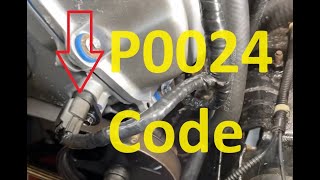
Helpful Videos
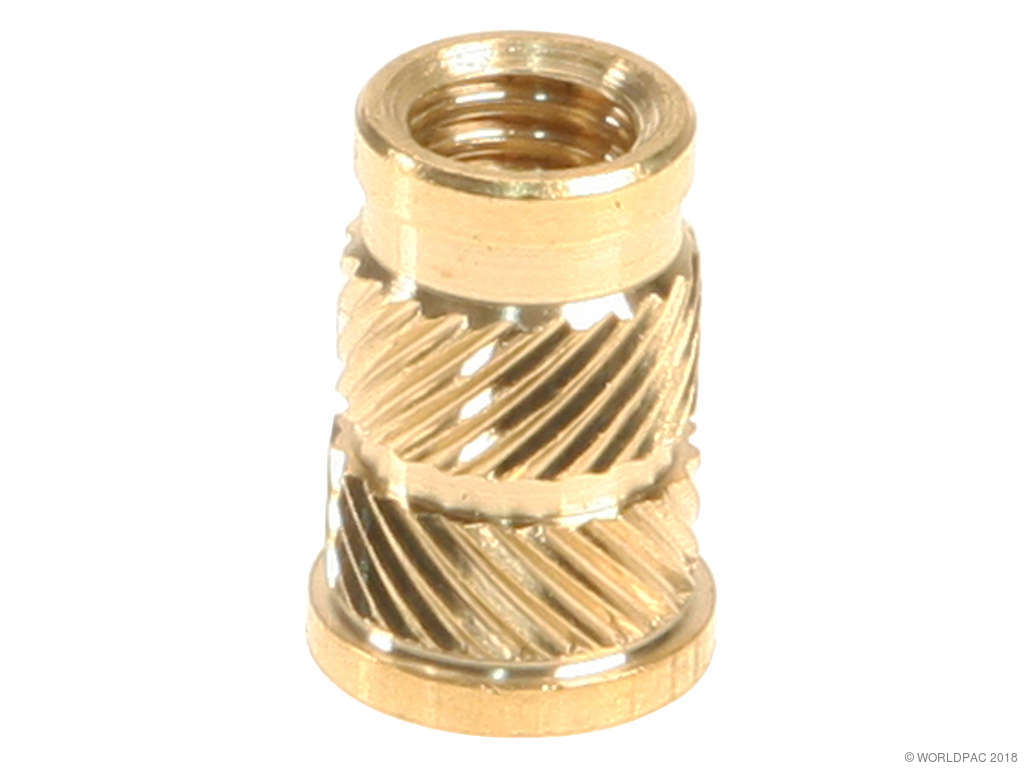
We Have This Part in Stock


The information in this article is provided for general reference and educational purposes only. Vehicle specifications, procedures, and part compatibility can vary by production date, trim level, and region. Always consult your vehicle's factory service manual and verify part numbers before purchasing or performing repairs. Safety-critical components such as airbags, seat belts, and braking systems should be installed by a qualified professional.
- Ford C-MAX:
- 🧭 Diagnostic Flowchart
- 🎬 Helpful Videos
- 🛍️ Shop This Part
- What's Unique About the 2015-2018 Ford C-MAX
- Symptoms You May Notice
- Most Likely Causes
- Rare But Worth Checking
- Diagnosis Steps
- Parts You'll Likely Need
- Related Codes That Often Appear With This One
- Technical Service Bulletins (TSBs) & Recalls
- Platform-Specific Known Issues
- Mechanic-Grade Diagnostic Values
- Scan Tool Commands That Help
- Wiring & Ground Locations
- OEM Part Supersession History
- Model Year Variations Within This Range
- 🎟️ Get 5% Off