

P0024 on 2015-2021 Ford Edge: Exhaust Cam Timing Over-Advanced (Bank 2) Causes and Fixes
On a 2015-2021 Ford Edge with a V6 engine, code P0024 is most often caused by a sticking exhaust VCT (Variable Camshaft Timing) solenoid on Bank 2, frequently due to dirty or low engine oil. Replacing the solenoid is a common and relatively affordable fix. Bank 2 is the cylinder bank closer to the firewall.
- P0024 on a V6 Ford Edge means the exhaust camshaft on the rear cylinder bank (Bank 2) is timed too far advanced.
- Before buying any parts, check your engine oil. Low, old, or dirty oil is a very common cause.
- The most likely part to fail is the Bank 2 exhaust VCT solenoid, which gets stuck. This is a known issue acknowledged by Ford in service bulletins.
- Replacing a single VCT solenoid is an affordable, DIY-friendly repair that often solves the problem.
- This code only applies to the 2.7L and 3.5L V6 engines, not the 2.0L 4-cylinder engine.
What's Unique About the 2015-2021 Ford EDGE
This code is specific to the V6 engine options (2.7L EcoBoost and 3.5L Duratec) in the 2015-2021 Edge, as four-cylinder models do not have a 'Bank 2'. Ford has issued multiple Technical Service Bulletins (TSBs) for this platform, including SSM 50067 and SSM 47170, which explicitly state that P0024 can be caused by small debris in the engine oil causing the VCT solenoid to stick. The TSBs advise technicians to attempt to clear the debris by cycling the solenoid with a diagnostic tool before replacing any parts, confirming how common this specific issue is. The 2.7L EcoBoost in particular is known for potential oil consumption and carbon buildup issues which can contribute to oil contamination.
Diagnostic Flowchart
Tap your situation to follow the diagnostic path that matches what you're seeing on this vehicle.
Symptoms You May Notice
- Check Engine Light is on
- Rough or unstable idle, sometimes feeling like the engine is shaking
- Engine hesitation or stalling, especially at low speeds or when coming to a stop
- Reduced engine power and poor acceleration
- Decreased fuel economy
- Rattling, ticking, or knocking noises from the engine, especially on startup
- Replacing the camshaft position sensor when the root cause is a sticking VCT solenoid or dirty oil.
- Replacing the entire VCT phaser when only the much cheaper and easier to access VCT solenoid has failed.
- Assuming a major timing chain issue before verifying oil quality and VCT solenoid function, which are far more common failures.
Most Likely Causes
- Low or Dirty Engine Oil 🔴 High Probability The VCT system is hydraulic and highly sensitive to oil pressure and cleanliness. Ford TSBs confirm that debris in the oil is a known issue causing VCT problems. Owners on forums for related engines have reported that multiple VCT codes were resolved simply by performing an engine flush and oil change due to sludging.
How to confirm: Check the engine oil dipstick for low level and inspect the oil's color and consistency. If it's dark, gritty, or past its service interval, it needs to be changed.
Typical fix: Perform an engine oil and filter change using the manufacturer-specified grade of oil (e.g., SAE 5W-30 for the 3.5L Duratec). In cases of suspected sludge, an engine flush may be recommended by a professional.
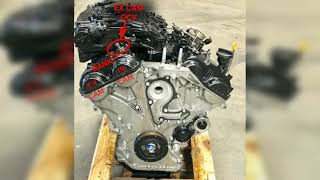
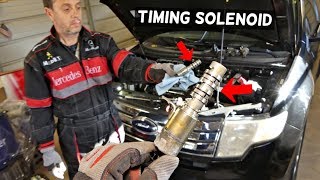
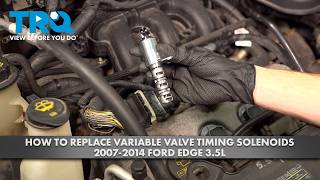
Est. part cost: $40-$80 - Failing Variable Camshaft Timing (VCT) Solenoid 🔴 High Probability → Shop Engine Camshaft As noted in Ford TSBs SSM 50067 and SSM 47170, these solenoids can stick due to small debris. It's the most common mechanical failure for this code. The solenoid for Bank 2 is located on the rear valve cover 🎬 Watch: Identifying VVT solenoid locations on Bank 1 and Bank 2 (closer to the firewall), making access more difficult than Bank 1.
How to confirm: Use a scan tool to command the solenoid on and off while listening for a click. A more definitive test is to swap the Bank 2 exhaust solenoid with another one (e.g., the intake solenoid on the same bank, if they are the same part number). If the code follows the solenoid (e.g., changes to P0021), the solenoid is faulty.
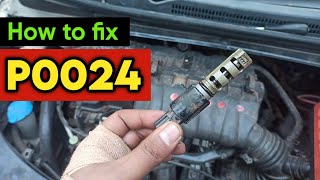
Typical fix: Replace the Bank 2 exhaust VCT solenoid. This requires removing the valve cover. 🎬 Watch this step-by-step guide to replacing the VVT solenoids
Est. part cost: $30-$90 - Faulty Camshaft Position (CMP) Sensor 🟡 Medium Probability → Shop Engine Camshaft Position Sensor
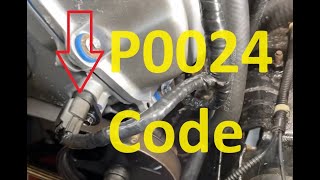
How to confirm: The sensor provides the timing data to the PCM. If the VCT solenoid is confirmed to be working, the sensor's wiring and output signal should be tested with a multimeter or oscilloscope. 🎬 See how to test and fix the exhaust camshaft timing A failing sensor may also trigger other codes like P0349.
Typical fix: Replace the Bank 2 exhaust camshaft position sensor.
Est. part cost: $25-$70
Rare But Worth Checking
- Worn Timing Chain or VCT Phaser: → Shop Engine Timing Chain This is a more serious mechanical issue. If the timing chain is stretched or the VCT phaser (the gear on the end of the camshaft) is stuck or damaged, it can cause a persistent timing code. This is usually accompanied by rattling noises, especially on startup. A Reddit user with a 3.5L EcoBoost reported P0014 and P0024 codes immediately after a timing job, which ended up being related to an oil pump priming issue, highlighting the complexity of the system.
- Clogged Oil Passages: In engines with a history of poor maintenance, sludge can build up and restrict oil flow to the VCT phaser and solenoid, preventing them from operating correctly. A forum user with a 3.5L EcoBoost fixed multiple VCT codes (P0012, P0014, P0022, P0024) with an ATF engine flush and subsequent oil change, which cleared sludge from the VCT screens.
- Wiring or Connector Issues: Damage or corrosion on the wiring or connector for the VCT solenoid or camshaft position sensor can cause an intermittent or false signal, triggering the code. This can happen to the wiring harness that runs over the valve covers.
Diagnosis Steps
- Verify the engine oil level and condition. If low, dirty, or incorrect viscosity, perform an oil and filter change first, clear the code, and re-test. This is the simplest and a very common fix.
- Use a diagnostic scan tool to read the freeze frame data and check for any other accompanying trouble codes.
- Monitor the live data PIDs for desired vs. actual camshaft position for Bank 2 Exhaust (B2E). Observe if the actual angle is stuck or slow to respond to engine RPM changes.
- As per TSB SSM 50067, use the scan tool's bidirectional controls to cycle the Bank 2 exhaust VCT solenoid 10 times to attempt to clear any debris. After cycling, clear the codes and see if the issue returns.
- If the code returns, command the Bank 2 exhaust VCT solenoid on and off with the scan tool. Listen for an audible click from the solenoid on the rear valve cover.
- If the solenoid doesn't click or the timing angle doesn't change, inspect the wiring and connector for damage or corrosion.
- Swap the Bank 2 exhaust VCT solenoid with the Bank 2 intake solenoid (confirm they are the same part number first). Clear the codes and drive the vehicle. If the code changes to P0021 (Intake Camshaft Position Timing Over-Advanced Bank 2), the solenoid is confirmed faulty.
- If the code P0024 returns after the swap, the problem is not the solenoid. The next step is to test the camshaft position sensor and its circuit.
- If all electrical components test good, the issue may be mechanical, such as a clogged oil passage, a faulty VCT phaser, or a stretched timing chain. This requires more in-depth mechanical diagnosis, likely including checking engine oil pressure.
Parts You'll Likely Need
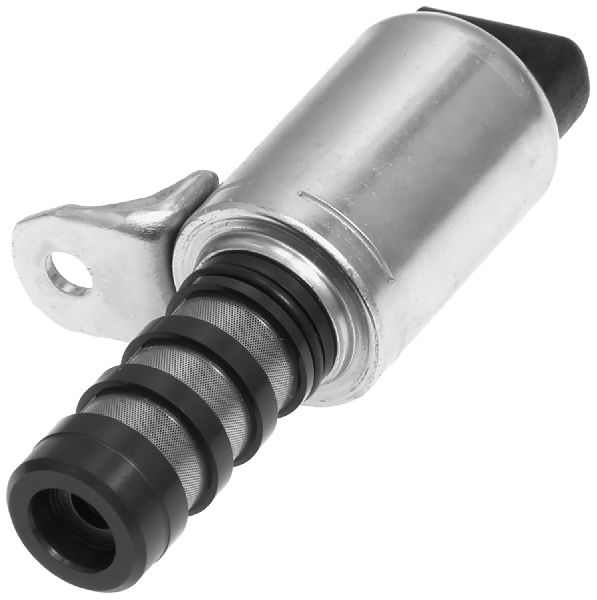
- Engine Variable Valve Timing (VVT) Solenoid
(OEM #AT4Z-6M280-C)— This is the most frequent point of failure for code P0024 on this vehicle, often due to sticking from oil debris as cited in Ford TSBs. This specific part number is listed for the Right (Bank 1) exhaust on some 3.5L applications, but part numbers can vary. It's critical to verify the exact part for your specific engine and position.
Trusted brands: Motorcraft, Dorman, SKP
OEM price range: $50-$90
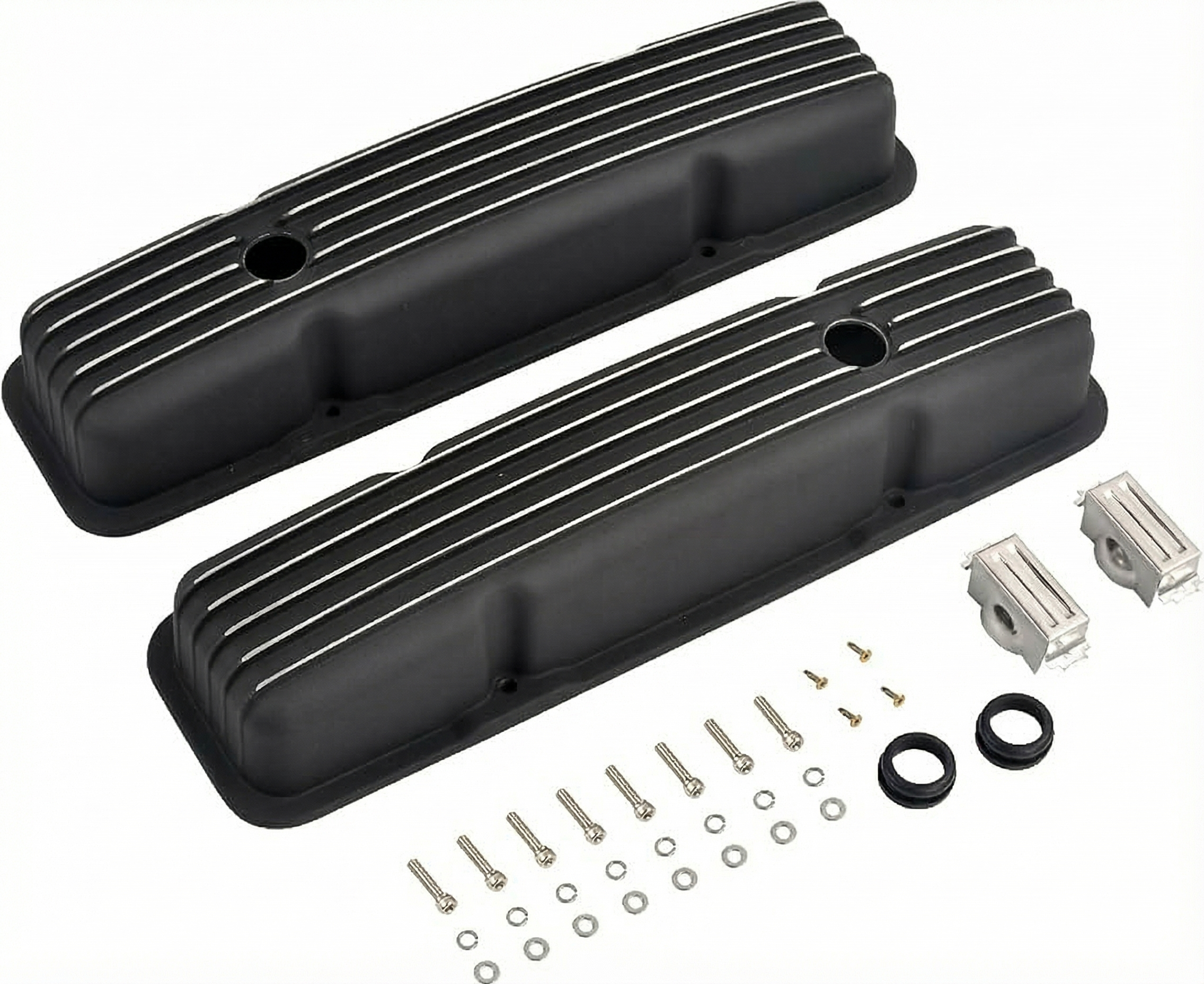
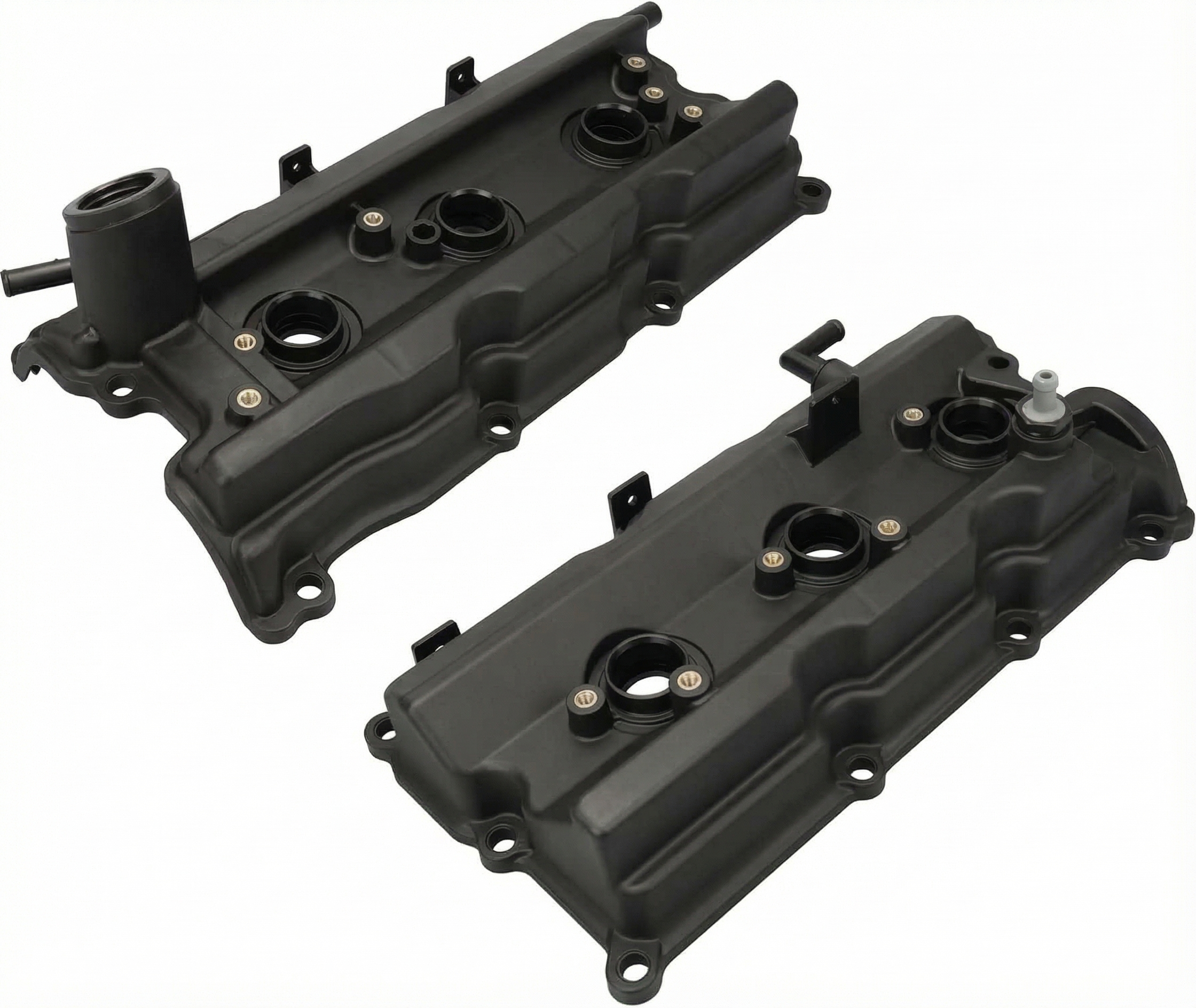
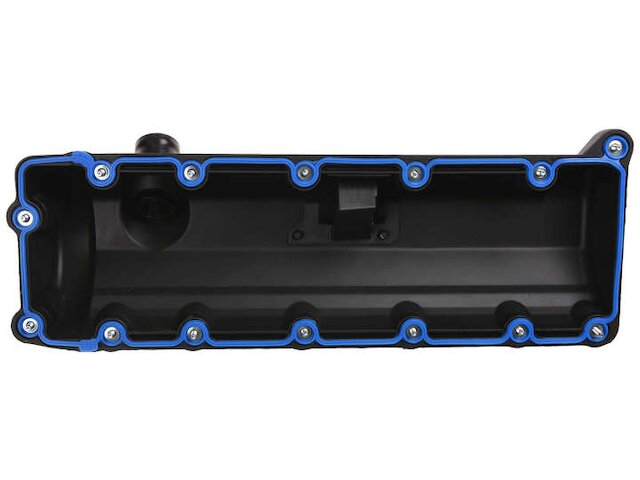
Aftermarket price range: $30-$60 - Valve Cover Gasket Kit — The valve cover must be removed to access the VCT solenoids on these engines. It is best practice to replace the gasket and spark plug tube seals anytime the cover is removed to prevent future oil leaks.
Trusted brands: Fel-Pro, Motorcraft, Mahle
OEM price range: $40-$70
Aftermarket price range: $25-$50 - Engine Oil and Filter — Dirty, low, or incorrect viscosity oil is a primary cause of VCT system faults. An oil change is a critical first step in diagnosis and repair.
Trusted brands: Motorcraft, Mobil 1, Castrol
OEM price range: $50-$80
Aftermarket price range: $40-$60
Related Codes That Often Appear With This One
- P0021 — Intake camshaft timing over-advanced on the same bank (Bank 2). This can occur if there is a systemic oil pressure or debris issue affecting both solenoids on that bank.
- P0014 — Exhaust camshaft timing over-advanced on the opposite bank (Bank 1). If both P0014 and P0024 are present, it strongly suggests a widespread issue like low/dirty oil or low oil pressure affecting both exhaust solenoids.
- P0349 — Camshaft Position Sensor 'A' Circuit Intermittent (Bank 2). This points more directly to a problem with the sensor itself or its wiring, rather than the mechanical VCT components.
Technical Service Bulletins (TSBs) & Recalls
- SSM 54366 - General diagnostic procedure for multiple VCT codes.
- SSM 50067 - Warns that P0024 may be due to debris causing the VCT solenoid to stick and provides a diagnostic step to cycle the solenoid before replacement.
- SSM 47170 - An earlier bulletin with the same warning as SSM 50067.
Platform-Specific Known Issues
- TSB SSM 50067: Notes that DTCs including P0024 may be caused by small debris causing the VCT solenoid to stick, and advises against component replacement before attempting to clear the debris by cycling the solenoid 10 times with a scan tool.
- TSB SSM 47170: Carries the s
Mechanic-Grade Diagnostic Values
- VCT Solenoid (OCV) Internal Resistance — expected: 5 to 15 Ohms. More specifically, a range of 7-12 Ohms is often cited as healthy.. Failure: A reading outside the specified range (open circuit or short) indicates a faulty solenoid.
- VCT Solenoid Connector Voltage — expected: Battery voltage (~12V) on the power supply pin with the ignition on, engine off.. Failure: No voltage suggests a problem with the fuse or power supply relay, not the solenoid itself.
- Camshaft Position (CMP) Sensor Voltage — expected: Signal should fluctuate between 0.5V and 4.5V.. Failure: A flatline voltage or a signal that does not change with engine RPM points to a failed sensor.
- Scan Tool PID: Desired vs. Actual Camshaft Position — expected: The actual position should closely follow the desired position commanded by the PCM.. Failure: The code may set if the difference between the desired and actual position exceeds a threshold, such as 20 degrees.
Scan Tool Commands That Help
- Ford IDS, FORScan, or equivalent professional scanner: VCT Solenoid Actuator Test / Bidirectional Control — As recommended by Ford TSBs, cycle the solenoid on and off (e.g., 10 times) to dislodge small debris. [Bulletin #SSM 50067] You can also use this to audibly confirm solenoid operation (a clicking sound) or watch for the engine to hesitate or stall, which confirms the solenoid is mechanically functioning when commanded.
- Ford IDS, FORScan, or equivalent professional scanner: Monitor VCT PIDs: VCTADV2 (Bank 2 Advance), VCTENA (VCT Enable) — These specific Ford Parameter IDs (PIDs) allow a technician to see if the conditions are correct for VCT operation (VCTENA) and to monitor the commanded versus actual timing advance in degrees (VCTADV2), which is essential for diagnosing if the issue is electronic or mechanical.
Wiring & Ground Locations
- PCM Connector C175E — This is one of the main connectors at the Powertrain Control Module (PCM).. The ground signal that controls the VCT solenoid originates from a pin on this connector. Technicians may need to test for continuity from the solenoid connector back to the corresponding pin at C175E to rule out a wiring break.
- VCT Solenoid Harness Routing — The wiring harness for the VCT solenoids typically runs over the top and around the back of the valve cover to a bulkhead connector.. This area is prone to heat and vibration. A visual inspection should focus on this path for any signs of chafing, melting, or damaged conduit that could lead to a short or open circuit, although this is less common than a failed solenoid.
OEM Part Supersession History
AT4Z-6M280-A / AT4Z-6M280-B→AT4Z-6M280-C— Part revisions for improved reliability or manufacturing changes.
Heads up: While often interchangeable, different revisions may have different colored connectors (e.g., AT4Z-6M280-C is noted as having a blue connector). It is critical to use a part number that matches the specific position (intake/exhaust) and bank for the vehicle's VIN, as internal calibration may differ.
Model Year Variations Within This Range
- 2015-2017 (2.7L EcoBoost): First-generation 2.7L EcoBoost engines used a timing chain setup that was later updated. Some of these earlier models may be more susceptible to timing chain rattle or stretch over time.
- 2018-2021 (2.7L EcoBoost): In 2018, the 2.7L EcoBoost was significantly updated with a stronger dual-chain camshaft drive system and a variable-displacement oil pump. These changes may affect the long-term reliability of the timing components compared to earlier versions.
- 2019-2021: The 2019 model year refresh for the Edge introduced an 8-speed automatic transmission, replacing the previous 6-speed. While not directly related to the P0024 code, PCM software and control strategies may differ between these transmission pairings.
Helpful Videos
![How to Fix P0024 Engine Code in 4 Minutes [2 DIY Methods / Only $6.74]](https://img.youtube.com/vi/0tbOM7HEJsQ/mqdefault.jpg)

Used OEM Parts in Stock
New Aftermarket Parts Available


The information in this article is provided for general reference and educational purposes only. Vehicle specifications, procedures, and part compatibility can vary by production date, trim level, and region. Always consult your vehicle's factory service manual and verify part numbers before purchasing or performing repairs. Safety-critical components such as airbags, seat belts, and braking systems should be installed by a qualified professional.
- Ford EDGE:
- 🧭 Diagnostic Flowchart
- 🎬 Helpful Videos
- 🛍️ Shop This Part
- What's Unique About the 2015-2021 Ford EDGE
- Symptoms You May Notice
- Most Likely Causes
- Rare But Worth Checking
- Diagnosis Steps
- Parts You'll Likely Need
- Related Codes That Often Appear With This One
- Technical Service Bulletins (TSBs) & Recalls
- Platform-Specific Known Issues
- Mechanic-Grade Diagnostic Values
- Scan Tool Commands That Help
- Wiring & Ground Locations
- OEM Part Supersession History
- Model Year Variations Within This Range
- 🎟️ Get 5% Off