

P0024 on 2015-2021 Ford Escape: Exhaust Cam Timing Over-Advanced Causes & Fixes
On a 2015-2021 Ford Escape, code P0024 is most often caused by low or dirty engine oil causing the exhaust Variable Camshaft Timing (VCT) solenoid to stick. An oil change is the first step; if that fails, replacing the VCT solenoid is the next likely fix, costing around $110-$140 for 2015-2019 models and $260-$375 for 2020-2021 models.
- P0024 on your Escape almost always points to an issue with oil flow or the exhaust VCT solenoid.
- Before buying any parts, check your engine oil level and condition. An oil change is the cheapest and easiest first step.
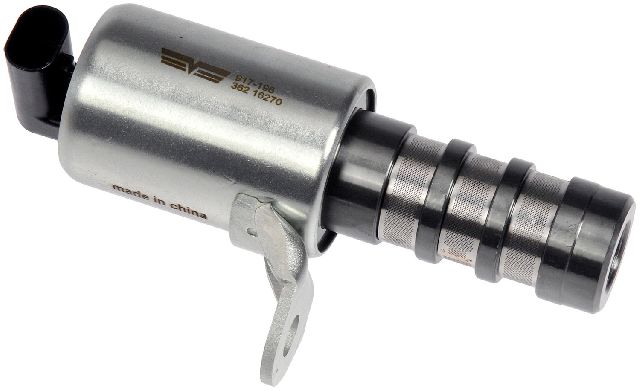
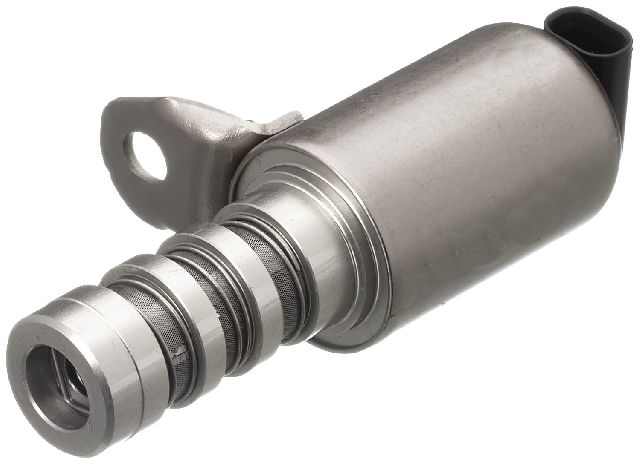
- The most likely part to replace is the exhaust VCT solenoid, also known as an oil control valve.
- Repair costs can be higher on 2020-2021 models than on 2015-2019 models for the same job.
- Do not immediately replace the camshaft position sensor; it is rarely the cause of this specific code.
What's Unique About the 2015-2021 Ford ESCAPE
While the Ford Escape in this year range uses inline engines (which technically only have one 'bank'), Ford's diagnostic system still uses the 'Bank 2' designation for this code, which refers to the exhaust camshaft. The most critical, platform-specific issue, confirmed by multiple Ford Technical Service Bulletins (TSBs), is the VCT solenoid's tendency to stick due to small debris in the engine oil. [1, SSM 50067, SSM 47170] This makes regular, high-quality oil changes especially important on these EcoBoost engines to prevent this specific fault. TSB SSM 50067 even advises technicians to cycle the solenoid with a scan tool 10 times to try and clear debris before replacing it.
Diagnostic Flowchart
Tap your situation to follow the diagnostic path that matches what you're seeing on this vehicle.
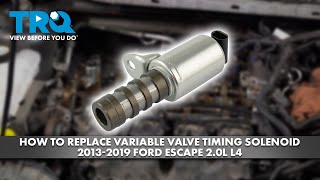
Generation note: This range covers two Ford Escape generations: the 3rd Gen (2015-2019) and the 4th Gen (2020-2021). While the root cause is often the same, the cost to replace the VCT solenoid can be significantly different. RepairPal estimates are lower for the 2015-2019 models compared 🎬 Watch: How to replace the VVT solenoid on 2.0L engines to the 2020-2021 models, suggesting a change in part design or engine bay accessibility. The issue is common across the 1.5L, 1.6L, and 2.0L EcoBoost 🎬 See this walkthrough for replacing the solenoid on 1.6L models engines found in these generations.
Symptoms You May Notice
- Illuminated Check Engine Light (MIL)
- Rough, uneven idle, or stalling at stops.
- Reduced engine power and hesitation when accelerating.
- Engine may be difficult to start.
- Noticeable decrease in fuel economy.
- Rattling or knocking sounds from the engine.
- Replacing the camshaft position sensor. While the sensor reports the timing, it's rarely the cause of an over-advanced condition. The problem is usually with the mechanical or hydraulic parts that control the timing (solenoid, phaser). Diagnose all Camshaft Position (CMP) sensor DTCs first if they are present alongside P0024.
Most Likely Causes
- Low, Dirty, or Incorrect Viscosity Engine Oil 🔴 High Probability Ford TSBs SSM 50067 and SSM 47170 directly state that small debris in the oil can cause the VCT solenoid to stick, which triggers this code. The EcoBoost engines are particularly sensitive to oil quality and level. Many owner accounts on forums like Reddit confirm that neglecting an oil change interval can directly lead to this code.
How to confirm: Check the oil level on the dipstick and inspect its color and consistency. If the level is low or the oil is dark, gritty, or past its service interval, this is the likely cause.
Typical fix: Change the engine oil and filter using the correct viscosity oil specified in your owner's manual. After the oil change, clear the DTC and drive to see if it returns.
Est. part cost: $40-$80 - Faulty Exhaust VCT Solenoid (Oil Control Valve) 🔴 High Probability → Shop Engine Variable Valve Timing (VVT) Solenoid This is the component that gets clogged or stuck by oil debris. It's a very common failure point for this code on many modern engines, including the Escape's. Ford's own TSBs point to this part as the primary sticking point.
How to confirm: After an oil change, if the code returns, the solenoid is the next suspect. A mechanic can use a scan tool to command the solenoid on and off to check its response. It can also be removed, inspected for sludge on its mesh screens, and tested for resistance with a multimeter. A healthy solenoid should typically read between 5 and 20 ohms.
Typical fix: Replace the exhaust VCT solenoid. The OEM part number for some applications is KX6Z-6M280-A. Before replacement, TSB SSM 50067 suggests attempting to clear debris by cycling the solenoid 10 times with a diagnostic tool.
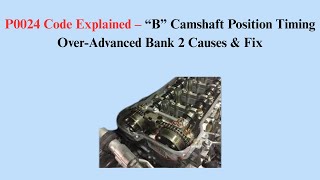
Est. part cost: $80-$100 for OEM, $30-$75 for aftermarket. - Failed Camshaft Phaser ⚪ Low Probability → Shop Engine Camshaft The phaser is the mechanical gear that the solenoid controls. If it becomes clogged with sludge or mechanically fails, it can get stuck in the advanced position. This is a more common issue on higher-mileage vehicles where oil maintenance may have been deferred.
How to confirm: This is more difficult to diagnose and is typically suspected after replacing the VCT solenoid doesn't fix the issue. Diagnosis involves more in-depth engine work, often requiring removal of the valve cover to inspect the phaser and timing components directly.
Typical fix: Replace the camshaft phaser assembly. This is a more labor-intensive job often performed concurrently with a timing chain replacement.
Est. part cost: $100-$300 - Wiring or Connector Issue ⚪ Low Probability
How to confirm: Visually inspect the wiring harness and connector going to the VCT solenoid for any signs of damage, corrosion, or loose connections. Use a multimeter to check for battery voltage (around 12V) at the connector with the ignition on.
Typical fix: Repair or replace the damaged section of the wiring harness or the connector.
Est. part cost: $10-$50
Rare But Worth Checking
- Stretched Timing Chain: → Shop Engine Timing Chain While not as common as oil-related issues, if the vehicle has high mileage, a stretched timing chain can throw off the base camshaft timing enough to trigger this code. This is a significant mechanical repair often accompanied by rattling noises on startup.
- Failing Powertrain Control Module (PCM): → Shop Engine Control Module (ECM) In very rare cases, the PCM itself can have a fault in the driver circuit that controls the VCT solenoid. This should only be considered after all other possibilities have been exhausted.
Diagnosis Steps
- Check Engine Oil: Verify the oil level is correct and the oil is clean. If low or dirty, perform an oil and filter change with the manufacturer-specified oil viscosity. Clear the code and test drive.
- Scan Tool Analysis: Use an advanced scan tool to monitor the desired vs. actual camshaft position angles. Per TSB SSM 50067, use the scan tool to command the exhaust VCT solenoid on and off 10 times to attempt to dislodge any debris. If the timing angle does not change as expected, proceed to the next step.
- Inspect VCT Solenoid & Wiring: Unplug the solenoid and check the connector for 12V power with the ignition on. If power is present, remove the solenoid. Inspect its screens for sludge or debris. Test the solenoid's internal resistance with a multimeter; a normal reading is typically between 5-20 ohms. You can also briefly apply 12V power to the solenoid's pins to see if it 'clicks' or actuates.
- Check Camshaft Phaser: If the solenoid is new or tests good, but the timing is still stuck, the issue may be with the camshaft phaser itself. This requires more advanced mechanical diagnosis, often involving valve cover removal.
- Check Base Timing: For high-mileage vehicles or if a startup rattle is present, verify the base engine timing to ensure the timing chain has not stretched or jumped a tooth.
Parts You'll Likely Need
- Engine Variable Valve Timing (VVT) Solenoid
(OEM #KX6Z-6M280-A (verify by VIN))— This is the most common component to fail or get stuck due to oil contamination, directly causing the P0024 code as noted in Ford TSBs.
Trusted brands: Motorcraft, Dorman, Standard Motor Products, NGK
OEM price range: $80-$100
Aftermarket price range: $30-$75
Related Codes That Often Appear With This One
- P0014, P0021, P0022, P0025 — These are all related to the Variable Camshaft Timing system. Ford TSBs #SSM 54366, #SSM 50067, and #SSM 47170 group P0024 with a long list of other VCT codes, as a single underlying issue like dirty oil can cause any of them.
Technical Service Bulletins (TSBs) & Recalls
- SSM 54366: Mentions P0024 among a list of VCT codes and refers to a specific pinpoint test HK in the Workshop Manual.
- SSM 50067: States that P0024 may be due to small debris causing the VCT solenoid to stick and advises checking this before component replacement. It specifically recommends cycling the solenoid with a scan tool to try and clear it.
- SSM 47170: An earlier bulletin with the same guidance as SSM 50067, indicating this has been a known issue for some time.
Platform-Specific Known Issues
- Ford Escapes covered in this range are susceptible to VCT solenoid failure due to debris in the oil, as documented by Ford in TSBs #SSM 50067 and #SSM 47170. The bulletins advise against immediate component replacement before checking for debris.
- A specific diagnostic step recommended by Ford for this issue is to use a scan tool to cycle the VCT solenoid 10 times to attempt to clear the blockage before replacing the part.
Mechanic-Grade Diagnostic Values
- VCT Solenoid (Oil Control Valve) Internal Resistance — expected: 6.9 to 7.9 ohms at 68°F (20°C). Some sources state a broader range of 7 to 14 ohms is acceptable.. Failure: A reading of 0 ohms (short circuit) or infinite/OL (open circuit) indicates a failed solenoid.
- VCT Solenoid Connector Voltage (Key On, Engine Off) — expected: Approximately 12V (Battery Voltage) on the power supply pin.. Failure: Significantly lower or no voltage suggests a problem in the wiring harness or the PCM power relay.
- Scan Tool PID: VCT_EXH_DIF (Exhaust Cam Timing Difference) — expected: Should be close to 0 degrees at idle and respond quickly to changes in engine RPM.. Failure: A large, persistent variance (e.g., more than 5-7 degrees) between the desired and actual cam position, or a slow, lagging response when revving the engine, points to a sticking solenoid or failing phaser.
Scan Tool Commands That Help
- FORScan: VCT Solenoid Actuator Test / Output Control — This bidirectional control allows a technician to command the VCT solenoid on and off while the engine is running. A healthy solenoid will cause the engine to hesitate or run rough when activated, confirming the solenoid is mechanically working. This is the same principle as the test mentioned in TSB SSM 50067.
- FORScan / Ford IDS: Clear Transmission Adaptive Tables & Reprogram Solenoid Strategy — While not directly for the P0024 engine code, if transmission work is performed concurrently (e.g., on vehicles where the valve body must be removed for access), this function is required. It resets the transmission's learned shift patterns and programs the new solenoid body's specific characterization data into the PCM/TCM.
Wiring & Ground Locations
- PCM Ground Wire — On some models, a key PCM ground wire is located below the airbox, near the battery.. A loose or corroded PCM ground can cause a wide range of intermittent electrical issues and seemingly unrelated trouble codes, including stalling and PCM de-energizing faults. While not a direct cause of P0024, ensuring grounds are clean and tight is a critical step in diagnosing any electrical fault.
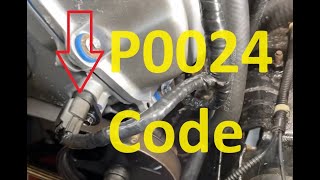
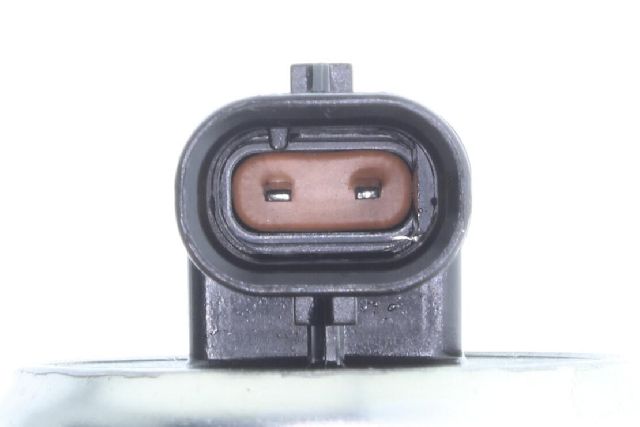
- VCT Solenoid Connector — On the cylinder head, near the corresponding camshaft (exhaust side for P0024).. This is the connection point for testing voltage and resistance. The two pins are for the 12V power supply from the PCM relay and the ground-side control wire from the PCM.
Real Owner Repair Stories
- Reddit user post on r/fordescape (2017 Ford Escape SE) — Car would randomly die when accelerating from a stop. Engine would stall, battery and oil pressure lights would illuminate. It would restart immediately. Threw various inconsistent codes, but eventually a consistent code for 'PCM de-energizing too early' appeared.
❌ Tried (didn't work) Checking basic connections, fuses, battery, alternator, and high-pressure fuel pump.
✅ What actually fixed it The dealership found a loose PCM ground wire located below the airbox. The owner suspects it was bumped and loosened during a previous battery change. Tightening the ground wire resolved all symptoms.
Model Year Variations Within This Range
- 2020-2021: Some 2020-2021 Escape models with the 1.5L engine have specific diagnostic procedures related to a low oil pressure warning and DTC P0524, which can be related to the overall health of the VVT system. The Workshop Manual was updated to aid in this specific diagnosis.
Helpful Videos

We Have This Part in Stock


The information in this article is provided for general reference and educational purposes only. Vehicle specifications, procedures, and part compatibility can vary by production date, trim level, and region. Always consult your vehicle's factory service manual and verify part numbers before purchasing or performing repairs. Safety-critical components such as airbags, seat belts, and braking systems should be installed by a qualified professional.
- Ford ESCAPE:
- 🧭 Diagnostic Flowchart
- 🎬 Helpful Videos
- 🛍️ Shop This Part
- What's Unique About the 2015-2021 Ford ESCAPE
- Symptoms You May Notice
- Most Likely Causes
- Rare But Worth Checking
- Diagnosis Steps
- Parts You'll Likely Need
- Related Codes That Often Appear With This One
- Technical Service Bulletins (TSBs) & Recalls
- Platform-Specific Known Issues
- Mechanic-Grade Diagnostic Values
- Scan Tool Commands That Help
- Wiring & Ground Locations
- Real Owner Repair Stories
- Model Year Variations Within This Range
- 🎟️ Get 5% Off