

P0024 on 2006-2010 Ford Explorer 4.6L V8: Causes and Fixes for Over-Advanced Cam Timing
On the 4.6L 3V V8, P0024 is almost always caused by a faulty driver's side (Bank 2) exhaust VCT solenoid, often due to old or low engine oil. Replacing the VCT solenoid is a common fix, costing around $40-$90 for the part. If you hear a loud, diesel-like rattle at hot idle, expect a more serious cam phaser or timing chain issue.
- Always check your engine oil first. Low, old, or incorrect viscosity (5W-20 is specified) oil is the #1 cause of P0024.
- If the oil is fine and there is no engine rattle, the most likely failed part is the driver's side exhaust VCT solenoid, which is a DIY-friendly fix.
- A loud, diesel-like rattling noise from the engine when warm means the cam phaser has failed, requiring a much more complex and expensive timing job.
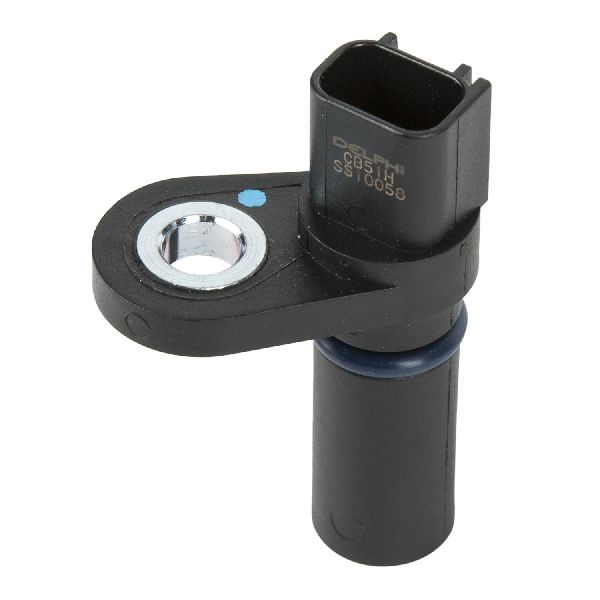
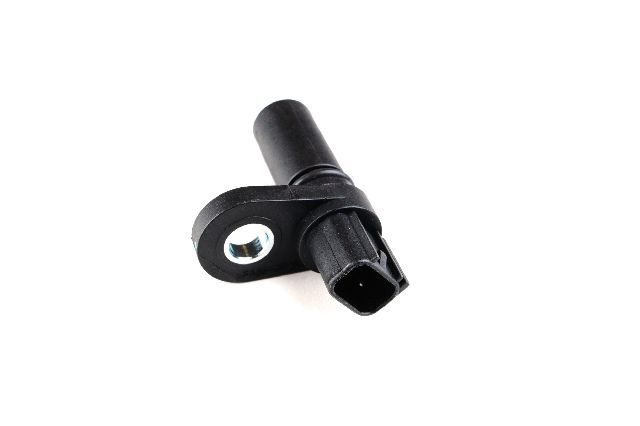
- Do not replace the camshaft position sensor; it is almost never the cause of this code on this engine.
What's Unique About the 2006-2010 Ford Explorer
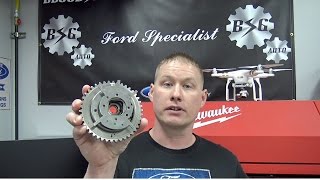
The Ford 4.6L 3-Valve engine is infamous for its sensitive and failure-prone Variable Camshaft Timing (VCT) system. Unlike many other vehicles where this code might point to a sensor, on this specific engine it almost always indicates a mechanical or hydraulic issue rooted in oil pressure or VCT hardware. These problems are so common that a distinct diesel-like rattling sound at idle is widely recognized by owners and technicians as the sign of a failed cam phaser 🎬 Watch: Hear the distinct rattle of a failed phaser, a primary cause of this code. The 4.6L 3V shares this architecture and its problems with the more notorious 5.4L 3V Triton engine.
Symptoms You May Notice
- Check Engine Light is on
- Rough or shaking idle
- Engine stalling, especially at low speeds or when coming to a stop
- Reduced engine power and hesitation during acceleration
- Loud ticking, rattling, or diesel-like chatter from the engine, particularly when warm at idle
- Decreased fuel economy
- Replacing the camshaft position sensor. The P0024 code indicates a mechanical timing performance issue, not a sensor electrical fault. The sensor is almost always doing its job correctly by reporting the timing deviation.
Most Likely Causes
- Low, Dirty, or Incorrect Viscosity Engine Oil 🔴 High Probability The VCT system uses small oil passages and solenoid screens that are easily clogged by sludge or debris from old or incorrect oil. The 3V modular engines are extremely sensitive to oil condition. Using non-Motorcraft oil filters with less effective anti-drainback valves can also contribute to VCT problems by allowing oil to drain from the heads at shutdown.
How to confirm: Check the oil level on the dipstick and inspect its condition. If the oil is low, dark, thick, or past its change interval, this is the first and most likely cause.
Typical fix: Perform an engine oil and filter change using the Ford-specified 5W-20 synthetic blend oil and a quality filter, such as the Motorcraft FL-820S. This simple step can sometimes resolve the code on its own.
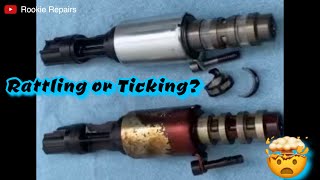
Est. part cost: $40-$80 - Failing VCT Solenoid (Oil Control Valve) 🔴 High Probability → Shop Engine Variable Valve Timing (VVT) Solenoid The VCT solenoids are a well-known weak point on the 4.6L 3V engine. The fine mesh screens can become clogged with debris or tear, causing the solenoid's internal spool valve to stick. This is a very common failure point shared with the 5.4L 3V engine.
How to confirm: Swap the Bank 2 (driver's side) exhaust VCT solenoid with the intake solenoid on the same bank. Clear the codes and drive the vehicle. If the code changes to P0021 ('A' Camshaft Position Timing Over-Advanced), the solenoid is confirmed to be faulty.
Typical fix: Replace the Bank 2 exhaust VCT solenoid. It is located on the top of the driver's side valve cover. Many technicians recommend replacing both solenoids on the bank at the same time as a preventative measure.
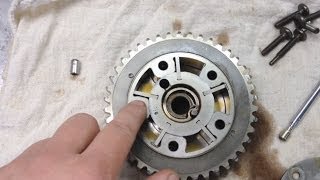
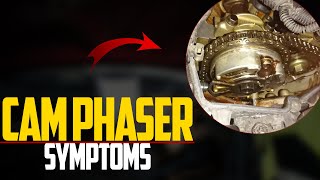
Est. part cost: $40-$90 - Worn Cam Phaser 🟡 Medium Probability The original equipment cam phasers are a known weak point. The internal locking pin can fail or the vanes inside can break, causing the phaser to move erratically and lose oil pressure control, which creates a loud knocking noise. This is a design flaw common to Ford's 3-valve engines of this era.
How to confirm: A loud, diesel-like rattling or knocking sound from the top of the engine at hot idle is the primary symptom of a failed phaser. This confirms a mechanical failure beyond just a stuck solenoid. The noise may quiet down above 1500 RPM.
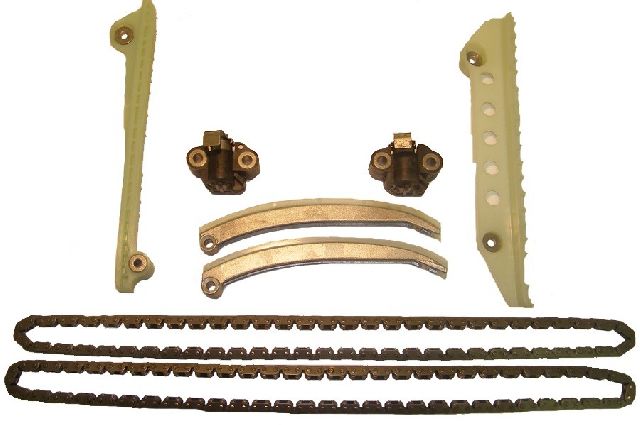
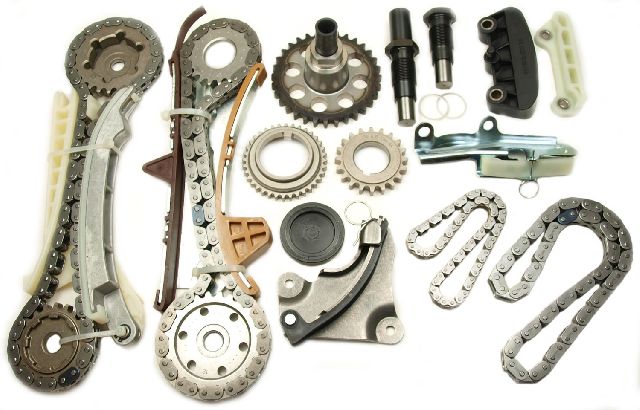
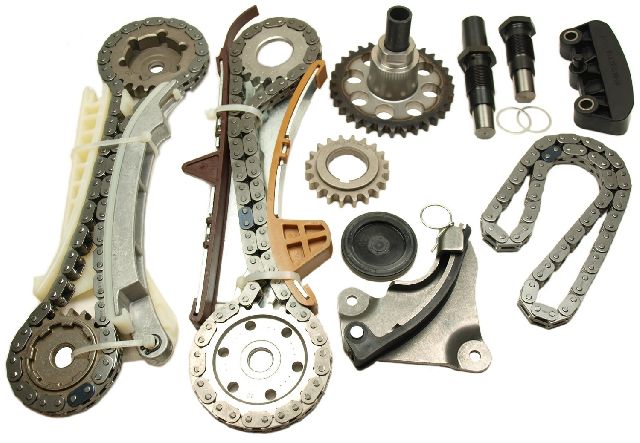
Typical fix: This is a major repair that involves replacing the cam phaser, timing chains, guides, and tensioners. 🎬 Watch: Step-by-step guide to replacing the timing chains It is often recommended to also replace the oil pump with a high-volume unit (e.g., Melling M340HV) at the same time.
Est. part cost: $300-$700 for a full timing kit
Rare But Worth Checking
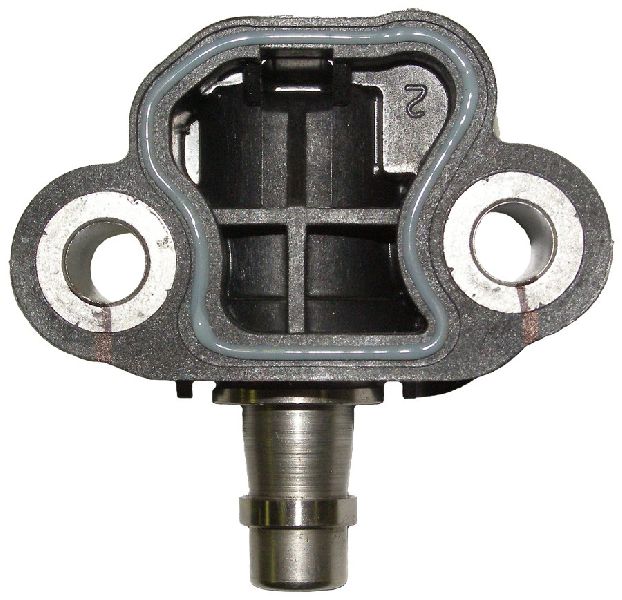
- Low Oil Pressure from Leaking Tensioner Seals: The plastic timing chain tensioners have seals that are known to blow out, causing a significant loss of oil pressure. This starves the entire VCT system and can trigger timing codes for one or both banks. This issue requires a full timing job to resolve.
- Damaged Cam Phaser Reluctor Wheel: The trigger wheel for the camshaft position sensor is part of the phaser assembly. If it becomes bent or damaged, it can cause erratic sensor readings and trigger timing codes. Visual inspection is required after removing the valve cover.
Diagnosis Steps
- Verify the engine oil level is full and the oil is clean and of the correct 5W-20 viscosity. If in doubt, perform an oil and filter change with a Motorcraft filter.
- Listen carefully to the engine when it is fully warmed up and idling. No noise points towards an oil or solenoid issue. A loud, rhythmic rattling or knocking noise strongly indicates a failed cam phaser or other timing components.
- If there is no rattling noise, the next step is to test the VCT solenoid. The solenoid is located under the driver's side (Bank 2) valve cover. You can test it by swapping the exhaust solenoid (rear position) with the intake solenoid (front position) on the same bank.
- Clear the OBD-II codes, drive the vehicle, and re-scan. If the code has changed to P0021, you have confirmed the VCT solenoid is the faulty part and needs to be replaced.
- If the code P0024 returns or if a loud rattling noise was present from the start, the problem lies deeper within the timing system (cam phaser, timing chain, tensioners). This requires a more intensive teardown and inspection of the timing components.
- During teardown, inspect the timing chain tensioner seals for leaks, which is a common source of oil pressure loss to the VCT system.
Parts You'll Likely Need
- Engine Variable Camshaft Timing (VCT) Solenoid
(OEM #8L3Z-6M280-B)— This is the most common part to fail. It gets stuck from oil sludge or the internal screens tear, causing incorrect oil flow to the cam phaser. This part number supersedes older versions like 3L3Z-6M280-EA.
Trusted brands: Motorcraft, Dorman
OEM price range: $70-$110
Aftermarket price range: $30-$60 - Camshaft Phaser
(OEM #3R2Z-6A257-DA)— Needed if a loud, diesel-like rattle is heard at hot idle. The original phasers are a known weak point and fail mechanically, losing their ability to hold timing steady.
Trusted brands: Motorcraft
OEM price range: $150-$250
Aftermarket price range: $80-$150 - Engine Timing Chain Kit — If replacing a failed cam phaser, it is best practice to replace all timing components, including chains, guides, and tensioners, as they wear together and are labor-intensive to access.
Trusted brands: Motorcraft, Melling, Cloyes
OEM price range: $400-$600
Aftermarket price range: $200-$400
Related Codes That Often Appear With This One
- P0014 — This is the same over-advanced code for Bank 1 (passenger side). Seeing both P0014 and P0024 together strongly suggests a systemic issue like critically low oil pressure or severe oil sludge affecting the entire engine.
- P0021 / P0022 — These codes relate to the intake camshaft timing on the same bank (Bank 2). They share the exact same root causes (solenoid, phaser, oil supply) and may appear alongside P0024 if the VCT system is malfunctioning broadly. Swapping the intake and exhaust solenoids may cause a P0024 to change to a P0021, confirming a bad solenoid.
- P0345 / P0349 — These codes indicate a circuit fault for the Bank 2 camshaft position sensor. They can appear with P0024 if the mechanical failure of the cam phaser is so severe that it damages the phaser's trigger wheel, causing an erratic signal from the sensor.
Technical Service Bulletins (TSBs) & Recalls
- TSB 08-5-1: Some 2005-2008 vehicles with 4.6L/5.4L 3V engines may exhibit a ticking/knocking noise after reaching operating temperature. This TSB addresses diagnosing VCT system noises, often leading to cam phaser replacement.
- TSB 10-21-5: This bulletin addresses diagnostic trouble codes P0011, P0012, P0021, P0022, P0340, and P0341 on some 4.6L 3V engines, often related to VCT solenoid contamination. It advises cleaning and inspection before component replacement.
Platform-Specific Known Issues
- The 4.6L 3V engine is known for developing low oil pressure at hot idle as it ages, often due to leaking timing chain tensioner seals. This condition starves the VCT system and is a root cause of phaser and solenoid failure.
- Due to the oil pressure issues, many mechanics recommend upgrading the stock oil pump to a Melling M340HV high-volume oil pump whenever a full timing job is performed to ensure longevity of the new VCT components.
- Some light ticking from the VCT system between 800-1200 RPM can be considered a normal characteristic by Ford, but loud rattling, especially at hot idle, is a clear sign of phaser failure.
Mechanic-Grade Diagnostic Values
- VCT Solenoid Internal Resistance — expected: 5.0 to 14.0 Ohms across the two pins.. Failure: A reading of zero (short circuit) or infinite/OL (open circuit) resistance indicates a failed solenoid coil.
- VCT Solenoid Connector Voltage (Key On, Engine Off) — expected: Approximately 12.6V (Battery Voltage) at the power supply pin (typically a Blue/Green wire).. Failure: No voltage suggests a wiring issue, a blown fuse, or a problem in the PCM power relay circuit.
- Engine Oil Pressure (at hot idle) — expected: A minimum of 15 PSI is required, with 25-30 PSI considered healthy.. Failure: Pressure consistently below 15 PSI at hot idle will starve the VCT system and points to worn bearings, a failing oil pump, or leaking tensioner seals.
- Scan Tool PID: VCT Exhaust Cam Error Bank 2 (VCT_EXH_ERR2 or VCT_ADV_ERR) — expected: Should be near 0 degrees (+/- 2 degrees) at a stable, warm idle in closed-loop operation.. Failure: A large, persistent positive value (e.g., > 5-10 degrees) that does not return to zero confirms the cam is over-advanced compared to the PCM's command.
Scan Tool Commands That Help
- Ford IDS, FORScan, or equivalent professional scanner: VCT Solenoid On/Off Command / Output State Control — This bidirectional control directly commands the VCT solenoid on and off at idle. A working solenoid will cause a noticeable change in engine idle (stumble, roughness, or stall). If the command is sent but the engine operation does not change, it points to a stuck solenoid, clogged oil passages, or a failed phaser. Ford TSBs recommend cycling the solenoid 10 times to attempt to clear debris before replacement.
- Ford IDS, FORScan, or equivalent professional scanner: VCT Advance Error PID (VCT_ADV_ERR) — This allows a technician to monitor the difference between the commanded and actual camshaft angle in real-time. Unplugging the VCT solenoids should cause the phasers to default to their base position, and the error PID should read near zero. If it still shows a significant error, it points to a mechanical issue (phaser) rather than a hydraulic/electrical one (solenoid).
Wiring & Ground Locations
- Bank 2 VCT Solenoid Connector — On the driver's side valve cover. The exhaust solenoid is the one towards the rear of the engine.. This 2-pin connector provides power and control to the solenoid. Pin 1 (often a Blue/Green wire) is the power supply from the battery junction box fuse. Pin 2 is the control line that the PCM provides a ground to for activation. Damage or corrosion here can cause a loss of control, leading to timing codes.
- Fuse F1.42 (4.6L) — In the under-hood fuse box (Battery Junction Box).. This fuse often supplies the 12V power to the VCT solenoids. A blown fuse would result in no power at the solenoid connector and would typically set codes for both solenoids on a bank, not just P0024. Note that this fuse also powers other components like injectors, so a blown fuse would likely cause more severe running issues.
Real Owner Repair Stories
- Ford Truck Enthusiasts Forum (2010 Ford F-150 4.6L 3V (80k miles)) — Ticking noise from the engine.
❌ Tried (didn't work) The owner considered replacing only the tensioners.
✅ What actually fixed it Forum advice strongly recommended a full timing job, replacing all components: Motorcraft phasers, chains, guides, and tensioners, along with a Melling high-volume oil pump. This is considered the definitive, long-term fix for any significant timing noise on the 3V engines, even at lower mileage. - Ford F150 Forum (2004-2008 Ford F-150 5.4L 3V) — Phaser rattle at startup, missing and rattling when stopping after a long haul.
❌ Tried (didn't work) Installed a full timing kit with Dorman phasers. The problem returned after the oil pump became clogged with debris, which then destroyed the new Dorman phasers.
✅ What actually fixed it The consensus from multiple users was that Dorman phasers have a very high failure rate for this application and that only OEM Motorcraft phasers should be used. The user's experience confirmed that the aftermarket phasers failed quickly under stress. The recommended fix is to use only OEM phasers, VCT solenoids, and tensioners.
OEM Part Supersession History
3L3Z-6M280-EA→8L3Z-6M280-A, then 8L3Z-6M280-B— The original solenoids were prone to failure from debris and internal screen tearing. The updated 'B' version has improved durability and screen design to better resist contamination.
Model Year Variations Within This Range
- 2007-2010: On 2007 and newer models, the VCT solenoid replacement requires removing the valve cover due to a change in the solenoid seal design. On 2006 models, the solenoids can often be accessed and replaced without removing the valve covers, making the job significantly easier.
Diagnostic Flowchart
Other Known Issues on This Vehicle
Issues unrelated to this code that are worth knowing about as an owner of this generation:
- Cracked Rear Liftgate Appliqué 🟡 Low — Extremely common. The plastic panel below the rear window develops stress cracks, often starting near the emblem. This is a design flaw. (Ref: Multiple TSBs issued for earlier models (e.g., 05-24-2), but no recall for the 2006-2010 generation which also suffers from the issue.)
- 5R55S/W Transmission Failure 🔴 High — Very common, especially on 2006-2007 models. Symptoms include harsh shifting, slipping, and loss of gears. Often related to servo bore wear or solenoid body failure.
- Leaking Thermostat Housing 🟠 Medium — Common failure. The plastic housing can crack or the O-ring seals can degrade, causing coolant leaks at the front of the engine.
- Failing Blend Door Actuator 🟡 Low — Common annoyance. Failure results in a clicking sound from the dashboard and inability to control air temperature or vent direction.
- Cracked Plastic Intake Manifold 🔴 High → Shop Engine Intake Manifold — A known issue on earlier 4.6L engines (pre-2002) with all-plastic manifolds. While the 3V engine has an improved design, leaks can still occur at the plastic-to-aluminum seams, causing coolant loss. (Ref: Class action lawsuit for earlier models, but no recall.)
Used vs. New Parts: Buying Guide for This Vehicle
When a used part is the smart pick: For this specific repair, using used parts is generally not recommended. The key failure components (solenoids, phasers, timing parts) are all high-wear items that fail due to age, mileage, and oil condition. A used part from a junkyard is likely to have the same or more wear than the part being replaced.
Donor-vehicle mileage cap: roughly under 50000 miles for the part to have meaningful remaining life.
What to inspect on the donor part:
- If forced to use a used part (e.g., a cylinder head), look for a donor vehicle with documented low mileage and proof of regular oil changes.
- Remove the oil fill cap and look inside with a flashlight. Avoid any engine that shows signs of thick, black sludge or a varnish-like coating.
OEM-only on this vehicle (don't cheap out):
- Cam Phasers
- VCT Solenoids
- Timing Chain Tensioners
Aftermarket brands forum-validated for this vehicle:
- Melling (For high-volume oil pumps like the M340HV or M360HV, which are a highly recommended upgrade during a timing job).
- Cloyes (Often considered a reputable brand for timing chain kits, though some users still prefer OEM).
Brands owners have reported issues with on this vehicle:
- Dorman (Specifically for cam phasers on this engine. Multiple forum threads report extremely high and rapid failure rates for Dorman phasers).
Real Owner Stories
Aggregated from forums and TSBs cited above. Mileages and costs reflect what owners reported in those sources.
2006-2010 Ford Explorer 4.6L 3V V8
Symptoms: Loud, diesel-like rattling or knocking sound from the top of the engine at hot idle; noise quiets down above 1500 RPM.
What fixed it: Major repair involving the replacement of cam phasers, timing chains, guides, and tensioners, along with an upgrade to a high-volume oil pump.
Source hint: ExplorerForum - '4th Generation (2006-2010) Explorer Problems'
Related OBD-II Codes
Frequently Asked Questions
Does TSB 08-5-1 apply to my 2007 Ford Explorer 4.6L 3V V8?
My Explorer is throwing P0024 and P0021; what does TSB 10-21-5 suggest?
What oil filter should I use to prevent VCT issues on my 4.6L 3V engine?
Can I just change the oil to fix a P0024 code on my Explorer?
Is the loud diesel-like rattling at idle normal for the Explorer V8?
Should I replace the oil pump when fixing the timing components on my 4.6L 3V?
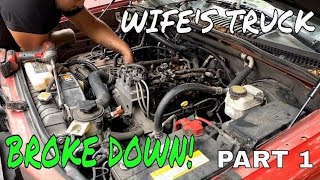
Helpful Videos
We Have This Part in Stock

The information in this article is provided for general reference and educational purposes only. Vehicle specifications, procedures, and part compatibility can vary by production date, trim level, and region. Always consult your vehicle's factory service manual and verify part numbers before purchasing or performing repairs. Safety-critical components such as airbags, seat belts, and braking systems should be installed by a qualified professional.
- Ford Explorer:
- 🧭 Diagnostic Flowchart
- 🎬 Helpful Videos
- 🛍️ Shop This Part
- What's Unique About the 2006-2010 Ford Explorer
- Symptoms You May Notice
- Most Likely Causes
- Rare But Worth Checking
- Diagnosis Steps
- Parts You'll Likely Need
- Related Codes That Often Appear With This One
- Technical Service Bulletins (TSBs) & Recalls
- Platform-Specific Known Issues
- Mechanic-Grade Diagnostic Values
- Scan Tool Commands That Help
- Wiring & Ground Locations
- Real Owner Repair Stories
- OEM Part Supersession History
- Model Year Variations Within This Range
- Other Known Issues on This Vehicle
- Used vs. New Parts: Buying Guide for This Vehicle
- Real Owner Stories
- 2006-2010 Ford Explorer 4.6L 3V V8
- Related OBD-II Codes
- Frequently Asked Questions
- 🎟️ Get 5% Off