

P0024 on 2015-2019 Ford Explorer Police Intercept: Exhaust Cam Timing Causes and Fixes
On a 2015-2019 Explorer Police Intercept, P0024 almost always points to a problem with the Bank 2 exhaust VCT solenoid, usually caused by low or dirty engine oil. Start by checking your oil; if that's good, the VCT solenoid is the next likely culprit and costs about $40-$90 for the part. This is a very common issue on Ford's V6 engines of this era.
- P0024 on your Explorer Police Intercept indicates the exhaust camshaft on the front side of the engine (Bank 2) is timed too far advanced.
- Before buying any parts, check your engine oil. Low, old, or incorrect oil is the most frequent cause.
- The most likely part to have failed is the Bank 2 exhaust VCT solenoid, which gets stuck from oil debris. This is a known issue cited in Ford TSBs.
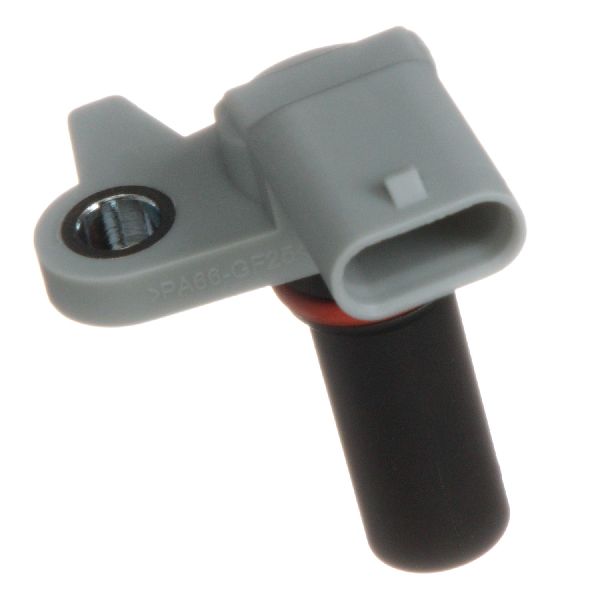
- Do not replace the camshaft position sensor; it is almost certainly not the cause of the problem.
- Replacing the VCT solenoid is a manageable DIY job for many, with the part located accessibly on the front valve cover.
What's Unique About the 2015-2019 Ford EXPLORER POLICE INTERCEPT
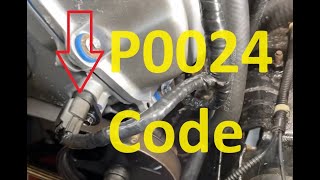
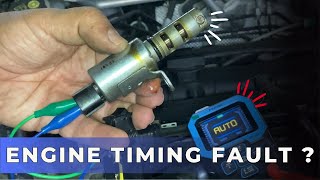
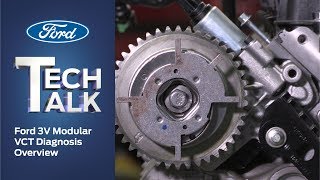
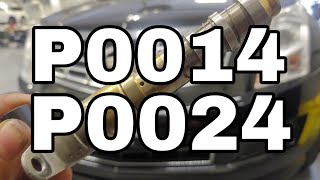
The V6 engines in this generation of Explorer, particularly those in demanding police service, are known for VCT system sensitivity. Police Interceptors experience long periods of idling combined with sudden high-RPM demands, which accelerates oil degradation and sludge formation. Ford has issued technical service bulletins (TSBs) acknowledging that this code is frequently caused by small debris in the oil that causes the VCT solenoid to stick. This makes regular, high-quality oil changes using full synthetic oil even more critical on these engines and points to the solenoid as a primary suspect 🎬 Watch: Ford technician explains how the VCT system fails. before considering more complex issues like phasers or timing chains.
Diagnostic Flowchart
Tap your situation to follow the diagnostic path that matches what you're seeing on this vehicle.
Symptoms You May Notice
- Check Engine Light is on
- Rough, uneven, or fluctuating idle
- Engine hesitation or stalling, especially under load or at stop lights
- Reduced engine power and sluggish acceleration
- Decreased fuel economy
- Hard starting conditions
- Rattling or knocking noises from the engine, especially on startup
- Replacing the camshaft position sensor. The sensor is just reporting the problem; it's rarely the cause of an over-advanced code. The fault lies with the mechanical parts that control the timing (solenoid, phaser) or the oil that operates them.
Most Likely Causes
- Low, Dirty, or Incorrect Viscosity Engine Oil 🔴 High Probability The VCT system is entirely dependent on oil pressure and cleanliness. Police Interceptors often experience long idle times and high-stress driving, which can degrade oil faster and lead to sludge. TSBs confirm debris in oil is a primary cause of VCT issues. As oil ages, it can thicken and cause the VCT solenoids to stick.
How to confirm: Check the engine oil dipstick for level and inspect the oil's color and consistency. If it is dark, thick, or below the 'add' line, it needs attention. An oil change is the cheapest and easiest first step.
Typical fix: Perform an engine oil and filter change using the correct Ford-specified full synthetic oil (e.g., Motorcraft 5W-30) and a quality filter like the Motorcraft FL-500S. Some owners on forums have had success performing an engine flush to clear out sludge.
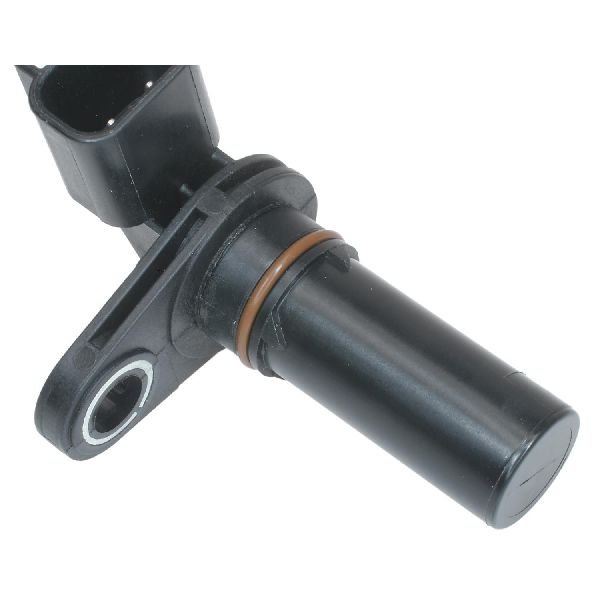
Est. part cost: $40-$80 - Sticking or Failed Bank 2 Exhaust VCT Solenoid 🔴 High Probability → Shop Engine Variable Valve Timing (VVT) Solenoid As stated in Ford TSB #SSM 50067, small debris in the engine oil can cause the VCT solenoid to stick, preventing it from correctly regulating oil flow to the cam phaser. This is the most common mechanical failure for this code on this platform.
How to confirm: Use a bi-directional scan tool to command the solenoid on and off; listen for a click. Per TSB SSM 50067, the official diagnostic step is to use a scan tool to cycle the solenoid 10 times to try and clear debris. A common DIY method is to swap the exhaust solenoid with the intake solenoid on the same bank (if they are identical) and see if the code changes to P0021 (Intake Over-Advanced). If the code moves, the solenoid is bad.
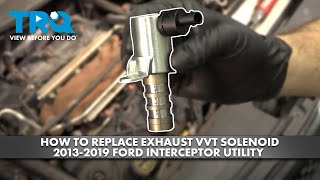
Typical fix: Replace the Bank 2 exhaust VCT solenoid. It is located on the front valve cover (radiator side). The solenoid can often be cleaned with brake cleaner, but replacement is recommended for reliability.
Est. part cost: $40-$90 - Failed Camshaft Phaser ⚪ Low Probability → Shop Engine Camshaft While less common than a solenoid failure, the cam phaser itself can fail or get stuck in an advanced position due to internal wear or oil contamination. The 3.5L EcoBoost, in particular, is known for a startup rattle that can indicate a developing phaser problem.
How to confirm: This is typically diagnosed after replacing the VCT solenoid and confirming good oil and pressure. A persistent rattling noise on startup is a strong indicator of phaser or timing chain issues. Advanced scan tools can monitor desired vs. actual cam angle to see if the phaser is responding to commands.
Typical fix: Replacement of the Bank 2 exhaust camshaft phaser. This is a more involved and expensive repair that often requires removal of the valve cover.
Est. part cost: $150-$300
Rare But Worth Checking
- Stretched Timing Chain: → Shop Engine Timing Chain If the vehicle has very high mileage or a poor maintenance history, a stretched timing chain can cause the cam timing to be physically out of sync, triggering this code. This is usually accompanied by a rattling noise and other timing codes for both banks.
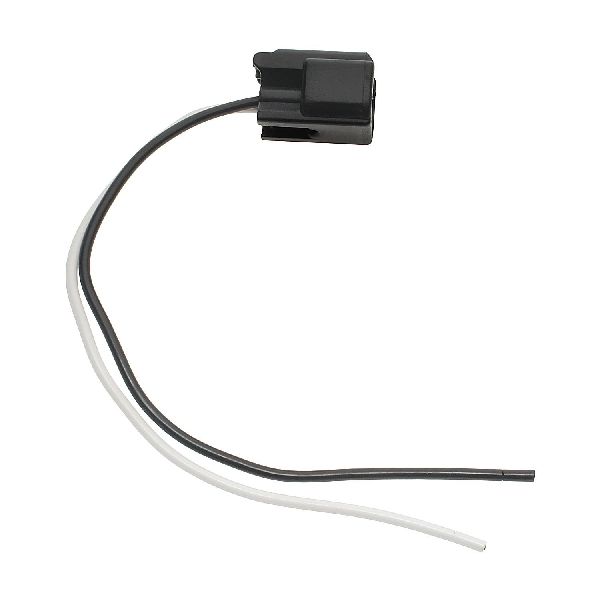
- Wiring or Connector Issue: Damage to the wiring harness or corrosion in the connector for the VCT solenoid can cause a loss of control, leading to the code. Inspect the harness leading to the solenoid on the front valve cover for any visible damage, corrosion, or oil contamination.
- Internal ECM/PCM Fault: In very rare cases, the Engine Control Module (ECM) or Powertrain Control Module (PCM) itself can have a faulty driver circuit that fails to properly control the VCT solenoid, though this should be the last consideration after all other possibilities are exhausted.
Diagnosis Steps
- Verify the code with an OBD-II scanner. Note any other codes present.
- Check the engine oil level and condition. If low, dirty, or overdue for a change, perform an oil and filter change with the manufacturer-specified full synthetic oil and a new filter. Clear the codes and drive to see if the code returns.
- If the code returns, locate the Bank 2 (front/radiator side) valve cover.
- Identify the exhaust VCT solenoid (it will be one of two solenoids on the valve cover, typically the one further back or distinguished by its connector).
- Inspect the electrical connector and wiring to the solenoid for damage, corrosion, or oil contamination.
- Using a bi-directional scan tool, perform the diagnostic test from TSB SSM 50067: command the VCT solenoid to cycle 10 times to attempt to clear debris. Monitor the desired vs. actual camshaft position PIDs for Bank 2 Exhaust.
- A common DIY diagnostic is to swap the Bank 2 exhaust solenoid with the Bank 2 intake solenoid (if part numbers are identical). Clear codes and drive. If the code changes to P0021, the solenoid you moved is faulty.
- If the solenoid is suspect, replace it. Clear the codes and test drive the vehicle to see if the code returns.
- If the code persists after a new solenoid and fresh oil, the issue may be a faulty cam phaser or a more significant timing chain problem, which may require professional diagnosis.
Parts You'll Likely Need
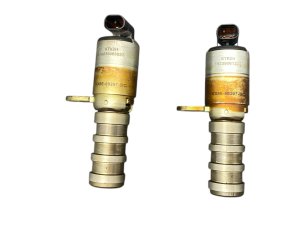
- Engine Variable Camshaft Timing (VCT) Solenoid
(OEM #BL3Z-6M280-B (or -A, check by VIN))— This part is the most common point of failure for P0024, as it gets stuck or clogged with oil debris, per Ford TSB SSM 50067. The part number 8L3Z-6M280-B from Pass 1 is for older V8 engines and is incorrect.
Trusted brands: Motorcraft, Dorman, Delphi
OEM price range: $60-$90
Aftermarket price range: $40-$70 - Engine Oil and Filter
(OEM #Motorcraft 5W-30 Full Synthetic, Motorcraft FL-500S)— Correct oil level and cleanliness are critical for the VCT system to function. This is the first and most important step in attempting to fix the code.
Trusted brands: Motorcraft, Mobil 1, Valvoline
OEM price range: $50-$90
Aftermarket price range: $40-$75
Related Codes That Often Appear With This One
- P0014 — This is the equivalent code for the Bank 1 exhaust camshaft. If both appear, it strongly suggests a systemic issue like very dirty oil, low oil pressure, or incorrect oil viscosity affecting the entire engine.
- P0021 — This is for Bank 2 Intake camshaft timing over-advanced. Seeing it with P0024 could point to an oil pressure or delivery problem specific to the Bank 2 cylinder head. If you swap the intake and exhaust solenoids for diagnosis and the code changes from P0024 to P0021, you have confirmed a bad solenoid.
Technical Service Bulletins (TSBs) & Recalls
- SSM 50067: Illuminated MIL with various VCT DTCs due to debris causing VCT solenoid to stick. Recommends cycling solenoid before replacement.
- SSM 47170: An earlier TSB with similar guidance to SSM 50067, indicating the persistent nature of this issue.
Platform-Specific Known Issues
- A Technical Service Bulletin (TSB #SSM 50067) was issued for many 2015-2021 Ford vehicles, stating that P0024 (and other related codes) may be caused by small debris causing the VCT solenoid to stick. The bulletin advises against immediate component replacement, instead recommending a diagnostic procedure using a scan tool to cycle the solenoid 10 times to attempt to clear the debris before replacement.
Mechanic-Grade Diagnostic Values
- VCT Solenoid Internal Resistance — expected: 5 to 14 ohms. Some sources are more specific, citing 7.8 to 10.4 ohms.. Failure: A reading of infinite resistance (open circuit), zero resistance (short), or a value significantly outside the expected range indicates a faulty solenoid.
- VCT Solenoid Connector Voltage (Key On, Engine Off) — expected: Approximately 12V (battery voltage) on the power supply wire.. Failure: Low or no voltage points to a problem in the wiring harness, fuse, or PCM power supply, not the solenoid itself.
- Live Data: VCT Advance Error PID (e.g., VCT_EXH_ERR, CAMERRR) — expected: Should hover around 0° (plus or minus 5°) at idle and during steady-state driving.. Failure: A consistent, large positive value indicates the camshaft is over-advanced. The PCM may set the P0024 code if the error exceeds a threshold like 20 degrees for a set amount of time.
- Live Data: VCT Solenoid Duty Cycle PID (e.g., VCT_EXH_DC) — expected: The PCM increases duty cycle to command more advance. When P0024 occurs, you may see the PCM command a very low duty cycle (attempting to correct the over-advanced state) while the actual cam angle remains high.. Failure: A mismatch between the commanded duty cycle and the resulting cam angle error points to a mechanical or hydraulic issue (sticking solenoid or phaser).
Hidden / Shadow Codes Worth Checking
- Mode $06, TID $53: This is not a hidden code, but a diagnostic test result accessible via advanced scan tools. TID $53 tracks cylinder-specific misfire rates. While not directly related to P0024, it can be useful to check if the timing issue is causing misfires on Bank 2 cylinders before a dedicated misfire code (P030x) is set. (see via An OBD-II scanner that supports Mode $06 data. The raw data must be converted to be human-readable.)
Scan Tool Commands That Help
- Ford IDS, FORScan: VCT Solenoid Output State Control / On-Off Command — This is a key bidirectional test used to verify solenoid function. With the engine idling, commanding the exhaust VCT solenoid ON should cause the engine to run rough or stall. If there is no change in engine operation, the solenoid is likely stuck, the oil passages are clogged, or the phaser is faulty. This is also the function used for the TSB-recommended debris-clearing procedure.
- Ford IDS, FORScan: Datalogger with VCT PIDs (VCT_EXH_DIF2, VCT_EXH_ACT2, VCT_EXH_ERR2) — Used to monitor and graph the desired vs. actual camshaft position and the error between them during a test drive. This can reveal if the phaser is sticking, responding slowly, or completely unresponsive to PCM commands, which helps differentiate a solenoid issue from a phaser or timing chain issue.
Wiring & Ground Locations
- C139 — This is a main inline harness connector. On some Ford V6 platforms, it is located near the back of the passenger-side valve cover and serves as a junction for the VCT solenoid harness to the main engine harness.. Corrosion or a pushed-out pin in this connector can interrupt the command signal from the PCM to the VCT solenoid, causing a loss of control that can mimic a failed solenoid.
- G104 — A major engine and chassis ground point, often located on the passenger side inner fender near the battery junction box on related Ford platforms.. A poor ground at this location can cause a variety of electrical issues for engine sensors and actuators, including the VCT solenoids. While not a direct cause, it should be checked if multiple, seemingly unrelated electrical faults are present.
- VCT Solenoid Connector — Directly on the VCT solenoid itself, on the front (radiator side) valve cover for Bank 2.. The PCM controls the solenoid by providing a ground signal. One pin should have battery voltage with the key on, and the other is the control wire from the PCM. Checking for voltage here is a primary electrical diagnostic step.
Real Owner Repair Stories
- Lincoln MKZ Forum (Lincoln MKZ (shares platform/drivetrain components with Explorer)) — Wrench light and an AWD light, with a P0024 code stored in memory.
❌ Tried (didn't work) Dealer initially applied TSB SSM 50067 for sticking VCT solenoids, which did not fix the issue.
✅ What actually fixed it A Ford field engineer diagnosed the issue as a defective replacement main wiring harness that had been previously installed. Replacing the faulty harness resolved the problem.
OEM Part Supersession History
BL3Z-6M280-A→BL3Z-6M280-B— Part revision and improvement by the manufacturer. The -B revision is the more current part for this application.
Heads up: While both may fit, it is always recommended to use the latest revision (-B) for improved reliability. Check with a dealer using the VIN to confirm the exact part number required.AT4Z-6M280-A / -B / -C→HL3Z-6M280-A / BR3Z-6M280-E (Varies by Intake/Exhaust and Engine)— Part numbers can vary significantly between the 3.5L EcoBoost and 3.7L Ti-VCT, and even between intake and exhaust positions. For example, some sources list AT4Z-6M280 series for the 3.7L, while later EcoBoosts use different numbers.
Heads up: Crucially, the intake and exhaust solenoids may have different part numbers and are not always interchangeable. It is essential to verify the correct part number for the specific position (Bank 2 Exhaust) and engine using the vehicle's VIN.
Model Year Variations Within This Range
- 2016-2019: The Ford Explorer received a significant facelift for the 2016 model year, which included revised exterior styling and some technology updates. While the core 3.5L and 3.7L V6 engines remained largely the same, there can be minor variations in wiring harnesses or part numbers across the 2015 vs. 2016-2019 range. Always confirm parts by VIN. The fundamental cause of P0024 (sticky VCT solenoid) remains consistent across the entire 2015-2019 range.
Helpful Videos

Used OEM Parts in Stock
New Aftermarket Parts Available


The information in this article is provided for general reference and educational purposes only. Vehicle specifications, procedures, and part compatibility can vary by production date, trim level, and region. Always consult your vehicle's factory service manual and verify part numbers before purchasing or performing repairs. Safety-critical components such as airbags, seat belts, and braking systems should be installed by a qualified professional.
- Ford EXPLORER POLICE INTERCEPT:
- 🧭 Diagnostic Flowchart
- 🎬 Helpful Videos
- 🛍️ Shop This Part
- What's Unique About the 2015-2019 Ford EXPLORER POLICE INTERCEPT
- Symptoms You May Notice
- Most Likely Causes
- Rare But Worth Checking
- Diagnosis Steps
- Parts You'll Likely Need
- Related Codes That Often Appear With This One
- Technical Service Bulletins (TSBs) & Recalls
- Platform-Specific Known Issues
- Mechanic-Grade Diagnostic Values
- Hidden / Shadow Codes Worth Checking
- Scan Tool Commands That Help
- Wiring & Ground Locations
- Real Owner Repair Stories
- OEM Part Supersession History
- Model Year Variations Within This Range
- 🎟️ Get 5% Off