

P0024 on 2021-2025 Genesis GV80 3.5L V6: Exhaust Cam Timing Causes and Fixes
On a 2021-2025 Genesis GV80 3.5L, code P0024 is most often caused by low or dirty engine oil. Before buying parts, check your oil level and condition. If the oil is clean and full, the next most likely cause is a faulty Bank 2 exhaust Oil Control Valve (OCV), also known as a VVT solenoid. This is a common issue on the Smartstream engine family.
- P0024 means the exhaust camshaft on the driver's side (Bank 2) is timed too far advanced.
- The most likely cause is low or dirty engine oil. Always check and change your oil with full-synthetic 0W-30 before attempting other repairs.
- If oil is not the issue, a faulty Bank 2 exhaust Oil Control Valve (OCV) is the next most probable cause.
What's Unique About the 2021-2025 Genesis GV80
The Genesis 3.5L Lambda III Twin-Turbo V6 is a 'Smartstream' engine that, like many modern direct-injection and turbocharged engines, is highly dependent on its Continuously Variable Valve Timing (CVVT) system for performance and efficiency. This system is extremely sensitive to engine oil quality, pressure, and cleanliness. While the technology isn't unique, owner and technician experiences across the Hyundai/Genesis/Kia family, including the related 3.3T engine, consistently show that adhering to strict oil change intervals with high-quality full-synthetic oil is the most critical factor in preventing CVVT-related codes like P0024. The engine's design, with its complex oil passages for the turbos and CVVT system, makes it prone to sludge buildup if maintenance is neglected.
Symptoms You May Notice
🎬 Watch: A quick overview of P0024 causes and common fixes.- Check Engine Light is on
- Rough or unstable idle
- Reduced engine power and sluggish acceleration
- Hesitation when accelerating
- Decreased fuel economy
- Engine may be hard to start
- Engine stalling in some cases
- Replacing the Camshaft Position Sensor first. The sensor is usually just the messenger reporting the problem; the root cause is typically oil-related or the Oil Control Valve (OCV).
Most Likely Causes
- Low, Dirty, or Incorrect Viscosity Engine Oil 🔴 High Probability The CVVT system uses oil pressure to actuate the cam phasers. Sludge, low levels, or the wrong oil type directly impacts its ability to function. Turbocharged GDI engines degrade oil faster, making this the most common cause of timing codes on this platform.
How to confirm: Check the oil dipstick for level and clarity. If the oil is below the 'Full' mark, dark black, or past its recommended change interval, this is the likely cause. The recommended oil is full-synthetic 0W-30 meeting API SP/ILSAC GF-6 specs.
Typical fix: Perform an engine oil and filter change using approximately 7.4 quarts of high-quality, full-synthetic 0W-30 oil that meets Genesis specifications. Clear the code and drive.
Est. part cost: $70-$120 - Faulty Bank 2 Exhaust Oil Control Valve (OCV) 🟡 Medium Probability → Shop Engine Variable Valve Timing (VVT) Solenoid The OCV (or VVT solenoid) is an electronic component that can fail or become clogged with oil sludge, causing it to stick open or closed. It's a common failure point for VVT-related codes on Hyundai/Genesis engines.
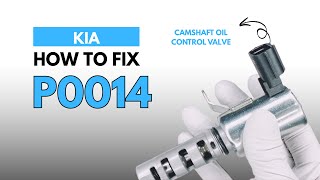
How to confirm: After confirming oil is good, the next step is to test the OCV. 🎬 See how to diagnose and replace your VVT solenoids. A professional scan tool can command the solenoid to activate. A simpler DIY method is to swap the Bank 2 exhaust OCV with the Bank 1 exhaust OCV (they are the same part). If the code changes to P0014 (the equivalent code for Bank 1), the OCV is faulty.
Typical fix: Replace the Bank 2 (driver's side) exhaust Oil Control Valve. The OEM part number is typically 24375-3L300.
Est. part cost: $80-$200
Rare But Worth Checking
- Faulty Camshaft Position Sensor: → Shop Engine Camshaft Position Sensor While possible, a failing sensor usually triggers its own specific circuit code (e.g., P0365-P0369). P0024 is a performance code, meaning the sensor is likely working correctly and reporting a real timing issue. Only consider replacing the sensor after ruling out oil issues and the OCV. A diagnostic swap with the Bank 1 sensor can confirm failure if the code moves.
- Stretched Timing Chain or Failed Tensioner: → Shop Engine Timing Chain This is a more serious mechanical issue. If the timing chain has stretched or a tensioner has failed, it can cause the physical timing to be off. This is less common on newer vehicles but can happen, and is usually accompanied by rattling noises from the front of the engine.
- Damaged Camshaft Phaser (CVVT Actuator): → Shop Engine Camshaft The phaser is the mechanical gear on the end of the camshaft that the OCV controls. It can fail or get stuck, often causing a distinct rattling or ticking noise on startup. Diagnosis usually requires ruling out all other causes, and replacement is a labor-intensive job.
Diagnosis Steps
- Check Engine Oil: Verify the engine oil level is full and the oil is clean. If it's low, dirty, or past its service interval, perform an oil and filter change with full-synthetic 0W-30 oil. Clear the code and drive to see if it returns. This resolves the issue in a majority of cases.
- Scan for Other Codes: Use an OBD-II scanner to check for any other related trouble codes. Codes for other camshafts (P0011, P0014, P0021) or misfires can provide diagnostic clues.
- Inspect Wiring: Visually inspect the wiring harness and connector for the Bank 2 (driver's side) exhaust Oil Control Valve and Camshaft Position Sensor. Look for any signs of damage, corrosion, or loose connections.
- Test the Oil Control Valve (OCV) via Swap: This is the most effective DIY diagnostic. Locate the exhaust OCVs on both Bank 1 (passenger side) and Bank 2 (driver's side). They are typically on the front of the valve covers. Swap them, clear the codes, and drive the vehicle. If the code returns as P0014 (for Bank 1), you have confirmed the OCV you moved is faulty and needs replacement.
- Advanced Diagnostics: If the problem persists, the issue may be more complex. Further diagnosis would involve using a professional scan tool to monitor camshaft angle data in real-time, testing the OCV circuit for proper voltage and resistance (should be 6.9-7.9 Ohms), and potentially checking mechanical timing, which may require professional assistance.
Parts You'll Likely Need
- Engine Oil and Filter — The CVVT system is highly sensitive to oil condition. Clean, correct-viscosity oil is the first and most important step in resolving this code.
Trusted brands: Genesis OE Filter, Mobil 1 Full Synthetic, Pennzoil Ultra Platinum Full Synthetic
OEM price range: $25-$40
Aftermarket price range: $15-$30 - Engine Oil Control Valve (VVT Solenoid) — This solenoid controls oil flow to the cam phaser and is the most common hardware component to fail for this code, either by sticking or failing electronically.
Trusted brands: Hyundai/Genesis OE
OEM price range: $100-$250
Aftermarket price range: $70-$150
Related Codes That Often Appear With This One
- P0014 — This is the same over-advanced timing code, but for Bank 1. If P0014 and P0024 appear together, it strongly points to a global issue affecting both sides of the engine, such as low engine oil level, incorrect oil viscosity, or low oil pressure.
- P0021 — This is an over-advanced timing code for the *intake* camshaft on the same bank (Bank 2). Seeing them together could indicate a more significant oil delivery problem to the entire Bank 2 cylinder head or a failing OCV if a swap was performed for diagnosis.
Technical Service Bulletins (TSBs) & Recalls
- TSB 23-DS-004G: While not for P0024, this is a major TSB for the GV80 platform addressing a whining noise from the rear differential, a commonly reported owner complaint.
- Recall 022G / TSB 24-01-043G: A critical safety recall to replace the low-pressure fuel pump, which can fail and cause a loss of power. 🎬 Watch: Real-world engine misfire diagnosis on a Genesis GV80.
Mechanic-Grade Diagnostic Values
- Oil Control Valve (OCV) Solenoid Resistance — expected: 6.7 to 7.9 Ohms at 20°C (68°F). Failure: A reading outside this range, or an open circuit (infinite resistance), points to a faulty solenoid coil.
- OCV Connector Voltage (Key On, Engine Off) — expected: One pin should have battery voltage (approx. 12V+). Failure: No voltage suggests a problem with the wiring, fuse, or power supply from the ECM/main relay.
- ECM Code Trigger Condition — expected: The ECM monitors camshaft position vs. target position while the engine is running (e.g., 600-5000 RPM) and oil temp is normal (20°C-110°C).. Failure: The code sets when the deviation between the actual and target camshaft position exceeds a threshold (e.g., >20 degrees) for a set time.
Scan Tool Commands That Help
- Genesis GDS (Global Diagnostic System) / GDS Mobile: CVVT Test or Actuation Test — This is a bidirectional command used by dealers and advanced technicians to force-activate the OCV solenoid while the engine is running. A change in engine idle (stumbling or stalling) confirms the solenoid is mechanically working and oil passages are likely clear. No change in engine performance points to a stuck/failed OCV or a clogged oil passage.
- Genesis GDS (Global Diagnostic System) / GDS Mobile: Multi Data Analysis — Allows for simultaneous graphing of target vs. actual camshaft angles for Bank 2 Exhaust. This is used to visually confirm if the camshaft is failing to respond to commands or is stuck in an advanced position, which is the direct cause of the P0024 code.
Real Owner Repair Stories
- Reddit r/HyundaiSantaFe (2017 Hyundai Santa Fe with 3.3L Lambda II V6) — Loss of power, check engine light with codes P0014 and P0024 present, tapping noise during acceleration.
❌ Tried (didn't work) Initially diagnosed as just cam timing codes.
✅ What actually fixed it The root cause was catastrophic engine failure due to excessive oil consumption. The owner found metal shavings in the oil filter. The vehicle was missing 4 quarts of oil despite not being due for a change. The engine required a full replacement, which was covered under an extended warranty campaign for rod bearing failure. The P0014/P0024 codes were early symptoms of the oil starvation that destroyed the engine. - Reddit r/Hyundai (Hyundai vehicle (model not specified)) — Engine seized immediately after an oil change at a third-party service center.
✅ What actually fixed it A Hyundai dealer discovered the service center had failed to remove a protective drain plug cap that was packaged inside the new oil filter. This cap was sucked into an oil passage upon startup, blocking oil flow and causing immediate, catastrophic engine failure. The service center admitted fault and paid for a new engine. This is an edge-case of oil starvation not caused by low levels or sludge.
Diagnostic Flowchart
Other Known Issues on This Vehicle
Issues unrelated to this code that are worth knowing about as an owner of this generation:
- Low-Pressure Fuel Pump Failure 🔴 High — Widespread enough to trigger a major safety recall. Affects 2021-2023 models. The impeller can deform, causing fuel starvation and sudden loss of power. (Ref: NHTSA Campaign 23V-630, expanded by recall 022G (TSB 24-01-043G).)
- Rear Differential Whining Noise 🟠 Medium — Commonly reported issue, especially on 2021-2023 models. A whining or humming noise is heard at certain speeds. Failures have been reported at low mileage. (Ref: TSB 23-DS-004G.)
- Turbocharger Failure (Isolated) 🔴 High — Not widespread, but isolated reports of turbo failure exist, sometimes caused by foreign object debris or other engine issues, leading to underboost code P0299 and significant power loss.
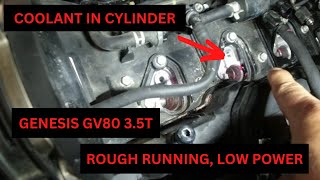
- Coolant Intrusion / Misfire 🔴 High — Very rare, but at least one documented case where a technician found coolant in the cylinders, possibly from a leaking water-to-air intercooler, causing persistent misfires.
- Premature Battery Failure 🟡 Low — Owners report premature battery failure, potentially due to vehicle modules not entering sleep mode correctly, causing a constant drain.
Used vs. New Parts: Buying Guide for This Vehicle
When a used part is the smart pick: For this specific repair, using used parts is generally not recommended. The primary failure components are the Oil Control Valve (OCV) and the oil itself. An OCV is an electro-mechanical part whose internal condition and remaining lifespan are impossible to verify from a used vehicle. Given that oil sludge is a primary failure mode, a used OCV may be pre-clogged or on the verge of failure.
Donor-vehicle mileage cap: roughly under 30000 miles for the part to have meaningful remaining life.
What to inspect on the donor part:
- If considering a used OCV, only pull from a very low-mileage vehicle that shows documented proof of regular oil changes.
- Inspect the mesh screens on the used solenoid for any tearing or debris. Any visible sludge is an immediate red flag.
OEM-only on this vehicle (don't cheap out):
- Oil Control Valve (VVT Solenoid)
- Camshaft Position Sensor
- Oil Filter
Aftermarket brands forum-validated for this vehicle:
- For engine oil, brands meeting Genesis specifications (API SP/ILSAC GF-6) like Mobil 1, Pennzoil Platinum, or Castrol EDGE are widely accepted.
Brands owners have reported issues with on this vehicle:
- Unbranded, 'white-box' electronic sensors and solenoids from online marketplaces like Amazon or eBay are frequently cited in forums as being unreliable, failing quickly, or being dead-on-arrival.
Real Owner Stories
Aggregated from forums and TSBs cited above. Mileages and costs reflect what owners reported in those sources.
2021-2023 Genesis GV80 3.5T
Symptoms: Whining or humming noise heard at certain speeds; failures reported at low mileage.
What fixed it: Replacement of the rear differential under warranty per TSB 23-DS-004G.
Source hint: TSB 23-DS-004G / Reddit r/GenesisMotors
2018-2023 Kia Stinger GT 3.3T
Symptoms: P0014/P0024 codes triggered, often following extended oil service intervals.
What fixed it: Adhering to strict oil service intervals or replacing the Oil Control Valve (OCV).
Source hint: General forum discussions for the related Kia Stinger 3.3T
2021-2023 Genesis GV80 3.5T
Symptoms: Sudden loss of power and engine stalling due to a deformed fuel pump impeller.
What fixed it: Replacement of the low-pressure fuel pump under Recall 022G.
Source hint: Recall 022G / TSB 24-01-043G
Related OBD-II Codes
Frequently Asked Questions
What specific engine oil should I use in my 2021-2025 Genesis GV80 3.5L to prevent P0024?
Can I swap parts to diagnose P0024 on my GV80 3.5T?
Is there a TSB for the GV80 that addresses power loss similar to P0024 symptoms?
Does the GV80 3.5L engine have a known issue with whining noises alongside these codes?
What is the resistance specification for the GV80 Oil Control Valve?
Why is my GV80 3.5T more prone to P0024 than non-turbo engines?
Helpful Videos
![How to Fix KIA P0014 Engine Code in 4 Minutes [1 DIY Method / Only $19.45]](https://img.youtube.com/vi/jvnWIsewzes/mqdefault.jpg)
We Have This Part in Stock


The information in this article is provided for general reference and educational purposes only. Vehicle specifications, procedures, and part compatibility can vary by production date, trim level, and region. Always consult your vehicle's factory service manual and verify part numbers before purchasing or performing repairs. Safety-critical components such as airbags, seat belts, and braking systems should be installed by a qualified professional.
- Genesis GV80:
- 🧭 Diagnostic Flowchart
- 🎬 Helpful Videos
- 🛍️ Shop This Part
- What's Unique About the 2021-2025 Genesis GV80
- Symptoms You May Notice
- Most Likely Causes
- Rare But Worth Checking
- Diagnosis Steps
- Parts You'll Likely Need
- Related Codes That Often Appear With This One
- Technical Service Bulletins (TSBs) & Recalls
- Mechanic-Grade Diagnostic Values
- Scan Tool Commands That Help
- Real Owner Repair Stories
- Other Known Issues on This Vehicle
- Used vs. New Parts: Buying Guide for This Vehicle
- Real Owner Stories
- 2021-2023 Genesis GV80 3.5T
- 2018-2023 Kia Stinger GT 3.3T
- 2021-2023 Genesis GV80 3.5T
- Related OBD-II Codes
- Frequently Asked Questions
- 🎟️ Get 5% Off