

P0024 on 2010-2012 GMC Terrain 3.0L V6: Exhaust Cam Timing Causes and Fixes
On a 2010-2012 GMC Terrain with the 3.0L V6, code P0024 is most often caused by a faulty Bank 2 exhaust camshaft actuator solenoid or simply low/dirty engine oil. The solenoid is a relatively affordable part (around $40-$80) and is a common DIY fix located on the front valve cover. This is a well-known issue on the GM 'High Feature' V6 engine family.
- First, check your engine oil. A simple oil change with the correct 5W-30 synthetic oil is the easiest and cheapest first step.
- P0024 almost always points to the Bank 2 (radiator side) EXHAUST camshaft actuator solenoid, not the sensor.
- The most likely failed part is the solenoid. You can confirm this by swapping it with the intake solenoid on the same bank to see if the code changes to P0021.
- If you also have codes P0008 or P0009, or hear engine rattling, stop driving and have the vehicle inspected for a stretched timing chain, a known and serious issue with this engine.
What's Unique About the 2010-2012 GMC Terrain
The GM High Feature V6 engine family, which includes the 3.0L LFW, is known for having issues with its Variable Valve Timing (VVT) system, which is highly sensitive to oil quality and pressure. These problems are frequently linked to engine oil condition or faulty camshaft actuator solenoids. GM even issued a technical service bulletin (PIP5096C) for the 2012 model year specifically for this code, pointing to a batch of solenoids with internal clearance problems that require an updated part from a different supplier. The TSB explicitly warns technicians not to simply swap solenoids for diagnosis but to replace the faulty unit with the new service part. While the solenoid is the most common fix, these engines can also suffer from stretched timing chains, a much more serious and expensive issue that can also trigger this code.
Symptoms You May Notice
- Check Engine Light is on
- Rough or unstable idle
- Engine hesitation or stumbling on acceleration
- Reduced engine power
- Poor fuel economy
- Engine may stall when coming to a stop
- Audible engine rattle or ticking noise, especially on startup
- Replacing the camshaft position *sensor* instead of the actuator *solenoid*. The sensor's job is to read the camshaft's position, while the solenoid's job is to control it. P0024 is a performance code indicating a control problem, which almost always points to the solenoid, oil, or mechanical timing, not the sensor.
Most Likely Causes
- Low or Dirty Engine Oil 🔴 High Probability The VVT system uses oil pressure to change cam timing. Low levels or oil that is old, dirty, or the wrong viscosity can clog the small passages and screens in the actuator solenoids, causing them to stick. These engines are known to be sensitive to oil condition, and many owners on forums report VVT codes appearing when oil changes are overdue.
How to confirm: Check the engine oil dipstick. The level should be in the safe range, and the oil should not appear overly dark, thick, or sludgy. Ensure the correct oil viscosity (5W-30) is being used.
Typical fix: Perform an oil and filter change using a full synthetic oil that meets GM's dexos1 specification (5W-30 is specified). If the oil was very low, investigate potential oil consumption issues, which are a known problem on related GM engines.
Est. part cost: $40-$80 - Faulty Bank 2 Exhaust Camshaft Position Actuator Solenoid 🔴 High Probability → Shop Engine Camshaft These solenoids are a known failure point. GM issued TSB PIP5096C for the 2012 model year due to a batch of solenoids with internal clearance issues, recommending replacement with an updated part from a new supplier. They can also fail electronically or become clogged with debris from infrequent oil changes.
How to confirm: Swap the Bank 2 exhaust solenoid with the Bank 2 intake solenoid (they are identical parts). Clear the codes and drive. If the code changes to P0021 (Intake Camshaft Position), the solenoid is confirmed faulty. You can also test its resistance with a multimeter; a good solenoid should read between 5 and 13 ohms. Note: TSB PIP5096C advises against swapping as a permanent fix, but it is a valid diagnostic step.
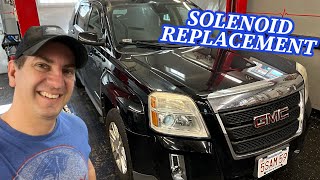
Typical fix: Replace the Bank 2 (front/radiator side) exhaust camshaft actuator solenoid. It is held in by a single 10mm bolt. 🎬 See this step-by-step VVT solenoid replacement walkthrough Be sure to use the latest OEM revised part (ACDelco is the OEM supplier).
Est. part cost: $30-$80
Rare But Worth Checking
- Stretched Timing Chains: → Shop Engine Timing Chain While less common than a bad solenoid, the 3.0L V6 is known for premature timing chain wear, a fact acknowledged by GM in TSBs like #12-06-01-009F. This is a major repair costing between $1,500 and $3,200. This cause becomes much more likely if you also see codes like P0008, P0009, P0017, or P0019, or hear a rattling noise from the engine on startup.
- Failed Camshaft Phaser: → Shop Engine Camshaft The phaser (or actuator) is the mechanical gear on the end of the camshaft that actually does the rotating. It can get stuck in the advanced position due to internal failure or oil pressure issues, but this is less common than a solenoid failure. This often requires significant labor to replace.
- Clogged Solenoid Oil Passages: Even with a good solenoid, the small oil passages in the cylinder head leading to the solenoid can become blocked with sludge, especially if oil changes have been neglected. This prevents the VVT system from operating correctly. A full engine flush may be required in these cases.
Diagnosis Steps
- Check the engine oil level and condition. If it is low or dirty, perform an oil and filter change with full synthetic 5W-30 oil meeting the GM dexos1 specification and clear the code. Drive to see if it returns.
- Scan for any other trouble codes. Codes like P0008, P0009, P0017, or P0019 point towards a much more serious timing chain issue requiring professional diagnosis.
- Locate the camshaft actuator solenoids on the Bank 2 (front) valve cover. The intake and exhaust solenoids are interchangeable for testing purposes.
- Diagnostic Swap Test: Swap the positions of the intake and exhaust solenoids on Bank 2. They are each held by a single 10mm bolt. Clean the area around the solenoid before removing it to prevent debris from entering the engine.
- Clear the codes and drive the vehicle. If the trouble code changes to P0021 ('A' Camshaft Position - Over-Advanced), the solenoid you moved is faulty and must be replaced.
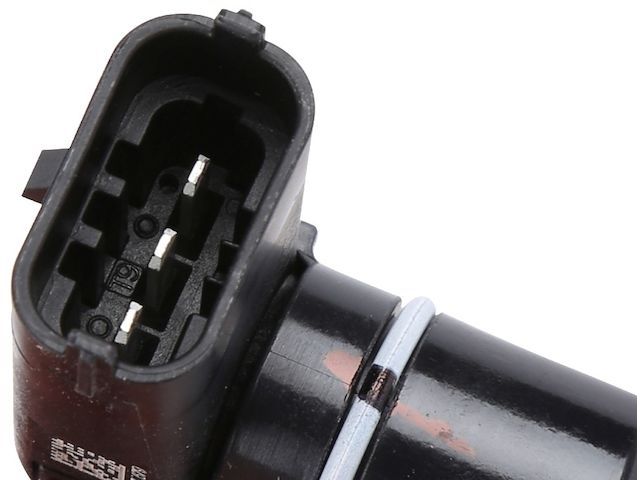
- Resistance Test: If you have a multimeter, you can test the solenoid's resistance. Disconnect the connector and measure between the two pins. A good solenoid should have a resistance between 5 and 13 ohms. An open circuit or a reading outside this range indicates a bad solenoid. 🎬 Watch: How to test and diagnose the P0024 code
- If the P0024 code returns after the swap and the solenoid tests good, the problem is not the solenoid. The issue may be a clogged oil passage, a faulty camshaft phaser, or a stretched timing chain, which will require more in-depth professional diagnosis.
Parts You'll Likely Need
- Camshaft Position Actuator Solenoid
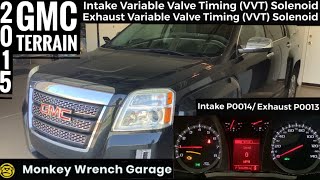
(OEM #12679099)— This is the most common part to fail, causing P0024. It controls oil flow to the cam phaser and gets clogged or fails electronically. 🎬 Watch: Locate and replace your GMC Terrain VVT solenoid GM has issued updated versions of this part to fix reliability issues.
Trusted brands: ACDelco (OEM), Delphi, Dorman
OEM price range: $50-$80
Aftermarket price range: $30-$60
Related Codes That Often Appear With This One
- P0014 — This is the same over-advanced exhaust cam code, but for Bank 1 (firewall side). Seeing both codes together strongly suggests a systemic problem affecting the whole engine, like low oil pressure or very dirty oil.
- P0021 — This is the over-advanced code for the *intake* camshaft on the same bank (Bank 2). If you swap a bad exhaust solenoid to the intake position for diagnosis, this code will appear, confirming the solenoid is the problem.
- P0008 / P0009 / P0017 / P0019 — These are serious timing correlation codes. If you see any of these with P0024, it is a very strong indicator that the timing chains have stretched and the engine's base timing is off. This requires immediate professional attention as continued driving could lead to catastrophic engine failure.
Technical Service Bulletins (TSBs) & Recalls
- PIP5096C: Addresses DTCs P0011, P0014, P0021, or P0024 with no other drivability concerns on 2012+ models with the 3.0L LFW engine. Recommends replacing the specific camshaft actuator solenoid with an updated service part from a different supplier and explicitly advises against swapping solenoids as a final repair. Bulletin #PIP5096C notes that technicians may find these codes during inspection and should check the engine EUN sticker for an "A" before the sequence number.
Platform-Specific Known Issues
- Premature timing chain stretch is a known problem on the GM 3.0L/3.6L V6 engine family. This is a costly repair ($1500-$3200) and is often preceded by VVT codes like P0024. The issue was prevalent enough for GM to issue TSBs like #12-06-01-009F and update the chain design in later engines.
- TSB PIP5096C was issued for 2012 models with the 3.0L V6, indicating that a batch of original camshaft actuator solenoids had manufacturing defects causing this code to set without other symptoms. The fix is to replace the solenoid with an updated part from a different supplier.
Mechanic-Grade Diagnostic Values
- Camshaft Position Actuator Solenoid Resistance — expected: 6.9 to 13 Ohms at 68°F (20°C).. Failure: A reading of infinity (Open Loop), near zero (short), or an unstable value indicates a faulty solenoid.
- Desired vs. Actual Camshaft Angle (Scan Tool PID) — expected: The 'Actual' angle PID should closely track the 'Desired' angle PID as engine RPM and load change.. Failure: A difference of more than 10-20 degrees between desired and actual, or an 'Actual' value that is stuck and unresponsive to commands, indicates a fault.
- Minimum Engine Oil Pressure (Hot) — expected: Approximately 6 psig at 1000 RPM, 18 psig at 2000 RPM.. Failure: Pressure significantly below these minimums can cause VVT system malfunction and set timing codes. This is a general specification and may vary slightly.
- VVT Solenoid Connector Voltage — expected: With the key on, engine off, one pin should show battery voltage (approx. 12V) and the other is the ground-side control from the ECM.. Failure: No voltage on the power pin indicates a problem with the circuit from the engine controls ignition relay. No control signal during operation points to a wiring or ECM issue.
Scan Tool Commands That Help
- GDS2 (GM Global Diagnostic System 2): Camshaft Position Actuator Solenoid Control / Test — This is a bidirectional control used to command the Bank 2 exhaust solenoid ON and OFF while the engine is running. A technician should observe the engine idle (it should stumble or run rough) and monitor the 'Desired vs. Actual' cam angle PIDs. If the actual angle does not change when commanded, it confirms a fault in the solenoid, its circuit, or a mechanically stuck phaser, helping to isolate the problem.
Wiring & Ground Locations
- G112 — On the 3.0L V6, this primary engine ground is located on the left rear of the engine.. A poor or corroded engine ground can cause erratic voltage signals and improper operation of sensors and actuators controlled by the ECM, including the VVT solenoids. Verifying this ground is clean and tight is a crucial step in diagnosing any electronic engine control issue.
- Bank 2 Camshaft Actuator Solenoid Connector — On the front (radiator side) valve cover, connected to the exhaust VVT solenoid.. This is the primary test point for electrical diagnosis. Technicians test for 12V power (key on) and check for continuity on the control wire back to the ECM. Wiggling this connector while the engine is running can help identify intermittent connection issues.
Real Owner Repair Stories
- Reddit user THRobinson75 on r/gmc (2010 GMC Terrain, 3.0L V6, ~191,000km) — Check Engine Light with codes P0014 and P0024. No other drivability issues noted.
❌ Tried (didn't work) A previous owner had already replaced the timing chain and kit., Multiple engine flushes and oil changes with high-quality full synthetic oil., The codes returned after these steps.
✅ What actually fixed it Replacing all 4 VVT solenoids with genuine GM parts caused the codes to disappear for two months, but they eventually returned. The final, permanent fix was not posted, highlighting that even after replacing all common culprits (timing chain and solenoids), the issue can persist, suggesting a deeper problem like oil passage blockage or an issue with the replacement phasers/chain installation.
When the Usual Fixes Don't Work
- In cases where P0024 (and related codes like P0014) persist or return shortly after common fixes, the root cause may be deeper than the most likely parts. One owner of a 2010 3.0L V6 reported that after a recent timing chain replacement, multiple engine flushes, and finally replacing all four VVT solenoids with OEM parts, the codes returned after just two months. This indicates that for some vehicles, especially those with high mileage or a questionable maintenance history, simply replacing the solenoids may be a temporary fix. The underlying issue could be persistent sludge in oil passages that re-contaminates the new solenoids, or a subtle problem with the timing chain replacement job itself (e.g., phaser clocking) that wasn't immediately apparent.
OEM Part Supersession History
12679099 (common service part for both intake/exhaust)— To address internal clearance and reliability issues identified in TSB PIP5096C.
Heads up: While older parts may fit, they are prone to the original failure. It is critical to use the latest revised part number to ensure a lasting repair. The intake and exhaust solenoids are physically identical and interchangeable for diagnosis, but always install the latest service part number.12655420 (Intake)→12679099— Updated design to improve durability and resolve known failure modes.
Heads up: Supersession trail includes 12578517, 12628347, and 12646783. Using the latest part (12679099) is recommended.
Model Year Variations Within This Range
- 2012: The 2012 model year is specifically called out in TSB PIP5096C for having a batch of camshaft actuator solenoids with manufacturing defects. While the part can fail on any year, the 2012 models have a documented higher likelihood of the solenoid being the sole cause of the code without any other drivability symptoms.
Diagnostic Flowchart
Other Known Issues on This Vehicle
Issues unrelated to this code that are worth knowing about as an owner of this generation:
- Excessive Oil Consumption (2.4L Engine) 🔴 High — Very common on the 2.4L Ecotec engine, less so on the 3.0L V6. Often due to worn piston rings. Can start as early as 50,000-70,000 miles. (Ref: Multiple Special Coverage Adjustments issued for the 2.4L engine, e.g., #14159, #15285C.)
- Premature Timing Chain Stretch (3.0L/3.6L V6) 🔴 High → Shop Engine Timing Chain — A widely documented problem, particularly on 2010-2012 models. Often occurs between 70,000 and 120,000 miles. Can lead to catastrophic engine failure if not addressed. (Ref: TSB #12-06-01-009F)
- Catalytic Converter Failure 🟠 Medium — Often a consequence of excessive oil consumption (on 2.4L) or persistent rich/lean conditions from other faults. Can occur over 100,000 miles.
- Cracked Exhaust Manifold 🟠 Medium — More common on the 2.4L 4-cylinder engine, but can occur on the V6. Leads to exhaust leaks, noise, and potentially lean codes.
Used vs. New Parts: Buying Guide for This Vehicle
When a used part is the smart pick: For this specific repair, buying a used camshaft actuator solenoid from a junkyard is NOT recommended. These are high-failure items that get clogged by oil debris; a used part is likely to have the same issues as the part being replaced.
OEM-only on this vehicle (don't cheap out):
- Camshaft Actuator Solenoid: While not strictly 'OEM-only', TSB PIP5096C strongly implies using the latest revised GM/ACDelco service part is the best practice to avoid a defective batch issue. Using a cheap, unverified aftermarket part is a significant gamble.
- Timing Chain Kit: If the issue is diagnosed as a stretched chain, using a complete, high-quality kit from GM/ACDelco or a reputable OEM-supplier like Cloyes is critical for a long-lasting repair. This is not a job you want to do twice due to low-quality parts.
Aftermarket brands forum-validated for this vehicle:
- Solenoids: Delphi (often an OEM supplier), Dorman (use with caution, but widely available).
- Timing Chain Kits: Cloyes.
Brands owners have reported issues with on this vehicle:
- Unbranded, 'white box' solenoids from online marketplaces. While the price is tempting, failure rates are high, and they can cause diagnostic headaches.
Real Owner Stories
Aggregated from forums and TSBs cited above. Mileages and costs reflect what owners reported in those sources.
2010 GMC Terrain 3.0L V6
Symptoms: Intermittent Check Engine Light, always showing P0024, and sometimes P0014 as well.
What fixed it: The issue was not resolved after a triple engine flush, oil changes with full synthetic oil, and a previously reported timing chain replacement.
Source hint: Chevrolet Forum thread 'P0014/P0024 Errors - Chevrolet Forum - Chevy Enthusiasts Forums'
Related OBD-II Codes
Frequently Asked Questions
I have a 2012 GMC Terrain 3.0L; is there a specific TSB for the P0024 code?
Can I just swap the solenoids to see if the code moves on my 3.0L V6?
What kind of oil should I use in my 2010-2012 Terrain to prevent VVT issues?
My Terrain has P0024 and a rattling noise on startup; how serious is this?
Is the P0024 code related to the oil consumption issues I've heard about in Terrains?
How much does it cost to fix the timing chain if that is causing my P0024?
Helpful Videos



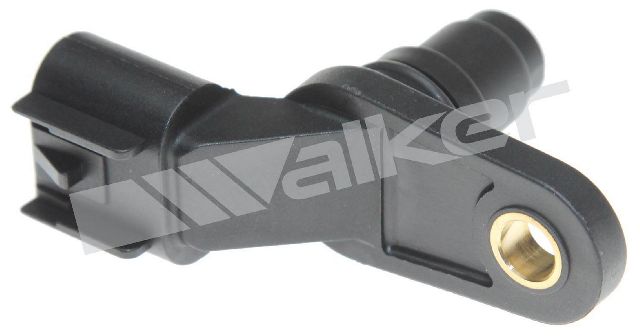
We Have This Part in Stock


The information in this article is provided for general reference and educational purposes only. Vehicle specifications, procedures, and part compatibility can vary by production date, trim level, and region. Always consult your vehicle's factory service manual and verify part numbers before purchasing or performing repairs. Safety-critical components such as airbags, seat belts, and braking systems should be installed by a qualified professional.
- GMC Terrain:
- 🧭 Diagnostic Flowchart
- 🎬 Helpful Videos
- 🛍️ Shop This Part
- What's Unique About the 2010-2012 GMC Terrain
- Symptoms You May Notice
- Most Likely Causes
- Rare But Worth Checking
- Diagnosis Steps
- Parts You'll Likely Need
- Related Codes That Often Appear With This One
- Technical Service Bulletins (TSBs) & Recalls
- Platform-Specific Known Issues
- Mechanic-Grade Diagnostic Values
- Scan Tool Commands That Help
- Wiring & Ground Locations
- Real Owner Repair Stories
- When the Usual Fixes Don't Work
- OEM Part Supersession History
- Model Year Variations Within This Range
- Other Known Issues on This Vehicle
- Used vs. New Parts: Buying Guide for This Vehicle
- Real Owner Stories
- 2010 GMC Terrain 3.0L V6
- Related OBD-II Codes
- Frequently Asked Questions
- 🎟️ Get 5% Off