

P0024 on 2020-2024 Hyundai Palisade 3.8L V6: Exhaust Cam Timing Over-Advanced Causes and Fixes
On a 2020-2024 Palisade, P0024 almost always means the engine oil is low/dirty or the Bank 2 exhaust Oil Control Valve (OCV) is faulty. Start with an oil and filter change using a genuine Hyundai filter. If the code persists, the OCV is the next likely fix. The OEM part number is typically 24355-3L100 (or 24355-2M000 for models built before 10/16/2020), costing around $60-$150.
- First, check your engine oil. P0024 is very often caused by low or dirty oil, and an oil change is the cheapest and easiest first step.
- Use a genuine Hyundai oil filter. These engines are known to be sensitive to aftermarket filters, which can cause oil pressure issues.
- The most likely failed part is the Bank 2 (front/radiator side) exhaust Oil Control Valve (OCV).
- A simple and effective way to confirm a bad OCV is to swap it with the OCV from the rear bank (Bank 1). If the code follows the part (changing to P0014), you've found the problem.
- Do not immediately replace the camshaft position sensor; it is rarely the cause for this specific performance code.
What's Unique About the 2020-2024 Hyundai Palisade
The Palisade's Lambda II 3.8L GDi engine is highly dependent on clean engine oil and correct oil pressure for its CVVT system to work properly. These engines can be sensitive to oil change intervals and even the brand of oil filter used; some owners report timing codes appearing after using non-OEM filters or due to an incorrectly installed cartridge filter. A Reddit user with a similar Hyundai V6 confirmed their P0024 and P0014 codes were resolved by replacing a poorly installed aftermarket oil filter with a genuine OEM one. While on many engines the Oil Control Valves (OCVs) are external and easy to access, a critical design note for some Lambda engines is that the exhaust OCVs are located *under* the valve covers, making replacement a more involved job. However, for the Palisade 3.8L, sources confirm the Bank 2 exhaust OCV is on the front valve cover, making it relatively accessible.
Symptoms You May Notice
- Check Engine Light is on
- Rough or unstable engine idle
- Reduced engine power and sluggish acceleration
- Hesitation when accelerating
- Decreased fuel economy
- Engine stalling, especially at stops
- Abnormal rattling or knocking noises from the engine
- Replacing the camshaft position sensor. The sensor is usually just doing its job by reporting the timing problem. A performance code like P0024 is more often caused by a mechanical or hydraulic issue (oil, OCV) than the sensor itself. A faulty sensor would typically generate a different code related to its circuit (e.g., P0365-P0369).
Most Likely Causes
- Low, Dirty, or Incorrect Viscosity Engine Oil 🔴 High Probability The CVVT system is entirely dependent on clean oil and proper pressure. GDI engines can be tough on oil, and some Lambda engines have reported oil consumption, making regular checks and changes with full synthetic 5W-30 oil critical. Hyundai's official stance is that consuming up to 1 quart per 1,000 miles is 'normal', which makes manually checking the dipstick between changes essential.
How to confirm: Check the engine oil level on the dipstick. Inspect the oil's color and consistency. If it is low, dark, or sludgy, it needs to be changed. The oil capacity is approximately 6.9 quarts with a filter change.
Typical fix: Perform an oil and filter change using the correct OEM-specified full synthetic 5W-30 oil and a high-quality OEM filter. Ensure the cartridge filter is installed correctly, as improper installation can cause pressure drops.
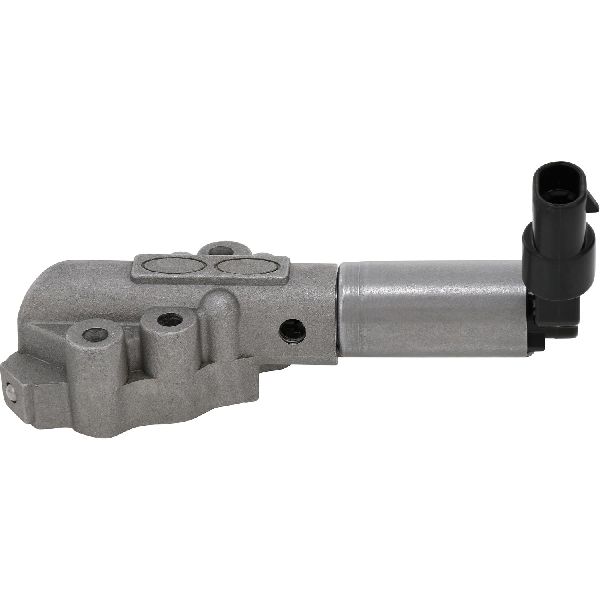
Est. part cost: $60-$150 - Faulty Bank 2 Exhaust Oil Control Valve (OCV) 🔴 High Probability → Shop Engine Variable Valve Timing (VVT) Solenoid The OCV (also called a VVT solenoid) is a common failure point. It's an electronic solenoid that can get clogged with sludge from dirty oil or fail electrically, causing it to stick. A report for a similar Hyundai engine, NHTSA ODI #11063653, describes a loud clunk where a mechanic diagnosed the issue as engine timing solenoids needing replacement due to the camshaft timing being advanced.
How to confirm: A highly effective diagnostic method is to swap the Bank 2 (front) exhaust OCV with the Bank 1 (rear) exhaust OCV. Clear the codes and drive. If the code changes to P0014 (the Bank 1 equivalent), the OCV is confirmed to be faulty. You can also test the OCV's resistance with a multimeter; it should be between 6.9 and 7.9 ohms at 68°F (20°C).
Typical fix: Replace the Bank 2 exhaust Oil Control Valve. On the Palisade 3.8L, this is located on the front valve cover (radiator side) and is relatively accessible. Use the correct OEM part number for your vehicle's production date.
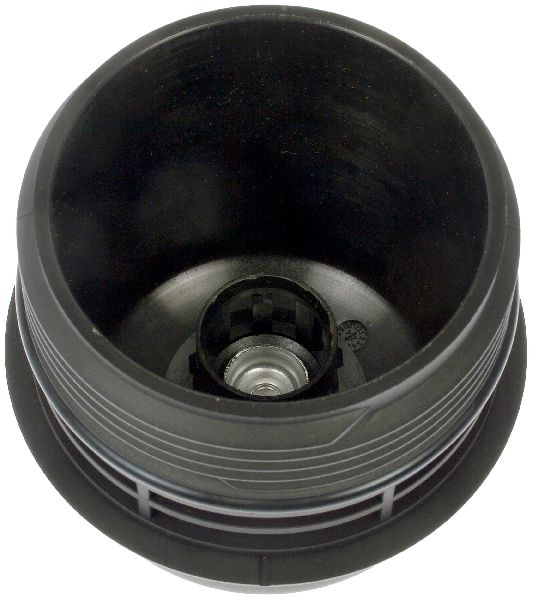
Est. part cost: $60-$150 - Incorrect or Poorly Installed Oil Filter 🟡 Medium Probability → Shop Engine Oil Filter Adapter This engine uses a cartridge-style oil filter. If a non-OEM filter is used or if the filter and its housing are installed incorrectly (e.g., missing center pin), it can cause a significant oil pressure drop to the CVVT system, triggering timing codes. This issue often appears immediately after an oil change from a quick-lube shop.
How to confirm: This issue often appears immediately after an oil change. Inspect the oil filter housing to ensure the filter is seated correctly and that no components are broken or missing. Compare the potentially faulty filter to a new OEM one.
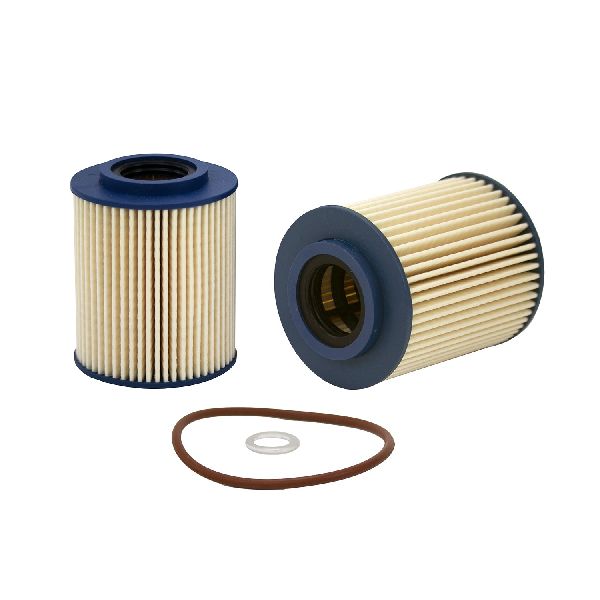
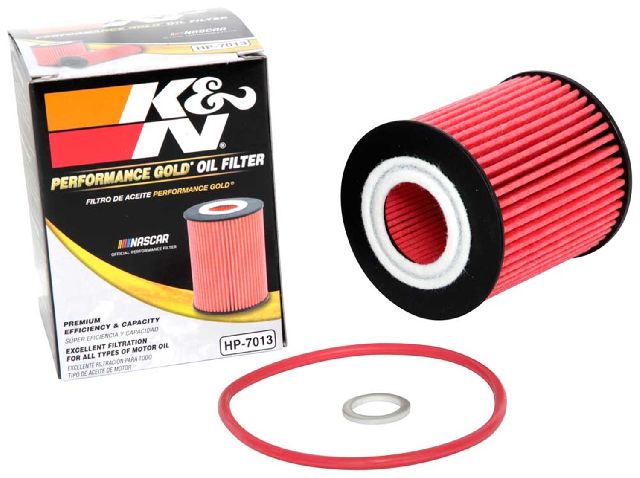
Typical fix: Replace the filter with a genuine Hyundai OEM filter (Part # 26320-3N000) and ensure it is installed correctly.
Est. part cost: $15-$30
Rare But Worth Checking
- Stretched Timing Chain or Failed Tensioner: → Shop Engine Timing Chain While possible, this is much less common on a newer vehicle than oil-related issues or a failed OCV. It should be considered a last resort after other causes are ruled out, as it is a major repair.
- Damaged Camshaft Phaser: → Shop Engine Camshaft The phaser is the mechanical gear on the end of the camshaft that the OCV controls. It can fail internally or become seized, but this is less frequent than an OCV failure. This would be a more expensive and labor-intensive repair.
Diagnosis Steps
- Verify the code with a quality OBD-II scanner.
- Check the engine oil level and condition. If it is low, dirty, or past its service interval, perform an oil and filter change using full synthetic 5W-30 oil and an OEM filter. Clear the code and test drive.
- If the code returns, inspect the wiring harness and connector for the Bank 2 (front/radiator side) exhaust OCV for any signs of damage, corrosion, or loose connections.
- To definitively test the OCV, swap the Bank 2 exhaust OCV with the Bank 1 (rear/firewall side) exhaust OCV. They are identical parts.
- Clear the codes and drive the vehicle. If the code changes to P0014 (Bank 1 Exhaust Cam Timing Over-Advanced), the OCV you moved is faulty and must be replaced.
- If the P0024 code returns after the swap, the issue is not the OCV. Further diagnosis would be required to check for oil passage blockages, a faulty camshaft phaser, or timing chain issues, which may require professional help.
Parts You'll Likely Need
- Engine Variable Valve Timing (VVT) Solenoid / Oil Control Valve (OCV)
(OEM #24355-3L100 (for models built after 10/16/2020), 24355-2M000 (for models built on or before 10/16/2020))— This solenoid is the most common part to fail. It gets clogged with oil sludge or fails electrically, causing it to stick and create the timing deviation.
Trusted brands: Hyundai (OEM), Denso, Delphi, Dorman
OEM price range: $90-$150
Aftermarket price range: $60-$150 - Engine Oil Filter
(OEM #26320-3N000)— Using a non-OEM or incorrectly installed oil filter is a known cause of oil pressure issues that trigger this code on Hyundai/Kia Lambda engines.
Trusted brands: Hyundai (OEM)
OEM price range: $15-$30
Aftermarket price range: $10-$20
Related Codes That Often Appear With This One
- P0014 — This is the equivalent code for the exhaust camshaft on Bank 1. If you swap the OCV from Bank 2 to Bank 1 for diagnosis, P0024 should disappear and P0014 should appear, confirming a bad OCV. If both codes appear together, it strongly suggests a systemic oil pressure problem.
- P0021 — This code is for an over-advanced *intake* camshaft on the same bank (Bank 2). Seeing both together could point to a more significant oil pressure or supply problem affecting the entire Bank 2 cylinder head.
Technical Service Bulletins (TSBs) & Recalls
- 24-01-039H-2: This TSB provides the service procedure for the engine sub-assembly replacement related to Safety Recall 255 for faulty valve springs on certain 2024 Palisade models.
- 21-EM-003H: This TSB provides guidelines for inspecting and diagnosing engine oil consumption concerns, which is a primary cause of P0024.
Platform-Specific Known Issues
- Safety Recall 255 (NHTSA ID: 24V106): Affects certain 2024 Palisade models produced between 08/21/2023 and 10/12/2023. Engine valve springs may fracture, potentially causing a loss of power or engine damage. While this does not directly cause P0024, it is a critical engine issue to be aware of for this model year.
Mechanic-Grade Diagnostic Values
- Exhaust Oil Control Valve (OCV) Coil Resistance — expected: 6.7 - 7.9 Ohms at 68°F (20°C). Failure: A reading of infinity (open circuit), near-zero (short circuit), or a value significantly outside the specified range indicates a failed solenoid coil.
- Scan Tool Live Data: CVVT Timing Deviation — expected: The 'Cam Actual Position' should closely track the 'Cam Desired Position' with a deviation of less than 5 degrees during stable operation.. Failure: A persistent deviation greater than 5-20 degrees between the actual and desired angles, especially when the ECU commands a change, will trigger the fault code.
- OCV Connector Voltage — expected: One pin should have 12V+ (battery voltage) with the key on, engine off.. Failure: No voltage indicates a problem with the power supply circuit, fuse, or wiring, not the OCV itself.
- Camshaft Position Sensor (CMP) Signal Voltage — expected: The sensor's signal wire should produce a square wave, switching between approximately 0V and 5V as the engine is rotated.. Failure: A constant voltage, no voltage, or an erratic signal indicates a faulty sensor or wiring issue, though this typically sets a different code.
Scan Tool Commands That Help
- Hyundai GDS (or equivalent professional scanner): CVVT Actuator Test / Bidirectional Control — This function allows a technician to command the OCV solenoid to activate and deactivate manually. It is used to verify if the solenoid is mechanically stuck or if the hydraulic circuit is responsive. A change in engine idle or sound should be observed, and the 'Actual' vs 'Desired' cam position on live data should change, if the system is working.
Wiring & Ground Locations
- OCV Connector — On the Oil Control Valve solenoid, accessible on the front of the Bank 2 (radiator side) valve cover.. This 2-pin connector provides power and control to the solenoid. One pin is 12V+ power from a fused source, and the other is a ground-side control wire that the ECM pulses to operate the valve. Checking for 12V power here is a key step before condemning the OCV.
Real Owner Repair Stories
- Reddit r/HyundaiSantaFe (2017 Hyundai Santa Fe with 3.3L Lambda II GDI engine) — Loss of power, tapping noise during acceleration, Check Engine Light with codes P0024 and P0014.
❌ Tried (didn't work) Initial diagnosis was not specified, but the problem was severe.
✅ What actually fixed it The issue was catastrophic engine failure. The owner pulled the oil filter and found metal shavings. The vehicle required a complete engine replacement. This serves as a worst-case scenario when these codes appear alongside mechanical noise and evidence of metal debris. - NHTSA ODI #11597363 (Hyundai Santa Fe) — An owner reported that while trying to accelerate, a clicking noise worsened and the check engine light displayed codes P0014 and P0024. The oil was found to be low, and the dealership ultimately stated the vehicle required a new engine.
- NHTSA ODI #11438666 (Hyundai Santa Fe) — A driver experienced a loss of power that required the vehicle to be moved off the roadway and towed. Diagnostic codes P0014 and P0024 were found, indicating crankshaft issues.
OEM Part Supersession History
24355-2M000→24355-3L100— Part revision or supplier change. 24355-3L100 is the more current part number used across many modern Hyundai/Kia 3.3L and 3.8L engines.
Heads up: Vehicles built on or before 10/16/2020 may have originally been fitted with 24355-2M000. While the newer part is likely backward compatible, it is critical to use a VIN lookup to confirm the correct part for the specific vehicle to avoid fitment or control issues.
Model Year Variations Within This Range
- 2020: Models built on or before October 16, 2020, may use a different OCV part number (24355-2M000) than later models (24355-3L100). This is the most significant known variation related to this fault code within the 2020-2024 range.
Diagnostic Flowchart
Other Known Issues on This Vehicle
Issues unrelated to this code that are worth knowing about as an owner of this generation:
- Excessive Oil Consumption 🔴 High — Frequently reported by owners on forums, sometimes starting around 30k-60k miles. Hyundai considers 1qt/1000 miles 'normal', but many owners experience higher rates leading to engine damage or replacement. (Ref: TSB 21-EM-003H (and superseding TSBs) provides official dealer procedure for oil consumption testing and repair.)
- Spontaneously Cracking Windshields 🟠 Medium — Widespread complaints from owners of 2020-2021 models reporting that windshields are unusually fragile and crack easily from small impacts or seemingly no impact at all. (Ref: No recall, but multiple class-action lawsuits have been filed regarding the issue.)
- Foul Interior Odor ('Garlic' or 'Rotten' Smell) 🟡 Low — Common in early (2020-2021) Limited and Calligraphy trims with Nappa leather. The smell, often compared to garlic or old socks, emanates from the headrests and worsens in heat. (Ref: TSB 20-BD-018H and 21-BD-002H instruct dealers to treat or replace the headrests.)
- Noisy Rear Self-Leveling Shocks 🟡 Low — Affects models with factory 20-inch wheels (e.g., SEL with convenience/premium, Limited). Owners report a knocking or rattling noise from the rear suspension over bumps. (Ref: TSB 22-SS-001H addresses the diagnosis and repair of this issue.)
- Hesitation or Rough Shifts from 8-Speed Automatic Transmission 🟠 Medium — Some owners report hesitation during shifts or rough engagement, particularly in early models. (Ref: Hyundai has issued several software updates (e.g., TSB 21-AT-003H) to improve transmission logic and shift quality.)
Used vs. New Parts: Buying Guide for This Vehicle
When a used part is the smart pick: A used part is generally not recommended for this repair due to the low cost of new parts and the high risk of a used electronic/hydraulic part being faulty. The only exception is for a complete engine assembly from a low-mileage, verified-running donor vehicle in a worst-case scenario where the original engine has suffered catastrophic failure (e.g., metal shavings found).
Donor-vehicle mileage cap: roughly under 50000 miles for the part to have meaningful remaining life.
What to inspect on the donor part:
- For an OCV: Not recommended.
- For a complete engine: Check for a clean oil cap (no milky residue), no visible sludge through the oil fill hole, and if possible, a video of the engine running before it was pulled. Ask for service history if available.
OEM-only on this vehicle (don't cheap out):
- Oil Filter: This is non-negotiable. Aftermarket filters are a documented cause of oil pressure problems leading to this code. Use only genuine Hyundai OEM filters.
- Oil Control Valve (OCV): Strongly recommended to use an OEM part. Aftermarket solenoids have a higher reported failure rate and can have slightly different operational characteristics, causing the code to return.
Aftermarket brands forum-validated for this vehicle:
- Denso
- Delphi
Brands owners have reported issues with on this vehicle:
- Unbranded eBay/Amazon parts
- Store brands (like Duralast) should be used with caution, as quality can be inconsistent for sensitive electronic components.
Real Owner Stories
Aggregated from forums and TSBs cited above. Mileages and costs reflect what owners reported in those sources.
Hyundai Lambda II GDi 3.3L V6 (Similar Architecture)
Symptoms: The vehicle threw codes P0024 and P0014 shortly after an oil change.
What fixed it: Discovered a poorly installed aftermarket oil filter and replaced it with a genuine OEM filter.
Source hint: Reddit r/Hyundai - Thread 'Code P0024 and Code P0014'
2020-2024 Hyundai Palisade 3.8L V6 — ~45000 miles
Symptoms: Engine oil levels dropping significantly between service intervals, potentially leading to CVVT timing issues.
What fixed it: Dealer-conducted oil consumption testing and repair following the guidelines in TSB 21-EM-003H.
Source hint: TSB 21-EM-003H
Hyundai V6 Owner — NHTSA ODI #11589365
Symptoms: The owner reported that the check engine light turned off upon restarting the vehicle but turned back on about 3 minutes after resuming driving, with codes P0014 and P0024 present.
What fixed it: Diagnostic process ongoing; owner was in the process of making an appointment for repair.
Source hint: NHTSA ODI #11589365
Hyundai V6 Owner — NHTSA ODI #11513071
Symptoms: A dealer technician identified codes P0014 and P0024, noting that the camshaft position timing was over-advanced for both Bank 1 and Bank 2.
What fixed it: The technician recommended getting a new vehicle if the repair was not covered under warranty.
Source hint: NHTSA ODI #11513071
Related OBD-II Codes
Frequently Asked Questions
My 2024 Palisade is acting up; could Safety Recall 255 be causing my P0024 code?
How does TSB 21-EM-003H relate to my P0024 timing code?
Can I use any oil filter for my 3.8L V6 Palisade to clear this code?
Is it true that Hyundai considers 1 quart of oil loss every 1,000 miles 'normal' for the Palisade?
Where is the Bank 2 Exhaust Oil Control Valve located on my 3.8L engine?
What are the specific resistance specs for testing the OCV on a Palisade?
Helpful Videos
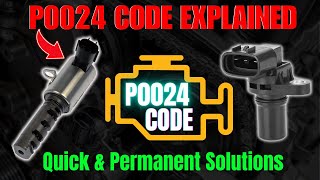
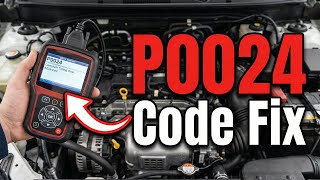
We Have This Part in Stock
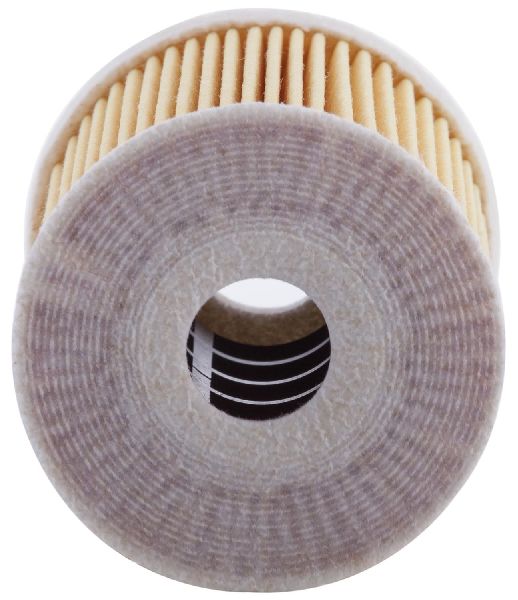
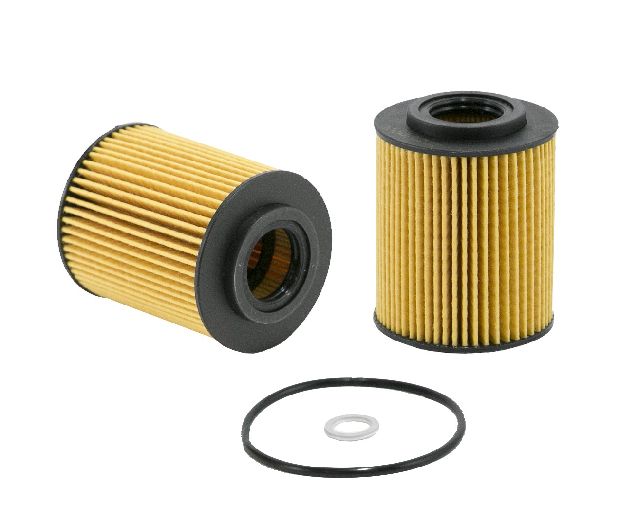

The information in this article is provided for general reference and educational purposes only. Vehicle specifications, procedures, and part compatibility can vary by production date, trim level, and region. Always consult your vehicle's factory service manual and verify part numbers before purchasing or performing repairs. Safety-critical components such as airbags, seat belts, and braking systems should be installed by a qualified professional.
- Hyundai Palisade:
- 🧭 Diagnostic Flowchart
- 🎬 Helpful Videos
- 🛍️ Shop This Part
- What's Unique About the 2020-2024 Hyundai Palisade
- Symptoms You May Notice
- Most Likely Causes
- Rare But Worth Checking
- Diagnosis Steps
- Parts You'll Likely Need
- Related Codes That Often Appear With This One
- Technical Service Bulletins (TSBs) & Recalls
- Platform-Specific Known Issues
- Mechanic-Grade Diagnostic Values
- Scan Tool Commands That Help
- Wiring & Ground Locations
- Real Owner Repair Stories
- OEM Part Supersession History
- Model Year Variations Within This Range
- Other Known Issues on This Vehicle
- Used vs. New Parts: Buying Guide for This Vehicle
- Real Owner Stories
- Hyundai Lambda II GDi 3.3L V6 (Similar Architecture)
- 2020-2024 Hyundai Palisade 3.8L V6 — ~45000 miles
- Hyundai V6 Owner — NHTSA ODI #11589365
- Hyundai V6 Owner — NHTSA ODI #11513071
- Related OBD-II Codes
- Frequently Asked Questions
- 🎟️ Get 5% Off