

P0024 on 2013-2019 Hyundai Santa Fe 3.3L V6: Exhaust Cam Timing Fixes
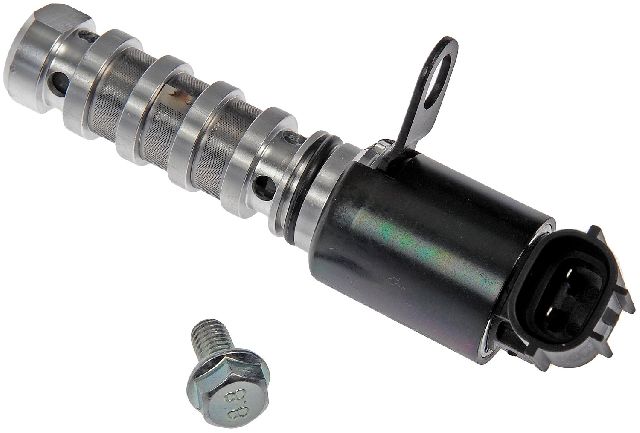
Code P0024 on a 3.3L Santa Fe most often means the Bank 2 exhaust Oil Control Valve (OCV) is faulty or clogged. Bank 2 is the cylinder bank closer to the firewall. Start by checking your oil level and condition; a simple oil change with a genuine Hyundai oil filter (P/N 26300-3LAA1) can sometimes fix it. If not, replacing the Bank 2 exhaust OCV (P/N 24360-3CAA2) is the next logical step and a common, effective repair.
- Code P0024 points to an over-advanced exhaust camshaft on the rear (Bank 2) cylinder bank.
- Before buying any parts, check your oil. Low, old, or dirty oil is a primary cause. An oil change with an OEM filter might fix it.
- The most common failed part is the Bank 2 exhaust Oil Control Valve (OCV), which is relatively inexpensive and accessible for DIY replacement.
- Do not immediately assume the Camshaft Position Sensor is bad; it's a less likely cause for this specific code.
- If an oil change and OCV replacement don't work, the problem is likely a more serious mechanical issue like a stuck cam phaser or timing chain, requiring professional diagnosis.
What's Unique About the 2013-2019 Hyundai Santa Fe
The 3.3L Lambda II GDI engine, while generally robust, is sensitive to oil quality and maintenance schedules. Sludge buildup from extended oil change intervals can clog the small passages in the Oil Control Valves (OCVs) and their filters, leading directly to timing codes like P0024. There is a strong consensus among owners and technicians that using genuine Hyundai/Kia oil filters is critical. Some aftermarket filters have been blamed for improper oil flow or pressure, potentially due to incorrect installation of the filter's center nipple, which can lead to a catastrophic loss of oil pressure if it breaks off. As a result, some aftermarket designs are 'nipple-less' to be more foolproof for quick-lube technicians, but sticking to the OEM filter (Part No. 26300-3LAA1) is the safest bet to avoid issues.
Generation note: This guide covers the third-generation Hyundai Santa Fe, specifically the 3-row models sold from 2013-2019. These were initially called the 'Santa Fe' and later re-badged as the 'Santa Fe XL' to distinguish them from the smaller 'Santa Fe Sport'. The fourth-generation Santa Fe, which also launched in 2019, did not use the 3.3L V6 engine.
Symptoms You May Notice
- Check Engine Light is on
- Rough or unstable idle
- Engine stalling, especially at low speeds or when coming to a stop
- Reduced engine power and sluggish acceleration
- Noticeably worse fuel economy
- Rattling or knocking noise from the engine, especially at startup
- Vehicle 'lurching' forward at low speeds
- Replacing the Camshaft Position Sensor: This code indicates a mechanical timing issue (cam is out of place), not an electrical sensor circuit failure. A failing sensor usually triggers different codes related to the sensor's signal or circuit integrity.
Most Likely Causes
- Low, Dirty, or Incorrect Viscosity Engine Oil 🔴 High Probability The CVVT system is entirely dependent on oil pressure and cleanliness. The GDI engine design can contribute to oil contamination, and sludge or debris can easily clog the small passages in the Oil Control Valve (OCV).
How to confirm: Check the oil dipstick. The oil should be at the full mark and have a clean, amber appearance. If it's low, black, or past the recommended service interval, it's the first thing to address.
Typical fix: Perform an engine oil and filter change. It is highly recommended to use a full synthetic 5W-30 oil that meets the manufacturer's specifications and a genuine Hyundai/Kia oil filter (P/N 26300-3LAA1). In some cases, this alone will resolve the code.
Est. part cost: $40-$80 - Faulty Bank 2 Exhaust Oil Control Valve (OCV) 🔴 High Probability → Shop Engine Variable Valve Timing (VVT) Solenoid The OCV is an electromechanical solenoid that constantly works while the engine is running. It is a very common failure point due to heat cycles and becoming clogged or stuck from contaminated engine oil.
How to confirm: After confirming good oil, this is the next step. A DIY method is to swap the Bank 2 exhaust OCV with the Bank 1 exhaust OCV (radiator side). If the code changes to P0014 (the Bank 1 equivalent), the OCV is confirmed bad. A mechanic can also command the solenoid with a scan tool or test its internal resistance (should be 6.7-7.7 Ohms at 68°F/20°C).
Typical fix: Replace the Bank 2 exhaust Oil Control Valve. Bank 2 is on the firewall side of the engine. The exhaust OCV is typically the lower of the two solenoids on that bank. The OEM part number is 24360-3CAA2.
Est. part cost: $50-$100 - Clogged OCV Filter Screen 🟡 Medium Probability Each OCV has a small, thimble-shaped filter screen located in the oil passage beneath it. These can become clogged with sludge or debris, restricting oil flow to the OCV and cam phaser even if the OCV itself is functional.
How to confirm: When removing the OCV for inspection or replacement, the filter can be seen in the port in the cylinder head. It can be carefully extracted with a small pick or screw.
Typical fix: Carefully remove, clean with brake cleaner, and reinstall the filter screen. If it is damaged or heavily clogged, replace it. They are inexpensive.
Est. part cost: $5-$15
Rare But Worth Checking
- Stuck or Failed Camshaft Phaser (CVVT Actuator): → Shop Engine Camshaft If a new OCV and fresh oil don't solve the problem, the issue may be with the mechanical phaser itself. The phaser can get stuck internally due to debris or wear, which is a much more involved repair requiring removal of the valve cover and timing components.
- Stretched Timing Chain or Failed Tensioner: → Shop Engine Timing Chain Over time, the timing chain can stretch, or the hydraulic tensioner can weaken, causing the physical camshaft timing to be out of sync with the crankshaft. This would typically be accompanied by rattling noises, especially on startup.
- Faulty Oil Pressure Switch: A leaking or faulty oil pressure switch is a known issue on this engine. While it may not directly cause P0024, it can lead to an intermittent flashing oil light and low oil pressure conditions that affect the entire CVVT system.
Diagnosis Steps
- Read the code with an OBD-II scanner to confirm P0024 is present.
- Crucial First Step: Check the engine oil level and condition. If it is low, dark, or past its service interval, perform an oil and filter change. Use a full synthetic 5W-30 oil and a genuine Hyundai filter (P/N 26300-3LAA1). Clear the code and drive to see if it returns.
- If the code returns, locate the Bank 2 (firewall side) exhaust Oil Control Valve (OCV). It is the lower of the two solenoids on that side of the engine.
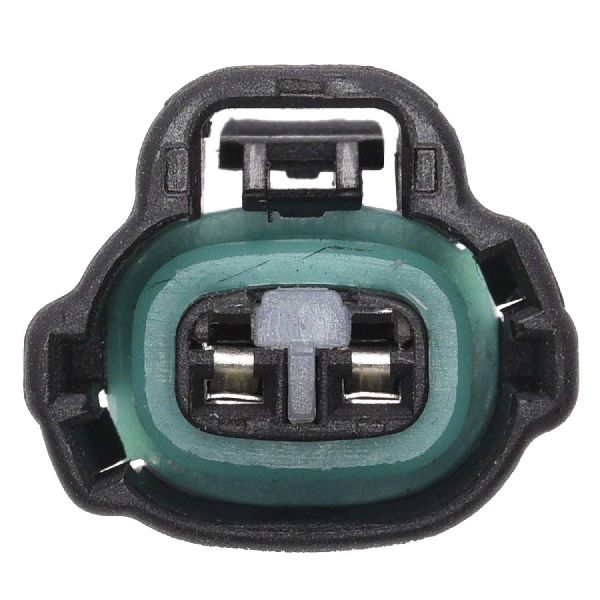
- Inspect the OCV's electrical connector for damage, corrosion, or oil saturation.
- Remove the OCV (typically a single 10mm bolt). Inspect it and its filter screen in the cylinder head for sludge or debris. You can attempt to clean both with brake cleaner and test the OCV by applying 12V to its terminals (it should click audibly).
- The Definitive OCV Test: Swap the Bank 2 exhaust OCV with the Bank 1 (radiator side) exhaust OCV. They are identical parts. Clear the codes and drive the vehicle. If the code returns as P0014 ('B' Camshaft Position - Bank 1), you have confirmed the OCV you moved is faulty. Replace the bad OCV with a new one (P/N 24360-3CAA2).
- If the code P0024 returns after the swap, the problem is not the OCV. The issue is likely within Bank 2, such as a clogged oil passage, a stuck camshaft phaser, or a timing chain problem. At this point, professional diagnosis is recommended as it requires more invasive testing.
Parts You'll Likely Need
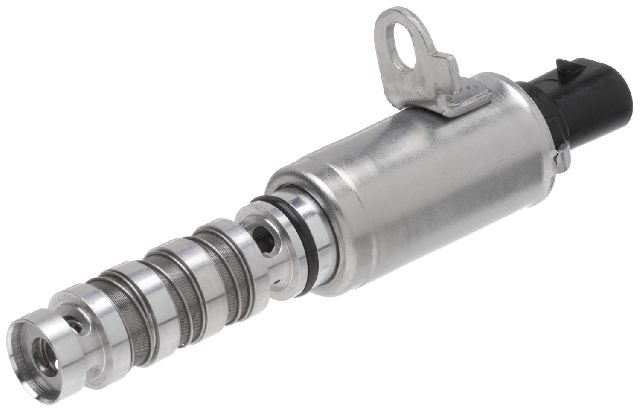
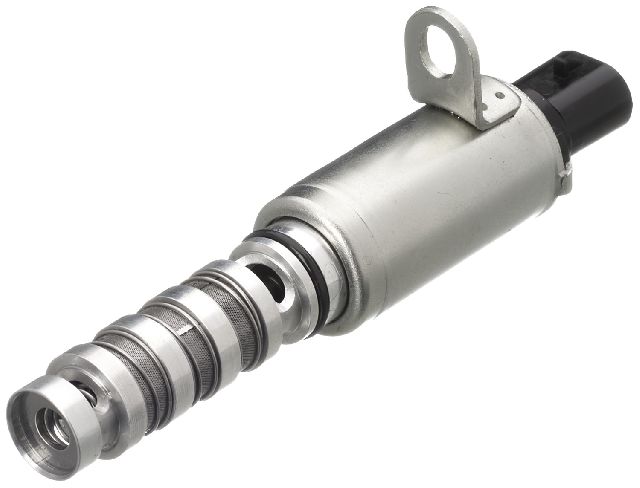
- Engine Oil Control Valve (OCV) / VVT Solenoid (Bank 2 Exhaust)
(OEM #24360-3CAA2)— This solenoid is the most common component to fail or become clogged, directly causing the P0024 code by getting stuck and allowing too much oil flow to the phaser.
Trusted brands: Hyundai Genuine, Bosch, Delphi
OEM price range: $80-$120
Aftermarket price range: $40-$80 - Engine Oil and OEM Filter
(OEM #26300-3LAA1 (Filter))— Correct oil level, viscosity, and cleanliness are absolutely critical for the CVVT system to function. An oil change with a genuine filter is the mandatory first step and may resolve the issue on its own.
Trusted brands: Hyundai Genuine Filter
OEM price range: $10-$15 (filter only)
Aftermarket price range: $5-$10 (filter only)
Related Codes That Often Appear With This One
- P0014 — This is the equivalent code for the exhaust camshaft on Bank 1. If both P0014 and P0024 appear together, it strongly suggests a systemic issue like very low/dirty oil, incorrect oil filter causing pressure loss, or major sludge buildup affecting both banks.
- P0023 — This is the electrical circuit fault code for the Bank 2 exhaust OCV. If you see P0023 alongside P0024, it means the computer has detected a problem with the solenoid's wiring or internal coil. The electrical fault (P0023) is preventing control of the solenoid, which then causes the mechanical timing fault (P0024). Diagnose the P0023 code first.
Technical Service Bulletins (TSBs) & Recalls
- TSB 24-EM-003H: Extends the limited engine warranty to 15 years/150,000 miles for 2013-2019 Santa Fe 3.3L models due to concerns about premature engine wear and failure.
- TSB 19-EM-002H: Instructs dealers to set maintenance reminders in the vehicle's infotainment system to encourage proper oil change intervals, highlighting the importance of oil maintenance.
- TSB 23-EM-007H: Details the official procedure for combustion chamber cleaning to address carbon buildup on GDI engines.
Platform-Specific Known Issues
- Hyundai extended the limited engine warranty for 2013-2019 Santa Fe SUVs with the 3.3L V6 to 15 years or 150,000 miles under TSB 24-EM-003H. This was in response to a petition regarding engine failures, which can be preceded by oil-related codes like P0024.
- TSB 23-EM-007H provides a procedure for combustion chamber cleaning, which Hyundai may recommend to combat issues stemming from carbon deposits and oil consumption on GDI engines.
- TSB 23-FL-003H recommends the use of Top Tier gasoline and a fuel system cleaner additive (like Techron) twice per oil change interval to help keep fuel injectors and other components clean on GDI engines.
Mechanic-Grade Diagnostic Values
- Oil Control Valve (OCV) Coil Resistance — expected: 6.7 - 7.7 Ω at 20°C (68°F). Failure: A reading of infinite resistance (open circuit) or near-zero resistance (short circuit).
- OCV Connector Voltage (Key On, Engine Off) — expected: ~10.7 V. Failure: A significant difference in voltage between the Bank 1 and Bank 2 OCV connectors could indicate a wiring problem.
Scan Tool Commands That Help
- Hyundai GDS (Global Diagnostic System): Actuation Test / Bi-directional Control for CVVT Solenoid — This function allows a technician to manually command the OCV to activate while the engine is running. A change in engine idle (stumbling or roughness) when the solenoid is commanded indicates the solenoid is mechanically responding and oil passages are likely clear. No change in idle suggests a stuck solenoid or a blocked oil passage. This is a definitive test before replacing parts.
- Hyundai GDS (Global Diagnostic System): CVVT System Data Analysis — The GDS can display live data for the 'Target Angle' and 'Real Angle' of the camshaft. For P0024, the ECM sets the code when the 'Real Angle' is significantly more advanced than the 'Target Angle' for a set period. Observing this data can confirm the fault condition is active.
Wiring & Ground Locations
- G10 / G109 / G110 — On the engine itself, providing ground for the Powertrain Control Module (PCM) and its associated sensors and actuators.. A poor PCM ground can cause erratic sensor readings and incorrect actuator commands. While not a common cause for a single-bank code like P0024, verifying the main engine control grounds are clean and tight is a crucial step in diagnosing any persistent electronic engine issue.
- OCV Connector — On the Bank 2 (firewall side) cylinder head cover, connecting to the exhaust OCV solenoid.. This is the direct electrical connection to the primary failed component. Technicians must check for ~12V power and a ground signal from the PCM at this connector's pins. Oil leaking from a failed valve cover gasket can saturate this connector, causing a poor connection and triggering codes.
Real Owner Repair Stories
- Reddit user in /r/HyundaiSantaFe (2017 Hyundai Santa Fe 3.3L Lambda II) — Check engine light with codes P0014 and P0024, loss of power, tapping noise during acceleration, and significant oil consumption.
❌ Tried (didn't work) The user first noticed oil loss and engine noise.
✅ What actually fixed it The vehicle was taken to a dealership and confirmed to be part of an extended warranty campaign for engine failure. The ultimate cause was internal engine failure (likely rod bearings, a known issue) which presented with CVVT codes. The fix was a complete engine replacement covered under the extended warranty. - NHTSA ODI #11597363 — An owner reported that while attempting to accelerate, a clicking noise worsened and the check engine light displayed codes P0014 and P0024. Upon inspection, the oil was found to be low, and the dealership determined the vehicle required a new engine.
- NHTSA ODI #11438666 — A driver experienced a loss of engine power that required the vehicle to be towed; a subsequent scan revealed codes P0014 and P0024 related to crankshaft issues.
OEM Part Supersession History
Not explicitly found, but 24360-3CAA2 is the widely cited number for this application.→The part number 24360-3CAA2 appears to be stable and fits a wide range of Hyundai/Kia models with the 3.3L and 3.8L Lambda engines from roughly 2011 through 2023, including the Santa Fe, Santa Fe XL, and Palisade.— N/A
Model Year Variations Within This Range
- 2019 only: For the 2019 model year, the 3-row Santa Fe was renamed the 'Santa Fe XL' to differentiate it from the all-new 2-row 4th generation 'Santa Fe' that launched simultaneously. This can cause confusion when ordering parts, but the engine and associated components for the 3.3L V6 remained the same as the 2013-2018 models.
Diagnostic Flowchart
Used vs. New Parts: Buying Guide for This Vehicle
When a used part is the smart pick: A used Oil Control Valve (OCV) from a low-mileage donor vehicle can be a cost-effective option. Since it's an external bolt-on part, it's easy to access and replace if the used part is faulty. It is a gamble, but a low-risk one given the ease of replacement.
Donor-vehicle mileage cap: roughly under 60000 miles for the part to have meaningful remaining life.
What to inspect on the donor part:
- Ask for the VIN of the donor car to verify mileage and check for any reported accident history.
- Inspect the electrical connector for any cracks, brittleness, or signs of oil contamination.
- Look at the small screen/filter end of the solenoid. If it is heavily sludged or full of metallic particles, do not buy it, as it likely came from a poorly maintained or failing engine.
OEM-only on this vehicle (don't cheap out):
- Engine Oil Filter: Given the engine's sensitivity to oil pressure and flow, and the known issues with some aftermarket filter designs, using the genuine Hyundai OEM filter (26300-3LAA1) is a non-negotiable, inexpensive insurance policy against oil-related problems.
- Camshaft Phaser (CVVT Actuator): This is a critical timing component. Aftermarket phasers have a poor reputation for reliability across many brands. If this part needs replacement, using an OEM phaser is strongly recommended to avoid repeat failures.
Aftermarket brands forum-validated for this vehicle:
- Bosch
- Delphi
Brands owners have reported issues with on this vehicle:
- Unbranded, low-cost solenoids from online marketplaces are frequently cited in forums as being dead-on-arrival or failing shortly after installation. While tempting, they often result in having to do the job twice.
Real Owner Stories
Aggregated from forums and TSBs cited above. Mileages and costs reflect what owners reported in those sources.
2017 Hyundai Santa Fe 3.3L GDI Lambda II
Symptoms: Loss of power, check engine light on, and the engine was missing about 4 quarts of oil.
What fixed it: The vehicle's VIN was part of the extended warranty campaign, leading to an engine repair or replacement.
Source hint: Reddit r/HyundaiSantaFe
2017 Hyundai Santa Fe 3.3L GDI Lambda II
Symptoms: Experienced P0014 and P0024 codes with metal shavings found in the engine oil.
What fixed it: The issue led to a complete engine replacement performed under the extended warranty.
Source hint: reddit.com/r/HyundaiSantaFe: A thread titled 'Engine failure including the 6 cylinder 3.3L GDI Lambda II'
Hyundai Santa Fe 3.5L
Symptoms: All four timing codes (P0011, P0014, P0021, P0024) appeared simultaneously.
What fixed it: The codes were resolved simply by performing an engine oil change and driving the vehicle, suggesting a temporary blockage was cleared.
Source hint: Hyundai-Forums.com: A thread titled 'Codes p0011, p0014, p0021, p0024'
2017 Hyundai Santa Fe SE 3.3L V6
Symptoms: A rattling or knocking noise from the engine, especially at startup.
What fixed it: The discussion linked the noise to oil drain-back and emphasized the importance of using a genuine OEM oil filter to resolve the issue.
Source hint: BobIsTheOilGuy.com: A thread titled 'Hyundai Lambda 3.3L V6 - startup rattle'
Documented NHTSA Reports
NHTSA ODI #11589365
Symptoms: The check engine light turned off upon restarting the vehicle but turned back on about 3 minutes after resuming driving. A scan revealed engine codes P0014 and P0024.
NHTSA ODI #11513071
Symptoms: Diagnostic codes P0014 and P0024 were triggered, indicating the "B" camshaft position timing was over-advanced.
What fixed it: The owner was advised by a technician that if the vehicle was not under warranty, they should recommend getting a new vehicle due to the severity of the timing issues.
Related OBD-II Codes
Frequently Asked Questions
Is my 2017 Santa Fe's engine covered by an extended warranty if I get a P0024 code?
What is the correct oil and filter for my 3.3L Santa Fe to prevent P0024?
I need to replace the Bank 2 exhaust OCV. Which one is it and what's the part number?
I swapped the Bank 2 exhaust OCV to the Bank 1 position. What code should I look for to confirm the OCV is bad?
My mechanic wants to do a 'combustion chamber cleaning'. Is this a real Hyundai procedure for my GDI engine?
Besides oil changes, does Hyundai recommend anything else to maintain the GDI engine and prevent issues?
We Have This Part in Stock


The information in this article is provided for general reference and educational purposes only. Vehicle specifications, procedures, and part compatibility can vary by production date, trim level, and region. Always consult your vehicle's factory service manual and verify part numbers before purchasing or performing repairs. Safety-critical components such as airbags, seat belts, and braking systems should be installed by a qualified professional.
- Hyundai Santa Fe:
- 🧭 Diagnostic Flowchart
- 🛍️ Shop This Part
- What's Unique About the 2013-2019 Hyundai Santa Fe
- Symptoms You May Notice
- Most Likely Causes
- Rare But Worth Checking
- Diagnosis Steps
- Parts You'll Likely Need
- Related Codes That Often Appear With This One
- Technical Service Bulletins (TSBs) & Recalls
- Platform-Specific Known Issues
- Mechanic-Grade Diagnostic Values
- Scan Tool Commands That Help
- Wiring & Ground Locations
- Real Owner Repair Stories
- OEM Part Supersession History
- Model Year Variations Within This Range
- Used vs. New Parts: Buying Guide for This Vehicle
- Real Owner Stories
- 2017 Hyundai Santa Fe 3.3L GDI Lambda II
- 2017 Hyundai Santa Fe 3.3L GDI Lambda II
- Hyundai Santa Fe 3.5L
- 2017 Hyundai Santa Fe SE 3.3L V6
- Documented NHTSA Reports
- NHTSA ODI #11589365
- NHTSA ODI #11513071
- Related OBD-II Codes
- Frequently Asked Questions
- 🎟️ Get 5% Off