

P0024 on 2015-2016 Lincoln MKS: Exhaust Cam Timing Over-Advanced Causes & Fixes
On a 2015-2016 Lincoln MKS, code P0024 is most often caused by a sticking Bank 2 exhaust VCT solenoid, usually due to dirty or low engine oil. An oil change and replacing the solenoid is the most common fix, with the part costing between $40 and $90. Bank 2 is the cylinder bank closer to the radiator.
- Always check your engine oil level and condition first. A simple oil change is often the fix for P0024.
- The most likely failed part is the Bank 2 (front/radiator side) exhaust VCT solenoid, which gets stuck from oil debris.
- Do not immediately assume a major mechanical failure. The issue is most often related to oil quality or the inexpensive solenoid itself.
- Replacing the VCT solenoid is a DIY-friendly job for many home mechanics and can save significant labor costs.
What's Unique About the 2015-2016 Lincoln MKS
The V6 engines in the Lincoln MKS (3.7L Cyclone and 3.5L EcoBoost) are known for the sensitivity of their VCT systems to oil quality and maintenance schedules. Manufacturer Technical Service Bulletins (TSBs) for this platform and its mates specifically mention that codes like P0024 are frequently caused by small debris in the oil that makes the VCT solenoid stick. TSB SSM 50067 even advises technicians to use a scan tool to cycle the affected solenoid 10 times to attempt to clear the debris before replacing the part, highlighting how common a non-component failure is. This makes checking the oil condition and inspecting/testing the VCT solenoid the primary diagnostic steps, well before suspecting more complex mechanical failures like cam phasers or timing chains. A unique vulnerability of the 3.7L V6 is its internal, timing-chain-driven water pump; a failure can contaminate the oil with coolant, leading to VCT system codes and eventual engine failure.
Diagnostic Flowchart
Tap your situation to follow the diagnostic path that matches what you're seeing on this vehicle.
Symptoms You May Notice
- Check Engine Light is on
- Rough or fluctuating idle.
- Engine hesitation or stalling, especially at low speeds or when stopping.
- Poor acceleration and reduced engine power.
- Decreased fuel economy.
- Rattling or ticking noises from the engine, particularly a startup rattle on the 3.5L EcoBoost which can be a precursor to this code.
- Hard starting engine.
- Replacing the camshaft position sensor first. The sensor is usually reporting the timing problem correctly; the fault is more often mechanical or hydraulic (solenoid or oil).
- Replacing the camshaft phaser before thoroughly testing the VCT solenoid and checking oil quality. The solenoid is a much more common and less expensive failure point, and Ford specifically advises diagnosing it first.
Most Likely Causes
- Dirty, Low, or Incorrect Viscosity Engine Oil 🔴 High Probability The VCT system is hydraulically operated and highly sensitive to oil pressure and cleanliness. The manufacturer has issued multiple TSBs noting that debris in oil is a primary cause of VCT solenoid issues across the Ford/Lincoln lineup.
How to confirm: Check the engine oil dipstick for level and observe the oil's color and consistency. If the oil is below the 'add' line, dark, or sludgy, this is the likely cause. 🎬 See this breakdown of common causes and fixes for P0024. An oil change is the mandatory first step.
Typical fix: Perform an engine oil and filter change using the manufacturer-specified oil (e.g., SAE 5W-30 for the 3.5L EcoBoost). In cases of suspected sludge, some owners on forums have reported success with an engine flush.
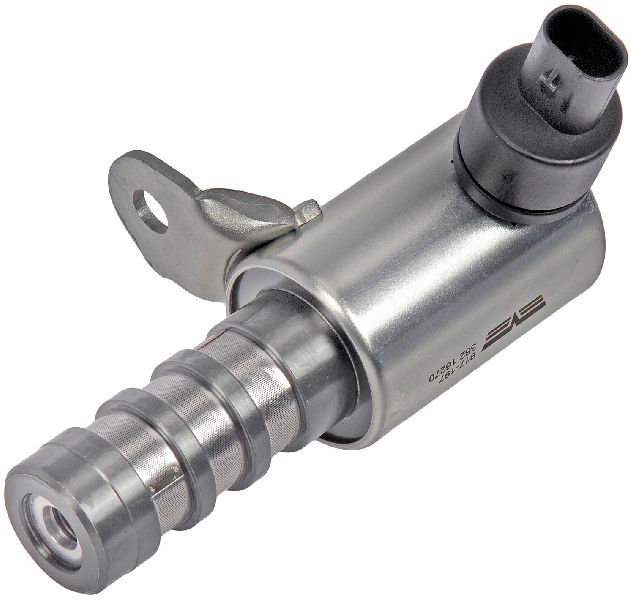
Est. part cost: $40-$80 - Sticking or Failed VCT Solenoid (Bank 2 Exhaust) 🔴 High Probability → Shop Engine Variable Valve Timing (VVT) Solenoid As noted in TSB SSM 50067, these solenoids are prone to sticking due to small debris in the engine oil, preventing them from correctly regulating oil flow to the cam phaser. This is the most common mechanical failure for this code.
How to confirm: After an oil change, if the code returns, swap the Bank 2 exhaust VCT solenoid with the Bank 2 intake solenoid (they are the same part number). Clear codes and drive. If the code changes to P0021 (Intake Cam Over-Advanced), the solenoid is faulty. A scan tool can also be used to command the solenoid on and off to check for response, and TSB 50067 suggests cycling it 10 times to clear debris. Resistance can be checked with a multimeter and should be between 5 and 14 ohms.
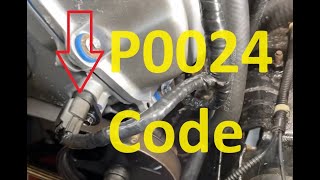
Typical fix: Replace the Bank 2 exhaust VCT solenoid. It is located on the valve cover of the cylinder bank closer to the radiator. On the 3.7L and 3.5L engines, this may require removing the valve cover, in which case the gasket should also be replaced. 🎬 Watch: A step-by-step guide to diagnosing and replacing VCT solenoids.
Est. part cost: $40-$90 - Faulty Camshaft Position Sensor (Bank 2 Exhaust) ⚪ Low Probability → Shop Engine Camshaft Position Sensor
How to confirm: The sensor provides the timing data to the PCM. If the VCT solenoid is confirmed to be working correctly, the sensor's signal can be checked with an oscilloscope or by swapping it with the sensor from another position to see if the fault follows the sensor. However, this is an uncommon cause, as a bad sensor usually throws its own specific codes.
Typical fix: Replace the Bank 2 exhaust camshaft position sensor. The Motorcraft part is often DU-90.
Est. part cost: $25-$60
Rare But Worth Checking
- Worn Timing Chain, Guides, or Tensioners: → Shop Engine Timing Chain If the engine has high mileage (over 100,000 miles) or a history of infrequent oil changes, a stretched timing chain can cause timing correlation faults. This is a more involved and expensive repair, often accompanied by a rattling noise on startup.
- Failed Camshaft Phaser: → Shop Engine Camshaft The phaser is the mechanical gear that the VCT solenoid controls. It can fail internally, getting stuck in an advanced position. This is a notorious problem on the 3.5L EcoBoost engine, often indicated by a loud cold-start rattle. This repair requires removing the valve cover and timing components and is a common outcome if a new solenoid does not fix the code.
- Wiring or Connector Issue: Damage to the wiring or a corroded connector for either the VCT solenoid or the camshaft position sensor can cause an intermittent or constant fault. A visual inspection and wiggle test of the harness is a key diagnostic step.
- Clogged VCT Solenoid Oil Filter Screen: → Shop Engine Variable Valve Timing (VVT) Solenoid Some high-mileage engines experience clogging of the small mesh filter screen located in the cylinder head, inside the bore where the VCT solenoid sits. This can restrict oil flow to the phaser even if a new solenoid is installed.
Diagnosis Steps
- Verify Oil Level and Condition: Check the oil dipstick. If the oil is low, dirty, or past its change interval, perform an oil and filter change with the correct viscosity oil (e.g., SAE 5W-30). Clear the code and test drive.
- Scan for Codes: Use an OBD-II scanner to confirm P0024 is present and check for any other related codes.
- Inspect Wiring: Visually inspect the connectors and wiring for the Bank 2 exhaust VCT solenoid and camshaft position sensor. Look for any signs of damage, corrosion, or loose connections.
- Test the VCT Solenoid: Per TSB SSM 50067, use a scan tool to cycle the solenoid 10 times to try and clear debris. The most effective DIY method is to swap the Bank 2 exhaust solenoid with the Bank 2 intake solenoid (part AT4Z-6M280-B is the same for both). Clear codes and drive. If the code changes to P0021, the solenoid is confirmed bad.
- Test the Camshaft Position Sensor: If the solenoid is good, test the sensor by checking its signal with a multimeter or oscilloscope, or by swapping it with a known good sensor. This is a less likely cause.
- Check for Mechanical Issues: If all else fails, the problem may be a worn timing chain or a failed camshaft phaser, especially if a startup rattle is present. This requires more advanced mechanical diagnosis, often involving removal of the valve cover for inspection.
Parts You'll Likely Need
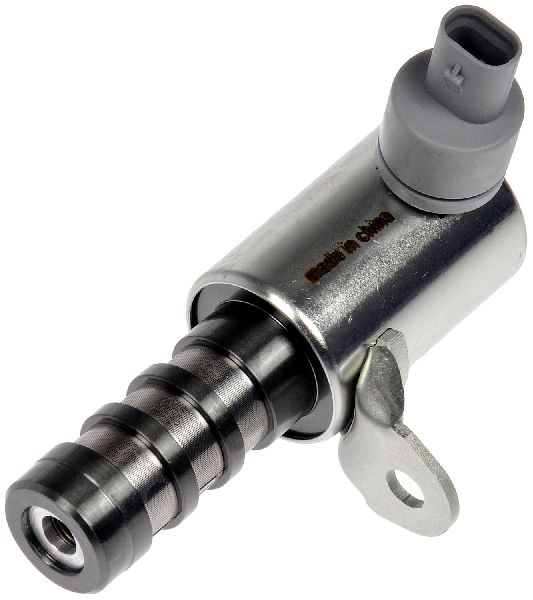
- Engine Variable Valve Timing (VCT) Solenoid
(OEM #AT4Z-6M280-B)— This is the most common point of failure for code P0024 on these engines, often sticking due to oil contamination as cited in manufacturer TSBs. The -B revision is the updated part for the 3.7L and 3.5L engines and is used for both intake and exhaust positions.
Trusted brands: Motorcraft, Dorman (p/n 917-198), NGK, Standard Motor Products (SMP)
OEM price range: $60-$90
Aftermarket price range: $40-$90 - Engine Oil and Filter
(OEM #Motorcraft FL-500S (Filter))— Dirty, low, or incorrect viscosity oil is a primary cause of all VCT system faults and an oil change is the first step in any diagnosis.
Trusted brands: Motorcraft, Mobil 1, Castrol, Valvoline
OEM price range: $50-$90
Aftermarket price range: $40-$80
Related Codes That Often Appear With This One
- P0014 — This is the same over-advanced fault but for Bank 1 (firewall side). Seeing both codes together strongly suggests a systemic problem like low/dirty oil or low oil pressure affecting the entire engine.
- P0021 — This code is for an over-advanced intake camshaft on the same bank (Bank 2). If it appears after swapping solenoids for diagnosis, it confirms the solenoid is bad. If it appears with P0024 initially, it may point to an oil pressure issue on that cylinder head.
- P0011, P0012, P0015, P0016, P0017, P0018, P0019, P0022, P0025 — These are all VCT and camshaft/crankshaft correlation codes. The provided TSBs (SSM 54366, SSM 50067) list them together, indicating a common root cause, often related to oil contamination or pressure, can trigger any combination of these faults.
Technical Service Bulletins (TSBs) & Recalls
- SSM 50067: Notes that P0024 and other VCT codes may be caused by small debris making the VCT solenoid stick. Advises using a scan tool to cycle the solenoid 10 times to attempt to clear it before replacement.
- SSM 54366: References a specific pinpoint test (HK) in the workshop manual for a list of VCT codes including P0024, indicating an updated, well-defined troubleshooting path from the manufacturer.
Platform-Specific Known Issues
- TSB SSM 50067 notes that vehicles may exhibit P0024 due to small debris causing the VCT solenoid to stick, and advises against immediate component replacement.
Mechanic-Grade Diagnostic Values
- VCT Solenoid Resistance — expected: 5 - 14 Ohms. Failure: A reading outside this range (especially an open or short circuit) indicates a failed solenoid coil.
- VCT Solenoid Control Voltage (Key On, Engine Off) — expected: Greater than 10.5 Volts. Failure: Voltage below this level points to an issue in the power supply wiring or PCM.
- Scan Tool VCT Advance Error PID (VCTADVERR2) — expected: Hovering near 0 degrees (+/- 5 degrees max) at stable RPM.. Failure: A large, persistent positive value (e.g., >10 degrees) when the system should be at rest or a commanded position confirms the over-advanced condition.
- Engine Oil Pressure at Hot Idle — expected: Minimum 15-25 PSI. Failure: Pressure below this threshold can cause the VCT system to malfunction, leading to timing codes.
Hidden / Shadow Codes Worth Checking
- VCTADVERR / VCTADVERR2: These are not separate trouble codes but live data Parameter IDs (PIDs) that show the difference in degrees between the commanded and actual camshaft position for Bank 1 and Bank 2. For P0024, a technician would monitor VCTADVERR2 (for Bank 2) and VCT_EXH_ACT2 (for exhaust cam actual position). A large positive number on VCTADVERR2 indicates an over-advanced condition. (see via Ford IDS (Integrated Diagnostic System) or a professional-grade scan tool with Ford-specific live data capabilities.)
- Mode 6, TID $84: Mode 6 data provides results from non-continuous system tests. For Ford VCT systems, Test ID $84 often corresponds to VCT advance and retard performance. A failing value here can indicate a problem before a hard code like P0024 is set, or help confirm a marginal component. (see via A scan tool that can display Mode 6 test results.)
Scan Tool Commands That Help
- Ford IDS or equivalent professional scanner: VCT Solenoid Duty Cycle Command / Output State Control — When the engine is idling, a technician can command the Bank 2 exhaust solenoid (VCT_EXH_DC2) to a specific duty cycle. A functional system will cause a noticeable change in idle quality or RPM. If there is no change, it suggests the solenoid is stuck, the passages are clogged, or the phaser is seized.
- Ford IDS or equivalent professional scanner: Data Logger with VCT PIDs — Record PIDs like VCT_EXH_CMD2 (Commanded Position), VCT_EXH_ACT2 (Actual Position), and VCTADVERR2 (Error) during a test drive. This allows a technician to see exactly when the timing error occurs (e.g., under load, on deceleration) and how the PCM is trying to compensate, which is crucial for diagnosing intermittent issues.
Wiring & Ground Locations
- VCT Solenoid Connector — On the top of the valve cover, plugging directly into the VCT solenoid. For Bank 2, this is the valve cover closer to the radiator.. This 2-pin oval connector (often gray) provides power and the control signal from the PCM. Oil leaking from the solenoid seal can contaminate the pins, and harness damage near the connector can cause an open or short, leading to P0024. Pin 1 is typically the control wire from the PCM, and Pin 2 is the 12V+ power (VPWR).
- Valve Cover Ground Strap — A ground wire is typically bolted to a stud on the corner of the valve cover on each bank.. While not directly for the VCT circuit, a poor ground on the cylinder head can cause erratic sensor readings and electrical noise, potentially interfering with the Camshaft Position Sensor signal and contributing to timing faults.
Real Owner Repair Stories
- Ford F150 Forum (2013 Ford F-150 3.5L EcoBoost with ~110,000 miles) — Check Engine Light with codes P0014 and P0024.
❌ Tried (didn't work) Initial diagnosis was inconclusive, with concerns about a major timing job being needed.
✅ What actually fixed it A Ford technician diagnosed oil sludging that was clogging the VCT phaser oil screens. The tech performed an engine flush by replacing the engine oil with ATF, running the engine to operating temperature, then draining it and performing a standard oil change. This cleared the codes. The owner now performs oil changes every 4,000 miles. - BAT Auto Technical Forum (2012 Ford F-150 3.7L with 55,000 miles) — Check Engine Light with code P0024.
❌ Tried (didn't work) A dealership replaced the Bank 2 VCT solenoid.
✅ What actually fixed it The Check Engine Light and P0024 code returned the next day. The dealership then re-diagnosed the issue as a failed camshaft phaser, which was replaced under the powertrain warranty and permanently resolved the code.
When the Usual Fixes Don't Work
- While a sticking VCT solenoid is the most frequent cause of P0024, it is not the only cause. A common diagnostic trap is to replace the solenoid without confirming the failure, only to have the code return. In a documented case involving a 3.7L V6 with 55,000 miles, a dealership replaced the VCT solenoid first, which did not solve the problem. The ultimate cause was a failed camshaft phaser, which had to be replaced to finally clear the code. This highlights that if a new solenoid and fresh oil do not resolve the issue, the next most likely culprit is the phaser itself, especially if any startup rattle is present.
OEM Part Supersession History
AT4Z-6M280-A→AT4Z-6M280-B— Part revision and update by Ford. The -B version is the most current and commonly specified replacement.
Heads up: While many aftermarket suppliers treat them as interchangeable, there is anecdotal evidence of differences (e.g., connector color - black for -A, gray for -B). To ensure compatibility, it is safest to use the -B revision (AT4Z-6M280-B) which is confirmed to work for all four VCT positions on the 3.5L/3.7L engines.
Model Year Variations Within This Range
- 2015-2016: No significant variations have been identified between the 2015 and 2016 Lincoln MKS models regarding the VCT system, common causes, or diagnostic procedures for code P0024. The 3.5L EcoBoost and 3.7L V6 engines and their VCT components remained consistent through these model years.
Helpful Videos
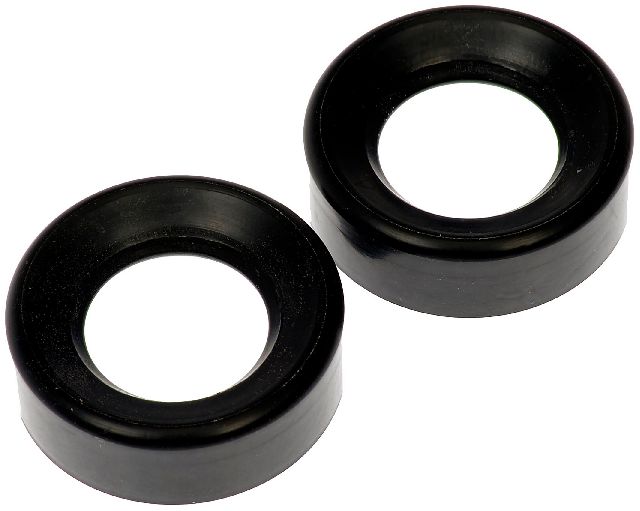
We Have This Part in Stock


The information in this article is provided for general reference and educational purposes only. Vehicle specifications, procedures, and part compatibility can vary by production date, trim level, and region. Always consult your vehicle's factory service manual and verify part numbers before purchasing or performing repairs. Safety-critical components such as airbags, seat belts, and braking systems should be installed by a qualified professional.
- Lincoln MKS:
- 🧭 Diagnostic Flowchart
- 🎬 Helpful Videos
- 🛍️ Shop This Part
- What's Unique About the 2015-2016 Lincoln MKS
- Symptoms You May Notice
- Most Likely Causes
- Rare But Worth Checking
- Diagnosis Steps
- Parts You'll Likely Need
- Related Codes That Often Appear With This One
- Technical Service Bulletins (TSBs) & Recalls
- Platform-Specific Known Issues
- Mechanic-Grade Diagnostic Values
- Hidden / Shadow Codes Worth Checking
- Scan Tool Commands That Help
- Wiring & Ground Locations
- Real Owner Repair Stories
- When the Usual Fixes Don't Work
- OEM Part Supersession History
- Model Year Variations Within This Range
- 🎟️ Get 5% Off