

P0024 on 2012-2015 Subaru Impreza: Exhaust Cam Timing Causes & Fixes
On a 2012-2015 Subaru Impreza, P0024 is almost always caused by low/dirty engine oil or a failing exhaust Oil Control Valve (OCV) on the driver's side. Start by checking your oil; if it's full and clean, the OCV is the next likely culprit, costing about $70-$120 for the part. This is a common issue for the FB20 engine, also found in the Crosstrek and Forester.
- P0024 on your Impreza points to a timing issue on the driver's side exhaust camshaft.
- Before buying any parts, check your engine oil level and condition. Low or dirty oil is the most common cause.
- The most likely failed part is the Oil Control Valve (OCV) for the driver's side exhaust, a relatively inexpensive and accessible part to replace.
- A simple DIY diagnostic, recommended by Subaru, is to swap the driver's side and passenger's side exhaust OCVs to see if the code follows to the other bank (P0014).
- Do not immediately replace the camshaft position sensor; it is almost always just reporting the problem correctly.
What's Unique About the 2012-2015 Subaru IMPREZA
The 2.0L FB20 engine in this generation Impreza relies heavily on its Dual AVCS (Active Valve Control System) for both performance and fuel efficiency. This system is notoriously sensitive to oil level and quality. Unlike some other brands where this code might point directly to a sensor, on this Subaru, the root cause is almost always hydraulic—either not enough oil pressure due to low levels, or a blockage in the Oil Control Valve (OCV) that directs the oil flow. The existence of a specific Technical Service Bulletin (TSB 02-132-12R) for AVCS-related codes underscores how common this issue is, stating a possible cause is contamination within the OCV or camshaft sprocket.
Diagnostic Flowchart
Tap your situation to follow the diagnostic path that matches what you're seeing on this vehicle.
Symptoms You May Notice
- Check Engine Light is on
- Flashing cruise control and traction control lights
- Rough or unstable idle
- Engine stalling, especially at low speeds
- Reduced engine power and sluggish acceleration
- Noticeably worse fuel economy
- Engine hesitation or stumbling
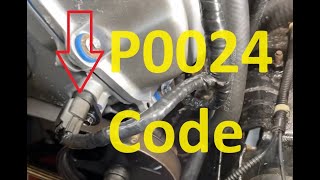
- A change in the exhaust note or sound 🎬 Watch: A breakdown of P0024 causes and common fixes.
- Replacing the camshaft position sensor. While the sensor reports the problem, it is rarely the cause of it. The issue is typically the mechanical or hydraulic system the sensor is monitoring. Forum users have replaced this part only to have the code return.
Most Likely Causes
- Low or Dirty Engine Oil 🔴 High Probability The Subaru AVCS is a hydraulic system that requires clean oil at the proper pressure to function. Sludge, low levels, or using the wrong viscosity oil will prevent the cam phasers from adjusting correctly. Multiple owner forums report that topping off or changing the oil resolved the code.
How to confirm: Check the oil dipstick. The oil level should be at the full mark, and the oil should be amber/brown, not black, thick, or gritty. Using a non-OEM or cheap oil filter can also contribute to contamination.
Typical fix: Perform an oil and filter change using the manufacturer-specified oil (Subaru recommends 0W-20 synthetic) and a quality filter. Clear the codes and drive.
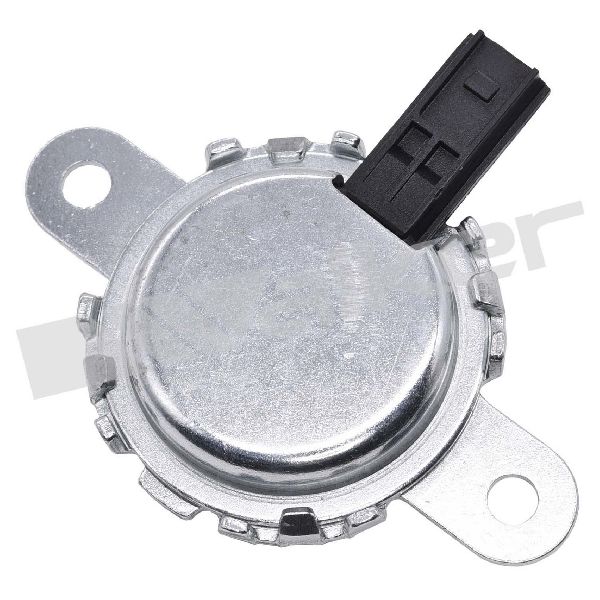
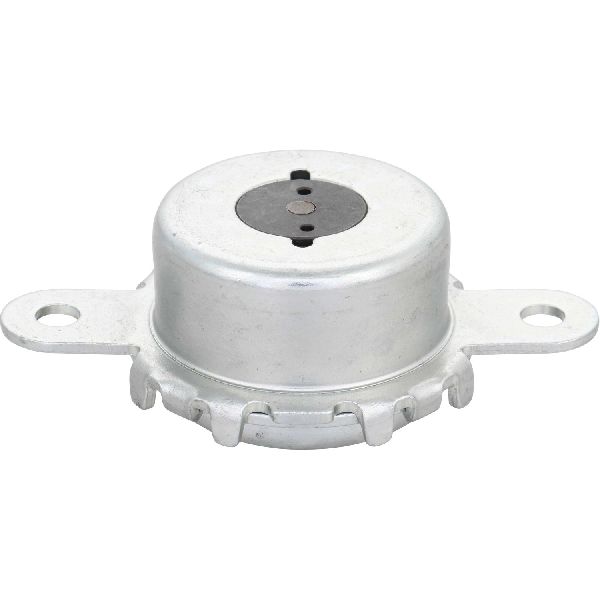
Est. part cost: $40-$70 - Faulty Oil Control Valve (OCV) / VVT Solenoid 🔴 High Probability → Shop Engine Variable Valve Timing (VVT) Solenoid This solenoid is the most common mechanical failure point for this code. Small passages inside can become clogged with oil sludge, causing it to stick. TSB 02-132-12R specifically identifies OCV contamination as a primary cause.
How to confirm: After confirming the oil is good, swap the Bank 2 (driver's side) exhaust OCV with the Bank 1 (passenger's side) exhaust OCV. Clear the codes and drive. If the code returns as P0014 (the Bank 1 equivalent), the OCV is faulty. 🎬 See this walkthrough on diagnosing and replacing the valve. This swap is the diagnostic procedure recommended by Subaru in TSB 02-132-12R.
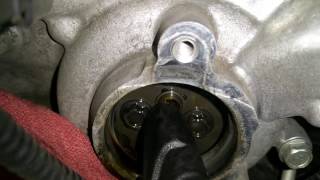
Typical fix: Replace the Bank 2 exhaust Oil Control Valve. The OCV for the exhaust cam is located on the lower part of the engine's front timing cover on the driver's side.
Est. part cost: $70-$120 - Wiring or Connector Issue at the OCV ⚪ Low Probability
How to confirm: Visually inspect the electrical connector and wiring going to the Bank 2 exhaust OCV for any signs of damage, corrosion, or loose connections. Check the ground strap attached near the OCV for a secure connection.
Typical fix: Repair the damaged wiring or clean/replace the connector.
Est. part cost: $5-$50
Rare But Worth Checking
- Stretched Timing Chain: → Shop Engine Timing Chain While the FB20 uses a timing chain designed to last the engine's life, significant stretching is possible at very high mileage or with poor maintenance. This can cause the physical cam timing to be out of sync with what the sensors report, triggering this code. A diagnostic procedure in a related TSB involves checking cam/crank correlation with the AVCS disabled; a deviation of 10° or more can indicate a slipped chain tooth. This is a major repair requiring removal of the front timing cover.
- Failed Camshaft Phaser (AVCS Actuator): → Shop Engine Camshaft The gear on the end of the camshaft can fail mechanically and get stuck in the advanced position. TSB 02-132-12R notes that if swapping the OCV doesn't resolve the code, the camshaft sprocket (phaser) is the next component to replace. This is usually diagnosed after replacing the OCV does not solve the problem.
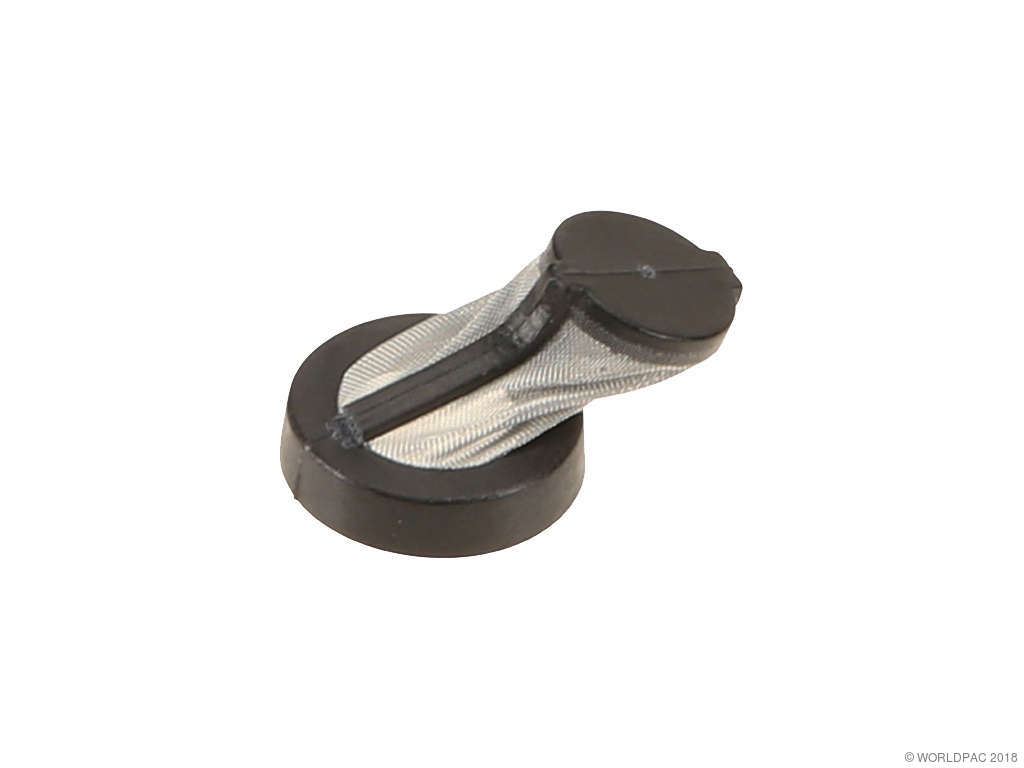
- Clogged Banjo Bolt Filters: Some Subaru engines have small mesh filters inside the banjo bolts that supply oil to the AVCS system. While less common on the FB20, if these become clogged with debris, they can starve the OCVs of oil pressure and cause timing codes. This is more of a known issue on the older EJ series engines but can be an edge case on the FB20 if oil maintenance has been poor.
Diagnosis Steps
- Check Engine Oil: Verify the engine oil is full and clean. If it is low, dirty, or past its service interval, perform an oil and filter change with the correct viscosity oil (0W-20 synthetic) and a quality OEM or equivalent filter. Clear the code and see if it returns.
- Inspect OCV Connector: Check the wiring and electrical connector for the Bank 2 (driver's side) exhaust Oil Control Valve. This is on the lower portion of the front timing cover. Ensure it is securely connected and free of corrosion or damage.
- Swap the Oil Control Valves: As recommended by Subaru TSB 02-132-12R, swap the driver's side exhaust OCV with the passenger's side exhaust OCV. They are identical parts. The O-ring on the OCV is a one-time use item and should ideally be replaced when reinstalling.
- Re-test: Clear the codes and drive the vehicle. If the code changes to P0014 (Bank 1 Exhaust Cam Timing Over-Advanced), you have confirmed the OCV you moved is faulty.
- Replace the Faulty OCV: If the OCV is confirmed bad, replace it with a new part. The replacement process takes about 10-20 minutes and requires basic tools like a 10mm socket. Be careful not to cross-thread the bolts into the aluminum engine block. 🎬 Watch: How to upgrade your FB20 oil control valve.
- Advanced Diagnosis: If the code persists after replacing the OCV, the issue may be a stretched timing chain or a faulty camshaft phaser (sprocket), as per TSB 02-132-12R. This requires more in-depth mechanical diagnosis, likely by a professional.
Parts You'll Likely Need
- Engine Oil Control Valve (VVT Solenoid)
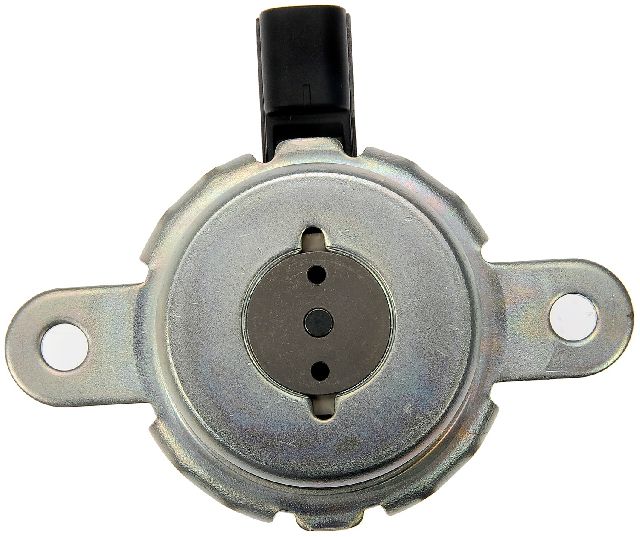
(OEM #10921AA231)— This solenoid is the most common part to fail, usually by getting clogged with oil sludge, which prevents it from correctly regulating oil flow to the cam phaser. This part number supersedes previous versions 10921AA230 and 10921AA220.
Trusted brands: Subaru (Genuine), Denso, Dorman, Standard Motor Products
OEM price range: $90-$120
Aftermarket price range: $60-$90 - OCV Gasket / O-Ring
(OEM #Not consistently specified, check with dealer)— Subaru TSB 02-132-12R states the o-ring and nylon backer ring are one-time use items and must be replaced when the OCV is reinstalled to prevent leaks. Some aftermarket OCVs may come with a new gasket.
Trusted brands: Subaru (Genuine)
OEM price range: $5-$15
Aftermarket price range: $2-$10
Related Codes That Often Appear With This One
- P0014 — This is the equivalent code for Bank 1 (passenger side) exhaust. Seeing both P0014 and P0024 together strongly points to a systemic issue like very low or dirty oil affecting both banks.
- P000B — This code refers to 'B' Camshaft Position Slow Response (Bank 2). It can appear with P0024 as it also indicates a problem with the AVCS system's ability to adjust cam timing on the driver's side exhaust, often pointing to the same root causes like oil issues or a failing OCV.
- P000D — Similar to P000B, this is another 'B' Camshaft Position Slow Response code for Bank 2. Seeing it alongside P0024 reinforces that the issue lies within the driver's side exhaust cam control system.
Technical Service Bulletins (TSBs) & Recalls
- 02-132-12R: DIAGNOSIS AND REPAIR FOR AVCS-RELATED DTCS P000A, P000B, P000C, P000D, P0011, P0014, P0021 AND P0024
Platform-Specific Known Issues
- TSB 02-132-12R: This TSB, titled "DIAGNOSIS AND REPAIR FOR AVCS-RELATED DTCS...", was issued by Subaru to address a range of codes including P0024. It confirms the cause is often contamination in the OCV or cam sprocket and provides the official diagnostic procedure: swap the OCV from side-to-side to confirm the failure. If the code follows the valve, replace the valve. If not, replace the cam sprocket.
- Oil Consumption and Sensitivity: The FB20B engine is known for some oil consumption, which can lead to low oil levels between changes if not monitored. This makes the AVCS system particularly vulnerable, as low oil pressure is a direct cause of timing codes like P0024.
Mechanic-Grade Diagnostic Values
- Oil Control Valve (OCV) Solenoid Resistance — expected: 6.9 - 7.9 Ω at 68°F (20°C). Failure: A reading of no resistance (open circuit) or very high resistance indicates a failed solenoid coil.
- Live Data: Commanded vs. Actual Cam Angle — expected: The actual cam angle ('AVCS Exh Left') should closely follow the commanded target angle ('AVCS Exh Target Final L') during engine operation.. Failure: A significant and persistent lag or difference between the target and actual angle points to a hydraulic or mechanical issue (clogged OCV, failing phaser).
- Live Data: Base Timing Check — expected: With the OCV for the affected bank electrically disconnected, the cam advance angle should read near 0° at idle.. Failure: A reading of approximately 10° or more suggests the timing chain has skipped a tooth on the 36-tooth cam sprocket.
Scan Tool Commands That Help
- Subaru Select Monitor (SSM) or equivalent (Topdon, Autel): AVCS Solenoid Activation Test — This bidirectional control commands the OCV solenoid to cycle on and off while the engine is running. The technician can then monitor live data for 'AVCS Exh Left' to see if the camshaft angle changes as commanded, confirming if the solenoid and phaser are mechanically responding.
- Subaru Select Monitor (SSM) or equivalent: Test Mode Change — This function can be used to put the vehicle into a diagnostic state, sometimes required before clearing certain codes or performing other system checks related to the AVCS.
Wiring & Ground Locations
- Main Engine Ground — The main engine-to-chassis ground strap bolts onto the top starter motor bolt.. A poor main engine ground can cause a host of electrical issues and erratic sensor readings. While not a direct cause, ensuring this connection is clean and tight is a fundamental step in any electrical diagnosis.
- GB-2 / GB-6 — GB-2 is a ground point near the left headlight; GB-6 is at the left end of the dash.. The OCV circuit is controlled by the ECM. These ground points are part of the network that the ECM and its related sensors rely on for a stable reference voltage. A fault at these locations could potentially affect the OCV's operation.
- ECM Location — The Engine Control Module (ECM) is located on the right side of the dash.. This is the source of the command signal for the OCV. Any diagnostic tests involving checking for signal voltage or continuity at the OCV connector will trace back to this module.
Real Owner Repair Stories
- YouTube channel 'Bearded Auto Media' (Subaru STi (EJ engine, but same P0024 code and AVCS principle)) — Rough start, rough running conditions, Check Engine Light on with flashing DCCD, cruise, and traction control lights.
❌ Tried (didn't work) The user went straight to replacing the suspected part after diagnosis.
✅ What actually fixed it The user replaced the driver's side (LH) exhaust Oil Control Valve (OCV) and performed an Amsoil engine flush. After the repair, the live data for the AVCS system on their Cobb Accessport read correctly and the exhaust note of the car was noticeably different, indicating the fix was successful.
When the Usual Fixes Don't Work
- While a simple oil change is the first and easiest step, it is not a guaranteed fix. In a documented case, a user performed a full oil change with synthetic oil, but the P0024 code returned immediately after a short drive. This indicates that while poor oil quality is a primary cause, once the Oil Control Valve (OCV) is mechanically stuck or failed due to contamination, simply changing the fluid is not enough to resolve the issue and part replacement is necessary.
OEM Part Supersession History
10921AA220, 10921AA230→10921AA231— An updated Oil Control Solenoid Valve was introduced to improve resistance to internal contamination, which was a known cause of AVCS-related DTCs.
Heads up: The newer part (10921AA231) is backward compatible and should be used for all repairs.
Model Year Variations Within This Range
- 2012: Per TSB 02-132-12R, Subaru incorporated updated parts into production during July 2012. Imprezas built before this with VINs lower than D*004655 (4-Door) or D*205723 (5-Door) have the older, more susceptible Oil Control Valve. Vehicles built after these VINs have the improved part from the factory.
Helpful Videos

We Have This Part in Stock


The information in this article is provided for general reference and educational purposes only. Vehicle specifications, procedures, and part compatibility can vary by production date, trim level, and region. Always consult your vehicle's factory service manual and verify part numbers before purchasing or performing repairs. Safety-critical components such as airbags, seat belts, and braking systems should be installed by a qualified professional.
- Subaru IMPREZA:
- 🧭 Diagnostic Flowchart
- 🎬 Helpful Videos
- 🛍️ Shop This Part
- What's Unique About the 2012-2015 Subaru IMPREZA
- Symptoms You May Notice
- Most Likely Causes
- Rare But Worth Checking
- Diagnosis Steps
- Parts You'll Likely Need
- Related Codes That Often Appear With This One
- Technical Service Bulletins (TSBs) & Recalls
- Platform-Specific Known Issues
- Mechanic-Grade Diagnostic Values
- Scan Tool Commands That Help
- Wiring & Ground Locations
- Real Owner Repair Stories
- When the Usual Fixes Don't Work
- OEM Part Supersession History
- Model Year Variations Within This Range
- 🎟️ Get 5% Off