

P0024 on 2005-2009 Toyota 4Runner 4.7L V8: Exhaust Cam Timing Over-Advanced Causes and Fixes
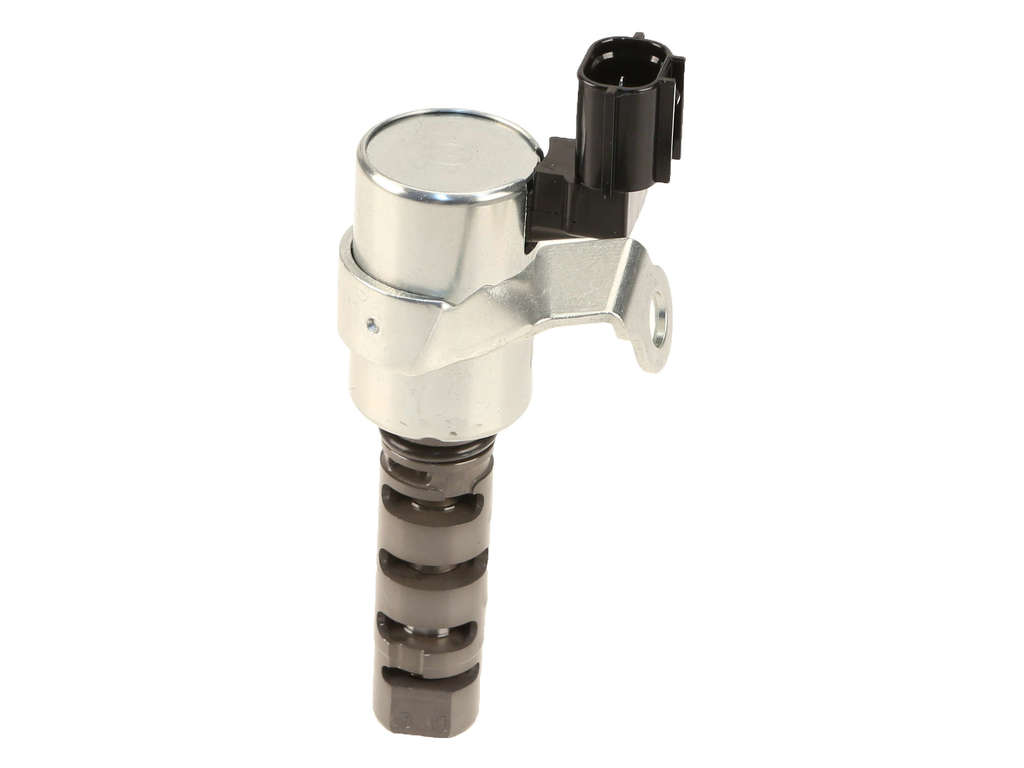
On a 2005-2009 4Runner with the 4.7L V8, P0024 is most often caused by a faulty driver's side exhaust Oil Control Valve (OCV), also called a VVT solenoid. Before replacing parts, check your engine oil level and condition, as low or dirty oil is a common trigger. A new OEM OCV (part # 15340-0F010) costs approximately $90-$150, with quality aftermarket options available for less.
- First, check your engine oil. Low or dirty oil is the most common cause for P0024 and the easiest to fix.
- This code applies only to 2005-2009 4Runners with the 4.7L V8 engine.
- The most likely part to have failed is the driver's side (Bank 2) exhaust Oil Control Valve (OCV).
- Do not immediately replace the camshaft position sensor; it is almost never the cause of this code.
- Replacing the OCV is a DIY-friendly job that requires basic tools and can be completed in under an hour.
What's Unique About the 2003-2009 Toyota 4Runner
This code is only applicable to the 2005-2009 model year 4Runners with the 4.7L V8, as this is when Toyota added the Variable Valve Timing (VVT-i) system to the 2UZ-FE engine. Earlier 2003-2004 models with the same engine do not have this system and cannot generate this code. On this V8, the VVT system's performance is highly sensitive to oil level and cleanliness. P0024 specifically points to the exhaust camshaft on the driver's side (Bank 2), and the most common failure point is the Oil Control Valve (OCV) that controls it.
Symptoms You May Notice
- Check Engine Light illuminated
- Rough or unstable idle
- Engine hesitation or stumbling during acceleration
- Engine stalling at low speeds or idle
- Reduced power and sluggish performance
- Decreased fuel economy
- A rattling or knocking sound from the engine upon startup or at idle
- Replacing the camshaft position sensor. The sensor is reporting the timing problem, it is not the cause of it. The code indicates a mechanical timing issue, not a sensor failure. 🎬 Watch: How to test and fix the P0024 timing code
Most Likely Causes
- Low or Dirty Engine Oil 🔴 High Probability The VVT-i system uses engine oil pressure to actuate the camshaft phasers. Insufficient or contaminated oil can't operate the system correctly, leading to timing errors. This is the most common cause across all VVT-i equipped vehicles.
How to confirm: Check the engine oil dipstick for proper level. Inspect the oil's color and consistency. If it is dark, thick, or below the 'add' line, it needs to be addressed.
Typical fix: Perform an oil and filter change using the manufacturer-recommended viscosity (5W-30). Clear the code and drive to see if it returns.
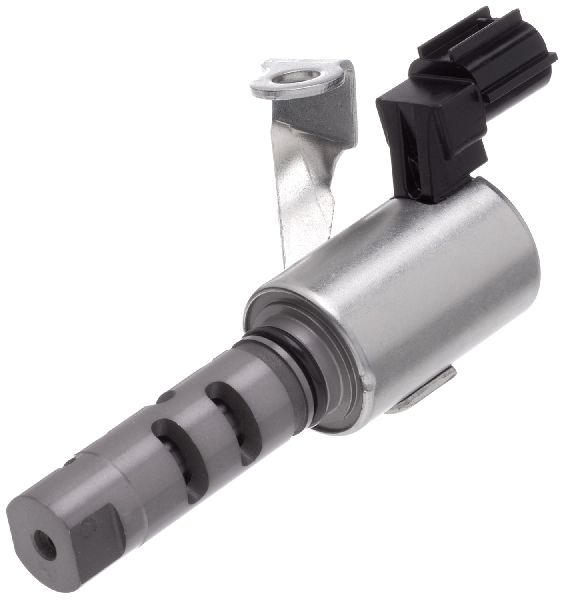
Est. part cost: $40-$80 - Faulty Oil Control Valve (OCV) / VVT Solenoid (Bank 2 Exhaust) 🔴 High Probability → Shop Engine Variable Valve Timing (VVT) Solenoid The OCV is an electronic solenoid that can become clogged with sludge from infrequent oil changes or can fail electrically over time. It is the most common mechanical failure point for this code.
How to confirm: Remove the OCV from the driver's side cylinder head. You can test its function by applying 12V power to the terminals to see if the internal plunger moves. You can also test its resistance with a multimeter; a common range for Toyota solenoids is 6.9-7.9 Ohms at 68°F (20°C). If it fails either test, it is faulty. A common DIY diagnostic is to swap the Bank 2 exhaust OCV with the Bank 1 (passenger side) exhaust OCV to see if the code changes to P0014.
Typical fix: Replace the Bank 2 (driver's side) exhaust Oil Control Valve. The OEM part number is 15340-0F010.
Est. part cost: $60-$120 - Clogged OCV Filter Screen 🟡 Medium Probability A small screen filters oil before it enters the OCV. Sludge and debris from the engine oil can clog this screen, restricting oil flow and preventing the VVT system from working correctly even with a functional OCV.
How to confirm: The filter is located in the cylinder head, usually underneath or near the OCV. It must be visually inspected for blockage after being removed with a bolt extractor or appropriate tool.
Typical fix: Remove and clean the filter screen with brake cleaner. If it is damaged or cannot be fully cleaned, it should be replaced. The OEM part number is often 15678-46020.
Est. part cost: $5-$15
Rare But Worth Checking
- Failed VVT Actuator (Cam Phaser): This is the mechanical gear on the end of the camshaft. It can get stuck due to internal wear or debris. This is a much more complex and expensive repair that involves removing the timing belt and is less common than an OCV failure.
- Wiring or Connector Issue: The wiring to the OCV can become damaged, or the connector pins can corrode, leading to a loss of signal. This should be checked before replacing the OCV itself.
- Timing Belt Issue: → Shop Engine Timing Chain An incorrectly installed, stretched, or skipped-tooth timing belt could cause general timing issues. This would typically be accompanied by other codes or more severe running problems and is a major mechanical failure.
- Faulty ECM: In very rare cases, the Engine Control Module itself can be the source of the problem, incorrectly interpreting signals or failing to control the OCV properly. This should only be considered after all other possibilities have been exhausted.
Diagnosis Steps
- Verify Engine Oil Level and Condition: Before any other steps, check the dipstick. If the oil is low, dark, or sludgy, perform an oil and filter change with 5W-30 synthetic oil, clear the code, and drive to see if it returns.
- Inspect OCV Connector: Locate the exhaust Oil Control Valve on the driver's side (Bank 2) cylinder head. It's the lower of the two solenoids. Check its electrical connector for a secure fit, corrosion, or damaged wires.
- Test the OCV: Unplug and remove the 10mm bolt holding the OCV. Remove the valve. Apply 12 volts to its two pins; you should hear a click and see the internal plunger move. Test resistance between the pins; it should be 6.9-7.9 Ohms. If it fails, replace it.
- Diagnostic Swap: Swap the Bank 2 (driver's side) exhaust OCV with the Bank 1 (passenger's side) exhaust OCV. Clear the codes and drive the vehicle. If the code changes to P0014 ('B' Camshaft Position - Timing Over-Advanced Bank 1), the OCV you moved is confirmed faulty.
- Inspect OCV Filter: With the OCV removed, check for the small filter screen in the cylinder head port. It may be under a separate bolt head. Remove and inspect it for sludge or debris. Clean with brake cleaner or replace as needed.
- Advanced Diagnostics: If the oil is clean, the OCV tests good, and the filter is clean, the issue may be a clogged oil passage, a failing cam phaser, or a timing belt problem, which may require professional diagnosis.
Parts You'll Likely Need
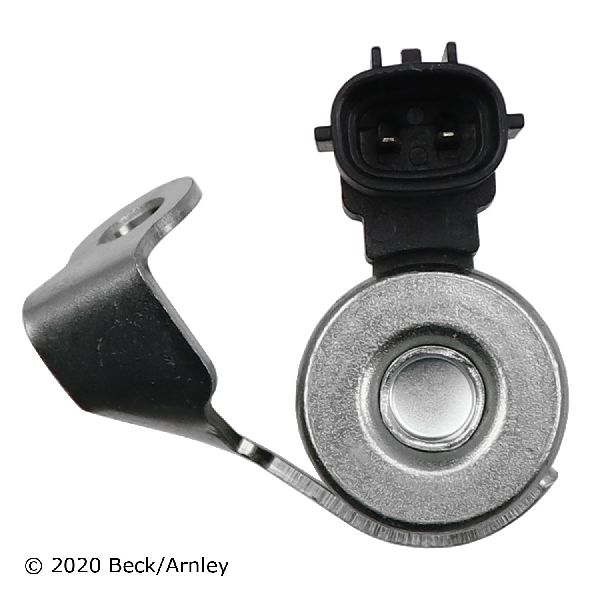
- Engine Oil Control Valve (VVT Solenoid), Bank 2 Exhaust
(OEM #15340-0F010, 15340-50011)— This solenoid is the most common component to fail, either by getting stuck or failing electrically, directly causing the P0024 code.
Trusted brands: Denso (OEM Supplier), Aisin, Dorman
OEM price range: $90-$150
Aftermarket price range: $50-$90 - Engine Oil and Filter — Low, old, or incorrect viscosity oil is a primary cause of VVT system faults. An oil change is a critical first step in diagnosis and repair.
Trusted brands: Mobil 1, Castrol, Valvoline
OEM price range: $60-$100 (using OEM filter)
Aftermarket price range: $40-$80 - OCV Filter Screen
(OEM #15678-46020)— This small filter can become clogged with sludge, starving the OCV of oil pressure. It is often overlooked and is a cheap part to replace during an OCV service. 🎬 Watch: How to locate and replace the VVTI filter screen
Trusted brands: Toyota Genuine Part
OEM price range: $5-$15
Aftermarket price range: $3-$10
Related Codes That Often Appear With This One
- P0014 — This is the same 'over-advanced' condition but for Bank 1 (passenger side). Seeing both could indicate a widespread oil pressure or sludge problem affecting the entire engine.
- P0022 — This is an 'over-retarded' timing code for Bank 2. If seen with P0024, it could point to an erratic OCV or a more serious issue with the cam phaser.
- P0025 — This is the 'over-retarded' code for the Bank 2 exhaust camshaft. Seeing both P0024 and P0025 could indicate a highly erratic OCV or a significant mechanical issue within the phaser or oil passages.
Platform-Specific Known Issues
- This code is only relevant for the 2005-2009 4.7L V8 models, which are equipped with VVT-i. The 2003-2004 models use a non-VVT-i version of the 2UZ-FE engine.
- Owners on forums frequently resolve P0024 with a simple OCV replacement on the driver's side, often after an oil change fails to fix the issue. The accessibility of the valve makes it a popular DIY repair. 🎬 See this step-by-step VVT solenoid replacement walkthrough
Mechanic-Grade Diagnostic Values
- Oil Control Valve (OCV) / VVT Solenoid Resistance — expected: 6.9 to 7.9 Ω at 68°F (20°C). Failure: No continuity (infinite resistance) or a reading outside the specified range indicates a faulty solenoid coil.
- VVT (Camshaft Position) Sensor Resistance — expected: Cold: 835 to 1,400 Ω. Hot: 1,060 to 1,645 Ω.. Failure: A resistance reading outside these temperature-dependent ranges suggests the sensor is faulty.
- OCV Power Supply Voltage (at connector, key on) — expected: Battery Voltage (approx. 12V). Failure: No voltage indicates a problem with the wiring or the EFI relay supplying power.
Scan Tool Commands That Help
- Toyota Techstream: Active Test: Control the VVT System (Bank 2) — This command allows a technician to manually activate the Bank 2 exhaust OCV while the engine is running. If the engine hesitates or stalls when the solenoid is commanded ON, it confirms the OCV and the VVT phaser are mechanically responding to commands. If the engine run-state does not change, it points to a stuck OCV, a clogged oil passage, or a failed phaser.
Wiring & Ground Locations
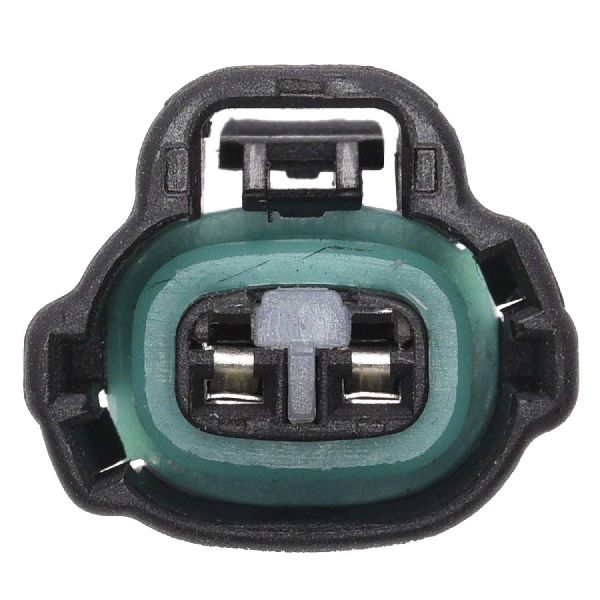
- OCV Bank 2 (Exhaust) Connector — On the driver's side (Bank 2) cylinder head, it is the lower of the two VVT solenoids.. This is the direct connection to the component most likely causing the fault. The two pins are for power from the EFI relay and the control signal from the ECM.
- ECM Pins OC2+ and OC2- — On the Engine Control Module (ECM). The specific connector and pin numbers can be found in the factory service manual wiring diagram for the 2UZ-FE engine.. These are the specific pins at the ECM that control the Bank 2 exhaust OCV. Testing for continuity between the OCV connector and these pins can rule out a wiring break in the harness.
Real Owner Repair Stories
- YouTube video comment (Vehicle not specified, but symptoms and parts are consistent with Toyota VVT-i systems.) — Check Engine Light with P0024.
❌ Tried (didn't work) Replaced the camshaft position sensor for Bank 2.
✅ What actually fixed it The owner planned to replace both the intake and exhaust VVT solenoids (OCVs) on Bank 2, acknowledging that replacing just the sensor did not solve the problem. This highlights the common misdiagnosis of blaming the sensor instead of the mechanical/hydraulic VVT components. - YouTube video by creator (2014 Subaru WRX STi (different vehicle, but demonstrates a common P0024 diagnostic trap)) — P0024 code, particularly when coasting at a constant speed.
❌ Tried (didn't work) Topping off low engine oil and performing an oil change.
✅ What actually fixed it The creator replaced the *intake* Oil Control Valve on Bank 2 and the P0024 (exhaust) code went away. He later noted this was illogical and shouldn't have worked, suspecting an underlying issue. Two years later, a related exhaust OCV code (P2090) appeared, suggesting the original fix was temporary or coincidental. This serves as a cautionary tale that even if a fix appears to work, it may not have addressed the true root cause. - NHTSA ODI #10326139 (Cross-manufacturer reference for Toyota VVT-i systems) — An owner reported VVT-i timing malfunctions including code P0024. A technician found the oil level was 1 quart low and leaking from the VVT-i line, eventually requiring the replacement of both VVT cams, cam housings, gears, and the oil pump.
OEM Part Supersession History
15340-50011→15340-0F010— Standard part number update/revision by Toyota.
Heads up: The parts are interchangeable. 15340-0F010 is the current part number for the Bank 2 (Left Hand/Driver Side) exhaust OCV.15340-50010→15340-50011 (and subsequently 15340-0F010)— Standard part number update/revision by Toyota.
Heads up: This was an earlier part number that has been replaced. All three part numbers refer to the same component and are cross-compatible.
Model Year Variations Within This Range
- 2005-2009: The 2UZ-FE engine in the 2005-2009 4Runner gained VVT-i, which is the system responsible for this code. The 2003-2004 4.7L V8 models have a non-VVT-i 2UZ-FE and cannot generate a P0024 code.
Diagnostic Flowchart
Other Known Issues on This Vehicle
Issues unrelated to this code that are worth knowing about as an owner of this generation:
- Cracked Exhaust Manifolds 🔴 High — Extremely common, often referred to as an inevitability. Can occur at any mileage, but more frequent over 100k miles. Causes an audible ticking noise, especially when cold.
- Secondary Air Injection System (SAIS) Failure 🔴 High — Very common on 2005+ models. The air pump fails, often due to a disintegrating foam filter, which sends debris into the switching valves, causing them to stick. Results in limp mode and costly repairs ($1500+). Many owners opt for an aftermarket bypass kit.
- Frame Rust 🔴 High — A significant issue, especially for vehicles in the salt belt. Rust perforates the frame, particularly near the rear control arm mounts and in the center section, potentially compromising structural integrity. (Ref: Part of a class-action lawsuit, but no formal recall like the Tacoma. Inspection is critical before purchase.)
- Cracked Dashboard 🟡 Low — Extremely common across all 4th Gen 4Runners, especially in sun-belt states. The vinyl cracks around vents, the passenger airbag, and instrument cluster hood due to UV exposure and heat cycling. (Ref: T-SB-0039-15 was issued for 2003-2005 models, but it was part of a limited-time Customer Support Program that has since expired.)
- Seized Front Brake Calipers 🟠 Medium — Common, particularly in rust-prone areas. The caliper pistons can seize, causing uneven brake wear, pulling to one side during braking, and excessive heat.
Used vs. New Parts: Buying Guide for This Vehicle
When a used part is the smart pick: For the primary cause of P0024, the Oil Control Valve (OCV), a used part from a low-mileage donor vehicle is a reasonable budget-friendly option. Since it's an external bolt-on part, it's easy to access and replace if the used part is also faulty. It is not recommended to buy a used VVT actuator (cam phaser) or timing belt components, as these are high-wear items and the labor to replace them is extensive.
Donor-vehicle mileage cap: roughly under 100000 miles for the part to have meaningful remaining life.
What to inspect on the donor part:
- Verify the donor vehicle's mileage. Aim for a vehicle under 100,000 miles.
- Inspect the OCV's electrical connector for cracks, brittleness, or corrosion.
- Look at the screen on the valve itself; it should be clean and free of metallic debris or heavy sludge.
- If possible, check the oil condition of the donor engine. A clean oil cap and dipstick are good signs of regular maintenance.
OEM-only on this vehicle (don't cheap out):
- VVT Actuator (Cam Phaser)
- Timing Belt and related components (tensioner, idlers)
- Engine Control Module (ECM)
Aftermarket brands forum-validated for this vehicle:
- Denso (often the OEM supplier for Toyota)
- Aisin
Brands owners have reported issues with on this vehicle:
- No-name, unbranded parts from online marketplaces should be avoided, as their internal tolerances and electrical specifications may not meet OEM requirements, leading to a quick return of the code.
Real Owner Stories
Aggregated from forums and TSBs cited above. Mileages and costs reflect what owners reported in those sources.
2005-2009 Toyota 4Runner 4.7L V8
Symptoms: The owner experienced a P0024 code that persisted even after attempting to resolve it with an oil change.
What fixed it: Replacement of the Oil Control Valve (OCV) on the driver's side (Bank 2).
Source hint: vehicle_specific_issues
2005-2009 Lexus GX 460
Symptoms: Check Engine Light (CEL) illuminated along with 4Low, Multi Terrain Select, and slip lights.
What fixed it: The owner used side-to-side solenoid swapping as a diagnostic step to isolate the fault.
Source hint: IH8MUD.com Forum - CEL + 4Low + Multi Terrain Select + slip lights on. Code P0024
2005-2009 Toyota Tundra 4.7L V8
Symptoms: Multiple codes appearing simultaneously, including P0024, making it difficult to narrow down the primary fault.
What fixed it: Diagnosis focused on the VVT system (OCV and oil condition) which is shared across the 2UZ-FE engine family.
Source hint: Toyota Tundra Forum - Multiple Codes, too many to narrow it down
Related OBD-II Codes
Frequently Asked Questions
Does the P0024 code apply to my 2003 or 2004 4Runner with the 4.7L V8?
I have a P0024 code on my 4Runner; which part should I replace first?
Is there a TSB for the cracked dashboard on my 2005 4Runner?
Can I clean the VVT system components instead of replacing them?
Where is the Bank 2 exhaust Oil Control Valve located on the 2UZ-FE?
What is the correct oil viscosity for my 2005-2009 4Runner to prevent VVT-i codes?
Helpful Videos
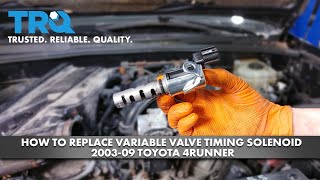

![How to Fix P0024 Engine Code in 4 Minutes [2 DIY Methods / Only $6.74]](https://img.youtube.com/vi/0tbOM7HEJsQ/mqdefault.jpg)
We Have This Part in Stock


The information in this article is provided for general reference and educational purposes only. Vehicle specifications, procedures, and part compatibility can vary by production date, trim level, and region. Always consult your vehicle's factory service manual and verify part numbers before purchasing or performing repairs. Safety-critical components such as airbags, seat belts, and braking systems should be installed by a qualified professional.
- Toyota 4Runner:
- 🧭 Diagnostic Flowchart
- 🎬 Helpful Videos
- 🛍️ Shop This Part
- What's Unique About the 2003-2009 Toyota 4Runner
- Symptoms You May Notice
- Most Likely Causes
- Rare But Worth Checking
- Diagnosis Steps
- Parts You'll Likely Need
- Related Codes That Often Appear With This One
- Platform-Specific Known Issues
- Mechanic-Grade Diagnostic Values
- Scan Tool Commands That Help
- Wiring & Ground Locations
- Real Owner Repair Stories
- OEM Part Supersession History
- Model Year Variations Within This Range
- Other Known Issues on This Vehicle
- Used vs. New Parts: Buying Guide for This Vehicle
- Real Owner Stories
- 2005-2009 Toyota 4Runner 4.7L V8
- 2005-2009 Lexus GX 460
- 2005-2009 Toyota Tundra 4.7L V8
- Related OBD-II Codes
- Frequently Asked Questions
- 🎟️ Get 5% Off