

OBD-II Code P0025: Exhaust Camshaft Position Timing - Over-Retarded (Bank 2)
What P0025 means, why it triggers, and how to fix it
- Check your engine oil first; low, dirty, or incorrect viscosity oil causes over 30% of P0025 codes.
- Replace the Bank 2 exhaust VVT solenoid if an oil change fails to clear the code, as stuck solenoids account for roughly 45% of failures.
- Limit driving to essential trips under 100 miles to prevent unburnt fuel from destroying your catalytic converter, an $800 to $2,500 repair.
- Stop DIY repairs and consult a professional if swapping the VVT solenoid does not fix the issue, as the next steps involve complex timing chain or camshaft phaser replacements.
What Does P0025 Mean?
P0025 means the Engine Control Module (ECM) detects the exhaust camshaft on Bank 2 is lagging (over-retarded) compared to its commanded position. The Variable Valve Timing (VVT) system uses oil pressure to adjust camshafts for optimal performance. This code triggers when the exhaust camshaft fails to advance as requested, creating a discrepancy between the target and actual timing.
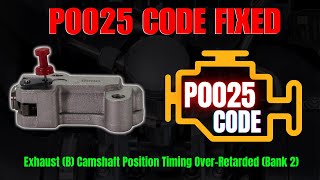
🎬 Watch: Expert guide to fixing the P0025 code fast.Technical definition: The SAE/ISO definition for P0025 is "'B' Camshaft Position - Timing Over-Retarded (Bank 2)". The ECM monitors the camshaft's actual position via the Camshaft Position Sensor and compares it to the target position set by internal mapping. The code sets when the difference between the commanded and actual position exceeds a manufacturer-specified threshold (typically 5-10 degrees) for several seconds.
Can I Drive With P0025?
Yes, But With Caution. Yes, but limit driving to essential trips under 100 miles if the engine runs smoothly. Do not drive if the check engine light flashes or the engine rattles. Prolonged driving causes unburnt fuel to enter the exhaust, destroying the catalytic converter—an $800 to $2,500 repair. Get the vehicle diagnosed within 3 to 5 days.
Common Causes
- Low, Dirty, or Incorrect Viscosity Engine Oil (Very Common) — The VVT system is hydraulic and requires clean oil at the exact specified pressure and viscosity. Sludge, low oil levels, or using oil that is too thick or thin prevents the camshaft phasers from moving as commanded.
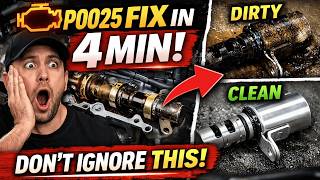
- Faulty Variable Valve Timing (VVT) Solenoid (Very Common) — Accounts for roughly 45% of cases. The solenoid (Oil Control Valve) directs oil flow to the camshaft phaser. It frequently gets stuck, clogged with sludge, or fails electrically, preventing timing adjustments.
- Clogged VVT Filter Screens or Oil Passages (Common) — Small filter screens protect the solenoids from debris. Sludge easily clogs these screens or the narrow oil passages in the cylinder head, starving the phaser of necessary oil pressure even if the oil level is full.
- Failing Camshaft Phaser (Common) — This mechanical gear on the camshaft physically adjusts the timing. Internal seal failure, sludge buildup, or mechanical wear causes it to stick in the retarded position or respond too slowly.
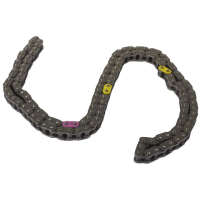
- Worn Timing Chain or Belt Components (Less Common) — A stretched timing chain, worn timing belt, or failed tensioner throws off the baseline synchronization between the crankshaft and camshafts, triggering timing correlation codes.
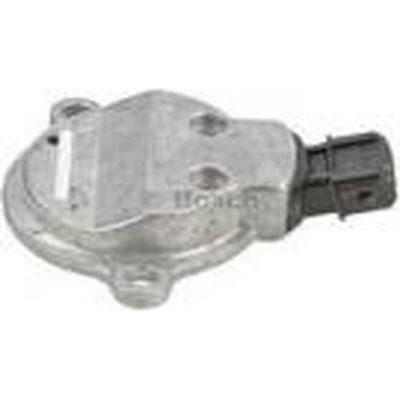
- Faulty Camshaft Position Sensor (Less Common) — The sensor reading the camshaft's position can fail and send delayed or inaccurate data to the ECM. This is highly likely if you also have sensor-specific circuit codes (like P0348 or P0349).
- Wiring or Connector Issues (Rare) — Damaged wires, melted insulation, or a corroded electrical connector for the VVT solenoid or camshaft position sensor interrupts the signal, triggering the code.
Symptoms
- Check Engine Light is On — The light illuminates steadily. A flashing light indicates a severe misfire that will rapidly destroy the catalytic converter.
- Rough or Unstable Idle — The engine shakes, runs unevenly, or stalls completely when stopped at a light or idling in traffic.
- Reduced Engine Power and Hesitation — Acceleration feels sluggish, or the engine hesitates before responding to the throttle due to inefficient airflow.
- Poor Fuel Economy — Fuel efficiency drops by 5% to 15% because the engine is operating outside its optimal timing parameters.
- Engine Knocking or Rattling Noises — A distinct rattling sound, especially on cold startups, indicates mechanical wear in the timing chain or camshaft phasers.
- Hard Starting — The engine cranks longer than usual before starting because the initial valve timing is incorrect for ignition.
Diagnostic Flowchart
Tap your situation to follow the diagnostic path that matches what you're seeing on this code.
Common Fixes & Costs
- Engine Oil and Filter Change — Parts: $40-$80, Labor: $20-$50, ~0.5 hr book time (DIY)
- Replace VVT Solenoid (Oil Control Valve)
— Parts: $50-$150, Labor: $100-$300, ~1.5 hr book time
(Intermediate)
: OEM
: OEM - Replace Camshaft Position Sensor — Parts: $30-$100, Labor: $80-$150, ~0.8 hr book time (DIY)
- Replace Camshaft Phaser — Parts: $200-$600, Labor: $800-$1,500, ~8.0 hr book time (Professional)
- Replace Timing Chain and Tensioners — Parts: $400-$800, Labor: $1,200-$2,500, ~12.0 hr book time (Professional)
Used vs. New Parts: Buying Guide
When a used part is worth it: A used OEM VVT solenoid from a low-mileage vehicle (under 60k miles) is a cost-effective alternative to a cheap aftermarket part, as OEM solenoids offer superior longevity.
Donor-vehicle mileage cap: roughly under 60000 miles for the part to have meaningful remaining life.
Donor quality checklist:
- Verify the donor vehicle was not scrapped due to engine sludge or timing failures.
- Ensure the electrical connector is intact and free of oil.
- Match the OEM part number exactly; intake and exhaust solenoids often look identical but function differently.
Decision logic:
- If The vehicle is highly reliable (e.g., Toyota, Honda) and cost savings exceed 50% → A used OEM solenoid is a reasonable choice.
- If The vehicle is known for sludge or VVT problems (e.g., Ford 5.4L, BMW N54) → Buy a new OEM part to avoid inheriting the exact same failure.
- If The labor to access the solenoid requires removing the valve cover → Always buy new to eliminate the risk of paying for labor twice.
Warranty tradeoff: Salvage yards offer 30-90 day warranties. New aftermarket parts offer 1-year to lifetime warranties. New OEM parts carry a 1-year/12,000-mile warranty.
Worst-case if a used part fails: $200-$500 if a used solenoid fails shortly after installation due to repeated labor costs.
What Happens If You Wait — Timeline
- 0-1 month: Check Engine Light is on. You notice a slightly rough idle, especially when cold, and a minor drop in fuel economy. (MPG impact: 3-8%% · Added cost: $20-$80 in wasted fuel.)
- 1-4 months: Engine hesitation becomes noticeable during acceleration. Rough idle leads to stalling at stoplights. Catalytic converter damage risk begins. (MPG impact: 8-15%% · Added cost: $80-$300 in wasted fuel, plus initial risk to catalytic converter.)
- 4-8 months: Sustained incorrect timing causes significant carbon buildup. Unburnt fuel permanently damages the catalytic converter substrate, triggering P0420/P0430. (MPG impact: 15-25%% · Added cost: $1,200-$2,800 for catalytic converter replacement.)
- 8+ months: Catastrophic failure risk. If caused by a worn timing chain, continued operation causes the chain to skip teeth, destroying the engine. (MPG impact: 25%+% · Added cost: $4,000-$8,000 for major engine repair or replacement.)
Cost of Not Fixing It
- 0-1 Month: Noticeable decrease in fuel economy (5-15%), rough idle, and engine hesitation. Risk of stalling in traffic increases. (Added cost: $50-$150 in wasted fuel.)
- 1-6 Months: Unburnt fuel enters the exhaust, overheating and permanently damaging the catalytic converter substrate. (Added cost: $1,200-$2,800 for catalytic converter replacement.)
- 6+ Months: Severe carbon buildup on valves. If caused by a failing timing chain, it skips time or breaks, causing catastrophic piston-to-valve contact. (Added cost: $4,000-$8,000 for major engine repair or replacement.)
Diagnosis Steps
- Check Engine Oil Level, Condition, and Viscosity
Pull the dipstick. Verify the oil is at the 'Full' mark and looks clean (amber or brown, not thick black sludge). Confirm the correct oil viscosity (e.g., 5W-20, 0W-20) was used during the last change. Incorrect or dirty oil is the primary cause of VVT failures.
Tools: Rag or paper towel (Beginner) - Scan for Codes and Review Live Data
Use an OBD-II scanner to confirm P0025 and check for related codes (e.g., P0015, P0020). Access live data to monitor 'Bank 2 Exhaust Cam Angle Command' vs. 'Bank 2 Exhaust Cam Angle Actual'. A persistent difference greater than 5 degrees confirms the fault.
Tools: OBD-II Scanner with Live Data (Beginner) - Swap VVT Solenoids (If Applicable)
If the intake and exhaust solenoids on Bank 2 are identical, swap them. Clear the codes and drive the car. If the code changes to P0022 (Intake Over-Retarded), the solenoid you moved is definitively faulty.
Tools: Basic hand tools (Intermediate) - Inspect and Test VVT Solenoid Electrically
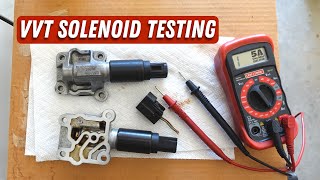
Disconnect the Bank 2 exhaust VVT solenoid. Inspect the connector for oil intrusion or corrosion. Use a multimeter set to Ohms (Ω) to measure internal resistance across the solenoid pins (typically 5-20 Ohms). Next, turn the key 'On' (engine off) and probe the harness connector to verify it receives 12V power.
Tools: Multimeter, Flashlight (Intermediate) - Test VVT Solenoid Mechanically
Remove the solenoid. Briefly apply 12V power and ground using a power probe or jumper wires. You must hear a sharp 'click' and see the internal plunger snap back and forth. Sluggish movement means it is seized or clogged and requires replacement.
Tools: Power Probe or 12V source, basic hand tools (Intermediate) - Command Solenoid with Bi-Directional Scanner
Use a high-end scan tool to command the VVT solenoid to a specific duty cycle (e.g., 50%) while the engine runs. If the 'Actual' cam position does not change to match the command, the issue is hydraulic (blockage, low pressure) or mechanical (bad phaser).
Tools: Bi-Directional OBD-II Scanner (Advanced) - Check Engine Oil Pressure
If the oil level is full but the problem persists, attach a mechanical oil pressure gauge. Compare idle and 3,000 RPM pressure readings against manufacturer specifications. Consistently low pressure indicates a failing oil pump or severe internal engine wear.
Tools: Oil pressure gauge kit, basic hand tools (Advanced) - Analyze Cam Sensor with Oscilloscope
Connect an oscilloscope to the camshaft position sensor. Compare the Bank 2 exhaust waveform to a known good waveform. A delayed, misshapen, or noisy signal indicates a failing sensor or a stretched timing chain.
Tools: Automotive Oscilloscope (Advanced) - Inspect Timing Components
Remove the valve cover and front engine cover. Visually inspect the timing chain for slack, verify timing marks align perfectly, and examine the camshaft phaser for physical damage or heavy sludge buildup.
Tools: Advanced tool set, torque wrench, manufacturer service manual (Advanced)
When This Code Triggers (Freeze-Frame Conditions)
- Engine Coolant Temp: 180-210°F (The engine has reached full operating temperature.)
- Engine RPM: 1500-3000 RPM (The fault is detected during steady-state cruising or light acceleration, not typically at idle.)
- Engine Load: 25-70% (Sets under moderate engine load when the VVT system actively attempts to adjust timing.)
- Vehicle Speed: 30-60 mph (Consistent driving speeds where the ECM expects a specific cam phaser response.)
Related Codes
- P0022 — The direct partner code. P0022 indicates the intake camshaft on Bank 2 is over-retarded. If you swap identical intake/exhaust solenoids and the code changes from P0025 to P0022, the solenoid is faulty.
- P0015 — The identical fault for Bank 1. Seeing P0015 and P0025 together confirms a systemic engine issue, such as critically low oil pressure, incorrect oil viscosity, or a stretched timing chain.
- P0348 / P0349 — These indicate a circuit fault for the Bank 2 camshaft position sensor. Diagnose these first; P0025 is likely triggering because the ECM is receiving bad sensor data.
- P0020 — Indicates an electrical circuit malfunction for the Bank 2 exhaust VVT solenoid. The problem is strictly electrical (short/open wire or dead solenoid), not mechanical or oil-related.
Climate & Environmental Factors
- Cold Weather: Cold, thick engine oil flows slowly, delaying the response of VVT phasers on startup and triggering P0025. This is highly prevalent if the oil is old or of an incorrect, thicker viscosity.
- High Altitude: Altitude does not directly cause P0025, but changes in engine load can make a pre-existing marginal VVT problem more noticeable.
- High Humidity: Humidity has no impact on the mechanical or hydraulic operation of the VVT system.
How to Talk to a Mechanic About This Code
Say this: "I have a P0025 code. Please verify the engine oil condition and test the Bank 2 exhaust VVT solenoid before quoting a phaser or timing chain replacement."
This directs the technician to follow a logical, cost-effective diagnostic path, starting with the cheapest potential failures and preventing immediate upsells.
Avoid saying:
- 'Just fix whatever's wrong'
- 'My check engine light is on, can you look at it?'
- 'Whatever you recommend'
Questions to ask before authorizing the repair:
- What was the condition and level of the engine oil?
- Can you show me the live data comparing the commanded versus actual cam angle for Bank 2?
- Did you test the VVT solenoid electrically and for mechanical movement?
- If you recommend a timing chain replacement, what specific test confirmed that failure over a simpler hydraulic issue?
Where to Take It: Dealer vs Independent vs Chain
- Dealer:
Best for: Vehicles still under powertrain warranty, Vehicles with known manufacturer-specific quirks (e.g., Ford phaser issues) or active TSBs
Downsides: Labor rates are 1.5-2x higher than independent shops., May recommend a larger, more expensive assembly replacement when only a smaller component failed. (Typical cost: +50% vs. baseline) - Independent Shop:
Best overall fit. A reputable independent shop offers the best balance of expertise and value for VVT system issues.
Best for: Most out-of-warranty vehicles where cost is a factor., Diagnosing and fixing common codes like P0025.
Downsides: Quality varies widely; vet the shop through reviews and check for ASE certifications. (Typical cost: +0% vs. baseline) - Chain Shop:
Acceptable for an oil change, but AVOID for diagnosing the P0025 code itself.
Best for: Simple maintenance like an oil and filter change.
Downsides: Technicians lack advanced diagnostic tools for anything beyond a simple part swap., High pressure to upsell leads to misdiagnosis. (Typical cost: -10% vs. baseline)
When to Walk Away From the Repair
If the estimated repair cost exceeds 40-50% of the car's private-party value, seriously consider selling or trading it in.
- Car worth $3500, fix is $2200: Walk away. The repair cost is over 60% of the car's value. It is not a sound financial decision.
- Car worth $15000, fix is $450: Fix it. This is a minor repair cost relative to the vehicle's high value.
- Car worth $5000, fix is $2000: Borderline. The cost is 40% of the car's value. Get a second opinion and consider the car's overall condition.
What Scan Tool You Need for This Code
Minimum: OBD-II reader with Live Data streaming.
A basic $20 code reader only shows the P0025 code. It cannot display live data for 'Commanded vs. Actual' camshaft position, which is mandatory to confirm the fault is real.
Budget: BlueDriver Pro (~$100) — Connects to your smartphone and provides excellent live data graphing to visually confirm the timing discrepancy.
Mid-range: Foxwell NT510 Elite (~$180) — Adds bi-directional control, allowing you to command the VVT solenoid on and off to test its mechanical function.
Professional: Autel MaxiCOM MK808S (~$500) — Offers full bi-directional control, extensive live data graphing, and dealership-level diagnostics to pinpoint electrical vs. mechanical faults.
Rent vs buy: Auto parts stores offer free loaner scanners, but they lack live data. Buying a scanner in the $100-$200 range is a mandatory investment for DIY VVT diagnosis.
How to Clear the Code After You Fix It
- Use an OBD-II scan tool to clear the P0025 code.
- Verify the engine oil is at the correct level.
- Perform a complete OBD-II drive cycle to allow readiness monitors to run.
Drive cycle (~30 minutes): Cold start and idle for 3 minutes. Drive in stop-and-go traffic for 10 minutes. Drive at a steady highway speed (55-60 mph) for 15 minutes. Allow the vehicle to cool down completely.
Readiness monitors affected: Comprehensive Component Monitor, Misfire Monitor, Catalyst Monitor
Before emissions retest: drive at least 100 miles to fully set monitors.
Watch out for:
- Clearing the code resets all readiness monitors, causing an automatic emissions test failure if you test immediately.
- Disconnecting the battery does not clear the code on modern vehicles.
- The code returns within 50 miles if the underlying hydraulic or mechanical fault remains.
Will This Fail Emissions / State Inspection?
Yes — this code typically fails an OBD-II emissions inspection.
- California: An active Check Engine Light is an automatic smog check failure. The vehicle must complete a drive cycle to set all readiness monitors before re-testing.
- New York: The NYS DMV emissions inspection includes an OBD-II scan. An active P0025 code is an automatic failure.
- Texas: In emissions-testing counties, an active P0025 code causes an immediate failure of the OBD inspection.
Most Commonly Affected Vehicles
- Ford F-150, Explorer, Mustang (V6/V8 engines) (2004-2024) — Ford's 3-valve V8 and EcoBoost V6 engines are notorious for VCT solenoid and camshaft phaser failures. On 5.0L V8s (2011+), solenoids are under the valve covers, doubling labor costs.
- Toyota / Lexus Camry, RAV4, Sienna, ES350 (2GR-FE V6) (2007-2024) — Toyota's VVT-i systems are reliable but highly sensitive to oil quality. This code almost always points to a clogged or failing exhaust VVT solenoid on Bank 2 (OEM part 15330-0P020).
- Hyundai / Kia Genesis Coupe, Santa Fe, Sorento (V6 Engines) (2010-2020) — Triggered by a failing Oil Control Valve (OCV) or sludge buildup from extended oil change intervals.
- Chevrolet / GMC Silverado, Sierra, Traverse, Equinox (V6/V8 Engines) (2010-2024) — Arises from oil sludge clogging solenoid screens. Certain 3.6L V6 engines suffer from premature timing chain wear, triggering this code.
- BMW Various with N5x/N63 Engines (e.g., 335i, 550i, 750i) (2007-2016) — P0025 frequently points to a sticking VANOS solenoid, especially when the engine is cold before the oil fully warms up.
- Nissan / Infiniti Various with VQ-series V6 (e.g., Altima, Maxima, G35) (2003-2015) — Commonly experience P0025 due to failing VVT solenoids or low oil levels affecting hydraulic operation.
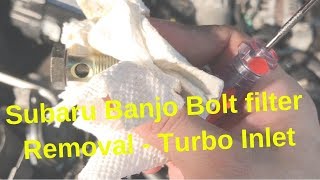
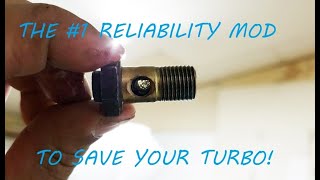
- Subaru Outback, Forester, Legacy (H4/H6 Engines) (2005-2019) — Clogged banjo bolt filters feeding oil to the AVCS solenoids are a known cause. TSB 02-103-07 addresses this, recommending screen removal.
- Honda / Acura Accord, Odyssey, Pilot, MDX (V6 Engines) (2003-2024) — Often caused by a clogged screen in the VTC solenoid gasket assembly rather than the solenoid itself.
Manufacturer-Specific Notes
- Ford: On 5.4L 3V engines, a diesel-like rattle on startup combined with P0025 confirms failing camshaft phasers, not just solenoids. Replacing only the solenoids wastes money.
- Subaru: Before replacing the expensive AVCS solenoid, check the tiny filter screen inside the banjo bolt supplying the oil line. These clog frequently. See TSB 02-103-07.
- BMW: A P0025 code that appears mainly when the engine is cold points to a sticking VANOS solenoid. As oil warms and thins, the solenoid functions properly, hiding the symptom.
- Honda: The VTC solenoid is reliable, but its mounting gasket contains a tiny filter screen that clogs with sludge. Replacing the inexpensive gasket often fixes the code.
- General Motors: Certain 3.6L V6 engines (LY7, LLT) suffer from premature timing chain wear causing cam correlation codes. GM issued Special Coverage Adjustment #14329 for this specific issue.
Real Owner Stories
2007 Mercedes ML350 with P0025
The Check Engine Light came on with code P0025. The owner identified this as the exhaust camshaft on the driver's side (Bank 2).
What they tried:
- Identified the correct part as the camshaft adjuster magnet (solenoid).
Outcome: The owner replaced the correct magnet on Bank 2, which required temporarily removing the power steering reservoir for access. The code cleared and did not return.
Lesson: Replacing a VVT solenoid often requires removing other components for access. Research the specific procedure for your vehicle to understand the full scope of the job.
2012 BMW 550i (N63 engine) with shifting cam codes
Initially had a P0021 (Intake cam timing issue). The owner swapped the intake and exhaust camshaft position sensors on Bank 2.
What they tried:
- Swapped cam position sensors between intake and exhaust.
Outcome: The code changed to P0025, suggesting the fault followed the sensor. However, replacing the sensor failed to fix it. The misfires were worse when cold, pointing to a sticking VANOS solenoid.
Lesson: If replacing a swapped part doesn't fix the issue, the problem is likely related to oil temperature affecting the hydraulic solenoid.
2019 Ford F-150 3.5L EcoBoost at 60k miles
Vehicle ran rough and felt laggy at a stoplight, throwing codes P0019 and P0025 immediately after an oil change at a quick-lube shop.
What they tried:
- Posted on a forum seeking advice regarding the recent oil change.
Outcome: The combination of codes on a 3.5L EcoBoost after an oil change strongly points to an incorrect oil filter or oil viscosity restricting flow.
Lesson: If a VVT code appears shortly after an oil change, immediately suspect incorrect oil viscosity or a low-quality oil filter.
1999 Lexus RX300 at 255k miles
A VVT code appeared. The mechanic admitted a previous shop likely skipped changing the hard-to-access oil filter during prior services.
What they tried:
- Replaced both VVT solenoids.
Outcome: The root cause was sludge buildup from neglected oil filter changes, which damaged the solenoids. The owner cleaned the VVT filter screens.
Lesson: Neglecting oil filter changes causes sludge to build up and permanently damage sensitive VVT solenoids and screens.
How to Prevent This Code From Triggering
- Perform regular oil changes with high-quality synthetic oil. (Every 5,000 miles, or per manufacturer's severe service schedule.) — Clean, correct-viscosity oil is critical for the hydraulic VVT system. Frequent changes prevent sludge that clogs solenoids and oil passages.
- Use only OEM or high-quality oil filters. (With every oil change.) — Cheap oil filters have poor anti-drainback valves or restrictive media, reducing oil pressure available to the VVT system on startup.
- Shorten oil change intervals for GDI engines. (Every 4,000-5,000 miles.) — Gasoline Direct Injection (GDI) engines suffer from fuel dilution and soot contamination, degrading oil faster and accelerating timing chain wear.
- Ensure the engine reaches full operating temperature on most trips. (Daily habit.) — Frequent short trips prevent moisture and fuel from burning off within the crankcase, accelerating oil degradation and sludge formation.
Frequently Asked Questions
What is 'Bank 2' and the 'B' camshaft?
Bank 2 is the side of a V-shaped engine that does not contain cylinder #1. The 'B' camshaft refers to the exhaust camshaft. Therefore, P0025 points to the exhaust camshaft on the side opposite cylinder #1.
What are the most common mistakes when diagnosing P0025?
The biggest mistake is replacing the camshaft sensor when the root cause is simply low, dirty, or incorrect viscosity engine oil. Another common error is failing to check for clogged oil passage screens or related Technical Service Bulletins (TSBs).
Can I fix P0025 myself?
Yes, checking the oil and replacing an accessible VVT solenoid are straightforward DIY fixes. However, stop and consult a shop if the problem requires inspecting the timing chain or replacing a camshaft phaser. Those jobs require specialized tools and risk engine damage if done incorrectly.
Will P0025 clear itself?
No, P0025 rarely clears itself. The Check Engine Light remains on until you repair the underlying fault. After repairing, clear the code with an OBD-II scanner or complete several successful drive cycles.
I replaced the VVT solenoid, but the P0025 code came back. Why?
The solenoid was likely not the root cause. The actual culprit is often a clogged oil passage, low overall oil pressure from a weak pump, or a mechanically failed camshaft phaser. A professional diagnostic is required at this stage.
Will P0025 cause my car to fail an emissions test?
Yes. An active Check Engine Light is an automatic failure in all jurisdictions requiring OBD-II testing. Furthermore, incorrect valve timing increases harmful emissions, causing tailpipe test failures.
I got a P0025 code right after an oil change. What happened?
This usually happens because the shop used the wrong oil viscosity, preventing the VVT system from operating correctly. It also occurs if a defective oil filter restricts flow, or if the new oil dislodged sludge that clogged a VVT screen.
Key Takeaways
- Check your engine oil first; low, dirty, or incorrect viscosity oil causes over 30% of P0025 codes.
- Replace the Bank 2 exhaust VVT solenoid if an oil change fails to clear the code, as stuck solenoids account for roughly 45% of failures.
- Limit driving to essential trips under 100 miles to prevent unburnt fuel from destroying your catalytic converter, an $800 to $2,500 repair.
- Stop DIY repairs and consult a professional if swapping the VVT solenoid does not fix the issue, as the next steps involve complex timing chain or camshaft phaser replacements.
Helpful Videos
![How to Fix P0025 Engine Code in 4 Minutes [2 DIY Methods / Only $6.99]](https://img.youtube.com/vi/7E-oYdoFAfM/mqdefault.jpg)

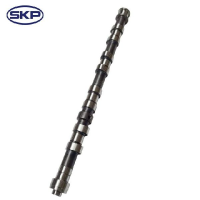
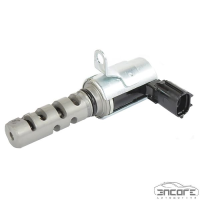
Shop the Parts Behind P0025
Below are the parts most often responsible for code P0025, ranked by how frequently each one is the actual culprit (per the diagnosis above). Tap any to see what we have for your vehicle.




The information in this article is provided for general reference and educational purposes only. Vehicle specifications, procedures, and part compatibility can vary by production date, trim level, and region. Always consult your vehicle's factory service manual and verify part numbers before purchasing or performing repairs. Safety-critical components such as airbags, seat belts, and braking systems should be installed by a qualified professional.
- 🧭 Diagnostic Flowchart
- 🎬 Helpful Videos
- 🛍️ Shop This Part
- What Does P0025 Mean?
- Can I Drive With P0025?
- Common Causes
- Symptoms
- Common Fixes & Costs
- Used vs. New Parts: Buying Guide
- What Happens If You Wait — Timeline
- Cost of Not Fixing It
- Diagnosis Steps
- When This Code Triggers (Freeze-Frame Conditions)
- Related Codes
- Climate & Environmental Factors
- How to Talk to a Mechanic About This Code
- Where to Take It: Dealer vs Independent vs Chain
- When to Walk Away From the Repair
- What Scan Tool You Need for This Code
- How to Clear the Code After You Fix It
- Will This Fail Emissions / State Inspection?
- Most Commonly Affected Vehicles
- Manufacturer-Specific Notes
- Real Owner Stories
- 2007 Mercedes ML350 with P0025
- 2012 BMW 550i (N63 engine) with shifting cam codes
- 2019 Ford F-150 3.5L EcoBoost at 60k miles
- 1999 Lexus RX300 at 255k miles
- How to Prevent This Code From Triggering
- Frequently Asked Questions
- What is 'Bank 2' and the 'B' camshaft?
- What are the most common mistakes when diagnosing P0025?
- Can I fix P0025 myself?
- Will P0025 clear itself?
- I replaced the VVT solenoid, but the P0025 code came back. Why?
- Will P0025 cause my car to fail an emissions test?
- I got a P0025 code right after an oil change. What happened?
- Key Takeaways
- 🎟️ Get 5% Off