

P0025 on 2015-2019 Ford Explorer Police Interceptor: Camshaft Timing Fixes
On a 2015-2019 Explorer Police Interceptor, P0025 is almost always caused by low/dirty engine oil or a sticking Bank 2 exhaust VCT solenoid. Start with an oil change using Ford-spec oil. If the code returns, the VCT solenoid likely needs replacement, which costs $40-$120 for the part. This is a known issue acknowledged by Ford in service bulletins.
- P0025 means the exhaust camshaft on the radiator-side of the engine (Bank 2) is lagging.
- Before buying any parts, check your engine oil. Low, dirty, or incorrect viscosity oil is the #1 cause.
- The most likely failed part is the Bank 2 exhaust VCT solenoid, a known issue confirmed by Ford TSBs.
- A solenoid swap with the intake solenoid on the same bank is a definitive, no-cost diagnostic test.
- Ignoring the code can lead to stalling and poor performance, and potentially more severe engine damage over time.
What's Unique About the 2015-2019 Ford EXPLORER POLICE INTERCEPTOR
The Ford 3.5L and 3.7L V6 engines use a Twin Independent Variable Camshaft Timing (Ti-VCT) system that is highly dependent on clean engine oil and stable oil pressure. These engines are known to be sensitive to oil contamination. Ford has issued technical service bulletins, like SSM 50067, acknowledging that small debris in the oil can cause the VCT solenoids to stick, leading directly to codes like P0025. The typical duty cycle of a Police Interceptor, involving long periods of idling followed by sudden high-RPM demands, can exacerbate oil-related issues and place additional stress on the VCT components.
Diagnostic Flowchart
Tap your situation to follow the diagnostic path that matches what you're seeing on this vehicle.
Symptoms You May Notice
- Check Engine Light is on
- Rough or unstable engine idle
- Engine stalling, especially when coming to a stop or at idle
- Reduced engine power and poor acceleration
- Decreased fuel economy
- Engine may be hard to start
- Rattling noise from the engine on a cold start, which can be a symptom of a failing cam phaser
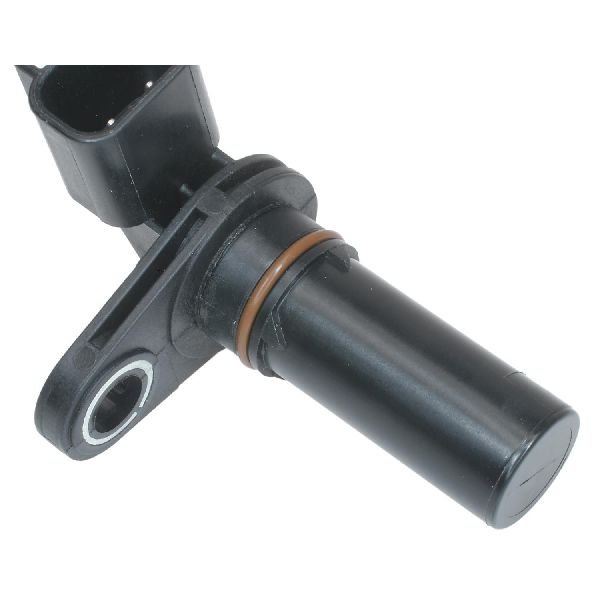
- Replacing the Camshaft Position Sensor. The sensor is usually doing its job correctly by reporting that the timing is off. The problem lies within the mechanical VCT system (oil, solenoid, or phaser), not the sensor itself.
- Immediately replacing the cam phaser. The VCT solenoid is a much more common failure point and is significantly cheaper and easier to replace. Always diagnose the solenoid first. 🎬 Watch: How to tell if your VVT solenoid is bad
Most Likely Causes
- Low or Dirty Engine Oil 🔴 High Probability The VCT system is hydraulic and extremely sensitive to oil pressure and cleanliness. Sludge, low oil levels, or using the incorrect oil viscosity are the most common reasons for VCT system faults.
How to confirm: Check the oil dipstick. If the oil is below the 'add' line or appears very dark, thick, or sludgy, this is the likely cause. The code may also appear after a recent oil change if the wrong viscosity was used or if the change dislodged sludge.
Typical fix: Perform an engine oil and filter change using the correct Ford-specified oil (e.g., Motorcraft 5W-20 or 5W-30 Synthetic Blend) and a Motorcraft filter. This simple step resolves the issue in many cases.
Est. part cost: $40-$80 - Failing Bank 2 Exhaust VCT Solenoid 🔴 High Probability → Shop Engine Variable Valve Timing (VVT) Solenoid Ford TSB SSM 50067 specifically states that debris can cause these solenoids to stick, leading to VCT codes. It is the most common mechanical part to fail for this code. TSB 16-0038 also advises replacing the Bank 2 exhaust VCT solenoid if P0025 is present with P0019.
How to confirm: Use a scan tool to command the solenoid on and off (per Pinpoint Test HK12 mentioned in TSB SSM 50067); a lack of response or clicking sound indicates failure. A common DIY test is to swap the Bank 2 exhaust solenoid with the Bank 2 intake solenoid. If the code changes to P0021, the solenoid is confirmed bad.
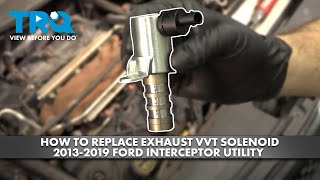
Typical fix: Replace the Bank 2 (radiator side) exhaust VCT solenoid. This requires removing the valve cover. 🎬 Watch this step-by-step exhaust solenoid replacement walkthrough The solenoid itself is often referred to as an Oil Control Valve (OCV).
Est. part cost: $40-$120 - Failed Camshaft Phaser ⚪ Low Probability → Shop Engine Camshaft While less common than a solenoid failure, the mechanical phaser gear itself can fail or get stuck due to internal wear or severe oil contamination. A characteristic cold start rattle is a strong indicator of phaser issues 🎬 See what a failing cam phaser sounds like on these engines.
How to confirm: This requires more in-depth diagnosis. If a new solenoid and clean oil do not fix the code, the phaser is the next component to inspect. This usually involves significant engine disassembly, including removing the timing cover.
Typical fix: Replace the Bank 2 exhaust camshaft phaser. This is a labor-intensive job that often includes replacing the timing chain, guides, and tensioners as a preventative measure.
Est. part cost: $150-$300
Rare But Worth Checking
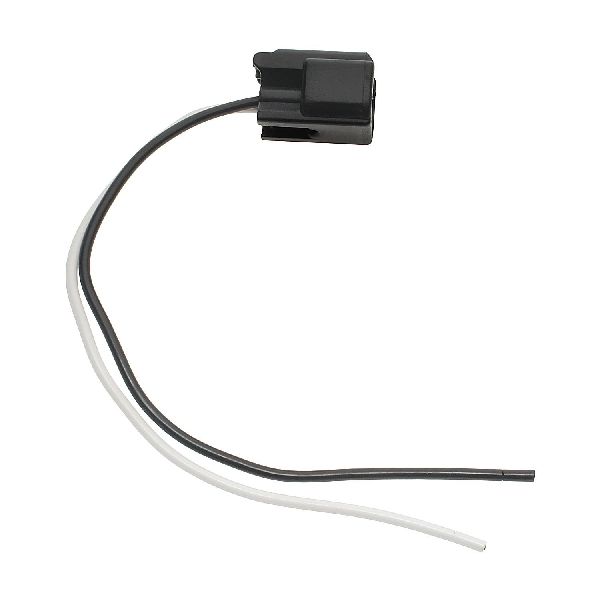
- Damaged Wiring or Connector: Check the wiring harness leading to the VCT solenoid on the Bank 2 valve cover for any signs of corrosion, breaks, or oil contamination before replacing parts. However, this is less common than the solenoid itself failing.
- Stretched Timing Chain: → Shop Engine Timing Chain On very high-mileage engines, a stretched timing chain can cause correlation issues between the crank and cams, but this would typically be accompanied by other timing codes (like P0016, P0017, P0018, P0019) and rattling noises.
- Clogged Oil Passages: Severe engine sludge can block the small oil passages leading to the VCT solenoids and cam phasers, preventing the system from operating correctly even with a functional solenoid.
Diagnosis Steps
- Verify the code with a quality OBD-II scanner.
- Check the engine oil level and condition. If low, dirty, or the wrong viscosity, perform an oil and filter change with Ford-spec products (e.g., Motorcraft 5W-20 or 5W-30 and a Motorcraft filter), clear the code, and test drive.
- Inspect the electrical connector and wiring for the Bank 2 exhaust VCT solenoid (on the valve cover closer to the radiator). Look for damage, corrosion, or loose connections.
- Using a bidirectional scan tool, monitor the desired vs. actual cam angle PIDs for the Bank 2 exhaust cam. Command the solenoid on and off to check for a response. TSB SSM 50067 suggests cycling the solenoid 10 times to potentially clear debris.
- If possible, swap the Bank 2 exhaust solenoid with the Bank 2 intake solenoid (they are the same part number). Clear the codes and drive. If the code changes to P0021 (Intake 'A' Camshaft Position - Timing Over-Advanced), the solenoid is faulty and needs replacement.
- If the solenoid tests good and the oil is clean, the issue may be a clogged oil passage or a faulty camshaft phaser, which requires more advanced mechanical diagnosis, likely involving removal of the valve and timing covers.
Parts You'll Likely Need
- Variable Camshaft Timing (VCT) Solenoid
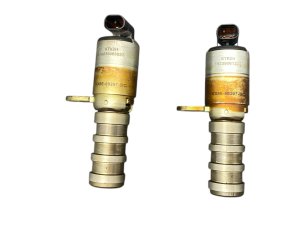
(OEM #7T4Z-6M280-C)— This solenoid is the most common component to fail for this code, often due to sticking from oil debris, as noted in Ford TSB SSM 50067. Part number 7T4Z-6M280-C is a supersession for older parts like 7T4Z-6M280-A and AT4Z-6M280-A.
Trusted brands: Motorcraft, Dorman
OEM price range: $60-$95
Aftermarket price range: $30-$70 - Valve Cover Gasket
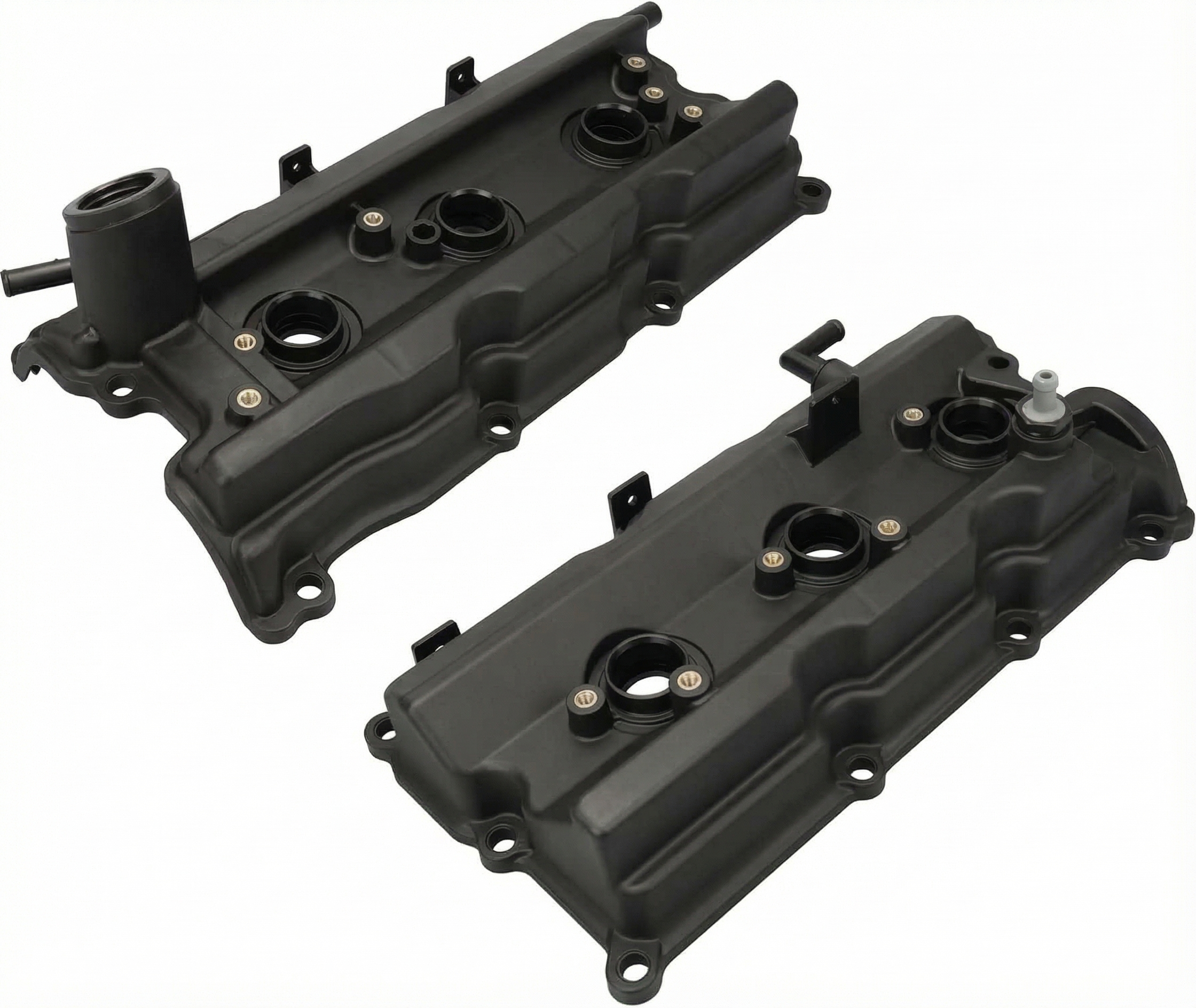
(OEM #7T4Z-6584-B)— The VCT solenoids are located under the valve cover, so the gasket must be replaced during the repair to prevent oil leaks.
Trusted brands: Motorcraft, Fel-Pro
OEM price range: $25-$50
Aftermarket price range: $15-$30
Related Codes That Often Appear With This One
- P0019 — This code indicates a Crankshaft-Camshaft correlation error for the same camshaft (Bank 2, Exhaust). It often appears with P0025 because if the cam timing is over-retarded, its correlation with the crankshaft will also be incorrect. TSB 16-0038 specifically recommends replacing the Bank 2 exhaust VCT solenoid if both codes are present.
- P0024 — This is the opposite code for the same component ('B' Camshaft Position - Timing Over-Advanced). Seeing them intermittently could point to a VCT solenoid that is sticking erratically in both directions.
- P0021 — This code for Bank 2 Intake camshaft over-advanced may appear if you have swapped the intake and exhaust solenoids for diagnostic purposes, confirming the solenoid is the faulty component.
Technical Service Bulletins (TSBs) & Recalls
- SSM 50067: Notes that various VCT codes, including P0025, may be due to small debris causing the VCT solenoid to stick and advises diagnosis before component replacement.
- TSB 16-0038: Relevant for 2016 models, suggests replacing the Bank 2 exhaust VCT solenoid if P0025 is found in conjunction with P0019.
- TSB-16-0093: Also lists P0025 among a range of VCT-related codes that may appear on 2016 models, indicating a known pattern of issues.
Platform-Specific Known Issues
- A Ford Technical Service Bulletin (TSB), #SSM 50067, applies to this vehicle. It states that codes P0011, P0012, P0014, P0015, P0016, P0017, P0018, P0019, P0021, P0022, P0024 and/or P0025 may be caused by small debris making the VCT solenoid stick. It advises performing a diagnostic cycling test (Pinpoint Test HK12) before replacing the solenoid.
- Ford TSB 16-0038 applies to 2016 models with the 3.5L engine and advises that if P0025 is present with P0019, the Bank 2 exhaust VCT solenoid should be replaced.
Mechanic-Grade Diagnostic Values
- VCT Solenoid Internal Resistance — expected: Between 5.0 and 14.0 Ohms. One source specifies a tighter range of 6.9 to 7.9 Ohms at 68°F (20°C).. Failure: A reading of infinite resistance (Open Loop) or near zero ohms (short circuit) indicates a failed solenoid.
- VCT Solenoid Connector Voltage (KOEO) — expected: Approximately 12 Volts (battery voltage) on one of the two pins.. Failure: No voltage on either pin suggests a wiring issue, a blown fuse, or a problem with the PCM power relay.
Hidden / Shadow Codes Worth Checking
- Mode $06, TID $53: This is not a hidden code, but rather on-board test data for cylinder-specific misfire rates. Before a misfire is bad enough to set a P030x code, the raw count can be seen here. A rough idle with P0025 could be caused by an intermittent misfire on a Bank 2 cylinder, and checking this data can help confirm which cylinder is affected. (see via A scan tool capable of reading Mode $06 data. The Component ID (CID) will correspond to the cylinder number (e.g., CID $01 for cylinder 1).)
Scan Tool Commands That Help
- Ford IDS (or equivalent like FORScan): Pinpoint Test HK12 - VCT Solenoid Cycle Test — As recommended by TSB SSM 50067, this function should be used before replacing a VCT solenoid suspected of sticking. The tool commands the PCM to rapidly cycle the solenoid on and off 10 times, which can dislodge small debris and restore normal function. If the code clears and does not immediately return after this test, it confirms a sticking issue that may not require part replacement.
- Ford IDS (or equivalent like FORScan): Monitor PIDs: VCT_EXH_CAM_ERR2 and VCT_EXH2_DSD — When diagnosing the fault, monitor the 'Exhaust Cam Error for Bank 2' (VCT_EXH_CAM_ERR2) and the 'Desired Exhaust Cam Position for Bank 2' (VCT_EXH2_DSD). The error PID should be close to 0 degrees at idle. A large, persistent negative value confirms the over-retarded condition reported by P0025.
Wiring & Ground Locations
- VCT Solenoid Connector — On the top of the Bank 2 (front/radiator side) valve cover, inserted into the VCT solenoid.. This is the direct electrical connection to the component. Pin 1 is the 12V power supply from the PCM power relay, and Pin 2 is the pulsed ground controlled by the PCM. Testing for power here is a critical first electrical check.
- G104 / G105 — Based on similar Ford platforms, G104 is often located on the right (passenger) front of the engine compartment, and G105 is on the left (driver) side. Exact locations should be verified with a model-specific diagram.. The PCM relies on clean, solid ground connections to accurately control components like VCT solenoids. A corroded or loose engine block or chassis ground can cause erratic voltage and unpredictable behavior from the solenoids, leading to intermittent timing codes.
Real Owner Repair Stories
- Ford F150 Forum (2013 F-150 3.5L EcoBoost (same engine family)) — Persistent P0019 code (Crank/Cam Correlation Bank 2 Sensor B) after a full timing chain and phaser replacement job.
❌ Tried (didn't work) The engine was running smoothly, and all timing components were brand new, yet the code persisted immediately on startup.
✅ What actually fixed it The user discovered they had inadvertently pinched the wiring harness pigtail for the Bank 2 exhaust camshaft sensor behind the valve cover during reinstallation. Freeing the pinched wire resolved the code. This highlights the importance of careful harness routing after a repair. - Ford F150 Forum (F-150 3.5L EcoBoost) — Rough idle, misfiring, and correlation codes.
❌ Tried (didn't work) Clearing the code would result in it returning quickly.
✅ What actually fixed it The owner disconnected the VCT solenoid connector and manually pulsed it with 12V from the battery. The solenoid, which was initially stuck, began clicking after the second or third pulse. After reconnecting and a short drive, the misfire and rough idle were gone, indicating the solenoid had been successfully unstuck.
OEM Part Supersession History
7T4Z-6M280-A, 7T4Z-6M280-AA, 7T4Z-6M280-B→7T4Z-6M280-C— Part has been revised and updated by the manufacturer over time to improve reliability and performance.
Heads up: The newest part number, 7T4Z-6M280-C, is the correct service replacement for the previous versions on 3.5L and 3.7L applications.
Model Year Variations Within This Range
- 2016: The 2016 model year marked a significant facelift for the Explorer. TSB 16-0038 was issued specifically for 2016 models with the 3.5L GTDI (EcoBoost) engine that may exhibit P0025 along with P0019 at very low mileage, directing technicians to replace the Bank 2 exhaust VCT solenoid.
- 2017-2019: The SYNC 3 infotainment system became available, replacing the older MyFord Touch system from the 2015-2016 models. This has no impact on the P0025 code but is a key difference in the vehicle's interior technology.
Helpful Videos

Used OEM Parts in Stock
New Aftermarket Parts Available


The information in this article is provided for general reference and educational purposes only. Vehicle specifications, procedures, and part compatibility can vary by production date, trim level, and region. Always consult your vehicle's factory service manual and verify part numbers before purchasing or performing repairs. Safety-critical components such as airbags, seat belts, and braking systems should be installed by a qualified professional.
- Ford EXPLORER POLICE INTERCEPT:
- 🧭 Diagnostic Flowchart
- 🎬 Helpful Videos
- 🛍️ Shop This Part
- What's Unique About the 2015-2019 Ford EXPLORER POLICE INTERCEPTOR
- Symptoms You May Notice
- Most Likely Causes
- Rare But Worth Checking
- Diagnosis Steps
- Parts You'll Likely Need
- Related Codes That Often Appear With This One
- Technical Service Bulletins (TSBs) & Recalls
- Platform-Specific Known Issues
- Mechanic-Grade Diagnostic Values
- Hidden / Shadow Codes Worth Checking
- Scan Tool Commands That Help
- Wiring & Ground Locations
- Real Owner Repair Stories
- OEM Part Supersession History
- Model Year Variations Within This Range
- 🎟️ Get 5% Off