

P0025 on 2015-2019 Ford Fusion Hybrid: Exhaust Cam Timing Causes and Fixes
On a 2015-2019 Fusion Hybrid, code P0025 almost always points to a sticking exhaust Variable Camshaft Timing (VCT) solenoid, often caused by dirty engine oil or low oil levels. The most common fix is to replace the exhaust VCT solenoid and perform an oil and filter change with the correct viscosity full synthetic oil.
- P0025 on your Fusion Hybrid refers to the exhaust camshaft timing being over-retarded.
- The most frequent cause is a sticking exhaust VCT solenoid, which is located on the valve cover toward the firewall.
- Low or dirty engine oil is the primary reason the solenoid fails; always check your oil first.
- The most common and effective repair is to replace the exhaust VCT solenoid (Part # CJ5Z-6M280-A) and perform an engine oil and filter change simultaneously.
- This is a known issue confirmed by Ford TSB SSM 50067.
What's Unique About the 2015-2019 Ford FUSION HYBRID
A key point of confusion is the 'Bank 2' in the code's definition. The Fusion Hybrid's 2.0L is an inline-four (I4) engine, which only has one cylinder bank (Bank 1). In this specific case, Ford's software uses a generic code that doesn't perfectly match the engine's physical layout. For this vehicle, P0025 reliably points to an issue with the exhaust camshaft timing system on the single existing bank. A Ford Technical Service Bulletin (SSM 50067) directly links this code to a sticking VCT solenoid caused by oil debris, confirming it's a known issue across many Ford and Lincoln models.
Diagnostic Flowchart
Tap your situation to follow the diagnostic path that matches what you're seeing on this vehicle.
Symptoms You May Notice
- Check Engine Light is on
- Rough or unstable idle, sometimes fluctuating before stabilizing
- Reduced engine power and poor acceleration
- Decreased fuel economy
- Engine may be hard to start
- Engine stalling, particularly when coming to a stop
- A rattling noise from the engine bay upon startup or during operation may be present in some cases.
- Replacing the camshaft position sensor. While it provides the timing data, the sensor itself is rarely the cause of an over-retarded timing code unless a specific sensor fault code is also present. The P0025 code indicates the PCM is receiving plausible but incorrect timing data, pointing to a mechanical or hydraulic issue, not a sensor failure. 🎬 See these two quick DIY methods to fix the P0025 code.
Most Likely Causes
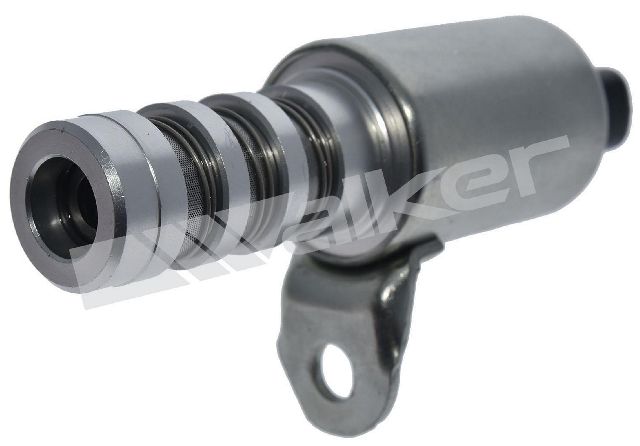
- Sticking or Failed Exhaust VCT Solenoid 🔴 High Probability → Shop Engine Variable Valve Timing (VVT) Solenoid Ford TSB #SSM 50067 specifically calls out that small debris in the engine oil can cause the VCT solenoid to stick, which is a known issue on this platform. The solenoids contain fine mesh screens that become clogged by sludge or contaminants from infrequent oil changes, impeding oil flow.
How to confirm: Use a capable scan tool to perform the diagnostic test recommended by Ford in TSB #SSM 50067: cycle the exhaust VCT solenoid on and off 10 times to see if the code clears or if the idle changes. If the issue persists, or if the solenoid fails to click, it needs replacement. You can also remove the solenoid and inspect its oil screens for sludge or debris. A multimeter can be used to test the solenoid's resistance, which should be between 6.9 and 7.9 ohms at 68°F (20°C).
Typical fix: Replace the exhaust VCT solenoid and perform an engine oil and filter change. It is critical to use the OEM-specified oil viscosity.
Est. part cost: $30-$70 - Low or Dirty Engine Oil 🔴 High Probability The VCT system is hydraulic and extremely sensitive to oil pressure and cleanliness. Neglected oil changes or using the incorrect oil viscosity leads to sludge buildup that clogs the fine mesh screens on the VCT solenoids, causing them to stick or fail.
How to confirm: Check the engine oil level and condition on the dipstick. If the oil is below the minimum mark, black, or feels gritty, it is a likely cause or major contributing factor. This should be the very first check performed.
Typical fix: Perform an engine oil and filter change with the correct viscosity full synthetic oil (refer to your owner's manual). This should be done even if you are also replacing the solenoid to ensure the new part operates in a clean environment.
Est. part cost: $40-$80 - Failed Camshaft Phaser ⚪ Low Probability → Shop Engine Camshaft
How to confirm: This is typically diagnosed after replacing the VCT solenoid and confirming good oil quality doesn't solve the issue. It requires more in-depth mechanical timing checks, often involving removal of the valve cover to inspect the phaser for damage or sticking.
Typical fix: Replace the exhaust camshaft phaser assembly, which is a more involved and expensive repair.
Est. part cost: $100-$250
Rare But Worth Checking
- Stretched Timing Chain or Failed Tensioner: → Shop Engine Timing Chain While rare, if the vehicle has very high mileage or a history of poor maintenance, the base engine timing could be off. This would usually be accompanied by rattling noises and other timing codes.
- Wiring Issue to VCT Solenoid: → Shop Engine Variable Valve Timing (VVT) Solenoid Damage to the wiring harness or connector for the exhaust VCT solenoid can cause a loss of signal, triggering the code. Check for frayed wires, corrosion at the connector, or loose pins. A continuity test can verify the integrity of the wiring.
- PCM (Powertrain Control Module) Fault: In very rare instances, the PCM itself can be the source of the problem, sending incorrect signals. This should only be considered after all other mechanical and electrical possibilities have been exhaustively ruled out.
Diagnosis Steps
- Check Engine Oil Level and Condition: Before any other step, verify the engine oil is full and clean. If it's low or dirty, an oil change with the manufacturer-specified viscosity oil may resolve the issue on its own.
- Scan for Codes: Confirm P0025 is the primary code. Note any other codes that are present, as they can provide additional diagnostic clues.
- Use a Scan Tool to Test the Solenoid: Access the PCM controls with a capable scan tool. As per TSB #SSM 50067, command the exhaust VCT solenoid on and off 10 times. Listen for an audible click from the engine.
- Observe Engine Behavior: If cycling the solenoid causes the engine idle to stumble or smooth out, the solenoid is mechanically functioning but was likely stuck. Clear the codes, perform an oil change, and test drive.
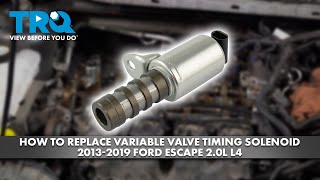
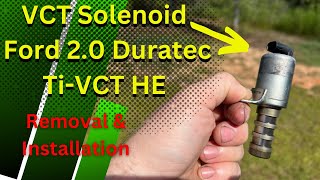
- Inspect the VCT Solenoid and Connector: If the code returns, disconnect the VCT solenoid connector and inspect for corrosion or damage. Remove the exhaust VCT solenoid (on the 2.0L, it is located on the valve cover). 🎬 Watch this step-by-step guide on replacing the VCT solenoid. Inspect the oil screens for sludge or metallic debris. Clean screens do not rule out an internal failure.
- Test Solenoid Electrical Integrity: Using a multimeter, check the resistance across the two pins of the solenoid. A correct reading is between 6.9 and 7.9 ohms at 68°F (20°C). An open circuit (infinite resistance) or short (zero resistance) indicates a failed solenoid. Then, with the key on and engine off, check for battery voltage (approx. 12V) at Pin 1 of the harness connector.
- Replace the Solenoid: If the solenoid is dirty, failed the scan tool test, has incorrect resistance, or if the issue persists, replace the exhaust VCT solenoid.
- Perform an Oil Change: It is critical to change the engine oil and filter when replacing the VCT solenoid to remove the contaminants that likely caused the original part to fail.
- Advanced Diagnosis: If the problem is still not resolved, the issue may be with the camshaft phaser or the base engine timing (timing chain/tensioner), which requires more advanced mechanical diagnosis.
Parts You'll Likely Need
- Engine Variable Valve Timing (VCT) Solenoid
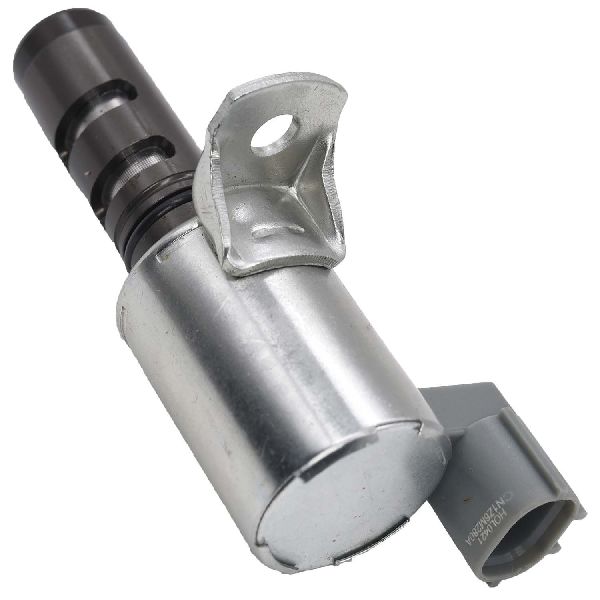
(OEM #CJ5Z-6M280-A)— This is the component that most commonly fails, usually by sticking due to oil debris, as documented in Ford TSB SSM 50067. The intake and exhaust solenoids are identical for this engine.
Trusted brands: Motorcraft (OEM), Dorman (p/n 917-196), NGK/NTK (p/n VV0002), Standard Motor Products (SMP), Gates (p/n VVS144)
OEM price range: $50-$70
Aftermarket price range: $25-$50 - Engine Oil and Filter — Dirty, low, or incorrect viscosity oil is the root cause of VCT solenoid failure. An oil change is essential to prevent the new solenoid from failing prematurely.
Trusted brands: Motorcraft (OEM), Mobil 1, Castrol, Valvoline
OEM price range: $50-$80
Aftermarket price range: $40-$60
Related Codes That Often Appear With This One
- P0014 — This is the equivalent code for an over-advanced timing condition on the exhaust cam. Seeing both could indicate an erratic VCT solenoid or severe oil flow problem.
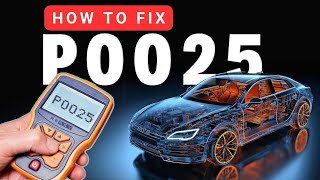
- P0015 — This is an identical code but for Bank 1. Since the Fusion Hybrid only has one bank, seeing this code instead of or with P0025 🎬 Watch this video to understand the P0025 over-retarded timing code. points to the same exhaust VCT system issue.
Technical Service Bulletins (TSBs) & Recalls
- SSM 50067: Illuminated Malfunction Indicator Lamp (MIL) With Variable Cam Timing (VCT) DTCs. This TSB confirms the most common cause is a sticking VCT solenoid due to debris and provides a diagnostic step before replacement. It applies to a wide range of 2015-2021 Ford and Lincoln vehicles.
Platform-Specific Known Issues
- Ford TSB #SSM 50067 explicitly notes that on 2015-2021 Ford vehicles, including the Fusion, VCT codes like P0025 can be caused by small debris making the VCT solenoid stick. The bulletin recommends a specific diagnostic procedure to cycle the solenoid with a scan tool before replacement.
- Owners on forums frequently confirm that replacing the exhaust VCT solenoid and changing the oil resolves the P0025 code. The exhaust solenoid is the one located closer to the firewall.
Mechanic-Grade Diagnostic Values
- VCT Solenoid Internal Resistance — expected: 6.9 to 7.9 ohms at 68°F (20°C). Failure: A reading outside this range, or an open (infinite) or short (near-zero) circuit.
- VCT Solenoid Connector Power Supply — expected: Approximately 12V (battery voltage) with key on, engine off.. Failure: No voltage or significantly low voltage suggests a wiring or fuse issue upstream of the solenoid.
- VCT Solenoid Connector Pinout — expected: Pin 1: Power Supply (12V). Pin 2: Control (Pulsed Ground from PCM).. Failure: Incorrect voltages at these pins point to a wiring or PCM driver issue, not a solenoid failure.
Hidden / Shadow Codes Worth Checking
- Mode 6 Data: Beyond standard DTCs, Mode 6 provides statistical data and test results for non-continuous monitors, including the VCT system. This can reveal if the VCT system is operating close to its failure threshold, even before a hard code is set. (see via A professional scan tool with Mode 6 capabilities, such as the Ford IDS (Integrated Diagnostic System).)
Scan Tool Commands That Help
- Ford IDS (Integrated Diagnostic System): Datalogger with VCT Error PIDs and Histogram Mode — For intermittent or hard-to-diagnose VCT issues. This allows a technician to record VCT performance during a drive cycle and use the histogram to visually identify anomalies or deviations from the commanded position that might not be obvious from live data alone.
Wiring & Ground Locations
- Main Chassis Ground — A prominent ground stud is located on the top of the passenger side strut tower in the engine bay.. While not exclusively for the VCT circuit, this is a critical grounding point for many engine bay components. A poor connection here due to corrosion can cause erratic electrical behavior in various systems, including the PCM and its control over the VCT solenoids.
When the Usual Fixes Don't Work
- While the VCT solenoid is the most common failure point, some technicians and DIYers have reported that replacing the solenoid with an aftermarket part did not resolve the code. In some of these cases, the issue was only resolved after installing a genuine OEM (Motorcraft) solenoid. This suggests that some aftermarket solenoids may have quality control issues or may not operate within the precise tolerances required by the Ford PCM, leading to a persistent code even with a new part.
Model Year Variations Within This Range
- 2015-2019: The Ford Fusion received a significant facelift for the 2017 model year, which included exterior styling changes and an updated interior with a rotary gear shifter and SYNC 3. However, the 2.0L Atkinson-cycle hybrid powertrain and its associated Variable Camshaft Timing (VCT) system remained unchanged. Therefore, the causes, diagnostic procedures, and fixes for code P0025 are consistent across the entire 2015-2019 model year range for the Fusion Hybrid.
Helpful Videos
![How to Fix P0025 Engine Code in 4 Minutes [2 DIY Methods / Only $6.99]](https://img.youtube.com/vi/7E-oYdoFAfM/mqdefault.jpg)
We Have This Part in Stock


The information in this article is provided for general reference and educational purposes only. Vehicle specifications, procedures, and part compatibility can vary by production date, trim level, and region. Always consult your vehicle's factory service manual and verify part numbers before purchasing or performing repairs. Safety-critical components such as airbags, seat belts, and braking systems should be installed by a qualified professional.
- Ford FUSION HYBRID:
- 🧭 Diagnostic Flowchart
- 🎬 Helpful Videos
- 🛍️ Shop This Part
- What's Unique About the 2015-2019 Ford FUSION HYBRID
- Symptoms You May Notice
- Most Likely Causes
- Rare But Worth Checking
- Diagnosis Steps
- Parts You'll Likely Need
- Related Codes That Often Appear With This One
- Technical Service Bulletins (TSBs) & Recalls
- Platform-Specific Known Issues
- Mechanic-Grade Diagnostic Values
- Hidden / Shadow Codes Worth Checking
- Scan Tool Commands That Help
- Wiring & Ground Locations
- When the Usual Fixes Don't Work
- Model Year Variations Within This Range
- 🎟️ Get 5% Off