

P0025 on 2015-2021 Ford Transit Connect: An Unlikely Code and Its Real Meaning
P0025 is for a 'Bank 2' fault, but your Transit Connect has an inline engine with only one bank. You almost certainly have a related 'Bank 1' code like P0015. This is typically caused by a faulty VCT solenoid or low/dirty engine oil, a fix that costs between $50 and $200.
- P0025 does not apply to your 2015-2021 Transit Connect. The code you are likely dealing with is P0015.
- The most common cause of this type of fault is low/dirty engine oil or a failing VCT solenoid.
- Always start diagnosis by checking the engine oil level and condition.
- Replacing the exhaust VCT solenoid is a common, relatively inexpensive, and DIY-friendly repair that often solves the problem.
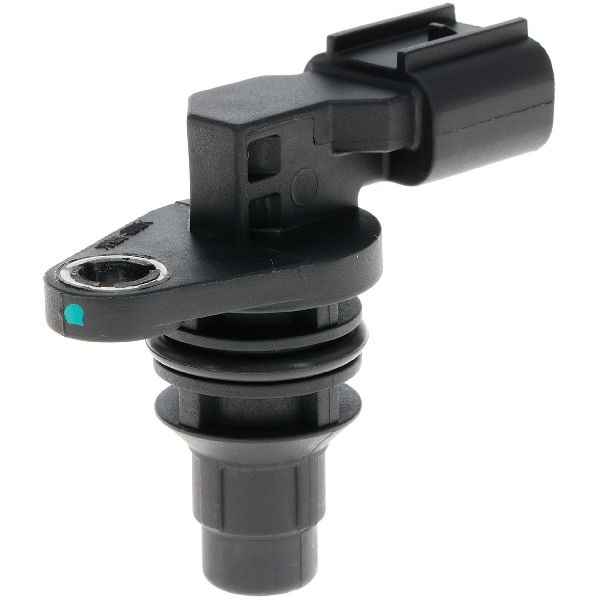
- Do not replace the camshaft position sensor; it is rarely the cause of this code.
What's Unique About the 2015-2021 Ford TRANSIT CONNECT
The confusion around this code often comes from official Ford Technical Service Bulletins (TSBs) like SSM 50067 and SSM 54366. These documents list a wide range of VCT codes, including P0025, and apply to many vehicles, including the Transit Connect. However, these bulletins are written to cover Ford's entire fleet, which includes V6 and V8 engines that *do* have a Bank 2. For the Transit Connect's inline engine, only the Bank 1 codes (P0011, P0012, P0014, P0015) are relevant. The key takeaway from the TSBs is Ford's acknowledgement that debris can cause the VCT solenoids to stick, which is a primary cause of these timing faults on Bank 1. TSB SSM 50067 explicitly advises technicians to try cycling the affected VCT solenoid 10 times with a scan tool to clear debris before replacing any parts.
Diagnostic Flowchart
Tap your situation to follow the diagnostic path that matches what you're seeing on this vehicle.
Symptoms You May Notice
- Check Engine Light is on
- Rough or unstable idle
- Reduced engine power and poor acceleration
- Engine may be hard to start or may stall
- Decreased fuel economy
- Rattling noise from the engine bay, particularly when warm
- Replacing the Camshaft Position Sensor. The sensor is usually doing its job by correctly reporting the timing problem. The code indicates a mechanical timing issue (timing is retarded), not an electrical sensor failure.
- Searching for 'Bank 2' components. Mechanics not familiar with the vehicle might waste time looking for a second bank of cylinders that does not exist.
- Replacing the PCM. A faulty PCM is a very rare cause for this code. All other hydraulic and mechanical causes should be ruled out first.
Most Likely Causes
- Low or Dirty Engine Oil 🔴 High Probability The Variable Camshaft Timing (VCT) system is hydraulic and relies entirely on clean oil at the correct pressure. Neglected oil changes lead to sludge that can clog the small passages in the VCT solenoids and phasers, which is the most common cause of VCT-related codes.
How to confirm: Check the oil level on the dipstick and examine its color and consistency. If it is low, black, or sludgy, this is your likely starting point. An oil change is the first and cheapest diagnostic step.
Typical fix: Perform an oil and filter change using the manufacturer-specified grade (e.g., Motorcraft 5W-20 Synthetic Blend).
Est. part cost: $40-$70 - Faulty VCT Oil Control Solenoid 🔴 High Probability → Shop Engine Camshaft Ford TSBs SSM 50067 and SSM 54366 specifically mention that debris can cause VCT solenoids to stick. These solenoids are a very common failure point for VCT-related codes across many Ford models, as they are responsible for metering oil flow to the phasers.
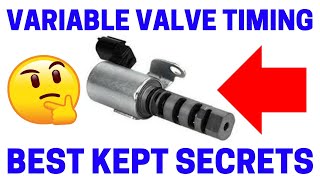
How to confirm: With a diagnostic scanner, monitor the commanded vs. actual cam position for Bank 1 Exhaust. You can also swap the intake and exhaust solenoids (if they are identical) and see if the code changes from P0015 (exhaust) to P0012 (intake). You can also test the solenoid's resistance with a multimeter (typically 6.9-7.9 ohms 🎬 Watch: How to tell if your VVT solenoid is bad) or by applying 12V to see if it actuates (clicks).
Typical fix: Replace the VCT solenoid for the exhaust camshaft on Bank 1. Many owners choose to replace both intake and exhaust solenoids at the same time as a preventative measure.
Est. part cost: $30-$100 - Failing Camshaft Phaser ⚪ Low Probability → Shop Engine Camshaft While less common than a solenoid failure, the phaser (actuator) itself can fail mechanically. It can get stuck due to internal wear or debris that the solenoid allows to pass, preventing it from adjusting the cam timing as commanded by the PCM.
How to confirm: This is usually diagnosed after replacing the VCT solenoid and changing the oil does not resolve the code. A mechanic may listen for rattling noises from the front of the engine, which can indicate a bad phaser. A scan tool showing the PCM commanding a change but the actual cam angle not moving confirms the phaser is stuck.
Typical fix: Replace the camshaft phaser. This is a more involved repair that requires removing the valve cover and potentially the timing components.
Est. part cost: $80-$200
Rare But Worth Checking
- Stretched Timing Chain or Damaged Guides: → Shop Engine Timing Chain If the timing chain has stretched or a guide has broken, it can cause the base timing to be off, leading to a persistent VCT code that won't clear. This is a more serious mechanical issue.
- Clogged Oil Passages: In cases of severe engine sludge, the oil passages leading to the VCT system can become blocked, starving the components of oil pressure. This usually requires significant engine cleaning or repair.
- Wiring or Connector Issues: Damage to the wiring harness or a poor connection at the VCT solenoid connector can cause an open circuit, preventing the PCM from controlling the solenoid.
Diagnosis Steps
- Verify the actual code. If your scanner shows P0025, try rescanning or using a different tool to confirm. The actual code is likely P0015.
- Check Engine Oil. Ensure the oil level is full and the oil is clean. If in doubt, perform an oil and filter change. This is the first and most crucial step.
- Inspect VCT Solenoid Wiring. Check the connector and wiring to the exhaust VCT solenoid for any visible damage, corrosion, or oil contamination.
- Scan Tool Analysis. Use a capable scan tool to monitor PIDs for 'VCT Exhaust Actual' vs. 'VCT Exhaust Desired'. A large, persistent discrepancy while driving indicates a problem with the VCT system.
- Test the Solenoid. Command the solenoid on and off with the scan tool to check for response, as suggested by TSB SSM 50067. If possible, swap the exhaust and intake VCT solenoids (they are often different part numbers, e.g., CJ5Z-6M280-A and CJ5Z-6M280-B, but may be physically swappable for a quick test) and see if the trouble code follows to the intake cam (e.g., P0012).
- Replace the VCT Solenoid. If the solenoid is suspect, replacement is the most common and effective fix. They are located on the top of the valve cover and are typically easy to access.
- Inspect Camshaft Phaser. If a new solenoid and clean oil do not fix the issue, the problem may be the camshaft phaser itself, which may require professional diagnosis.
Parts You'll Likely Need
- Exhaust Variable Camshaft Timing (VCT) Solenoid
(OEM #CJ5Z-6M280-A)— This solenoid controls oil flow to the exhaust phaser and is the most common failure point for this issue, often getting stuck due to debris as noted in Ford TSBs.
Trusted brands: Motorcraft, Dorman, Standard Motor Products (SMP), NTK
OEM price range: $60-$100
Aftermarket price range: $30-$70 - Intake Variable Camshaft Timing (VCT) Solenoid
(OEM #CJ5Z-6M280-B)— Often replaced at the same time as the exhaust solenoid as a preventative measure, since they are subjected to the same oil and conditions. The intake and exhaust solenoids can have different colored connectors (e.g., black and gray) and slightly different designs.
Trusted brands: Motorcraft, Dorman, Standard Motor Products (SMP)
OEM price range: $60-$100
Aftermarket price range: $30-$70 - Engine Oil and Filter — Clean oil is critical for the VCT system to function. Old or low oil is a primary cause of VCT faults.
Trusted brands: Motorcraft, Mobil 1, Valvoline
OEM price range: $50-$80
Aftermarket price range: $40-$60
Related Codes That Often Appear With This One
- P0015 — This is the correct code for the same fault (Exhaust Cam Timing Over-Retarded) on the Transit Connect's engine (Bank 1).
- P0014 — This indicates the exhaust cam timing is over-advanced, a related fault often caused by the same VCT solenoid or oiling issues.
- P0011 / P0012 — These are the codes for the intake camshaft on Bank 1. It's common to have issues with both intake and exhaust VCT solenoids, especially if the root cause is dirty oil.
- P0016 / P0017 — These codes indicate a correlation issue between the crankshaft and camshaft positions. A stretched timing chain that causes a P0015 could also lead to these codes.
Technical Service Bulletins (TSBs) & Recalls
- SSM 50067: Notes that the MIL may be on with various VCT codes (including P0025) and that this may be due to debris causing the VCT solenoid to stick.
- SSM 54366: Mentions that Pinpoint Test HK in the PC/ED manual has been updated for a range of VCT codes including P0025.
- TSB160038: References a group of VCT codes, including P0025, that may appear on low-mileage vehicles.
Platform-Specific Known Issues
- The primary vehicle-specific issue is the confusion caused by generic TSBs (SSM 54366, TSB160038, SSM 50067) that list Bank 2 codes for a vehicle that only has Bank 1.
- On the 2.0L GDI and 2.5L engines, the VCT solenoids are located on top of the valve cover, making them relatively easy to access and replace without major disassembly.
Mechanic-Grade Diagnostic Values
- VCT Solenoid Internal Resistance — expected: 6.9 to 7.9 ohms at 68°F (20°C).. Failure: A reading outside this range, or an open/short circuit, indicates a faulty solenoid.
- VCT Solenoid Power Supply Voltage — expected: Battery voltage (approx. 12V) should be present at one pin of the solenoid connector with the key on.. Failure: No voltage suggests a problem with the power supply from the fuse box (e.g., fuse F28 in the engine compartment for the 2.5L) or the PCM power relay.
Scan Tool Commands That Help
- Ford IDS (Integrated Diagnostic System) or equivalent professional scan tool: VCT Actuator Test or Solenoid On/Off Command — This bidirectional command allows a technician to manually activate and deactivate the VCT solenoid while the engine is running. If the solenoid is functional, activating it should cause the engine to hesitate or run rough, confirming the solenoid is mechanically working. This directly tests the solenoid's function as recommended in TSB SSM 50067.
Wiring & Ground Locations
- VCT Solenoid Connector — On top of the valve cover, plugging directly into the VCT solenoids. The connector for the 2014-2016 model years is part number 7223-1324.. This is the primary connection point for testing power, ground, and signal to the solenoid. The plastic can become brittle, and the terminals can get contaminated with oil, leading to a poor connection.
- G104 (or similar engine block ground) — A primary ground point typically located on the engine block or cylinder head, often near the starter motor or on the side of the block.. The PCM controls the VCT solenoid by providing a pulsed ground signal. A corroded, loose, or damaged engine ground strap can cause erratic behavior in many PCM-controlled components, including VCT solenoids, leading to intermittent or persistent timing codes.
- VCT Solenoid Wiring Pins — At the solenoid connector. Pin 1 is typically the power supply (12V), and Pin 2 is the control line (pulsed ground) from the PCM.. Knowing the pinout is essential for accurately testing for power from the fuse box and the control signal from the PCM without guessing.
Real Owner Repair Stories
- Reddit user in r/fordfusion (2013 Ford Fusion with 2.5L Duratec engine (same family as used in Transit Connect)) — Not specified, but discussing long-term reliability.
✅ What actually fixed it A Ford powertrain engineer advised the owner that the 2.5L engine would 'last forever.' The owner reported only needing to replace the valve cover gasket at 100,000 miles, attesting to the engine's general durability. This reinforces that VCT issues on this engine are more likely caused by maintenance items (oil) or serviceable components (solenoids) rather than catastrophic internal failure.
Model Year Variations Within This Range
- 2019-2021: Starting in 2019, the standard engine became the 2.0L GDI I4, with the 2.5L I4 becoming a fleet-only option. While both are inline-four engines with VCT (Ford calls it Ti-VCT), their specific components and PCM software may differ slightly. However, the fundamental diagnostic principles for VCT codes remain the same across both engines.
Helpful Videos

We Have This Part in Stock


The information in this article is provided for general reference and educational purposes only. Vehicle specifications, procedures, and part compatibility can vary by production date, trim level, and region. Always consult your vehicle's factory service manual and verify part numbers before purchasing or performing repairs. Safety-critical components such as airbags, seat belts, and braking systems should be installed by a qualified professional.
- Ford TRANSIT CONNECT:
- 🧭 Diagnostic Flowchart
- 🎬 Helpful Videos
- 🛍️ Shop This Part
- What's Unique About the 2015-2021 Ford TRANSIT CONNECT
- Symptoms You May Notice
- Most Likely Causes
- Rare But Worth Checking
- Diagnosis Steps
- Parts You'll Likely Need
- Related Codes That Often Appear With This One
- Technical Service Bulletins (TSBs) & Recalls
- Platform-Specific Known Issues
- Mechanic-Grade Diagnostic Values
- Scan Tool Commands That Help
- Wiring & Ground Locations
- Real Owner Repair Stories
- Model Year Variations Within This Range
- 🎟️ Get 5% Off