

P0025 on 2015-2019 Lincoln MKT: Exhaust Cam Timing Over-Retarded Causes and Fixes
On a 2015-2019 Lincoln MKT, code P0025 is most often caused by low/dirty engine oil or a failing exhaust VCT solenoid on Bank 2. An oil change and solenoid replacement (~$50-$150 for the part) is the most common fix. Due to the labor involved in accessing the solenoids under the valve cover, using high-quality OEM or reputable aftermarket parts is crucial to avoid repeat repairs.
- The first and most important diagnostic step for P0025 is to check the engine oil level and condition. Low or dirty oil is a very common cause.
- The most likely failed part is the Bank 2 exhaust VCT solenoid, which gets stuck due to oil debris, a known issue cited in manufacturer TSBs. [SSM 50067]
- Do not immediately replace the camshaft position sensor; it is almost never the cause of this code.
- Because the solenoids are under the valve cover, it is wise to replace the valve cover gasket during the repair to prevent future oil leaks.
What's Unique About the 2015-2019 Lincoln MKT
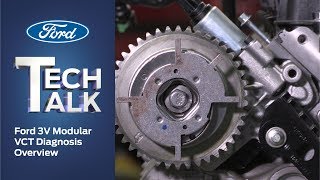
The 3.5L and 3.7L V6 engines used in the Lincoln MKT rely on a Variable Camshaft Timing (VCT) system that is hydraulically operated by engine oil. These systems can be sensitive to oil quality and level. As documented in Lincoln's own Technical Service Bulletins (TSBs), small debris in the oil can cause the VCT solenoids to stick, leading to timing-related codes like P0025. This makes regular oil changes with the correct specification oil especially critical for these engines. In fact, TSB SSM 50067 explicitly advises 🎬 Watch: Ford technicians explain VCT system diagnosis and TSB procedures. technicians to first try cycling the affected VCT solenoid with a scan tool to clear debris before replacing any parts.
Diagnostic Flowchart
Tap your situation to follow the diagnostic path that matches what you're seeing on this vehicle.
Symptoms You May Notice
- Check Engine Light is on
- Rough or shaky idle, sometimes feeling like the car will stall
- Poor acceleration and reduced engine power, feeling sluggish
- Engine may be hard to start
- Decreased fuel economy
- Engine may stall at low speeds or when coming to a stop
- Rattling, ticking, or dragging noises from the engine, especially on a cold startup, that may go away after a few seconds as oil pressure builds.
- Replacing the camshaft position sensor. The sensor is accurately reporting the timing error; it is not the cause of the error. The code indicates a mechanical timing issue or a fault in the VCT control system, not a sensor failure.
Most Likely Causes
- Low or Dirty Engine Oil 🔴 High Probability The VCT system is hydraulic and highly dependent on oil pressure and cleanliness. Sludge or contaminated oil can clog the fine mesh screens on the VCT solenoids and passages in the phasers, preventing correct operation. This is the most common cause of VVT system problems.
How to confirm: Check the engine oil dipstick for level and inspect the oil's color and consistency. If it is low, black, or sludgy, it needs to be changed. This should always be the first step.
Typical fix: Perform an engine oil and filter change using the manufacturer-specified oil (e.g., Motorcraft 5W-30 Synthetic Blend) and a quality filter (e.g., Motorcraft FL-500S). Clear codes and test drive.
Est. part cost: $40-$80 - Failing Variable Camshaft Timing (VCT) Solenoid 🔴 High Probability → Shop Engine Camshaft Manufacturer TSBs SSM 50067 and others specifically state that debris can cause the VCT solenoid to stick, triggering this code. The solenoids are a known failure point across many Ford/Lincoln vehicles using these engines.
How to confirm: After verifying oil level, use a scan tool to perform the VCT solenoid cleaning procedure outlined in TSB SSM 50067. If the code returns, swap the Bank 2 exhaust solenoid with the Bank 2 intake solenoid (they are often identical parts). If the code changes to P0021, the solenoid is faulty. You can also test resistance with a multimeter (should be 6.9-7.9 ohms at 68°F). 🎬 See this video for a step-by-step guide on testing solenoids.
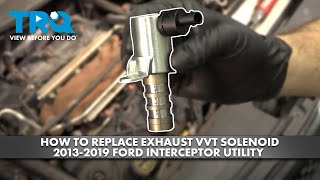
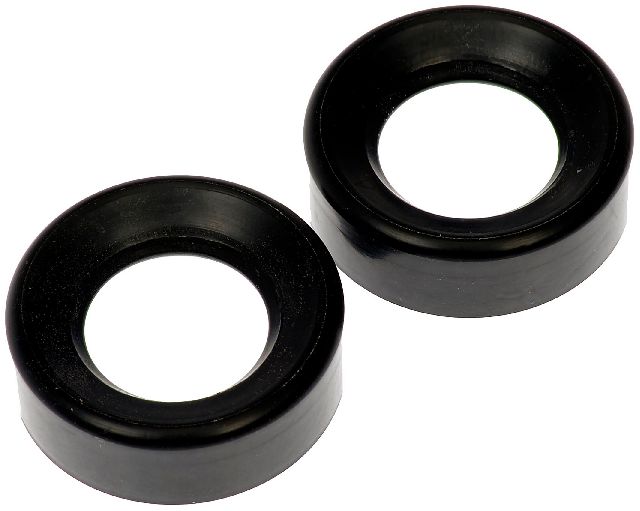
Typical fix: Replace the Bank 2 exhaust VCT solenoid. Since the solenoids are under the valve cover, it is highly recommended to replace the valve cover gasket and the solenoid seals at the same time to prevent oil leaks. Many mechanics suggest replacing both solenoids on the same bank (intake and exhaust) or all four at once to prevent future failures. 🎬 Watch: A complete walkthrough on replacing the exhaust VVT solenoid.
Est. part cost: $50-$150 - Worn Timing Components (Phaser, Chain, Tensioner) 🟡 Medium Probability Over time, especially with extended oil change intervals or low oil pressure events, the timing chain can stretch, the plastic guides can break, or the phaser can fail mechanically. A startup rattle is a classic symptom of worn tensioners or guides allowing chain slack before oil pressure builds.
How to confirm: This is an advanced diagnosis. A key symptom is a persistent startup rattle. A scan tool monitoring commanded vs. actual cam angle will show a persistent deviation that doesn't resolve with a new solenoid. Physical inspection requires removing the timing cover and is labor-intensive.
Typical fix: Replace the timing chain, guides, tensioners, and camshaft phasers as a set. This is a labor-intensive job often costing thousands of dollars.
Est. part cost: $400-$900
Rare But Worth Checking
- Damaged Wiring to VCT Solenoid: → Shop Engine Variable Valve Timing (VVT) Solenoid Check the wiring harness and connector for the Bank 2 exhaust VCT solenoid for any signs of damage, corrosion, or loose connection before replacing parts. A wiggle test on the harness while the engine is running can sometimes reveal a bad connection.
- Low Oil Pressure Due to Failing Oil Pump: While rare, a failing oil pump can starve the VCT system of the pressure it needs to operate, leading to timing codes. This is a catastrophic failure that can seize the engine if not addressed. A forum user on FordF150Forum.com described a sudden low oil pressure light followed by engine seizure on a 3.5L EcoBoost due to a failed oil pump.
- Failing Powertrain Control Module (PCM): This is extremely rare. The PCM should only be considered after all other mechanical and electrical possibilities have been exhaustively ruled out.
Diagnosis Steps
- Verify the code with an OBD-II scanner.
- Check the engine oil level and condition. If low or dirty, perform an oil and filter change with the correct spec oil (e.g., Motorcraft 5W-30) and filter. Clear the code and see if it returns.
- Inspect the electrical connector and wiring for the Bank 2 exhaust VCT solenoid for any damage or corrosion.
- Using a capable scan tool, monitor the desired vs. actual camshaft position for the Bank 2 exhaust cam. Also, use the scan tool's bidirectional controls to perform the VCT solenoid cleaning procedure as described in TSB SSM 50067, which cycles the solenoid 10 times to dislodge debris.
- If the code persists, perform a solenoid swap test. Swap the exhaust VCT solenoid with the intake VCT solenoid on the same bank (Bank 2). Clear the codes and run the engine. If the code changes to P0021 (Intake 'A' Camshaft Position - Timing Over-Advanced), the solenoid is confirmed to be faulty and should be replaced.
- If the solenoid swap does not move the code, the issue is likely more severe. Listen carefully for a startup rattle, which points towards timing chain/tensioner issues.
- If a timing chain issue is suspected, further diagnosis requires removing the valve and/or timing covers for physical inspection of the chain, guides, and phasers. This is a complex job best left to a professional.
Parts You'll Likely Need
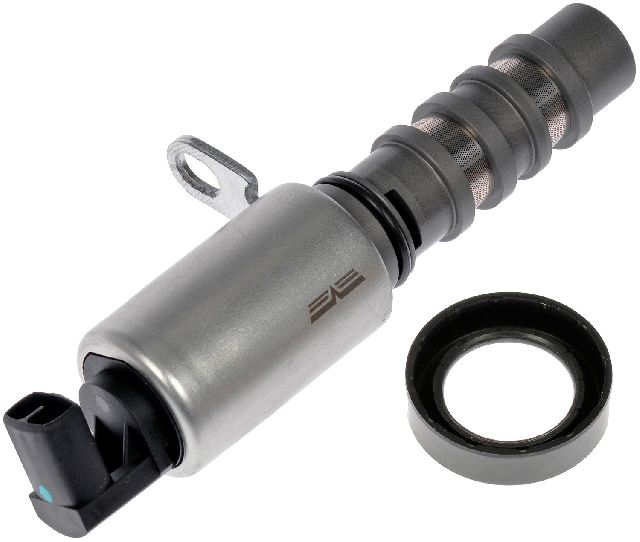
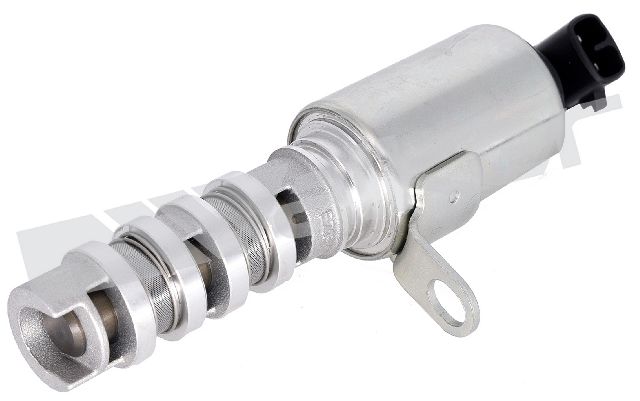
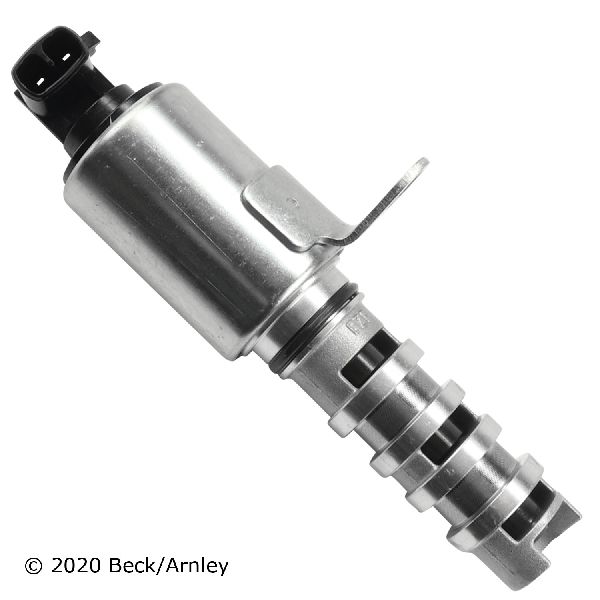
- Engine Variable Valve Timing (VVT) Solenoid
(OEM #AT4Z-6M280-B)— This solenoid controls oil flow to the cam phaser. It is the most common point of failure for code P0025, often due to sticking from oil debris as noted in TSB SSM 50067. The solenoids for intake and exhaust may be different parts. For P0025 (Bank 2 Exhaust), the specific part number can vary; TSB 16-0038 lists AT4Z-6M280-C for the right side (Bank 2) exhaust on some 3.5L engines. It is critical to verify the correct part for your specific vehicle.
Trusted brands: Motorcraft, Dorman, Spectra Premium, Standard Motor Products (SMP)
OEM price range: $75-$120
Aftermarket price range: $40-$90 - Valve Cover Gasket
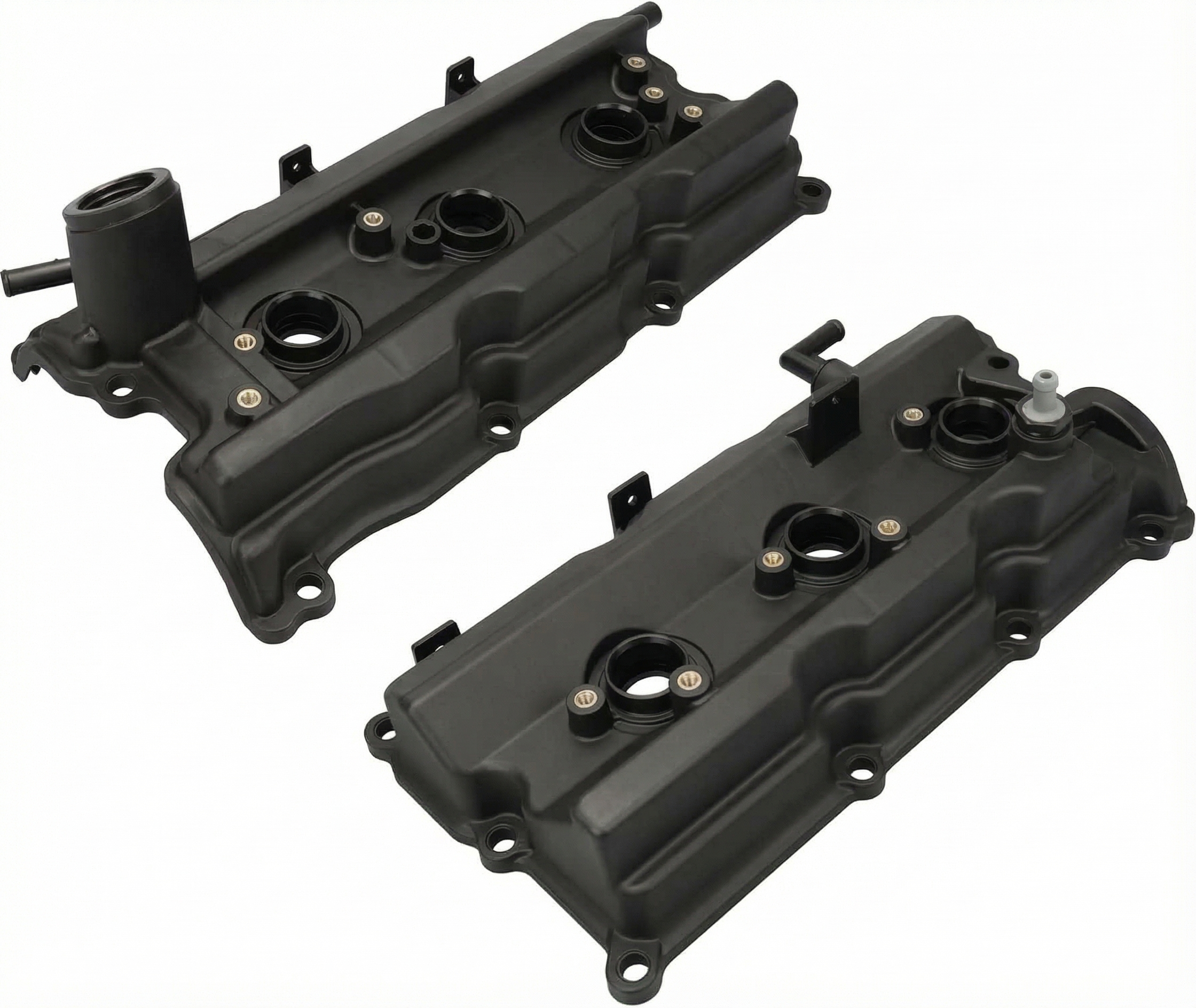
(OEM #DL3Z-6584-C (Bank 2/Right Side for some applications))— The VVT solenoids are located under the valve cover on these engines. The gasket is a one-time use part and must be replaced whenever the valve cover is removed to prevent oil leaks. Gasket kits often include new spark plug tube seals and VCT solenoid seals.
Trusted brands: Motorcraft, Fel-Pro, Mahle
OEM price range: $40-$70
Aftermarket price range: $20-$40
Related Codes That Often Appear With This One
- P0019 — This code indicates a Crankshaft-Camshaft correlation issue for Bank 2, Sensor B (exhaust). It is very common to see P0019 and P0025 together, as the over-retarded timing directly causes a correlation fault with the crankshaft.
- P0024 — This is the code for an over-advanced condition on the same camshaft. It can appear if the VCT solenoid is sticking intermittently in both directions.
- P0015 — This is the equivalent over-retarded code for Bank 1. If both P0015 and P0025 are present, it strongly points to a systemic issue like low/dirty oil or low oil pressure affecting the entire engine.
Technical Service Bulletins (TSBs) & Recalls
- SSM 50067: VCT codes may be caused by debris in VCT solenoid. Recommends cycling solenoid with scan tool before replacement.
- SSM 54366: Updated diagnostic procedures for VCT codes including P0025.
- 16-0093: Advises VCT solenoid replacement for these codes on low-mileage 2016 3.5L engines.
Platform-Specific Known Issues
- TSB #SSM 50067: Notes that various VCT codes including P0025 may be caused by small debris causing the VCT solenoid to stick. It advises against immediate component replacement, instead recommending the use of a scan tool to cycle the affected VCT solenoid 10 times to attempt to clear the debris first.
- TSB #SSM 54366: Mentions that diagnostic procedures for P0025 and related codes have been updated in the Powertrain Control/Emissions Diagnosis (PC/ED) manual.
Mechanic-Grade Diagnostic Values
- VCT Solenoid Resistance — expected: 6.9 to 7.9 ohms at 68°F (20°C). Failure: No reading (open circuit) or a reading significantly outside the expected range.
- Scan Tool Live Data - VCT Error — expected: VCT_EXH_ERR2 (Bank 2 Exhaust Camshaft Position Error) should be close to 0 degrees at idle.. Failure: A large, persistent negative value (e.g., -10 degrees or more) indicates the cam is over-retarded compared to the PCM's command.
- Scan Tool Live Data - VCT Duty Cycle — expected: VCT_EXH_DC2 (Bank 2 Exhaust Solenoid Duty Cycle) will vary based on engine speed and load. At idle, it should be relatively stable.. Failure: A duty cycle commanded to 100% or 0% for extended periods while the VCT error remains high suggests the PCM is trying to correct a timing issue but the phaser is not responding, pointing to a mechanical or hydraulic problem.
Hidden / Shadow Codes Worth Checking
- Mode 6, Test ID $A2 through $A9 (varies by specific ECU): Mode 6 data can reveal misfire counts per cylinder for the current and last 10 driving cycles, even if a full P030x code has not been set. While not a direct P0025 indicator, timing issues can cause misfires, and checking this data can help assess overall engine health. (see via A capable OBD-II scan tool that supports Mode 6, such as FORScan or some professional-grade scanners.)
Scan Tool Commands That Help
- Ford IDS (Integrated Diagnostic System) / FORScan: VCT Solenoid On/Off State or Duty Cycle Control — This is the bidirectional command referenced in TSB SSM 50067. It allows a technician to manually command the solenoid on and off (or cycle its duty cycle) to see if it's mechanically stuck. Cycling it multiple times can dislodge small debris, potentially fixing the issue without part replacement. It's also used to confirm the solenoid is responding to electrical commands before condemning it.
Wiring & Ground Locations
- G104 — On the 3.5L Turbo, it is located at the rear of the engine. On the 3.7L, it is at the top rear of the engine.. This is a primary engine ground. A poor connection here can cause a host of issues with sensors and actuators controlled by the PCM, including the VCT solenoids. Intermittent or incorrect ground can lead to erratic sensor readings and actuator behavior.
- G101 — Located on the left side of the engine compartment.. This ground point serves the Powertrain Control Module (PCM). A compromised ground at G101 can directly affect the PCM's ability to accurately control the VCT system and other engine functions.
- VCT Solenoid Connector — Under the Bank 2 (radiator side) valve cover. It's a two-pin connector attached to the top of the solenoid.. The connector itself or the wiring leading to it can become brittle from heat cycles or damaged during previous repairs. One pin receives a 12V feed (with key on), and the other is the control wire (ground-side switched) from the PCM. Verifying voltage and continuity here is a key electrical diagnostic step.
Real Owner Repair Stories
- Reddit user on r/AskMechanics (2019 Ford F-150 3.5L EcoBoost with 60k miles) — While driving on a long trip, the truck became laggy with a loss of power after idling at a stop light. It threw codes P0019 and P0025.
❌ Tried (didn't work) The user was on a road trip and had not yet attempted a repair.
✅ What actually fixed it The user noted that the problem started shortly after an oil change at a quick-lube shop (Jiffy Lube). The strong implication and consensus from comments was that either the incorrect oil viscosity was used or the oil filter was of poor quality, leading to a hydraulic pressure/flow issue in the VCT system. The recommended fix was to immediately perform another oil change with the correct Motorcraft oil and filter.
OEM Part Supersession History
Unknown, multiple revisions exist→AT4Z-6M280-B, AT4Z-6M280-C, AT4Z-6M280-A— Ford has released several revisions of the VCT solenoids for the 3.5L/3.7L engines to improve durability and resistance to contamination.
Heads up: The solenoids for intake and exhaust, and for Bank 1 vs Bank 2, can have different part numbers and are not always interchangeable. For example, TSB 16-0038 specifies AT4Z-6M280-C for the Bank 2 exhaust cam on some 3.5L engines. AT4Z-6M280-B is often listed for the driver's side (Bank 2 on a transverse MKT). It is absolutely critical to verify the correct part number for the specific position (Bank 2 Exhaust) using the vehicle's VIN.
Helpful Videos

Used OEM Parts in Stock
New Aftermarket Parts Available


The information in this article is provided for general reference and educational purposes only. Vehicle specifications, procedures, and part compatibility can vary by production date, trim level, and region. Always consult your vehicle's factory service manual and verify part numbers before purchasing or performing repairs. Safety-critical components such as airbags, seat belts, and braking systems should be installed by a qualified professional.
- Lincoln MKT:
- 🧭 Diagnostic Flowchart
- 🎬 Helpful Videos
- 🛍️ Shop This Part
- What's Unique About the 2015-2019 Lincoln MKT
- Symptoms You May Notice
- Most Likely Causes
- Rare But Worth Checking
- Diagnosis Steps
- Parts You'll Likely Need
- Related Codes That Often Appear With This One
- Technical Service Bulletins (TSBs) & Recalls
- Platform-Specific Known Issues
- Mechanic-Grade Diagnostic Values
- Hidden / Shadow Codes Worth Checking
- Scan Tool Commands That Help
- Wiring & Ground Locations
- Real Owner Repair Stories
- OEM Part Supersession History
- 🎟️ Get 5% Off