

P0025 on 2015-2020 Lincoln MKZ: Causes and Fixes for Exhaust Cam Timing
On a 2015-2020 Lincoln MKZ with a V6 engine, code P0025 is most often caused by a faulty Variable Camshaft Timing (VCT) solenoid or low/dirty engine oil. Replacing the Bank 2 exhaust VCT solenoid costs around $70-$80 for the part and is a common DIY fix, though it requires removing the valve cover.
- P0025 on your Lincoln MKZ V6 means the Bank 2 exhaust camshaft timing is lagging.
- The most likely cause is a sticking Variable Camshaft Timing (VCT) solenoid, often due to dirty oil, an issue acknowledged by Ford in a TSB.
- Always check your engine oil level and condition first. A simple oil change can sometimes resolve the issue.
- If the oil is fine, the next step is to inspect and likely replace the Bank 2 exhaust VCT solenoid.
- On these V6 engines, replacing the solenoid requires removing the valve cover, so replacing the valve cover gasket at the same time is mandatory.
What's Unique About the 2015-2020 Lincoln MKZ
For this generation of Lincoln MKZ with V6 engines, Ford/Lincoln issued Technical Service Bulletins (TSBs) that directly address this family of codes. The VCT system is entirely dependent on oil pressure to function. TSB #SSM 50067 specifically notes that P0025 can be caused by small debris making the Variable Camshaft Timing (VCT) solenoid stick. This points to a known sensitivity in the VCT system to oil condition and quality. The TSB even recommends a diagnostic procedure to cycle the solenoid with a scan tool 10 times to try and clear the debris before replacing any parts. This makes regular oil changes with the correct oil viscosity paramount on these engines.
Diagnostic Flowchart
Tap your situation to follow the diagnostic path that matches what you're seeing on this vehicle.
Generation note: The 2015-2020 year range covers two versions of the second-generation Lincoln MKZ. The 2015-2016 models used the 3.7L V6 engine, while the refreshed 2017-2020 models introduced the 3.0L twin-turbo V6. This code applies to both V6 engines as they both have two cylinder banks and Variable Camshaft Timing.
Symptoms You May Notice
- Check Engine Light is on
- Rough or unstable idle
- Reduced engine power and poor acceleration
- Engine may be hard to start
- Decreased fuel economy
- Engine may stall at stops
- Rattling or ticking noise from the engine, especially on startup
- Replacing the camshaft position sensor. While a sensor can fail, it is much less likely to cause an 'over-retarded' code than a mechanical or hydraulic issue with the VCT solenoid or phaser. A bad sensor usually triggers different codes related to circuit failure (e.g., P0390).
Most Likely Causes
- Faulty Bank 2 Exhaust VCT Solenoid 🔴 High Probability → Shop Engine Variable Valve Timing (VVT) Solenoid TSB #SSM 50067 explicitly states this code may be due to small debris causing the VCT solenoid to stick. This is a very common failure point in these systems, as the solenoids have fine mesh screens that can become clogged by oil sludge or varnish.
How to confirm: Use a scan tool to monitor commanded vs. actual cam position for Bank 2 Exhaust. You can also remove the solenoid and inspect it for sludge or debris on the screens. Testing its resistance with a multimeter can also confirm electrical failure; a reading between 5 and 20 ohms is typical for a good solenoid. A key diagnostic step from TSB 50067 is to use a capable scan tool to command the solenoid on and off multiple times to see if it frees up.
Typical fix: Replace the Bank 2 exhaust VCT solenoid and its seal. On the 3.7L and 3.0L V6 engines, the solenoids are located under the valve covers, which adds complexity and time to the job. An oil and filter change is highly recommended at the same time.
Est. part cost: $70-$85 - Low or Dirty Engine Oil 🔴 High Probability The VCT system is hydraulic and relies entirely on clean oil at the correct pressure to physically move the camshaft phasers. TSBs point to debris as a primary cause, which is often related to extended oil change intervals or using the incorrect oil viscosity.
How to confirm: Check the oil level on the dipstick and inspect its color and consistency. If the oil is low or appears dark and sludgy, this is a likely contributor. The issue may resolve temporarily or completely after an oil change.
Typical fix: Perform an oil and filter change using the manufacturer-specified grade of oil (e.g., SAE 5W-30 for the 3.7L). Some owners report success with an engine flush product before the oil change to help clear sludge.
Est. part cost: $50-$100 - Failed Camshaft Phaser 🟡 Medium Probability → Shop Engine Camshaft The phaser is the mechanical gear that the solenoid controls. It can fail internally, get stuck due to sludge, or its locking pin can fail, preventing it from adjusting cam timing correctly. The 3.0L EcoBoost in 2017-2020 models has known issues with premature cam phaser failure, often causing a rattling noise on startup. 🎬 See common reliability issues with the 3.0L EcoBoost engine.
How to confirm: This is typically diagnosed after confirming the VCT solenoid and oil are good. Diagnosis may require an oscilloscope to analyze cam/crank correlation or partial engine disassembly to inspect the phaser and timing marks.
Typical fix: Replace the Bank 2 exhaust camshaft phaser. This is a labor-intensive job that also requires replacing the timing chain, tensioners, and guides as a best practice.
Est. part cost: $150-$300 - Worn Timing Chain or Tensioner ⚪ Low Probability → Shop Engine Timing Chain While less common on these specific engines unless they are very high mileage, excessive slack in the timing chain from a worn chain or a failed hydraulic tensioner can cause camshaft timing to be retarded enough to set this code.
How to confirm: Listen for a distinct rattling noise from the front of the engine (timing cover area), especially on a cold startup, that may quiet down as oil pressure builds. Confirmation requires removing the timing cover for visual inspection of chain slack and guide wear.
Typical fix: Replace the timing chain, guides, and tensioners. This is a major engine repair.
Est. part cost: $400-$800
Rare But Worth Checking
- Wiring Harness or Connector Issue:
Diagnosis Steps
- Verify the engine oil level and condition. Top off or perform an oil change with the correct viscosity oil if necessary. This is the cheapest and easiest first step.
- Use an OBD-II scanner to check for any other related trouble codes. Note any codes for misfires, or correlation codes like P0019.
- With a capable scan tool (like Ford's IDS), monitor the VCT advanced error PIDs (VCT_ERR1/VCT_ERR2) for the Bank 2 exhaust cam while the engine is in closed-loop operation. The error should be close to 0°, with a variation of no more than +/- 5° being acceptable.
- As per TSB 50067, use the scan tool's bidirectional controls to command the Bank 2 exhaust VCT solenoid on and off (or cycle it 10 times) to check for a response in the cam angle and to potentially clear debris.
- If accessible, swap the Bank 2 exhaust solenoid with the Bank 2 intake solenoid (if they are the same part number) to see if the trouble code follows the part (e.g., P0025 changes to P0022).
- Remove the Bank 2 valve cover to access and inspect the VCT solenoid. Check for clogged screens or signs of sludge.
- If the solenoid appears clean and tests functional, the issue may be a clogged oil passage in the cylinder head, a failing camshaft phaser, or a problem with the base timing (timing chain). Further mechanical inspection is required.
Parts You'll Likely Need
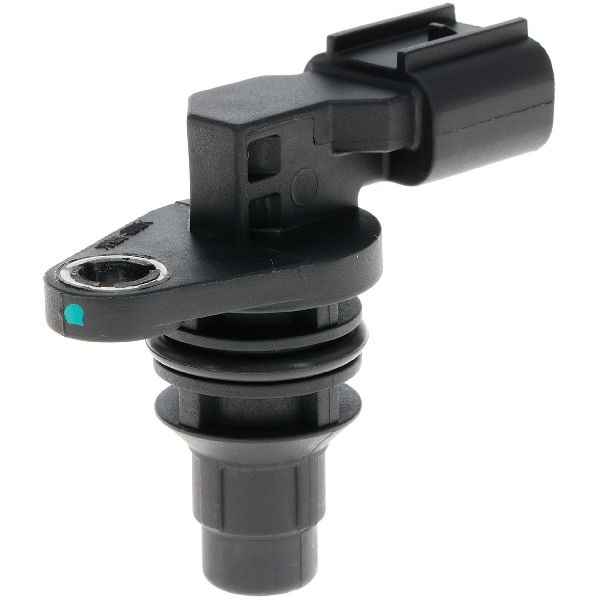
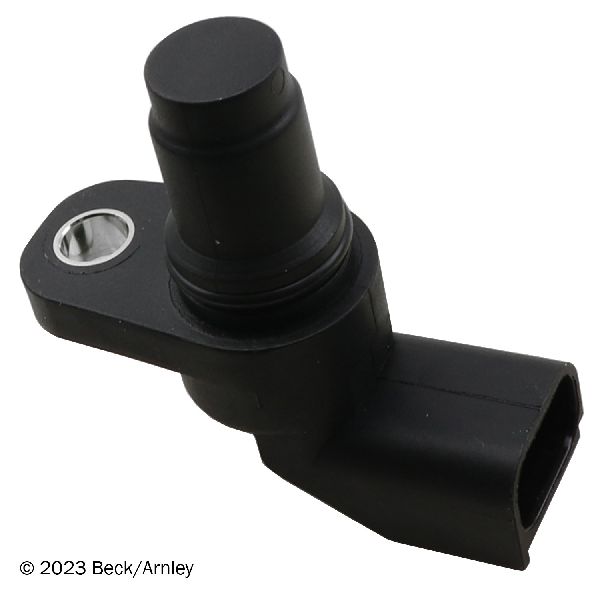
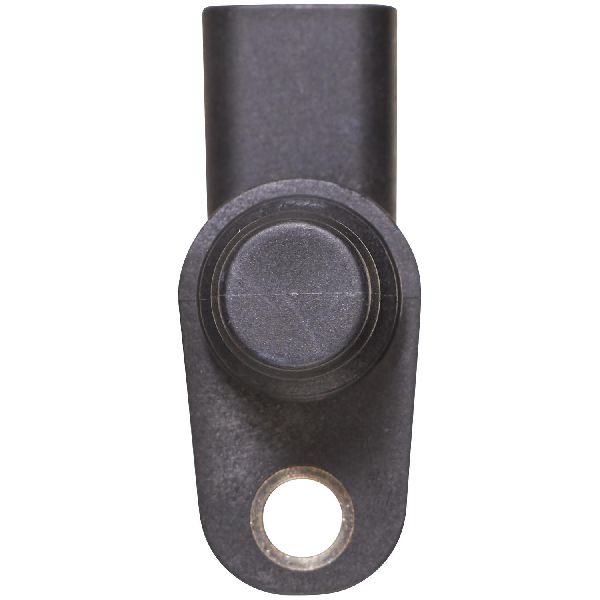
- Variable Camshaft Timing (VCT) Solenoid (Bank 2 Exhaust)
(OEM #AT4Z-6M280-B (for 3.7L), HL3Z-6M280-A (for 3.0L, check VIN))— This solenoid is the most frequent point of failure for VCT-related codes, often sticking due to oil debris as noted in TSB #SSM 50067. Part AT4Z-6M280-B is specified for the 3.7L and 3.5L engines, while HL3Z-6M280-A is listed for many turbo (EcoBoost) applications, but VIN confirmation is critical.
Trusted brands: Motorcraft, Dorman, Standard Motor Products (SMP)
OEM price range: $75-$100
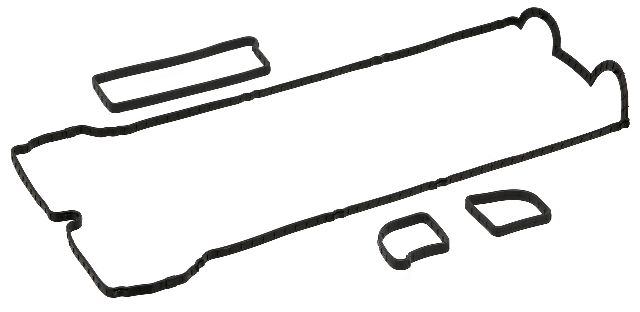
Aftermarket price range: $30-$60 - Valve Cover Gasket Kit — On the 3.7L and 3.0L V6 engines, the VCT solenoids are located under the valve covers. The gaskets must be replaced anytime the covers are removed to prevent oil leaks. 🎬 Watch: Step-by-step valve cover and gasket replacement guide. The kit should include the main gasket and spark plug tube seals.
Trusted brands: Fel-Pro, Mahle, Motorcraft
OEM price range: $50-$80
Aftermarket price range: $30-$50
Related Codes That Often Appear With This One
- P0024 — This code is for 'B' Camshaft Position - Timing Over-Advanced (Bank 2). It's common to see both over-advanced and over-retarded codes when the VCT system is slow to respond or sticking intermittently.
- P0015 — This is the equivalent code for Bank 1 ('B' Camshaft Position - Timing Over-Retarded). If both banks have similar issues (e.g., widespread oil sludge), you might see both codes.
- P0019 — This code indicates a Crankshaft-Camshaft Position Correlation error for Bank 2 Sensor B. It can be set alongside P0025 if the timing deviation is significant enough to disrupt the expected correlation between the two sensors.
Technical Service Bulletins (TSBs) & Recalls
- SSM 50067: Notes that P0025 may be due to small debris causing the VCT solenoid to stick and provides a diagnostic step to cycle the solenoid before replacement.
- SSM 54366: Mentions updated diagnostic pinpoint tests for a range of VCT codes including P0025, indicating an ongoing manufacturer focus on this issue.
Platform-Specific Known Issues
- TSB #SSM 50067 indicates that P0025 and other VCT codes may be caused by small debris causing the solenoid to stick, and advises against immediate component replacement. It recommends using a scan tool to cycle the affected VCT solenoid 10 times to attempt to clear the debris first.
- TSB #SSM 54366 notes that the diagnostic procedure for this family of codes has been updated in the official workshop manual, suggesting it's a well-documented issue that may have required revised diagnostic steps over time.
- The location of the VCT solenoids underneath the valve covers on both the 3.7L and 3.0L V6 engines makes replacement more labor-intensive than on engines where they are externally accessible.
Mechanic-Grade Diagnostic Values
- VCT Solenoid Coil Resistance — expected: 5.0 to 20.0 Ohms. Failure: A reading of OL (over limit/infinite) indicates an open coil. A reading below 5 ohms suggests an internal short.
- VCT Solenoid Power Supply Voltage — expected: Battery Voltage (approx. 12.6V with key on, engine off). Failure: Significantly lower or no voltage indicates a problem in the power supply circuit from the PCM or fuse box.
- VCT Advance Error PID (via Ford IDS or similar) — expected: Should hover around 0° (+/- 5°). Failure: A consistent, large deviation from 0° on Bank 2 while the concern is present indicates the cam is not achieving its commanded position.
Scan Tool Commands That Help
- Ford IDS (Integrated Diagnostic System) or FORScan: VCT Solenoid Bidirectional Control / Output State Control — As recommended by TSB #SSM 50067, this function is used to cycle the solenoid on and off multiple times. This can help determine if the solenoid is mechanically stuck and can sometimes dislodge small debris, potentially fixing the issue without parts replacement.
- Ford IDS (Integrated Diagnostic System) or FORScan: Monitor PIDs: VCT_ERR1/VCT_ERR2, VCT_ADV1/VCT_ADV2, VCTDC1/VCTDC2 — These Parameter IDs (PIDs) allow a technician to watch the commanded vs. actual cam timing in real-time. VCT_ERR shows the difference, VCT_ADV shows the advance angle, and VCTDC shows the solenoid duty cycle. A large error value or a high duty cycle with no corresponding change in angle points to a mechanical or hydraulic issue.
Wiring & Ground Locations
- G101 / G102 / G105 — Various locations in the engine compartment, typically on the front radiator support or inner fender aprons. For a 2014 MKZ, G101/102 are at the left front and G105 is on the right side of the engine compartment.. These are primary engine and PCM ground points. A corroded or loose ground at these locations can cause erratic sensor readings and incorrect PCM calculations, potentially leading to false VCT codes.
- G201 — On some Ford platforms, this is a key PCM ground located in the passenger side kick panel area.. A faulty PCM ground can directly impact the operation of its drivers, including the circuits that control the VCT solenoids, leading to performance issues and fault codes.
OEM Part Supersession History
AT4E-6B297-JD→AT4Z-6M280-B— Part number consolidation and potential design revision for the VCT solenoid used in the 3.7L Cyclone V6 and related engines.Unknown→HL3Z-6M280-A— This is the service part for many EcoBoost engines, including the 3.0L Twin-Turbo. It likely superseded an earlier part number used at the start of production.
Heads up: This part is generally not interchangeable with the AT4Z-6M280-B used on the naturally aspirated V6.
Model Year Variations Within This Range
- 2017-2020: These models with the 3.0L Twin-Turbo V6 use a wet-belt driven oil pump and have a known tendency for premature cam phaser failure, causing a distinct rattling or ticking noise on cold starts. While the 3.7L (2015-2016) can also have phaser issues, it is a more widely documented problem on the 3.0L EcoBoost.
- 2015-2016: These models use the naturally aspirated 3.7L 'Cyclone' V6. The VCT system is robust but highly sensitive to oil condition. The most common cause of P0025 on this engine is a sticking solenoid due to debris or low/dirty oil, as highlighted in TSBs.
Helpful Videos
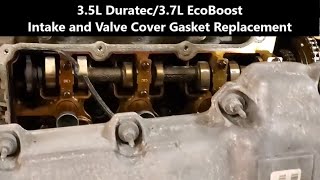
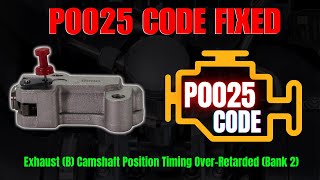
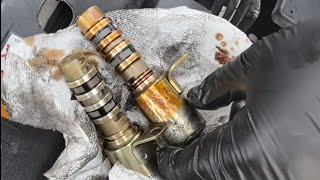
![How to Fix P0025 Engine Code in 4 Minutes [2 DIY Methods / Only $6.99]](https://img.youtube.com/vi/7E-oYdoFAfM/mqdefault.jpg)

Used OEM Parts in Stock
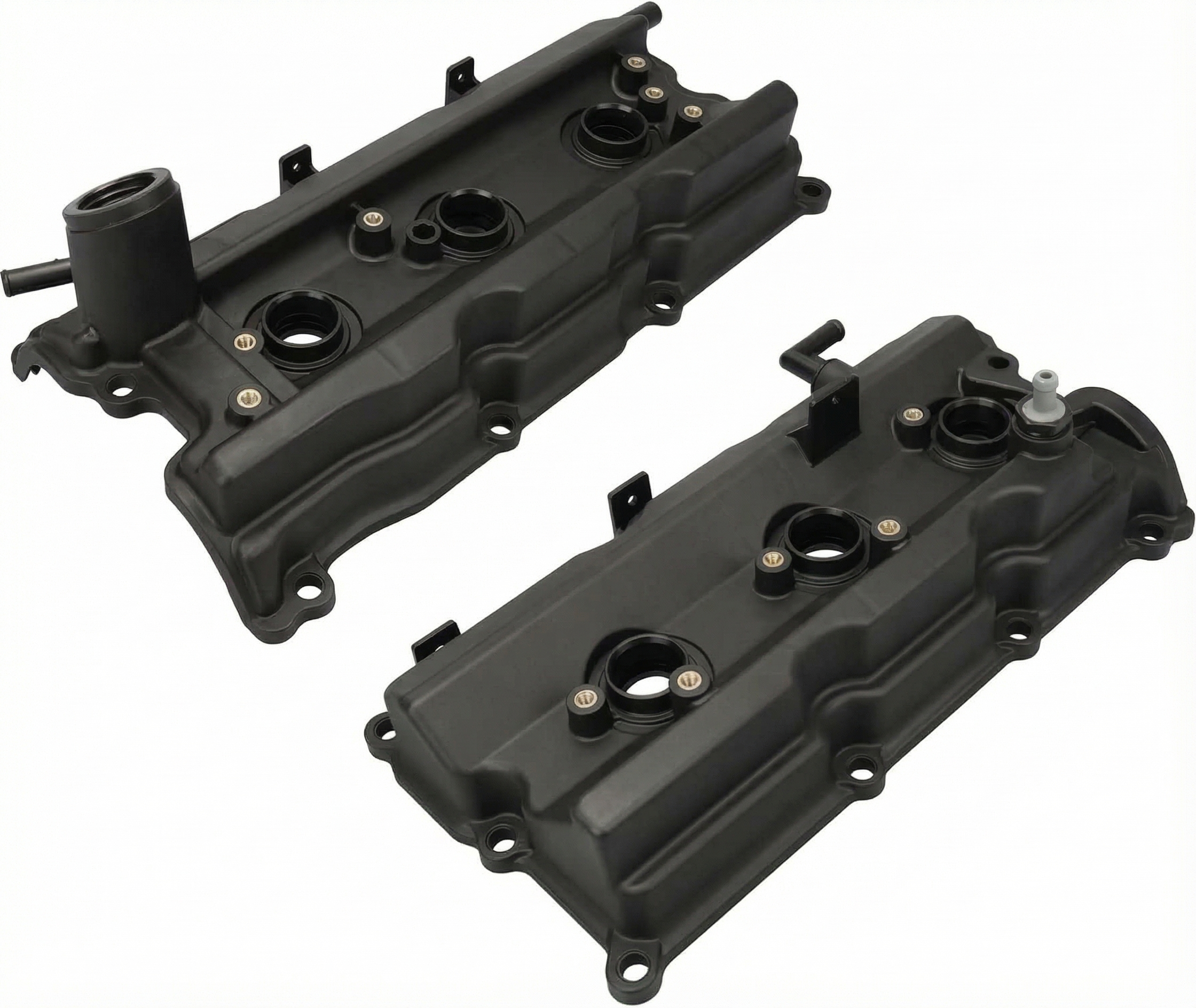
New Aftermarket Parts Available


The information in this article is provided for general reference and educational purposes only. Vehicle specifications, procedures, and part compatibility can vary by production date, trim level, and region. Always consult your vehicle's factory service manual and verify part numbers before purchasing or performing repairs. Safety-critical components such as airbags, seat belts, and braking systems should be installed by a qualified professional.
- Lincoln MKZ:
- 🧭 Diagnostic Flowchart
- 🎬 Helpful Videos
- 🛍️ Shop This Part
- What's Unique About the 2015-2020 Lincoln MKZ
- Symptoms You May Notice
- Most Likely Causes
- Rare But Worth Checking
- Diagnosis Steps
- Parts You'll Likely Need
- Related Codes That Often Appear With This One
- Technical Service Bulletins (TSBs) & Recalls
- Platform-Specific Known Issues
- Mechanic-Grade Diagnostic Values
- Scan Tool Commands That Help
- Wiring & Ground Locations
- OEM Part Supersession History
- Model Year Variations Within This Range
- 🎟️ Get 5% Off