

P0026 on 2012-2016 Land Rover Range Rover Evoque: Causes and Fixes
On a 2012-2016 Evoque, P0026 often indicates a serious mechanical issue, such as a broken camshaft sprocket pin, as documented in Land Rover TSBs. It can also be caused by a faulty VVT solenoid or low oil level. This code warrants immediate diagnosis to avoid severe engine damage.
- P0026 on a 2012-2016 Evoque is a serious code that should be addressed immediately.
- The most likely cause, according to Land Rover, is a broken pin on the camshaft sprocket, which is a significant mechanical repair.
- Do not continue to drive the vehicle, as this could lead to catastrophic engine failure.
- Simpler causes like low/dirty engine oil or a faulty VVT solenoid should be checked first, but be prepared for a more involved timing system repair.
What's Unique About the 2012-2016 Land Rover RANGE ROVER EVOQUE

The 2012-2016 Evoque uses a 2.0L turbocharged engine, also known as the Si4, which is based on the Ford 2.0L EcoBoost. This specific engine is known for a serious issue related to code P0026. Land Rover has issued multiple Technical Service Bulletins (TSBs), most notably SSM69738, pointing to a broken locating pin on the intake camshaft sprocket as a primary cause. This makes the P0026 code on this specific vehicle potentially more severe than on other cars, where it might just be a simple solenoid failure.
Diagnostic Flowchart

Tap your situation to follow the diagnostic path that matches what you're seeing on this vehicle.
Symptoms You May Notice
- Check Engine Light is on
- Audible noise (rattling, ticking) from the engine compartment, especially on startup 🎬 See how a worn timing chain causes that rattling noise
- Rough or erratic idle
- Loss of engine power and poor acceleration
- Engine may stall
- Decreased fuel economy
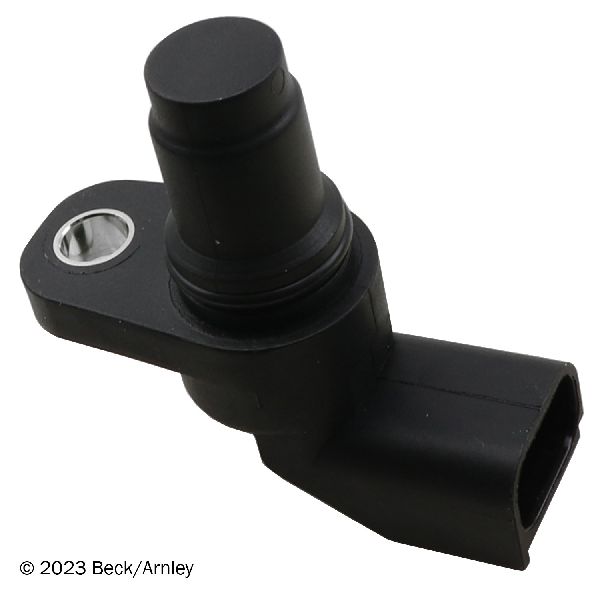
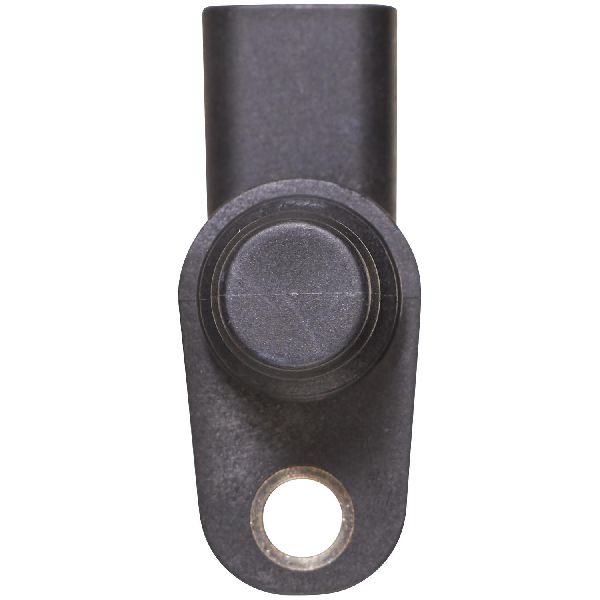
- Replacing the camshaft position sensor. The sensor is usually reporting the problem correctly; it is not the cause of the problem. The code indicates a performance/range issue, not a sensor circuit failure.
- Replacing only the VVT solenoid without checking for debris. If the solenoid has failed due to contamination from a breaking-down sprocket or chain guide, the new solenoid will soon fail as well, and the root cause will remain.
Most Likely Causes

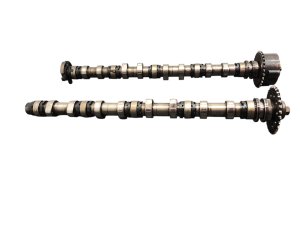
- Broken Camshaft Sprocket Pin 🔴 High Probability → Shop Engine Camshaft This is a well-documented failure on the 2.0L Si4 (Ford EcoBoost) engine. Land Rover TSB #SSM69738 explicitly identifies a broken pin on the camshaft sprocket as the cause for P0026. The original pin material was prone to shearing.
How to confirm: Physical inspection of the camshaft sprockets and timing gear is required. This involves removing the valve cover and potentially the front engine cover to access the timing components. A borescope might be used for initial inspection, but full access is often needed.
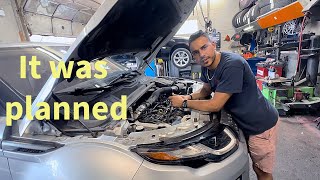
Typical fix: Replacement of the faulty intake camshaft sprocket with the updated part (Land Rover part number LR050849 🎬 Watch this walkthrough of the VVT actuator and timing repair or subsequent revisions). It is highly recommended to replace the timing chain, tensioners, and guides at the same time.
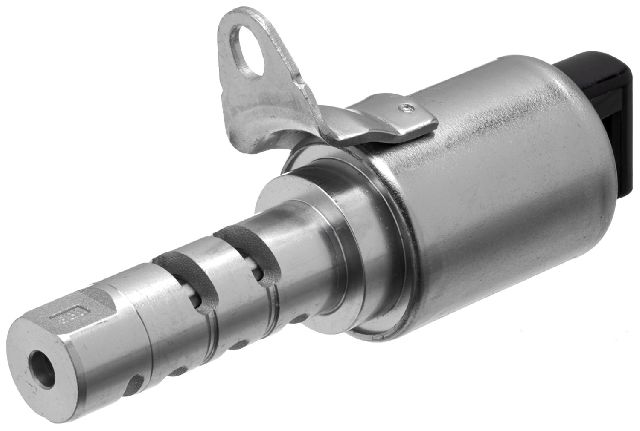
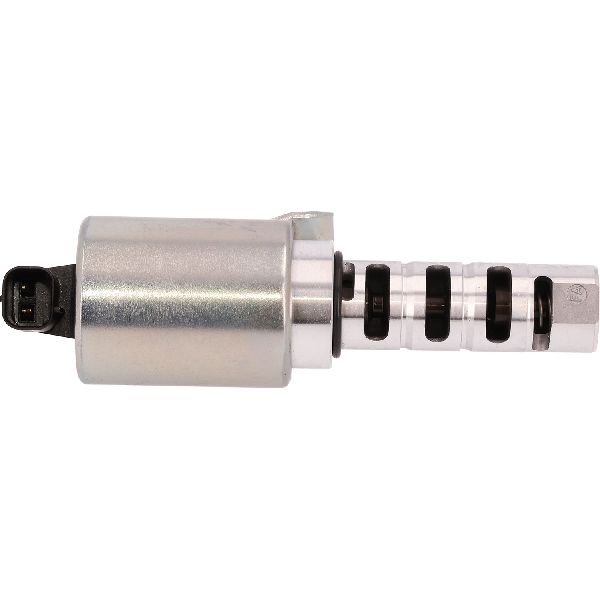
Est. part cost: $200-$500 - Faulty Intake VVT Solenoid (Oil Control Valve) 🟡 Medium Probability Like any VVT system, the solenoid is a common failure point. It can fail electrically or become clogged with oil sludge or debris, especially if oil change intervals are extended or if debris from a failing timing component is circulating in the oil.
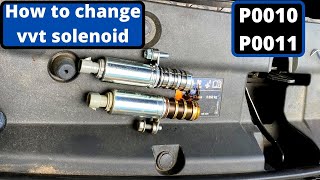
How to confirm: A mechanic can use a scan tool to command the solenoid on and off to check for response. It can also be removed, inspected for clogged screens, and tested for resistance and mechanical operation by applying 12V power. 🎬 Watch: How to test and replace a VVT solenoid
Typical fix: Replacement of the intake VVT solenoid. If the solenoid's screens are clogged with metallic debris, it's a strong indicator of a larger mechanical failure like the sprocket pin.
Est. part cost: $50-$180 - Low Engine Oil Level or Pressure 🟡 Medium Probability The VVT system is operated by oil pressure. Any issue that reduces oil pressure, such as a low oil level, dirty/sludgy oil, or a failing oil pump, will prevent the VVT system from working correctly and can trigger a P0026 code.
How to confirm: Check the engine oil level via the dipstick and verify the oil's condition. A mechanical oil pressure test can confirm proper pressure at the cylinder head.
Typical fix: Perform an oil and filter change with the correct specification oil (meeting JLR standards). If pressure is low, further diagnosis of the lubrication system is needed.
Est. part cost: $70-$120
Rare But Worth Checking
- Stretched Timing Chain or Worn Guides: → Shop Engine Timing Chain While the broken sprocket pin is more common on this model, a worn timing chain can also cause camshaft correlation errors and trigger this code. This is a known issue on high-mileage 2.0L Si4 engines.
- Wiring Harness Issue: Damage or a short in the wiring to the VVT solenoid can prevent it from operating correctly. Check for chafing, corrosion at the connector, or breaks in the harness.
- Powertrain Control Module (PCM) Fault: In very rare cases, the PCM itself may be faulty, but all other possibilities, especially mechanical ones, should be exhausted first.
Diagnosis Steps
- Verify the engine oil level and condition. Top up or change the oil if necessary, using oil that meets manufacturer specifications.
- Use an OBD-II scanner to check for any other related trouble codes, such as P0016 or P0341.
- With a professional scan tool, monitor the commanded vs. actual intake camshaft angle to confirm a discrepancy.
- Inspect the wiring and connector for the intake VVT solenoid for any damage or corrosion.
- Test the VVT solenoid. Remove it and inspect the mesh screens for metallic debris. Test its operation by applying a 12V source to see if the plunger actuates.
- If the solenoid is clean and functional, the next step is a mechanical inspection. This requires removing the valve cover to inspect the timing chain, guides, and camshaft sprockets, paying close attention to the intake sprocket's locating pin as mentioned in TSB #SSM69738.
- If significant engine noise is present, an oil pressure test should be performed to rule out lubrication system failure.
Parts You'll Likely Need
- Camshaft Sprocket / Phaser
(OEM #LR050849 (updated part), LR025628 (original))— This is the most likely failure point according to Land Rover TSBs, specifically due to a broken alignment pin. TSB SSM69738 specifies LR050849 as the improved replacement part with new pin material.
Trusted brands: Land Rover Genuine
OEM price range: $250-$400
Aftermarket price range: $150-$300 - Intake VVT Solenoid
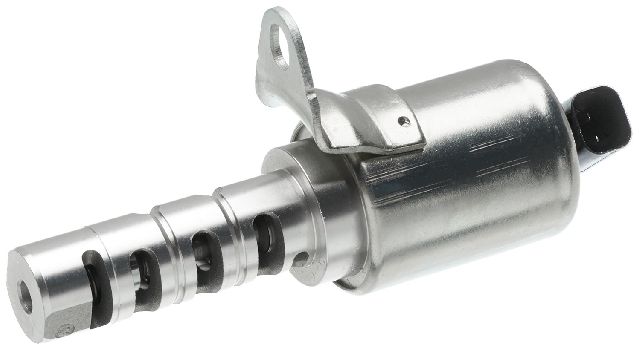
(OEM #LR024995)— A common failure item in any VVT system, either through electrical failure or blockage from dirty oil or mechanical debris. It's a logical diagnostic step and a relatively inexpensive part to replace.
Trusted brands: Pierburg, Febi Bilstein, Land Rover Genuine
OEM price range: $100-$180
Aftermarket price range: $50-$100 - Timing Chain Kit — If the engine is opened up to replace a sprocket, it is best practice and highly recommended to replace the timing chain, tensioners, and guides at the same time, as they are wear items and subject to the same labor cost.
Trusted brands: Land Rover Genuine
OEM price range: $400-$600
Aftermarket price range: $200-$400
Related Codes That Often Appear With This One
- P0016 — Indicates a crankshaft/camshaft position correlation error, which is a direct result of the timing issue causing P0026. TSB SSM69738 lists this as a related code.
- P0017 — Another crankshaft/camshaft position correlation code, often appearing with timing system faults.
- P0341 — Indicates a problem with the camshaft position sensor circuit's range/performance, which can be triggered by the erratic camshaft movement caused by the underlying P0026 fault. This code is also cited in TSBs LTB00916NAS5 and SSM69738.
Technical Service Bulletins (TSBs) & Recalls

- SSM69738: Mentions the check engine lamp on with possible engine noise and lists P0026-00 as a potential DTC, caused by a broken pin on the camshaft sprocket. Specifies the fix is an updated part (LR050849).
- LTB00916NAS5: Notes that the Malfunction Indicator Lamp (MIL) may be illuminated and DTC P0026 may be stored in relation to engine noise complaints.
- LTB00916NAS2: An earlier version of the above TSB, also confirming P0026 as a relevant code for MIL illumination.
Platform-Specific Known Issues
- Land Rover Serviceability Service Message #SSM69738 explicitly states that for a P0026 code, the cause may be a broken pin on the camshaft sprocket and provides an updated part number (LR050849) with improved materials.
- Technical Service Bulletin #LTB00916NAS5 also lists P0026 as a potential code when investigating engine noise or a MIL illumination.
- Owner forums frequently discuss this failure. One user on landroverforums.com noted several potential causes seen by a tech, including failed sealing rings on the VVT solenoid bracket creating a blockage, which points to the oil-pressure-dependent nature of the system.
Mechanic-Grade Diagnostic Values
- VVT Solenoid Internal Resistance — expected: 5 to 12 Ohms. Failure: A reading of infinite resistance (open circuit) or near zero Ohms (short circuit) indicates a failed solenoid.
- VVT Solenoid Connector Voltage — expected: Approximately 12V (battery voltage) on one pin with Key On, Engine Off.. Failure: No voltage suggests a wiring issue, blown fuse, or PCM driver fault.
- Scan Tool Live Data: Commanded vs. Actual Camshaft Angle — expected: The 'Actual' angle PID should closely follow the 'Desired' angle PID as engine RPM and load change.. Failure: A large discrepancy between the two values, or the 'Actual' angle being stuck at 0 or another value while 'Desired' changes, points to a mechanical or hydraulic fault in the VVT system.
Hidden / Shadow Codes Worth Checking
- P0026-00: This is the code format listed in Land Rover TSB #SSM69738. The '-00' suffix is a failure type code that may not be visible on all generic OBD-II scanners but can be read by dealer-level tools like JLR SDD or Pathfinder. It provides more specific information about the nature of the fault. (see via JLR SDD, Pathfinder, or other professional-grade diagnostic scanners with manufacturer-specific software.)
Scan Tool Commands That Help
- JLR SDD / Pathfinder: VVT Solenoid Bidirectional Test / Actuator Test — This function allows a technician to manually command the VVT solenoid on and off while the engine is off or idling. A clicking sound from the solenoid indicates the electrical coil and plunger are likely functional, helping to isolate the problem between the solenoid itself and a hydraulic/mechanical issue.
- JLR SDD / Pathfinder: Live Data Monitoring for Camshaft Timing — Used to diagnose a performance-related fault. By graphing the 'Intake Camshaft Desired Angle' against the 'Intake Camshaft Actual Angle' while driving or revving the engine, a technician can visually confirm if the phaser is responding sluggishly or not at all, which is the core of a P0026 fault.
Wiring & Ground Locations
- VVT Solenoid Connector — The intake and exhaust VVT solenoids are located on the top, front-facing side of the cylinder head, near the valve cover.. This is the primary electrical connection to inspect for corrosion, damage, or oil contamination. It's where voltage and resistance tests are performed on the solenoid and its circuit.
- G1D108 — A primary ground point located near the battery.. This is a listed ground point for the Engine Control Module (ECM). A poor connection here could cause erratic behavior and fault codes related to engine management.
- G1D130A — A ground point located in the left front of the engine compartment.. This is another major engine compartment ground. Ensuring all engine-to-chassis grounds are clean and tight is crucial for stable sensor and actuator operation.
OEM Part Supersession History
LR025628→LR050849— The updated part (LR050849) features a new, stronger locating pin material and machining changes to the sprocket body to prevent the shearing failure that causes P0026 and related timing codes.LR033733→LR025628 (which was then superseded by LR050849)— Part of the evolution of the camshaft sprocket design.
Heads up: Always use the latest part number (LR050849) for repairs to ensure the updated design is installed.
Model Year Variations Within This Range
- 2012-2015: Vehicles produced before VIN 840665 were fitted with the original camshaft sprocket (LR025628 or earlier) that is prone to the locating pin failure. Vehicles produced after this VIN should have the updated part (LR050849) from the factory, making the failure less likely.
Helpful Videos


Used OEM Parts in Stock
New Aftermarket Parts Available


The information in this article is provided for general reference and educational purposes only. Vehicle specifications, procedures, and part compatibility can vary by production date, trim level, and region. Always consult your vehicle's factory service manual and verify part numbers before purchasing or performing repairs. Safety-critical components such as airbags, seat belts, and braking systems should be installed by a qualified professional.
- Land Rover RANGE ROVER EVOQUE:
- 🧭 Diagnostic Flowchart
- 🎬 Helpful Videos
- 🛍️ Shop This Part
- What's Unique About the 2012-2016 Land Rover RANGE ROVER EVOQUE
- Symptoms You May Notice
- Most Likely Causes
- Rare But Worth Checking
- Diagnosis Steps
- Parts You'll Likely Need
- Related Codes That Often Appear With This One
- Technical Service Bulletins (TSBs) & Recalls
- Platform-Specific Known Issues
- Mechanic-Grade Diagnostic Values
- Hidden / Shadow Codes Worth Checking
- Scan Tool Commands That Help
- Wiring & Ground Locations
- OEM Part Supersession History
- Model Year Variations Within This Range
- 🎟️ Get 5% Off