

P0030 on 2012-2016 Chevrolet Impala 3.6L: HO2S Heater Circuit Causes and Fixes
P0030 on a 2012-2016 Impala with the 3.6L V6 almost always means the heater inside the Bank 1, Sensor 1 oxygen sensor has failed. This is the upstream sensor on the rear cylinder bank (near the firewall). Replacing the sensor is the typical fix. Before replacement, check the 'EMISSION 1' fuse in the under-hood fuse box. An aftermarket sensor costs $40-$80, while an OEM ACDelco part is $100+.
- P0030 points directly to the heater circuit for the upstream oxygen sensor on the rear cylinder bank (by the firewall).
- The most likely fix is replacing the sensor itself, but always check the 'EMISSION 1' fuse (F11 in the under-hood box for 2014+) first.
- Accessing this specific sensor is the main challenge of the repair; it is more difficult than the front sensor and requires working from above and below the engine.
- Do not confuse Bank 1 (rear) with Bank 2 (front) on this engine.
- A quality aftermarket sensor (like Denso 234-4529) is a cost-effective alternative to the OEM part.
What's Unique About the 2012-2016 Chevrolet Impala
On the transversely mounted 3.6L LFX V6 in the Impala, correctly identifying Bank 1 is the most important step. It is the rear bank, closer to the firewall, which makes accessing the sensor more difficult than the front bank (Bank 2). While the failure itself is a common issue across many vehicles, the location on this specific platform is what makes the repair more challenging for a DIYer. Access requires working from both above and below the engine, and often requires a specialized 7/8" or 22mm offset oxygen sensor socket to remove. There are no widespread, unique design flaws that cause this code, but wiring can be susceptible to heat damage given its location near the exhaust manifold.
Generation note: This range covers the end of the 9th generation (2012-2013, and fleet 'Limited' models 2014-2016) and the start of the 10th generation (2014-2019). Both generations used the 3.6L LFX V6 engine. The cause, symptoms, and the replacement part for code P0030 are identical for both generations as the engine and sensor locations are the same. However, the fuse box locations and fuse designations are different between the 9th and 10th generation models.
Symptoms You May Notice
- Check Engine Light is illuminated
- Decreased fuel economy
- Rough idle when the engine is cold
- Failing an emissions test
- Vehicle may enter a default 'limp mode' with reduced power
- Replacing the wrong oxygen sensor (e.g., Bank 2 [front] instead of Bank 1 [rear], or the downstream sensor instead of upstream).
- Replacing the catalytic converter (this code relates to the sensor *before* the converter).
- Ignoring a blown fuse and replacing the sensor, only to have the code return immediately.
Most Likely Causes
- Failed Bank 1, Sensor 1 Oxygen Sensor 🔴 High Probability → Shop Oxygen Sensor The internal heater element is a common failure point in oxygen sensors due to constant, extreme heat cycles. This is the most frequent reason for P0030 across most vehicles. The sensor is a wear-and-tear item.
How to confirm: Disconnect the sensor and measure the resistance between the two heater circuit pins (typically the two same-colored wires) with a multimeter. 🎬 See how to diagnose and fix the P0030 heater circuit. A reading of infinite resistance (open circuit) or a value outside the typical 3-10 ohm range confirms a failed heater element.
Typical fix: Replace the Bank 1, Sensor 1 (upstream, rear) oxygen sensor. A 7/8" or 22mm offset oxygen sensor socket is usually required for removal and installation.
Est. part cost: $40-$120 - Blown Fuse 🟡 Medium Probability A short circuit in the O2 sensor's heater element or its wiring can cause the fuse to blow as a protective measure. On this platform, multiple emission components can share a single fuse.
How to confirm: Locate and inspect the fuse for the O2 sensor heater circuit. For the 10th gen Impala (2014+), this is often fuse F11, labeled 'EMISSION 1' in the under-hood fuse box. For the 9th gen Impala (2012-2013), check the fuse labeled 'EMISSIONS' in the under-hood fuse block. A visual inspection or a continuity test with a multimeter will confirm if it's blown.
Typical fix: Replace the blown fuse. If it blows again immediately, it indicates a persistent short circuit in the wiring or the sensor itself that must be diagnosed and repaired before replacing the fuse again.
Est. part cost: $1-$5 - Damaged Wiring or Connector ⚪ Low Probability The wiring harness for the rear oxygen sensor is routed near hot exhaust components, making it susceptible to melting, chafing, or corrosion over time. The connector can also become brittle from heat cycles.
How to confirm: Visually inspect the entire wiring harness from the sensor connector to the main engine harness. Check for melted plastic, frayed wires, or corrosion inside the connector pins. Perform a 'wiggle test' on the harness while the engine is running and monitoring sensor data to check for intermittent connections.
Typical fix: Repair the damaged section of wiring or replace the connector pigtail.
Est. part cost: $10-$30
Rare But Worth Checking
- Faulty Engine Control Module (ECM): → Shop Engine Control Module (ECM) This is very rare. The ECM's internal driver for the heater circuit can fail. This should only be considered after all other possibilities (sensor, fuse, wiring) have been definitively ruled out.
Diagnosis Steps
- Read the code with an OBD-II scanner to confirm P0030 is present.
- Locate the under-hood fuse box and check the fuse for the emissions/O2 sensor circuit (e.g., F11 'EMISSION 1' on 2014+ models or 'EMISSIONS' fuse on 2012-2013 models). Replace if blown.
- If the fuse is good, safely raise the vehicle to access the rear exhaust manifold.
- Locate the Bank 1, Sensor 1 oxygen sensor. It is the upstream sensor on the cylinder bank closer to the firewall.
- Inspect the sensor's electrical connector and wiring for any signs of melting, chafing, or corrosion. Repair as needed.
- If the wiring appears intact, disconnect the sensor. Use a multimeter set to Ohms to measure the resistance of the heater circuit on the sensor side (between the two same-colored wires). A reading of infinite resistance (OL) or a value outside the 3-10 Ohm range indicates the sensor has failed and needs replacement. 🎬 Watch this video for a detailed Bank 1 Sensor 1 repair.
- If the sensor resistance is within spec, test the vehicle-side connector. With the key on and engine off, check for 12V power on the power supply pin and a good ground on the ground pin. If power or ground is missing, the fault is in the wiring harness or the ECM.
- If the sensor has failed, replace it. Use an O2 sensor socket and apply anti-seize compound to the threads of the new sensor if not pre-applied. Clear the code and perform a drive cycle to ensure the repair was successful.
Parts You'll Likely Need
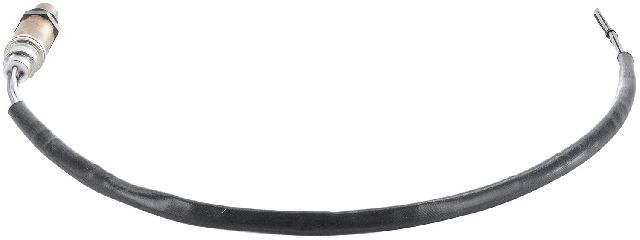
- Bank 1 Sensor 1 Oxygen Sensor (Upstream, Rear)
(OEM #12676736)— The internal heater element fails from thermal stress, which is the most common cause of code P0030.
Trusted brands: ACDelco (GM Genuine), Denso (OEM supplier, e.g., 234-4529), Bosch, Walker Products
OEM price range: $100-$150
Aftermarket price range: $40-$80
Related Codes That Often Appear With This One
- P0031 — This code indicates 'HO2S Heater Control Circuit Low,' which points to a short to ground in the same circuit.
- P0032 — This code indicates 'HO2S Heater Control Circuit High,' which points to a short to power in the same circuit.
- P0131 — This code for 'O2 Sensor Circuit Low Voltage' can appear if the heater is not working, as a cold sensor cannot produce the correct voltage. A blown 'EMISSION 1' fuse can cause both P0030 and P0131.
Platform-Specific Known Issues
- Access to the Bank 1 (rear) upstream O2 sensor is tight, making removal more difficult than the Bank 2 sensor. It often requires working from both above and below the vehicle.
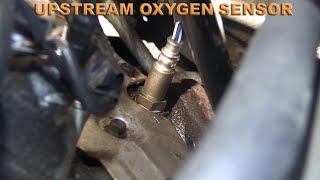
- A YouTube video by '2010SSRS' titled '2012+ Impala 3.6 LFX Full Engine Tune Up...' shows the location of all four O2 sensors and highlights the difficulty in accessing the rear bank components.
Technical Service Bulletins (TSBs) & Recalls
- Bulletin #PIT5336: This manufacturer service bulletin provides information regarding vehicles that have a Service Engine Soon Malfunction Indicator Lamp on. Technicians may find Diagnostic Trouble Codes including P0030, P0031, P0032, and P0131 among others.
Mechanic-Grade Diagnostic Values
- HO2S Heater Element Resistance — expected: 3 to 10 Ohms at ambient temperature. A common value for a good sensor is around 5.5 Ohms.. Failure: Infinite resistance (OL - Open Loop) indicates a broken heater element. A reading significantly outside the expected range also indicates failure.
- Voltage at Heater Power Supply Pin (Vehicle-Side Connector) — expected: Battery voltage (approx. 12.6V with key on, engine off).. Failure: Less than 12V indicates a problem with the fuse or the power supply wire from the fuse block.
- ECM Control Signal (Heater Ground-Side) — expected: The ECM provides a pulse-width modulated (PWM) ground. With a multimeter, you will see fluctuating voltage. With an oscilloscope, you will see a square wave.. Failure: A constant 0V or constant battery voltage on the control wire indicates a problem with the ECM driver or the wiring to the ECM.
Hidden / Shadow Codes Worth Checking
- Mode $06, TID $01, CID $10: This refers to the On-Board Diagnostic Monitor for the Bank 1 Sensor 1 Wide Range Air Fuel (WRAF) sensor's slow response test. While not a direct heater circuit test, a failing heater can cause the sensor to respond slowly and fail this monitor before a specific heater code is set. (see via A professional scan tool capable of displaying Mode $06 data. Many advanced consumer-grade scanners also have this function.)
Scan Tool Commands That Help
- GDS2 (GM Global Diagnostic System 2): HO2S Heater Control Circuit Open Test Status — When diagnosing a potential wiring or ECM issue. According to GM service information, with the sensor disconnected and ignition on, the scan tool parameter should display 'Open'. This confirms the ECM is correctly identifying the open circuit.
Wiring & Ground Locations
- ECM Connector C1, Pin 16 — At the Engine Control Module (ECM).. This is the specific pin for the 'HO2S Heater Low Control – Bank 1 Sensor 1' circuit on a similar GM 3.6L V6 application. It provides the pulsed ground signal to the heater. A wiring fault here will cause P0030.
- G101 — Located at the lower front of the engine block.. This is a primary ground for the Engine Control Module (ECM). A poor connection here can cause erratic behavior and various codes, including P0030, due to unstable voltage references.
- G105 / G106 — G105 is at the left front of the engine compartment; G106 is on the front center of the frame cross rail.. These are major chassis and engine ground points. While not directly for the O2 sensor, a corroded or loose main ground strap can cause widespread electrical issues that may manifest as sensor circuit faults.
OEM Part Supersession History
12634061→12676736— Standard part lifecycle update by GM.
Model Year Variations Within This Range
- 2012-2013 (9th Gen): The under-hood fuse box is on the driver's side of the engine bay. The relevant fuse is labeled 'EMISSIONS'. This model also has an interior fuse box on the passenger side kick panel.
- 2014-2016 (10th Gen): The under-hood fuse box is on the driver's side. The relevant fuse is typically F11, labeled 'EMISSION 1'. This model also has an interior fuse box behind a panel on the driver's side of the dashboard.
Diagnostic Flowchart
Other Known Issues on This Vehicle
Issues unrelated to this code that are worth knowing about as an owner of this generation:
- Timing Chain Stretch 🔴 High — Less common on the LFX than earlier GM 3.6L engines (LLT/LY7), but can still occur, typically after 80,000-100,000 miles. Risk is increased by extended oil change intervals or low oil levels. (Ref: Multiple TSBs like PIP3423P exist for the HFV6 engine family regarding timing chain codes (P0008, P0017, etc.).)
- Cracked Catalytic Converter Flange 🟠 Medium — A known issue on 2014+ models where the converter pipe cracks at the flange weld, causing an exhaust leak and codes P0420/P0430. (Ref: TSB #17-NA-321 (or PIP5419A) was issued for this specific problem.)
- Excessive Oil Consumption 🟠 Medium — Many owners report consuming 1-2 quarts of oil between changes. GM often considers this 'normal'. It is exacerbated by the PCV system design and can contribute to other issues if the oil level is not checked regularly. (Ref: A customer satisfaction program (18186) was issued for some 2018 models for piston rings, but earlier models are also widely reported to consume oil.)
- Cracked Air Intake Boot 🟡 Low — The flexible rubber intake duct between the air filter and throttle body is prone to cracking in the ribbed sections, causing a vacuum leak and lean codes (P0171/P0174).
- Chafed Fuel Injector Wiring Harness 🟠 Medium — The injector harness, particularly for the rear bank, is known to rub against engine components, causing shorts or open circuits that trigger injector codes (e.g., P0206). (Ref: TSB #PIP4924D addresses this specific wiring issue.)
Used vs. New Parts: Buying Guide for This Vehicle
When a used part is the smart pick: For this code, a used part is generally not recommended for the sensor itself. However, if the fault is traced to a damaged wiring harness connector pigtail or a faulty Engine Control Module (ECM), a used part from a reputable auto recycler is a cost-effective option.
Donor-vehicle mileage cap: roughly under 80000 miles for the part to have meaningful remaining life.
What to inspect on the donor part:
- For a wiring pigtail, ensure the plastic is not brittle and the locking tab is intact.
- Check for any signs of corrosion (green crust) on the connector pins.
- For an ECM, verify the part number matches exactly and check if it requires reprogramming (most GM ECMs do).
- Ensure the donor vehicle was not in a front-end or fire-related accident.
OEM-only on this vehicle (don't cheap out):
- While not strictly required, using an OEM ACDelco oxygen sensor is highly recommended to avoid compatibility issues that can sometimes arise with aftermarket sensors on GM vehicles.
Aftermarket brands forum-validated for this vehicle:
- Denso (often the original equipment manufacturer for GM)
- NTK / NGK (also a primary OEM supplier, considered high quality)
Brands owners have reported issues with on this vehicle:
- Avoid 'universal' sensors that require splicing wires. The resistance values can be incorrect, leading to persistent codes.
- Be cautious with unbranded, low-cost sensors from online marketplaces, as their longevity and accuracy are often questionable.
Real Owner Stories
Aggregated from forums and TSBs cited above. Mileages and costs reflect what owners reported in those sources.
2013 Chevrolet Impala 3.6L LFX
Symptoms: Discussion regarding engine reliability and sensitivity to oil quality and level; noted that major timing chain issues were largely resolved compared to prior years.
What fixed it: Maintaining strict oil change intervals and monitoring oil levels to prevent timing chain stretch and sensor fouling.
Source hint: https://www.bobistheoilguy.com/forums/threads/2013-impala-3-6l-v6.375531/
2014 Chevrolet Impala 3.6L LFX
Symptoms: Oil consumption of a quart or more between changes; dealers stated this was 'within spec'.
What fixed it: Regularly checking and topping off oil levels to mitigate the effects of the PCV system design and piston ring issues.
Source hint: https://www.chevroletforum.com/forum/impala-14/what-acceptable-oil-consumption-2014-imp-3-6l-86165/
Documented NHTSA Reports
General Motors Platform Reports
Symptoms: Multiple owners have reported the Check Engine Light illuminating with a "Reduced Propulsion" message on the dashboard. In several instances, a 15 AMP fuse was found to be blown, often linked to EGR valve issues or heater circuit faults.
What fixed it: Diagnostic reports such as NHTSA ODI #11560268 and NHTSA ODI #11632222 describe finding blown fuses (such as F03 or a 15A fuse) associated with multiple codes including P0030, P0031, and P0135. Another owner in NHTSA ODI #11681144 noted P0030 appearing alongside EGR-related codes like P0403 and P0405. NHTSA ODI #11448862 also describes a vehicle that would eventually stop with an "engine offline" message after registering P0030 and related heater circuit codes.
Related OBD-II Codes
Frequently Asked Questions
Where is the Bank 1, Sensor 1 oxygen sensor located on my 2012-2016 Impala 3.6L?
Which fuse should I check for a P0030 code on a 2014-2016 Chevrolet Impala?
Is there a specific fuse for the 2012-2013 Impala 3.6L emissions circuit?
Could an exhaust leak cause issues related to my oxygen sensors on a 2014+ Impala?
What size tool do I need to replace the Bank 1, Sensor 1 O2 sensor on my LFX V6?
Does the LFX engine in my Impala have the same timing chain problems as older GM 3.6L engines?
Helpful Videos
We Have This Part in Stock


The information in this article is provided for general reference and educational purposes only. Vehicle specifications, procedures, and part compatibility can vary by production date, trim level, and region. Always consult your vehicle's factory service manual and verify part numbers before purchasing or performing repairs. Safety-critical components such as airbags, seat belts, and braking systems should be installed by a qualified professional.
- Chevrolet Impala:
- 🧭 Diagnostic Flowchart
- 🎬 Helpful Videos
- 🛍️ Shop This Part
- What's Unique About the 2012-2016 Chevrolet Impala
- Symptoms You May Notice
- Most Likely Causes
- Rare But Worth Checking
- Diagnosis Steps
- Parts You'll Likely Need
- Related Codes That Often Appear With This One
- Platform-Specific Known Issues
- Technical Service Bulletins (TSBs) & Recalls
- Mechanic-Grade Diagnostic Values
- Hidden / Shadow Codes Worth Checking
- Scan Tool Commands That Help
- Wiring & Ground Locations
- OEM Part Supersession History
- Model Year Variations Within This Range
- Other Known Issues on This Vehicle
- Used vs. New Parts: Buying Guide for This Vehicle
- Real Owner Stories
- 2013 Chevrolet Impala 3.6L LFX
- 2014 Chevrolet Impala 3.6L LFX
- Documented NHTSA Reports
- General Motors Platform Reports
- Related OBD-II Codes
- Frequently Asked Questions
- 🎟️ Get 5% Off