

P0030 on 2013-2016 Dodge Dart 1.4L Turbo: O2 Sensor Heater Circuit Causes and Fixes
This code almost always means the heating element inside the upstream oxygen sensor has failed. Replacing the Bank 1, Sensor 1 O2 sensor is the most common fix. Before replacing, check fuse F87 in the underhood fuse box. Expect to pay $50-$120 for a quality aftermarket sensor or $130-$190 for an OEM part, with a DIY difficulty of 2/5.
- P0030 on a 2013-2016 Dodge Dart 1.4L almost always points to a bad upstream oxygen sensor (Bank 1, Sensor 1).
- Before buying a new sensor, perform a quick visual check of the wiring for melting or damage, as it's routed near hot exhaust components.
- Check fuse F87 (20A) in the engine bay fuse box as a simple, no-cost first step.
- Replacing the sensor is a DIY-friendly job for most, but the sensor can sometimes be seized in the exhaust manifold, requiring a special O2 sensor socket and penetrating oil.
What's Unique About the 2013-2016 Dodge Dart
The Dodge Dart shares its 1.4L MultiAir Turbo engine and core architecture with other Fiat-Chrysler (FCA) vehicles like the Fiat 500 Abarth and Jeep Renegade. As such, the P0030 fault is not unique to the Dart but is a common issue across these platforms. The diagnostic process is standard, with no specific design flaws on the Dart making it unusually prone to this code beyond the typical failure rate of O2 sensor heating elements.
Symptoms You May Notice
- Check Engine Light is on
- Decreased fuel economy
- Rough idle or hesitation, especially when the engine is cold
- A faint smell of gasoline or 'rotten eggs' from the exhaust due to an incorrect air/fuel mixture
- Replacing the downstream (post-catalyst) oxygen sensor instead of the upstream one. P0030 specifically refers to Sensor 1, which is before the catalytic converter.
Most Likely Causes
- Failed Oxygen Sensor Heater Element 🔴 High Probability → Shop Oxygen Sensor The heating element inside the sensor is a common point of failure due to constant, extreme heat cycles and engine vibration. This is the most frequent cause of P0030.
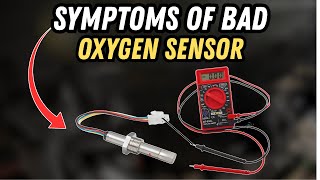
How to confirm: Disconnect the sensor and use a multimeter to measure the resistance between the two heater circuit pins (usually the two wires of the same color). A reading of infinity (Open Loop) indicates a burned-out heater. 🎬 See this guide on how to test an oxygen sensor A good heater should have a low resistance, typically between 4 and 30 ohms, depending on the sensor brand.
Typical fix: Replace the upstream (Bank 1, Sensor 1) oxygen sensor.
Est. part cost: $50 - $190 - Damaged Wiring or Connector 🟡 Medium Probability The wiring harness is routed close to the hot exhaust manifold and turbocharger, making it susceptible to melting, chafing, or becoming brittle over time.
How to confirm: Visually inspect the entire wiring harness from the sensor to where it joins the main loom. Look for melted plastic, exposed wires, or corrosion inside the connector pins. A user on dodge-dart.org noted their wiring was melted near the heat shield.
Typical fix: Repair the damaged section of the wire or replace the connector pigtail.
Est. part cost: $15 - $40 - Blown Fuse ⚪ Low Probability
How to confirm: Check the fuse box in the engine bay (Power Distribution Center) near the battery. The fuse for the O2 sensor heaters is typically F87, a 20A yellow mini fuse. Visually inspect the fuse and test for continuity with a multimeter.
Typical fix: Replace the blown fuse. If the new fuse blows immediately, it indicates a short circuit in the wiring that must be found and repaired.
Est. part cost: $1 - $5
Rare But Worth Checking
- Faulty Powertrain Control Module (PCM): → Shop Engine Control Module (ECM) This is extremely rare. The PCM's internal driver for the heater circuit can fail, but this should only be considered after all other possibilities, including the fuse, wiring, and the sensor itself, have been thoroughly tested and ruled out.
Diagnosis Steps
- Scan for any other trouble codes to get a full picture of any issues.
- Locate the underhood fuse box near the battery and inspect fuse F87 (20A mini fuse). Replace if blown.
- Perform a thorough visual inspection of the upstream O2 sensor's wiring harness and connector. Look for any signs of melting, chafing, or loose connections, paying close attention to where the harness is routed near the turbo and exhaust manifold.
- If the fuse and wiring appear intact, disconnect the O2 sensor connector.
- Use a multimeter to test the resistance of the heater element on the sensor side of the connector. A reading of infinite resistance (OL) means the heater is burned out and the sensor must be replaced. A good sensor will typically read between 4-30 ohms.
- With the key on and engine off, use a multimeter to check for 12V power and a good ground on the vehicle harness side of the connector. Lack of power points to a wiring issue or a blown fuse.
- If power, ground, and sensor resistance are all within spec, the problem may be intermittent or, in very rare cases, a fault within the PCM.
Parts You'll Likely Need
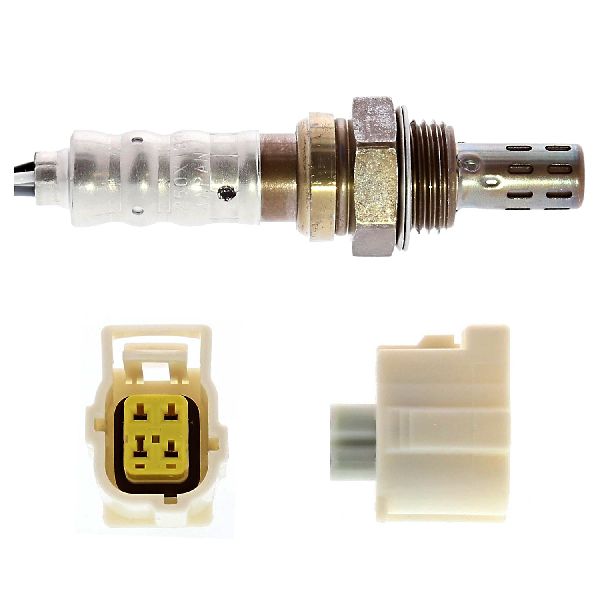
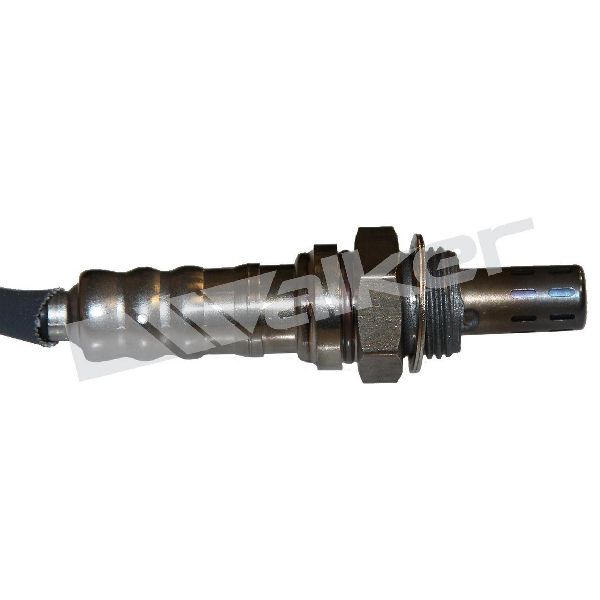
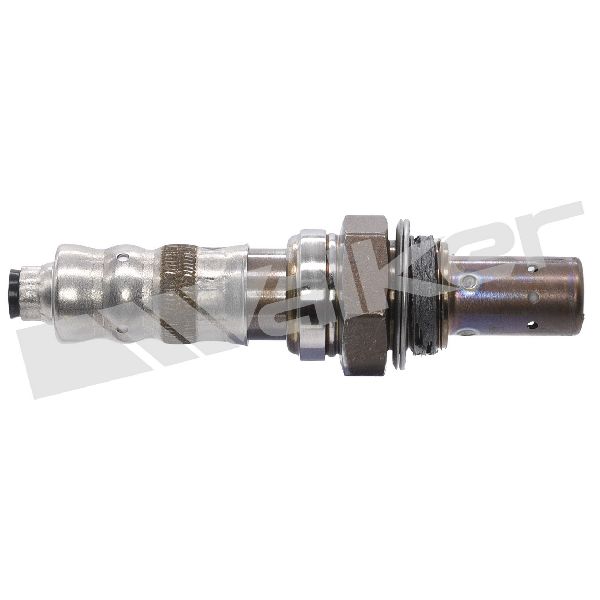
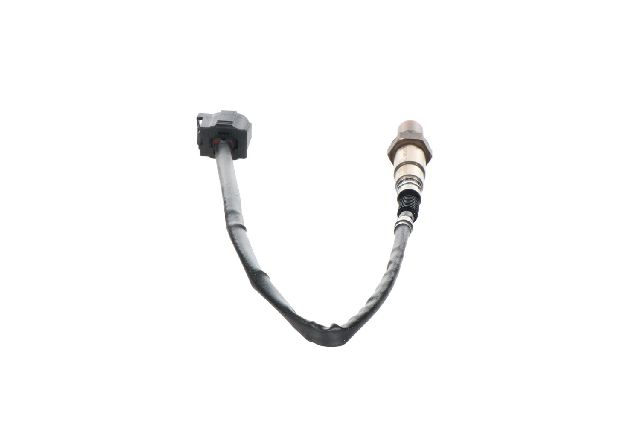
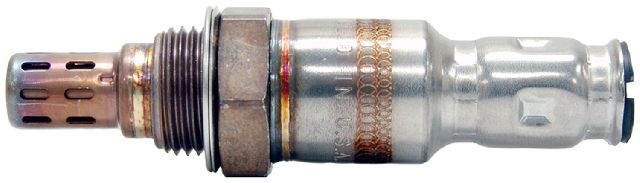
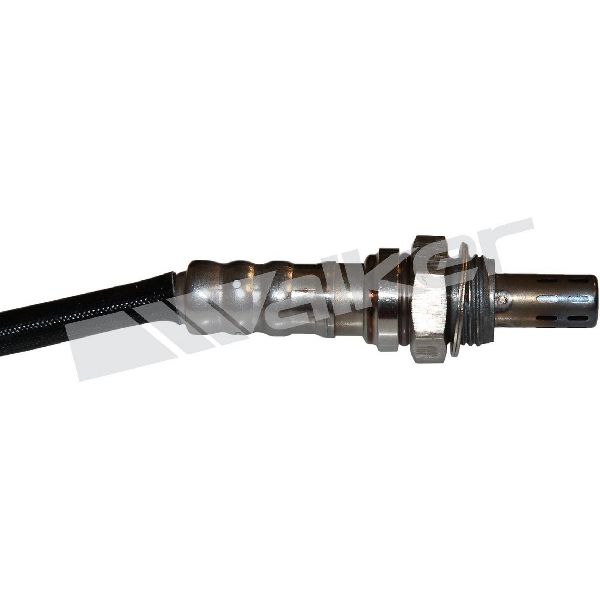
- Upstream Oxygen Sensor
(OEM #68142340AA (supersedes 68119593AA))— The internal heater element is the most common failure point for this code. The entire sensor must be replaced as the heater is an integral part.
Trusted brands: Mopar, Bosch (Part #17282 or #15510), NTK (Part #24394), Denso (Part #234-5075)
OEM price range: $130 - $190
Aftermarket price range: $50 - $120
Related Codes That Often Appear With This One
- P0135 — This code is nearly identical to P0030 but is sometimes used by different manufacturers for the same fault: 'O2 Sensor Heater Circuit Malfunction (Bank 1 Sensor 1)'. Seeing both is unlikely, but they point to the same problem.
- P0300-P0304 — If the engine runs on an incorrect air-fuel mixture for an extended period due to the faulty O2 sensor, it can eventually lead to carbon buildup on spark plugs and cause cylinder misfires (P0300-P0304).
Technical Service Bulletins (TSBs) & Recalls
- TSB Bulletin #25-002-14: This manufacturer bulletin identifies P0030 as "O2 Sensor 1/1 Heater Circuit" and notes that it can sometimes be associated with soot-related codes or slow response faults like P014D.
- TSB Bulletin #25-003-13: Documentation for related manufacturer platforms confirms that P0030 (O2 Sensor 1/1 Heater Circuit) is often grouped with heater circuit low (P0031) or high (P0032) faults during diagnostic procedures.
- TSB Bulletin #25-004-12: A service bulletin regarding fuel systems and gasoline engines lists P0030 as a primary heater circuit fault for the upstream oxygen sensor (Sensor 1/1).
Platform-Specific Known Issues
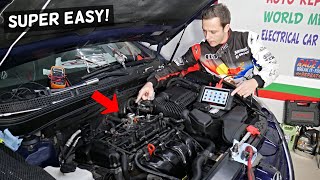
- Sensor Seizure: Like many vehicles, the O2 sensor can become seized in the exhaust manifold due to rust and heat cycling. Using a generous amount of penetrating oil (like PB Blaster) and letting it soak is highly recommended. A specialized O2 sensor socket with a slit for the wire is almost essential for removal. 🎬 Watch: Step-by-step 2013 Dodge Dart O2 sensor removal and installation
Mechanic-Grade Diagnostic Values
- Upstream O2 Sensor Heater Element Resistance — expected: 4 to 15 ohms when the sensor is at ambient temperature.. Failure: A reading of infinite resistance (OL) indicates an open/burned-out heater. A reading significantly outside the expected range also indicates failure.
- Voltage at Heater Power Pin (Vehicle Harness Side) — expected: Approximately 12V (battery voltage) with Key On, Engine Off (KOEO).. Failure: 0V indicates a lack of power, pointing to a blown fuse (F87), a bad relay, or a break in the power wire.
- Heater Ground Circuit (Vehicle Harness Side) — expected: This is a PCM-controlled ground. With the sensor connected and engine running, the PCM will pulse the ground to control the heater. A test light connected between the power and ground pins should pulse after startup.. Failure: No pulse or activity on the ground circuit with a known-good sensor and power supply points towards a wiring issue to the PCM or a faulty PCM driver (rare).
Scan Tool Commands That Help
- wiTECH (or equivalent professional scanner): O2 Heater Test / Actuator Test — This is used when basic voltage and resistance tests are inconclusive. The scan tool can command the PCM to activate the heater circuit on demand. The technician can then monitor the current draw on the circuit. A dealer-level tool might reference P0030 as "O2 Sensor 1/1 Heater Circuit" as seen in manufacturer records like TSB Bulletin #25-003-13.
Wiring & Ground Locations
- Upstream O2 Sensor Connector — On the 1.4L Turbo engine, the upstream sensor is screwed into the turbocharger/exhaust manifold assembly, easily visible at the top-rear of the engine. The electrical connector is typically clipped to the firewall or a nearby bracket.. 🎬 Watch: Locate and replace the upstream sensor on this platform This is the primary connector to test for power, ground, and sensor resistance. Its proximity to heat makes the connector and nearby wires a common failure point.
- G104 — A wiring diagram for the 2013 Dart places this ground on the left front side of the engine.. This is a key engine ground point. While not exclusively for the O2 sensor, a poor connection here can cause a variety of sensor and actuator issues, including erratic sensor readings or fault codes.
- G108 — For the 1.4L engine, this ground is located at the rear center of the top of the engine.. This is another critical engine ground. Verifying it is clean and tight is a crucial step when diagnosing any electrical fault code, as a bad ground can cause unpredictable behavior in the sensor circuits.
- PCM Connector (Heater Circuit Pins) — The Powertrain Control Module (PCM) is on the right rear corner of the engine compartment for the 1.4L model.. For advanced diagnosis, a technician would test for continuity between the O2 sensor connector and the PCM. Wiring diagrams identify the relevant circuits as 'O2 rtn upstrm' (Oxygen Sensor Return Upstream) and a fused ignition feed for the heater power. This confirms the fault isn't in the harness itself.
Real Owner Repair Stories
- Reddit user on r/cruze (2014 Chevy Cruze 1.4L Turbo (shares engine architecture)) — P0030 and P0420 codes, loss of power during acceleration.
❌ Tried (didn't work) Replaced the upstream O2 sensor with a new Bosch unit.
✅ What actually fixed it The user was still diagnosing, but the fact that a new sensor did not fix the P0030 and was accompanied by a P0420 (Catalyst Efficiency) code suggests the problem was more complex. Potential causes include an exhaust leak, a failing catalytic converter causing sensor issues, or a wiring problem between the sensor and PCM that wasn't resolved by the new sensor.
When the Usual Fixes Don't Work
- While replacing the upstream O2 sensor is the most common fix, it is not guaranteed. In a documented case on a vehicle with the same 1.4L turbo engine, a user replaced the sensor for P0030, but the code returned along with a P0420 catalyst code. This highlights that if a new, quality sensor doesn't resolve the issue, the fault likely lies in the wiring harness (a short or open not visible at the connector), a poor ground connection, or, less commonly, a failing catalytic converter affecting sensor operation.
OEM Part Supersession History
5149171AA→5149171AB— Standard part revision by the manufacturer for improvements or supplier change.
Heads up: Both parts are for the upstream (pre-catalyst) position on the 1.4L engine. The part68142340AAmentioned in Pass 2 is often misidentified as upstream but is typically for the downstream position. Using a downstream sensor in the upstream position will not work correctly.
Diagnostic Flowchart
Other Known Issues on This Vehicle
Issues unrelated to this code that are worth knowing about as an owner of this generation:
- MultiAir Actuator ('Brick') Failure 🔴 High — Common issue, often occurring after 80,000 miles. Can be triggered by incorrect oil type or extended oil change intervals.
- Shifter Cable Bushing Failure (Automatic Transmission) 🔴 High — Extremely common. The bushing deteriorates, causing the shifter cable to detach from the transmission, potentially leading to a rollaway risk. (Ref: NHTSA Recall 19V-293 (V34))
- Excessive Oil Consumption (2.4L and 1.4L) 🟠 Medium — Frequently reported by owners, requiring regular oil level checks between changes.
- Premature Battery Failure 🟡 Low — Numerous owner complaints of batteries failing unexpectedly, sometimes within two years of replacement.
- Faulty Thermostat (Code P0128) 🟡 Low — A common cause for the check engine light, especially in colder weather.
- Uconnect System Glitches 🟡 Low — Glitches, freezing, and Bluetooth connectivity issues are widely reported. Software updates and hard resets (disconnecting the battery) are common remedies.
Used vs. New Parts: Buying Guide for This Vehicle
When a used part is the smart pick: A used part is generally NOT recommended for the oxygen sensor itself. However, sourcing a used connector pigtail from a junkyard is a smart, cost-effective choice if only the connector is melted or damaged. A used engine wiring harness could also be an option for severe, widespread wiring damage.
Donor-vehicle mileage cap: roughly under 80000 miles for the part to have meaningful remaining life.
What to inspect on the donor part:
- For a connector pigtail: Ensure the plastic is not brittle, the locking tab is intact, and there is no corrosion on the pins.
- For a wiring harness: Inspect for any signs of previous repairs (e.g., splices, electrical tape), melting near the turbo area, or rodent damage.
Aftermarket brands forum-validated for this vehicle:
- NTK (often the OE supplier)
- Denso
- Bosch
Brands owners have reported issues with on this vehicle:
- No-name, unbranded sensors from online marketplaces. Forum users on related platforms frequently report these fail quickly or are dead-on-arrival.
Real Owner Stories
Aggregated from forums and TSBs cited above. Mileages and costs reflect what owners reported in those sources.
2013-2016 Dodge Dart 1.4L Turbo
Symptoms: Check Engine Light was on with code P0030.
What fixed it: Replacement of the upstream O2 sensor after verifying the fuse was still good.
Source hint: dodge-dart.org: Multiple threads confirm the upstream O2 sensor is the primary culprit. One user in a thread titled 'P0030 Code' confirmed replacement of the sensor fixed the issue after checking the fuse.
2013-2016 Dodge Dart 1.4L Turbo
Symptoms: P0030 code triggered by physical damage to the electrical leads.
What fixed it: Repairing the wiring harness that had melted against a heat shield.
Source hint: dodge-dart.org: Another mentioned their wiring harness had melted against a heat shield.
2013-2016 Dodge Dart 1.4L Turbo — ~85000 miles
Symptoms: Multiple codes including misfires and P0030.
What fixed it: The issues were traced back to a failing MultiAir brick (actuator).
Source hint: reddit.com/r/dodgedart: In a thread titled 'My MultiAir Actuator is bad, I need advice.', a user's car with multiple codes including misfires was traced back to a failing MultiAir brick.
Related OBD-II Codes
Frequently Asked Questions
Which fuse should I check for the O2 sensor heater on my Dodge Dart 1.4L Turbo?
Is there a specific brand of oxygen sensor recommended for the Dart 1.4L MultiAir engine?
Can a melted wiring harness cause the P0030 code on my Dart?
Does my Dodge Dart have a recall related to the P0030 code?
What are the common symptoms of a failed upstream O2 sensor heater on the 1.4L engine?
How can I tell if the sensor itself is bad or if it's a wiring issue?
Helpful Videos
We Have This Part in Stock

The information in this article is provided for general reference and educational purposes only. Vehicle specifications, procedures, and part compatibility can vary by production date, trim level, and region. Always consult your vehicle's factory service manual and verify part numbers before purchasing or performing repairs. Safety-critical components such as airbags, seat belts, and braking systems should be installed by a qualified professional.
- Dodge Dart:
- 🧭 Diagnostic Flowchart
- 🎬 Helpful Videos
- 🛍️ Shop This Part
- What's Unique About the 2013-2016 Dodge Dart
- Symptoms You May Notice
- Most Likely Causes
- Rare But Worth Checking
- Diagnosis Steps
- Parts You'll Likely Need
- Related Codes That Often Appear With This One
- Technical Service Bulletins (TSBs) & Recalls
- Platform-Specific Known Issues
- Mechanic-Grade Diagnostic Values
- Scan Tool Commands That Help
- Wiring & Ground Locations
- Real Owner Repair Stories
- When the Usual Fixes Don't Work
- OEM Part Supersession History
- Other Known Issues on This Vehicle
- Used vs. New Parts: Buying Guide for This Vehicle
- Real Owner Stories
- 2013-2016 Dodge Dart 1.4L Turbo
- 2013-2016 Dodge Dart 1.4L Turbo
- 2013-2016 Dodge Dart 1.4L Turbo — ~85000 miles
- Related OBD-II Codes
- Frequently Asked Questions
- 🎟️ Get 5% Off