

P0030 on 2012-2018 Ford Focus 2.0L: Heater Circuit Causes and Fixes
This code almost always means the upstream oxygen sensor (Bank 1, Sensor 1) has failed. Replacing it is the most common fix. Before replacing, check fuse F32 (2012-14) or F35 (2015-18) in the engine bay. Expect to pay $50-$100 for an aftermarket sensor or $120-$180 for an OEM Motorcraft part. It's a DIY-friendly job, typically taking less than an hour.
- P0030 points directly to a problem with the heater inside the upstream oxygen sensor (the one before the catalytic converter).
- The most likely fix is to replace the upstream O2 sensor. This is a common maintenance item, and Ford even issued a TSB for it on 2013 models.
- Before buying parts, check the fuse first. It's fuse F32 (15A) for 2012-2014 cars or F35 (10A) for 2015-2018 cars in the engine bay fuse box.
- This is a manageable DIY repair for most home mechanics with a special O2 sensor socket (22mm or 7/8").
- Driving with this code will cause poor fuel mileage and will make you fail an emissions test.
What's Unique About the 2012-2018 Ford Focus
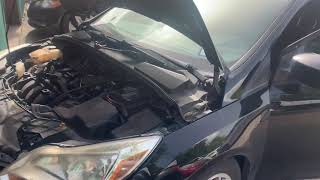
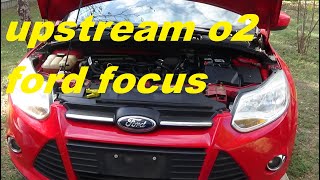
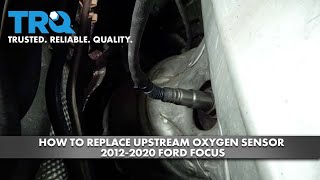
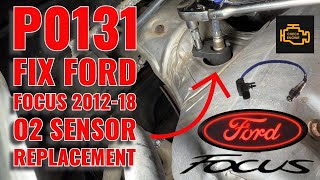
On the 2.0L engine in the third-generation Ford Focus (2012-2018), this is a straightforward and common code. The Bank 1, Sensor 1 O2 sensor is easily accessible at the front of the engine bay, screwed into the exhaust manifold. 🎬 See exactly where the upstream sensor is located. Unlike some vehicles where wiring is a frequent problem, for the Focus, the issue is most often a simple failure of the heating element within the sensor itself due to age and heat cycles. Ford issued a Technical Service Bulletin (TSB 14-0189) for 2013 models built between mid-2012 and mid-2013 for this exact issue, recommending sensor replacement.
🎬 Watch: Step-by-step guide to replacing the upstream oxygen sensor.Symptoms You May Notice
- Check Engine Light is on
- Decreased fuel economy.
- Vehicle may fail an emissions test.
- Slightly rough idle or hesitation, especially when the engine is cold.
- Delay in the engine entering closed-loop mode.
- Replacing the downstream (post-catalyst) oxygen sensor. P0030 specifically refers to Sensor 1, which is the upstream sensor.
- Mistaking the OEM part number. Part number CV6Z-9G444-A is commonly listed for this vehicle but is the downstream sensor.
Most Likely Causes
- Failed Upstream Oxygen Sensor 🔴 High Probability → Shop Oxygen Sensor The internal heating element is a common failure point on O2 sensors due to constant heat cycles. It's considered a wear-and-tear item. Ford recognized this with TSB 14-0189 for 2013 models.
How to confirm: Disconnect the sensor and measure the resistance between the two heater circuit pins (usually the two wires of the same color). A good sensor typically has a resistance between 2 and 30 ohms when cold. An open circuit (infinite resistance, or 'OL' on a multimeter) confirms the heater has failed.
Typical fix: Replace the upstream (Bank 1, Sensor 1) oxygen sensor. One owner reported fuel economy jumping from ~25 mpg to ~37 mpg after replacement.
Est. part cost: $50-$180 - Blown Fuse for O2 Heater Circuit 🟡 Medium Probability
How to confirm: Locate the engine compartment fuse box. For 2012-2014 models, check fuse F32 (15A). For 2015-2018 models, check fuse F35 (10A). Visually inspect the fuse or test it for continuity with a multimeter.
Typical fix: Replace the blown fuse. If it blows again immediately, this indicates a short circuit in the wiring or the sensor itself that needs to be traced.
Est. part cost: $1-$5 - Damaged Wiring or Connector ⚪ Low Probability The wiring harness is in the engine bay and exposed to heat and vibration, which can cause wires to become brittle or connectors to corrode over time. Wires can also be damaged by contact with hot exhaust components.
How to confirm: Visually inspect the wiring harness and connector for the upstream O2 sensor for any signs of melting, chafing, or corrosion. With the key on, engine off, use a multimeter to check for 12V power at the heater power wire in the harness-side connector.
Typical fix: Repair the damaged section of wire or clean/replace the connector. It is good practice to use a zip tie to secure the new sensor's wiring away from the exhaust manifold after installation.
Est. part cost: $5-$50
Rare But Worth Checking
- Faulty Powertrain Control Module (PCM): → Shop Engine Control Module (ECM) This is very uncommon. The PCM driver that controls the heater circuit can fail. This should only be considered after all other possibilities (sensor, fuse, wiring) have been definitively ruled out.
Diagnosis Steps
- Read the code with an OBD-II scanner to confirm P0030 is present. Check for other codes like P0132, P0135, P2243, or P2251 which were noted in a related TSB.
- Locate the engine compartment fuse box and inspect the fuse for the O2 sensor heater circuit. This is fuse F32 (15A) on 2012-2014 models and F35 (10A) on 2015-2018 models. Replace if blown.
- If the fuse is good, locate the upstream O2 sensor on the exhaust manifold.
- Inspect the sensor's electrical connector and wiring for any visible damage, melting, or corrosion.
- Disconnect the sensor. With the ignition key on (engine off), use a multimeter to verify that there are ~12 volts at the heater power pin on the vehicle's harness connector.
- On the sensor side of the connector, measure the resistance between the two heater pins (typically same-colored wires). A reading of 'OL' (over-limit/infinite) indicates a failed heater element. A good sensor will typically have a low resistance, often in the 2-30 ohm range.
- If the fuse, wiring, and sensor resistance all check out, the problem may be in the ground control circuit from the PCM, which is a more advanced diagnosis.
Parts You'll Likely Need
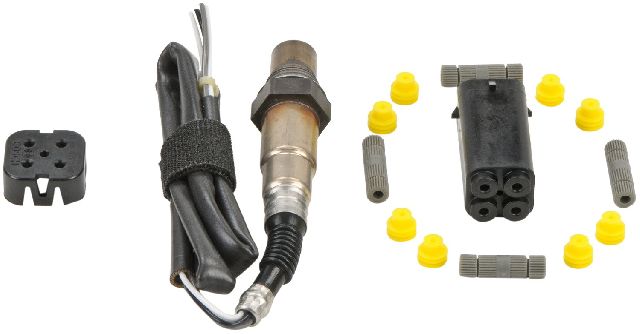
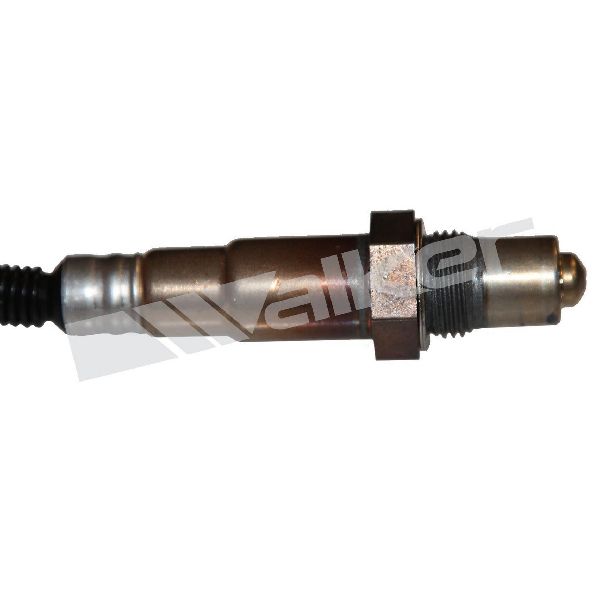
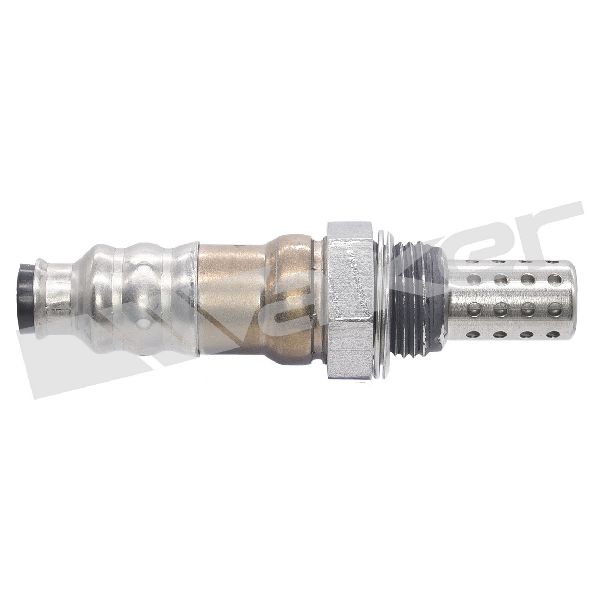
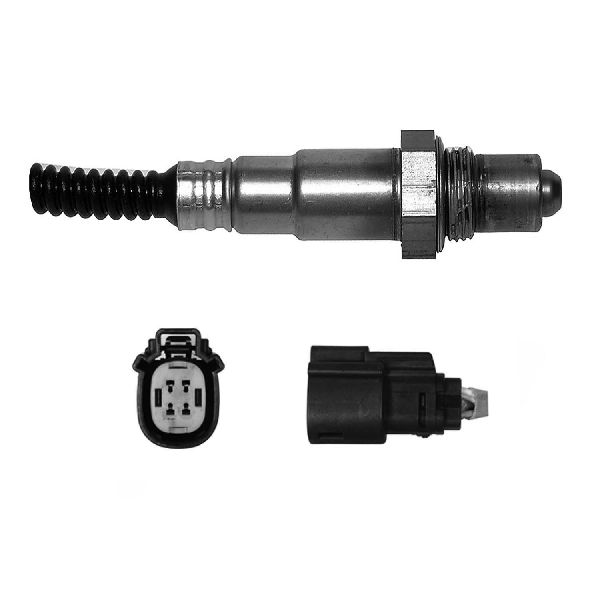
- Upstream Oxygen Sensor (Bank 1, Sensor 1)
(OEM #8F9Z-9F472-H)— This is the component that contains the heating element referenced by the P0030 code. The element failing from age is the most common cause. This part number is specified in Ford TSB 14-0189 for this issue on 2013 models.
Trusted brands: Motorcraft, Bosch, Denso, NGK/NTK
OEM price range: $120-$180
Aftermarket price range: $50-$100
Related Codes That Often Appear With This One
- P0132
- P0135
- P2243
- P2251
Technical Service Bulletins (TSBs) & Recalls
- {'bulletin_id': 'TSB 14-0189', 'description': 'Supersedes TSB 14-0129. Addresses an illuminated MIL with DTCs P0030, P0132, P0135, P2243, and/or P2251 on some 2013 Focus 2.0L GDI vehicles built 6/1/2012 through 5/1/2013. The prescribed action is to replace the Bank 1, Sensor 1 heated oxygen sensor (HO2S) with part number 8F9Z-9F472-H.'}
- Manufacturer TSB Bulletin #TSB-14-0129 notes that DTCs P0132, P0135, P0030, P2243, and P2251 can be stored in the PCM memory and cause the MIL to illuminate on related Ford platforms.
- Manufacturer TSB Bulletin #TSB 16-0143 indicates that certain Ford hybrid models may exhibit an illuminated MIL with DTCs P0030 and/or P0130, requiring specific service procedure steps to correct the condition.
Platform-Specific Known Issues
- A Technical Service Bulletin (TSB 14-0189) was issued for some 2013 Ford Focus 2.0L GDI models built between June 1, 2012 and May 1, 2013 that may exhibit a MIL with DTC P0030. The official fix is to replace the upstream HO2S.
- When replacing the sensor, it is a common best practice to secure the new sensor's wire harness with a zip tie to a nearby hose or bracket to prevent it from drooping and making contact with the hot exhaust manifold.
Mechanic-Grade Diagnostic Values
- Upstream O2 Sensor (HO2S11) Heater Element Resistance — expected: 3 to 30 Ohms. Failure: An open circuit ('OL' on a multimeter) or resistance far outside the specified range indicates a failed heater element.
- Heater Circuit Power Supply at Harness Connector — expected: 10-12 Volts with Key On, Engine Off. Failure: Voltage significantly below 10V or 0V points to a problem with the fuse or the power supply wiring from the PCM, not the sensor itself.
- Ford-specific HO2S Heater Resistance — expected: ~10 Ohms. Failure: A user on a Ford-specific forum reported a reading of ~10 ohms on a known good sensor, providing a more precise target than the generic 3-30 ohm range.
Scan Tool Commands That Help
- Ford IDS (Integrated Diagnostic System): Actuation Test > Oxygen Sensor Bank 1 Sensor 1 — This bidirectional test allows a technician to command the HO2S heater circuit on and off directly from the scan tool. It helps verify if the PCM driver, wiring, and heater element are all capable of functioning, isolating the fault without manual electrical tests.
- Ford IDS (or equivalent advanced scan tool): Datalogger > PID: 'Heated Oxygen Sensor Heater Fault' — When monitoring live data, this specific Ford PID will explicitly state if a fault is detected by the PCM in the heater circuit. This can confirm the P0030 code is active and not an intermittent or stored historical code.
Wiring & Ground Locations
- Heater Circuit Wires — On the oxygen sensor's own pigtail and connector.. The two wires for the heater circuit are typically the same color (e.g., two black wires or two white wires). This allows for quick identification for resistance testing without a wiring diagram.
- G104 / G102 — Left front of motor compartment.. These are primary engine bay ground points. While the O2 heater is often ground-controlled by the PCM, a poor main engine or PCM ground can cause a host of electrical issues, including erratic sensor behavior. Ensuring these grounds are clean and tight is a crucial step if direct circuit testing is inconclusive.
- Main Chassis Ground — A large ground wire runs from the negative battery terminal to a post on the driver's side strut tower area.. On the Focus, this is the single most important ground point for the entire vehicle's electrical system. Poor contact here (due to paint or corrosion) can cause widespread, difficult-to-diagnose electrical gremlins. While not a direct cause of P0030, verifying this ground is solid is a best practice for any electrical fault.
Real Owner Repair Stories
- Ford Owners Club user 'jimalime' (2006 Ford Focus MK2 (European model, but principles are identical)) — P0030 code present.
❌ Tried (didn't work) User tested the original sensor and found it had ~10 ohms resistance, which is within the good range., User verified 14V at the harness connector, confirming power supply was good.
✅ What actually fixed it Despite the original sensor testing within spec, replacing the oxygen sensor ultimately resolved the issue. This highlights that a sensor can sometimes fail under load or heat in a way that a simple cold resistance test doesn't capture. - NHTSA ODI #11404251: An owner of a related Ford model reported that their vehicle would not start and a diagnostic scan revealed numerous codes including P0030, P0300, P0301, P0302, P0303, P0304, C0014, P0047, and P0141.
OEM Part Supersession History
8F9Z-9F472-H→No direct supersession found, remains the current recommended part.— N/A
Heads up: This part number (8F9Z-9F472-H) is also used on other Ford vehicles like the Mustang 5.0L and E-Series vans, confirming it is a widely used component. The Motorcraft service part number is often listed as DY1185.
Model Year Variations Within This Range
- 2012-2014 vs 2015-2018: The fuse protecting the HO2S heater circuit is in a different location with a different rating. For 2012-2014, it is F32 (15A). For the facelifted 2015-2018 models, it is F35 (10A). This is a critical first check and varies by model year.
Diagnostic Flowchart
Real Owner Stories
Aggregated from forums and TSBs cited above. Mileages and costs reflect what owners reported in those sources.
2013 Ford Focus
Symptoms: Check engine light with codes P0030, P0132, P2243; poor fuel economy of 23-28 MPG.
What fixed it: Replaced the Bank 1, Sensor 1 heated oxygen sensor (HO2S). Fuel economy improved to 34-40 MPG after replacement.
Source hint: AR15.COM forum thread 'Oxygen sensor info'
2013 Ford Focus Hatchback — 100000 miles
Symptoms: Check engine light with P0030 code.
What fixed it: The user reported the code came back after the initial fix of changing the pre-cat lambda sensor, so the ultimate solution was not stated.
Source hint: StartMyCar - 'Ford Focus Sensors: problems and issues'
2014 Ford Focus SE (mk3)
Symptoms: Check engine light (code P0030) on a straight-piped car. The owner mistakenly thought it was the downstream sensor.
What fixed it: Unresolved in the report; the owner tried using sparkplug anti-foulers on the downstream sensor, but the code returned at higher RPMs.
Source hint: Reddit r/AskMechanics
Related OBD-II Codes
Frequently Asked Questions
Does Ford have a Technical Service Bulletin for the P0030 code on the Focus?
Which fuse should I check for the O2 sensor heater circuit on my 2012-2018 Focus?
What is the recommended part number if I need to replace the upstream O2 sensor under TSB 14-0189?
How can I test if the upstream O2 sensor heater has failed on my 2.0L GDI?
Can a P0030 code cause bad gas mileage on my Focus?
Is there a specific installation tip when replacing the O2 sensor on this engine?
Helpful Videos
We Have This Part in Stock


The information in this article is provided for general reference and educational purposes only. Vehicle specifications, procedures, and part compatibility can vary by production date, trim level, and region. Always consult your vehicle's factory service manual and verify part numbers before purchasing or performing repairs. Safety-critical components such as airbags, seat belts, and braking systems should be installed by a qualified professional.
- Ford Focus:
- 🧭 Diagnostic Flowchart
- 🎬 Helpful Videos
- 🛍️ Shop This Part
- What's Unique About the 2012-2018 Ford Focus
- Symptoms You May Notice
- Most Likely Causes
- Rare But Worth Checking
- Diagnosis Steps
- Parts You'll Likely Need
- Related Codes That Often Appear With This One
- Technical Service Bulletins (TSBs) & Recalls
- Platform-Specific Known Issues
- Mechanic-Grade Diagnostic Values
- Scan Tool Commands That Help
- Wiring & Ground Locations
- Real Owner Repair Stories
- OEM Part Supersession History
- Model Year Variations Within This Range
- Real Owner Stories
- 2013 Ford Focus
- 2013 Ford Focus Hatchback — 100000 miles
- 2014 Ford Focus SE (mk3)
- Related OBD-II Codes
- Frequently Asked Questions
- 🎟️ Get 5% Off