

P0030 on 2013-2018 Hyundai Santa Fe 3.3L V6: Heater Circuit Fault Causes and Fixes
This code almost always means the heater element inside the Bank 1, Sensor 1 oxygen sensor has failed. Bank 1 is the rear cylinder bank, closer to the firewall. Replacing the sensor is the most common fix, costing around $70-$120 for an aftermarket part or $200+ for OEM. Access is difficult and may require removing the upper intake manifold.
- P0030 on this Santa Fe points to a problem with the heater circuit in the upstream oxygen sensor on the rear cylinder bank (Bank 1).
- The most common fix is to replace the Bank 1, Sensor 1 oxygen sensor itself (OEM Part # 39210-3CCB0).
- Before replacing the sensor, always check the 'SENSOR 1' 15A fuse and visually inspect the wiring harness for any signs of melting or damage.
- Be prepared for a difficult repair. The sensor is located in a tight space behind the engine, and removing the upper intake manifold is often necessary to access it, turning a 1-hour job into a 2-3 hour job.
What's Unique About the 2013-2018 Hyundai Santa Fe
On the transverse-mounted 3.3L V6 in the Santa Fe, the primary challenge with a P0030 code is physical access to the sensor. Bank 1 is the rear bank, tucked against the firewall and underneath the intake plenum. This makes what is usually a simple repair on other vehicles a more difficult job, often requiring 2-3 hours of labor and the removal of the upper intake manifold for sufficient access.
Symptoms You May Notice
- Check Engine Light is on.
- Decreased fuel economy.
- Rough idle on cold starts.
- Failure to pass an emissions test.
- Slight hesitation during acceleration when the engine is cold.
- Replacing the wrong oxygen sensor. It is easy to confuse Bank 1 (rear/firewall side) with Bank 2 (front/radiator side), or Sensor 1 (upstream/pre-catalyst) with Sensor 2 (downstream/post-catalyst).
- Replacing the sensor without checking the fuse first. A blown fuse will cause the code to return immediately with a new sensor.
Most Likely Causes
- Failed Oxygen Sensor Heater Element 🔴 High Probability → Shop Oxygen Sensor The internal heating element is a common failure point in all oxygen sensors as they age due to thousands of heat cycles. It is a simple wear-and-tear item.
How to confirm: Disconnect the sensor and use a multimeter to check the resistance between the two heater circuit wires (typically the two wires of the same color, often white or black). An open circuit (infinite resistance, 'OL') or a reading far outside the manufacturer's specification (typically 8-12 ohms) confirms failure.
Typical fix: Replace the Bank 1, Sensor 1 oxygen sensor.
Est. part cost: $70-$270 - Damaged Wiring or Connector 🟡 Medium Probability The wiring harness for Bank 1 is in a hot, tight space behind the engine. It can come loose from its retaining clips and make contact with the hot exhaust manifold, causing it to melt. Rodents can also chew the wires in this hidden area.
How to confirm: Visually inspect the sensor's wiring harness from the sensor up to the main engine harness. Look for any signs of melting, chafing, frayed wires, or corrosion in the connector pins. Perform a voltage and ground test at the connector.
Typical fix: Repair the damaged section of the wiring harness or replace the connector pigtail.
Est. part cost: $15-$50 - Blown Fuse ⚪ Low Probability
How to confirm: Locate and inspect the fuse for the oxygen sensor heater circuit. It is located in the engine bay fuse box, often labeled 'SENSOR 1' or 'SNSR 1' and is typically a 15A fuse.
Typical fix: Replace the blown fuse. If the fuse blows again immediately, it indicates a short circuit in the wiring or within the new sensor that must be diagnosed.
Est. part cost: $1-$5
Rare But Worth Checking
- Faulty Engine Control Module (ECM): → Shop Engine Control Module (ECM) This is extremely rare. The ECM's internal driver for the heater circuit can fail, but this should only be considered after all other possibilities (sensor, wiring, fuses) have been exhaustively tested and ruled out.
Diagnosis Steps
- Read the trouble codes with an OBD-II scanner to confirm P0030 is the primary code.
- Check for any Technical Service Bulletins (TSBs) related to this code for your vehicle, particularly TSB 25-EM-008H regarding engine warranty.
- Inspect the 'SENSOR 1' 15A fuse in the engine bay fuse box.
- Visually inspect the Bank 1 Sensor 1 wiring harness and connector for any signs of damage, such as melting, chafing, or corrosion. Ensure it is properly secured in its clips away from the exhaust.
- If the wiring appears intact, disconnect the sensor.
- Test the resistance of the heater circuit on the sensor side of the connector using a multimeter. An open circuit (infinite resistance) or a reading outside of 8-12 ohms indicates a failed heater element, and the sensor must be replaced.
- If sensor resistance is normal, test the vehicle-side connector. With the key on and engine off, check for 12V battery voltage on the power wire and for a good ground on the ground wire. Lack of voltage points to a fuse or wiring issue upstream. Lack of ground points to a wiring issue back to the ECM.
- If removing the intake manifold is necessary for access, follow the service manual procedure, which involves disconnecting various hoses and electrical connectors.
- If wiring, fuse, and sensor all test good, the issue may be with the ECM's driver circuit, but this is highly unlikely.
Parts You'll Likely Need
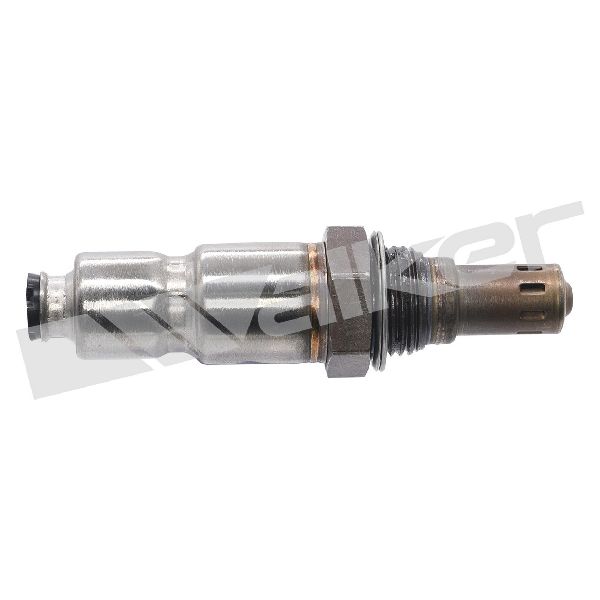
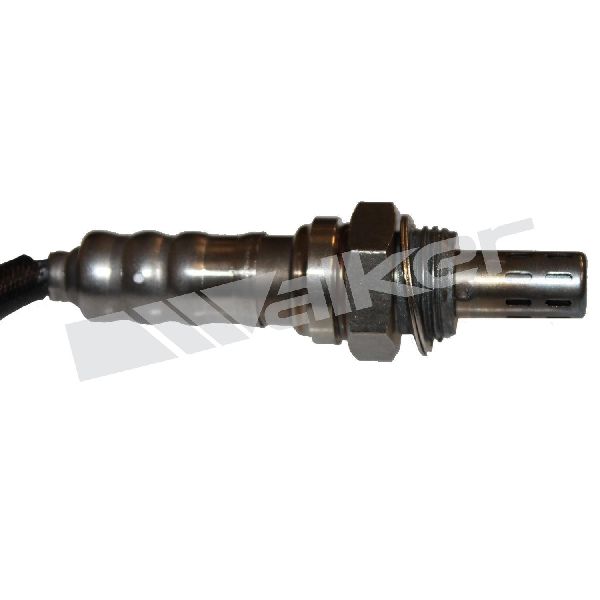
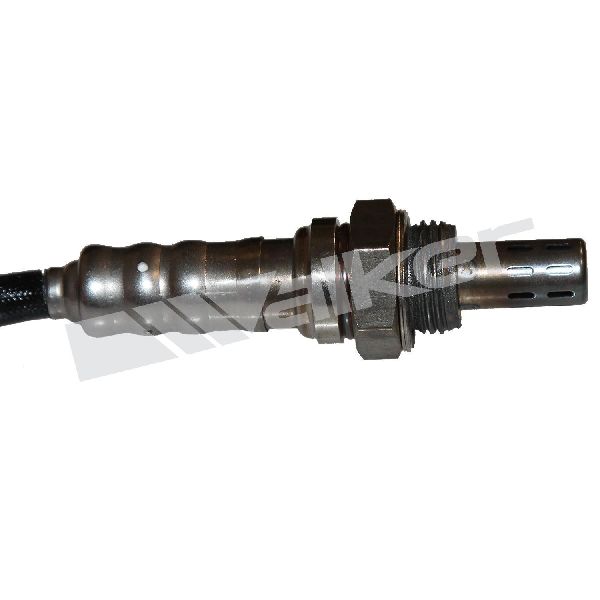
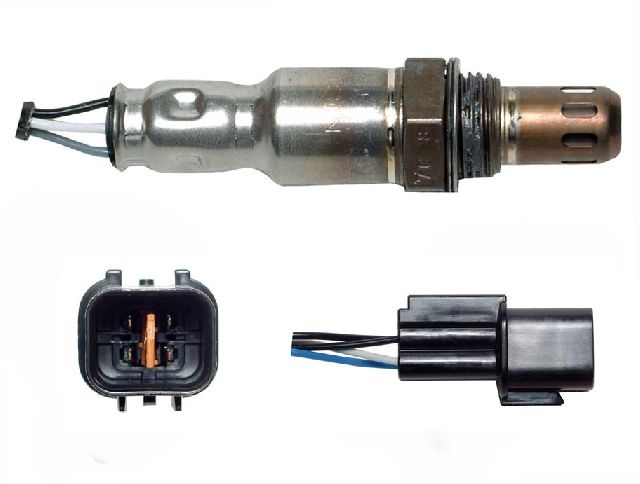
- Oxygen Sensor (Bank 1, Sensor 1)
(OEM #39210-3CCB0)— This is the upstream oxygen sensor for the rear cylinder bank. The internal heater circuit is the most common failure point that triggers code P0030.
Trusted brands: Hyundai (OEM), Denso, NGK/NTK, Bosch
OEM price range: $200-$270
Aftermarket price range: $70-$120
Related Codes That Often Appear With This One
- P1326 —
Technical Service Bulletins (TSBs) & Recalls
- TSB 25-EM-008H (supersedes 24-EM-007H): Details the engine inspection and replacement procedure under the extended warranty (TXX8) for abnormal engine noise related to bearing wear on the 3.3L Lambda II GDI engine. This is critical context for any engine-related code on this platform.
Platform-Specific Known Issues
- Access to the Bank 1 Sensor 1 is notably difficult due to its location on the rear exhaust manifold, tucked against the firewall and under the intake manifold. Many technicians and DIYers find it necessary to remove the upper intake plenum to gain adequate access, which adds significant time to the repair.
- A video by 'Auto Repair Guys' on YouTube demonstrates the intake manifold removal process, which involves disconnecting the air cleaner assembly, multiple electrical connectors (ETC, MAPS, injectors, etc.), and various vacuum and coolant hoses before unbolting the manifold itself.
Mechanic-Grade Diagnostic Values
- O2 Sensor Heater Element Resistance — expected: 8.1 - 11.1 Ω at 21°C (70°F). Some sources give a wider acceptable range of 2.4-14.0 Ω depending on the exact OEM supplier and temperature.. Failure: A reading of 'OL' (open circuit/infinite resistance) or near-zero ohms (short circuit) on a multimeter confirms a failed heater element.
- O2 Sensor Heater Circuit Current Draw — expected: 0.5 A to 2.0 A when active (viewable with an advanced scan tool).. Failure: Current below ~0.3 A may indicate an open circuit, while current significantly above 2.0 A may indicate a short circuit and cause the fuse to blow.
- Heater Circuit Power Supply at Harness Connector — expected: Battery Voltage (~12V) with Key On, Engine Off.. Failure: Zero or significantly low voltage points to a blown 'SENSOR 1' fuse, a faulty relay, or an open in the power supply wire.
Scan Tool Commands That Help
- Hyundai GDS (Global Diagnostic System): Live Data / Data Analysis — To monitor the 'O2 Sensor Heater Duty Cycle' in real-time. The ECM uses a Pulse-Width Modulated (PWM) ground to control the heater. Observing the duty cycle percentage confirms the ECM is attempting to activate the heater. A 99% duty cycle with low current draw suggests an open circuit in the sensor or wiring.
- Hyundai GDS (Global Diagnostic System): Flight Record — For intermittent P0030 faults. This function allows a technician to capture a snapshot of sensor data when the fault occurs during a test drive, helping to diagnose intermittent opens or shorts in the wiring harness.
- Advanced OBD-II Scanner: Mode 6 Test Results — To check the results of the onboard oxygen sensor monitoring test. This can sometimes provide manufacturer-specific component and test IDs that show the heater circuit's performance relative to its expected thresholds, even before a code is set.
Wiring & Ground Locations
- B1S1 Connector (e.g., E39) — On the wiring harness at the rear of the engine near the firewall, connecting to the upstream O2 sensor.. This is the primary test point. Pin 4 should have 12V+ power from the 'SENSOR 1' fuse with key-on. Pin 3 is the control wire that the ECM pulses to ground to activate the heater. Testing here isolates a wiring problem from a sensor problem.
- Fuse 'SENSOR 1' — In the main engine compartment fuse and relay box.. This 15A fuse provides the 12V power to the heater element. A shorted heater element in the sensor will often cause this fuse to blow, and the code will return instantly with a new sensor if the fuse is not replaced.
- Main Engine Grounds (e.g., GC101, GE01) — Bolted to the chassis/fender in the engine compartment and from the engine block to the frame.. The ECM, which controls the O2 heater, relies on a stable and clean ground reference. A corroded or loose main engine ground strap can cause fluctuating voltages and unstable sensor readings, potentially leading to a false P0030 code.
Real Owner Repair Stories
- CarKiller forum post (cited by Go-Parts) (2012 Hyundai Sonata 2.0T (similar engine management principles)) — Persistent Check Engine Light for O2 sensor heater circuit (P0030 or similar).
❌ Tried (didn't work) Replacing the oxygen sensor (twice).
✅ What actually fixed it The wiring harness had been damaged and repaired incorrectly during previous engine work. The heater circuit wires were swapped with the sensor signal wires in the connector. The fix was to obtain a correct wiring diagram and re-pin the connector properly. - NHTSA ODI #11675752 (Hyundai Elantra - cross-manufacturer reference) — An owner reported a P0030 H02S Heater Control Circuit (Bank 1, Sensor 1) code appearing alongside multiple misfire codes (P0301, P0302) and timing issues (P0014), requiring a tow to the dealership for diagnosis.
OEM Part Supersession History
39210-3CBA0→39210-3CDA0— Part revision or manufacturer change.
Heads up: This is an example from a related model. The -3CBA0 part is for 2009-2012 models, while the correct part for the 2013-2018 Santa Fe 3.3L is typically 39210-3CCB0. Using the wrong part, even if it fits physically, can cause the code to return due to different heater resistance specifications. Always verify the part number by VIN.
Diagnostic Flowchart
Other Known Issues on This Vehicle
Issues unrelated to this code that are worth knowing about as an owner of this generation:
- Catastrophic Engine Failure (Rod Bearing Wear) 🔴 High — Occurs at various mileages, sometimes under 80,000 miles. A significant number of complaints and lawsuits exist. (Ref: NHTSA Campaign 17V577000 (for some 2017 models); Warranty Extension TXX8 (TSB 25-EM-008H) extends engine warranty to 15 years/150,000 miles for 2013-2019 models.)
- Peeling Exterior Paint (Especially White) 🟡 Low — Widespread reports, particularly on white and pearl-white vehicles, sometimes starting just a few years after purchase. (Ref: Hyundai extended the paint warranty to 10 years/unlimited miles for this issue on affected models.)
- Knock Sensor Failure / Detection System Faults 🟠 Medium — Common enough to be listed as a top-5 problem for this generation. Can trigger a check engine light (P0326) and potentially limp mode. (Ref: Hyundai has a related campaign (P1326) involving a software update to better detect bearing noise before failure.)
- Carbon Buildup on Intake Valves 🟠 Medium — A common issue for all Gasoline Direct Injection (GDI) engines, including the Lambda II 3.3L. Can cause rough idle, misfires, and reduced performance over time, typically noticeable after 60,000+ miles. (Ref: TSB 23-EM-007H describes a combustion chamber cleaning procedure.)
- Transmission Shift Quality Issues 🟡 Low — Some owners report harsh shifting or slipping, particularly when the transmission is cold. (Ref: Multiple TSBs exist for transmission issues, such as 20-AT-008H, which addresses solenoid replacement for various DTCs on the Santa Fe (NC).)
Used vs. New Parts: Buying Guide for This Vehicle
When a used part is the smart pick: For this repair, a used part only makes sense for the connector pigtail or a section of the wiring harness if it is damaged. An oxygen sensor is a wear-and-tear item with a finite lifespan (typically 60,000-100,000 miles) and should always be purchased new.
Donor-vehicle mileage cap: roughly under 100000 miles for the part to have meaningful remaining life.
What to inspect on the donor part:
- For a used connector/pigtail, inspect for non-brittle plastic.
- Ensure there is no green or white corrosion on the electrical pins.
- Check that the wiring insulation is flexible and not cracked or heat-damaged.
OEM-only on this vehicle (don't cheap out):
- No parts are strictly OEM-only, but using a generic 'universal' sensor that requires splicing wires is strongly discouraged as it often leads to poor connections and the code returning.
Aftermarket brands forum-validated for this vehicle:
- Denso
- NTK (made by NGK)
Brands owners have reported issues with on this vehicle:
- Unbranded 'universal' sensors that require cutting and splicing wires.
Real Owner Stories
Aggregated from forums and TSBs cited above. Mileages and costs reflect what owners reported in those sources.
2013-2018 Hyundai Santa Fe 3.3L V6
Symptoms: Frustration with accessing the sensor due to its location on the rear, firewall-side exhaust manifold.
What fixed it: Replacing the rear, firewall-side O2 sensor by removing the intake manifold to gain adequate access.
Source hint: Hyundai-Forums.com: Multiple threads discuss the P0030 code on the 3.3L V6
2017 Hyundai Santa Fe 3.3L V6
Symptoms: Owner performing their own maintenance including replacing an oxygen sensor in the context of broader engine concerns and potential failure.
What fixed it: Replacing the oxygen sensor.
Source hint: Reddit - r/Hyundai: A thread titled '2017 Hyundai Santa Fe 3.3L engine failure'
Related OBD-II Codes
Frequently Asked Questions
Is the P0030 code on my 2013-2018 Santa Fe covered under the TSB 25-EM-008H engine warranty?
Why is the labor for replacing the Bank 1 Sensor 1 so expensive on the 3.3L V6?
Which fuse should I check for the P0030 heater circuit on my Santa Fe?
Can I use the same oxygen sensor from a Kia Sorento for my Santa Fe?
What is the correct resistance for a new oxygen sensor heater on this vehicle?
Could my P0030 code be related to the carbon buildup issues common on GDI engines?
Helpful Videos
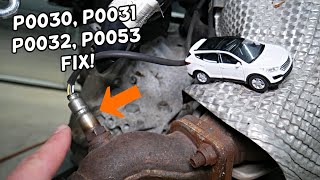
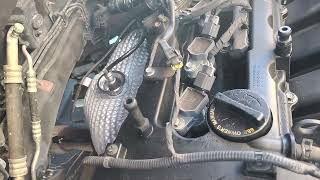
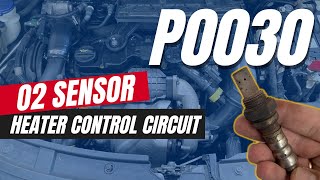

We Have This Part in Stock
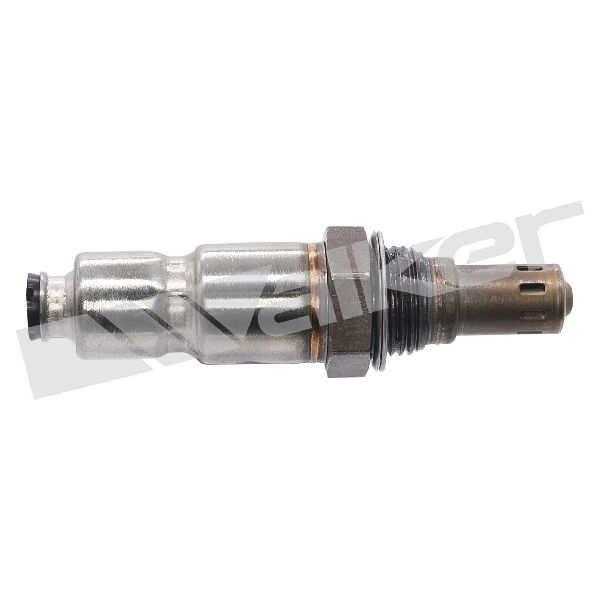


The information in this article is provided for general reference and educational purposes only. Vehicle specifications, procedures, and part compatibility can vary by production date, trim level, and region. Always consult your vehicle's factory service manual and verify part numbers before purchasing or performing repairs. Safety-critical components such as airbags, seat belts, and braking systems should be installed by a qualified professional.
- Hyundai Santa Fe:
- 🧭 Diagnostic Flowchart
- 🎬 Helpful Videos
- 🛍️ Shop This Part
- What's Unique About the 2013-2018 Hyundai Santa Fe
- Symptoms You May Notice
- Most Likely Causes
- Rare But Worth Checking
- Diagnosis Steps
- Parts You'll Likely Need
- Related Codes That Often Appear With This One
- Technical Service Bulletins (TSBs) & Recalls
- Platform-Specific Known Issues
- Mechanic-Grade Diagnostic Values
- Scan Tool Commands That Help
- Wiring & Ground Locations
- Real Owner Repair Stories
- OEM Part Supersession History
- Other Known Issues on This Vehicle
- Used vs. New Parts: Buying Guide for This Vehicle
- Real Owner Stories
- 2013-2018 Hyundai Santa Fe 3.3L V6
- 2017 Hyundai Santa Fe 3.3L V6
- Related OBD-II Codes
- Frequently Asked Questions
- 🎟️ Get 5% Off