

P0030 on 2003-2007 Infiniti G35: HO2S Heater Circuit Causes and Fixes
This code almost always means the heater element inside the Bank 1 (passenger side) upstream oxygen sensor has failed. Replacing the sensor is the typical fix. Expect to pay $70-$120 for an aftermarket sensor (Denso/Bosch) or $160-$210 for an OEM part. It's a DIY-friendly job with moderate difficulty due to tight access. Ensure you buy the correct part for your model year, as it changed in mid-2004.
- P0030 on a G35 points directly to the heater in the passenger-side upstream O2 sensor.
- The most likely fix is to replace the sensor itself.
- Before buying a part, test the old sensor's heater resistance with a multimeter to be certain.
- Verify the correct part number for your specific model year. The part changed in mid-2004. Denso is the OEM supplier.
- This is a manageable DIY repair, but you will need a 22mm O2 sensor socket and some patience to work in the tight space.
What's Unique About the 2003-2007 Infiniti G35
On the G35's VQ35DE engine, this code is a straightforward component failure and not indicative of a larger systemic issue. It's simply a common failure item as the vehicle ages. Bank 1 is definitively the passenger side, and Sensor 1 is the upstream sensor in the exhaust manifold, which can be tight to access from the top of the engine bay. Owners report that while frustrating, replacement is manageable for a DIYer with a 22mm O2 sensor socket. It's critical to note that Nissan/Infiniti used different upstream sensors for early vs. late VQ35DE models. The changeover happened mid-2004. Always verify the correct part for your specific VIN.
Generation note: The specified year range covers the entire first generation (V35) coupe (2003-2007) and most of the V35 sedan (2003-2006). The 2007 G35 sedan is a new generation (V36) with a different engine (VQ35HR) to which this specific guide may not fully apply, as the upstream sensors are a different type. All vehicles in this guide use the VQ35DE engine.
Symptoms You May Notice
- Check Engine Light is on
- Decreased fuel economy
- Failing an emissions test
- Slightly rough idle on cold starts
- Engine may take longer to enter 'closed-loop' operation
- Replacing the wrong oxygen sensor (e.g., Bank 2 on the driver's side, or Sensor 2 after the catalytic converter). Always confirm Bank 1 is the passenger side for the VQ35DE.
- Replacing the sensor when the actual fault is a blown fuse or damaged wiring.
Most Likely Causes
- Failed Oxygen Sensor Heater Element 🔴 High Probability → Shop Oxygen Sensor The internal heater element is a common failure point on O2 sensors due to age and constant, extreme heat cycles. Denso is the OEM supplier, and these sensors have a finite lifespan.
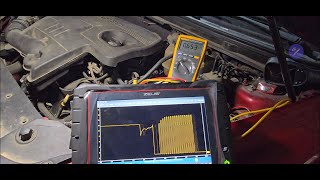
How to confirm: Disconnect the sensor and measure the resistance across the two heater circuit pins (usually the two same-colored wires, often black) with a multimeter. 🎬 See how to test the heater circuit using a multimeter. An infinite reading (open circuit) or a reading far outside the factory specification of 1.8-3.4 ohms at 68°F (20°C) confirms failure.
Typical fix: Replace the Bank 1, Sensor 1 Air/Fuel Ratio Sensor.
Est. part cost: $70-$210 - Damaged Wiring or Connector 🟡 Medium Probability The wiring is close to hot exhaust components and the plastic connector can become brittle over time, leading to cracks or poor pin contact. The harness can also be damaged during other engine repairs.
How to confirm: Visually inspect the wiring harness and connector leading to the sensor for any signs of melting, fraying, or corrosion. With the key on and engine off, use a multimeter to check for battery voltage (12V+) at the heater power supply pin in the harness-side connector.
Typical fix: Repair the damaged section of the wiring harness or clean/replace the connector.
Est. part cost: $5-$50 - Blown Fuse ⚪ Low Probability
How to confirm: Locate the fuse for the O2 sensor heater circuit. In the G35, this is typically a 15A fuse labeled 'A/F HEATER' in the IPDM E/R (Intelligent Power Distribution Module Engine Room) located in a black box behind the battery.
Typical fix: Replace the blown fuse. If it blows again, a short circuit exists in the wiring or within the sensor itself that must be found.
Est. part cost: $1-$5
Rare But Worth Checking
- Faulty Engine Control Module (ECM): → Shop Engine Control Module (ECM) This is extremely rare. The ECM's driver circuit for the heater can fail, but all other possibilities (sensor, wiring, fuse) should be exhaustively tested before considering ECM replacement.
Diagnosis Steps
- Confirm the code P0030 is present using an OBD-II scanner.
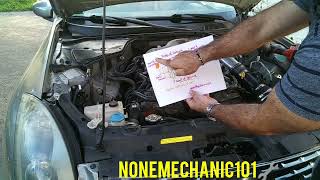
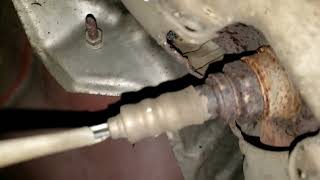
- Locate the Bank 1, Sensor 1 (Air/Fuel Ratio Sensor). It is on the passenger side exhaust manifold, before the catalytic converter. Access is from the top of the engine bay, looking down past the intake components. 🎬 Watch: This video shows exactly where to find the Bank 1 sensor.
- Visually inspect the sensor's wiring harness and connector for any obvious damage, such as melting, chafing, or corrosion.
- Check the fuse for the sensor heater circuit. On a G35, the relevant fuse box is the IPDM E/R (Intelligent Power Distribution Module Engine Room) located behind the battery. Check the 15A fuse labeled 'A/F HEATER'.
- If the wiring and fuse are okay, disconnect the sensor's electrical connector.
- With the ignition key in the 'ON' position (engine off), use a multimeter to verify that the heater power supply pin in the vehicle-side harness connector has battery voltage (approx. 12V).
- Set the multimeter to measure resistance (Ohms). On the sensor itself, measure the resistance between the two heater pins. A normal reading is between 1.8 and 3.4 ohms at room temperature. An open circuit (infinite resistance) or a dead short (zero resistance) indicates the heater has failed.
- If the sensor's heater circuit resistance is within spec and power is present at the harness, there may be an issue with the ground side of the circuit (which is pulse-width modulated by the ECM) or, in very rare cases, the ECM itself.
Parts You'll Likely Need
- Air/Fuel Ratio Sensor (Bank 1, Sensor 1)
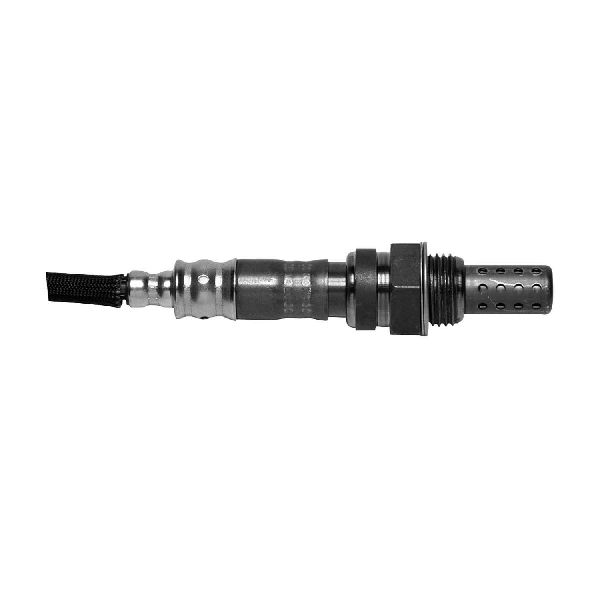
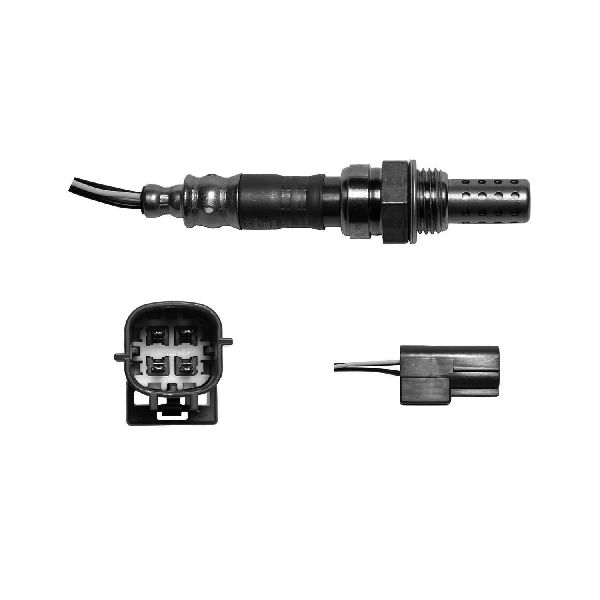
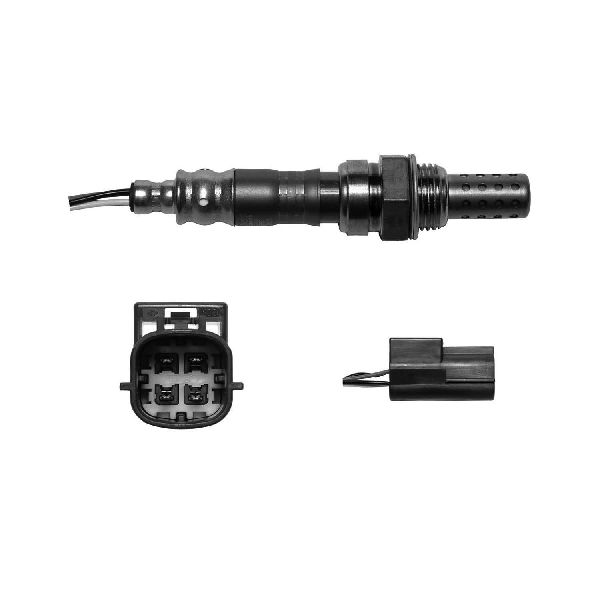
(OEM #22690-AL600 (for 2003-mid.2004 models), 22693-CD700 (for mid.2004-2007 models))— This is the upstream oxygen sensor for the passenger side. Its internal heater element is the most common failure point for code P0030. Part numbers changed mid-2004, primarily affecting wire harness length. Denso is the OEM supplier. The equivalent aftermarket parts are Denso 234-5060 (for early models) and Denso 234-5061 (for later models).
Trusted brands: Denso (OEM Supplier), Bosch, NGK/NTK
OEM price range: $160-$210
Aftermarket price range: $70-$120 - O2 Sensor Socket — A special 22mm (or 7/8") slotted socket is often required to remove and install the sensor due to the attached wire and tight access.
Trusted brands: Lisle, OEMTOOLS, GearWrench
Aftermarket price range: $10-$25
Platform-Specific Known Issues
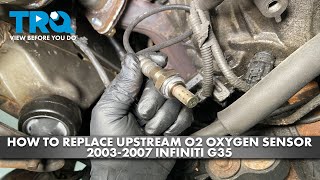
- Access to the Bank 1 sensor is tight. While it can be reached from the top of the engine bay, some owners report difficulty getting leverage on the sensor without a proper 22mm O2 sensor socket 🎬 Watch: A step-by-step walkthrough of the upstream sensor replacement process. and a long extension.
- Part number changes: 2003-2004 models use a different upstream sensor (shorter wire harness, Denso 234-5060, 14.57 inches) than mid-2004-2007 models (longer wire harness, Denso 234-5061, 20.87 inches). Always verify the part number with your vehicle's VIN before purchasing.
- Real-World Repair Story: A user on g35driver.com with a P0030 code first checked the 'A/F HEATER' fuse and found it intact. They then tested the resistance of the original sensor and got an open circuit reading. After replacing the Bank 1 Sensor 1 with a new Denso sensor (which read ~5 ohms before installation), the code was cleared and did not return, confirming the sensor's internal heater was the sole point of failure.
Mechanic-Grade Diagnostic Values
- A/F Sensor Heater Element Resistance — expected: 1.8 to 3.4 Ω at 20°C (68°F). Failure: Infinite resistance (open circuit) or a value significantly outside the expected range.
- A/F Sensor Heater Power Supply (at harness connector) — expected: Approx. 12 Volts (Battery Voltage) with Key On, Engine Off. Failure: 0 Volts or significantly less than battery voltage, indicating a blown fuse or wiring issue.
- A/F Sensor Reference Voltage (at harness connector) — expected: Approx. 2.2 Volts with Key On, Engine Off. Failure: Incorrect voltage may point to a wiring or ECM issue, though not directly related to the heater circuit fault.
- A/F Sensor Heater Control (at harness connector) — expected: 0 Volts with Key On, Engine Off. The ECM provides a pulsed ground to this pin to control the heater once the engine is running.. Failure: Constant ground or voltage when not expected could indicate an ECM or wiring short.
Hidden / Shadow Codes Worth Checking
- P1031 / P1032: These are manufacturer-specific codes for 'A/F SEN1 HTR (B1)'. They provide a more precise fault location than the generic P0030 and point directly to the Bank 1 Sensor 1 heater circuit. (see via These codes are typically visible on professional-level scan tools like the Infiniti CONSULT-II or advanced aftermarket scanners.)
Scan Tool Commands That Help
- Infiniti CONSULT-II / Nissan DataScan II: Active Test / Work Support — A professional scan tool may offer an 'Active Test' for the A/F sensor heater. This function would allow a technician to command the heater circuit on and off manually, verifying the integrity of the wiring, relay, and ECM driver without having to wait for the normal warm-up cycle.
Wiring & Ground Locations
- IPDM E/R — In the engine compartment, in a black box located directly behind the passenger-side battery.. This module houses the 'A/F HEATER' fuse and the ECM relay, which provides power to the sensor's heater circuit. Failures in this module can cut power to the heater.
- ECM Connector Pin 2 — At the main Engine Control Module (ECM) harness connector.. This is the specific output pin from the ECM that controls the heater for Bank 1, Sensor 1 (HO2S B1S1). Advanced diagnosis involves checking for a pulsed ground signal at this pin when the engine is running to confirm the ECM driver is functioning.
- Engine Ground E17 — On the right (passenger) side of the engine compartment.. A poor main engine ground can cause a variety of electrical issues and sensor reading errors. While not a direct cause of a P0030, verifying main grounds are clean and tight is a good practice during any electrical diagnosis.
- Cowl Drain Plugs — Underneath the battery tray area in the engine compartment.. These drains frequently clog with leaves and debris. This causes rainwater to back up and flood the IPDM E/R, leading to corrosion and failure of internal relays, including the one powering the A/F sensor heater.
Real Owner Repair Stories
- Synthesized from G35Driver & My350Z forums (2005 Infiniti G35 Coupe) — Check Engine Light on, code P0030. Slightly worse fuel economy.
❌ Tried (didn't work) Clearing the code (it returned immediately on the next engine start).
✅ What actually fixed it The owner first located the IPDM E/R behind the battery and checked the 15A 'A/F HEATER' fuse, which was good. They then disconnected the Bank 1 upstream O2 sensor and tested the resistance between the two black heater wires, getting an 'OL' (Open Loop/infinite resistance) reading on their multimeter. A new Denso sensor read 2.5 ohms. After installing the new sensor and clearing the code, the light stayed off, confirming the original sensor's internal heater had failed.
OEM Part Supersession History
22690-AL600→N/A - Still the correct number for the application— N/A
Heads up: This part is for early models and has a shorter wire harness (Denso 234-5060, approx. 14.57 inches). It will not reach the connector on later models.22693-CD700→N/A - Still the correct number for the application— N/A
Heads up: This part is for later models and has a longer wire harness (Denso 234-5061, approx. 20.87 inches). While it might physically plug into an early model, the excess wire could be damaged by heat or moving parts.
Model Year Variations Within This Range
- 2003-mid.2004 vs mid.2004-2007: The primary difference for this code is the upstream Air/Fuel ratio sensor. The part number changed mid-2004. The key physical difference is the length of the integrated wire harness on the sensor itself. Early models use Denso 234-5060 (14.57 in. wire) and later models use Denso 234-5061 (20.87 in. wire). Using the wrong one will result in the connector not reaching or having excessive slack.
Diagnostic Flowchart
Used vs. New Parts: Buying Guide for This Vehicle
When a used part is the smart pick: For this repair, a used part is almost never recommended for the sensor itself. However, obtaining a used IPDM E/R from a reputable junkyard can be a cost-effective solution if the original has failed, especially due to water damage. Ensure the donor vehicle was not a flood car.
Donor-vehicle mileage cap: roughly under 80000 miles for the part to have meaningful remaining life.
What to inspect on the donor part:
- For a used IPDM: Inspect the exterior for cracks. Open the cover and look for any signs of water marks, white/green corrosion on the fuse legs, or a musty smell.
- For a used O2 sensor (if no other option): Inspect the sensor tip for heavy white or black deposits and ensure the wiring is not brittle or frayed. It remains a high-risk purchase.
OEM-only on this vehicle (don't cheap out):
- While not strictly 'OEM-only', sticking to the OEM supplier (Denso) or a reputable equivalent (NTK, Bosch) for the A/F sensor is highly recommended. Cheap, unbranded sensors are known to fail quickly or provide inaccurate readings on these vehicles.
Aftermarket brands forum-validated for this vehicle:
- Denso (OEM supplier)
- NTK (NGK)
- Bosch
Brands owners have reported issues with on this vehicle:
- Generic, unbranded, or 'white-box' sensors sold on auction sites. Forum members consistently report premature failure and chasing codes after installing cheap sensors.
Real Owner Stories
Aggregated from forums and TSBs cited above. Mileages and costs reflect what owners reported in those sources.
2003-2007 Infiniti G35 3.5L VQ35DE V6
Symptoms: Check Engine Light with code P0030.
What fixed it: The owner first checked the 'A/F HEATER' fuse and found it was good. They tested the resistance of the original sensor and got an open circuit reading. Replacing the Bank 1 Sensor 1 with a new Denso sensor resolved the issue and the code did not return.
Source hint: Real-World Repair Story from g35driver.com
2003-2006 Nissan 350Z (Z33)
Symptoms: Check Engine Light with heater circuit codes P0031 and P0051.
What fixed it: Users confirmed that the fix is almost always replacing the upstream oxygen sensors. They specifically recommended using OEM or Denso parts to avoid premature failure of cheaper alternatives.
Source hint: my350z.com forum thread titled 'P0031 & P0051 O2 Heater Control Circuit Low (350Z)'
Related OBD-II Codes
Frequently Asked Questions
Where exactly is the Bank 1, Sensor 1 located on my 2005 Infiniti G35?
I'm buying a replacement oxygen sensor for my 2004 G35. Are all model years the same?
What brand of A/F sensor should I use for this repair?
How can I test my old sensor to confirm it's the problem?
My sensor tested good. What else could cause the P0030 code on my G35?
Is it difficult to get the old sensor out?
Helpful Videos
We Have This Part in Stock


The information in this article is provided for general reference and educational purposes only. Vehicle specifications, procedures, and part compatibility can vary by production date, trim level, and region. Always consult your vehicle's factory service manual and verify part numbers before purchasing or performing repairs. Safety-critical components such as airbags, seat belts, and braking systems should be installed by a qualified professional.
- Infiniti G35:
- 🧭 Diagnostic Flowchart
- 🎬 Helpful Videos
- 🛍️ Shop This Part
- What's Unique About the 2003-2007 Infiniti G35
- Symptoms You May Notice
- Most Likely Causes
- Rare But Worth Checking
- Diagnosis Steps
- Parts You'll Likely Need
- Platform-Specific Known Issues
- Mechanic-Grade Diagnostic Values
- Hidden / Shadow Codes Worth Checking
- Scan Tool Commands That Help
- Wiring & Ground Locations
- Real Owner Repair Stories
- OEM Part Supersession History
- Model Year Variations Within This Range
- Used vs. New Parts: Buying Guide for This Vehicle
- Real Owner Stories
- 2003-2007 Infiniti G35 3.5L VQ35DE V6
- 2003-2006 Nissan 350Z (Z33)
- Related OBD-II Codes
- Frequently Asked Questions
- 🎟️ Get 5% Off