

P0030 on 2006-2008 Lincoln Mark LT: HO2S Heater Circuit Causes and Fixes
This code points to a failure in the heater circuit for the upstream oxygen sensor on the passenger side (Bank 1). The most common fix is replacing the sensor itself, which is a DIY-friendly job with an estimated part cost of $50-$150. Before replacement, check for a blown fuse (Fuse #33 in the passenger kick panel) and inspect wiring for damage.
- P0030 specifically refers to the heater circuit of the upstream oxygen sensor on the passenger side.
- The most likely cause is a failed oxygen sensor, which is a common wear item.
- Before replacing the sensor, always check Fuse #33 in the passenger kick panel and visually inspect the wiring for damage, especially near the exhaust.
- This is a DIY-friendly repair; the main challenge is often accessing the sensor and removing it if it's rusted in place. Use penetrating oil.
- Driving with this code won't cause immediate harm, but your fuel efficiency will suffer and you will not pass an emissions test.
What's Unique About the 2006-2008 Lincoln Mark LT
The Lincoln Mark LT from this era is mechanically identical to the popular Ford F-150 with the 5.4L 3V Triton engine. This is advantageous for owners, as parts are widely available and troubleshooting steps are well-documented in F-150 communities. There are no unique, Mark LT-specific causes for P0030; the issues are shared across the Ford truck platform, typically involving a failed sensor, its wiring, or a shared fuse. The wiring harness can be susceptible to heat damage from the exhaust manifold.
Symptoms You May Notice
- Check Engine Light is on.
- Decreased fuel economy.
- Failure to pass an emissions test.
- Rough idle on a cold start (less common).
- Engine may hesitate or run rough until it warms up.
- Replacing the wrong O2 sensor. P0030 is specifically for Bank 1 (passenger side), Sensor 1 (upstream/pre-catalyst). Always verify the location before purchasing parts.
- Replacing the sensor without checking the fuse first, especially if multiple heater codes are present.
- Assuming the sensor is bad when the true fault is a damaged wire or corroded connector.
Most Likely Causes
- Failed Oxygen Sensor Heater Element 🔴 High Probability → Shop Oxygen Sensor Oxygen sensors are wear-and-tear items exposed to extreme heat cycles in the exhaust stream, and the internal heater element is often the first part to fail. This is the most common cause of P0030. 🎬 Watch: A breakdown of P0030 causes and common fixes.
How to confirm: Using a multimeter, disconnect the sensor and measure the resistance between the two heater circuit pins on the sensor side (usually the two wires of the same color). A typical resistance for a good heater is between 4 and 20 ohms. An open circuit (infinite resistance) or a value far outside this range confirms a failed heater.
Typical fix: Replace the Bank 1, Sensor 1 (upstream, passenger side) oxygen sensor.
Est. part cost: $50-$150 - Damaged Wiring or Connector 🟡 Medium Probability The wiring harness for the O2 sensor is routed near the hot exhaust manifold and can be susceptible to melting, chafing, or physical damage from road debris. Connectors can also corrode from moisture and dirt.
How to confirm: Visually inspect the wiring harness leading to the O2 sensor for any signs of melting, chafing, or corrosion on the connector pins. Check for 12V power and ground at the connector with the key on, engine off. A short or open in the wiring will cause the code.
Typical fix: Repair the damaged section of the wiring harness or clean/replace the connector. Apply dielectric grease to the new connector to prevent future corrosion.
Est. part cost: $10-$50 - Blown Fuse ⚪ Low Probability
How to confirm: Check the vehicle's fuse box in the passenger kick panel. For the 2004-2008 F-150/Mark LT platform, this is often Fuse #33 (15A), which protects the Heated Oxygen Sensors. If multiple O2 sensor heater codes (like P0135, P0155) appear at once, a blown fuse is a very likely cause. 🎬 See how to diagnose multiple heater circuit codes at once. If the fuse is blown, it may indicate a short circuit in the wiring that needs to be addressed.
Typical fix: Replace the blown fuse. If it blows again, diagnose the underlying short circuit in the O2 sensor heater wiring.
Est. part cost: $1-$5
Rare But Worth Checking
- Faulty Powertrain Control Module (PCM): → Shop Engine Control Module (ECM) This is extremely rare. The PCM's internal driver for the heater circuit can fail, but this should only be considered after all other possibilities (sensor, wiring, fuses) have been exhaustively tested and ruled out.
Diagnosis Steps
- Verify the code with an OBD-II scanner. Note any other codes present.
- Check Fuse #33 (15A) in the passenger compartment fuse panel (kick panel). If it's blown, replace it and see if the code returns. If it blows again, investigate a short circuit. 🎬 Watch: Troubleshooting multiple sensor codes on the F-150 platform.
- Visually inspect the wiring and connector for the passenger-side upstream O2 sensor. Look for any signs of melting, chafing, corrosion, or loose pins. The harness is often routed near the exhaust manifold, making it prone to heat damage.
- With the ignition key in the 'On' position (engine off), use a multimeter to test for 12-volt power on the heater power wire at the sensor connector (harness side).
- Disconnect the sensor and measure the resistance of the heater element across the two heater pins on the sensor itself (usually the two wires of the same color). A good sensor should read between 4 and 20 ohms. A reading of infinite resistance (OL) means the sensor's heater is open and the sensor must be replaced.
- If the sensor's resistance is within spec and power is present at the connector, check the ground control wire running back to the PCM for continuity. The PCM provides the ground to activate the heater.
- If a new sensor is installed and the code returns, re-check the wiring for an intermittent short or open that may not have been obvious on the first inspection. A common failure point is the wiring rubbing against the frame or engine block.
Parts You'll Likely Need
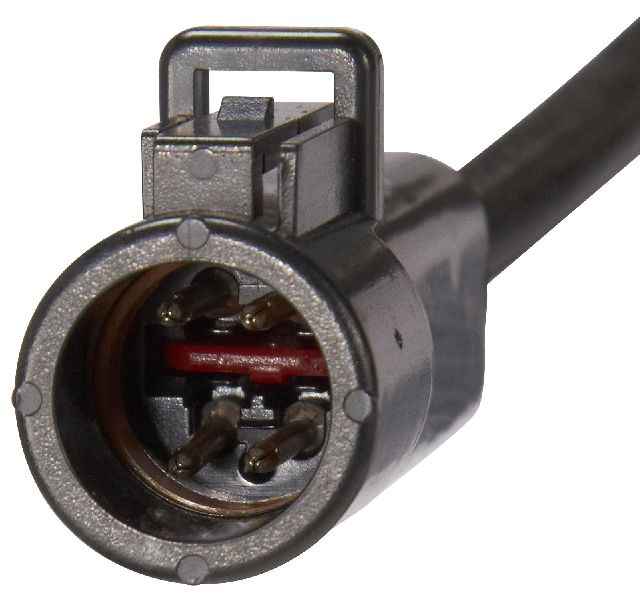
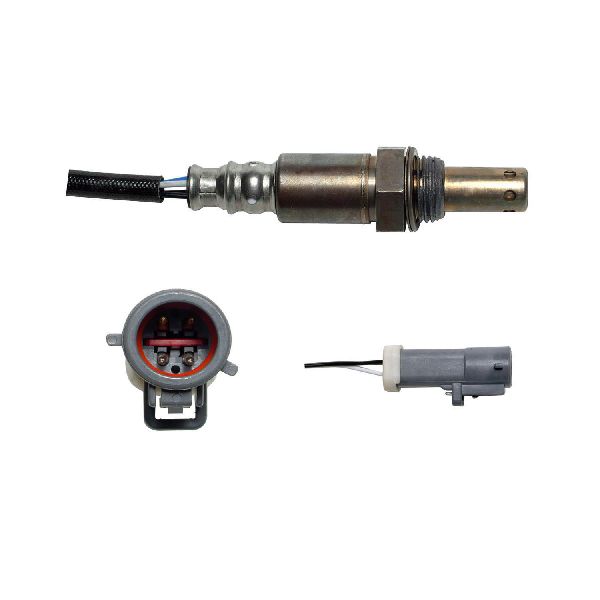
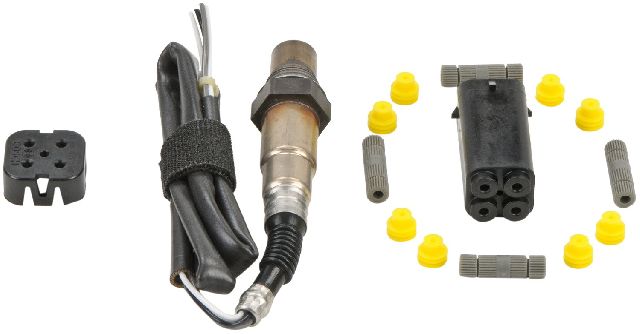
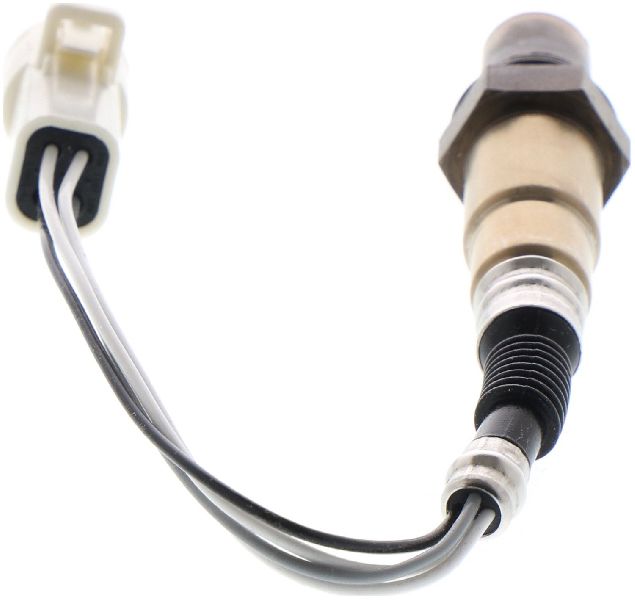
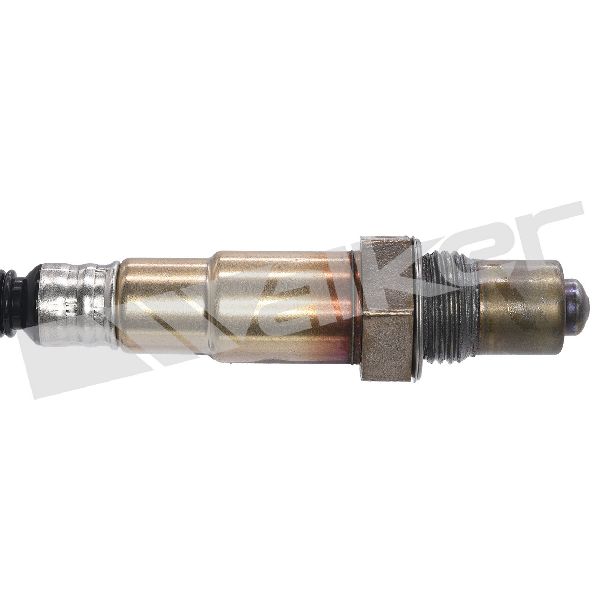
- Oxygen Sensor (Bank 1, Sensor 1)
(OEM #4L3Z-9G444-AA (Service part number may be DY-992))— The internal heater element of the oxygen sensor is the most common failure point for this code. It is a non-serviceable part of the sensor, requiring full replacement.
Trusted brands: Motorcraft, Bosch, Denso, Walker, Spectra Premium
OEM price range: $80-$150
Aftermarket price range: $50-$100
Related Codes That Often Appear With This One
- P0135 — P0135 is a nearly identical code, also indicating a malfunction in the Bank 1, Sensor 1 heater circuit. Some scan tools may display one or both for the same fault.
- P0031 — Indicates the heater control circuit is low, suggesting a short to ground.
- P0032 — Indicates the heater control circuit is high, suggesting an open circuit or a short to power.
- P0155, P0050, P0060 — These are heater circuit codes for other O2 sensors (Bank 2 Sensor 1, Bank 1 Sensor 2, Bank 2 Sensor 2). If they appear alongside P0030, it strongly suggests a common power supply issue, like a blown fuse.
Technical Service Bulletins (TSBs) & Recalls
- No specific TSBs were found directly addressing a P0030 code on this platform. However, TSB 11-3-27 was issued for related codes (like P2195) on the 5.4L 3V, sometimes leading to O2 sensor replacement, indicating Ford's awareness of sensor issues on this engine.
- Manufacturer TSB Bulletin #TSB-14-0129 notes that Lincoln vehicles may have DTCs P0030, P0132, P0135, P2243, and P2251 stored in the PCM memory, causing the Malfunction Indicator Lamp to illuminate.
- Additionally, TSB Bulletin #TSB 16-0143 describes a condition where Lincoln hybrid models may exhibit an illuminated MIL with diagnostic trouble codes P0030 and/or P0130.
Platform-Specific Known Issues
- Owners frequently report that the original sensors can be extremely difficult to remove due to rust. Soaking the sensor threads with a quality penetrating oil (like PB Blaster) for several hours or overnight is highly recommended before attempting removal. Using a dedicated O2 sensor socket is also crucial to avoid rounding off the sensor body.
- On the 5.4L 3V engine, access to the Bank 1 (passenger side) upstream sensor is tight. It is located on the exhaust manifold, just before the catalytic converter. Some owners find it easier to access from underneath the vehicle after removing the front passenger-side wheel and inner fender liner.
Mechanic-Grade Diagnostic Values
- O2 Sensor Heater Element Resistance — expected: 4 to 20 Ohms when cold. Some sources state 5-15 Ohms is a tighter, more common range.. Failure: A reading of infinite resistance (Open Loop) or near zero ohms (short circuit) indicates a failed heater element.
- Heater Power Supply Voltage at Harness Connector — expected: 11-13 Volts (Battery Voltage) with key on, engine off.. Failure: 0V indicates a break in the power supply wire, a blown fuse, or a faulty relay.
- Mode 6 - HO2S Heater Impedance — expected: The PCM monitors the heater circuit and expects the impedance to be below a certain threshold. If the impedance is more than 44 ohms for 200 seconds, the PCM will flag a fault.. Failure: Impedance reading > 44 ohms.
- PCM Control Signal (Oscilloscope) — expected: A square wave pattern (Pulse Width Modulation) when the PCM is commanding the heater on.. Failure: A flat line at 0V or 12V, or no signal at all, points to a wiring issue or a faulty PCM driver.
Scan Tool Commands That Help
- Ford IDS (or equivalent like FORScan): HO2S Heater On-Demand Self-Test — This function allows the technician to command the PCM to activate the O2 sensor heater circuit outside of normal operation. It's used to verify if the PCM driver is capable of commanding the circuit and to check for current flow with an amp clamp, confirming the integrity of the circuit in real-time.
Wiring & Ground Locations
- Bank 1 Sensor 1 Heater Control Wire — This wire runs from the O2 sensor connector to the PCM. On a similar 2000-2001 5.4L PCM, the Bank 1 Sensor 1 heater control is a Red/White wire at Pin 93 of the 104-pin PCM connector. While the exact pin may differ slightly for 2006-2008, the wire color is often consistent.. This is the ground control wire that the PCM pulses to activate the heater. A break or short-to-ground on this specific wire will cause P0030. Testing for continuity from the sensor connector to this PCM pin is the definitive way to check the control circuit.
- G101 - Engine Compartment Ground — Located on the firewall behind the PCM in the right rear of the engine compartment.. While the O2 heater is controlled by the PCM, the PCM itself and other related components rely on clean, solid grounds. A corroded or loose G101 can cause a host of difficult-to-diagnose electronic issues, including erratic sensor behavior.
- G100 - Engine Block Ground — Main ground from the battery, typically located at the starter motor or on the engine block near the starter.. This is the primary ground for the engine block. A poor connection here can affect the ground reference for all sensors mounted to the engine, potentially causing incorrect readings or fault codes.
- C175B / C175E / C175T — These are the designators for the three main PCM connectors on the firewall. The specific pin for the HO2S heater control will be in one of these connectors.. When diagnosing a potential PCM or wiring issue, you must identify the correct connector and pin to test. Water intrusion or pin corrosion at these main connectors can cause this code.
Real Owner Repair Stories
- Ford Truck Enthusiasts Forums (2005 Ford F-150 5.4L) — Check Engine Light with multiple O2 heater codes.
❌ Tried (didn't work) Replacing the oxygen sensors.
✅ What actually fixed it The user found that the wiring harness had rubbed against the frame, causing a short. After repairing the damaged wires, the codes were resolved. This highlights the importance of inspecting the full length of the harness, not just the connector.
OEM Part Supersession History
4L3Z-9G444-AA→Motorcraft DY-992— Standard service part number update.
Heads up: The service part DY-992 is listed for the downstream position on many parts sites, which can cause confusion. However, for some F-150 applications, the physical sensor is the same for upstream and downstream, with only wire length and connector keying being different. Always verify fitment for the specific Bank 1, Sensor 1 position.
Model Year Variations Within This Range
- 2006-2008: There are no significant known variations within the 2006-2008 model years for the Lincoln Mark LT that would affect the diagnosis or repair of a P0030 code. The engine, wiring, and emissions components remained consistent. A minor facelift occurred in 2007, but it did not impact the powertrain.
Diagnostic Flowchart
Used vs. New Parts: Buying Guide for This Vehicle
When a used part is the smart pick: For this repair, a used part only makes sense for a wiring harness pigtail or connector. If the original connector is melted or corroded, sourcing a used pigtail from a junkyard is a cost-effective and reliable repair. Never buy a used oxygen sensor itself.
Donor-vehicle mileage cap: roughly under 150000 miles for the part to have meaningful remaining life.
What to inspect on the donor part:
- For a wiring pigtail, inspect for any signs of melting, brittleness, or cracked insulation.
- Ensure the connector locking tab is intact and not broken.
- Check for green or white corrosion on the pins inside the connector.
- Ensure you get at least 6-8 inches of wire to make splicing easy.
Aftermarket brands forum-validated for this vehicle:
- NTK (often an OEM supplier for Ford)
- Denso
- Bosch (though some forum users report mixed results, it is a major OEM supplier)
Brands owners have reported issues with on this vehicle:
- No-name, unbranded sensors from online marketplaces are frequently cited as failing quickly or being dead-on-arrival.
Real Owner Stories
Aggregated from forums and TSBs cited above. Mileages and costs reflect what owners reported in those sources.
2007 Ford F-150 5.4L V8
Symptoms: The truck started to run rough and the service engine light came on. Multiple fault codes appeared at once, including P0135 and P0155.
What fixed it: A mechanic discovered and repaired a short in the wiring harness, which resolved the codes and the rough running condition.
Source hint: Ford Truck Enthusiasts Forums - "P0010 P0020 P0135 P0155 P0443 Codes all popped up at once!"
Related OBD-II Codes
Frequently Asked Questions
Where is the Bank 1, Sensor 1 oxygen sensor located on my 2007 Mark LT 5.4L?
What fuse should I check first for a P0030 code on my Mark LT?
My original O2 sensor is stuck. Any tips for removing it?
What is the correct resistance for the O2 sensor heater element on this engine?
Is there a specific Technical Service Bulletin (TSB) from Ford for the P0030 code on this truck?
What other vehicles share this same P0030 issue?
Helpful Videos

We Have This Part in Stock


The information in this article is provided for general reference and educational purposes only. Vehicle specifications, procedures, and part compatibility can vary by production date, trim level, and region. Always consult your vehicle's factory service manual and verify part numbers before purchasing or performing repairs. Safety-critical components such as airbags, seat belts, and braking systems should be installed by a qualified professional.
- Lincoln Mark LT:
- 🧭 Diagnostic Flowchart
- 🎬 Helpful Videos
- 🛍️ Shop This Part
- What's Unique About the 2006-2008 Lincoln Mark LT
- Symptoms You May Notice
- Most Likely Causes
- Rare But Worth Checking
- Diagnosis Steps
- Parts You'll Likely Need
- Related Codes That Often Appear With This One
- Technical Service Bulletins (TSBs) & Recalls
- Platform-Specific Known Issues
- Mechanic-Grade Diagnostic Values
- Scan Tool Commands That Help
- Wiring & Ground Locations
- Real Owner Repair Stories
- OEM Part Supersession History
- Model Year Variations Within This Range
- Used vs. New Parts: Buying Guide for This Vehicle
- Real Owner Stories
- 2007 Ford F-150 5.4L V8
- Related OBD-II Codes
- Frequently Asked Questions
- 🎟️ Get 5% Off