

P0030 on 2012-2021 Mazda 6 2.2L SkyActiv-D: A/F Sensor Heater Fault Guide
This code indicates a failure in the heater circuit of the upstream Air/Fuel (A/F) ratio sensor, also known as Bank 1 Sensor 1. The most common fix is to replace the sensor itself. Before replacing, check the 'ENGINE1 15A' fuse in the engine bay fuse box as a simple first step.
- P0030 on this specific diesel Mazda indicates a problem with the heater in the upstream A/F sensor.
- This code will put the vehicle into a fail-safe mode with reduced power and disabled emissions functions like DPF regeneration.
- The most likely cause is a failed A/F sensor itself, with the OEM part number being SH01-18-8G1 or a newer revision.
- Before buying parts, check the 'ENGINE1 15A' fuse and visually inspect the sensor's wiring for damage near the exhaust manifold.
- Replacing the A/F sensor is a manageable DIY job for most home mechanics with the correct tools (like a 22mm O2 sensor socket).
What's Unique About the 2012-2021 Mazda 6
On the Mazda 6 with the 2.2L SkyActiv-D engine, this code triggers significant fail-safe protocols. Unlike some gasoline engines where this fault is a minor annoyance, the diesel's PCM will restrict engine torque, inhibit EGR control, and disable diesel particulate filter (DPF) regeneration and the i-stop function. This is a more aggressive response to protect the complex and sensitive diesel emissions system, making a timely repair more critical to prevent issues like a clogged DPF.
Generation note: The 2012-2021 model years cover the third generation (GJ/GL) of the Mazda 6. The SkyActiv-D 2.2L engine was available in this generation, and the diagnostic information for P0030 is consistent across this period. The GJ designation covers 2012-2016 models, while the GL covers the facelifted 2016-2021 models; the core engine and sensor setup for this fault remain the same.
Symptoms You May Notice
- Check Engine Light illuminated
- Reduced engine power / torque restriction
- i-Stop system disabled
- EGR system disabled
- DPF regeneration will not occur
- Increased fuel consumption
- Rough idle on a cold start
- Failing an emissions test
- Replacing the PCM before verifying the sensor, fuse, and wiring are all good.
- Replacing the sensor without checking the fuse first. If the fuse is blown due to a short, the new sensor may also be damaged or simply won't work.
Most Likely Causes
- Air/Fuel (A/F) Sensor Heater Malfunction 🔴 High Probability The heater element inside the sensor is a common failure point due to constant, extreme heat cycles. The internal resistance of the heater circuit can go out of specification (open or shorted), triggering the code.
How to confirm: Disconnect the sensor and measure the resistance between the two heater circuit pins (typically the two wires of the same color). Compare the reading to the manufacturer's specification. An open circuit (infinite resistance) or a dead short (near zero resistance) indicates a failed heater. 🎬 Watch: How to test the heater control circuit
Typical fix: Replace the upstream Air/Fuel ratio sensor (Bank 1, Sensor 1).
Est. part cost: $150-$300 - Blown Fuse 🟡 Medium Probability A short circuit in the sensor's heater element or its wiring can cause the fuse to blow as a protective measure.
How to confirm: Locate and inspect the 'ENGINE1 15A' fuse in the engine compartment fuse box. If it is blown, there is likely a short circuit in the heater power supply wiring or the sensor itself that needs to be found and repaired before replacing the fuse, otherwise the new fuse will blow immediately.
Typical fix: Replace the fuse after diagnosing and repairing the underlying short circuit.
Est. part cost: $1-$5 - Damaged Wiring or Connector 🟡 Medium Probability The sensor wiring is routed near the hot exhaust manifold and turbocharger. Over time, heat can make the wiring brittle, and vibrations can cause it to chafe against engine components, leading to a short or open circuit.
How to confirm: Visually inspect the wiring harness and connector for the A/F sensor for any signs of melting, chafing, or corrosion. Pay close attention to where the harness is secured or comes close to the engine block or heat shields. Perform a continuity test on the power and ground wires between the PCM and the sensor connector if visual inspection is inconclusive.
Typical fix: Repair or replace the damaged section of the wiring harness or the connector.
Est. part cost: $20-$100
Rare But Worth Checking
- Powertrain Control Module (PCM) Malfunction: → Shop Engine Control Module (ECM) This is very rare. The PCM's internal driver for the heater circuit can fail, but this should only be considered after all other possibilities, including the sensor, fuse, and wiring, have been thoroughly tested and ruled out.
Diagnosis Steps
- Verify the code with a scanner and check for any other stored DTCs. Note the Freeze Frame Data if available. 🎬 Watch: A professional guide to fixing the P0030 code
- Inspect the 'ENGINE1 15A' fuse in the engine compartment fuse box. If it's blown, investigate for a short circuit before replacing it.
- Visually inspect the A/F sensor's wiring harness and connector for any signs of melting, chafing, corrosion, or pulled pins. The sensor is located on the exhaust manifold, pre-turbocharger.
- Disconnect the A/F sensor. With the ignition ON (engine off), use a multimeter to check for battery voltage (approx. 12V) at terminal C of the harness-side connector.
- If voltage is not present, there is an open circuit or short to ground in the power supply wire from the fuse. Trace and repair the wiring.
- If voltage is present, check the heater element within the sensor itself. Measure the resistance across the two heater pins on the sensor (usually the two same-colored wires). A typical good reading is between 1-10 ohms. An open circuit (infinite resistance) or short (near zero ohms) means the sensor has failed.
- If the sensor's resistance is good, check the control circuit. Check for a short to ground or an open circuit in the wire between the A/F sensor connector (terminal D) and the PCM connector (terminal 1CG).
- If all wiring and the sensor test good, the fault may lie within the PCM, but this is extremely unlikely.
Parts You'll Likely Need
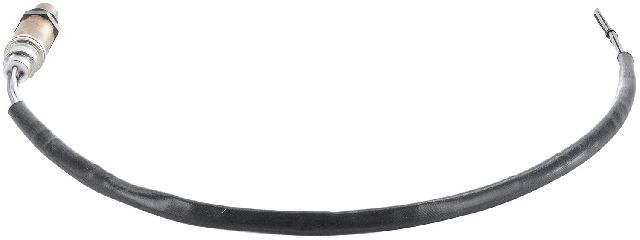
- Air/Fuel Ratio Sensor (Bank 1, Sensor 1)
(OEM #SH01-18-8G1 (may be superseded by SH01-18-8G1A))— This is the upstream wideband sensor whose internal heater element is the most common failure point for code P0030.
Trusted brands: Mazda (OEM), Denso (often the OEM supplier, e.g., DOX-0589), NTK
OEM price range: $250-$350
Aftermarket price range: $150-$250
Platform-Specific Known Issues
- A failure triggering P0030 on the SkyActiv-D engine leads to a more severe fail-safe mode than on many gasoline vehicles, including torque limitation and disabling of DPF regeneration, making prompt repair important to avoid further complications like a clogged DPF.
Mechanic-Grade Diagnostic Values
- A/F Sensor Heater Resistance — expected: 1 - 10 Ohms at room temperature.. Failure: An infinite resistance (Open Loop/OL) reading indicates an open circuit, while a reading near zero indicates a short. Both mean the sensor has failed.
- A/F Sensor Heater Circuit Voltage (at harness connector) — expected: Battery Voltage (approx. 10V - 14V) at terminal C with Key On, Engine Off.. Failure: 0V or significantly low voltage points to a blown 'ENGINE1 15A' fuse or an open/short in the power supply wire from the main relay.
Wiring & Ground Locations
- PCM Terminal 1CG — At the Powertrain Control Module connector.. This is the specific terminal for the A/F sensor heater control circuit. Testing for continuity, shorts to ground, or shorts to power between this pin and Terminal D of the sensor connector is a key diagnostic step.
- ENGINE1 15A Fuse — In the main fuse box located in the engine compartment.. This fuse provides power to the A/F sensor's heater circuit. If it blows, the heater will not function and P0030 will be set. A blown fuse often indicates a short circuit in the sensor itself or its wiring.
- A/F Sensor Connector — On the wiring harness leading to the upstream A/F sensor, located on the exhaust manifold before the turbocharger.. This is the primary point for testing. Terminal C is the power supply from the fuse/relay, and Terminal D is the control line to PCM pin 1CG.
OEM Part Supersession History
SH01-18-8G1→SH01-18-8G1A— Standard part revision by the manufacturer, likely for minor improvements in durability or material.
Heads up: The parts are interchangeable; the newer part number replaces the older one.
Model Year Variations Within This Range
- 2012-2021: The third generation is split into pre-facelift (GJ, 2012-2016) and facelift (GL, 2016-2021) models. While there were refinements to the engine and soundproofing in the GL models, the fundamental design of the 2.2L SkyActiv-D engine, the A/F sensor (SH01-18-8G1), and the diagnostic procedure for P0030 remained consistent across this entire range.
Diagnostic Flowchart
Other Known Issues on This Vehicle
Issues unrelated to this code that are worth knowing about as an owner of this generation:
- Oil Dilution / Rising Oil Level 🔴 High — Common, especially on vehicles used for frequent short trips which prevents complete DPF regeneration. Fuel gets into the oil sump during active regeneration. (Ref: Mazda issued software updates and a revised dipstick in some markets to mitigate the issue.)
- Intake Manifold Carbon Buildup 🟠 Medium — Very common across all SkyActiv-D engines, typically requiring cleaning every 40,000-60,000 miles. Caused by the combination of EGR and crankcase ventilation systems. (Ref: Mazda has issued TSBs for cleaning procedures (e.g., TSB 01-012/19 for related gasoline engines, but the principle is the same for diesels).)
- Premature Turbocharger Failure 🔴 High — More common on earlier models (approx. 2012-2015). Often linked to other issues like oil contamination from injector seal failure or oil dilution reducing lubrication. (Ref: No specific recall, but a widely discussed problem in owner communities.)
- Injector Seal Failure 🔴 High — A known failure point. Leaking injector seals can cause combustion gases to enter the crankcase, contaminating the oil and leading to a blocked oil pickup strainer, which can cause catastrophic engine failure. (Ref: Mazda has TSBs regarding inspection and replacement of these seals.)
- Exhaust Camshaft Lobe Wear 🟠 Medium — Can occur on higher mileage vehicles, sometimes linked to poor oil quality or infrequent changes. Worn lobes affect valve lift and can lead to performance issues. (Ref: A known issue discussed in TSBs related to engine performance.)
Used vs. New Parts: Buying Guide for This Vehicle
When a used part is the smart pick: A used part is NOT recommended for this repair. The A/F sensor is a sensitive electronic component and a wear item exposed to extreme heat and exhaust gases. Its failure is due to the internal heater element burning out, which is a function of age and heat cycles. A used sensor from a junkyard has unknown remaining life and is highly likely to fail soon, if it works at all.
What to inspect on the donor part:
- Not applicable, as a used part is not a viable option.
OEM-only on this vehicle (don't cheap out):
- While not strictly 'OEM-only', using a high-quality OEM-equivalent brand is critical. Cheap, unbranded sensors are known to have poor accuracy and short lifespans, leading to the code returning quickly.
Aftermarket brands forum-validated for this vehicle:
- Denso (often the original OEM supplier, part DOX-0589)
- NTK
Brands owners have reported issues with on this vehicle:
- Generic, unbranded, or 'white-box' sensors from online marketplaces should be avoided as they often fail to meet the precise specifications required by the Mazda PCM.
Real Owner Stories
Aggregated from forums and TSBs cited above. Mileages and costs reflect what owners reported in those sources.
2015 Mazda 6 2.2L SkyActiv-D
Symptoms: Check Engine Light illuminated, torque restriction (reduced engine power), and the i-Stop system stopped working.
What fixed it: Replacement of the upstream Air/Fuel ratio sensor (Bank 1, Sensor 1) after confirming the heater circuit was faulty.
Source hint: Mazda6 P0030 Discussion on mazda6club.com
2014 Mazda CX-5 2.2L SkyActiv-D
Symptoms: The owner reported the same P0030 fault code as the Mazda 6, noting the shared engine platform resulted in identical diagnostic failures.
What fixed it: Replacing the upstream O2 sensor after checking the fuse and wiring.
Source hint: CX-5 Diesel P0030 - Same Engine, Same Problem on Mazdas247.com
Related OBD-II Codes
Frequently Asked Questions
Why is my Mazda 6's i-Stop system disabled along with the Check Engine Light for P0030?
Can I keep driving my Mazda 6 with P0030 if I don't mind the reduced power?
Which fuse should I check for the Air/Fuel sensor heater circuit on my 2.2L SkyActiv-D?
Is there a specific aftermarket brand recommended by other Mazda owners for this sensor?
Where is the A/F sensor located on the SH-VPTS engine?
Does this P0030 issue affect the Mazda CX-5 as well?
Helpful Videos
We Have This Part in Stock

The information in this article is provided for general reference and educational purposes only. Vehicle specifications, procedures, and part compatibility can vary by production date, trim level, and region. Always consult your vehicle's factory service manual and verify part numbers before purchasing or performing repairs. Safety-critical components such as airbags, seat belts, and braking systems should be installed by a qualified professional.
- Mazda 6:
- 🧭 Diagnostic Flowchart
- 🎬 Helpful Videos
- 🛍️ Shop This Part
- What's Unique About the 2012-2021 Mazda 6
- Symptoms You May Notice
- Most Likely Causes
- Rare But Worth Checking
- Diagnosis Steps
- Parts You'll Likely Need
- Platform-Specific Known Issues
- Mechanic-Grade Diagnostic Values
- Wiring & Ground Locations
- OEM Part Supersession History
- Model Year Variations Within This Range
- Other Known Issues on This Vehicle
- Used vs. New Parts: Buying Guide for This Vehicle
- Real Owner Stories
- 2015 Mazda 6 2.2L SkyActiv-D
- 2014 Mazda CX-5 2.2L SkyActiv-D
- Related OBD-II Codes
- Frequently Asked Questions
- 🎟️ Get 5% Off