

P0030 on 2005-2012 Porsche 911: Heater Circuit Fault Causes and Fixes
For a 2005-2008 Porsche 911 (997.1), code P0030 almost always means the front (pre-cat) oxygen sensor on the passenger side has failed. Replacing the sensor with a Bosch equivalent (Part No. 17307) is the most common fix, with parts costing around $100-$180. The job is DIY-friendly and does not require removing the bumper or exhaust.
- P0030 on a 2005-2008 Porsche 911 points directly to a failed heater in the passenger-side, pre-catalytic converter O2 sensor.
- This is a common, age-related failure. The most probable fix is to replace the sensor with a Bosch 17307 or OEM equivalent.
- The job is DIY-friendly (2/5 difficulty). Access to the sensor connector is achieved by removing the airbox; the sensor itself is removed from below with a 22mm wrench or O2 sensor socket and torqued to 37 ft-lb.
- Ensure you are buying the correct sensor. For a 997.1, the pre-cat sensor has a blue-sheathed wire.
- Driving with the code active is not dangerous, but it will cause an automatic failure on an emissions test.
What's Unique About the 2005-2012 Porsche 911
On the Porsche 911, this is a straightforward and common fault, especially as the M96/M97 generation cars age. The oxygen sensors are supplied by Bosch, and their internal heaters are a known failure point over time. While the code is generic, the diagnosis on a 911 is reliable. The most important distinction is generational: this guide focuses on the 2005-2008 (997.1) models with the M97 engine. The 2009-2012 (997.2) models use a different (9A1) engine with different sensor part numbers and potentially different access procedures.
Generation note: The 2005-2012 year range covers two distinct Porsche 911 generations. The 997.1 (2005-2008) uses the M96/M97 engine, which is the focus of this guide. The 997.2 (2009-2012) uses the 9A1 direct-injection engine. While the meaning of P0030 is the same, the specific oxygen sensor part numbers and replacement procedures differ between these generations.
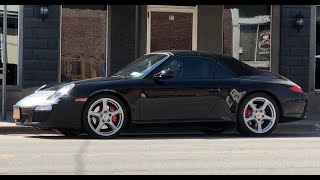
🎬 Watch: A helpful overview of the 997.2 oxygen sensor setup.Symptoms You May Notice
- Check Engine Light is on.
- Slightly increased fuel consumption.
- Car may run a bit rough or hesitate during the first few minutes after a cold start.
- Failure to pass an emissions test.
- A 'Check Engine, Visit Workshop' message may appear on the dashboard.
- Replacing the wrong sensor. P0030 is for Bank 1 (passenger side), Sensor 1 (pre-catalytic converter). A common mistake is replacing the post-cat sensor or the sensor on the driver's side (Bank 2).
Most Likely Causes
- Failed Bank 1 Pre-Cat Oxygen Sensor 🔴 High Probability → Shop Oxygen Sensor The internal heater element within the oxygen sensor is a common wear item that fails with age and heat cycles. Bosch is the OEM supplier, and this is a typical failure mode for their sensors after many years of service.
How to confirm: After checking fuses and wiring, the most definitive test is to measure the resistance across the two heater circuit pins on the sensor's connector. A reading of 'Open Line' (OL) or infinite resistance on a multimeter confirms the internal circuit is broken. 🎬 Watch: A professional guide on how to test an oxygen sensor. While some generic guides suggest a low resistance (2-30 Ohms) on a good sensor, Porsche-specific values for a healthy Bosch wideband sensor are typically 2-10 Ohms at room temperature. The key is the absence of an open circuit.
Typical fix: Replace the Bank 1, Sensor 1 oxygen sensor. 🎬 See this walkthrough on how to fix the P0030 engine code. Torque the new sensor to 37 ft-lb (50 Nm).
Est. part cost: $100-$250 - Wiring or Connector Damage ⚪ Low Probability The wiring harness is routed in a hot, tight engine bay. Over time, plastic connectors can become brittle and wires can be damaged, though it's less common than sensor failure.
How to confirm: Visually inspect the wiring harness from the oxygen sensor to its connection point in the engine bay. Check for melted insulation, chafed wires, or corrosion in the connector pins. A user on a 997.1 Turbo reported that the final cause of his O2 sensor codes was a bent prong inside the sensor's plug, which was resolved after straightening it. Perform a continuity test on the heater circuit wires from the sensor connector to the DME.
Typical fix: Repair the damaged section of the wiring harness or replace the connector pigtail.
Est. part cost: $10-$50 - Blown Fuse ⚪ Low Probability
How to confirm: Check the fuse box located in the driver's side footwell. While there isn't a single fuse labeled 'O2 Sensor', it is often grouped with other engine electronics. Consult the fuse map in your owner's manual or on the fuse box cover to identify and check relevant fuses (often labeled with engine or emissions symbols). A blown fuse suggests a short circuit in the wiring or the sensor itself.
Typical fix: Replace the blown fuse with one of the correct amperage. If the fuse blows again, it indicates a short circuit in the wiring or the sensor itself that must be diagnosed.
Est. part cost: $1-$5
Rare But Worth Checking
- Faulty Engine Computer (DME): This is extremely rare. The DME's internal driver for the heater circuit can fail, but this should only be considered after all other possibilities (sensor, wiring, fuses) have been exhaustively ruled out.
- Power Distributor Fault: Porsche issued TSB WJ11 for 997 and 987 models regarding the power distributor. A fault here can cause various electrical issues and error messages. While not a direct cause, an unstable power supply could theoretically impact the O2 heater circuit. This is a very unlikely cause for an isolated P0030 code.
Diagnosis Steps
- Read the code with an OBD-II scanner to confirm P0030 is present. Note any other codes like P0135 or P0134.
- Inspect the fuse box in the driver's footwell for any blown fuses related to engine electronics or emissions systems.
- Gain access to the O2 sensor connectors in the engine bay. For the 997.1, this is done by removing the engine airbox assembly. The bumper and exhaust do NOT need to be removed.
- Locate the connector for Bank 1, Sensor 1. The pre-cat sensors on a 997.1 have a blue sheathed cable. Disconnect it.
- Visually inspect the connector pins for corrosion or damage.
- Using a multimeter set to Ohms (Ω), measure the resistance between the two heater pins on the sensor side of the connector. A reading of infinite resistance (OL) indicates a failed sensor heater. A good sensor should read between 2-10 Ohms.
- If resistance is not infinite, check for 12V power at the harness-side connector with the ignition on. If power is missing, the problem is upstream in the wiring or fuse box.
- If the sensor and wiring test good, the most likely fix is still replacing the sensor, as intermittent failures are common. If a new sensor does not fix the issue, a more advanced diagnosis of the DME may be needed, but this is rare.
Parts You'll Likely Need
- Oxygen Sensor (Bank 1, Sensor 1)
(OEM #99760612801)— This is the pre-catalytic converter sensor for the passenger side (Bank 1) on M97 engines. Its internal heater is the component that fails, triggering the P0030 code.
Trusted brands: Bosch
OEM price range: $200-$280
Aftermarket price range: $100-$180
Related Codes That Often Appear With This One
- P0135 — P0135 is a nearly identical code, 'O2 Sensor Heater Circuit Malfunction (Bank 1 Sensor 1)'. Some scan tools may report one, the other, or both for the same fault. They point to the exact same problem.
- P0134 — P0134 means 'O2 Sensor Circuit No Activity Detected (Bank 1 Sensor 1)'. If the heater fails, the sensor may not reach operating temperature, leading to a lack of signal that can trigger this code alongside P0030.
Technical Service Bulletins (TSBs) & Recalls
- WJ11 (October 31, 2016): While not for P0030 specifically, this TSB addresses potential faults in the main power distributor on 2005-2012 997 and 987 models. It notes that a bad distributor can cause 'various malfunctions in the vehicle electrics' and 'various error messages'. This could be a very rare underlying cause if power to the O2 sensor heater circuit is affected.
Platform-Specific Known Issues
- DIY Repair Access & Tips: A common owner experience shared on forums is that this repair is easier than it looks. On a 997.1, access is gained by simply removing the airbox. The bumper, wheels, and exhaust do not need to be touched. A long 22mm wrench is often sufficient to remove the sensor from below. A helpful tip is to have a second person hold the sensor's wire from the top of the engine bay while unscrewing it from below to prevent the wire from twisting and binding.
Mechanic-Grade Diagnostic Values
- O2 Sensor Heater Element Resistance — expected: 2-10 Ohms at room temperature for a healthy Bosch wideband sensor.. Failure: Infinite resistance (Open Line or 'OL' on a multimeter) indicates a failed internal heater element.
- Voltage at Heater Circuit Power Pin (Harness Side) — expected: ~12V (battery voltage) with ignition on, engine off.. Failure: No voltage indicates a problem upstream in the fuse, relay, or power supply wiring.
- Live Data O2 Sensor Voltage (Signal, not heater) — expected: Once warm, a healthy sensor's signal voltage should fluctuate between ~0.1V and 0.9V. A Durametric scan tool can log these 'Actual Values'.. Failure: No activity or a static voltage can indicate a sensor that isn't heating up or has failed entirely, often triggering code P0134 in conjunction with P0030.
Scan Tool Commands That Help
- Durametric: Activations — After confirming the P0030 code, a technician can use the Durametric software to command the DME to activate specific components, such as the O2 sensor heater. This can help verify if the DME is sending the signal and if the wiring is intact, isolating the fault to the sensor itself if the command is sent but the sensor doesn't respond (e.g., draw current).
- Durametric: Actual Values — To monitor live data from the O2 sensor, including its signal voltage. While P0030 is a heater circuit code, observing a flatline or 'no activity' in the sensor's signal voltage via Actual Values can corroborate that the sensor is not reaching operating temperature, strengthening the diagnosis of a failed heater.
Wiring & Ground Locations
- DME Connector II (24-pin) — The DME (ECU) is located in the rear of the passenger compartment. Connector II is one of five large multi-pin connectors.. This connector contains the pins for the O2 sensor heater circuits. For the DME 7.8 used in the 997.1, Pin 24 is for 'Oxygen sensor heating 1 ahead of catalytic converter'. Probing this pin can confirm if the control signal is leaving the DME, which is a critical step if a new sensor and checked wiring do not solve the fault.
- DME Connector III (52-pin) — At the DME in the rear of the passenger compartment.. This connector contains the signal wires for the O2 sensors. For DME 7.8, Pin 24 is the 'Signal, HO2S 1 ahead of TWC'. While P0030 is a heater code, checking for a signal here can be part of a comprehensive diagnosis. A forum user noted the signal wire is green and shielded by a ground wire that goes to pin 23.
- Engine Bay Ground Points — Factory wiring diagrams show multiple ground points (GP) throughout the engine bay and chassis. A key ground point for engine electronics is often located on the chassis near the DME or on the engine block itself.. The O2 sensor heater circuit requires a solid ground to complete its circuit. A corroded or loose engine or chassis ground could potentially cause high resistance and trigger a heater fault, although it would likely cause other electrical issues as well.
Real Owner Repair Stories
- 6SpeedOnline user (2007-2009 Porsche 997.1 Turbo) — Check Engine Light with O2 sensor codes.
❌ Tried (didn't work) Replacing the primary oxygen sensor.
✅ What actually fixed it The issue was a bent prong inside the new sensor's electrical connector plug. Straightening the pin resolved the fault code. - Rennlist user (1999 Porsche 996 (similar M96 engine architecture)) — CEL for P0139 (O2 sensor aging), then after replacing with cheap sensors, got P0134 (No Activity) and P1115 (Heater fault).
❌ Tried (didn't work) Replacing all four O2 sensors with a cheap, unbranded set from eBay where all four sensors were identical., Clearing codes, checking connections, disconnecting battery.
✅ What actually fixed it Putting the original, old Porsche O2 sensors back in the car fixed the new codes. The lesson was that cheap, non-specific sensors caused more problems, and OEM/Bosch sensors with correct part numbers for pre-cat and post-cat are required.
OEM Part Supersession History
99760612800→99760612801, 99760612802, 99760612803— Standard part evolution and supplier updates.
Heads up: The part numbers 997606128xx are for the pre-cat sensor. The post-cat sensor has a different part number (e.g., 99760617702) and they are not interchangeable. Using a post-cat sensor in the pre-cat position will not work correctly.
Model Year Variations Within This Range
- 2005-2008 (997.1): These models use the M96/M97 engine family. The pre-cat O2 sensor is Bosch part 17307, corresponding to Porsche P/N 99760612801.
- 2009-2012 (997.2): These models use the completely different 9A1 direct-injection engine. The O2 sensors have different part numbers (e.g., post-cat is 9A160617702) and are not compatible with the earlier cars. Diagnostic and replacement procedures may vary.
Diagnostic Flowchart
Used vs. New Parts: Buying Guide for This Vehicle
When a used part is the smart pick: Never. Oxygen sensors are wear-and-tear items with a finite lifespan, typically rated for 50,000 to 100,000 miles. Installing a used sensor is not recommended as its remaining life is unknown, and it may fail shortly after installation, wasting time and labor.
What to inspect on the donor part:
- Not applicable as used parts are not recommended.
Aftermarket brands forum-validated for this vehicle:
- Bosch: Bosch is the Original Equipment Manufacturer (OEM) for Porsche and invented the modern O2 sensor. The direct-fit Bosch sensor (e.g., part 17307) is identical to the Porsche-branded part but often costs significantly less.
- Denso / NTK: These are other major OEM suppliers of oxygen sensors globally and are considered high-quality, reliable alternatives if a direct-fit Bosch is unavailable.
Brands owners have reported issues with on this vehicle:
- Unbranded / Generic 'eBay' sensors: Forum users report significant problems with cheap, unbranded sensor kits, which often use the same sensor for all positions (pre and post-cat) and can cause new, different trouble codes immediately after installation. It is critical to use a sensor with the correct heater resistance and connector for the specific application.
Real Owner Stories
Aggregated from forums and TSBs cited above. Mileages and costs reflect what owners reported in those sources.
Porsche 997
Symptoms: Recurrent Check Engine Light with codes P0030 and P0135, related to the heater control on the forward driver's side O2 sensor.
What fixed it: The owner was advised by an independent mechanic to replace all four O2 sensors, though another user suggested starting by replacing only the single bad sensor. The final repair performed was not confirmed in the source.
Source hint: Rennlist.com thread titled 'O2 Sensors - what's the appropriate move?'
Porsche 997.1 Turbo
Symptoms: O2 sensor codes.
What fixed it: The final cause was discovered to be a bent prong inside the sensor's electrical plug. The issue was resolved by straightening the prong.
Source hint: A forum report concerning a 997.1 Turbo, cited in the 'Wiring or Connector Damage' section.
Porsche 997.1 C2
Symptoms: Implied Check Engine Light requiring oxygen sensor replacement.
What fixed it: The owner replaced the oxygen sensor. The process involved removing only the airbox for access and having a helper hold the sensor wire from above to prevent twisting during removal from below.
Source hint: Rennlist.com thread titled 'DIY Oxygen Sensor Replacement Notes: 997.1 C2'
Related OBD-II Codes
Frequently Asked Questions
How difficult is it to replace the Bank 1 oxygen sensor myself on my Porsche 997?
What brand of oxygen sensor should I buy for my 911?
My scanner shows both P0030 and P0135. Do I have two separate problems?
What is the correct torque specification when installing a new oxygen sensor on this engine?
How can I definitively test the old oxygen sensor to confirm it's the cause of P0030?
Does this P0030 issue also affect the Porsche Boxster or Cayman?
Could TSB WJ11 be related to my P0030 code?
Helpful Videos
We Have This Part in Stock


The information in this article is provided for general reference and educational purposes only. Vehicle specifications, procedures, and part compatibility can vary by production date, trim level, and region. Always consult your vehicle's factory service manual and verify part numbers before purchasing or performing repairs. Safety-critical components such as airbags, seat belts, and braking systems should be installed by a qualified professional.
- Porsche 911:
- 🧭 Diagnostic Flowchart
- 🎬 Helpful Videos
- 🛍️ Shop This Part
- What's Unique About the 2005-2012 Porsche 911
- Symptoms You May Notice
- Most Likely Causes
- Rare But Worth Checking
- Diagnosis Steps
- Parts You'll Likely Need
- Related Codes That Often Appear With This One
- Technical Service Bulletins (TSBs) & Recalls
- Platform-Specific Known Issues
- Mechanic-Grade Diagnostic Values
- Scan Tool Commands That Help
- Wiring & Ground Locations
- Real Owner Repair Stories
- OEM Part Supersession History
- Model Year Variations Within This Range
- Used vs. New Parts: Buying Guide for This Vehicle
- Real Owner Stories
- Porsche 997
- Porsche 997.1 Turbo
- Porsche 997.1 C2
- Related OBD-II Codes
- Frequently Asked Questions
- 🎟️ Get 5% Off