

P0030 on 2010-2012 Saab 9-5: HO2S Heater Circuit Fault Causes and Fixes
P0030 on a 2010-2012 Saab 9-5 almost always means the heater element inside the upstream oxygen sensor (Bank 1, Sensor 1) has failed. This is a common wear item. Replacing the sensor with a quality Bosch, NTK, or Denso unit is the most reliable fix. Before replacing, it's wise to check the 'F27' fuse in the engine bay fuse box.
- P0030 points to a failure in the heater circuit of the upstream oxygen sensor (Bank 1, Sensor 1).
- The most common fix by far is to replace the sensor itself. The internal heater simply wears out over time.
- Before buying a new sensor, perform a quick visual check of the wiring for melting/damage and check the F27 15A fuse in the engine bay fuse box.
- Use a quality replacement sensor from a brand like Bosch (OEM), Denso, or NTK to ensure compatibility and avoid future issues.
- This is a DIY-friendly repair for those comfortable with basic tools, including a special 22mm (7/8") oxygen sensor socket.
What's Unique About the 2010-2012 Saab 9-5
The 2010-2012 'NG' (New Generation) Saab 9-5 was built on General Motors' global Epsilon II platform, sharing its core architecture and powertrains with the Buick Regal/LaCrosse and Opel Insignia. The 2.0L turbo is a GM LHU Ecotec engine, while the 2.8L V6 is the GM LP9, also used in the Opel Insignia OPC. While engine management software is tuned by Saab, the physical oxygen sensors and related wiring are standard GM parts. Bosch was the original equipment manufacturer (OEM) for these sensors, so using a Bosch replacement (or other high-quality OE brands like Denso and NTK) is the most reliable path to ensure compatibility with the sensitive electronics.
Symptoms You May Notice
- Check Engine Light is on
- Slightly reduced fuel economy, potentially a 5-10% increase in consumption.
- Failure to pass an emissions test
- Rough or unstable idle on a cold start.
- Replacing the wrong oxygen sensor (e.g., the downstream Sensor 2 instead of the upstream Sensor 1).
- Replacing the catalytic converter when no catalyst-related codes (like P0420) are present.
- Assuming the sensor is bad without first checking the F27 fuse in the engine bay.
Most Likely Causes
- Failed Oxygen Sensor Heater Element 🔴 High Probability → Shop Oxygen Sensor The internal heater element is a common wear-and-tear component that fails from age and thousands of heat cycles. It's the most frequent cause for P0030.
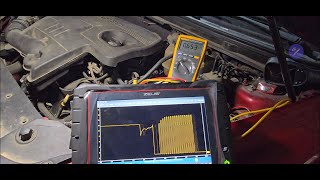
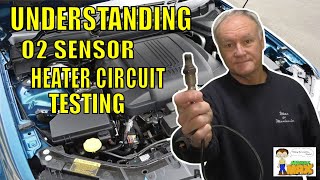
How to confirm: Disconnect the sensor and measure the resistance between the two heater circuit pins (often the two same-colored wires, e.g., white or brown) using a multimeter. 🎬 Watch: How to test oxygen sensor heater circuits with a multimeter. A good sensor will have a low resistance, typically between 5 and 15 Ohms when cold. An infinite reading (OL) or a very high resistance confirms the internal heater circuit is open and has failed.
Typical fix: Replace the Bank 1, Sensor 1 oxygen sensor. It is strongly recommended to use an OEM-quality brand like Bosch, Denso, or NTK to avoid compatibility issues.
Est. part cost: $70-$150 - Damaged Wiring or Connector 🟡 Medium Probability The wiring harness for the upstream O2 sensor is routed close to the hot exhaust manifold and turbocharger, making it susceptible to melting, becoming brittle, or chafing over time.
How to confirm: Visually inspect the sensor's wiring harness and connector for any signs of melting, chafing, corrosion, or loose pins. Wiggle the harness with the engine running (if safe to do so) to see if it triggers the fault intermittently, which can be monitored with a scan tool.
Typical fix: Repair the damaged section of the wiring harness or replace the connector pigtail.
Est. part cost: $15-$50 - Blown Fuse ⚪ Low Probability
How to confirm: Check the fuse for the O2 sensor heater circuit. For the 2010-2012 Saab 9-5, this is typically fuse F27 (a 15A fuse) located in the engine compartment fuse box. A short circuit within the old sensor's heater element can cause this fuse to blow.
Typical fix: Replace the blown fuse. If the new fuse blows immediately after installation (or after starting the car), it confirms a short circuit in the wiring or, more likely, within the O2 sensor itself, which must then be replaced.
Est. part cost: $1-$5
Rare But Worth Checking
- Faulty Engine Control Module (ECM): → Shop Engine Control Module (ECM) This is very rare and should be the last resort. The ECM's internal driver for the heater circuit can fail, but this should only be considered after the sensor, wiring, and fuse have all been definitively ruled out as the cause.
Diagnosis Steps
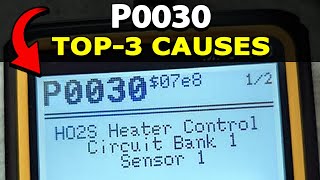
- Read the code with an OBD-II scanner to confirm P0030 is the primary fault. 🎬 Watch: What the P0030 code actually means and how to fix it.
- Locate the Bank 1, Sensor 1 oxygen sensor. On the 2.0L 4-cylinder engine, it is the only upstream sensor, located on the exhaust manifold before the turbo. On the 2.8L V6, Bank 1 is the cylinder bank closer to the firewall, and Sensor 1 is the upper sensor on that bank's exhaust manifold.
- Visually inspect the sensor's wiring harness and connector for obvious damage like melting, corrosion, or frayed wires.
- Check fuse F27 (15A) in the engine compartment fuse box. If it's blown, replace it and see if the code returns. If it blows again, the sensor is likely shorted internally.
- If the fuse is good, disconnect the sensor's electrical connector.
- Test the sensor's internal heater. Use a multimeter set to Ohms (Ω) and measure the resistance between the two heater pins on the sensor side of the connector (these are often the two wires of the same color). A good sensor should read between 5-15 Ohms. An 'OL' (Open Loop) or infinite reading means the heater is broken, and the sensor must be replaced.
- Test the vehicle's circuit. With the key on and engine off, use a multimeter set to DC Volts to check for battery voltage (approx. 12V) at one of the heater pins on the harness side of the connector. If there is no voltage, there is a break in the power supply wire or a blown fuse.
- If power is present and the sensor's resistance is within spec, the issue may be intermittent or, in very rare cases, a problem with the ECM driver circuit.
Parts You'll Likely Need
- Heated Oxygen Sensor (Bank 1, Sensor 1)
(OEM #55568696 (for 2.0T LHU), 12643705 (supersedes 55568696); 93185453 (for 2.8T LP9) - Always verify with VIN.)— The internal heater element is the most common failure point for code P0030.
Trusted brands: Bosch (OEM) - e.g., Bosch 17096, Denso (OEM quality), NTK (OEM quality)
OEM price range: $150-$250
Aftermarket price range: $70-$150 - Oxygen Sensor Socket — A special 22mm (7/8") socket with a slot for the wire is required to remove and install the sensor without damaging the pigtail. 🎬 See this walkthrough on how to change O2 sensors properly.
Trusted brands: Lisle, OEMTOOLS, NEO TOOLS
OEM price range: $10-$25
Aftermarket price range: $10-$25
Related Codes That Often Appear With This One
- P0031 — Indicates a short to ground in the same Bank 1 Sensor 1 heater circuit.
- P0032 — Indicates a short to voltage in the same Bank 1 Sensor 1 heater circuit.
- P0135 — A more generic SAE code for the same 'O2 Sensor Heater Circuit Malfunction (Bank 1 Sensor 1)'.
Platform-Specific Known Issues
- Fuse Location: The fuse for the heater circuit is located in the main fuse box in the engine compartment. It is labeled as F27 and is rated for 15 Amps. This should be checked before ordering a new sensor.
- Access on 2.8T V6: On the 2.8L V6 (LP9) engine, Bank 1 is the rear bank, closer to the firewall. Access to the upstream sensor (Sensor 1) can be tight, sometimes requiring removal of other components like heat shields or charge pipes for better access.
Mechanic-Grade Diagnostic Values
- HO2S Heater Power Supply Voltage — expected: Battery Voltage (approx. 12V) when testing with a test lamp.. Failure: Test lamp does not illuminate, indicating an open/high resistance or short to ground in the ignition circuit.
- HO2S Heater Control Circuit to Ground — expected: Test lamp connected between control circuit pin and B+ should NOT illuminate.. Failure: Test lamp illuminates, indicating a short to ground in the control circuit.
Scan Tool Commands That Help
- Tech 2 / GDS2 (or equivalent professional scanner): Monitor 'Circuit Status' Parameter — When an intermittent fault is suspected. Wiggle the related wiring harnesses and connectors with the engine running while watching this parameter. A change from 'OK' or 'Not Run' to 'Fault' will pinpoint the location of the intermittent connection issue.
- Tech 2 / GDS2 (or equivalent professional scanner): View Freeze Frame / Failure Records — To understand the exact vehicle operating conditions (engine speed, load, temperature, etc.) at the moment the DTC was set. This can help replicate the fault during diagnosis.
Wiring & Ground Locations
- B52 — Harness connector for the Bank 1, Sensor 1 Heated Oxygen Sensor.. This is the primary connector to test for power, ground, and signal integrity. Per the WIS, terminal 4 is the ignition circuit (power supply) and terminal 3 is the heater control circuit (ECM controlled ground).
- K20 — The Engine Control Module (ECM). On the related Saab 9-3 2.0T, it is located on the side of the engine block, near the exhaust, under a plastic shield.. The K20 ECM provides the pulsed ground signal to control the heater circuit via pin 3 of the B52 connector. In rare cases of sensor and wiring being confirmed good, the driver circuit within the K20 ECM can fail.
- ECM Ground Bolt — On similar Saab/GM platforms, a critical ground wire is often attached to one of the ECM's mounting bolts.. While not directly for the heater circuit, a poor main ground for the ECM can cause erratic behavior, including faulty sensor readings and driver circuit errors. Always ensure ECM grounds are clean and tight during diagnosis.
Real Owner Repair Stories
- Reddit user u/OB1182 in r/saab (Saab 9-5 Aero (T7 engine, similar sensitivity to NG9-5)) — Check Engine Light with misfire codes P1312 and P1334, particularly under boost.
❌ Tried (didn't work) Using Bosch platinum spark plugs, which a supplier database claimed were compatible.
✅ What actually fixed it The owner replaced the Bosch spark plugs with the OEM-specified NGK PFR6H-10 plugs, which resolved the misfiring. This highlights the platform's sensitivity to non-OEM electronic components, a lesson that directly applies to using the correct brand (Bosch, Denso, NTK) for the P0030 oxygen sensor fix.
Diagnostic Flowchart
Used vs. New Parts: Buying Guide for This Vehicle
When a used part is the smart pick: For this specific repair, a used part is only advisable for sourcing a replacement connector pigtail or a section of wiring harness if the original is damaged beyond repair. Never buy a used oxygen sensor; it is a wear item with a finite lifespan and its remaining health is impossible to verify.
Donor-vehicle mileage cap: roughly under 150000 miles for the part to have meaningful remaining life.
What to inspect on the donor part:
- For wiring/pigtails, inspect for any signs of melting, brittleness, or cracking from heat.
- Ensure the connector's locking tabs are intact and not broken.
- Check that the pins inside the connector are clean, straight, and free of corrosion.
OEM-only on this vehicle (don't cheap out):
- Oxygen Sensor (HO2S): Strongly recommend OEM (Bosch) or a direct OEM-equivalent from NTK or Denso to ensure compatibility with the sensitive engine management electronics.
- Engine Control Module (ECM): If diagnosis leads to a faulty ECM, it must be replaced with a correct, programmable OEM unit. Aftermarket ECMs are not a viable option.
Aftermarket brands forum-validated for this vehicle:
- Bosch (OEM for this sensor)
- NTK (also known as NGK)
- Denso
Brands owners have reported issues with on this vehicle:
- Unbranded 'white-box' or generic parts store sensors are notorious for causing compatibility issues, incorrect readings, or premature failure on European vehicles like Saab.
Related OBD-II Codes
Frequently Asked Questions
Where is the fuse for the O2 sensor heater on my 2011 Saab 9-5?
Which oxygen sensor is 'Bank 1, Sensor 1' for the P0030 code?
Is it difficult to access the Bank 1 sensor on the 2.8L V6 model?
What brand of replacement oxygen sensor should I use for my Saab 9-5?
How can I test the oxygen sensor myself to confirm it's the cause of P0030?
The wiring near my O2 sensor looks melted. Could that cause the P0030 code?
Can I use a cheap, used oxygen sensor from a junkyard?
Helpful Videos


The information in this article is provided for general reference and educational purposes only. Vehicle specifications, procedures, and part compatibility can vary by production date, trim level, and region. Always consult your vehicle's factory service manual and verify part numbers before purchasing or performing repairs. Safety-critical components such as airbags, seat belts, and braking systems should be installed by a qualified professional.
- Saab 9-5:
- 🧭 Diagnostic Flowchart
- 🎬 Helpful Videos
- What's Unique About the 2010-2012 Saab 9-5
- Symptoms You May Notice
- Most Likely Causes
- Rare But Worth Checking
- Diagnosis Steps
- Parts You'll Likely Need
- Related Codes That Often Appear With This One
- Platform-Specific Known Issues
- Mechanic-Grade Diagnostic Values
- Scan Tool Commands That Help
- Wiring & Ground Locations
- Real Owner Repair Stories
- Used vs. New Parts: Buying Guide for This Vehicle
- Related OBD-II Codes
- Frequently Asked Questions
- 🎟️ Get 5% Off