

P0030 on 2003-2009 Subaru Legacy: Causes and Fixes for the O2 Sensor Heater Circuit
On a 2003-2009 Subaru Legacy, code P0030 almost always means the front oxygen sensor (an Air/Fuel Ratio sensor) has failed. The internal heater circuit burns out, requiring sensor replacement. Before replacing, check the A/F sensor fuse in the engine bay fuse box. Expect to pay $120-$200 for an OEM-quality aftermarket sensor (like Denso) and $250+ for an OEM part. It's a straightforward DIY job for many owners.
- P0030 on your Legacy points directly to a problem with the front oxygen sensor's heater circuit.
- The most likely fix is replacing the front oxygen sensor (also called an Air/Fuel Ratio sensor).
- Before buying a new sensor, take 10 minutes to check the 'A/F HEATER' fuse and test the old sensor's heater resistance with a multimeter to confirm it has failed (it should read between 2.5-5.0 ohms).
- Use a quality aftermarket brand like Denso (the original supplier) or an OEM part for best results. The Denso part number is often 234-9123 for the non-turbo 2.5L engine.
- This is a very manageable DIY repair with basic tools and an oxygen sensor socket, though access on turbo models can be tight.
What's Unique About the 2003-2009 Subaru Legacy
Subaru's 4-cylinder boxer engines have a single cylinder bank, so 'Bank 1' refers to the entire engine. 'Sensor 1' is the upstream Air/Fuel Ratio (A/F) sensor located on the passenger-side exhaust manifold, before the catalytic converter. Unlike a basic oxygen sensor, this A/F sensor is a more precise (and expensive) wideband unit. The failure of its internal heater is a very common issue on this platform, often due to age and countless heat cycles, and is considered a standard wear item.
Symptoms You May Notice
- Check Engine Light is on (often with a flashing 'Cruise Control' light)
- Decreased fuel economy
- Rough idle or slight hesitation, particularly when the engine is cold
- Failed emissions test
- Replacing the rear oxygen sensor (Sensor 2) instead of the front one (Sensor 1). P0030 specifically refers to Sensor 1.
- Attributing a slight engine hesitation solely to the P0030 code. Some Legacys have a known hesitation issue between 2400-2800 RPM related to fueling and timing maps, which is a separate problem.
Most Likely Causes
- Failed Front Oxygen (A/F) Sensor 🔴 High Probability → Shop Oxygen Sensor The internal heater element is a common failure point due to age and constant exposure to extreme exhaust temperatures. It's considered a wear-and-tear item.
How to confirm: Disconnect the sensor and measure the resistance between the two heater circuit pins (usually the two wires of the same color, often black). A reading of 'OL' (Open Loop) or infinite resistance on a multimeter indicates a burned-out heater. A good sensor should have a low resistance, typically between 2.5 and 5.0 ohms when at room temperature.
Typical fix: Replace the Bank 1, Sensor 1 Air/Fuel Ratio sensor.
Est. part cost: $120-$220 - Damaged Wiring or Connector 🟡 Medium Probability The wiring harness is located in a high-heat engine bay and can become brittle, or rodents can chew on the wires. The harness runs close to the exhaust manifold and can be damaged if not properly secured.
How to confirm: Visually inspect the wiring harness from the sensor to where it connects to the main engine harness near the passenger side strut tower. Check for melted plastic, chafed wires, or corrosion inside the connector pins. With the key on, engine off, check for 12V power at the appropriate pin on the harness-side connector.
Typical fix: Repair the damaged section of wire or replace the connector pigtail.
Est. part cost: $10-$40 - Blown Fuse ⚪ Low Probability
How to confirm: Locate the main fuse box in the engine compartment. Check the fuse labeled 'A/F HEATER' or similar (often a 15A or 20A fuse). On many 2005-2009 models, this is fuse #12 or is related to the main relay in the engine compartment fuse box. Visually inspect the fuse. If it blows again immediately after replacement, a short circuit exists in the wiring or the sensor itself.
Typical fix: Replace the blown fuse. If the fuse blows repeatedly, diagnose the underlying short circuit, which is often a failed sensor heater.
Est. part cost: $1-$5
Rare But Worth Checking
- Faulty Engine Control Module (ECM): → Shop Engine Control Module (ECM) This is very uncommon. Before condemning the ECM, all other possibilities (sensor, wiring, fuses) must be exhaustively ruled out. One forum user on Ultimate Subaru Message Board confirmed a bad ECU driver was the cause after swapping with a known-good unit from another car; the heater circuit was not being grounded by the ECU.
Diagnosis Steps
- Read the code with an OBD-II scanner to confirm P0030 is present.
- Check the A/F sensor heater fuse (often labeled 'A/F HEATER') in the under-hood fuse box. Replace if blown.
- Locate the front oxygen sensor (Bank 1, Sensor 1) on the passenger side exhaust manifold.
- Inspect the sensor's wiring and connector for any visible damage, melting, or corrosion. Ensure the harness is properly clipped away from hot exhaust components.
- Disconnect the sensor. Turn the ignition to 'ON' (engine off) and use a multimeter to verify that there is battery voltage (approx. 12V) being supplied to one of the heater circuit pins on the vehicle's harness connector.
- With the sensor still disconnected, set your multimeter to measure resistance (Ohms). Measure the resistance between the two heater pins (same-colored wires) on the sensor itself. A good sensor will show a low resistance value (e.g., 2.5-5.0 ohms). A failed sensor will typically show infinite resistance (an open circuit).
- If the wiring has power and the sensor's heater circuit is open, the sensor is faulty and needs to be replaced.
- If the sensor tests good but power is missing at the harness, trace the wiring back to the fuse/relay to find the break.
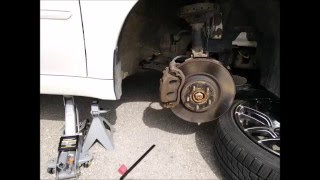
- After replacing the part, clear the trouble code with a scanner. 🎬 Watch: A complete walkthrough of the P0030 diagnostic and repair. It may be necessary to perform a drive cycle (10-15 minutes of driving) for the ECU to recognize the new sensor and for the Check Engine Light to stay off.
Parts You'll Likely Need
- Front Air/Fuel Ratio Sensor
(OEM #22641AA272 (for 2.5L EJ253 N/A), 22641AA211 (for 2.5L EJ255 Turbo). Note: These part numbers may have been superseded. Always verify with VIN.)— This is the most common failure for code P0030, as the internal heater element burns out over time.
Trusted brands: Denso (OEM supplier), NGK/NTK
OEM price range: $250-$300
Aftermarket price range: $120-$200
Related Codes That Often Appear With This One
- P0134 — P0134 means 'O2 Sensor Circuit No Activity Detected'. This code can appear with P0030 because if the sensor's heater is broken, the sensor cannot warm up to produce a signal, leading the ECM to see 'no activity'.
- P0031 — This code indicates 'HO2S Heater Control Circuit Low', meaning the ECM has detected a short to ground in the heater circuit. It often points to the same root causes as P0030 and can sometimes appear after a faulty sensor replacement.
- P0032 — This code indicates 'HO2S Heater Control Circuit High', meaning the ECM has detected a short to power in the heater circuit. One owner on LegacyGT.com reported getting P0032, replacing the sensor, and then getting P0030, indicating the complexity of the circuit's diagnostics.
Platform-Specific Known Issues
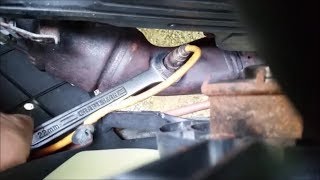
- Access on Turbo Models (Legacy GT): On the 2.5L turbo engine (EJ255), the front A/F sensor is located on the exhaust manifold very close to the turbocharger's heat shield. Access can be tight, and it may be necessary to remove the intercooler and/or the heat shield 🎬 Watch: Step-by-step upstream sensor replacement on a Legacy GT. to gain proper leverage with an O2 sensor socket.
- Use of OEM or Denso Parts is Critical: Subaru ECUs are known to be sensitive to the specific characteristics of their sensors. Many owners on forums like LegacyGT.com and UltimateSubaru.org report that using generic or off-brand sensors often fails to resolve the code or introduces new codes (like P0031/P0032). Sticking with a genuine Subaru part or a Denso-branded sensor is highly recommended for a successful first-time repair.
Mechanic-Grade Diagnostic Values
- A/F Sensor Heater Resistance — expected: 2.5 to 5.0 Ohms at room temperature. Some sources cite up to 10 Ohms as acceptable.. Failure: Infinite resistance (Open Loop / OL) indicates a burned-out heater. Resistance significantly lower than 2.0 Ohms may indicate an internal short.
- Voltage at Harness Connector (Heater Power Pin) — expected: Approximately 12V (Battery Voltage) with Key On, Engine Off.. Failure: 0V or significantly less than 12V indicates a problem with the fuse, relay, or wiring from the power source.
- Voltage at Harness Connector (Heater Ground Pin) — expected: Should show less than 1.0V with the key on and engine idling, as the ECU provides a controlled ground to activate the heater.. Failure: Reading 12V on both heater wires (power and ground) indicates the ECU is not providing the ground path, which could be a wiring or ECU fault.
Scan Tool Commands That Help
- Subaru Select Monitor (SSM) or equivalent professional scanner: DTC Status Check / Live Data Monitoring — While P0030 doesn't typically have a specific bidirectional test for the heater, a professional scan tool is used to monitor live data from the A/F sensor to confirm 'No Activity' (related to P0134) and to properly clear the code from the ECM's memory after repair.
Wiring & Ground Locations
- Front A/F Sensor Connector — On the passenger side of the engine bay, typically clipped to a bracket near the strut tower. The harness runs down to the sensor on the exhaust manifold.. This is the primary point for testing voltage and resistance. Corrosion or damage here is a common cause of failure.
- Engine Ground (Intake Manifold) — A primary grounding point for many sensors is located on top of the intake manifold. The ECU itself is often grounded via a bolt on the manifold.. A poor ground connection at this location can cause a variety of intermittent electrical issues, including incorrect sensor readings or faulty ground signals from the ECU, which controls the A/F sensor heater.
- Engine Bay Fuse Box — Located on the driver's side of the engine bay.. This box contains the fuse for the A/F sensor heater circuit. For 2005-2009 models, this is often a 15A fuse in position #12, but this can vary.
- A/F Sensor Heater Relay — The A/F sensor heater is typically powered by the main relay, which is also located in the engine bay fuse box. There is not usually a separate, dedicated relay just for the O2 heater.. A failure of the main relay would cause a no-start or multiple other codes, but its function is critical for powering the heater circuit.
Real Owner Repair Stories
- Ultimate Subaru Message Board user 'WoodsWagon' (2003 Subaru Outback (similar platform/engine)) — Persistent P0030 code that would return immediately after being cleared.
❌ Tried (didn't work) Replacing the front A/F sensor with a new Denso part.
✅ What actually fixed it The owner tested the harness and found 12V on both the power and ground wires for the heater, indicating the ECU was not providing the ground. They swapped in a spare ECU from another Legacy, which immediately fixed the problem. The final fix was replacing the faulty ECU.
OEM Part Supersession History
22641AA272→This part number is still listed as current for many EJ253 applications, but it's critical to verify with a VIN as minor changes occurred.— N/A
Heads up: Using a sensor for a turbo engine (EJ255) on a non-turbo (EJ253) or vice-versa will not work, even if the plug is the same. The ECU is calibrated for specific sensor characteristics.
Model Year Variations Within This Range
- 2003-2004 vs 2005-2009: There may be minor differences in fuse box layouts and connector pinouts between pre-facelift (2003-2004) and facelift (2005-2009) models. For example, a 2003 Legacy harness pinout shows Yellow/Red for 12V power and Green for the heater ground, which may differ from later years. Always consult a model-year specific wiring diagram.
Diagnostic Flowchart
Real Owner Stories
Aggregated from forums and TSBs cited above. Mileages and costs reflect what owners reported in those sources.
2005 Subaru Legacy GT
Symptoms: Check engine light with codes P0030, P0031, and P0134.
What fixed it: Replaced the front oxygen sensor (Bank 1, Sensor 1) with a direct-fit part from O'Reilly's.
Cost: $125
Source hint: YouTube
Subaru Legacy
Symptoms: Diagnosed P0030 and P0134. Confirmed the sensor was good and it was getting 12V power, but discovered the ECU was not providing the ground signal.
What fixed it: Swapped in a spare ECU which fixed the problem, confirming a rare ECM failure.
Source hint: Ultimate Subaru Message Board - P0030 Upstream O2 Sensor keeps failing...
2005 Subaru Legacy GT
Symptoms: Experienced a P0031 code (Heater Circuit Low) related to the front sensor heater circuit.
What fixed it: Replaced the front sensor with a Denso part, and resolved the issue.
Source hint: LegacyGT.com
Related OBD-II Codes
Frequently Asked Questions
Why is my Cruise Control light flashing along with the Check Engine Light for code P0030 on my Legacy?
Can I use a generic aftermarket O2 sensor to fix P0030 on my EJ253 or EJ255 engine?
Where is the A/F sensor heater fuse located on my 2005-2009 Legacy?
I have a Legacy GT (EJ255 turbo). Is replacing the front A/F sensor difficult?
I replaced the sensor and checked the fuse, but P0030 is still there. What else could it be?
What should the resistance reading be on a healthy front A/F sensor for this Subaru?
Helpful Videos

We Have This Part in Stock


The information in this article is provided for general reference and educational purposes only. Vehicle specifications, procedures, and part compatibility can vary by production date, trim level, and region. Always consult your vehicle's factory service manual and verify part numbers before purchasing or performing repairs. Safety-critical components such as airbags, seat belts, and braking systems should be installed by a qualified professional.
- Subaru Legacy:
- 🧭 Diagnostic Flowchart
- 🎬 Helpful Videos
- 🛍️ Shop This Part
- What's Unique About the 2003-2009 Subaru Legacy
- Symptoms You May Notice
- Most Likely Causes
- Rare But Worth Checking
- Diagnosis Steps
- Parts You'll Likely Need
- Related Codes That Often Appear With This One
- Platform-Specific Known Issues
- Mechanic-Grade Diagnostic Values
- Scan Tool Commands That Help
- Wiring & Ground Locations
- Real Owner Repair Stories
- OEM Part Supersession History
- Model Year Variations Within This Range
- Real Owner Stories
- 2005 Subaru Legacy GT
- Subaru Legacy
- 2005 Subaru Legacy GT
- Related OBD-II Codes
- Frequently Asked Questions
- 🎟️ Get 5% Off