

P0030 on 2010-2014 Subaru Outback 3.6L: A/F Sensor Heater Circuit Causes and Fixes
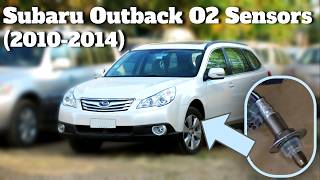
On a 2010-2014 Outback with the 3.6L H6 engine, code P0030 almost always means the internal heater for the front passenger-side Air/Fuel (A/F) ratio sensor has failed. The fix is to replace the sensor. Expect to pay around $180-$240 for a Denso (OEM supplier) part, with a DIY difficulty of 2/5. The most common OEM part number is 22641AA50A, which corresponds to Denso part #234-9092.
- P0030 on this Outback almost certainly means you need a new front passenger-side Air/Fuel Ratio sensor.
- Use a quality Denso (part #234-9092) or NGK/NTK sensor to avoid compatibility issues. The Subaru OEM part number is 22641AA50A.
- Before starting, spray the old sensor with penetrating oil and let it soak to make removal easier. A special 22mm O2 sensor socket is highly recommended.
- Always check the fuse first, but it is rarely the cause.
What's Unique About the 2010-2014 Subaru Outback
For the Subaru Outback with the EZ36D 3.6L H6 boxer engine, "Bank 1" refers to the cylinder bank on the passenger side of the vehicle. The P0030 code specifically points to the upstream sensor on this bank, located in the exhaust manifold before the catalytic converter. While the code is straightforward, Subarus are known for disabling the cruise control and Vehicle Dynamics Control (VDC) systems as a safety precaution whenever the Check Engine Light is on, which can be alarming to the driver but is normal behavior for this fault.
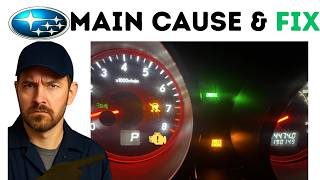
🎬 Watch: Why your cruise control light is flashingSymptoms You May Notice
- Check Engine Light (CEL) is on
- Cruise control light flashing or disabled
- Vehicle Dynamics Control (VDC) or traction control light is on
- Decreased fuel economy
- Rough idle on cold starts
- Potential hesitation during acceleration while the engine is cold
- Replacing the wrong oxygen sensor (e.g., the downstream sensor or the sensor on the driver's side/Bank 2).
- Replacing the catalytic converter.
- Replacing the sensor without first checking the fuse and wiring for power.
- Using a cheap, universal oxygen sensor that has compatibility issues with the Subaru ECM.
Most Likely Causes
- Failed Bank 1 Air/Fuel Ratio Sensor Heater Element 🔴 High Probability → Shop Oxygen Sensor The internal heating element is a common failure point in oxygen sensors after many heat cycles over years of use. It essentially burns out like a lightbulb filament, creating an open circuit.
How to confirm: Disconnect the sensor and use a multimeter set to Ohms (Ω) to test the resistance between the two same-colored wires (usually black) of the sensor's connector. A good heater circuit will have a low resistance, typically between 2-5 ohms. A failed sensor will show infinite resistance (an open circuit, often displayed as 'OL' on the multimeter).
Typical fix: Replace the Bank 1, Sensor 1 (passenger side, upstream) Air/Fuel Ratio sensor. The recommended OEM-equivalent part is Denso #234-9092.
Est. part cost: $180-$280 - Blown A/F Sensor Heater Fuse ⚪ Low Probability A short circuit in the sensor's wiring or the sensor itself can cause the fuse to blow as a protective measure.
How to confirm: Locate the main fuse box in the engine compartment. Check the diagram on the fuse box cover for a fuse labeled 'A/F SENSOR HEATER' or similar (often a 15A or 20A fuse) and inspect it to see if it's blown. If the fuse is good, you can also check for 12V power at the vehicle-side harness connector with the key on, engine off.
Typical fix: Replace the blown fuse. If the fuse blows again immediately, it indicates a short circuit in the wiring or sensor that needs to be found and repaired.
Est. part cost: $1-$5 - Damaged Wiring or Connector ⚪ Low Probability The wiring harness for the sensor is routed near hot exhaust components and can become brittle, melted, or chafed over time, leading to a short or open circuit. The connector itself can also accumulate moisture or corrosion.
How to confirm: Visually inspect the wiring harness leading to the Bank 1 A/F sensor from the engine bay down to the exhaust manifold. Look for any signs of melting, chafing, or broken wires. Check the connector for corrosion, moisture, or pushed-out pins.
Typical fix: Repair the damaged section of the wiring harness or clean/repair the connector. In severe cases, a new connector pigtail may need to be spliced in.
Est. part cost: $10-$40
Rare But Worth Checking
- Failed Engine Control Module (ECM): → Shop Engine Control Module (ECM) This is extremely rare. The ECM's internal driver for the heater circuit can fail, but all other potential causes, especially the sensor itself, should be exhaustively ruled out before considering ECM replacement.
Diagnosis Steps
- Read the code with an OBD-II scanner to confirm P0030 is present.
- Locate the main fuse box in the engine bay and check the fuse for the A/F sensor heater. Replace if blown and see if the code returns.
- If the fuse is good, locate the Bank 1, Sensor 1 (passenger side, upstream) A/F sensor connector in the engine bay. It is one of two gray connectors mounted on a bracket near the passenger-side strut tower.
- Visually inspect the wiring and connector for any obvious damage, melting, or corrosion.
- Disconnect the sensor and test the resistance of the heater circuit on the sensor side of the connector (between the two black wires). An open circuit ('OL') or very high resistance confirms a bad sensor. A good sensor should read between 2-5 Ohms.
- If the sensor tests good, use a multimeter to check for 12V power and a good ground at the vehicle-side harness connector with the key on, engine off.
- If power and ground are present and the sensor resistance is within spec, the issue could be an intermittent connection or, in very rare cases, the ECM driver circuit.
- If the sensor is confirmed bad, replace it. It is highly recommended to use an OEM-equivalent brand like Denso to avoid compatibility problems.
Parts You'll Likely Need
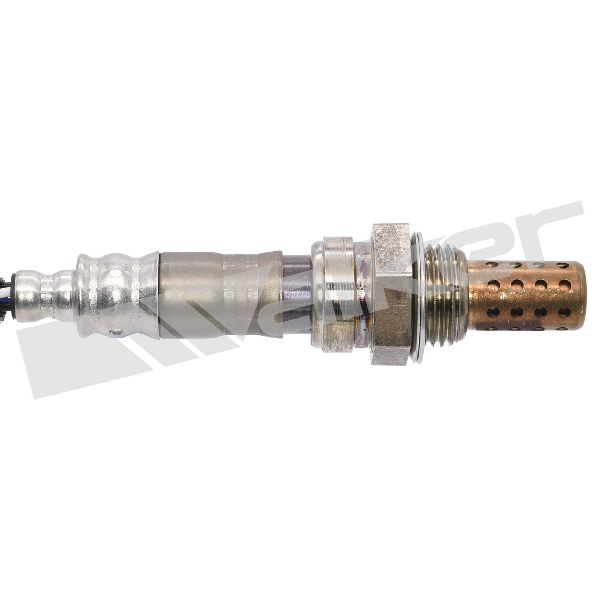
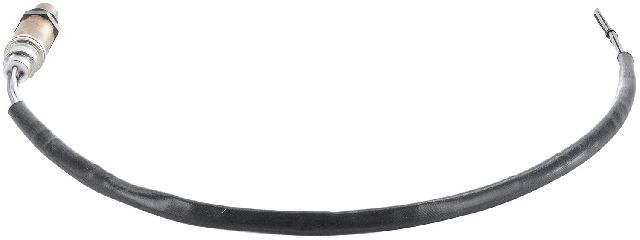
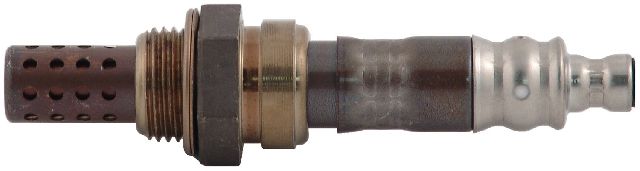
- Air/Fuel Ratio Sensor (Bank 1, Sensor 1)
(OEM #22641AA50A)— This is the component that contains the heater element that fails, which is the cause of the P0030 code in over 95% of cases.
Trusted brands: Denso (Part #234-9092), NGK/NTK
OEM price range: $220-$300
Aftermarket price range: $180-$240
Related Codes That Often Appear With This One
- P0031 — This code for 'Heater Control Circuit Low' is a more specific version of P0030, often indicating a short to ground in the same circuit.
- P0032 — This code for 'Heater Control Circuit High' also points to the same circuit and often indicates a short to power.
- P0134 — This code for 'O2 Sensor Circuit No Activity Detected' can be a direct result of the P0030 fault, as a non-working heater will prevent the sensor from sending a signal when the engine is cold.
Platform-Specific Known Issues
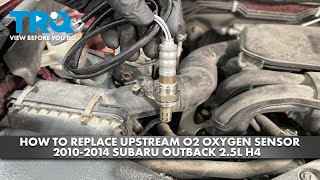
- The most common challenge with this repair is the old sensor being seized in the exhaust manifold due to rust and heat cycles. Applying penetrating oil generously before attempting removal and using a dedicated 22mm O2 sensor socket is highly recommended. In severe cases, a torch may be needed to heat the manifold bung to break the sensor free. 🎬 Watch this walkthrough for replacing a seized sensor Some owners have had to remove the exhaust manifold to get enough leverage on a stuck sensor.
Mechanic-Grade Diagnostic Values
- A/F Sensor Heater Circuit Resistance — expected: 1.4 - 5.0 Ohms at room temperature.. Failure: A reading of infinite resistance (OL) or a value significantly outside the expected range indicates a failed heater element.
- Voltage at Harness Connector Heater Power Pin — expected: Approximately 12V (Battery Voltage) with Key On, Engine Off.. Failure: 0V or significantly low voltage points to a problem upstream of the sensor, such as a blown fuse, faulty relay, or wiring issue.
- A/F Sensor Heater Current Draw — expected: 0.52 ± 0.1 Amps at 13.5V (when exhaust temp is 450°C).. Failure: Current draw significantly outside this range points to a circuit or sensor fault. A low current may trigger P0031, while high current can trigger P0032.
Scan Tool Commands That Help
- Subaru Select Monitor (SSM): Current Data Display > O2 Heater Diagnosis — To check the status of the oxygen sensor heater self-test. It will show as 'Complete' or 'Incomplete', which helps confirm if the ECM is recognizing the circuit's operation after a repair.
- Subaru Select Monitor (SSM): Active Test — The SSM's Active Test function allows for the activation of various solenoids and system modes. While not explicitly for the heater, it can be used to test related components in the emissions system.
Wiring & Ground Locations
- Main Fuse Box (MFB) — In the engine compartment, on the passenger side, right behind the battery.. This box contains the fuse and relay for the A/F sensor heater circuit. A blown fuse or failed relay will cut power to the heater, causing P0030.
- A/F Sensor Heater Relay — Located within the Main Fuse Box (MFB) in the engine compartment.. This relay provides the 12V power to the sensor's heater element. While less common to fail than the sensor itself, a faulty relay will prevent the heater from working and set this code.
- A/F Sensor Connector (Bank 1, Sensor 1) — A gray connector mounted on a bracket near the passenger-side strut tower, next to the upper radiator hose.. This is the primary access point for testing the sensor's heater resistance and checking for power and ground from the vehicle's wiring harness.
Real Owner Repair Stories
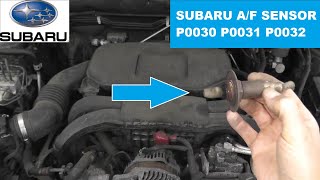
- YouTube Comment on 'Subaru Air Fuel Sensor P0030 P0031 P0032' (2011 Subaru Outback 2.5L (different engine, but same code and component function), ~173,000 miles) — Check Engine Light with codes P0030, P0031, or P0032.
✅ What actually fixed it The owner replaced the front oxygen sensor (air fuel sensor), which resolved the code. - ScannerDanner Forum (2002 Subaru Outback 3.0 H6 (older model, but same engine layout and code principle)) — Intermittent P0030, poor fuel economy, vehicle stuck in open loop, A/F sensor voltage stuck at 3.79v.
❌ Tried (didn't work) Clearing codes
✅ What actually fixed it Diagnosis revealed no resistance reading (open circuit) on the Bank 1 sensor's heater wires, while the good Bank 2 sensor read 1.4 ohms. The confirmed fix was to replace the failed Bank 1 A/F sensor.
Diagnostic Flowchart
Other Known Issues on This Vehicle
Issues unrelated to this code that are worth knowing about as an owner of this generation:
- Torque Converter Shudder 🟠 Medium — Common on the 5EAT transmission, especially over 100,000 miles. Feels like driving over rumble strips at low-to-medium speeds (35-45 mph). (Ref: While no specific recall exists for this generation, Subaru has issued TSBs for similar issues on other models (e.g., 16-95-15 for CVT issues) and dealers are familiar with the problem. A fluid change or adding a friction modifier like 'Shudder Fixx' is a common first attempt at a fix.)
- Power Steering Pump Whine / Air Ingress 🟡 Low — A very common issue where air gets sucked into the power steering system, causing a whining noise that changes with engine RPM. It is often misdiagnosed as a failed pump. (Ref: No TSB, but the common cause is a hardened O-ring on the power steering pump inlet, which is a very inexpensive part to replace. The suction hose itself can also become hard and brittle, causing a similar leak.)
- Headlight Bulb Burnout and Difficult Replacement 🟡 Low — Many owners report frequent failure of low-beam headlight bulbs. Replacement is notoriously difficult, requiring access through the wheel well.
- Steering Wheel Vibration / 'Shimmy' 🟠 Medium — Some 2010-2011 models experienced a persistent steering wheel vibration at highway speeds. (Ref: Subaru issued TSB 05-48-10 for 2010-2011 models, which involved a complex procedure of replacing steering and suspension components to resolve the issue.)
Used vs. New Parts: Buying Guide for This Vehicle
When a used part is the smart pick: For this repair, a used part only makes sense for the harness-side connector pigtail if the original is damaged or corroded. The A/F sensor itself should always be purchased new.
Donor-vehicle mileage cap: roughly under 100000 miles for the part to have meaningful remaining life.
What to inspect on the donor part:
- For a connector pigtail, ensure the plastic is not brittle or cracked.
- Check for any signs of corrosion or pushed-out pins inside the connector.
- Ensure there is at least 6-8 inches of wiring attached to the pigtail for easier splicing.
Aftermarket brands forum-validated for this vehicle:
- Denso (OEM supplier)
- NGK/NTK
Brands owners have reported issues with on this vehicle:
- Unnamed 'universal' sensors that require splicing wires.
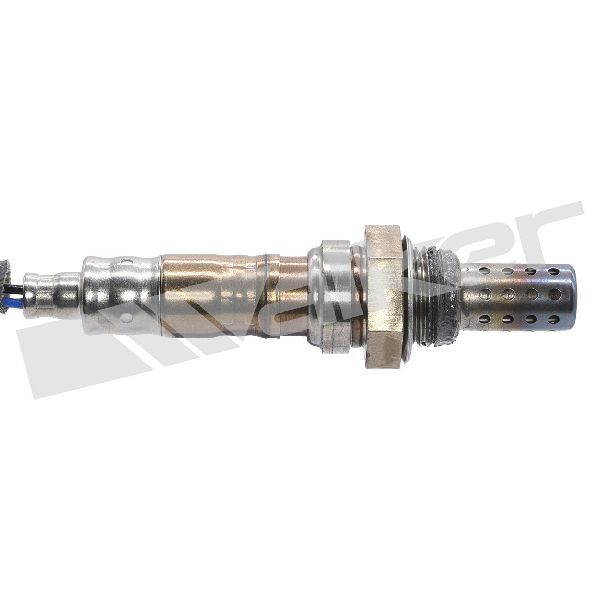
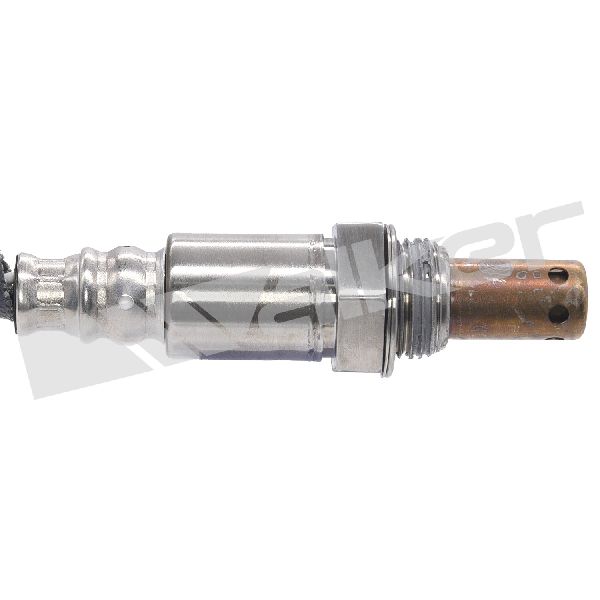
- Walker branded sensors have mixed reviews; while some are reportedly re-branded Denso, others have reported compatibility issues. It is safer to stick with Denso or NTK.
Real Owner Stories
Aggregated from forums and TSBs cited above. Mileages and costs reflect what owners reported in those sources.
2011 Subaru Outback 3.6R
Symptoms: Confirmed the Bank 1 Sensor 1 location is the passenger side, in front of the catalytic converter.
What fixed it: Replacement of the passenger side upstream A/F sensor.
Source hint: Reddit (r/subaruoutback)
2017 Subaru Legacy 3.6R
Symptoms: Reported getting P0030, P0031, and P0134 together, pointing to a recurring issue with the A/F sensor heater circuit.
What fixed it: Replacement of the A/F sensor.
Source hint: Reddit r/subarulegacy
2010-2014 Subaru Outback 3.6L
Symptoms: The old sensor was seized in the exhaust manifold due to rust and heat cycles.
What fixed it: Applying penetrating oil and using a dedicated 22mm O2 sensor socket; some owners required a torch or manifold removal for leverage.
Source hint: subaruoutback.org
Related OBD-II Codes
Frequently Asked Questions
Which specific sensor do I need to replace for a P0030 code on my 3.6L Outback?
Where is the A/F sensor connector located on the EZ36D engine?
My steering wheel vibrates at highway speeds along with the CEL; is this related to P0030?
Can I use a universal oxygen sensor to save money on this repair?
Why did my cruise control and VDC lights come on with the Check Engine Light?
Is there a fuse I should check before buying a new Denso sensor?
I'm having trouble removing the old sensor from the manifold. Any tips?
Helpful Videos
We Have This Part in Stock


The information in this article is provided for general reference and educational purposes only. Vehicle specifications, procedures, and part compatibility can vary by production date, trim level, and region. Always consult your vehicle's factory service manual and verify part numbers before purchasing or performing repairs. Safety-critical components such as airbags, seat belts, and braking systems should be installed by a qualified professional.
- Subaru Outback:
- 🧭 Diagnostic Flowchart
- 🎬 Helpful Videos
- 🛍️ Shop This Part
- What's Unique About the 2010-2014 Subaru Outback
- Symptoms You May Notice
- Most Likely Causes
- Rare But Worth Checking
- Diagnosis Steps
- Parts You'll Likely Need
- Related Codes That Often Appear With This One
- Platform-Specific Known Issues
- Mechanic-Grade Diagnostic Values
- Scan Tool Commands That Help
- Wiring & Ground Locations
- Real Owner Repair Stories
- Other Known Issues on This Vehicle
- Used vs. New Parts: Buying Guide for This Vehicle
- Real Owner Stories
- 2011 Subaru Outback 3.6R
- 2017 Subaru Legacy 3.6R
- 2010-2014 Subaru Outback 3.6L
- Related OBD-II Codes
- Frequently Asked Questions
- 🎟️ Get 5% Off