

P0031 on 2015-2017 Chrysler 200 2.4L: O2 Sensor Heater Circuit Causes and Fixes
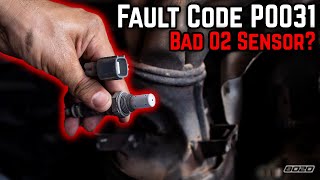
For a 2015-2017 Chrysler 200 with the 2.4L engine, code P0031 almost always means the upstream oxygen sensor (Bank 1, Sensor 1) has failed. The most likely fix is replacing the sensor itself. Before replacing, check for a blown fuse and inspect the wiring for melting. Expect to pay around $130 for an OEM Mopar part (P/N: 68195741AA) or $40-$90 for a quality aftermarket replacement from brands like NTK or Denso.
- P0031 on your Chrysler 200 almost certainly points to a bad upstream oxygen sensor (the one on the exhaust manifold).
- The most common and effective fix is to replace the sensor (OEM Part #68195741AA).
- Before replacing the sensor, perform a quick visual check of the wiring for any obvious melting or damage.
- This is a DIY-friendly repair that can be done with basic tools and a special O2 sensor socket (22mm or 7/8").
- If you have high oil consumption, be aware that this can cause the new sensor to fail prematurely as well.
What's Unique About the 2015-2017 Chrysler 200
The 2.4L MultiAir 'Tigershark' engine, used across many Chrysler, Dodge, and Jeep vehicles, is well-documented for this specific P0031 fault. A known tendency for excessive oil consumption on this engine can contaminate the oxygen sensor, leading to premature and repeated failures. This oil consumption issue is so prevalent that it has led to class-action lawsuits and a specific Technical Service Bulletin (TSB 09-003-23) outlining an oil consumption test and potential engine replacement under an extended warranty (XB1). While the sensor itself is the most common culprit, Chrysler has also issued several PCM software updates to fix other O2 sensor-related codes on this platform, making a software check a relevant diagnostic consideration. Manufacturer service bulletins, such as TSB Bulletin #1805916 and TSB Bulletin #1805022REVA, specifically list P0031 (O2 Sensor 1/1 Heater Circuit Low) as a recognized diagnostic trouble code across the Chrysler lineup, reinforcing its status as a known electrical system fault.
Symptoms You May Notice
- Check Engine Light is on
- Decreased fuel economy
- Failure to pass an emissions test
- Rough idle on a cold start
- Replacing the downstream (Sensor 2) oxygen sensor instead of the upstream (Sensor 1) sensor.
- Replacing the oxygen sensor without first checking for a blown fuse or damaged wiring.
- Assuming the oxygen sensor is bad when the real issue is a PCM software glitch that requires an update from a dealer.
- Using a cheap, universal, or incompatible brand of O2 sensor. Some Chrysler vehicles are known to be sensitive and may set codes unless an OEM (Mopar) or OEM-equivalent (NTK, Denso) sensor is used.
Most Likely Causes
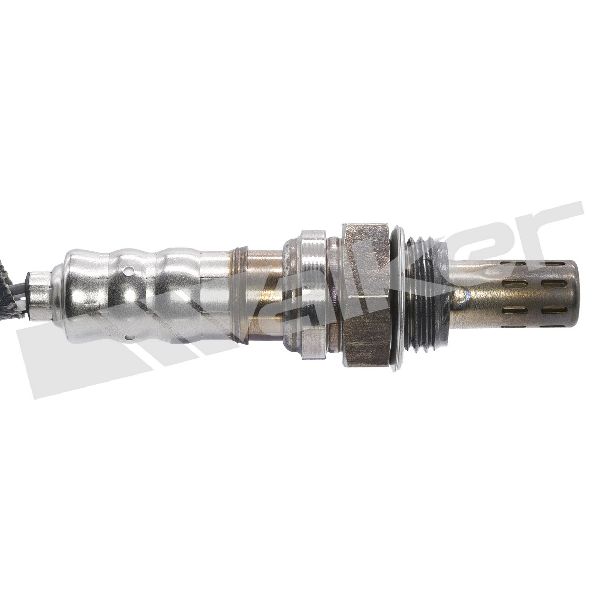
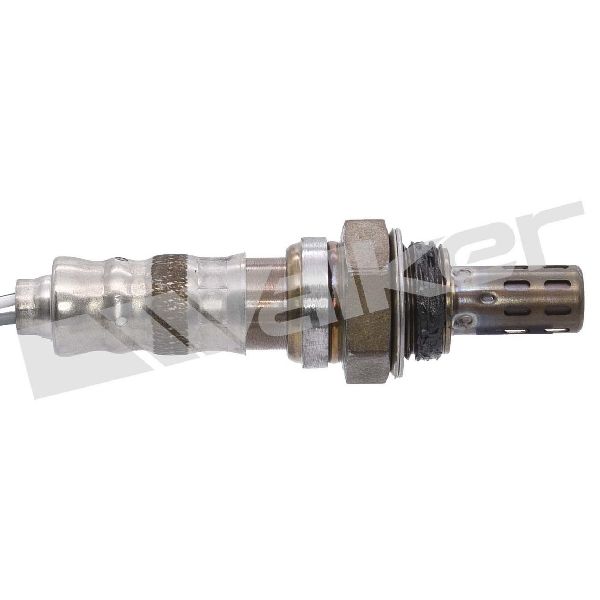
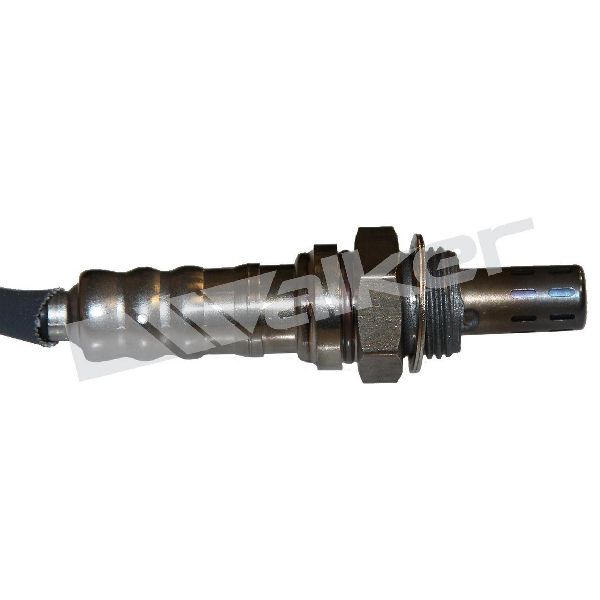
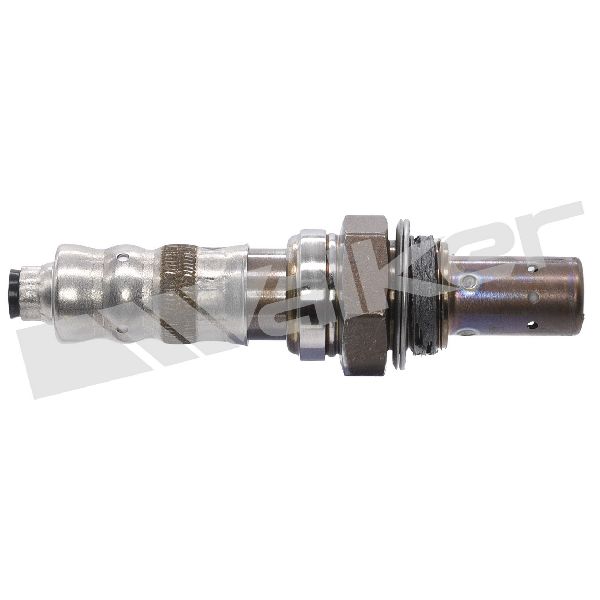
- Failed Upstream (Bank 1, Sensor 1) Oxygen Sensor 🔴 High Probability → Shop Oxygen Sensor The internal heater element is a common failure point on these sensors. The 2.4L engine platform is also known for oil consumption issues that can foul the sensor with oil deposits, causing it to fail prematurely.
How to confirm: Disconnect the sensor and measure the resistance across the two heater circuit pins (usually the two same-colored wires). A healthy Mopar sensor should read between 4.5-8.0 Ohms at room temperature (68°F). An infinite reading (OL) or near-zero reading indicates a failed heater element.
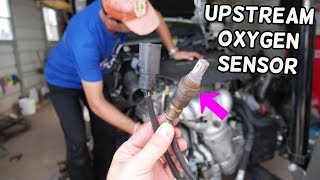
Typical fix: Replace the upstream oxygen sensor. It is located on the exhaust manifold and is accessible from the top of the engine bay. 🎬 Watch: Step-by-step upstream oxygen sensor replacement for the 2.4L engine. An oxygen sensor socket is recommended for removal.
Est. part cost: $40-$180 - Damaged Wiring or Connector 🟡 Medium Probability The sensor wiring is routed near the hot exhaust manifold, which can cause the protective loom and wire insulation to become brittle, melt, or break over time. This is a known issue on the platform.
How to confirm: Visually inspect the entire wiring harness from the O2 sensor to its connection point. Look for any signs of melting, chafing, exposed wires, or corrosion on the connector pins. Pay close attention to where the harness may contact the engine or exhaust components.
Typical fix: Repair the damaged section of wiring or replace the connector pigtail. Ensure the repaired harness is properly secured away from heat sources.
Est. part cost: $10-$30 - Blown Fuse or Power Supply Issue ⚪ Low Probability While less common than sensor failure, a blown fuse can disable the heater circuit. On related Chrysler products, the O2 sensor heater fuse is sometimes located in the TIPM (fuse box) in a slot like M25 (20A), but this can vary and is not always explicitly labeled 'O2 Heater'.
How to confirm: Check fuses related to emissions, fuel systems, and the PCM in the engine bay fuse box (Power Distribution Center). With the key on and engine off, use a multimeter to check for battery voltage (at least 11V) at the appropriate power pin on the sensor's harness-side connector. A wiring diagram is recommended to identify the correct power and ground pins.
Typical fix: Replace the blown fuse. If the fuse blows again immediately, it indicates a short circuit in the wiring that must be found and repaired.
Est. part cost: $1-$5
Rare But Worth Checking
- Powertrain Control Module (PCM) Fault: A PCM software glitch or internal hardware failure can incorrectly set a P0031 code. Chrysler has issued software updates to fix other O2 sensor codes (like P0133) on this exact vehicle, so it's a possibility. A TSB (18-096-22) was even issued for the 2022 Jeep Cherokee 2.4L to fix a false P0031 with a software update, showing precedent on this powertrain. This should be considered only after the sensor and wiring have been proven to be good.
Diagnosis Steps
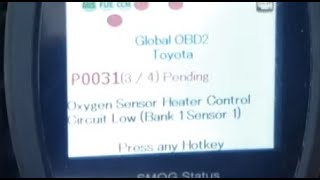
- Read the code with an OBD-II scanner to confirm P0031 is the primary code.
- Visually inspect the upstream O2 sensor's wiring harness and connector for any signs of melting, fraying, or damage. The sensor is on the front of the exhaust manifold.
- Check fuses related to the PCM and fuel system in the engine bay fuse box. While not always clearly labeled, look for fuses marked 'O2 Heater', 'A/F Heater', or similar.
- Disconnect the O2 sensor connector. With the ignition key in the 'On' position (engine off), use a multimeter to verify that one of the heater circuit pins on the vehicle's harness connector has battery voltage (approximately 12V).
- With the sensor still disconnected, measure the resistance between the two heater pins on the sensor itself (often the two wires of the same color). A good sensor will typically have a resistance between 4.5 and 8.0 ohms. A reading of OL (over limit/infinite) or near zero ohms confirms the sensor's heater has failed.
- If the sensor and wiring test good, check with a Chrysler dealer if any PCM software updates are available for your vehicle's VIN, as updates have been released to fix other O2 sensor codes.
- If the sensor fails repeatedly, investigate the vehicle for excessive oil consumption, a known issue with the 2.4L Tigershark engine that fouls O2 sensors.
Parts You'll Likely Need
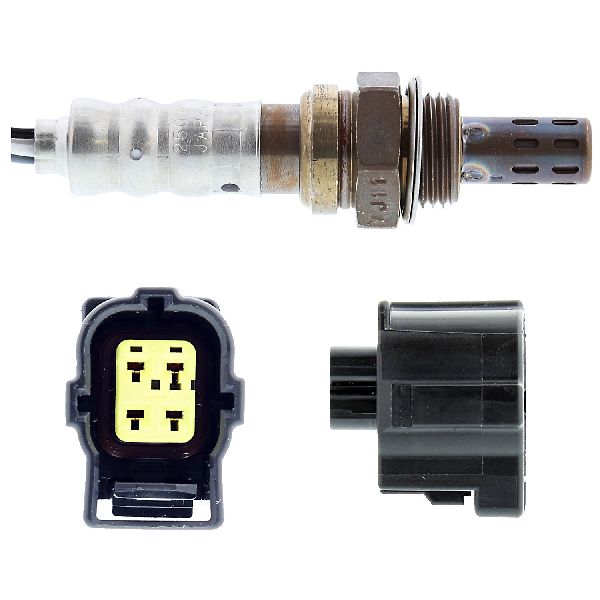
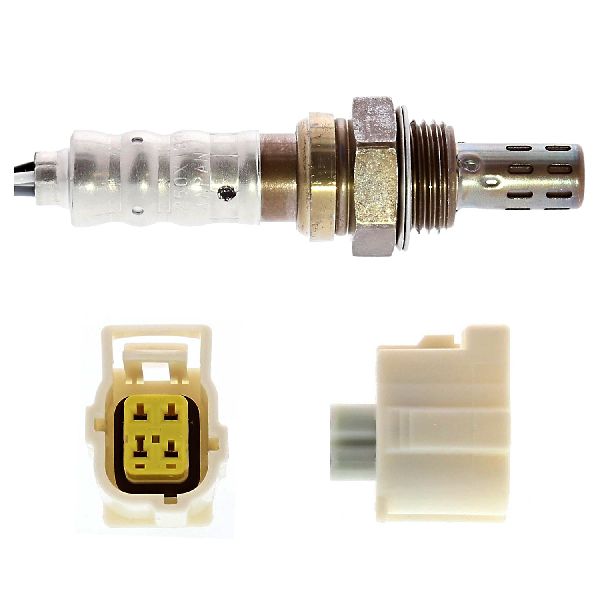
- Upstream Oxygen Sensor (Bank 1, Sensor 1)
(OEM #68195741AA)— The internal heater element of the original sensor is the most common failure point for this code on the 2.4L MultiAir engine.
Trusted brands: Mopar, Denso, NTK, Bosch
OEM price range: $130-$180
Aftermarket price range: $40-$90
Related Codes That Often Appear With This One
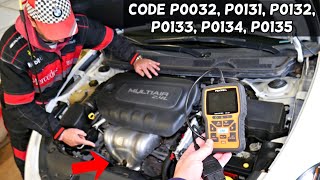
- P0133 — This code for 'O2 Sensor Slow Response' for the same sensor can appear if the sensor is failing or if there is an underlying PCM software issue. TSB 18-023-16 addresses P0133 🎬 Watch: How to fix P0133 and other related O2 sensor codes. with a software update for this vehicle.
- P0032 — This code indicates 'Heater Control Circuit High' for the same sensor. Seeing P0031 or P0032 points definitively to a problem in the heater circuit, most often the sensor itself. TSB Bulletin #1805022REVA notes that P0032 is often diagnosed alongside P0031 in Chrysler electrical systems.
- P0135 — This is a more generic code for 'O2 Sensor Heater Circuit Malfunction (Bank 1 Sensor 1)'. It often appears with P0031 and points to the same set of failures.
Technical Service Bulletins (TSBs) & Recalls
- 18-023-16 Rev. C: Addresses various powertrain diagnostic improvements, including fixing code P0133 (O2 Sensor 1/1 Slow Response) via a PCM software update.
- 09-003-23 Rev. A: Details the procedure for an oil consumption test related to the known excessive oil consumption issue on the 2.4L Tigershark engine and establishes the XB1 warranty extension.
- 18-096-22: A TSB for the 2022 Jeep Cherokee with the same 2.4L engine, specifically to fix a false P0031 code with a PCM software update, showing manufacturer precedent for this exact issue.
- TSB Bulletin #1805916: A manufacturer service bulletin that identifies P0031 as "O2 Sensor 1/1 Heater Circuit Low" as part of broader powertrain diagnostic protocols.
- TSB Bulletin #1805022REVA: An updated electrical system bulletin that includes P0031 and P0032 as recognized heater circuit faults for the O2 Sensor 1/1.
Platform-Specific Known Issues
- The 2.4L 'Tigershark' engine has a well-documented history of excessive oil consumption due to a piston ring design issue, which can foul and destroy oxygen sensors, leading to repeat failures. TSB 09-003-23 details an oil consumption test for dealers to perform.
- While no recall directly targets P0031, Emissions Recall U90 for some 2016 models involved replacing the catalytic converter and both O2 sensors, indicating a pattern of emissions component issues on this platform.
- Technical Service Bulletin (TSB) 18-023-16 Rev. C provides a PCM software update to fix other O2 sensor codes (like P0133) on the 2015 Chrysler 200 2.4L, making it a relevant consideration for any O2 sensor fault.
Mechanic-Grade Diagnostic Values
- Upstream O2 Sensor (Bank 1, Sensor 1) Heater Element Resistance — expected: 4.5 to 8.0 Ohms at 20°C (68°F) for an OEM Mopar sensor.. Failure: A reading of infinity (OL) indicates an open circuit/burned out element, while a reading near 0 Ohms indicates a short circuit.
- Heater Circuit Power Supply Voltage — expected: Battery voltage (approx. 12.6V) with Key On, Engine Off. A minimum of 11V is required for proper operation.. Failure: Zero or significantly low voltage points to a blown fuse, faulty relay, or a break in the power wire from the TIPM.
- Heater Control Circuit Voltage (PCM Ground Side) — expected: On many Chrysler systems, this is a Pulse-Width Modulated (PWM) ground. A test light connected between the power and control pins on the harness should flash or light steadily when the heater is commanded on by a scan tool or during a cold start.. Failure: No light activation when the heater should be on suggests an open in the control wire to the PCM or a failed PCM driver.
Scan Tool Commands That Help
- wiTECH or equivalent professional scan tool: O2 Heater Test / Activation — This bidirectional command allows a technician to manually turn the O2 sensor heater circuit on and off. It is used to verify if the PCM can control the circuit and to check for voltage/ground at the sensor connector without having to wait for a cold start.
Wiring & Ground Locations
- PCM Connector C4, Pin 77 — At the Powertrain Control Module (PCM).. This is the specific pin for the 'O2 1/1 HEATER CONTROL' circuit. The wire color is typically Brown/White (BRN/WHT). Testing for continuity from this pin to the sensor connector can confirm if the control wire is intact.
- TIPM (Totally Integrated Power Module) — In the engine bay, on the driver's side, next to the battery.. The TIPM supplies the 12V power to the O2 sensor heater circuit. An internal fault, corrosion, or a blown fuse within the TIPM can cut power to the sensor, causing P0031.
Model Year Variations Within This Range
- 2015: The 2015 model year received significantly more owner complaints related to the powertrain and electrical systems compared to the 2016 and 2017 models. While not specific to P0031, this suggests a higher likelihood of encountering electrical gremlins, including sensor circuit faults, on the first model year of this generation.
Diagnostic Flowchart
Other Known Issues on This Vehicle
Issues unrelated to this code that are worth knowing about as an owner of this generation:
- Excessive Engine Oil Consumption 🔴 High — Very common. Can start at any mileage. Owners report adding a quart of oil every 1,000 miles. Caused by a piston ring design defect. (Ref: TSB 09-003-23 (Rev. A) details an oil consumption test and warranty extension XB1. Led to class-action lawsuit settlement.)
- Harsh Shifting & Failure of 9-Speed Automatic Transmission 🔴 High — Extremely common on 2015 models. Problems include lurching, hesitation, sudden shifts to neutral, and complete failure. (Ref: Multiple TSBs for software updates (e.g., 21-019-17, 21-021-15) and a recall (NHTSA 16V-529) for a wiring harness issue causing shifts to neutral.)
- Engine Stalls/Shuts Off While Driving 🔴 High — Common complaint, often linked to the oil consumption issue causing low oil pressure shutdown, or transmission issues causing the engine to stall. (Ref: Related to oil consumption TSBs and transmission recalls.)
- Electrical Issues / TIPM Problems 🟠 Medium — FCA vehicles of this era are known for electrical problems related to the Totally Integrated Power Module (TIPM) or PCM, which can cause a wide range of strange behaviors.
- Random Deployment of Active Head Restraints (AHR) 🟠 Medium — Less common than powertrain issues, but a known problem where the plastic bracket inside the headrest can fail, causing it to deploy without an impact. (Ref: Subject of a class-action lawsuit.)
Used vs. New Parts: Buying Guide for This Vehicle
When a used part is the smart pick: For an oxygen sensor, a used part is almost never a smart choice. O2 sensors are wear-and-tear items with a finite lifespan and are highly susceptible to contamination from oil, coolant, and carbon, which is a known issue on this specific 2.4L engine. The risk of getting a part that is already near the end of its life or contaminated is very high.
What to inspect on the donor part:
- Not applicable, as used O2 sensors are not recommended for this repair.
OEM-only on this vehicle (don't cheap out):
- Oxygen Sensor: This platform is known to be sensitive to the brand of O2 sensor. To avoid compatibility issues and repeat codes, using an OEM Mopar part or a direct OE supplier is strongly recommended.
- Catalytic Converter: If other codes like P0420 are present, be aware that aftermarket catalytic converters often fail to meet the efficiency requirements for this engine, especially if oil consumption is a factor. An OEM converter is the most reliable, albeit expensive, solution.
Aftermarket brands forum-validated for this vehicle:
- NTK
- Denso
- Bosch (ensure it is a direct-fit, not universal)
Brands owners have reported issues with on this vehicle:
- Unbranded 'universal' sensors that require splicing wires.
- Low-cost, no-name brands from online marketplaces.
Real Owner Stories
Aggregated from forums and TSBs cited above. Mileages and costs reflect what owners reported in those sources.
2015 Chrysler 200 2.4L MultiAir
Symptoms: Check engine light on with code P0031; owner noted the car was lurching and shifting harshly.
What fixed it: Replacement of the upstream O2 sensor located on the exhaust manifold and a PCM software update as per TSB 18-023-16.
Source hint: 200forums.com
2014 Jeep Cherokee (KL) 2.4L
Symptoms: P0031 code triggered; upon inspection, the wiring harness near the exhaust manifold was found to be melted.
What fixed it: Repairing the damaged section of the wiring harness and securing it away from heat sources.
Source hint: jeepcherokeeclub.com
2016 Chrysler 200 2.4L — ~1000 miles
Symptoms: Decreased fuel economy and failed emissions test; engine was consuming a quart of oil every 1,000 miles.
What fixed it: The vehicle underwent Emissions Recall U90, which replaced both O2 sensors and the catalytic converter.
Source hint: Emissions Recall U90
Related OBD-II Codes
Frequently Asked Questions
Is there a software update for my 2015 Chrysler 200 2.4L that might fix O2 sensor codes?
Could the excessive oil consumption in my Tigershark engine be causing my P0031 code?
What should the resistance be on a new Mopar upstream O2 sensor for the 2.4L engine?
Is there a recall for the oxygen sensors on the 2016 Chrysler 200?
Where is the O2 sensor heater fuse located on the Chrysler 200?
Does the warranty extension for oil consumption apply to my 2.4L engine?
Helpful Videos
We Have This Part in Stock

The information in this article is provided for general reference and educational purposes only. Vehicle specifications, procedures, and part compatibility can vary by production date, trim level, and region. Always consult your vehicle's factory service manual and verify part numbers before purchasing or performing repairs. Safety-critical components such as airbags, seat belts, and braking systems should be installed by a qualified professional.
- Chrysler 200:
- 🧭 Diagnostic Flowchart
- 🎬 Helpful Videos
- 🛍️ Shop This Part
- What's Unique About the 2015-2017 Chrysler 200
- Symptoms You May Notice
- Most Likely Causes
- Rare But Worth Checking
- Diagnosis Steps
- Parts You'll Likely Need
- Related Codes That Often Appear With This One
- Technical Service Bulletins (TSBs) & Recalls
- Platform-Specific Known Issues
- Mechanic-Grade Diagnostic Values
- Scan Tool Commands That Help
- Wiring & Ground Locations
- Model Year Variations Within This Range
- Other Known Issues on This Vehicle
- Used vs. New Parts: Buying Guide for This Vehicle
- Real Owner Stories
- 2015 Chrysler 200 2.4L MultiAir
- 2014 Jeep Cherokee (KL) 2.4L
- 2016 Chrysler 200 2.4L — ~1000 miles
- Related OBD-II Codes
- Frequently Asked Questions
- 🎟️ Get 5% Off