

P0031 on 2013-2019 Ford Escape 2.5L: Heater Circuit Fixes & O2 Sensor Replacement
This code almost always means the upstream oxygen sensor (Bank 1, Sensor 1) has failed and needs to be replaced. The internal heater element burns out, triggering the code. Expect to pay $50-$120 for an OEM Motorcraft sensor and about 30 minutes for a DIY replacement. Before replacing, check the related fuse and inspect the wiring for any obvious damage near the hot exhaust.
- P0031 on a 2013-2019 Ford Escape 2.5L almost always points to a bad upstream oxygen sensor (Bank 1, Sensor 1).
- Before buying a new sensor, it's wise to spend 5 minutes checking the fuse and visually inspecting the wiring for obvious damage.
- This is a DIY-friendly repair that typically requires an oxygen sensor socket and can be completed in under an hour.
- Always confirm the correct OEM part number for your specific vehicle using its VIN to avoid purchasing the wrong sensor.
What's Unique About the 2013-2019 Ford Escape
On the Ford Escape with the 2.5L i-VCT engine, this is a straightforward and very common code. Since the 2.5L is an inline-four cylinder, there is only one exhaust bank, so 'Bank 1' is the only bank. 'Sensor 1' is the more accessible of the two sensors on the exhaust, located right at the back of the engine bay in the exhaust manifold. The issue is almost always a burned-out heater element inside the sensor itself, a common failure point for this component across many vehicles due to constant, extreme heat cycles.
Symptoms You May Notice
- Check Engine Light is on
- Decreased fuel economy
- Rough or unstable idle, especially when the engine is cold
- Hesitation or reduced engine power
- Failing a vehicle emissions test
- A faint exhaust or gasoline smell if the mixture becomes too rich
- Replacing the downstream (Sensor 2) oxygen sensor instead of the upstream (Sensor 1) sensor.
- Replacing the catalytic converter when the code is specifically for the sensor's heater circuit.
- Replacing the sensor without first checking for a blown fuse or damaged wiring, leading to the code returning immediately.
Most Likely Causes
- Faulty Upstream Oxygen Sensor (Bank 1, Sensor 1) 🔴 High Probability → Shop Oxygen Sensor The internal heater element within the oxygen sensor is a common failure point due to constant heat cycles. It is a wear-and-tear component.
How to confirm: After checking the fuse and wiring, test the resistance of the heater circuit at the sensor's connector using a multimeter. The two wires for the heater are typically the same color. A healthy sensor should have a resistance between 3 and 30 Ohms. A reading of infinite resistance (open circuit) or near-zero resistance (short circuit) confirms the sensor's heater element has failed.
Typical fix: Replace the Bank 1, Sensor 1 (upstream) oxygen sensor. Applying penetrating oil to the threads before removal is highly recommended.
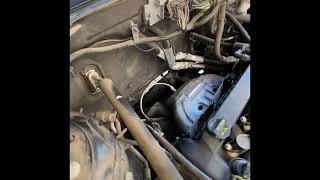
Est. part cost: $50-$120 - Damaged Wiring or Corroded Connector 🟡 Medium Probability The sensor wiring is close to the hot exhaust manifold and can become brittle, frayed, or melted over time. The connector itself is mounted to a bracket on the firewall behind the engine and can be susceptible to contamination from fluid leaks from above.
How to confirm: Visually inspect the wiring harness and connector leading to the upstream O2 sensor for any signs of melting, chafing, or corrosion. Check for 12-volt power and a good ground at the harness-side connector with the key on, engine off. A voltage drop test between the PCM and the sensor connector can also identify high resistance in the wiring; a drop of more than 0.5V is problematic.
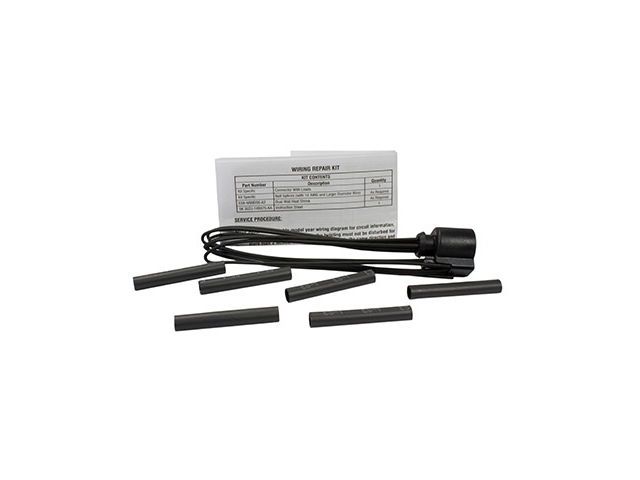
Typical fix: Repair the damaged section of the wiring harness or clean/replace the connector. A pigtail connector can be sourced if the original is damaged.
Est. part cost: $15-$50 - Blown Fuse ⚪ Low Probability
How to confirm: Locate and inspect the fuse for the O2 sensor heater circuit in the vehicle's fuse box. While specific fuse numbers for the 2.5L Escape are not consistently documented online, on similar Ford platforms like the F-150, a single fuse often powers the heaters for multiple O2 sensors. Consult the owner's manual for the specific fuse location. A visual inspection or a continuity test with a multimeter will confirm if it's blown.
Typical fix: Replace the blown fuse. If the new fuse blows immediately, it indicates a short circuit in the wiring or the sensor itself that must be diagnosed.
Est. part cost: $1-$5
Rare But Worth Checking
- Faulty Powertrain Control Module (PCM): This is very rare. The PCM is the last thing to suspect after all other possibilities (sensor, wiring, fuses) have been thoroughly ruled out. A failure of the internal driver circuit for the O2 heater inside the PCM can cause this code.
Diagnosis Steps
- Read the code with an OBD-II scanner to confirm P0031 is present.
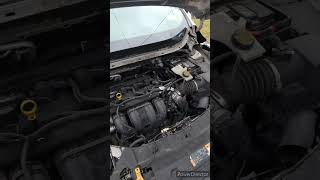
- Locate the Bank 1, Sensor 1 (upstream) oxygen sensor. On the 2.5L Escape, it is on the exhaust manifold, visible at the rear of the engine bay.
- Carefully inspect the sensor's electrical connector and wiring harness for any signs of melting, fraying, corrosion, or loose connections.
- Check the fuse box for a blown fuse related to the O2 sensors. Consult the owner's manual for the correct fuse location as it can vary.
- If the fuse and wiring appear intact, disconnect the sensor. With the ignition on (engine off), use a multimeter to verify that one pin in the harness-side connector has battery voltage (approx. 12V) and another has a good ground.
- If power and ground are present, the issue is likely the sensor itself. Measure the resistance (ohms) between the two heater circuit pins (often same-colored wires) on the sensor side of the connector. A reading between 5-20 Ohms is typically good. A reading of infinite resistance (open) or very low resistance (short) indicates a failed heater element.
- If the sensor's resistance is within spec, a more complex wiring issue (like high resistance) or a rare PCM fault is likely. Perform a voltage drop test on the power and ground wires to check for hidden corrosion or breaks.
- After repair, clear the code and perform a drive cycle. It is also best practice to reset the Keep Alive Memory (KAM) using a capable scan tool to force the PCM to relearn fuel trims with the new sensor data.
Parts You'll Likely Need
- Upstream Oxygen Sensor (Bank 1, Sensor 1)
(OEM #DY-1203 (Motorcraft, fits 2013-2016), F1FA9G444MA / F1FZ9G444C (Motorcraft, fits 2017-2019). NOTE: Part numbers vary by model year. Always verify with the vehicle's VIN before purchasing.)— This is the most common failure for code P0031, as the internal heater element burns out.
Trusted brands: Motorcraft, Bosch, Denso, NGK/NTK
OEM price range: $70-$120
Aftermarket price range: $45-$90
Related Codes That Often Appear With This One
- P0135 — This code is also for 'O2 Sensor Heater Circuit (Bank 1, Sensor 1)'. It's a more generic fault, while P0031 specifically points to a 'low' circuit condition. They often appear together and point to the same root cause.
- P0134 — This code means 'O2 Sensor Circuit No Activity Detected (Bank 1 Sensor 1)'. If the heater fails, the sensor may not reach operating temperature, leading the PCM to report no signal activity.
- P0051 — This is the equivalent code for Bank 2, Sensor 1. On an inline-four engine like the 2.5L, this code should not appear. If it does, it may indicate a broader PCM or wiring issue. On V-engines, seeing P0031 and P0051 together strongly suggests a shared power problem, like a blown fuse, rather than two failed sensors.
Platform-Specific Known Issues
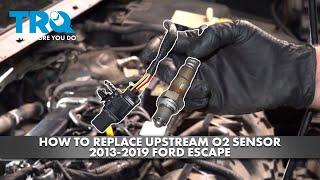
- Owner Experience: Quick DIY Fix: Multiple owners on forums like fordescape.org and Reddit report that this is a very common and straightforward repair. The upstream sensor is relatively easy to access at the back of the engine bay. Most DIYers report completing the replacement in under 30 minutes 🎬 Watch: A quick walkthrough of the 2.5L upstream sensor replacement. using a 22mm or 7/8" oxygen sensor socket.
Mechanic-Grade Diagnostic Values
- Upstream O2 Sensor (HO2S B1S1) Heater Circuit Resistance — expected: 5 - 20 Ohms. Failure: Infinite resistance (open circuit) or near-zero resistance (short circuit).
- Upstream O2 Sensor (HO2S B1S1) Live Data Voltage (Warm Engine, Closed Loop) — expected: Rapidly fluctuating between 0.1V and 0.9V.. Failure: Voltage is stuck at a fixed value, often near 0.0V or 0.45V, indicating no activity.
- O2 Sensor Heater Circuit Fuse Amperage — expected: Typically 15A or 25A. Failure: Fuse is visually blown or has no continuity when tested with a multimeter.
Scan Tool Commands That Help
- Ford IDS (Integrated Diagnostic System): Launch CCC Engineering Application (Code 60274) — For advanced, manual diagnostics by a professional technician. This mode can provide access to manually activate and test individual circuits like the O2 sensor heater, which is useful when standard diagnostic procedures fail to find the fault. Use with extreme caution.
Wiring & Ground Locations
- Engine Block Ground — On the engine block, adjacent to the oil filter housing.. A poor engine ground can cause a variety of electrical issues, including incorrect voltage and ground references for sensors like the HO2S. While the O2 sensor heater has its own ground wire, that wire ultimately terminates at a chassis or engine ground. This specific point is a known location for corrosion and looseness on this engine family.
OEM Part Supersession History
DY-1203 (Motorcraft)→F1FA-9G444-MA / F1FZ-9G444-C (Motorcraft)— Model year change / vehicle facelift.
Heads up: The parts for 2013-2016 models are different from 2017-2019 models. While they may physically connect, their internal characteristics can differ. Using the wrong year part may cause the code to persist or return. Always verify by VIN.
Model Year Variations Within This Range
- 2013-2016: Uses upstream oxygen sensor part number DY-1203 (Motorcraft).
- 2017-2019: Uses different upstream oxygen sensor part numbers, such as F1FA-9G444-MA or F1FZ-9G444-C (Motorcraft), or aftermarket equivalents like Bosch 0258030320.
Diagnostic Flowchart
Other Known Issues on This Vehicle
Issues unrelated to this code that are worth knowing about as an owner of this generation:
- 6F35 Transmission Failure/Shifting Issues 🔴 High — More common in earlier models (2013-2016), can manifest as harsh shifts, slipping, or complete failure. TSB ASI-45239 notes a 2-3 shift hesitation after a cold soak. (Ref: TSB ASI-45239)
- Coolant Intrusion (EcoBoost Engines) 🔴 High — Primarily affects the 1.5L, 1.6L, and 2.0L EcoBoost engines, not the 2.5L i-VCT. A known design flaw can cause coolant to leak into the cylinders, leading to misfires, white smoke, and eventual engine failure. (Ref: TSB 19-2375)
- Door Latch Failures 🟠 Medium — Widespread across many Ford models of this era. The door latch may fail, causing a 'door ajar' light to stay on or preventing the door from latching securely. Multiple recalls were issued. (Ref: Recalls 16V643, 20V177)
- Rear Suspension Arm Bushing Wear 🟡 Low — Bushings on the rear suspension lower arm ('dog bone') can delaminate or get damaged, causing noise from the rear of the vehicle over bumps. (Ref: TSB SSM 47858)
Used vs. New Parts: Buying Guide for This Vehicle
When a used part is the smart pick: A used part is a smart choice for the wiring harness pigtail. If the original connector is damaged by heat or corrosion, sourcing a pigtail from a donor vehicle at a junkyard is a cost-effective and reliable repair.
Donor-vehicle mileage cap: roughly under 150000 miles for the part to have meaningful remaining life.
What to inspect on the donor part:
- Check the connector's plastic for brittleness or cracking.
- Inspect the wire insulation for any signs of melting, chafing, or oil saturation.
- Look at the electrical pins inside the connector for any green or white corrosion.
- Ensure the locking tab is intact and functional.
OEM-only on this vehicle (don't cheap out):
- Oxygen Sensor
Aftermarket brands forum-validated for this vehicle:
- Bosch
- Denso
- NGK/NTK
Brands owners have reported issues with on this vehicle:
- Unnamed or generic 'white-box' brands from online marketplaces are frequently reported to have high failure rates or incorrect calibration, causing codes to return.
Real Owner Stories
Aggregated from forums and TSBs cited above. Mileages and costs reflect what owners reported in those sources.
2014 Ford Escape 2.5L
Symptoms: Check engine light with code P0031.
What fixed it: Replaced the upstream O2 sensor (Bank 1, Sensor 1).
Source hint: reddit.com/r/MechanicAdvice thread titled 'P0031 on 2014 Ford Escape 2.5'
2013-2019 Ford Escape 2.5L
Symptoms: P0031 and P0135 codes present; sensor is easy to access at the back of the engine bay.
What fixed it: Replacement of the upstream sensor using a 22mm or 7/8" oxygen sensor socket; repair took under 30 minutes.
Source hint: fordescape.org forum threads and vehicle_specific_issues 'Owner Experience: Quick DIY Fix'
Related OBD-II Codes
Frequently Asked Questions
Does the coolant intrusion TSB 19-2375 apply to my 2013-2019 Ford Escape 2.5L i-VCT?
I'm seeing P0031 on my 2014 Escape 2.5L; what is the most likely fix according to other owners?
Are there any specific brands of oxygen sensors I should avoid for my Ford Escape?
Can I use a used part to fix the P0031 code on my Escape?
Is there a TSB for transmission issues on the 2013-2019 Ford Escape that I should be aware of while fixing my O2 sensor?
Where is the upstream O2 sensor connector located on the 2.5L engine?
Helpful Videos

We Have This Part in Stock

The information in this article is provided for general reference and educational purposes only. Vehicle specifications, procedures, and part compatibility can vary by production date, trim level, and region. Always consult your vehicle's factory service manual and verify part numbers before purchasing or performing repairs. Safety-critical components such as airbags, seat belts, and braking systems should be installed by a qualified professional.
- Ford Escape:
- 🧭 Diagnostic Flowchart
- 🎬 Helpful Videos
- 🛍️ Shop This Part
- What's Unique About the 2013-2019 Ford Escape
- Symptoms You May Notice
- Most Likely Causes
- Rare But Worth Checking
- Diagnosis Steps
- Parts You'll Likely Need
- Related Codes That Often Appear With This One
- Platform-Specific Known Issues
- Mechanic-Grade Diagnostic Values
- Scan Tool Commands That Help
- Wiring & Ground Locations
- OEM Part Supersession History
- Model Year Variations Within This Range
- Other Known Issues on This Vehicle
- Used vs. New Parts: Buying Guide for This Vehicle
- Real Owner Stories
- 2014 Ford Escape 2.5L
- 2013-2019 Ford Escape 2.5L
- Related OBD-II Codes
- Frequently Asked Questions
- 🎟️ Get 5% Off