

P0031 on 2011-2019 Ford Explorer: O2 Sensor Heater Circuit Causes & Fixes
The P0031 code on a 2011-2019 Ford Explorer almost always means the internal heater in the Bank 1, Sensor 1 oxygen sensor has failed. This is the upstream sensor on the firewall side for V6 engines. Before replacing the sensor, check fuse #67 (a 20A fuse) in the under-hood fuse box. Replacing the sensor is the most common fix. Expect to pay between $50 and $150 for a new sensor.
- P0031 points to a failure in the heater circuit for the upstream oxygen sensor on Bank 1.
- The most common cause is a failed oxygen sensor, which requires replacement.
- For V6 Explorers, Bank 1 is the rear bank by the firewall, making access more difficult.
- Always check the fuse and inspect wiring for damage before replacing the sensor.
- Driving with this code will reduce fuel economy and cause an automatic emissions test failure.
What's Unique About the 2011-2019 Ford Explorer
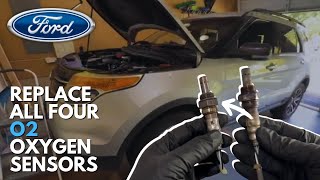
For the 5th generation Explorer with a V6 engine (3.5L NA or 3.5L EcoBoost), 'Bank 1' is the cylinder bank located against the firewall, making it the more difficult side to work on. Accessing the Bank 1, Sensor 1 (upstream) oxygen sensor is challenging. Many owners and mechanics report the best method is to access it from underneath the vehicle or through the passenger side wheel well after removing the wheel. 🎬 Watch this complete guide on replacing the upstream V6 sensors. A 22mm (or 7/8") offset oxygen sensor socket, a breaker bar, and extensions are often required to get enough leverage to remove the old sensor, which is frequently seized in the exhaust manifold. On four-cylinder models (2.0L or 2.3L EcoBoost), there is only one bank, which is designated as Bank 1, and access is generally much easier from the front of the engine bay.
Symptoms You May Notice
- Check Engine Light is on
- Decreased fuel economy
- Vehicle may fail an emissions test
- Rough idle on a cold start in some cases
- Sluggish acceleration or poor engine performance
- Replacing the wrong oxygen sensor (e.g., Bank 2 instead of Bank 1, or the downstream Sensor 2 instead of the upstream Sensor 1).
- Replacing the catalytic converter, which is not related to a heater circuit code.
- Replacing the O2 sensor without first checking for a blown fuse, especially if multiple heater codes are present.
Most Likely Causes
- Failed Oxygen Sensor Heater Element 🔴 High Probability → Shop Oxygen Sensor The internal heating element is a common failure point on oxygen sensors as they age from constant, rapid heat cycles. This is the most frequent cause of P0031.
How to confirm: Unplug the sensor and measure the resistance between the two heater circuit pins on the sensor side. An open circuit (infinite resistance) or a dead short (near zero resistance) confirms the heater has failed. The expected resistance is typically between 2 and 30 ohms.
Typical fix: Replace the Bank 1, Sensor 1 oxygen sensor.
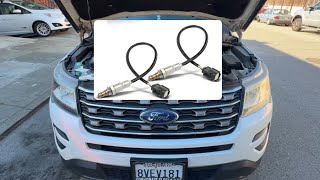
Est. part cost: $50-$150 - Damaged Wiring or Connector 🟡 Medium Probability The wiring harness for the Bank 1 sensor on V6 models is routed in a tight space near the hot exhaust manifold and firewall. Over time, the heat can make the wiring brittle or melt the insulation, leading to a short circuit. This is particularly noted on EcoBoost models near the turbochargers. 🎬 Watch a walkthrough for changing sensors on the 3.5L Ecoboost.
How to confirm: Visually inspect the wiring and connector for the Bank 1, Sensor 1 O2 sensor. Look for any signs of melting, burning, chafing, or corrosion on the harness leading to the firewall. Check for 12-volt power on the heater supply wire with the key on, engine off.
Typical fix: Repair the damaged section of the wiring harness or replace the connector pigtail.
Est. part cost: $15-$50 - Blown Fuse ⚪ Low Probability A short circuit in the heater element or its wiring can cause the corresponding fuse to blow as a protective measure.
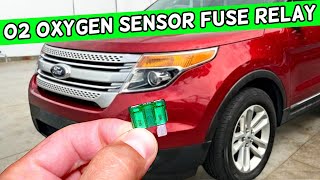
How to confirm: Locate the under-hood fuse box (Power Distribution Box) next to the battery. Check fuse #67, which is a 20A fuse 🎬 See this video to locate the O2 sensor fuse and relay. that powers the O2 sensor heaters. If multiple O2 sensor heater codes are present (e.g., P0031 and P0051), a blown fuse is the most likely cause.
Typical fix: Replace the blown fuse. If the new fuse blows immediately, it indicates a persistent short circuit in the wiring or one of the O2 sensors that must be found and repaired.
Est. part cost: $1-$5
Rare But Worth Checking
- Faulty Powertrain Control Module (PCM): This is extremely rare. The PCM's internal driver for the heater circuit can fail, but this should only be considered after exhaustively ruling out the sensor, wiring, and fuse.
Diagnosis Steps
- Verify code P0031 is present using an OBD-II scanner.
- Check fuse #67 (20A) in the under-hood fuse box. If it's blown, replace it and see if the code returns. If it blows again, investigate for a short circuit.
- If the fuse is good, gain access to the Bank 1, Sensor 1 oxygen sensor. On V6 models, this is on the firewall side of the engine. Access may require removing the passenger side front wheel.
- Visually inspect the sensor's wiring harness and connector for any signs of damage, such as melting, chafing, or corrosion.
- Disconnect the sensor. With the ignition key on (engine off), use a multimeter to check for 12V power on the heater power supply wire in the harness-side connector.
- Check for a good ground on the ground side of the heater circuit in the harness.
- If power and ground are present, measure the resistance across the two heater pins on the O2 sensor itself. A reading of infinite resistance (open) or near-zero resistance (short) indicates a faulty sensor. A good sensor typically reads between 2-30 ohms.
- If the sensor's resistance is within specification, the fault likely lies in the wiring between the sensor and the PCM. Check for continuity and shorts in the harness.
- If all wiring and the sensor check out, the issue could be a faulty PCM, but this is highly unlikely and should be the last resort.
Parts You'll Likely Need
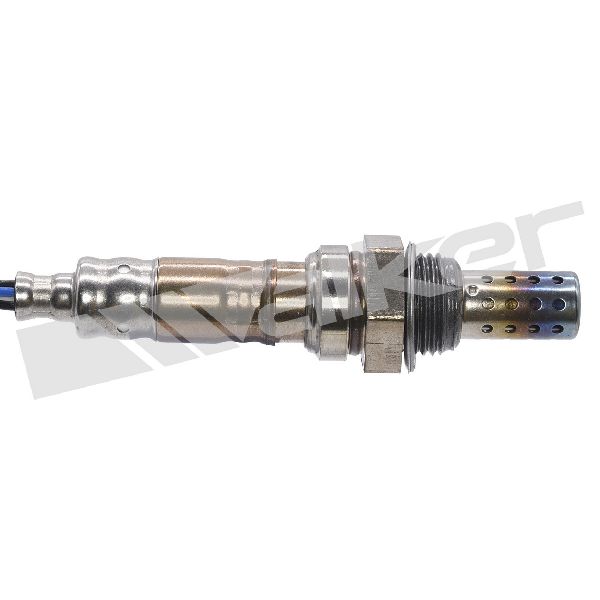
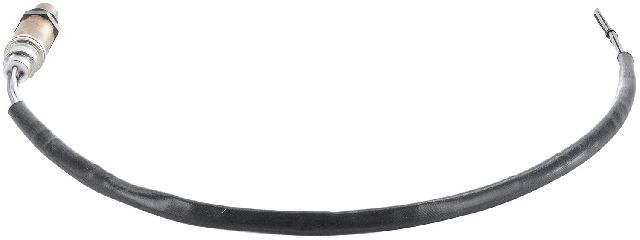
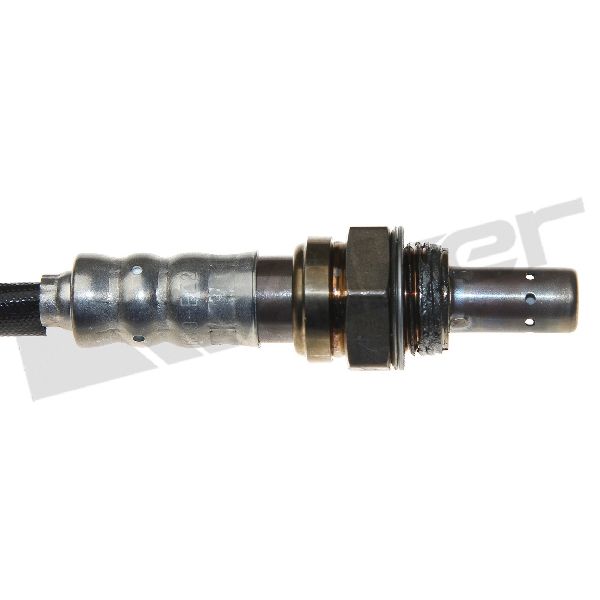
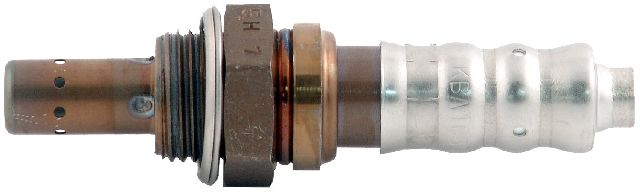
- Bank 1, Sensor 1 Oxygen Sensor
(OEM #Motorcraft DY-1178 (Upstream for 3.5L NA V6), Motorcraft DY-1185 (Upstream for 3.5L EcoBoost V6))— This is the upstream sensor on the firewall side (for V6 engines). The internal heater element is the most common point of failure that triggers code P0031.
Trusted brands: Motorcraft, Bosch, Denso, NGK/NTK
OEM price range: $90-$180
Aftermarket price range: $50-$120
Platform-Specific Known Issues
- Difficulty Removing Rear Sensor on V6: Owners on explorerforum.com frequently discuss the difficulty of accessing and removing the Bank 1 (rear) upstream O2 sensor. A common tip is to use plenty of penetrating oil, a 22mm offset O2 sensor socket, and a long breaker bar for adequate leverage. Some find access easier by removing the passenger front wheel.
- Fuse #67 Powers Multiple Heaters: A post on a Reddit Cartalk forum for a different Ford vehicle highlighted that a single fuse often powers multiple O2 sensor heaters, the EGR valve, and the EVAP purge valve. On the Explorer, fuse #67 (20A) in the engine bay fuse box is the correct one to check for the O2 heaters. If codes for both Bank 1 and Bank 2 heaters (P0031 and P0051) are present, the fuse is the primary suspect.
Mechanic-Grade Diagnostic Values
- O2 Sensor Heater Element Resistance — expected: 2 - 30 Ohms (typically 2-20 Ohms). Failure: Infinite resistance (OL) indicates an open circuit (burned out element). Near zero resistance indicates a shorted element.
- Heater Circuit Power Supply (KOEO) — expected: 11 - 14.5 Volts (Battery Voltage). Failure: Voltage significantly below battery voltage, or 0V, indicates a wiring issue, blown fuse, or bad relay.
- PCM Trigger Threshold — expected: Heater control voltage should drop when commanded ON.. Failure: The PCM sets P0031 if the control voltage exceeds 25% of battery voltage when the heater is commanded OFF (indicating a short to power), or if current draw is below a threshold like 0.8A.
Hidden / Shadow Codes Worth Checking
- Mode $06, TID $81: This is not a DTC, but a monitor result from the PCM's self-tests. Test ID (TID) $81 typically corresponds to the O2 Sensor Heater test for Bank 1, Sensor 1. A technician can view this data with an advanced scan tool to see if the heater circuit is marginal or failing before it triggers a persistent P0031 code. (see via An advanced OBD-II scan tool capable of displaying Mode $06 data.)
Scan Tool Commands That Help
- FORScan / Ford IDS: On-Demand Self-Test (ODST) or KOEO/KOER tests — These professional-grade tools can command the O2 heater circuit to turn on and off, allowing a technician to actively monitor voltage and current to confirm if the sensor, wiring, or PCM driver is at fault without waiting for a drive cycle.
Wiring & Ground Locations
- Engine to Body Ground Strap — On the 3.5L V6, a primary ground strap is typically located on the passenger side, connecting the engine block or cylinder head to the firewall or inner fender area.. A poor or corroded main engine ground can add resistance to the entire electrical system, potentially causing low voltage conditions for various sensors, including the O2 heater circuit, leading to a P0031 code that won't be fixed by replacing the sensor.
- Heater Circuit Wires — Within the 4-wire O2 sensor connector, the two wires for the heater element are typically the same color (e.g., two white wires or two black wires).. When testing resistance on the sensor side, these are the two pins to probe. When testing voltage and ground on the harness side, these are the two corresponding terminals to test.
Model Year Variations Within This Range
- 2016-2019: A mid-cycle refresh occurred for the 2016 model year. While this introduced a new optional 2.3L EcoBoost 4-cylinder engine (replacing the 2.0L), the 3.5L naturally aspirated and 3.5L EcoBoost V6 engines remained the standard and optional V6 choices. The diagnosis and common causes for P0031 on the V6 models are consistent across the entire 2011-2019 range.
Diagnostic Flowchart
Other Known Issues on This Vehicle
Issues unrelated to this code that are worth knowing about as an owner of this generation:
- Internal Water Pump Failure (3.5L & 3.7L V6) 🔴 High — Commonly occurs around or after 100,000 miles. Failure can cause coolant to mix with engine oil, leading to catastrophic engine damage.
- Exhaust Odor In Cabin 🟠 Medium — Affects 2011-2015 models primarily, noticed during heavy acceleration or with A/C in recirculation mode. (Ref: TSB 14-0130, TSB 16-0166)
- Power Steering Rack Failure 🔴 High — Sudden loss of power steering assist is reported across many model years, with a recall for 2011-2013 models. Problems persist in later years, often requiring expensive rack replacement. (Ref: Ford Recall 14S06 (for 2011-2013 models))
- Power Transfer Unit (PTU) Fluid Leak/Failure 🟠 Medium — Common in AWD models. The PTU is located near the hot exhaust, which can cook the fluid, leading to seal failure, leaks, and eventual gear failure. Owners report a burning smell.
- Throttle Body Failure 🟠 Medium — Can cause the vehicle to unexpectedly enter "limp mode" with reduced power. Associated with codes like P2111 and P2112.
- Paint Bubbling on Aluminum Hood 🟡 Low — Corrosion causes paint to bubble and flake, particularly on the leading edge of the hood. This is a cosmetic issue common to the 2011-2019 generation.
Used vs. New Parts: Buying Guide for This Vehicle
When a used part is the smart pick: For this repair, a used part is almost never a smart choice. Oxygen sensors are wear-and-tear items with a finite lifespan. Installing a used sensor from a junkyard is risky as you don't know its remaining life, and it could fail shortly after installation.
Donor-vehicle mileage cap: roughly under 20000 miles for the part to have meaningful remaining life.
What to inspect on the donor part:
- Not applicable, as used O2 sensors are not recommended.
OEM-only on this vehicle (don't cheap out):
- While not strictly 'OEM-only', using the OEM Motorcraft sensor or a direct OE-supplier equivalent is highly recommended to avoid incompatibility issues.
Aftermarket brands forum-validated for this vehicle:
- NTK
- Denso (often the OEM supplier for Motorcraft)
- Bosch
Brands owners have reported issues with on this vehicle:
- Generic, unbranded 'white-box' sensors from online marketplaces often have poor quality control and can fail prematurely or not meet the PCM's strict performance parameters, causing the code to return.
Real Owner Stories
Aggregated from forums and TSBs cited above. Mileages and costs reflect what owners reported in those sources.
2011-2019 Ford Explorer V6
Symptoms: Difficulty accessing and removing the Bank 1 (rear) upstream O2 sensor due to the tight space near the firewall.
What fixed it: Used plenty of penetrating oil, a 22mm offset O2 sensor socket, and a long breaker bar; some owners removed the passenger front wheel to gain better access.
Source hint: explorerforum.com discussion mentioned in 'Difficulty Removing Rear Sensor on V6'
2011-2019 Ford Explorer
Symptoms: Multiple O2 sensor heater codes appearing at once.
What fixed it: Replaced fuse #67 (20A) in the main engine fuse box under the hood.
Source hint: YouTube - Ford Explorer O2 Oxygen Sensor Heater Fuse Relay Location Replacement 2011 2012 2013 2014 2015
2011-2019 Ford Explorer V6
Symptoms: Check engine light with P0031; needed a step-by-step guide for all four sensors.
What fixed it: Replacement of the sensor using part number DY-1178 for the upstream location.
Source hint: YouTube - How to Replace All 4 Oxygen Sensors | 2011 - 2019 Ford Explorer Fifth-Generation DIY
Related OBD-II Codes
Frequently Asked Questions
Where is the Bank 1, Sensor 1 oxygen sensor located on my V6 Ford Explorer?
Which fuse should I check for a P0031 code on a 2011-2019 Explorer?
If I have both P0031 and P0051 codes, what is the most likely cause?
Are there specific tools recommended for replacing the rear O2 sensor on the Explorer?
What are the specific Ford part numbers for the oxygen sensors on this generation?
Could my P0031 code be related to the EcoBoost turbochargers?
Helpful Videos
We Have This Part in Stock

The information in this article is provided for general reference and educational purposes only. Vehicle specifications, procedures, and part compatibility can vary by production date, trim level, and region. Always consult your vehicle's factory service manual and verify part numbers before purchasing or performing repairs. Safety-critical components such as airbags, seat belts, and braking systems should be installed by a qualified professional.
- Ford Explorer:
- 🧭 Diagnostic Flowchart
- 🎬 Helpful Videos
- 🛍️ Shop This Part
- What's Unique About the 2011-2019 Ford Explorer
- Symptoms You May Notice
- Most Likely Causes
- Rare But Worth Checking
- Diagnosis Steps
- Parts You'll Likely Need
- Platform-Specific Known Issues
- Mechanic-Grade Diagnostic Values
- Hidden / Shadow Codes Worth Checking
- Scan Tool Commands That Help
- Wiring & Ground Locations
- Model Year Variations Within This Range
- Other Known Issues on This Vehicle
- Used vs. New Parts: Buying Guide for This Vehicle
- Real Owner Stories
- 2011-2019 Ford Explorer V6
- 2011-2019 Ford Explorer
- 2011-2019 Ford Explorer V6
- Related OBD-II Codes
- Frequently Asked Questions
- 🎟️ Get 5% Off