

P0031 on 2012-2017 Hyundai Veloster: O2 Sensor Heater Circuit Causes and Fixes
On a 2012-2017 Veloster, code P0031 almost always means the heater element inside the upstream oxygen sensor (Bank 1, Sensor 1) has failed. This is a common wear item. Replacing the sensor is the typical fix. Expect to pay $60-$120 for a quality aftermarket sensor (like Denso or NTK) or $150-$250 for an OEM part. It's a straightforward DIY job for many owners with an O2 sensor socket.
- P0031 points directly to a fault in the heater circuit of the upstream O2 sensor (Bank 1, Sensor 1).
- The most likely cause is a failed O2 sensor, which is a common wear-and-tear item due to heat cycles.
- Before buying parts, perform a quick visual check of the wiring for melting/damage and check the O2 sensor fuse in the engine bay fuse box.
- Replacing the upstream O2 sensor is a manageable DIY job with the correct tool (a 22mm or 7/8" O2 sensor socket).
- Ensure you are replacing the correct sensor; it's the one located on the exhaust manifold before the catalytic converter, easily visible from the top of the engine.
What's Unique About the 2012-2017 Hyundai Veloster
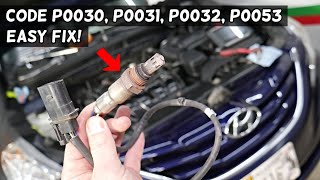
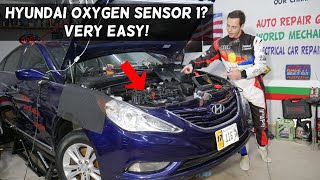
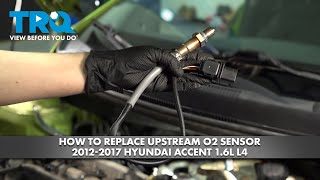
The 1.6L Gamma GDI engine in the first-generation Veloster has a straightforward single-bank exhaust layout, making sensor identification simple. 'Bank 1 Sensor 1' is the one and only upstream O2 sensor, easily accessible in the exhaust manifold from the top of the engine bay. 🎬 Watch: Locate the upstream O2 sensor on your Hyundai. While there are no widespread recalls for this specific issue, the failure of the O2 sensor's internal heater is a very common repair on many modern vehicles, including this Hyundai platform, due to the constant and extreme heat cycles it endures.
Symptoms You May Notice
- Check Engine Light is on
- Decreased fuel economy
- Rough or unstable idle, especially when the engine is cold
- Failing a vehicle emissions test
- Possible hesitation on initial acceleration from a stop
- Replacing the downstream (Bank 1, Sensor 2) oxygen sensor. P0031 specifically refers to Sensor 1, which is upstream of the catalytic converter.
- Replacing the sensor without first checking the fuse and wiring harness for obvious damage.
Most Likely Causes
- Failed Upstream Oxygen Sensor 🔴 High Probability → Shop Oxygen Sensor The internal heater element is a common failure point in O2 sensors due to constant, extreme heat cycles. It's effectively like a light bulb filament that eventually burns out or shorts.
How to confirm: Disconnect the sensor and use a multimeter to measure the resistance across the two heater circuit pins (often the two wires of the same color). An infinite resistance reading (open circuit) or a very low reading (short circuit) confirms the heater has failed. A healthy sensor heater typically has a specific resistance range, but a completely open circuit is a definitive failure.
Typical fix: Replace the Bank 1, Sensor 1 (upstream) oxygen sensor.
Est. part cost: $60-$250 - Damaged Wiring or Connector 🟡 Medium Probability The sensor's wiring harness is located near the hot exhaust manifold and can become brittle, melt, or chafe over time, leading to a short or open circuit. The plastic connector can also become brittle and crack.
How to confirm: Visually inspect the entire length of the O2 sensor's wiring harness and connector for any signs of melting, fraying, or corrosion. Check for 12V power on the heater power supply wire and a good ground at the connector with the key on, engine off. A voltage drop greater than 0.5V between the ECM and the sensor connector can indicate a wiring problem.
Typical fix: Repair the damaged section of the wiring harness or clean/replace the connector.
Est. part cost: $5-$50 - Blown Fuse ⚪ Low Probability A short circuit in the heater element or its wiring can cause the corresponding fuse to blow as a protective measure.
How to confirm: Locate the fuse for the O2 sensor heater circuit in the engine compartment fuse box. On some Hyundai models, this may be labeled 'A/F HEATER' or similar. Visually inspect the fuse or test for continuity with a multimeter.
Typical fix: Replace the blown fuse. If it blows again immediately, a short circuit is present in the wiring or sensor that must be found and fixed first.
Est. part cost: $1-$5
Rare But Worth Checking
- Faulty Powertrain Control Module (PCM): This is very rare. The PCM's internal driver for the heater circuit can fail. This should only be suspected after thoroughly testing the sensor, wiring, and fuses. A PCM failure would likely be accompanied by other trouble codes and is the last resort diagnosis.
Diagnosis Steps
- Read the code with an OBD-II scanner to confirm P0031 is the primary code.
- Visually inspect the Bank 1, Sensor 1 (upstream) O2 sensor's electrical connector and wiring harness for obvious damage like melting, chafing, or corrosion.
- Locate and check the fuse for the O2 sensor heater circuit in the engine bay fuse box. It may be labeled 'A/F HEATER' or similar. Replace if blown.
- If the fuse and wiring appear intact, disconnect the O2 sensor connector.
- Use a multimeter to test the resistance of the heater element across the two designated pins on the sensor side of the connector (often the two same-colored wires). A reading of 'OL' (Over Limit) or infinite resistance indicates a burned-out heater. A very low reading (near zero ohms) indicates a short. In either case, the sensor must be replaced.
- If the sensor resistance is within spec (refer to a service manual, but typically 4-15 ohms), test the vehicle-side connector. With the ignition on (engine off), check for 12-volt power on the heater power supply wire. Then, check for good continuity to ground on the ground wire.
- If 12V power or a proper ground is missing, the wiring issue must be traced back towards the PCM and repaired. If the sensor has failed its resistance test, it is the faulty component. 🎬 See how to diagnose and fix the P0031 code.
Parts You'll Likely Need
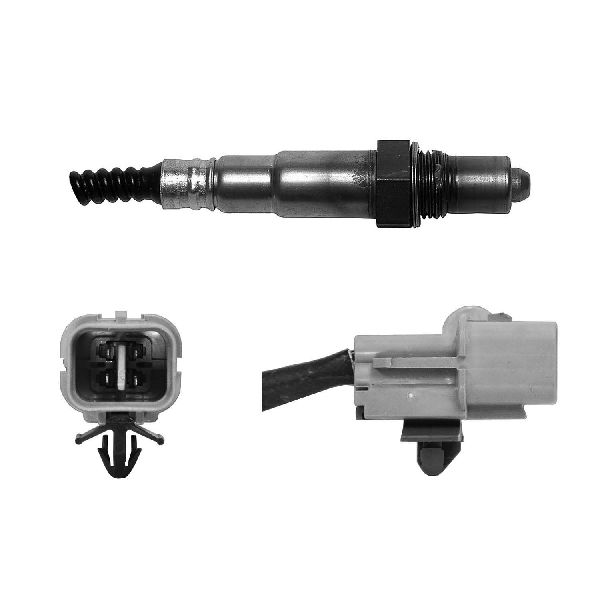
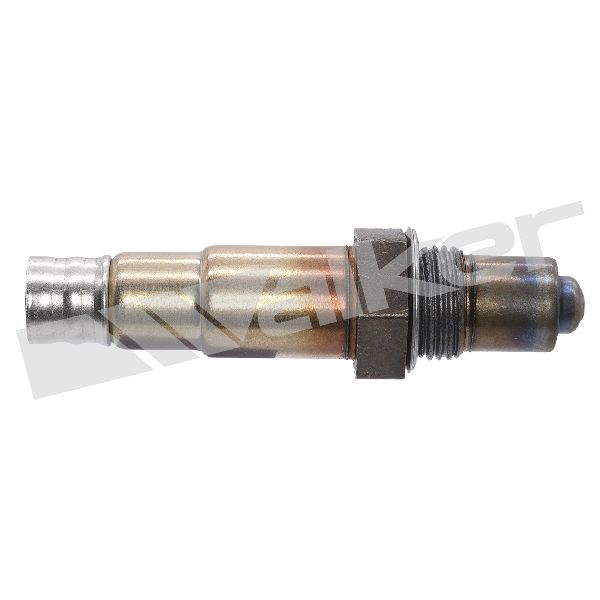
- Upstream Oxygen Sensor (Air/Fuel Ratio Sensor)
(OEM #39210-2B510)— This is Bank 1, Sensor 1. Its internal heater element is the most common failure point for code P0031. The OEM part fits various Hyundai models with the 1.6L engine.
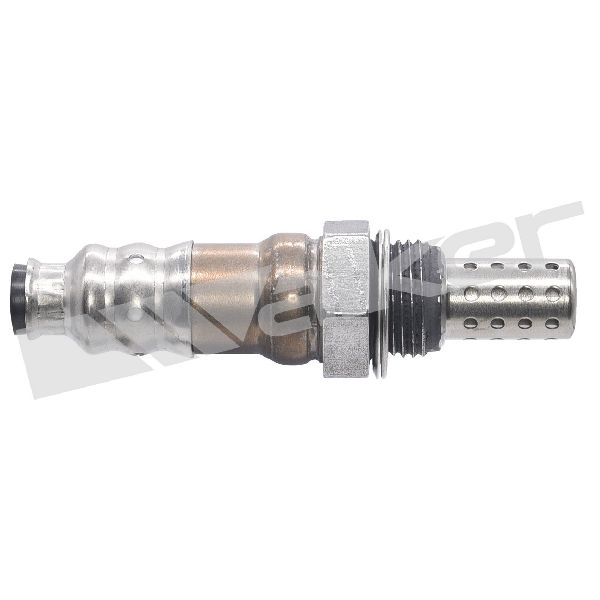
Trusted brands: Hyundai (OEM), Denso (e.g., 234-5055), NGK/NTK (e.g., 27093, 27077), Bosch, Walker Products
OEM price range: $150-$250
Aftermarket price range: $60-$120
Technical Service Bulletins (TSBs) & Recalls
- While no TSBs directly address P0031 on the Veloster, related bulletins like 10-FL-004 for other models show that Hyundai issues ECM updates that can sometimes inadvertently affect emissions monitor reporting. It's always wise to ensure the vehicle's ECM software is up to date.
Mechanic-Grade Diagnostic Values
- O2 Sensor (A/F Sensor) Heater Resistance — expected: 4–15 ohms at room temperature.. Failure: A reading of infinite resistance (OL) indicates an open circuit (burned out element). A reading near zero ohms indicates a short circuit. The P0031 code specifically triggers when the ECM detects heater current is less than 0.8 A, which points to high resistance or an open circuit.
- Voltage at O2 Sensor Connector (Harness Side) — expected: Approximately 12V (battery voltage) at the heater power supply pin with the ignition on, engine off.. Failure: Significantly less than 12V or 0V indicates a problem with the wiring, fuse, or relay providing power to the circuit.
Scan Tool Commands That Help
- Hyundai GDS (Global Diagnostic System) or equivalent professional scanner: Actuation Test for 'Heater for oxygen sensor (Upstream)' — This command allows a technician to manually turn the O2 sensor heater on and off while monitoring the circuit's voltage or current via live data. It's used to confirm if the ECM driver is functioning and if the heater responds to commands, helping to isolate the fault between the ECM, wiring, and the sensor itself without having to physically access the components initially.
Wiring & Ground Locations
- ECM Connector Pin 7 — At the main Engine Control Module (ECM) harness connector.. According to a generic Hyundai ECM pinout, Pin 7 is the control output for the Heated Oxygen Sensor (Sensor 1) heater. If voltage tests at the sensor connector fail, a continuity test between this pin and the corresponding wire at the sensor connector can confirm if the wiring harness is intact or has an open/short.
- ECM Connector Pins 3 & 4 — At the main Engine Control Module (ECM) harness connector.. These pins are listed as the main power grounds for the ECM. A poor ground connection at these points can cause a variety of issues, including incorrect readings and fault codes for sensor circuits. Verifying a clean, tight connection to the chassis ground is a crucial step in advanced diagnostics.
Real Owner Repair Stories
- AliExpress Product Review/Technical Write-up (2014 Hyundai Accent with 1.6L GDI (G4FJ engine), mileage not specified) — Check Engine Light with code P0135 (Heater Circuit Malfunction - functionally identical diagnosis to P0031), poor fuel economy (dropped from 32.5 to 28.1 mpg).
❌ Tried (didn't work) The user went straight to diagnostics rather than replacing parts randomly.
✅ What actually fixed it The user diagnosed the issue by checking live O2 sensor data, which showed the voltage was stuck at 0.15V, indicating it wasn't heating up. They confirmed the failure by measuring the heater resistance, which was 22.1 ohms (out of the expected 10-15 ohm range). Replacing the upstream oxygen sensor (part number 39210-2B355, a compatible number) and clearing the code resolved the issue.
OEM Part Supersession History
39210-2B510→No direct supersession found, but this part number is confirmed to fit a wide range of model years, including later Veloster models up to 2021.— N/A
Heads up: While the OEM part 39210-2B510 has wide compatibility, some aftermarket parts may have variations. For example, NGK/NTK lists different part numbers for the naturally aspirated vs. the turbo Veloster within the same generation (e.g., #27093 for NA, #27088 for Turbo). Always verify fitment with the specific vehicle's engine type (Turbo or Naturally Aspirated).
Diagnostic Flowchart
Other Known Issues on This Vehicle
Issues unrelated to this code that are worth knowing about as an owner of this generation:
- Catastrophic Engine Failure 🔴 High — A significant number of owners, particularly in 2012-2016 models, have reported connecting rod failure leading to engine block damage. Often occurs between 30,000 and 80,000 miles. (Ref: A recall was issued for this issue due to the risk of engine seizure and fire.)
- Dual-Clutch Transmission (DCT) Problems 🟠 Medium — Common complaints for DCT-equipped models (especially 2016-2017) include hesitation from a stop, shuddering, jerking, and in some cases, overheating or premature failure. Some owners report issues with even/odd gear selection. (Ref: Hyundai issued service bulletins to update the Transmission Control Module (TCM) logic to address some of these issues.)
- Carbon Buildup on Intake Valves 🟠 Medium — As with many Gasoline Direct Injection (GDI) engines, the 1.6L Gamma is prone to carbon deposits on intake valves over time, as fuel no longer cleans the valves. This can lead to rough idle, hesitation, and power loss, typically noticeable after 60,000-100,000 miles.
- Peeling Paint 🟡 Low — Widespread complaints exist regarding paint, especially white and Performance Blue, delaminating and peeling off in sheets. This can occur just outside of the standard warranty period. (Ref: Hyundai has addressed this for some models and years with warranty extensions, but coverage has been inconsistent.)
- Excessive Oil Consumption 🟠 Medium — Some owners report their engines consuming a significant amount of oil between changes, which can exacerbate other engine wear issues if not monitored closely.
Used vs. New Parts: Buying Guide for This Vehicle
When a used part is the smart pick: For this repair, a used part is almost never a smart choice. The primary cause of P0031 is the failure of the O2 sensor's internal heater, which is a wear-and-tear component with a finite lifespan. A used sensor from a junkyard has unknown remaining life and could fail shortly after installation, wasting time and money. The only exception might be sourcing a used wiring harness pigtail if only the connector is damaged, but even then, a new pigtail is inexpensive.
Donor-vehicle mileage cap: roughly under 50000 miles for the part to have meaningful remaining life.
What to inspect on the donor part:
- If forced to buy a used sensor, avoid any with visible rust, corrosion on the connector pins, or physical damage to the sensor tip or wiring.
- Ask for the mileage of the donor vehicle; anything over 50,000 miles is a significant gamble.
OEM-only on this vehicle (don't cheap out):
- While not strictly 'OEM-only', using a reputable OE-supplier brand is highly recommended. Some owners report that ultra-cheap, no-name aftermarket sensors can fail prematurely or have slightly different response characteristics that can cause other issues.
Aftermarket brands forum-validated for this vehicle:
- Denso
- NGK / NTK
- Bosch
- Walker Products
Brands owners have reported issues with on this vehicle:
- Unbranded, 'white-box' sensors from online marketplaces are often cited in forums as being unreliable or failing quickly.
Real Owner Stories
Aggregated from forums and TSBs cited above. Mileages and costs reflect what owners reported in those sources.
2015 Veloster Turbo
Symptoms: The car suddenly had no boost or power after being parked for 5 minutes. It sounded like the intake was pushing out air rather than sucking it in. Multiple codes were present including P0031, P0136, P0037, P0447, P0445, P0245, and P0034.
What fixed it: Replacing the upstream (pre-cat) sensor is the consistently reported resolution for P0031 in these community discussions.
Source hint: Reddit r/veloster
2012-2017 Hyundai Veloster 1.6L
Symptoms: Owners report the Check Engine Light coming on, often accompanied by decreased fuel economy and a rough or unstable idle, particularly when the engine is cold.
What fixed it: Replacing the Bank 1, Sensor 1 (upstream) oxygen sensor.
Source hint: VelosterTurbo.org
Related OBD-II Codes
Frequently Asked Questions
Does Hyundai TSB 10-FL-004 apply to my Veloster's P0031 code?
Should I use an OEM Hyundai sensor or an aftermarket brand like Denso for my 1.6L Gamma GDI?
Where is the Bank 1, Sensor 1 oxygen sensor located on the 2012-2017 Veloster?
Could a blown fuse be the reason my Veloster is throwing P0031?
Is the P0031 code related to the common carbon buildup issues on the 1.6L Gamma engine?
Can I check the O2 sensor heater myself with a multimeter?
Helpful Videos
We Have This Part in Stock



The information in this article is provided for general reference and educational purposes only. Vehicle specifications, procedures, and part compatibility can vary by production date, trim level, and region. Always consult your vehicle's factory service manual and verify part numbers before purchasing or performing repairs. Safety-critical components such as airbags, seat belts, and braking systems should be installed by a qualified professional.
- Hyundai Veloster:
- 🧭 Diagnostic Flowchart
- 🎬 Helpful Videos
- 🛍️ Shop This Part
- What's Unique About the 2012-2017 Hyundai Veloster
- Symptoms You May Notice
- Most Likely Causes
- Rare But Worth Checking
- Diagnosis Steps
- Parts You'll Likely Need
- Technical Service Bulletins (TSBs) & Recalls
- Mechanic-Grade Diagnostic Values
- Scan Tool Commands That Help
- Wiring & Ground Locations
- Real Owner Repair Stories
- OEM Part Supersession History
- Other Known Issues on This Vehicle
- Used vs. New Parts: Buying Guide for This Vehicle
- Real Owner Stories
- 2015 Veloster Turbo
- 2012-2017 Hyundai Veloster 1.6L
- Related OBD-II Codes
- Frequently Asked Questions
- 🎟️ Get 5% Off