

P0031 on 2014-2021 Jeep Cherokee 3.2L V6: Oxygen Sensor Heater Circuit Guide
On a 2014-2021 Jeep Cherokee with the 3.2L V6, code P0031 almost always means the upstream oxygen sensor on the rear cylinder bank (Bank 1) has failed. The most common fix is to replace the sensor. Expect to pay $50-$100 for an aftermarket part or $100-$180 for an OEM Mopar sensor. It's a DIY job with the right tools, but accessing the rear sensor is challenging.
- P0031 on the 3.2L V6 Cherokee almost always points to the upstream O2 sensor on the REAR cylinder bank (near the firewall).
- The most likely fix is replacing this specific sensor (Mopar P/N 05149180AB).
- Before buying parts, always perform a quick visual check of the wiring for melting or damage, as its location makes it vulnerable.
- Also, check the O2 sensor-related fuses in the underhood fuse box as a simple preliminary step.
- Do not confuse Bank 1 (rear) with Bank 2 (front), which is a common and costly mistake.
What's Unique About the 2014-2021 Jeep Cherokee
For the Jeep Cherokee (KL generation) with the transverse-mounted 3.2L V6 engine, the key platform-specific detail for code P0031 is the location of 'Bank 1'. Unlike longitudinally mounted engines where Bank 1 is on the driver's or passenger's side, on this vehicle Bank 1 is the cylinder bank closer to the firewall (the rear bank). This is a frequent point of confusion and can lead to mechanics or owners replacing the wrong sensor. Accessing this rear sensor is also significantly more difficult than accessing the Bank 2 sensor at the front of the vehicle due to tight space.
Symptoms You May Notice
- Check Engine Light illuminated
- Decreased fuel economy
- Rough idle, especially when cold
- Possible hesitation during acceleration
- Failure to pass an emissions test
- Replacing the wrong oxygen sensor. Many people mistakenly replace the Bank 2 (front/radiator side) sensor because it's easier to access, or they replace the downstream (Sensor 2) sensor instead of the upstream (Sensor 1) sensor. P0031 is specifically for the upstream sensor on the rear bank.
- Replacing the sensor without checking for a blown fuse or damaged wiring first. A user on a Reddit forum shared an experience where a new sensor didn't fix the code, which was ultimately traced to a wiring issue.
Most Likely Causes
- Failed Bank 1, Sensor 1 Oxygen Sensor 🔴 High Probability → Shop Oxygen Sensor The internal heater element is a common wear-and-tear component that eventually burns out, which is the most frequent cause of this code. The sensor is a consumable part that operates in a high-temperature environment.
How to confirm: Disconnect the sensor and test the resistance between the two heater circuit pins (often the two same-colored wires). A healthy sensor will have a resistance between 4 and 30 ohms. An open circuit (infinite resistance) or a reading near zero confirms the heater has failed. This is the definitive test before buying a new part.
Typical fix: Replace the Bank 1, Sensor 1 oxygen sensor. This is the upstream sensor on the rear (firewall side) exhaust manifold. A 22mm or 7/8" oxygen sensor socket is required for removal.
Est. part cost: $50-$180 - Damaged Wiring or Connector 🟡 Medium Probability The wiring harness for the rear O2 sensor is routed in a tight, hot area. It can be susceptible to melting if it comes into contact with the exhaust manifold or chafing against other components, leading to a short or open circuit. This is a known issue on Jeeps where harnesses are routed near hot components.
How to confirm: Visually inspect the entire wiring harness from the sensor to the main engine harness. Look for melted plastic, frayed or broken wires, and check for corrosion or damage inside the connector pins. In some cases, a wire can rub through its insulation, causing a short to ground that requires a simple repair.
Typical fix: Repair the damaged section of wire using solder and heat shrink. If the connector is damaged, replace it with a new pigtail connector.
Est. part cost: $10-$30 - Blown Fuse ⚪ Low Probability A short circuit in the heater wiring or the sensor itself can cause the associated fuse to blow, cutting power to the circuit. While less common than sensor failure, it's a simple and crucial check.
How to confirm: Check the fuses in the underhood Power Distribution Center. Relevant fuses for engine management and O2 sensors include F07, F08, F10, F16, F30, F59, and F83. Always consult your owner's manual for the specific fuse layout for your model year.
Typical fix: Replace the blown fuse. If the new fuse blows immediately, it indicates a persistent short circuit that must be located and repaired before installing a new sensor.
Est. part cost: $1-$5
Rare But Worth Checking
- Powertrain Control Module (PCM) Failure: This is very rare. Before condemning the PCM, all other possibilities (sensor, wiring, fuses) must be exhaustively ruled out. A faulty PCM driver for the heater circuit can cause the code, but it's an unlikely point of failure. Some TSBs for other O2 sensor codes on this platform do involve PCM software updates, so it's worth checking with a dealer if your VIN has any pending flashes.
Diagnosis Steps
- Read the trouble codes with an OBD-II scanner to confirm P0031 is present.
- Locate Bank 1, Sensor 1. On the 3.2L V6, this is the upstream sensor on the exhaust manifold at the rear of the engine bay, near the firewall.
- Perform a thorough visual inspection of the sensor's wiring harness and connector. Look for any signs of melting, chafing, or corrosion, paying close attention to where it runs near the exhaust.
- Check the O2 sensor heater-related fuses in the engine bay fuse box (Power Distribution Center). Refer to the owner's manual for your specific model year.
- If fuses are good, disconnect the O2 sensor electrical connector.
- Using a multimeter set to Ohms, measure the resistance across the two heater circuit pins on the sensor side of the connector (usually the two wires of the same color). A reading between 4-30 ohms is good. A reading of infinity (OL) or near zero indicates a failed sensor heater.
- If the sensor resistance is good, turn the ignition to the 'On' position (engine off). Use a multimeter to check for battery voltage (approx. 12V) on the power supply wire in the vehicle-side harness connector.
- If power and sensor resistance are good, the issue may be in the PCM-controlled ground wire or, rarely, the PCM itself. At this point, if the cause is not obvious, professional diagnosis may be required.
Parts You'll Likely Need
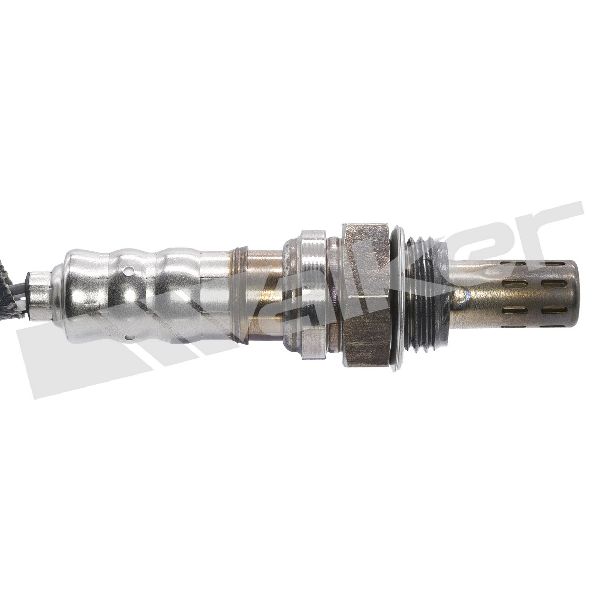
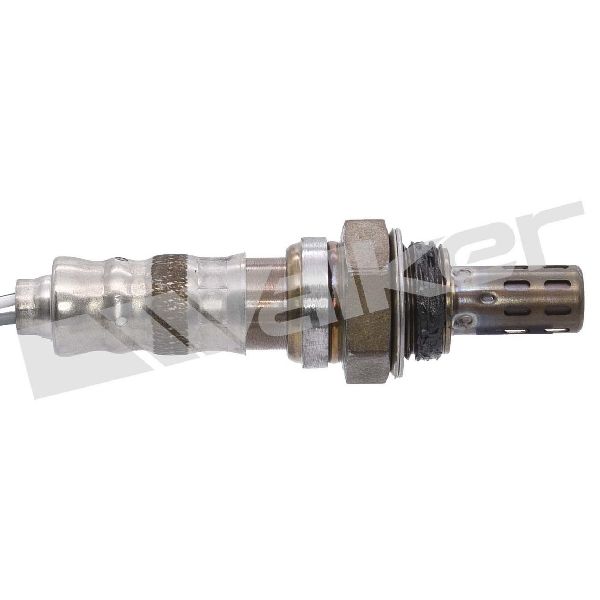
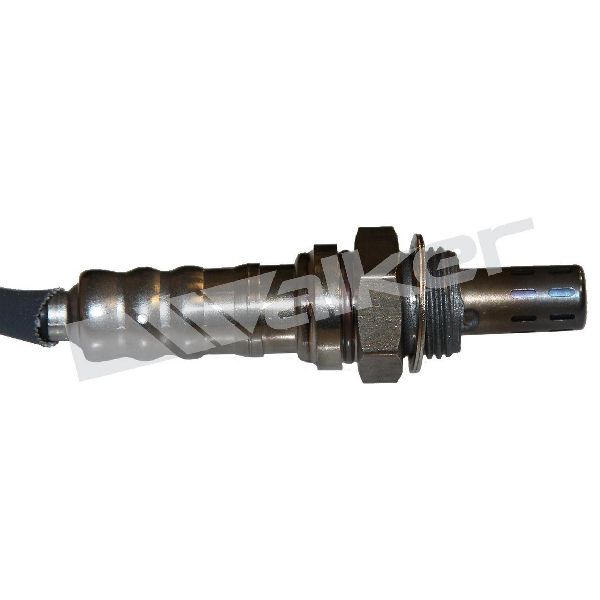
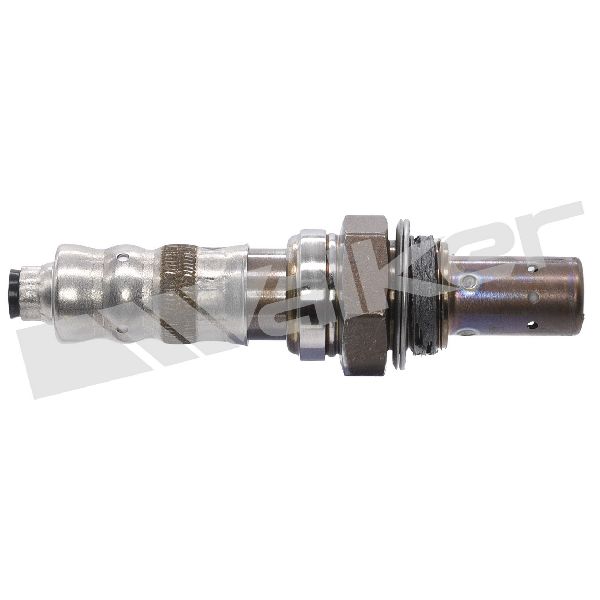
- Upstream Oxygen Sensor (Bank 1)
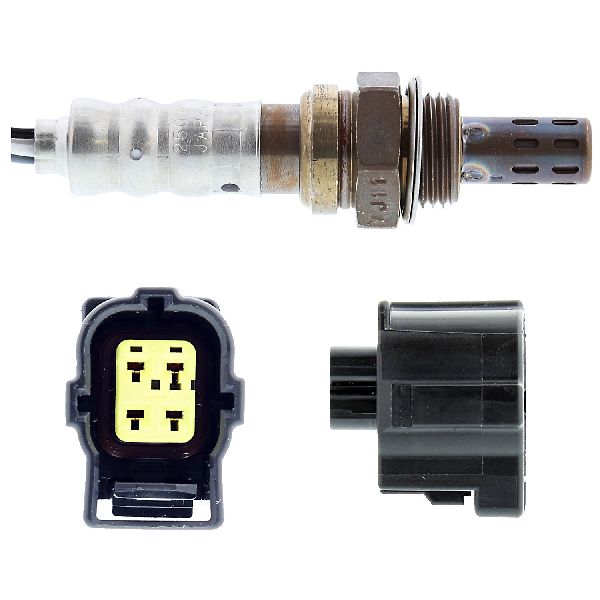
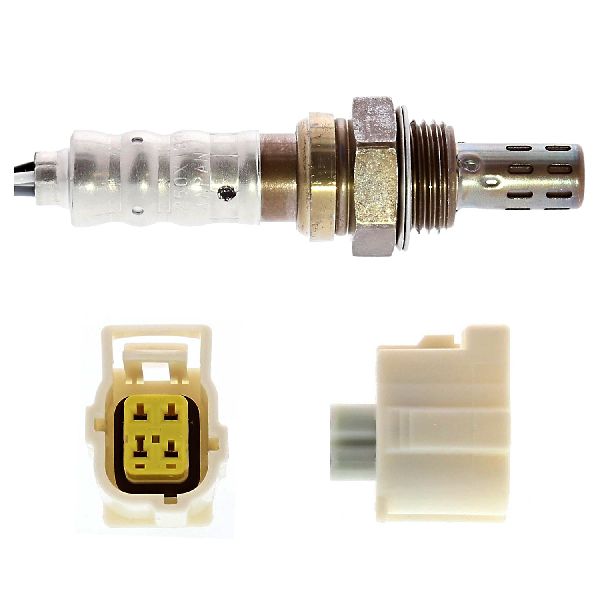
(OEM #05149180AB)— The internal heater element is the most common failure point for this code. This is the upstream sensor for the rear cylinder bank.
Trusted brands: Mopar, NTK, Denso, Bosch
OEM price range: $100-$180
Aftermarket price range: $50-$100
Related Codes That Often Appear With This One
- P2251: O2 Sensor Negative Current Control Circuit/Open (Bank 1 Sensor 1). This code is sometimes seen with P0031 and can be addressed by the same PCM software updates in some TSBs, indicating a related electrical or software logic issue.
Technical Service Bulletins (TSBs) & Recalls
- While several TSBs exist that mention P0031 for the Jeep Cherokee (e.g., #18-078-22, #18-004-16 REV. A, #18-013-14 REV. A), they primarily apply to the 2.4L engine and often involve PCM software updates for issues like cold start flares or are paired with other codes like P2251. There are no widespread TSBs specifically for the 3.2L V6 that point to a software fix for an isolated P0031 code; it usually indicates a hardware failure.
Mechanic-Grade Diagnostic Values
- O2 Sensor Heater Element Resistance — expected: Between 4 and 30 ohms, with many OEM Mopar sensors measuring specifically between 4-7 ohms at room temperature.. Failure: A reading of infinite resistance (OL) indicates an open circuit, while a reading near zero ohms indicates a short. Both mean the sensor has failed.
- Heater Circuit Power Supply Voltage (KOEO) — expected: Approximately 12 Volts (battery voltage) at the power supply pin on the vehicle-side harness connector with the Key On, Engine Off.. Failure: Zero or very low voltage points to a problem upstream of the sensor, such as a blown fuse, a faulty Auto Shutdown (ASD) relay, or a break in the power wire.
Hidden / Shadow Codes Worth Checking
- Mode $06: A professional scan tool can access Mode $06 data, which contains non-continuous monitor test results. For the O2 sensor heater, this can show test values for the heater circuit that may be failing or borderline even before a continuous fault like P0031 is set. (see via A professional-grade OBD-II scan tool that supports Mode $06 data display.)
Scan Tool Commands That Help
- wiTECH or equivalent professional scan tool: O2 Sensor Heater Test — This is a bidirectional command that allows the technician to directly activate the O2 sensor's heater circuit to verify its integrity without needing to manually measure resistance at the connector.
- wiTECH or equivalent professional scan tool: O2 Sensor Response Test — While not directly for the heater circuit, this test is used to check if the sensor is lazy or slow to respond after it has been heated, which can help confirm the overall health of the sensor.
Wiring & Ground Locations
- Power Distribution Center (PDC) — The main fuse box located in the engine compartment, on the driver's side near the battery.. This box contains the fuses (e.g., F07, F08, F10, F16, F30, F59, F83) and the Auto Shutdown (ASD) relay that supply power to the O2 sensor heater circuits. A blown fuse or faulty ASD relay here will cut power and cause a P0031 code.
- Engine Wiring Harness (Firewall) — The section of the main engine wiring harness that runs along the firewall, behind the 3.2L V6 engine.. This area is a known chafe point on some Jeep platforms. Since the Bank 1 O2 sensor is located at the rear, its wiring runs through this area and can be susceptible to damage, leading to shorts or open circuits that trigger P0031.
- O2 Sensor Heater Relay — Not applicable; integrated into the PCM.. Unlike some vehicles, the Jeep Cherokee does not use a separate, swappable relay for the O2 sensor heaters. The function is controlled directly by the Powertrain Control Module (PCM). This means if the power supply (fuse) and sensor are good, the fault lies in the wiring to the PCM or the PCM itself.
Real Owner Repair Stories
- MOTOR Information Systems technical article (Vehicle with a recurring P0031 code (specific model not mentioned, but a common scenario).) — Check Engine Light with code P0031.
❌ Tried (didn't work) Replacing the Bank 1 Sensor 1 oxygen sensor (was done twice by two different shops).
✅ What actually fixed it The vehicle had recently had its valve cover gasket replaced. The O2 sensor wiring harness was found to be pinched underneath the valve cover at the back of the cylinder head, causing the heater control wire to be shorted to ground. Repairing the pinched wire resolved the code.
"I Checked Everything" — The Actual Cause
- In one documented case, a recurring P0031 that was not fixed by replacing the sensor was ultimately caused by the sensor's wiring harness being pinched under the valve cover after a recent, unrelated repair. Standard electrical tests on the disconnected sensor and fuse box would not have revealed this type of hidden short in the harness itself.
OEM Part Supersession History
5149180AA→05149180AB— Standard part revision for improvement or a change in supplier by the manufacturer.
Heads up: Using the newer part number (05149180AB) is strongly recommended. While the old part may fit, the revision was made for a reason and the new part is the correct service replacement.
Model Year Variations Within This Range
- 2014-2021: While the 3.2L V6 engine and its physical components remained largely consistent through the 2019 model year facelift, the PCM software did not. Different model years may have specific software updates (TSBs) available that address diagnostic sensitivity for O2 sensor codes. An issue fixed by a software flash on a 2015 model may not apply to a 2020 model, even with identical symptoms.
Diagnostic Flowchart
Other Known Issues on This Vehicle
Issues unrelated to this code that are worth knowing about as an owner of this generation:
- ZF 9-Speed Transmission Problems 🔴 High — Very common, especially in 2014-2016 models. Issues include rough/erratic shifting, sudden shifts to neutral, and stalling. (Ref: Multiple recalls and dozens of TSBs (e.g., a 2016 recall and an August 2019 recall for 2014 V6 models) were issued for software updates and, in some cases, hardware replacement.)
- Excessive Oil Consumption (3.2L V6) 🟠 Medium — Frequently reported by owners, though often deemed 'within spec' by Chrysler (up to 1 quart per 1000 miles). Can begin at relatively low mileage (e.g., under 30k miles). Some cases are caused by a leaking oil filter housing/cooler assembly. (Ref: No specific recall, but dealers perform oil consumption tests. Some owners report needing engine work or replacement for severe cases.)
- Rocker Arm / Lifter Failure (3.2L V6) 🟠 Medium — A known issue with the Pentastar engine family. Bearing failure in the rocker arms can cause a ticking noise and persistent misfires (like P0300), often requiring significant top-end engine repair. (Ref: TSB 09-013-22 notes not to replace MDS lifters just for a misaligned pin, indicating it's a known area of concern.)
- Vehicle 'Wobble' or Vibration at 30-45 MPH 🟡 Low — Some owners report a noticeable front-end vibration or 'wobble' at speeds around 30-45 mph that is not the classic 'Death Wobble'. It is often attributed to axle shafts or other driveline components.
- Leaking Oil Filter Housing / Cooler Assembly 🟠 Medium — The plastic oil filter housing, located in the engine valley, is known to crack and leak oil. This can be mistaken for other leaks and is a common failure point on the Pentastar engine.
Used vs. New Parts: Buying Guide for This Vehicle
When a used part is the smart pick: For this repair, using a used part is not recommended. The primary cause of P0031 is the failure of a wear-and-tear item (the sensor's internal heater). A used sensor has an unknown amount of remaining life and is a high-risk purchase.
Donor-vehicle mileage cap: roughly under 30000 miles for the part to have meaningful remaining life.
What to inspect on the donor part:
- If considering a used sensor against advice, ensure the donor vehicle has very low mileage.
- Inspect the used sensor's wiring for any signs of brittleness, melting, or frayed insulation.
- Check that the connector is clean, free of corrosion, and has no bent or pushed-out pins.
OEM-only on this vehicle (don't cheap out):
- Powertrain Control Module (PCM) - In the rare event the PCM is the cause, a new or professionally remanufactured unit programmed to the vehicle's VIN is essential.
Aftermarket brands forum-validated for this vehicle:
- NTK (often the OEM supplier)
- Denso
- Bosch
Brands owners have reported issues with on this vehicle:
- Unnamed, 'white-box' generic parts from online marketplaces, as Chrysler products can be sensitive to sensor electronics that are not to OEM specification.
Real Owner Stories
Aggregated from forums and TSBs cited above. Mileages and costs reflect what owners reported in those sources.
2014-2021 Jeep Cherokee 3.2L V6
Symptoms: Check Engine Light illuminated; owners frequently discuss the difficulty of accessing the sensor, sometimes requiring the removal of the cowl for better access.
What fixed it: Replacing the Bank 1 (rear) upstream O2 sensor.
Source hint: jeepcherokeeclub.com: Multiple threads on this forum corroborate that P0031 on the 3.2L V6 is a common issue
2014-2021 Jeep Cherokee 3.2L V6
Symptoms: Check Engine Light with codes P0031 and P0051 appearing at the same time.
What fixed it: Replacing both upstream O2 sensors.
Source hint: jeepcherokeeclub.com thread titled 'P0031 and P0051 at the same time'
Related OBD-II Codes
Frequently Asked Questions
Do TSBs #18-078-22 or #18-004-16 REV. A provide a software fix for my 3.2L V6 Cherokee's P0031 code?
Where exactly is the Bank 1 Sensor 1 located on the Jeep 3.2L V6 engine?
Is there a specific fuse I should check for the O2 sensor heater circuit on my Cherokee?
Why is the wiring harness for the rear O2 sensor prone to failure on this vehicle?
What resistance reading confirms that my Bank 1 Sensor 1 heater has failed?
Could my Cherokee's 3.2L oil consumption issue be related to the P0031 code?
Helpful Videos
We Have This Part in Stock

The information in this article is provided for general reference and educational purposes only. Vehicle specifications, procedures, and part compatibility can vary by production date, trim level, and region. Always consult your vehicle's factory service manual and verify part numbers before purchasing or performing repairs. Safety-critical components such as airbags, seat belts, and braking systems should be installed by a qualified professional.
- Jeep Cherokee:
- 🧭 Diagnostic Flowchart
- 🎬 Helpful Videos
- 🛍️ Shop This Part
- What's Unique About the 2014-2021 Jeep Cherokee
- Symptoms You May Notice
- Most Likely Causes
- Rare But Worth Checking
- Diagnosis Steps
- Parts You'll Likely Need
- Related Codes That Often Appear With This One
- Technical Service Bulletins (TSBs) & Recalls
- Mechanic-Grade Diagnostic Values
- Hidden / Shadow Codes Worth Checking
- Scan Tool Commands That Help
- Wiring & Ground Locations
- Real Owner Repair Stories
- "I Checked Everything" — The Actual Cause
- OEM Part Supersession History
- Model Year Variations Within This Range
- Other Known Issues on This Vehicle
- Used vs. New Parts: Buying Guide for This Vehicle
- Real Owner Stories
- 2014-2021 Jeep Cherokee 3.2L V6
- 2014-2021 Jeep Cherokee 3.2L V6
- Related OBD-II Codes
- Frequently Asked Questions
- 🎟️ Get 5% Off