

P0031 on 2017-2020 Jeep Compass 2.4L: O2 Sensor Heater Causes and Fixes
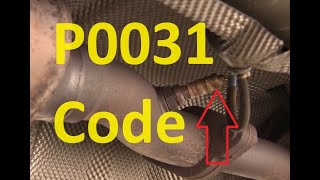
On a 2017-2020 Jeep Compass with the 2.4L engine, code P0031 almost always means the upstream oxygen sensor (Bank 1, Sensor 1) has failed. The most common fix is replacing the sensor. Before replacing, check the associated fuse and inspect the wiring harness for melting. Expect to pay $40-$100 for an aftermarket part or $120-$180 for an OEM Mopar sensor.
- P0031 on your Jeep Compass almost always points to a bad upstream (pre-catalytic converter) oxygen sensor.
- Before buying a new sensor, always check the fuse and visually inspect the wiring harness for any melting or damage, as this is a common and cheaper fix.
- This is a DIY-friendly repair for most home mechanics with basic tools and a special O2 sensor socket.
- If you experience repeated O2 sensor failures, monitor your engine's oil level closely. The 2.4L engine's known oil consumption can be the root cause, and you may be eligible for a dealer-performed oil consumption test under warranty extension XB1.
- Use the correct Mopar part (68195741AA) or a quality aftermarket equivalent from brands like Denso or NGK
What's Unique About the 2017-2020 Jeep Compass
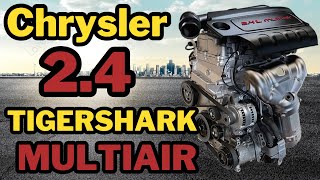
The 2.4L MultiAir 'Tigershark' engine used in the Jeep Compass has a widely documented tendency for higher-than-average oil consumption, which is the subject of class-action lawsuits and warranty extensions. This can lead to oil deposits fouling the upstream oxygen sensor, causing its internal heater element to fail prematurely and trigger the P0031 code. While the code's direct cause is often the sensor itself, the underlying reason for repeat failures can be this engine-specific oil consumption issue.
Symptoms You May Notice
- Check Engine Light is on
- Decreased fuel economy
- Rough idle, especially on cold starts
- Slightly sluggish engine performance
- Possible engine stalling at idle when cold
- Replacing the downstream (Sensor 2) oxygen sensor instead of the upstream (Sensor 1) sensor. P0031 is specific to the sensor before the catalytic converter.
- Replacing the O2 sensor without first checking the fuse and inspecting the wiring harness for damage.
- Assuming the O2 sensor is bad when the root cause is excessive oil consumption repeatedly fouling new sensors.
Most Likely Causes
- Failed Upstream (Bank 1, Sensor 1) Oxygen Sensor 🔴 High Probability → Shop Oxygen Sensor The internal heater element is a common failure point from age and heat cycles. The 2.4L engine's tendency to consume oil can also foul the sensor with deposits, accelerating its failure.
How to confirm: Disconnect the sensor and test the resistance between the two heater circuit pins with a multimeter. A healthy sensor should read between 4-10 ohms. An open circuit (infinite resistance) or a reading far outside this range (e.g., below 0.8 A) indicates failure. This is the most common cause.
Typical fix: Replace the Bank 1, Sensor 1 (upstream) oxygen sensor. An O2 sensor socket is recommended for removal.
Est. part cost: $40-$180 - Damaged Wiring or Connector 🟡 Medium Probability The sensor wiring is routed close to the hot exhaust manifold, making it susceptible to melting, chafing, or corrosion over time. This is a common point of failure.
How to confirm: Visually inspect the entire wiring harness from the O2 sensor to its connection point on the engine. Look for any signs of melting, frayed wires, or corrosion on the connector pins.
Typical fix: Repair the damaged section of the wiring harness or replace the connector pigtail.
Est. part cost: $15-$50 - Blown Fuse ⚪ Low Probability
How to confirm: Locate the fuse for the O2 sensor heater circuit in the vehicle's fuse box (consult the owner's manual or online diagrams for location, often related to the ASD relay like fuse F16) and check if it is blown.
Typical fix: Replace the blown fuse. If the fuse blows again immediately, it indicates a short circuit in the wiring or within the O2 sensor itself that must be diagnosed.
Est. part cost: $1-$5
Rare But Worth Checking
- Faulty Powertrain Control Module (PCM): A recall (NHTSA 18V-524 / FCA U87) was issued for some 2018 Compass models due to a faulty voltage regulator chip in the PCM that could cause stalling. While this recall wasn't specifically for P0031, it shows that PCM hardware failure is a possibility on this platform. This should only be considered after all other causes have been ruled out.
Diagnosis Steps
- Read the trouble codes with an OBD-II scanner to confirm P0031 is the primary code.
- Perform a thorough visual inspection of the upstream oxygen sensor's wiring harness and connector. Look for any signs of melting, burns, or frayed wires due to contact with the exhaust.
- Check the fuse for the oxygen sensor heater circuit in the under-hood fuse box. Replace if blown.
- If the fuse and wiring appear intact, disconnect the oxygen sensor electrical connector.
- Using a multimeter set to Ohms, measure the resistance across the two pins for the heater element on the sensor side of the connector. A reading between 4 and 10 Ohms is typical; a reading of infinity (OL) indicates an open circuit and a failed sensor.
- If sensor resistance is good, turn the ignition to the 'ON' position (engine off) and check for battery voltage (~12V) on the power supply wire in the harness-side connector.
- If power is present and the sensor resistance is good, check the ground circuit for continuity. A poor ground can also cause this code.
- If power, ground, and sensor resistance are all within spec, the fault may lie within the PCM's driver circuit, though this is rare.
Parts You'll Likely Need
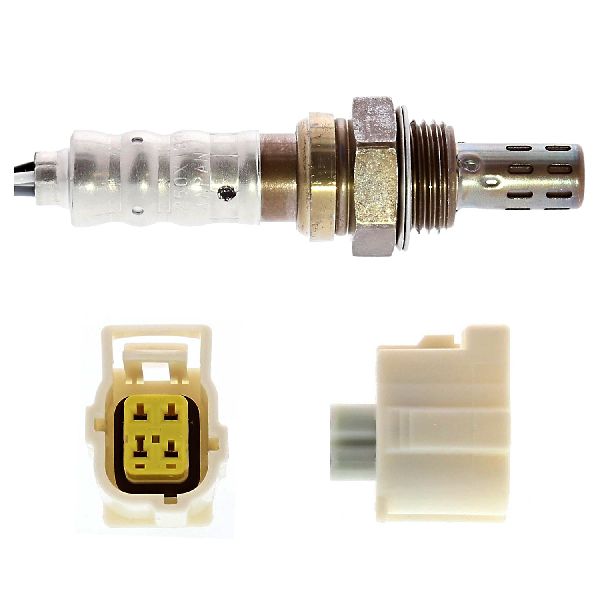
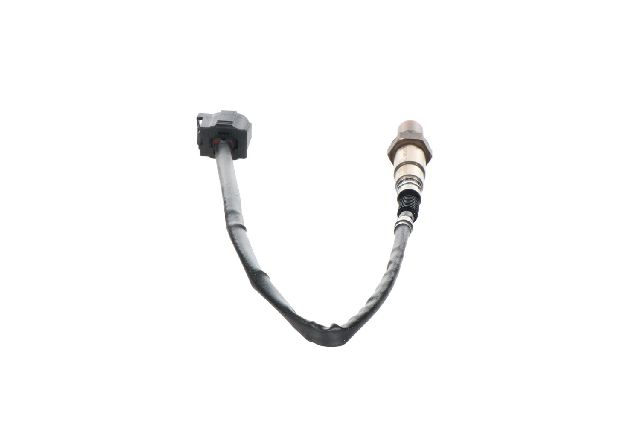
- Upstream Oxygen Sensor (Bank 1, Sensor 1)
(OEM #68195741AA)— The internal heater element is the most common point of failure for code P0031 on this vehicle.
Trusted brands: Mopar, Denso, NGK, Bosch
OEM price range: $120-$180
Aftermarket price range: $40-$100
Related Codes That Often Appear With This One
- P0032 — This code for 'Heater Control Circuit High' is the opposite of P0031. Seeing both could indicate an intermittent short or a wiring problem affecting the heater circuit.
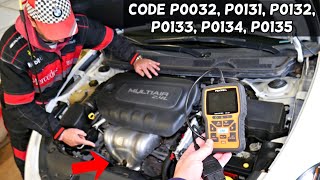
- P0131, P0132, P0133, P0134, P0135 — These are all codes related to the Bank 1, Sensor 1 O2 sensor's performance, circuit voltage, response time, or heater circuit. They often appear alongside P0031, pointing strongly to a failure of the sensor or its immediate wiring.
- P06EF — According to TSB Bulletin #18-004-23, P0031 may be found alongside P06EF (Engine Restart Performance), leading to Malfunction Indicator Lamp illumination.
Technical Service Bulletins (TSBs) & Recalls
- TSB 09-006-20 / 09-003-23: Details the procedure for dealers to perform an oil consumption test on the 2.4L engine, which is a root cause of sensor fouling.
- Warranty Extension XB1: Related to the oil consumption TSBs, this program may cover engine repairs or replacement for vehicles that fail the consumption test.
- TSB Bulletin #18-004-23: Notes that technicians may find P0031 set in conjunction with engine restart performance issues.
- TSB Bulletin #1811222: Confirms that P0031 is a documented cause for Malfunction Indicator Lamp (MIL) illumination on this platform.
Platform-Specific Known Issues
- The 2.4L MultiAir engine is known for oil consumption issues, which can foul the O2 sensor and cause repeated failures. This is a well-documented problem with TSBs (like 09-006-20) and a warranty extension (XB1) issued to address it.
- A recall for some 2018 models (NHTSA 18V-524) addressed faulty PCMs, which could cause a variety of electrical issues.
- Wiring for the O2 sensor is routed near the hot exhaust and is prone to melting or chafing, making a visual inspection critical before replacing parts.
- Manufacturer service bulletins, such as TSB Bulletin #18-085-22, highlight that P0031 can occur simultaneously with brake system communication codes like U0418-00.
Mechanic-Grade Diagnostic Values
- O2 Sensor Heater Element Resistance — expected: Between 2.0 and 30.0 ohms, with OEM Mopar sensors typically measuring between 4.0 and 8.0 ohms at room temperature (70°F/21°C).. Failure: An infinite reading (OL) indicates an open circuit/burned-out heater. A reading near zero ohms indicates a short circuit.
- Heater Circuit Power Supply Voltage (KOEO) — expected: Battery voltage (~12V) at the power supply pin on the harness-side connector.. Failure: Voltage below 11V or 0V points to a blown fuse, faulty ASD relay, or a break in the power wire.
- PCM Heater Current Threshold — expected: Current draw should be above 0.17 amps while the heater is commanded on.. Failure: The PCM will set code P0031 if it detects the heater current has been lower than 0.17 amps for more than 2 seconds.
- Scan Tool 'O2 Heater Test' Voltage — expected: When the test is activated, the O2 sensor voltage should remain above 4.5 volts.. Failure: If the voltage drops below 4.5 volts during the test, it indicates a problem in the circuit or sensor.
Hidden / Shadow Codes Worth Checking
- U0418 - Implausible Data Received From Brake System Control Module: On some Jeep models (specifically 2021, but may apply to others on the same platform), P0031 will appear alongside U0418, often with a long-crank symptom. This is not two separate problems, but a known software glitch in the PCM. (see via A standard OBD-II scanner will show both codes. The key is recognizing their relationship. The fix is a dealer-performed PCM software update per TSB #18-085-22, not replacing the O2 sensor or brake components.)
Scan Tool Commands That Help
- wiTECH (or equivalent professional scanner): O2 Sensor Heater Test — This is a bidirectional test that allows a technician to manually command the O2 sensor heater circuit on and off. It's used to verify if the PCM driver, wiring, and sensor heater are all functioning without having to wait for a cold start. It directly tests the circuit that sets P0031.
- wiTECH Diagnostic Application: Reprogram Powertrain Control Module (PCM) — This is required when P0031 is accompanied by code U0418. The fix is to apply the software update specified in TSB #18-085-22 to resolve the false codes.
Wiring & Ground Locations
- O2 1/1 Heater Control Wire — This wire runs from the PCM C2 Connector, Pin 76, to the upstream O2 sensor harness connector. On many 2.4L models, the wire color is Brown/Blue (BN/BU).. This is the specific ground-side control wire from the PCM. A short to ground or an open circuit on this wire will directly cause P0031. Technicians test this wire for continuity and shorts between the PCM and the sensor.
- Ground Point G904A — Located on the left front of the engine block.. This is a major engine ground point. While not exclusively for the O2 sensor, a loose or corroded connection here can cause a variety of sensor and module communication issues, including erratic behavior that could contribute to heater circuit faults. It should be checked for integrity during diagnosis.
"I Checked Everything" — The Actual Cause
- While a smoke test is not used for this code, a similar pattern exists: if the O2 sensor resistance tests good, the wiring has continuity, and the fuse is intact, but the P0031 code persists (especially if paired with code U0418), the root cause is often a PCM software anomaly. Technicians can chase this as a hardware fault for hours, but the actual fix is a dealer-performed software update per TSB #18-085-22.
OEM Part Supersession History
68195741AA→N/A— This part number appears to be the stable and correct OEM part for the entire 2017-2020 model year range.
Heads up: While some vendors list interchange part numbers like 68087364AA, 68195741AA is the most consistently cited and correct part. Using a sensor designed for a different calibration, even if it fits, can cause performance issues.
Model Year Variations Within This Range
- 2017-2020: Within the 2017-2020 model years, there were no significant changes to the 2.4L MultiAir engine or its emissions components that would affect the diagnosis or repair of code P0031. The parts and procedures are consistent across this range.
Diagnostic Flowchart
Other Known Issues on This Vehicle
Issues unrelated to this code that are worth knowing about as an owner of this generation:
- Excessive Engine Oil Consumption 🔴 High — Very common across all model years with the 2.4L engine. Can start at any mileage. A quart of oil loss every 1,000-2,000 miles is reported by many owners. (Ref: TSB 09-003-23; Warranty Extension XB1)
- Engine Stalling While Driving/Stopping 🔴 High — Frequently reported, especially in 2017-2018 models. Can be caused by low oil levels (engine self-preservation), faulty PCM, or other electrical issues. (Ref: Recall NHTSA 18V-524 (for 2018 PCM))
- Electronic Parking Brake (EPB) Malfunctions 🟠 Medium — Common reports of 'Service Electronic Parking Brake' messages, often tied to no-start conditions, stalling, and battery issues. Can be difficult to diagnose.
- Start/Stop System Malfunction 🟡 Low — Often reported in conjunction with stalling or battery issues. The system may become unavailable, which can be a precursor to other electrical problems.
- Rough Idle on Cold Start 🟡 Low — Reported by some owners, sometimes addressed by a PCM software update. (Ref: TSB 18-031-17 REV. B)
Used vs. New Parts: Buying Guide for This Vehicle
When a used part is the smart pick: Never. Oxygen sensors are consumable wear-and-tear items with a finite lifespan, much like spark plugs or brake pads. The internal heater element is a delicate filament that degrades with every heat cycle. A used sensor has an unknown amount of remaining life and may have been removed from a vehicle with issues (like oil consumption) that have already compromised it.
Donor-vehicle mileage cap: roughly under 10000 miles for the part to have meaningful remaining life.
What to inspect on the donor part:
- Verify the part number on the sensor body matches OEM (68195741AA).
- Inspect the sensor tip for heavy black soot (rich condition), white crust (oil/coolant contamination), or physical damage. A light gray or tan coating is normal.
- Ensure the wiring and connector are free of cuts, melting, or corrosion.
- Even with a perfect visual, the internal heater's remaining life is impossible to determine.
OEM-only on this vehicle (don't cheap out):
- While not strictly OEM-only, using a cheap, unbranded aftermarket O2 sensor is a common cause of repeat failures or new, different codes. The PCM is calibrated for the specific resistance and response time of the OEM sensor.
Aftermarket brands forum-validated for this vehicle:
- Denso
- NGK / NTK
- Bosch
Brands owners have reported issues with on this vehicle:
- Unbranded, 'white-box' parts from online marketplaces are frequently reported on forums as being unreliable or failing shortly after installation.
Real Owner Stories
Aggregated from forums and TSBs cited above. Mileages and costs reflect what owners reported in those sources.
2017 Jeep Compass 2.4L
Symptoms: Vehicle keeps stalling; other users suggested checking oil levels as low oil can cause stalling as a fail-safe.
What fixed it: While the specific user traced a stalling issue to a crankshaft sensor, the context identifies that oil consumption is a root cause for sensor fouling and stalling on this platform.
Source hint: Reddit r/JeepCompass thread titled '2017 Jeep Compass Keeps Stalling'
2018 Jeep Compass 2.4L
Symptoms: Service Electronic Parking Brake message, stalling, and no-start conditions tied to electrical gremlins.
What fixed it: Diagnosis of complex electrical nature including battery and electronic parking brake errors.
Source hint: Reddit r/cartalk thread titled '2018 Jeep Compass - Service Electronic Parking Brake'
Related OBD-II Codes
Frequently Asked Questions
Could the oil consumption issue on my 2.4L MultiAir engine be causing my P0031 code?
Is there a TSB or warranty extension that covers engine issues related to sensor fouling on the Jeep Compass?
My 2018 Compass has electrical issues and P0031; is there a recall I should know about?
Where is the fuse for the O2 sensor heater circuit located on the 2.4L Compass?
Can I use a used O2 sensor from a salvage yard to fix P0031?
Why does my Compass stall when cold along with the Check Engine Light?
Helpful Videos
We Have This Part in Stock

The information in this article is provided for general reference and educational purposes only. Vehicle specifications, procedures, and part compatibility can vary by production date, trim level, and region. Always consult your vehicle's factory service manual and verify part numbers before purchasing or performing repairs. Safety-critical components such as airbags, seat belts, and braking systems should be installed by a qualified professional.
- Jeep Compass:
- 🧭 Diagnostic Flowchart
- 🎬 Helpful Videos
- 🛍️ Shop This Part
- What's Unique About the 2017-2020 Jeep Compass
- Symptoms You May Notice
- Most Likely Causes
- Rare But Worth Checking
- Diagnosis Steps
- Parts You'll Likely Need
- Related Codes That Often Appear With This One
- Technical Service Bulletins (TSBs) & Recalls
- Platform-Specific Known Issues
- Mechanic-Grade Diagnostic Values
- Hidden / Shadow Codes Worth Checking
- Scan Tool Commands That Help
- Wiring & Ground Locations
- "I Checked Everything" — The Actual Cause
- OEM Part Supersession History
- Model Year Variations Within This Range
- Other Known Issues on This Vehicle
- Used vs. New Parts: Buying Guide for This Vehicle
- Real Owner Stories
- 2017 Jeep Compass 2.4L
- 2018 Jeep Compass 2.4L
- Related OBD-II Codes
- Frequently Asked Questions
- 🎟️ Get 5% Off