

P0031 on 2021-2022 Jeep Compass: O2 Sensor Heater Circuit Causes and Fixes
P0031 on a 2021-2022 Jeep Compass most often means the upstream oxygen sensor (Bank 1, Sensor 1) has failed. Replacing the sensor (Mopar Part #68492338AA) is the usual fix. Before replacement, check for related TSBs, as a software update may be required to correct false triggers or related issues like long crank times.
- P0031 points to a failure in the heater circuit of the upstream O2 sensor (Bank 1, Sensor 1).
- The most common fix is to replace the sensor itself, which is a manageable DIY job for many.
- Before replacing parts, always check the fuse and inspect the wiring for obvious damage.
- For a 2021-2022 Compass, it's crucial to check for TSBs, as a simple software update at the dealer may be the required fix, especially if other seemingly unrelated codes are present.
What's Unique About the 2021-2022 Jeep COMPASS
For the 2021-2022 Jeep Compass with the 2.4L Tigershark engine, the P0031 code is notable for two reasons. First, this engine family has known issues with oil consumption, which can contaminate and cause premature failure of the O2 sensor. Second, Jeep has issued several Technical Service Bulletins (TSBs) that link this code to other seemingly unrelated system faults. For instance, TSB 18-085-22 connects P0031 with long engine cranking times and a fault code from the brake module (U0418-00), while TSB 18-004-23 links it to engine restart performance codes. This suggests that on this specific platform, the code may not just be a simple sensor failure but could be part of a broader electrical or software issue that requires a PCM software update at a dealership.
Diagnostic Flowchart
Tap your situation to follow the diagnostic path that matches what you're seeing on this vehicle.
Symptoms You May Notice
- Check Engine Light (Malfunction Indicator Lamp or MIL) is on.
- Decreased fuel economy.
- Rough or unstable idle, especially when the engine is cold.
- Vehicle may fail an emissions test.
- Long engine cranking prior to vehicle start, particularly in warmer temperatures (above 104°F / 40°C), as noted in TSB #18-085-22.
- Replacing the wrong oxygen sensor. P0031 is specifically for Bank 1, Sensor 1 (the upstream sensor). On a four-cylinder engine like the one in the Compass, there is only one bank. Sensor 1 is before the catalytic converter.
- Replacing the sensor without checking the fuse or wiring first. A simple blown fuse or damaged wire can cause the code and is much cheaper to fix than a new sensor.
- Replacing the sensor when a PCM software update is the actual required fix, especially if other TSB-related codes are present.
Most Likely Causes
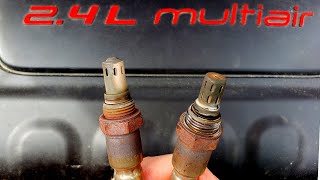
- Failed Upstream Oxygen Sensor (Bank 1, Sensor 1) 🔴 High Probability → Shop Oxygen Sensor The internal heater element of the O2 sensor is a common failure point due to constant heat cycles. On the 2.4L Tigershark engine, excessive oil consumption can also lead to oil deposits on the sensor, causing it to fail prematurely.
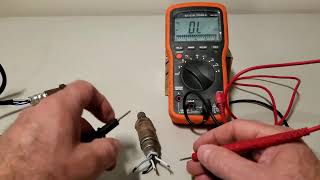
How to confirm: Disconnect the sensor and measure the resistance across the two heater circuit pins with a multimeter. An infinite reading (open circuit) or a reading far outside the manufacturer's specification confirms failure. A typical resistance 🎬 Watch: How to test if your O2 sensor heater is bad. is between 2-30 ohms, with many Chrysler/Jeep sensors specifically falling in the 5-7 ohm range when at room temperature.
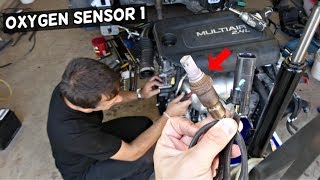
Typical fix: Replace the Bank 1, Sensor 1 oxygen sensor. On the 2.4L engine, this sensor is located on the exhaust manifold, accessible from the top of the engine bay. The OEM part number is Mopar 68492338AA. 🎬 Watch: See the upstream sensor location and replacement on the 2.4L.
Est. part cost: $40-$100 - Damaged Wiring or Connector 🟡 Medium Probability The wiring harness is close to hot exhaust components and can become melted, frayed, or corroded over time.
How to confirm: Visually inspect the entire wiring harness from the sensor to the main engine harness. Check the connector for corrosion, pushed-out pins, or signs of melting. A short to ground on the control wire can also cause this code.
Typical fix: Repair the damaged section of wire or replace the connector pigtail.
Est. part cost: $10-$30 - Blown Fuse ⚪ Low Probability
How to confirm: Locate the fuse for the O2 sensor heater circuit in the engine compartment fuse box (Power Distribution Unit) and check if it is blown. The owner's manual or fuse box lid should identify the correct fuse, often labeled O2 HTR, HTR-O2, or similar. On some Jeep models, this power is supplied via the Auto Shutdown (ASD) relay circuit, so related fuses like F16 may be involved.
Typical fix: Replace the blown fuse. If the fuse blows again immediately, it indicates a short circuit in the wiring or the sensor itself that must be diagnosed.
Est. part cost: $1-$5 - PCM Software Update Required ⚪ Low Probability Multiple TSBs for the 2021-2022 Compass (e.g., #18-085-22, #18-004-23) indicate that P0031 can be set, sometimes falsely, in conjunction with other codes due to software logic issues.
How to confirm: A Jeep dealership or a qualified shop with access to OEM service information can check if your vehicle's VIN has any outstanding TSBs that require a PCM software flash. This should be a primary check if other codes like U0418-00 or P06EF are also present.
Typical fix: The dealership reprograms the Powertrain Control Module (PCM) with the updated software.
Est. part cost: $0-$200
Rare But Worth Checking
- Faulty Powertrain Control Module (PCM): This is very rare. The PCM's internal driver for the heater circuit can fail. This should only be considered after all other possibilities (sensor, wiring, fuses, software) have been exhaustively ruled out.
Diagnosis Steps
- Read the code with an OBD-II scanner and note any other codes present. If codes like U0418-00 or P06EF are present, check for TSBs first.
- Check for applicable TSBs (like 18-085-22 and 18-004-23) related to P0031 for your vehicle's VIN, as a software update may be the required fix.
- Visually inspect the Bank 1, Sensor 1 oxygen sensor's wiring and connector for any signs of melting, chafing, or corrosion.
- Check the fuse for the O2 sensor heater circuit in the engine bay fuse box. Replace if blown.
- If the fuse and wiring appear intact, disconnect the O2 sensor.
- Use a multimeter to measure the resistance of the heater circuit on the sensor side of the connector. Compare this value to the manufacturer's specification (typically 5-7 ohms for Mopar, but up to 16 is acceptable). If it's an open circuit (infinite resistance) or out of spec, the sensor is bad.
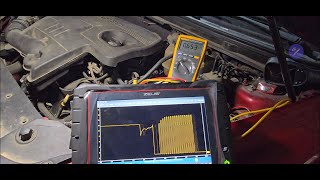
- If the sensor resistance is good, turn the ignition to the 'ON' position (engine off) and check for battery voltage (~12V) at the heater power wire in the harness-side connector. 🎬 Watch: A guide to testing the vehicle's O2 heater circuit wiring.
- If voltage and resistance are good, the issue may be in the control wire to the PCM or a PCM fault, which may require professional diagnosis.
Parts You'll Likely Need
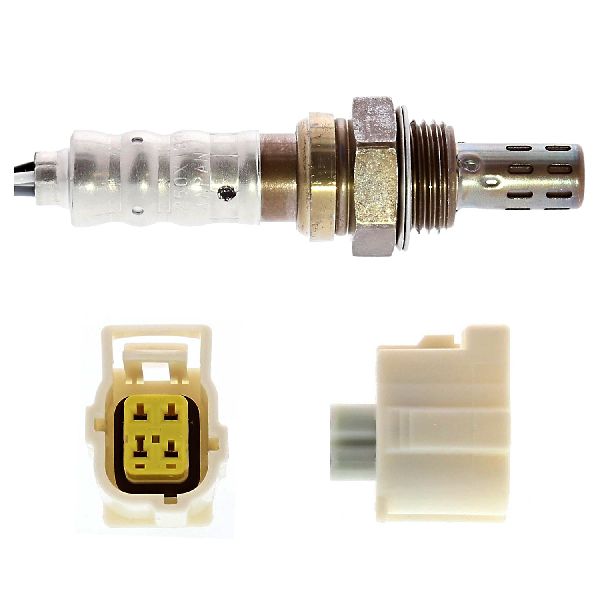
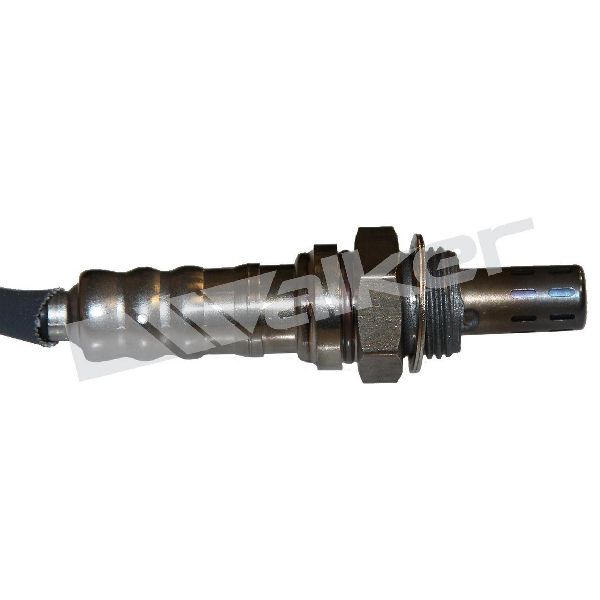
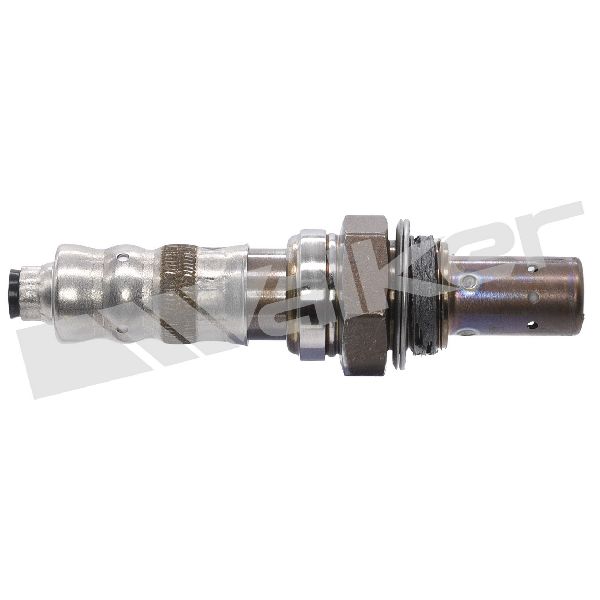
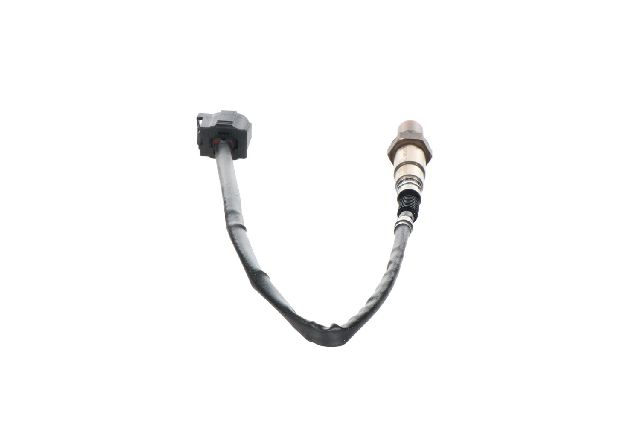
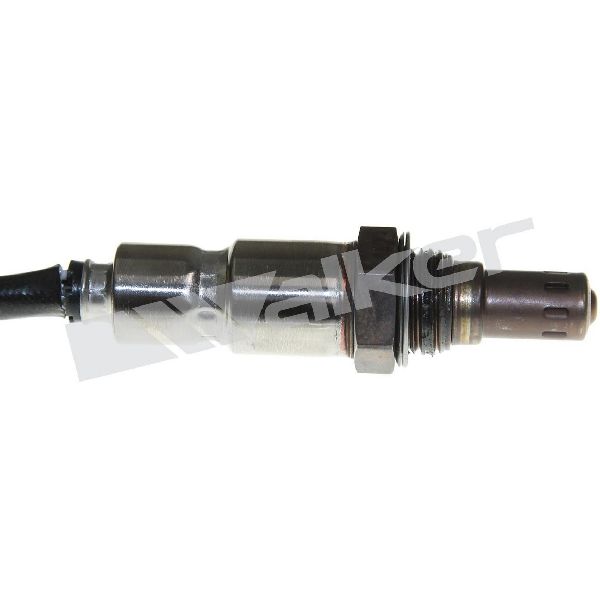
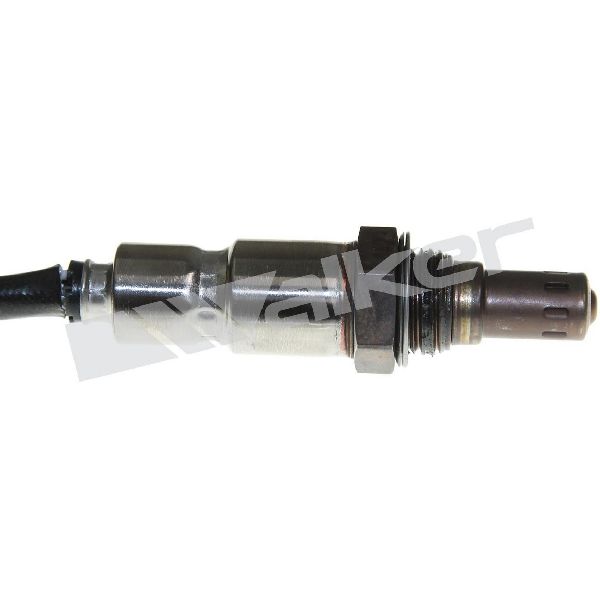
- Upstream Oxygen Sensor (Bank 1, Sensor 1)
(OEM #68492338AA)— The internal heater element is the most common point of failure for this code.
Trusted brands: Mopar, NTK, Denso, Bosch
OEM price range: $120-$180
Aftermarket price range: $40-$100
Related Codes That Often Appear With This One
- U0418-00 — TSB #18-085-22 specifically notes that P0031 can appear with U0418-00 ('Implausible Data Received From Brake System Control Module 1') on 2021 models, often pointing to a software issue that also causes long crank times.
- P06EF — TSB #18-004-23 links P0031 with P06EF ('Engine Restart Performance'), again suggesting a potential software-related fault that a dealer needs to address on some 2022 models.
- P0032 — This code means 'HO2S Heater Control Circuit High', which is the opposite of P0031. Seeing them together could indicate an intermittent shorting or wiring problem.
Technical Service Bulletins (TSBs) & Recalls
- 18-004-23: Links P0031 with P06EF (Engine Restart Performance) on 2022 models.
- 18-085-22: Links P0031 with U0418-00 (Implausible Data From Brake System Control Module) and long crank times on 2021 models.
- 1811222: Notes P0031 illumination on 2022 models, sometimes in relation to back-over prevention systems.
Platform-Specific Known Issues
- TSB #18-004-23 notes that on some 2022 models, P0031 may be set along with P06EF, indicating a potential software issue. This TSB primarily applies to India/Asia Pacific markets but indicates a known software logic path.
- TSB #18-085-22 indicates that on some 2021 models, P0031 can be set with U0418-00 and may be accompanied by a customer complaint of long engine cranking. This points towards a required PCM software flash.
- TSB #1811222 also documents P0031 illumination on 2022 models, sometimes in relation to the back-over prevention system.
- The 2.4L Tigershark engine has a reputation for oil consumption issues, which can foul the O2 sensor and cause it to fail, triggering a P0031 code.
Mechanic-Grade Diagnostic Values
- O2 Sensor Heater Element Resistance — expected: 5 to 7 Ohms at room temperature.. Failure: An infinite reading (Open Loop/OL) or a value significantly outside the expected range indicates a faulty heater element within the sensor.
- Heater Circuit Power Supply Voltage — expected: ~12 Volts (Battery Voltage) with Key On, Engine Off.. Failure: No voltage or significantly low voltage indicates a problem with the power supply, which could be a blown fuse, a faulty ASD relay, or a break in the power wire.
Scan Tool Commands That Help
- Witech (or compatible high-end scan tool): O2 Sensor Heater Actuation / Control — This bidirectional command allows a technician to manually turn the O2 sensor heater circuit on (typically to 25% or 100%). It is used to verify if the PCM can control the circuit and to check for voltage at the sensor connector while the circuit is commanded on, which helps isolate the fault between the PCM, wiring, and the sensor itself.
- Witech (or compatible high-end scan tool): Heated Oxygen Sensor Heater Resistance Learned Values Reset — On some Chrysler/Jeep vehicles, the O2 heater performance is a learned value. After replacing a faulty O2 sensor, this reset function should be performed to clear the old learned data and prevent the new sensor from being flagged incorrectly.
Wiring & Ground Locations
- Upstream O2 Sensor Connector (C107) — On the 2.4L engine, the upstream O2 sensor is on the exhaust manifold, visible from the top of the engine bay. The connector is typically attached to a nearby bracket.. This is the primary connection point for testing. Technicians test for power, ground, and resistance at this connector's pins.
- O2 1/1 Heater Control Circuit Wire — This wire runs from the Powertrain Control Module (PCM) to the upstream O2 sensor connector.. For some Jeep models, this wire is Brown/Light Green or Brown/Orange. A short to ground or an open circuit on this specific wire will cause a P0031 code. Technicians check continuity and for shorts on this wire between the PCM and the sensor connector.
- Auto Shutdown (ASD) Relay — Located in the underhood fuse box (Power Distribution Center).. The ASD relay supplies the 12V power to the fuse that protects the O2 sensor heater circuit. A faulty relay can cut power to the heater, triggering P0031 even if the fuse and sensor are good.
Model Year Variations Within This Range
- 2021 vs. 2022: While the 2.4L Tigershark engine and its core components are virtually unchanged between the 2021 and 2022 model years, the 2022 model received a significant interior and technology update, including the Uconnect 5 infotainment system and a new digital instrument cluster. These changes primarily affect the cabin electronics and do not alter the diagnosis for a P0031 engine code.
Helpful Videos
We Have This Part in Stock

The information in this article is provided for general reference and educational purposes only. Vehicle specifications, procedures, and part compatibility can vary by production date, trim level, and region. Always consult your vehicle's factory service manual and verify part numbers before purchasing or performing repairs. Safety-critical components such as airbags, seat belts, and braking systems should be installed by a qualified professional.
- Jeep COMPASS:
- 🧭 Diagnostic Flowchart
- 🎬 Helpful Videos
- 🛍️ Shop This Part
- What's Unique About the 2021-2022 Jeep COMPASS
- Symptoms You May Notice
- Most Likely Causes
- Rare But Worth Checking
- Diagnosis Steps
- Parts You'll Likely Need
- Related Codes That Often Appear With This One
- Technical Service Bulletins (TSBs) & Recalls
- Platform-Specific Known Issues
- Mechanic-Grade Diagnostic Values
- Scan Tool Commands That Help
- Wiring & Ground Locations
- Model Year Variations Within This Range
- 🎟️ Get 5% Off