

P0031 on 2009-2013 Mazda 3 2.0L: O2 Sensor Heater Circuit Causes and Fixes
On a 2009-2013 Mazda 3 with the 2.0L engine, code P0031 almost always means the heater element inside the upstream oxygen sensor has failed. The most common fix is replacing this sensor (Bank 1, Sensor 1), which costs about $70-$150 for a quality aftermarket part and is a very manageable DIY job. Before replacing, it's wise to check the 'ENG BAR 15A' fuse in the under-hood fuse box.
- P0031 on a 2009-2013 Mazda 3 almost always points to a failed heater in the upstream oxygen sensor (Bank 1, Sensor 1).
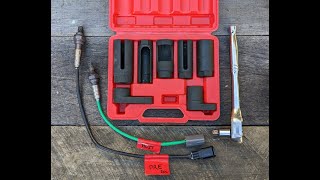
- The most common and effective fix is to replace the sensor itself. This is a DIY-friendly job requiring a 22mm O2 sensor socket.
- Before buying a new sensor, take a moment to check the 'ENG BAR 15A' fuse in the under-hood fuse box.
- Use a quality replacement sensor from a brand like Denso (234-5015) or NTK (24357) to avoid the code returning prematurely.
- Do not confuse the upstream sensor (before the catalytic converter) with the downstream one (after the converter).
What's Unique About the 2009-2013 Mazda 3
For the second-generation Mazda 3 (model code 'BL', 2010-2013) with the 2.0L LF-VDS engine, the P0031 code is a very common and straightforward issue. The emissions system is conventional and reliable, and this code typically indicates a standard wear-and-tear failure of the original oxygen sensor's heater element after many years and heat cycles. Owner experiences across forums like Mazdas247 and YouTube confirm that this is a high-probability failure item. A video specifically for a 2012 Mazda 3 shows the entire diagnostic and replacement process, highlighting its commonality. Using high-quality, direct-fit replacement sensors from OEM suppliers like Denso or NTK is important, as cheap generic sensors are known to fail quickly and cause the code to return.
Generation note: The 2009-2013 range covers the end of the first generation (BK, through 2009) and the entire second generation (BL, 2010-2013). While the code's meaning is the same for both, this guide focuses on the second-generation (BL) Mazda 3 with the 2.0L LF-VDS engine, for which this is a very common fault. The repair procedure is similar for both generations, and the upstream sensor is a known failure point across the MZR engine family.
Symptoms You May Notice
- Check Engine Light is on
- Decreased fuel economy
- Vehicle will not pass an emissions test
- Rough or unstable idle on cold starts
- Sluggish acceleration
- Replacing the downstream (post-catalytic converter) oxygen sensor. P0031 specifically refers to Sensor 1, which is always the upstream sensor before the catalytic converter.
- Using a cheap, generic oxygen sensor. Owners on forums frequently report that non-OEM or non-Denso/NTK sensors fail to work correctly or fail prematurely, causing the code to return.
Most Likely Causes
- Failed Upstream Oxygen Sensor (A/F Sensor) 🔴 High Probability → Shop Oxygen Sensor The internal heater element is a common wear item that fails after many heat cycles. This is the most frequent cause of P0031 on this vehicle, with failures often reported between 80,000 and 120,000 miles.
How to confirm: Disconnect the sensor and measure the resistance between the two heater circuit pins (usually the two same-colored wires, often black). An open circuit (infinite resistance or 'OL') or a resistance value far outside the manufacturer's spec (typically 2-15 Ohms for this platform) confirms a failed heater. A YouTube video for a 2012 Mazda 3 demonstrates this test, showing a dead sensor with no resistance reading. 🎬 Watch: How to test and diagnose the sensor
Typical fix: Replace the upstream oxygen sensor (Bank 1, Sensor 1). A 22mm or 7/8" offset O2 sensor socket is requ 🎬 See this step-by-step replacement walkthroughired.
Est. part cost: $70-$180 - Blown Fuse ⚪ Low Probability
How to confirm: Check the fuse for the O2 sensor heater circuit in the under-hood fuse box. Fuse box diagrams for the Mazda 3 BL confirm this fuse is labeled 'ENG BAR' and is a 15A fuse. It is located in the main fuse block in the engine compartment, near the battery.
Typical fix: Replace the blown fuse. If it blows again, there is a short circuit in the wiring that must be diagnosed.
Est. part cost: $1-$5 - Damaged Wiring or Connector ⚪ Low Probability The wiring harness runs close to the hot exhaust manifold, making it susceptible to becoming brittle, melting, or chafing over time.
How to confirm: Visually inspect the wiring harness and connector for the upstream O2 sensor. Look for any signs of melting, chafing on brackets, corrosion in the connector pins, or broken wires. Trace the harness from the sensor up to its connection point on the engine.
Typical fix: Repair the damaged section of the wiring harness or replace the connector pigtail.
Est. part cost: $10-$50
Rare But Worth Checking
- Faulty Powertrain Control Module (PCM): This is extremely rare. The PCM is the last thing to suspect. All other possibilities, including the sensor, fuse, and wiring, should be exhaustively ruled out before considering a PCM failure.
Diagnosis Steps
- Read the code with an OBD-II scanner to confirm P0031 is present.
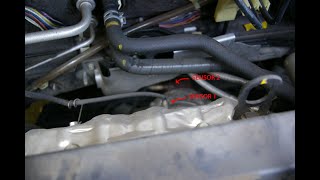
- Visually inspect the upstream oxygen sensor's wiring and connector for any signs of melting, fraying, or corrosion. The sensor is located on the front of the exhaust manifold, easily visible.
- Check the 'ENG BAR 15A' fuse in the under-hood fuse box, located near the battery.
- If the wiring and fuse are good, disconnect the sensor's electrical connector.
- Using a multimeter set to Ohms (Ω), measure the resistance of the heater circuit on the sensor side of the connector (usually between the two wires of the same color, typically black). A reading of 'OL' (over-limit/open) indicates a failed heater element. A good sensor should have a low resistance, typically between 2 and 15 ohms when cold.
- If the sensor's resistance is within spec, check for battery voltage (approx. 12V) and a good ground at the vehicle-side harness connector with the key on, engine off. The heater circuit feed is the most common place to check for voltage.
- If voltage and ground are present and the sensor resistance is good, there may be a more complex wiring issue or a rare PCM fault.
Parts You'll Likely Need
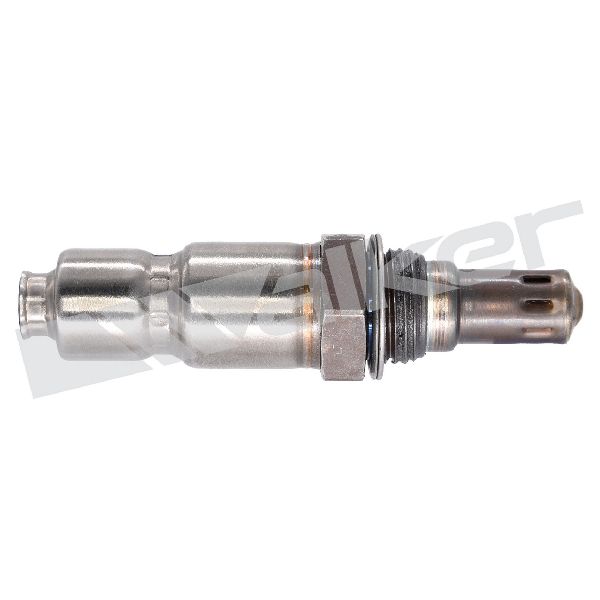
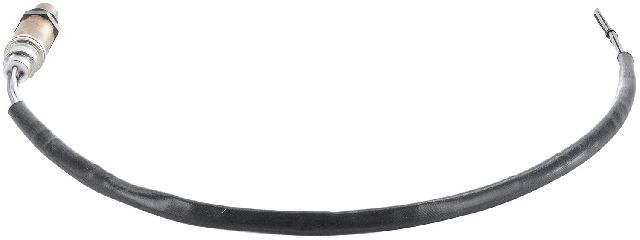
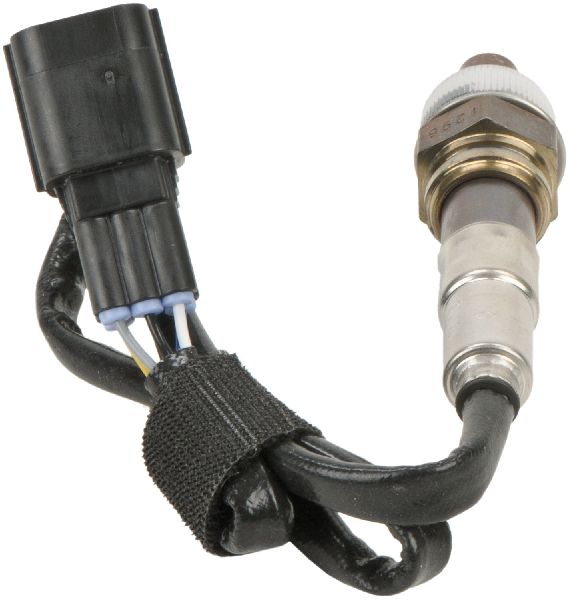
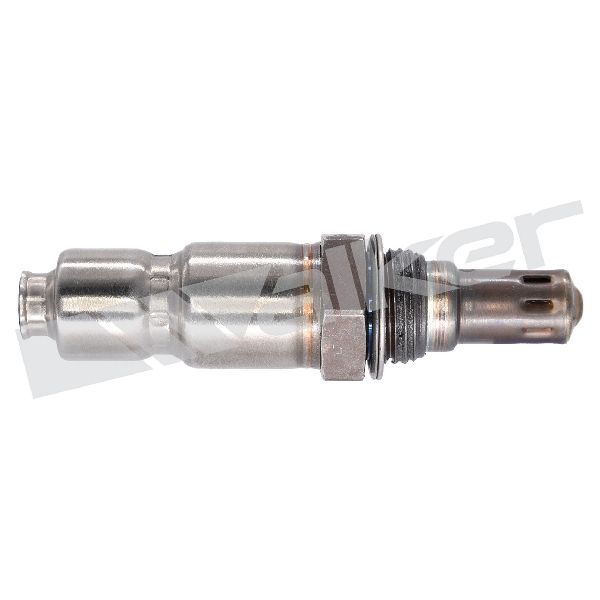
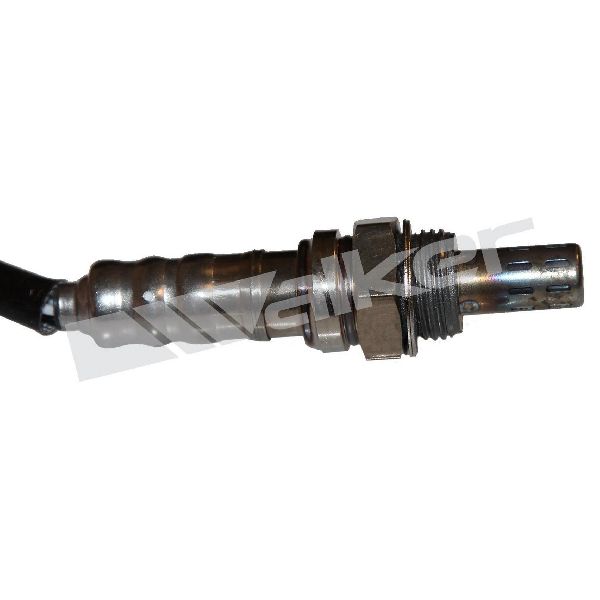
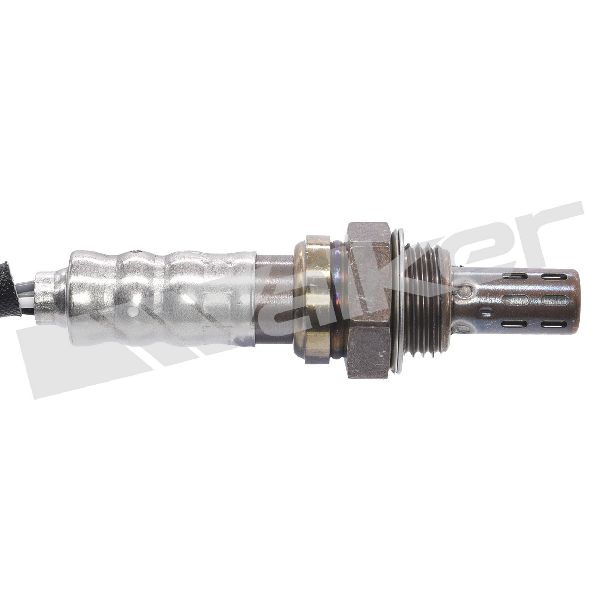
- Upstream Oxygen Sensor / Air-Fuel Ratio Sensor
(OEM #LFL7-18-8G1)— This is the component that contains the heater element that most commonly fails, triggering the P0031 code. A video shows the Ford logo is also etched on the original Denso sensor.
Trusted brands: Denso (OEM Supplier), NGK/NTK
OEM price range: $180-$250
Aftermarket price range: $70-$150
Related Codes That Often Appear With This One
- P0032 — This is the counterpart code for 'Heater Control Circuit High'. Both codes point to a fault in the same component (Bank 1, Sensor 1 heater circuit), just a different type of electrical fault.
- P0135 — This is a more generic code for 'O2 Sensor Heater Circuit Malfunction (Bank 1 Sensor 1)'. It identifies the same failure as P0031, and the diagnostic process is identical.
- P0134 — This code for 'O2 Sensor Circuit No Activity Detected' can appear alongside P0031 because a failed heater will prevent the sensor from reaching operating temperature and producing a signal.
Platform-Specific Known Issues
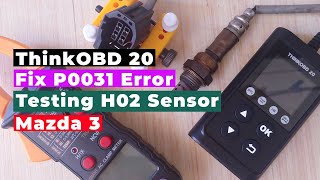
- note: A 2012 Mazda 3 owner on YouTube documented the entire process of diagnosing P0031, from getting the code read at a shop to testing the old sensor (showing it was open/dead) and discussing part numbers. The original sensor was a Denso part with a Ford logo. The total dealer cost was quoted at over 13,000 PHP (approx $230 USD), while the part could be sourced online for much less. (Source: YouTube - ThinkOBD 20, 'Fix P0031 OBD error Mazda 3 2012 non-skyactive')
- note: On Mazdas247 forums, a user with P0031 was immediately advised to replace the upstream sensor on the exhaust manifold, confirming it's the common fix. The required tool was identified as a 22mm O2 sensor socket. 🎬 Watch: A handy removal hack for stubborn sensors (Source: Mazdas247, 'P0031 - H02S Heater Control Circuit Low (Bank 1 Sensor 1)')
Mechanic-Grade Diagnostic Values
- A/F Sensor Heater Resistance — expected: 2 - 15 Ohms when cold. Some sources cite a tighter range of 4.5 - 5.2 Ohms.. Failure: A reading of 'OL' (Open Loop/infinite resistance) or a value far outside the expected range indicates a failed heater element.
- A/F Sensor Heater Circuit Voltage (at harness connector) — expected: Approximately 12V (Battery Voltage) with key on, engine off.. Failure: Voltage significantly below 11V points to a power supply issue, such as a blown fuse, faulty relay, or high resistance in the wiring.
- Heater Circuit Current Draw — expected: Greater than 0.8 Amps when the PCM commands the heater on.. Failure: The PCM will set code P0031 if the measured current is less than 0.8 Amps when the heater is commanded on, indicating an open circuit or high resistance.
Scan Tool Commands That Help
- Mazda Modular Diagnostic System (M-MDS) or equivalent (e.g., high-end FORScan, Autel): A/F Sensor Heater Active Test — This bidirectional command allows a technician to manually activate the A/F sensor heater circuit from the scan tool. It is used to verify if the PCM driver, wiring, and heater element are all working by commanding the circuit on and observing the change in current or sensor temperature. This is useful if a resistance test is good but the sensor still doesn't appear to be heating.
Wiring & Ground Locations
- A/F Sensor Connector (Harness Side) — Connected to the upstream O2 sensor, which is located on the exhaust manifold at the front of the engine.. A wiring diagram for a similar SKYACTIV engine shows power is supplied to Terminal A from the 'ENGINE1 15A' fuse, and the PCM controls the ground on Terminal E (to PCM pin 1BY). While the specific pins may differ slightly on the LF-VDS, the principle is the same: one pin should have 12V power (key on), and the other is the control from the PCM. Testing for voltage here is a key diagnostic step.
- Engine Ground — There are multiple engine-to-chassis grounds. One key ground strap is often located near the passenger side motor mount, connecting the engine block to the chassis. Another is often found on or near the transmission housing.. While not a primary cause, a poor or corroded main engine ground can cause a variety of electrical issues, including low voltage problems in sensor circuits. A video on a 2013 Mazda 3 with communication codes highlighted a bad ground attached to the oil filter housing, which had a rubber gasket preventing a good connection. Verifying main grounds are clean and tight is good practice.
- Fuse 'ENG BAR 15A' — In the main under-hood fuse box, near the battery.. This fuse directly supplies the 12V power to the oxygen sensor heater circuit. If this fuse is blown, the heater will not function and P0031 will be set. If it blows repeatedly, it indicates a short to ground in the wiring or the sensor itself.
Real Owner Repair Stories
- YouTube video from channel 'ThinkOBD 20' (2012 Mazda 3 2.0L (non-Skyactiv)) — Check Engine Light on.
❌ Tried (didn't work) The owner first took the car to a shop, which diagnosed the code and quoted a high price for replacement without further diagnostics.
✅ What actually fixed it The owner replaced the upstream oxygen sensor (Bank 1 Sensor 1). He confirmed the failure by testing the old sensor with a multimeter, which showed an open circuit (no resistance) on the two black heater wires. This is the classic failure mode for this code. - YouTube video from channel 'Robinson's Automotive Specialist' (2004 Jeep Grand Cherokee (different vehicle, but demonstrates the principle)) — P0031 code returned after a shop replaced the oxygen sensor.
❌ Tried (didn't work) Replacing the oxygen sensor.
✅ What actually fixed it The technician found that the heater control wire was shorted to ground in the harness. This caused the heater to be on constantly. The fix was to repair the chafed wire. This is a valuable story because it shows the next step if a new sensor doesn't fix the P0031 code: suspect a wiring short.
OEM Part Supersession History
LFL7-18-8G1→LFL7-18-8G1A, LFL7-18-8G1B, LFL7-18-8G1C— Standard part revisions by the manufacturer over time. These are generally for minor manufacturing process improvements or supplier changes.
Heads up: All part numbers in this chain (LFL7-18-8G1x) are considered interchangeable for the specified vehicle application.
Diagnostic Flowchart
Other Known Issues on This Vehicle
Issues unrelated to this code that are worth knowing about as an owner of this generation:
- Failed Passenger-Side Hydraulic Engine Mount 🟠 Medium — Very common failure, often between 60,000-100,000 miles. The hydraulic fluid leaks out, causing excessive engine vibration and clunking noises, especially on acceleration.
- Melting/Sticky Dashboard 🟡 Low — Widespread issue, particularly on 2010 models in hot, humid climates. The dashboard surface degrades, becomes sticky, and creates a dangerous glare on the windshield. (Ref: Mazda SSP 97 (Warranty Extension))
- Automatic Transmission Control Module (TCM) Failure 🔴 High — A known issue on 2010-2011 models, causing harsh shifting, getting stuck in gear, and erratic behavior. Can sometimes be misdiagnosed as internal transmission failure.
- Premature Clutch Failure (Manual Transmission) 🟠 Medium — Reported on 2010-2013 models, with some owners needing clutch replacement under 50,000 miles due to potentially defective release components.
- Corrosion/Rust 🟠 Medium — While improved from the first generation, the BL Mazda 3 can still suffer from rust on rear wheel arches, rocker panels, and subframe components, especially in regions with road salt. (Ref: Global recall for rust risk on some models.)
- Warping Instrument Panel 🟡 Low — The instrument panel above the central information display can warp and create a gap when exposed to heat. (Ref: Mazda SSP A1 (Warranty Extension))
Used vs. New Parts: Buying Guide for This Vehicle
When a used part is the smart pick: For this specific repair, using a used oxygen sensor from a junkyard is NOT recommended. Oxygen sensors are wear items with a finite lifespan, and a used part has unknown remaining life and could fail quickly.
What to inspect on the donor part:
- Not applicable as used sensors are not advised.
OEM-only on this vehicle (don't cheap out):
- While not strictly 'OEM-only', the consensus is to use high-quality parts from OEM suppliers. Avoid generic, unbranded 'white box' parts.
Aftermarket brands forum-validated for this vehicle:
- Denso (often the original OEM supplier)
- NTK (also known as NGK)
Brands owners have reported issues with on this vehicle:
- Unbranded, generic sensors from online marketplaces like eBay or AliExpress are frequently reported by forum users to be dead-on-arrival or fail within a short period, causing the code to return.
Real Owner Stories
Aggregated from forums and TSBs cited above. Mileages and costs reflect what owners reported in those sources.
2012 Mazda 3 2.0L (Non-Skyactiv)
Symptoms: The owner had the P0031 code read at a shop and confirmed the sensor was dead using a multimeter.
What fixed it: Replacement of the upstream oxygen sensor (Bank 1, Sensor 1). The original part was a Denso unit with a Ford logo.
Cost: $230-$230
Source hint: YouTube - ThinkOBD 20, 'Fix P0031 OBD error Mazda 3 2012 non-skyactive'
2012 Mazda 3 2.0L
Symptoms: Confirmed the P0031 code and consulted the service manual for fuse locations.
What fixed it: Checked the 'ENG BAR 15A' fuse as part of the diagnostic process.
Source hint: Reddit r/Cartalk
2010 Mazda 3 2.0L — ~100000 miles
Symptoms: The Check Engine Light was triggered by a failed heater element in the upstream sensor.
What fixed it: Replacement of the upstream sensor on the exhaust manifold using a 22mm O2 sensor socket.
Source hint: Mazdas247 - 'P0031 - H02S Heater Control Circuit Low (Bank 1 Sensor 1)'
Related OBD-II Codes
Frequently Asked Questions
Which fuse should I check for a P0031 code on my 2009-2013 Mazda 3?
Is there a specific tool I need to replace the upstream O2 sensor on my Mazda 3?
What is the typical resistance for a healthy A/F sensor heater on this platform?
Does Mazda have a warranty extension for the sticky dashboard issue on my 2010 model?
My 2012 Mazda 3 is shifting harshly; could this be related to the P0031 code?
Is the warping instrument panel above my display covered by Mazda?
Helpful Videos


We Have This Part in Stock

The information in this article is provided for general reference and educational purposes only. Vehicle specifications, procedures, and part compatibility can vary by production date, trim level, and region. Always consult your vehicle's factory service manual and verify part numbers before purchasing or performing repairs. Safety-critical components such as airbags, seat belts, and braking systems should be installed by a qualified professional.
- Mazda 3:
- 🧭 Diagnostic Flowchart
- 🎬 Helpful Videos
- 🛍️ Shop This Part
- What's Unique About the 2009-2013 Mazda 3
- Symptoms You May Notice
- Most Likely Causes
- Rare But Worth Checking
- Diagnosis Steps
- Parts You'll Likely Need
- Related Codes That Often Appear With This One
- Platform-Specific Known Issues
- Mechanic-Grade Diagnostic Values
- Scan Tool Commands That Help
- Wiring & Ground Locations
- Real Owner Repair Stories
- OEM Part Supersession History
- Other Known Issues on This Vehicle
- Used vs. New Parts: Buying Guide for This Vehicle
- Real Owner Stories
- 2012 Mazda 3 2.0L (Non-Skyactiv)
- 2012 Mazda 3 2.0L
- 2010 Mazda 3 2.0L — ~100000 miles
- Related OBD-II Codes
- Frequently Asked Questions
- 🎟️ Get 5% Off